
The iconic British brand’s supercar breaks all records at an exclusive auction in Abu Dhabi.
The McLaren F1 is one of those cars capable of marking a before and after in history «. Gordon Murray, an engineering genius, designed the supercar «. BMW’s powerful and prodigious V12 engine propels this model «. Furthermore, the brand produced this icon from 1993 to 1998 «. The series limited production to just 64 units «. To these are added the special GTR, LM, and GT versions «. The car was the fastest in the world from 1993 to 2005 «. Therefore, it remains an absolute icon of the four-wheeled world «.
The ‘Chassis 014’ Unit Breaks Records at Auction
One of the 64 exemplars has been auctioned by Sotheby’s in Abu Dhabi «. The car reached a sale price of 25.31 million dollars «. In currency exchange, this represents just over 23 million euros «. Undoubtedly, the vehicle has become the most expensive McLaren in history «. The protagonist of this feat was a 1994 McLaren F1 (chassis 014) «. Originally, the brand delivered the car to the royal family of Brunei «. The original hue was a discreet titanium yellow «. In addition, the interior featured black leather and Alcantara «.

Million-Dollar Restoration and the Autograph Duel
The car ended up in the US after several changes of ownership on both sides of the Atlantic «. There, they subjected the model to a complete restyling «. The car was repainted in the Ibis White still present «. Additionally, it is equipped with the High-Downforce kit «. This kit includes a fixed rear wing instead of the original active spoiler «. It also brings a new front bumper «. In fact, the splitter derives from the GTR .
The previous owner chose better headlights «. He also opted for a new exhaust system «. The car features black OZ five-spoke wheels «. Even the interior received a renovation «. Specifically, they installed a new air conditioning system «. The entire job cost a price of around 500,000 euros «.
The Erased Legacy of Schumacher
Regrettably, the restoration work erased Michael Schumacher’s autograph «. Schumacher signed the door sill on March 12, 1996. That date was the day of his first race at the wheel of a Ferrari «. In its place, the car now shows the autograph of Lewis Hamilton «. While this is not a bad substitute, it is not the same.












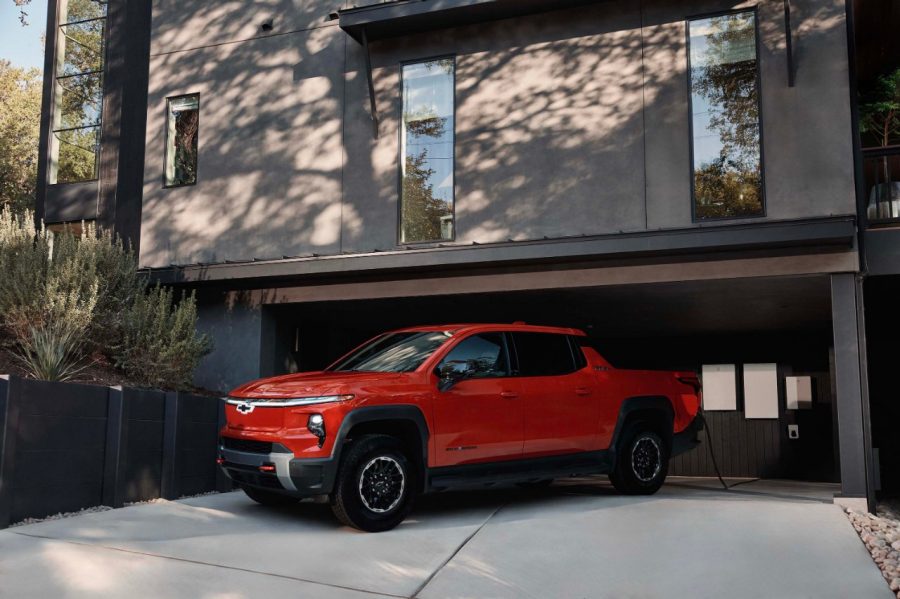
Home EV charging is easier than many drivers think. Here’s everything GM EV owners need to know about charging, installation, costs, and charging standards.
Charging an electric vehicle at home is the most convenient and cost-effective way to keep a battery full. According to industry estimates, more than 80% of EV charging in the United States happens at home, making public charging a secondary option for most drivers. Understanding the different charging levels, connector types, and installation requirements can help owners get the most from their electric vehicle.
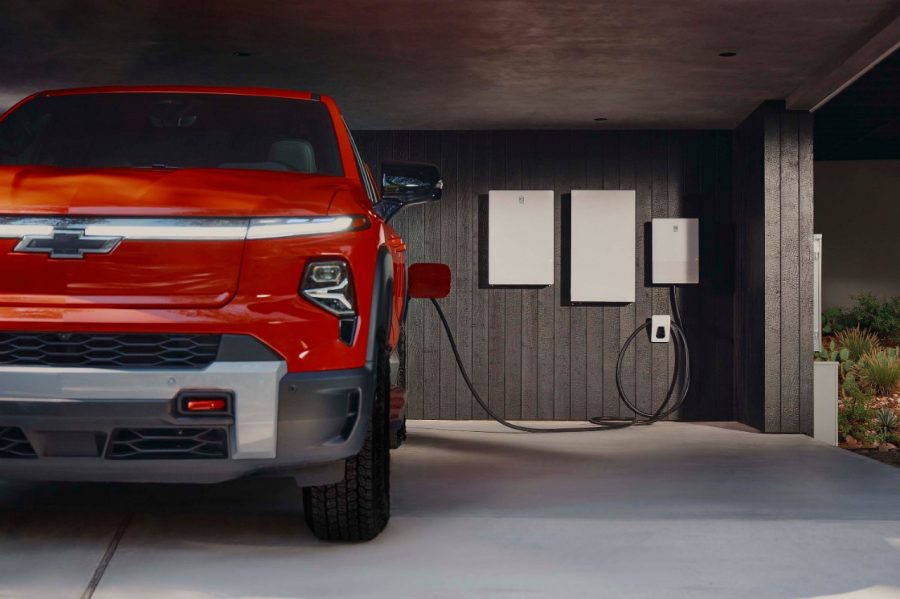
Most EV owners recharge their vehicles at home using Level 1 or Level 2 charging.
Level 1 vs. Level 2 home EV charging
Home EV charging comes in two primary forms. Level 1 charging uses a standard 120-volt household outlet and requires no special installation. While it’s the simplest solution, it typically adds only 3 to 5 miles of driving range per hour, making it best suited for drivers with short daily commutes.
Level 2 charging operates on a 240-volt circuit and requires professional installation. The faster charging speed makes it the preferred solution for most homeowners, with compatible GM home chargers capable of adding up to 44 miles of range per hour. Many workplaces, hotels, parking garages, and public locations also offer Level 2 charging.
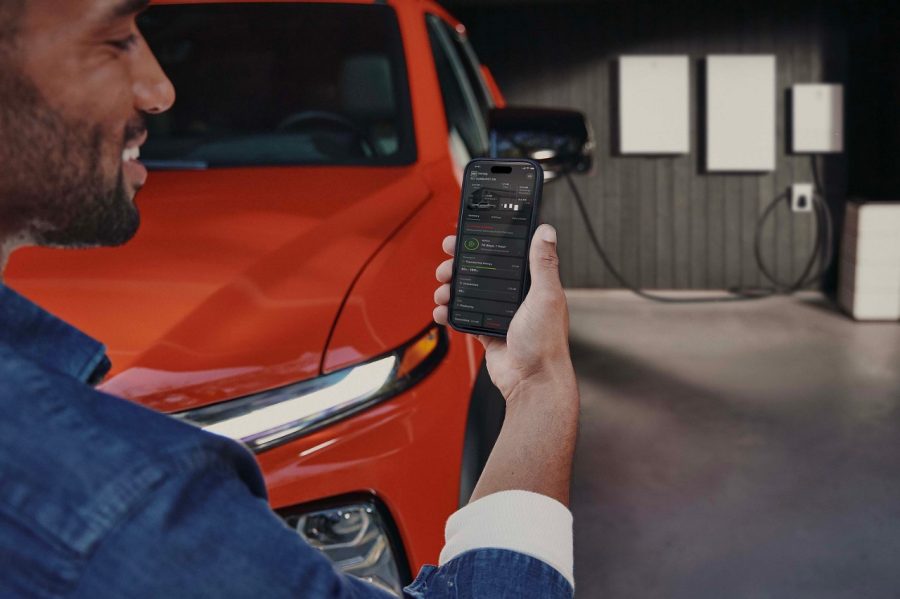
Level 2 charging provides significantly faster charging speeds than a standard household outlet.
Understanding NACS and CCS charging connectors
Modern GM electric vehicles are transitioning to the North American Charging Standard (NACS), while previous models use the Combined Charging Standard (CCS1/J1772) connector. The difference is simply the charging plug design, and adapters allow owners to use either standard without replacing their home charging equipment.
Installing a Level 2 charger requires a qualified electrician, who will determine whether the home’s electrical system can support the new circuit. Installation costs vary depending on the home’s electrical panel, wiring distance, and available capacity.
Smart charging helps reduce costs
Many electric utilities offer lower electricity rates during off-peak hours, allowing owners to schedule charging overnight and reduce operating costs. GM’s mobile apps also let owners monitor battery status, set charging limits, and schedule charging sessions remotely.
For daily driving, charging to 80% is generally recommended to help preserve long-term battery health, while charging to 100% is best reserved for longer road trips.

Smart charging allows EV owners to schedule charging during lower-cost overnight hours.
Home charging also unlocks advanced technologies such as vehicle-to-home (V2H) capability. Compatible GM EVs paired with the appropriate charging equipment can supply electricity to a properly equipped home during a power outage, while optional home energy storage systems can store excess electricity for later use.
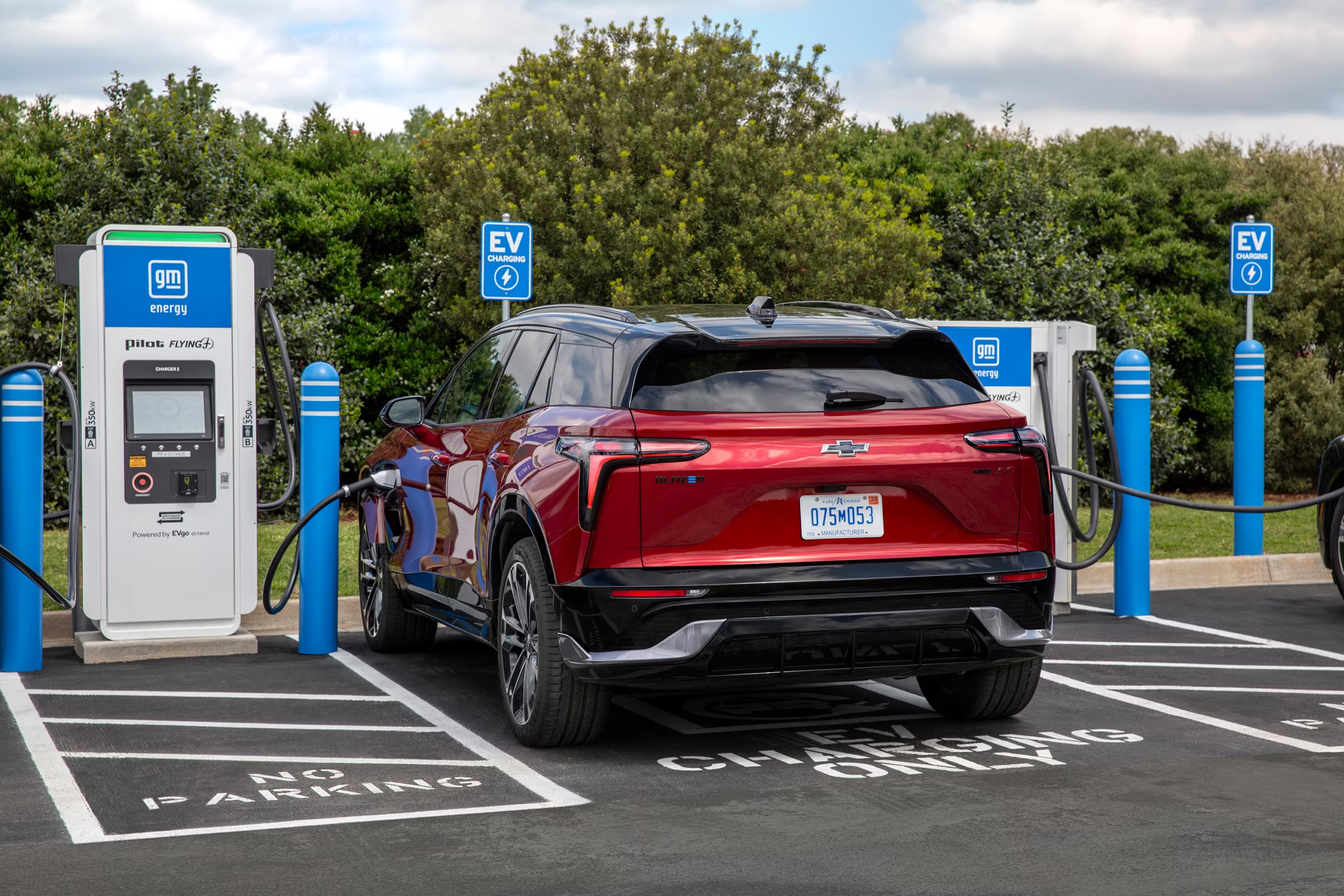
GM EV drivers can now access more than 120 IONNA fast-charging stations across the United States with seamless charging through Energy Pass.
Electric vehicle owners driving Chevrolet, Cadillac and GMC models now have access to an even larger public charging network as IONNA continues expanding across the United States. Backed by General Motors and seven other major automakers, the fast-growing charging network now operates 122 charging locations nationwide with 1,166 DC fast-charging stalls, making long-distance EV travel more convenient than ever.
The expansion also strengthens GM’s charging ecosystem by integrating IONNA directly into the company’s Energy Pass platform, allowing drivers to locate chargers, start charging sessions and pay without downloading additional apps.
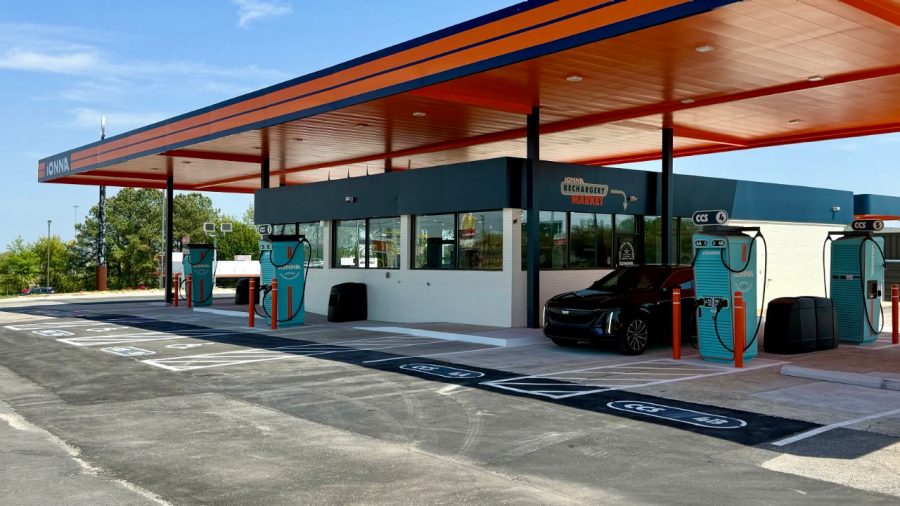
GM EV drivers now have access to more than 120 IONNA fast-charging stations across the United States.
GM expands fast charging across the United States
IONNA continues rapidly expanding its footprint with stations strategically located across major travel corridors.
Many of the new locations feature IONNA Rechargeries, offering drivers amenities such as:
- Fast charging up to 400 kW
- Food and beverage options
- Modern restrooms
- Well-lit charging areas
- Comfortable rest stops during charging sessions
The network is designed to reduce charging times while providing a better experience for EV owners traveling long distances.

IONNA Rechargery locations combine ultra-fast charging with convenient traveler amenities.
Energy Pass simplifies public EV charging
GM’s new Energy Pass integrates public charging directly into the MyChevrolet, MyCadillac, and MyGMC mobile apps.
Instead of creating multiple charging accounts, drivers can:
- Find compatible charging stations
- Start charging remotely
- Pay directly through one account
- Use Plug & Charge for automatic authentication
- Receive a 10% discount when charging at participating IONNA stations
The system also provides access to multiple charging providers through a single interface.
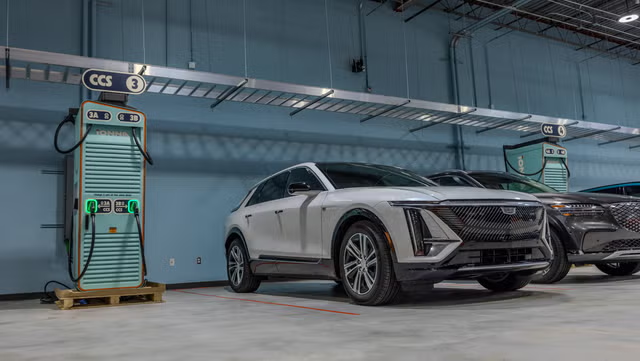
Energy Pass allows GM EV owners to access multiple charging networks from one app.
More charging options for GM electric vehicles
Beyond IONNA, Energy Pass also connects GM customers with several of the nation’s largest charging networks, including Tesla Supercharger, Electrify America, and additional providers that continue expanding throughout the country.
Combined, these networks provide access to nearly 70% of all DC fast chargers in the United States, giving GM EV owners significantly greater charging flexibility whether commuting daily or taking longer road trips.
As IONNA continues opening new locations nationwide, General Motors is strengthening one of the most important aspects of EV ownership: convenient, reliable and easy-to-use public charging infrastructure.

Hyundai expands its connected car experience by integrating myQ Connected Garage technology, allowing drivers to monitor and control compatible garage doors directly from the vehicle’s touchscreen.
Hyundai Motor America has announced a new partnership with Chamberlain Group to introduce Hyundai myQ Connected Garage, a feature that allows drivers to monitor and operate compatible garage doors directly from the vehicle’s infotainment system.
Available on select 2024-2026 Hyundai models in the U.S., the new connected service enhances convenience by integrating smart home technology with Hyundai’s Bluelink platform.
Hyundai myQ Connected Garage adds smarter vehicle connectivity
The new Hyundai myQ Connected Garage system enables owners to check whether their garage door is open or closed and control it remotely without leaving the vehicle.
Once linked to a compatible myQ account and Hyundai Bluelink, the service provides seamless access through the vehicle’s touchscreen display.
Among the new features are:
- Automatic garage door opening and closing through customizable geofencing.
- Remote monitoring and control from virtually anywhere.
- Personalized opening and closing distance settings.
- Valet Mode to temporarily disable garage access.
- Support for multiple garage doors and multiple properties.
- Close Door Reminder notifications if the garage remains open.
Hyundai introduces myQ Connected Garage technology for compatible vehicles.
Compatible with leading smart garage systems
The Hyundai myQ Connected Garage platform works with several of the most popular smart garage door brands in North America, including:
- LiftMaster
- Chamberlain
- Craftsman
Garage door systems from many other manufacturers can also become compatible by adding the myQ Smart Garage Control device, eliminating the need for additional vehicle hardware or manual programming.
Once connected through a Hyundai Bluelink account, drivers can access their garage controls directly from the infotainment screen for a more integrated ownership experience.

The system supports multiple garage doors through a single myQ account.
Three-month free trial available on select Hyundai models
Hyundai is offering a three-month complimentary trial of myQ Connected Garage for eligible customers.
The service is available on select 2024, 2025 and 2026 Hyundai vehicles, depending on model and trim level, giving owners the opportunity to experience expanded smart home integration through their vehicle.
This latest technology further strengthens Hyundai’s connected ecosystem by combining vehicle convenience, home automation and remote accessibility into a single seamless platform.

Eligible Hyundai owners receive a complimentary three-month trial of myQ Connected Garage.
As connected vehicle technology continues to evolve, Hyundai myQ Connected Garage represents another step toward integrating everyday digital services into the driving experience. By allowing drivers to manage their garage doors directly from the vehicle, Hyundai expands its smart mobility ecosystem while offering greater convenience, security and peace of mind for customers across the U.S. market.
-
 TEST DRIVES1 month ago
2026 Subaru Outback Touring
-
 TEST DRIVES2 months ago
2026 Hyundai Santa Cruz Limited AWD
-

 TEST DRIVES1 month ago
Lamborghini prepares multiple launches for 2026 as electrification plans continue
-
 RACING1 month ago
George Russell Leads Final Barcelona Practice As Kimi Antonelli Receives Reprimand
-

 RACING1 month ago
Barcelona-Catalunya Grand Prix: Everything You Need To Know About Formula 1’s Ultimate Benchmark Circuit
-

 NOW TRENDING1 month ago
Porsche Creates A Buzz Lightyear-Inspired 911 GT3 RS That Looks Ready To Go “To Infinity And Beyond”
-

 RACING1 month ago
Why Formula 1 Has Pit Lane Speed Limits And How They Are Measured
-
 NOW TRENDING1 month ago
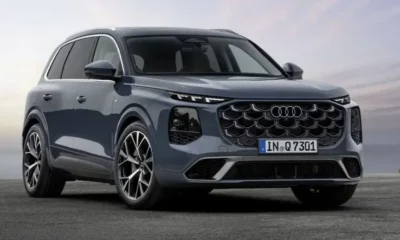
2026 Audi Q7 Brings New Design, Smarter Technology, And Greater Versatility
You must be logged in to post a comment Login