
INTELLIGENT MOBILITY
Global EV Sales Rise 9% in July as Europe Drives Growth


Global electric vehicle sales increased for a fifth straight month in July, with strong European demand offsetting declines in China and North America.
Global electric vehicle sales continued to grow in July, marking the fifth consecutive month of higher global demand. Sales of battery-electric and plug-in hybrid vehicles reached 1.85 million units, up 9% from the same month last year.
The latest figures from Benchmark Mineral Intelligence show that growth is becoming increasingly uneven across major markets. Europe posted strong gains, while sales weakened in China and North America.
Europe becomes the main driver of EV growth
Europe was the strongest major market in July. EV sales increased 33% to 450,000 vehicles, while year-to-date sales were up 28%.
Several major European markets recorded particularly strong results. France saw EV sales rise 81%, while Germany increased 46% and Britain gained 43%.

European EV sales surged in July as renewed incentives helped boost demand across major markets.
Benchmark Mineral Intelligence linked much of the growth to the return of EV subsidy programs in several European countries over the past 18 months.
The stronger incentives are helping electric vehicles become more competitive as consumers consider their next vehicle purchase.
China sees sales decline after years of strong growth
China remained the world’s largest EV market, but July brought weaker results.
Sales of battery-electric and plug-in hybrid vehicles fell 5% to 980,000 units. The decline marks a clear contrast with Europe’s rapid growth and shows how the global EV market is developing at different speeds.

China remained the largest EV market in July despite a 5% decline in sales compared with last year.
Chinese automakers are also increasingly looking outside the domestic market to support future growth.
With domestic competition remaining intense, exports are becoming a more important part of the strategy for several Chinese manufacturers.
Despite the July decline, China remains far ahead of other individual markets in total EV sales volume.
North America faces a sharp decline
North America recorded the biggest decline among the major markets.
Sales dropped 27% to 140,000 vehicles in July, with the end of U.S. federal EV tax credits weighing heavily on demand.

North American EV sales fell sharply in July following the removal of U.S. federal EV tax credits.
The decline highlights how strongly incentives can influence electric vehicle demand. Without the previous federal support, U.S. consumers and automakers are facing a different market environment.
The regional slowdown contrasts sharply with Europe, where government support is helping push EV adoption higher.
Global EV demand continues to expand
Despite weakness in China and North America, global sales still increased to 1.85 million vehicles in July.
Year-to-date global sales have now reached 11.5 million electric and plug-in hybrid vehicles, confirming that demand continues to expand even as major markets move in different directions.
Outside Europe, China, and North America, sales jumped 97% to 280,000 vehicles, showing that EV adoption is also accelerating in emerging markets.
The global EV sales July 2026 figures underline a major shift in the industry. Europe is currently providing the strongest growth, while China remains the largest market by volume and North America faces a period of adjustment after changes to EV incentives.









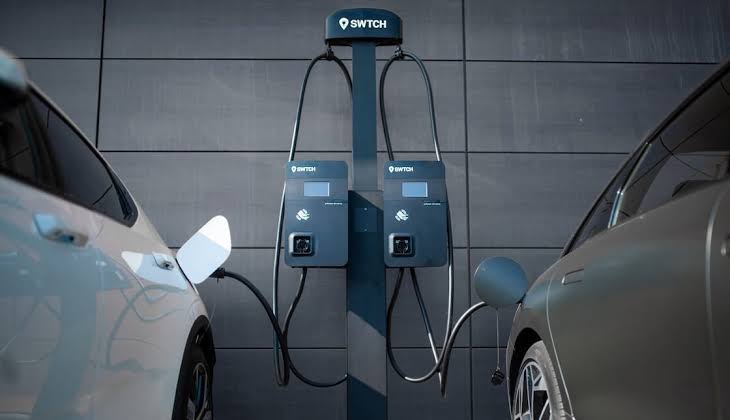
Public EV charging infrastructure continues to expand across the United States, with high-power stations growing even as electric vehicle sales face a slower market.
U.S. charging infrastructure keeps expanding
The American EV market is going through a complicated period.
Electric vehicle sales have softened, but public charging infrastructure continues to grow. The result is a rapidly expanding network that is becoming more important for drivers who cannot rely entirely on home charging.
As of August, the U.S. had more than 80,000 public charging locations and over 250,000 individual charging ports, according to the data cited in the source material. Thousands more ports are being added each quarter.
The growth matters because access to charging remains one of the key concerns for people considering an EV.
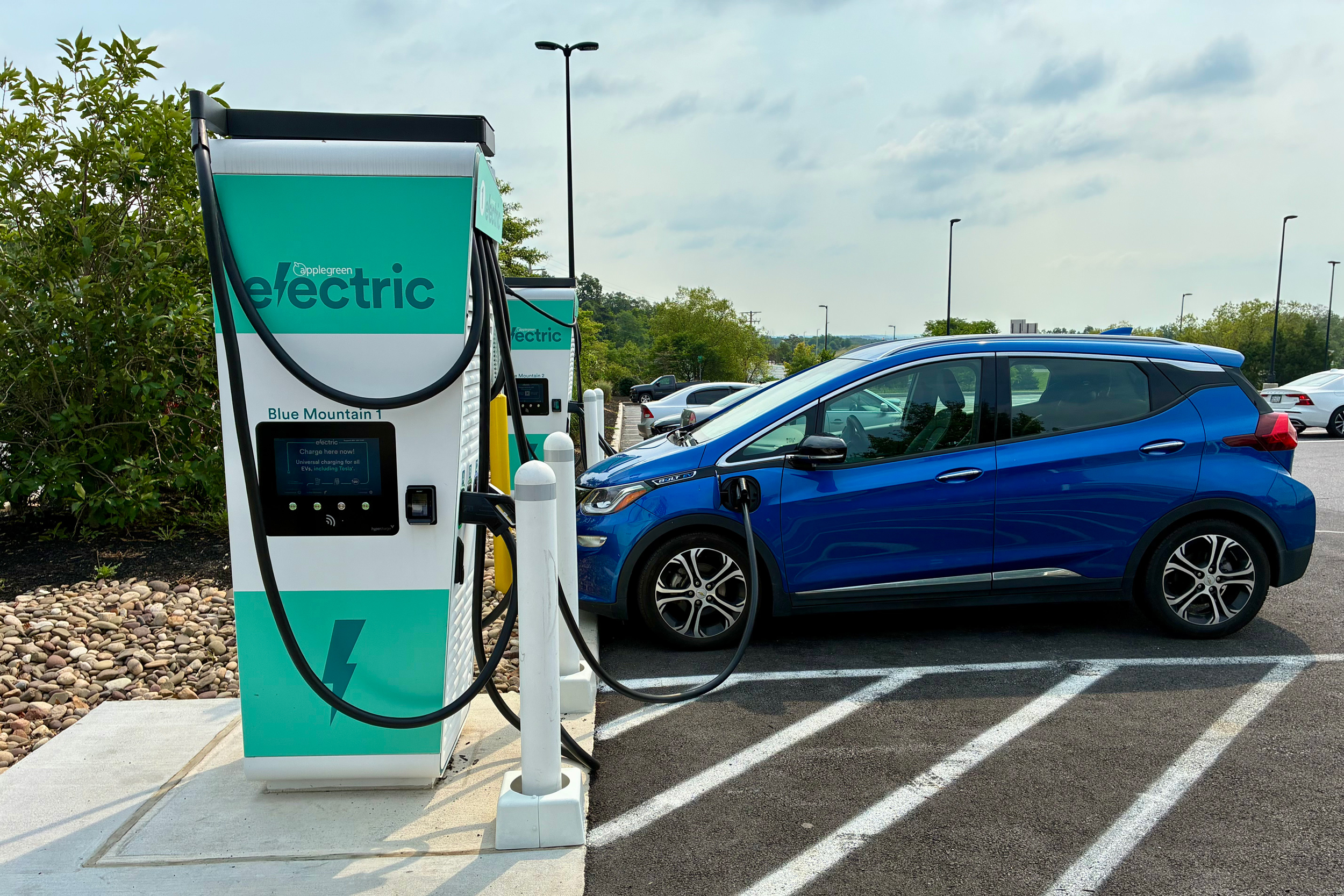
An EVgo fast-charging installation operates at a Meijer location as charging networks expand across the U.S.
The industry is also building larger charging sites.
In Warren, Michigan, EVgo and General Motors opened a 12-stall flagship charging station at a Meijer store. The site supports both CCS and NACS connections and can deliver up to 350 kW. EVgo says compatible vehicles can recover a full charge in as little as 15 minutes, depending on the vehicle and conditions.
The station is part of a broader expansion.
EVgo says more than 40 flagship stalls were already operating nationwide in August, with more than 100 expected by the end of 2026. GM is supporting the expansion as part of its effort to improve EV charging access.
Not all chargers work the same way
Charging speed depends heavily on the type of equipment.
There are three main charging levels.
Level 1 uses a standard 120-volt household outlet. It is the slowest option and is generally better suited to long charging sessions at home.
Level 2 uses 240-volt power. It is much faster and is commonly installed at homes, workplaces and public destinations.
DC fast charging, sometimes called Level 3, is designed for much shorter stops. Depending on the vehicle and charger, a significant amount of range can be added in minutes rather than hours. The U.S. Department of Energy notes that DC fast equipment can reach power levels of up to 500 kW.
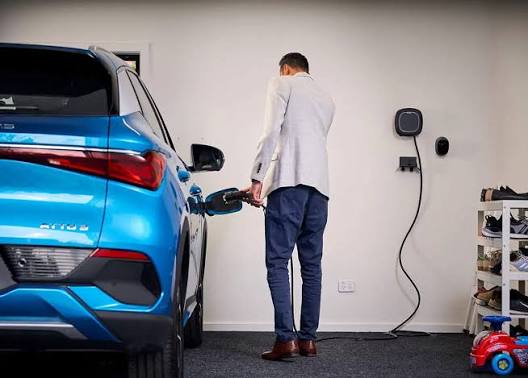
EVgo is expanding its fast-charging network with larger sites designed to improve access and reliability.
That distinction is increasingly important.
A driver making a long-distance trip needs a different charging experience from someone leaving an EV connected overnight at home.
Public DC fast chargers are therefore becoming a major part of the national charging strategy.
More chargers could help EV adoption
The relationship between charging infrastructure and EV sales is not simple.
More chargers can reduce range anxiety. They can also make EV ownership easier for drivers who live in apartments or homes without dedicated charging.
The 2026 JD Power EVX Ownership Study found that satisfaction with public-charging availability increased substantially year over year. The study said availability was the most improved public-charging factor for both premium and mass-market BEV owners.
But charging is not the only obstacle.
Vehicle price remains a major issue for many shoppers. A larger charging network can solve one barrier without necessarily solving affordability.
That creates a two-part challenge for automakers and charging companies: make charging easier while also bringing EV prices closer to what mainstream buyers can afford.
Retail locations are becoming charging destinations
One of the biggest changes is where chargers are being installed.
Large retail locations can offer several advantages. Drivers can shop, eat or use other services while the vehicle charges.
That is exactly what EVgo and GM are doing with the Meijer flagship site in Michigan. The location combines high-power chargers with access to groceries and other amenities.
EVgo is also expanding its relationship with Meijer across the Midwest.
The companies announced plans for up to 480 additional fast-charging stalls at as many as 60 Meijer properties across Michigan, Illinois, Wisconsin, Indiana, Ohio and Kentucky.
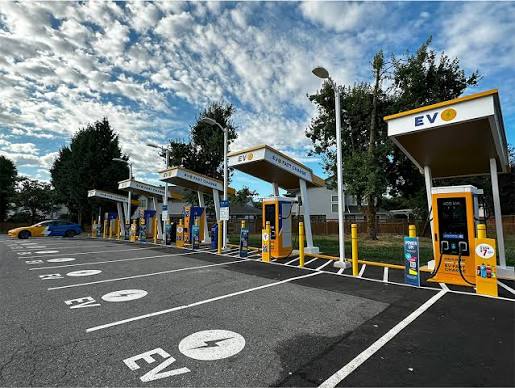
Large public charging sites are increasingly being integrated into shopping and commercial areas.
This model also addresses one of the practical problems with charging.
A long charging stop does not necessarily have to mean sitting in a parking lot.
When chargers are located at supermarkets, restaurants, hotels or shopping centers, drivers can use that time for other activities.
Reliability matters as much as speed
More chargers do not automatically mean a better charging experience.
The 2025 JD Power EVX Public Charging Study found that non-charging visits had fallen to their lowest level in four years, suggesting that reliability was improving. However, the study also found that satisfaction with DC fast charging remained sensitive to cost and payment experience.
That is an important distinction.
A broken 350-kW charger is still a problem.
A functioning charger that is too expensive can also discourage repeat use.
For charging networks, the next phase is therefore not only about adding more hardware. It is also about reliability, availability, payment systems and location convenience.
Charging infrastructure is growing despite a softer EV market
The U.S. charging network is expanding during a period of uncertainty for EV demand.
That may seem contradictory, but infrastructure projects often take years to plan and build. Companies are making decisions based not only on today’s sales but also on the number of EVs expected to use the network in the future.
EVgo and GM are one example.
Their new flagship sites use more stalls, higher charging power and better access to nearby amenities. The idea is to make public charging feel more like a normal stop during a road trip.
The Department of Energy also continues to describe a robust public charging network as an important part of wider EV adoption in the United States.
EV charging still has room to improve
The U.S. network is much larger than it was several years ago.
Yet the industry still has major work ahead.
Drivers want chargers that are available, reliable, fast and affordable. They also need infrastructure in the places where they actually live, work and travel.
That includes apartment-heavy areas, highways, shopping centers and smaller communities.
The U.S. EV charging network is clearly expanding, even as EV sales face a period of slower growth. The next challenge will be making that larger network consistent enough that charging becomes a routine part of owning an electric vehicle rather than one of the biggest concerns surrounding the technology.
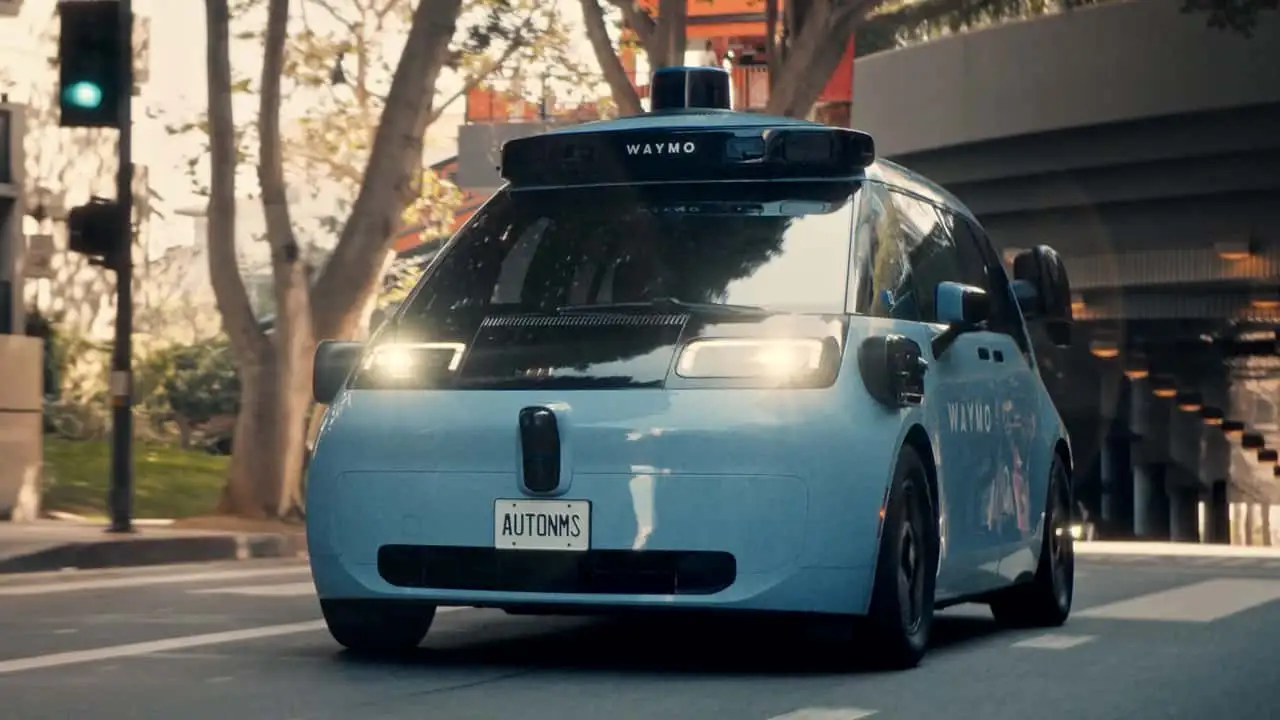
Waymo says its driverless vehicles recorded 82% fewer injury-causing crashes than human-driver benchmarks after more than 271 million autonomous miles.
Waymo reports a large safety gap
Waymo has published its latest autonomous driving safety data. The analysis covers more than 271.3 million rider-only miles through June 2026.
The company compared its driverless vehicles with human-driver benchmarks in Atlanta, Austin, Los Angeles, Phoenix and San Francisco. Waymo says its vehicles were involved in 82% fewer injury-causing crashes than the human benchmark.
The analysis also points to a larger difference in more serious crashes.
Waymo reports 95% fewer crashes involving serious injury or worse. That represents a roughly 20-fold reduction compared with its human benchmark.
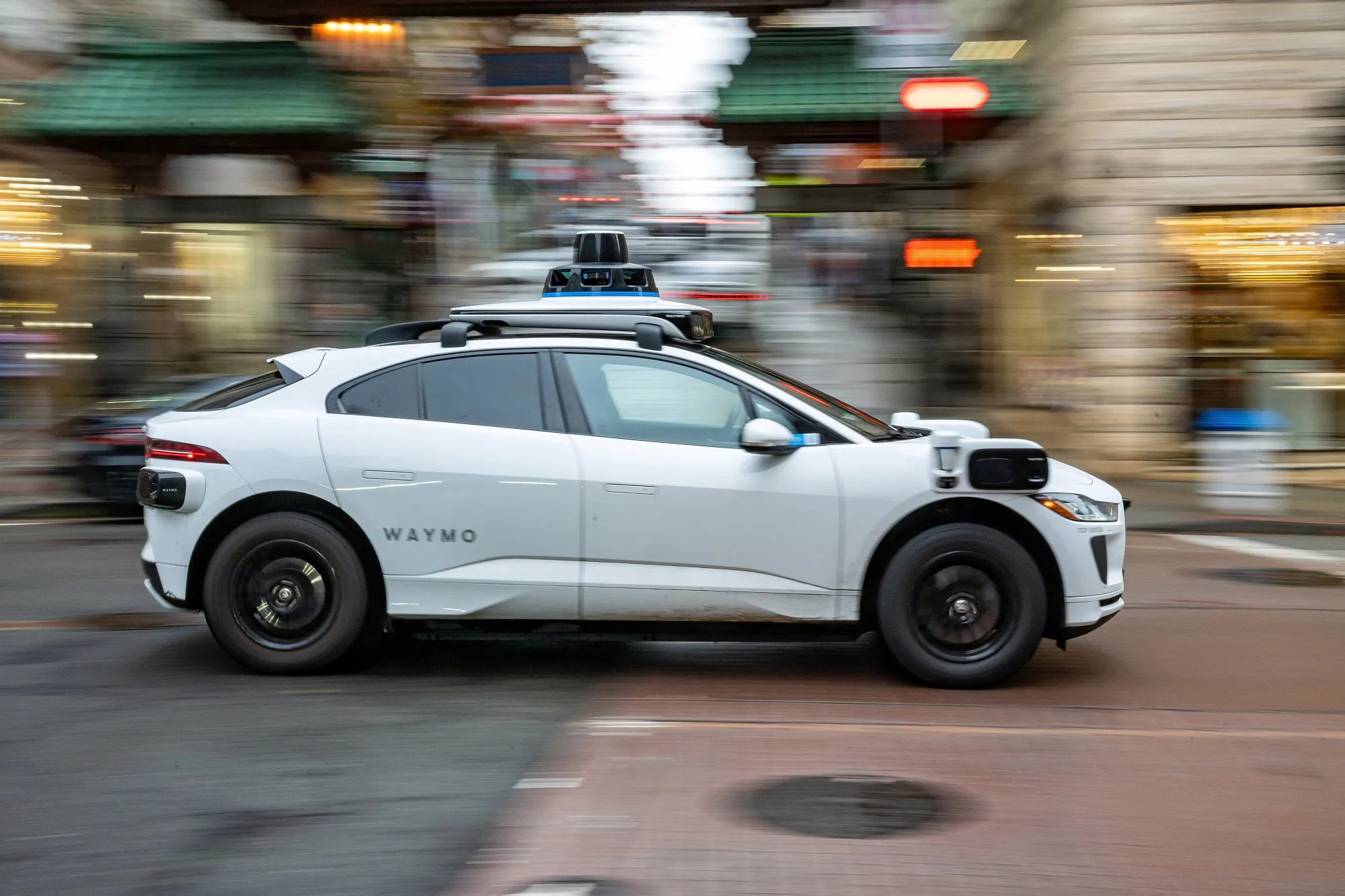
Waymo’s autonomous vehicles operate commercially in multiple U.S. cities, including San Francisco.
Waymo’s current safety dashboard provides more detail.
Across all five operating areas, the reported rate for any injury-related crash is 0.67 incidents per million miles. The corresponding human benchmark is 3.77 incidents per million miles.
For serious-injury-or-worse crashes, Waymo reports 0.01 incidents per million miles. The human benchmark is 0.21.
The figures also vary by city.
In San Francisco, for example, Waymo reports 0.67 injury-related incidents per million miles, compared with a human benchmark of 6.64.
Pedestrians and cyclists also show lower rates
Waymo’s analysis covers more than vehicle occupants.
The company reports 93% fewer pedestrian crashes involving injuries compared with human drivers. Cyclist injury crashes were down 86%, while motorcycle-related injury crashes were down 82%.
Those categories matter because pedestrians, cyclists and motorcyclists have less physical protection in a collision.
The latest Waymo analysis estimates that 841 injury-causing crashes were avoided over the 271 million autonomous miles, using a conservative assumption of at least one injured person per prevented crash.
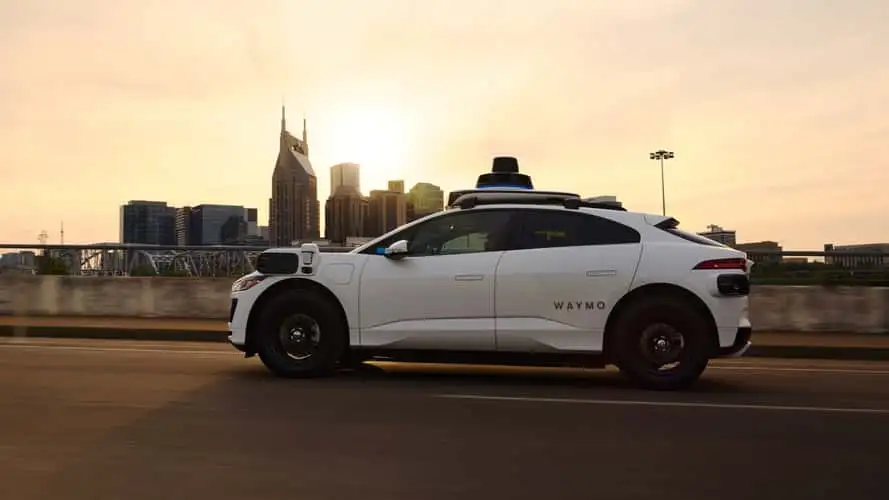
Waymo continues to expand its autonomous service while collecting safety data across different road environments.
The results should still be read with some context.
Waymo’s comparison covers five metropolitan areas, not every road in the United States. The human benchmark is adjusted to account for differences in the types of roads and driving exposure represented in Waymo’s operations.
Waymo also points out that autonomous vehicles and human crashes are reported differently.
Automated-vehicle operators must report physical contact that results, or allegedly results, in property damage, injury or death. Many human crashes are not reported to police.
That is one reason Waymo emphasizes injury-related outcomes rather than simply counting every collision.
Independent research also found fewer crashes
Waymo’s findings have also been examined independently.
A July 2026 study from the Insurance Institute for Highway Safety found that Waymo vehicles operating in San Francisco, Phoenix, Los Angeles and Austin had 68% fewer police-reportable crashes per vehicle mile than human drivers.
The IIHS also highlighted a limitation.
Its researchers said current federal systems for tracking automated-vehicle safety are not yet strong enough for continuous monitoring as deployment expands.
That makes the quality of the underlying data increasingly important.
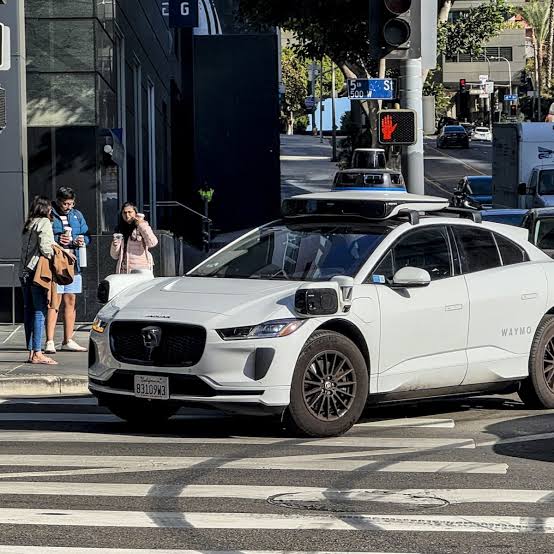
Waymo uses sensor-equipped vehicles and its Waymo Driver system to operate fully autonomous rides.
Waymo is also expanding its U.S. service
The safety data comes as Waymo continues to expand its commercial operation.
During 2026, the company added public rides in Denver, San Diego, Tampa and Las Vegas, among other markets. Waymo said in September that it was providing fully autonomous trips in 14 cities.
The company is also preparing for international expansion.
Waymo announced plans to introduce fully autonomous commercial ride-hailing in Singapore in 2028 and has outlined plans for London and Munich.
That expansion will provide new operating environments and more data.
For now, however, the latest U.S. figures show a clear pattern in Waymo’s five-city analysis: 0.67 injury-related crashes per million autonomous miles versus 3.77 for the human benchmark.
The Waymo safety data therefore points to substantially lower injury-crash rates than the company’s human-driver comparison. At the same time, independent research and Waymo’s own methodology both show why the figures need to be monitored as autonomous vehicles operate across more cities and road conditions.
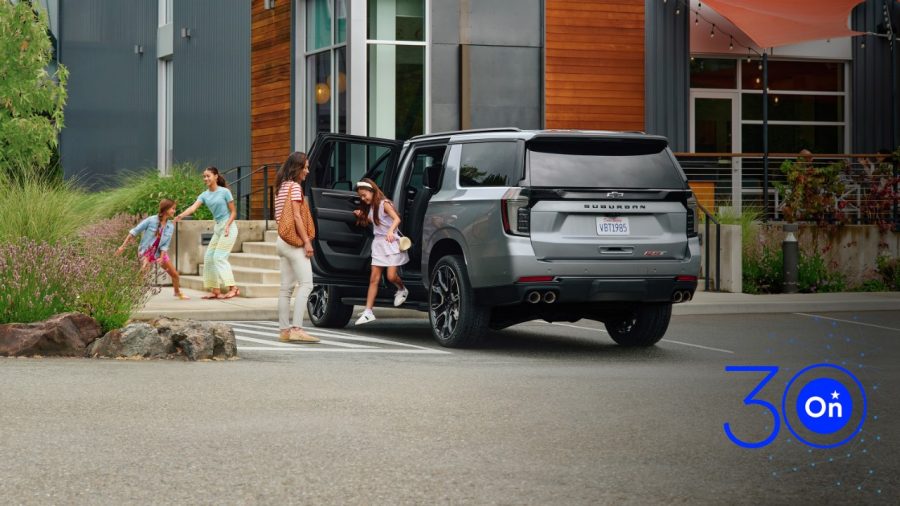
Thirty years after its launch, OnStar has grown from an emergency-response service into a global connected-vehicle platform, supporting safety, software updates, Super Cruise and new AI-powered experiences.
From an emergency button to a connected vehicle platform
General Motors introduced OnStar in 1996 as an embedded telematics platform with automatic crash notification. The idea was simple: give drivers a direct connection to assistance when they needed it most.
Three decades later, the original blue button is part of a much larger technology ecosystem.
GM says OnStar now operates across 22 markets with more than 12 million global subscribers. The platform supports emergency services, connected features, Super Cruise and in-vehicle entertainment.
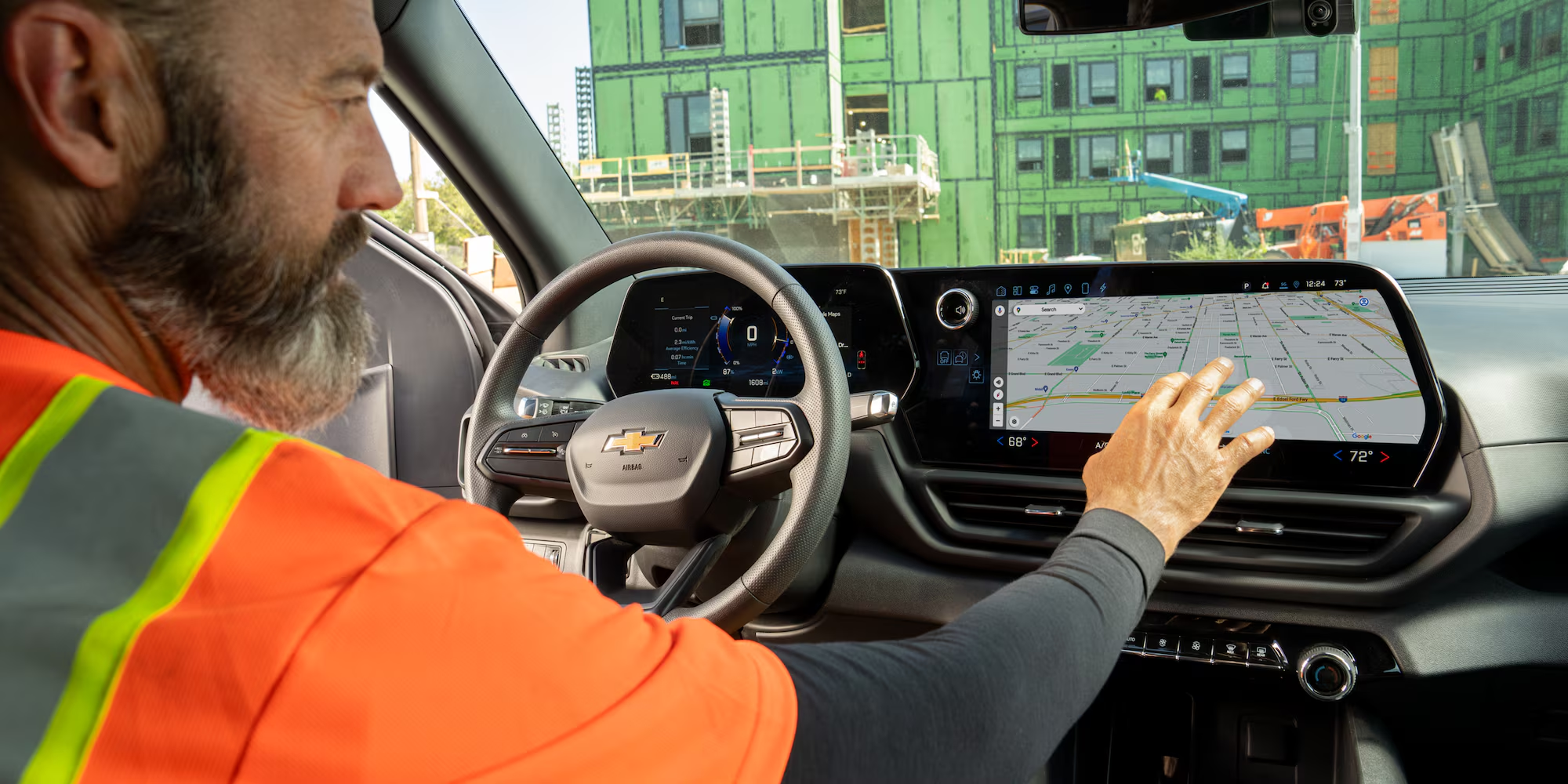
OnStar has evolved from an emergency-response system into a global connected-services platform.
The scale of the operation is significant.
OnStar Advisors handle more than 20 million calls in North America each year. In 2025 alone, GM says they responded to more than 675,000 emergency and stolen-vehicle calls across the region.
The service also supports drivers during severe weather, vehicle thefts and roadside emergencies.
GM says OnStar Advisors have even helped with extraordinary situations, including more than a dozen births on the road over the service’s history.
Over-the-air updates keep GM vehicles evolving
The role of OnStar now extends beyond emergency assistance.
The platform supports over-the-air software updates, allowing compatible GM vehicles to receive new features and improvements without visiting a dealership.
Those updates can add new entertainment services, improve vehicle functions and fix software issues.
GM also uses connected updates for features that can change the way a vehicle is used. The company cites examples such as new streaming services, additional camera views and features such as King Crab mode on the GMC Hummer EV.
That means the vehicle can continue evolving after it leaves the factory.
Super Cruise is becoming a major part of the platform
One of the biggest connected technologies supported by OnStar is Super Cruise.
GM says roughly 1 million vehicles on the road will have Super Cruise by the end of 2026. The hands-free driving system relies on OnStar’s connected platform for services such as map-data updates.
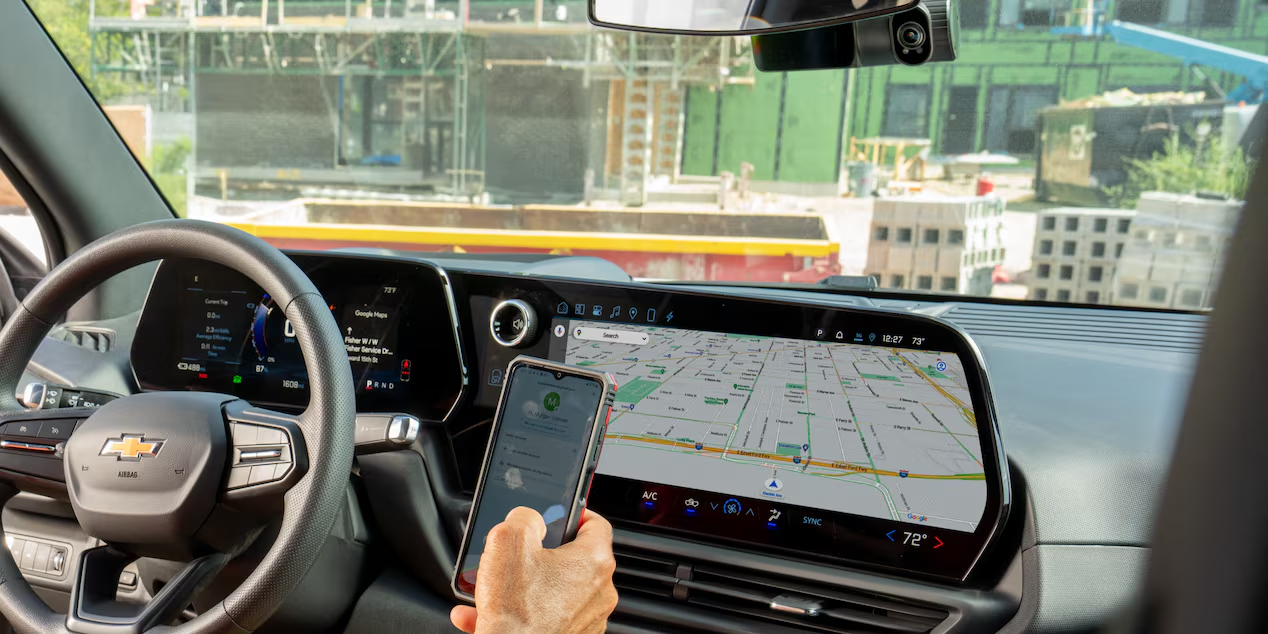
OnStar provides the connected infrastructure that supports Super Cruise and its map data.
The usage figures are already substantial.
GM says customers have accumulated more than 1.2 billion hands-free miles with Super Cruise. Drivers collectively cover more than 1 million hands-free miles every day, according to the company.
Nearly 70% of users operate Super Cruise at least once a month, GM says.
Connected software therefore plays a much larger role than it did when OnStar launched.
OnStar is also becoming an everyday digital service
Modern OnStar features go well beyond safety.
GM’s connected-services portfolio includes remote vehicle commands, navigation, vehicle-status information, Wi-Fi connectivity, entertainment and software updates.
The system can also work with GM’s mobile apps, including MyChevrolet, MyGMC, MyCadillac and MyBuick.
That creates a connection between the vehicle and the owner’s smartphone.
Owners can remotely lock or unlock a vehicle, check battery or fuel information, send navigation directions and monitor charging status on compatible vehicles.
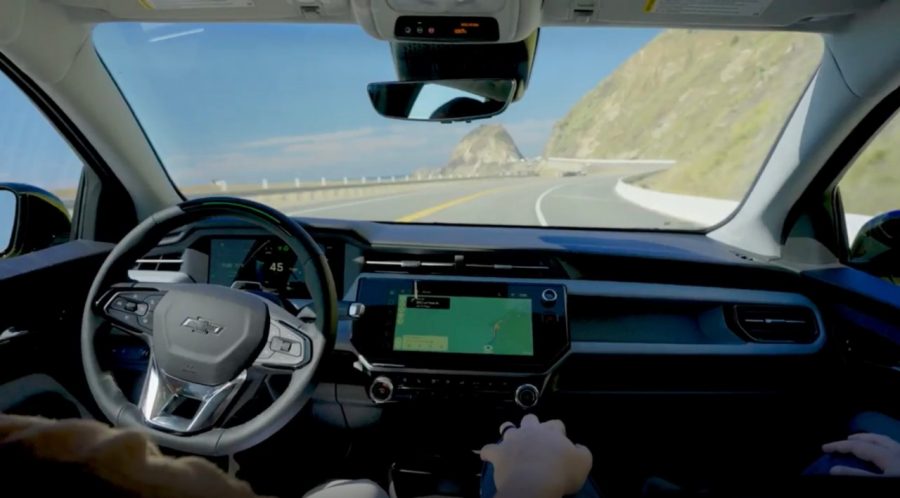
OnStar connects vehicle functions with the digital experience inside the cabin.
The technology is also expanding into artificial intelligence.
GM says vehicles with Google built-in can use Google Gemini for conversational assistance, including navigation, climate controls and media functions.
That gives OnStar a role in an increasingly software-defined vehicle.
The next step is agentic AI
GM says the next phase of OnStar will focus on agentic AI integrated more deeply into vehicle systems.
The company has not yet provided the full details of that future assistant. However, GM says the goal is to use OnStar’s existing connected infrastructure and safety expertise to create more intelligent vehicle experiences.
The timing is important.
OnStar is reaching its 30th anniversary while GM is investing heavily in software, connected services and advanced driving technology.
The original concept was to connect a driver with help after an accident.
Today, OnStar also connects the vehicle with software, cloud services, entertainment, remote functions and hands-free driving technology.
The next chapter will add artificial intelligence to that ecosystem.
For GM, the OnStar 30th anniversary marks more than a milestone. It represents the transition from the connected car of the 1990s to a vehicle that can continue gaining new capabilities throughout its life.
-

 NOW TRENDING1 month ago
Tesla Cybercab Gets September 3 Austin Launch Date
-
 NOW TRENDING2 months ago
2027 Hyundai Tucson Spied With New Design and Hybrid Power
-

 NOW TRENDING2 months ago
Ferrari Sold Out Through 2027 as Demand Hits New High
-
 NOW TRENDING2 months ago
Audi’s New SUVs Could Help Reverse Its Sales Decline in 2026
-
 NOW TRENDING2 months ago
Mazda Plans Updates for CX-70 and CX-90 After Sales Drop
-
 NOW TRENDING2 months ago
GM Invests $157 Million in Missouri Assembly Plant
-
 NOW TRENDING2 months ago
Cadillac spent $16 million on the Blackwing V8 before canceling it
-

 RACING2 months ago
Ferrari Strengthens F1 Team With Key Chassis Signings
You must be logged in to post a comment Login