
As millions of Americans prepare to hit the road for Thanksgiving holiday travel, a new survey conducted by Harris Poll on behalf of Chevrolet reveals that keeping the kids entertained and hearing the ever-present “Are we there yet?†ranked lower than traffic, packing and cost when it comes to the top family road trip stressors. The Harris Poll surveyed 1,063 U.S. parentsof children under 18 to explore the state of the American family road trip.

As traffic levels are projected to increase during the upcoming Thanksgiving travel week, parents indicated that in-vehicle technologies can improve the family road trip experience by making gridlock more bearable.
Technology offered in vehicles such as the all-new Chevrolet Traverse can give parents added peace and quiet on the road. More than half of American parents (56 percent) said that Wi-Fi/internet connectivity would help make family road trips more enjoyable, making it the top in-vehicle tech on their wish list for family road trips.
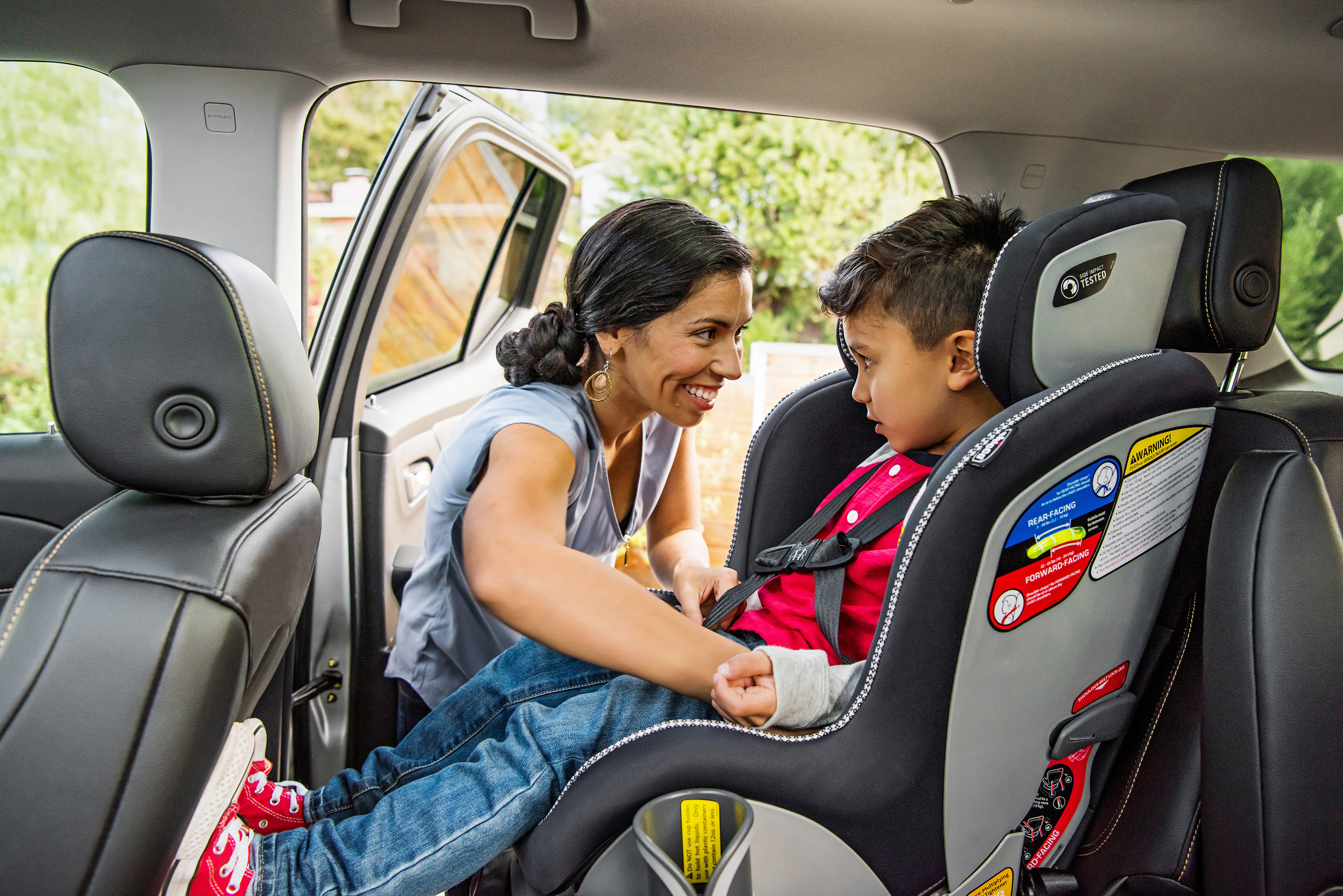
“The vehicle is the new family dinner table, where memories are created and bonds grow strong,†said Steve Majoros, director of marketing, Chevrolet Cars and Crossovers. “As families prepare to hit the road this holiday to spend time with friends and family, they can depend on crossovers like the 2018 Chevrolet Traverse and Equinox to meet their needs, from storage space to USB outlets, available 4G LTE Wi-Fi and Apple CarPlay and Android Autocompatibility.â€
The survey also revealed that, despite stressful or unexpected moments, the spirit of the American family road trip remains alive and well. The vast majority of American parents (93 percent) say they enjoy road trips with their family, with more than half (53 percent) saying they “love†them.
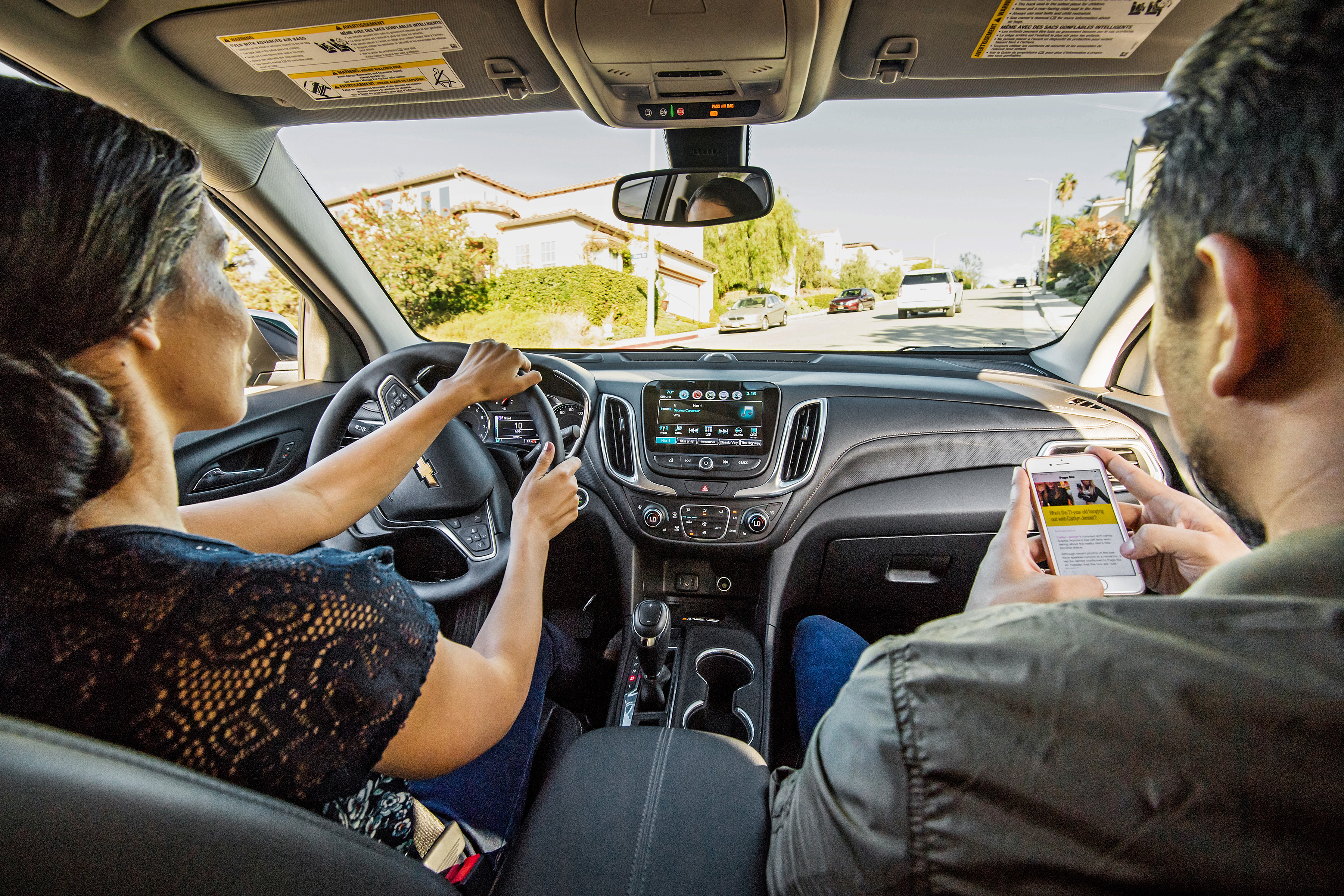
The top reasons for America’s love affair with family road trips? Chevrolet and Harris Poll find that spending time with family (80 percent) ranked as parents’ favorite thing about road trips, followed by exploring and stopping at interesting locations/destinations (69 percent). The following results are based on the survey:
TECHNOLOGY AND ITS IMPACT ON THE FAMILY ROAD TRIP
In-car Wi-Fi sits at the top of parents’ wish list for better road trips:
- 56 percent of parents say that having Wi-Fi/internet connectivity would help make their family road trips more enjoyable.
- Nearly three in 10 parents who take family road trips but do not have Wi-Fi/internet connectivity in their car say they would be more likely to take longer (29 percent) or more frequent (28 percent) family road trips if their vehicle had Wi-Fi/connectivity.
- Of those who do have Wi-Fi/internet connectivity in their cars, more than half of parents who take road trips said they are more likely to take longer (54 percent) or more frequent (56 percent) family road trips because of the feature.
A CLOSER LOOK AT THE LOVE OF THE FAMILY ROAD TRIP
The vast majority of American parents enjoy taking road trips, and so do their kids:
- 93 percent of all parents say they like or love taking road trips with their family, including more than half (53 percent) who “love†it. Of those who take road trips, 95 percent like or love them, including 55 percent who say they “love†them.
- Kids like spending time on the road with their families as well: 90 percent of parents who take road trips say their kids also enjoy time on the road.
- 86 percent of American parents who took road trips when they were growing up say they have “a lot of fond memories†from childhood that took place on family road trips, including nearly half (49 percent) who strongly agree.
Family time and new explorations drive America’s love of road trips:
- Spending time with family (80 percent) and exploring and stopping at interesting locations and destinations (69 percent) are parents’ top two favorite aspects of family road trips.
- Unplugging from everyday life (49 percent), indulging in foods and snacks (44 percent) and being out on the open road (45 percent) round out the top five favorite parts of taking family road trips.
What stresses parents out the most on family road trips? It’s not the kids:
- Traffic and other unexpected delays is by far the most stressful part of the family road trip, according to nearly two in three parents (63%).
- Only about one in four parents (26%) are most stressed by getting asked “are we there yet?†and just under one in three (31%) find it stressful to keep the kids entertained.
BY THE NUMBERS: QUICK STATS ON THE STATE OF THE AMERICAN FAMILY ROAD TRIP
- Is there a “perfect†road trip length? The consensus is yes. American parents who take road trips believe that the “perfect†family road trip length is typically six hours.
- Tech savvy: Parents who take road trips today bring 6.6 mobile devices, on average, in the vehicle.
- Which wheels are best? Nearly two-thirds of all American parents (63 percent) say they would prefer to take a family road trip in an SUV over any other type of vehicle, with more than two in five (42 percent) preferring a large SUV with three rows.
- A family affair: 67 percent of parents who take road trips involve their children in the planning.
A CLOSER LOOK AT CHEVROLET
In time for holiday travel, Chevrolet vehicles provide families a home away from home where they can make special memories on the road.
Chevrolet was the first automaker to offer 4G LTE Wi-Fi on its cars, trucks and crossovers, and has offered Android Auto and Apple CarPlay compatibility in most of its lineup since 2015, helping families stay connected on the road.
Along with available safety features such as the Lane Change Alert with Side Blind Zone Alert, Surround Vision and Lane Keep Assist with Lane Departure Warning, Chevrolet aims to help loved ones stay safe, comfortable and connected on long trips.
Other available technology and safety features include:
- Rear Cross Traffic Alert
- Rear Park Assist
- Forward Collision Alert
- Low Speed Forward Automatic Braking
- Rear Seat Reminder
SURVEY METHODOLOGY
This survey was conducted online within the United States by Harris Poll on behalf of Chevrolet between Oct. 19 and Oct. 27, 2017, among 1,063 adults ages 18+ who are the parent or legal guardian of a child/children under the age of 18 residing in their household (“parentsâ€). For complete research method, including subgroup sample sizes and weighting variables, contact Katie Amann at katie.amann@chevrolet.com



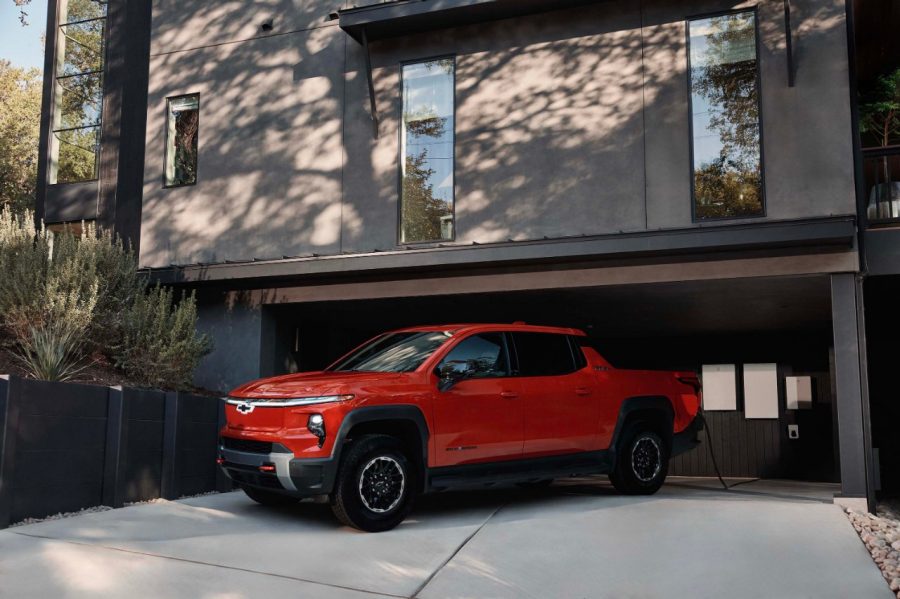
Home EV charging is easier than many drivers think. Here’s everything GM EV owners need to know about charging, installation, costs, and charging standards.
Charging an electric vehicle at home is the most convenient and cost-effective way to keep a battery full. According to industry estimates, more than 80% of EV charging in the United States happens at home, making public charging a secondary option for most drivers. Understanding the different charging levels, connector types, and installation requirements can help owners get the most from their electric vehicle.
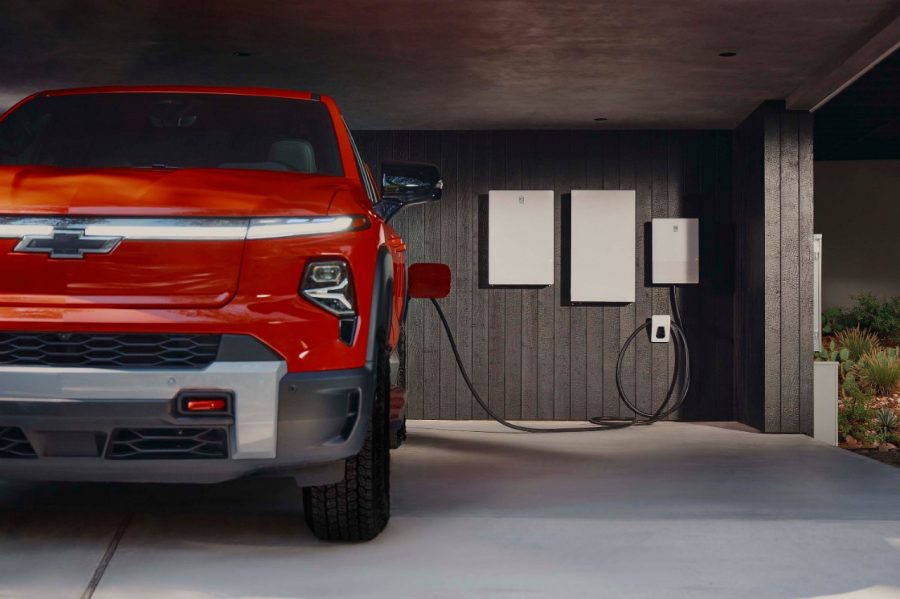
Most EV owners recharge their vehicles at home using Level 1 or Level 2 charging.
Level 1 vs. Level 2 home EV charging
Home EV charging comes in two primary forms. Level 1 charging uses a standard 120-volt household outlet and requires no special installation. While it’s the simplest solution, it typically adds only 3 to 5 miles of driving range per hour, making it best suited for drivers with short daily commutes.
Level 2 charging operates on a 240-volt circuit and requires professional installation. The faster charging speed makes it the preferred solution for most homeowners, with compatible GM home chargers capable of adding up to 44 miles of range per hour. Many workplaces, hotels, parking garages, and public locations also offer Level 2 charging.
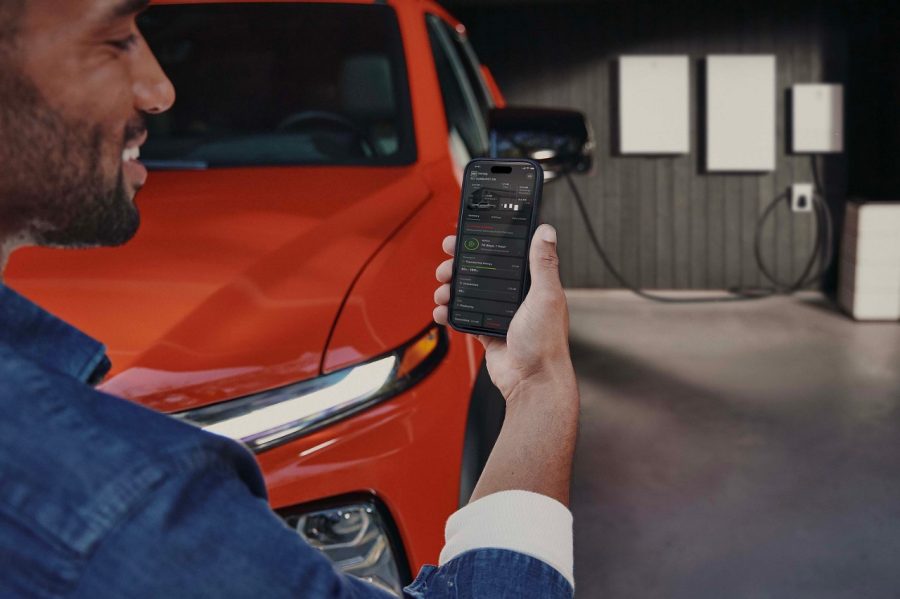
Level 2 charging provides significantly faster charging speeds than a standard household outlet.
Understanding NACS and CCS charging connectors
Modern GM electric vehicles are transitioning to the North American Charging Standard (NACS), while previous models use the Combined Charging Standard (CCS1/J1772) connector. The difference is simply the charging plug design, and adapters allow owners to use either standard without replacing their home charging equipment.
Installing a Level 2 charger requires a qualified electrician, who will determine whether the home’s electrical system can support the new circuit. Installation costs vary depending on the home’s electrical panel, wiring distance, and available capacity.
Smart charging helps reduce costs
Many electric utilities offer lower electricity rates during off-peak hours, allowing owners to schedule charging overnight and reduce operating costs. GM’s mobile apps also let owners monitor battery status, set charging limits, and schedule charging sessions remotely.
For daily driving, charging to 80% is generally recommended to help preserve long-term battery health, while charging to 100% is best reserved for longer road trips.

Smart charging allows EV owners to schedule charging during lower-cost overnight hours.
Home charging also unlocks advanced technologies such as vehicle-to-home (V2H) capability. Compatible GM EVs paired with the appropriate charging equipment can supply electricity to a properly equipped home during a power outage, while optional home energy storage systems can store excess electricity for later use.
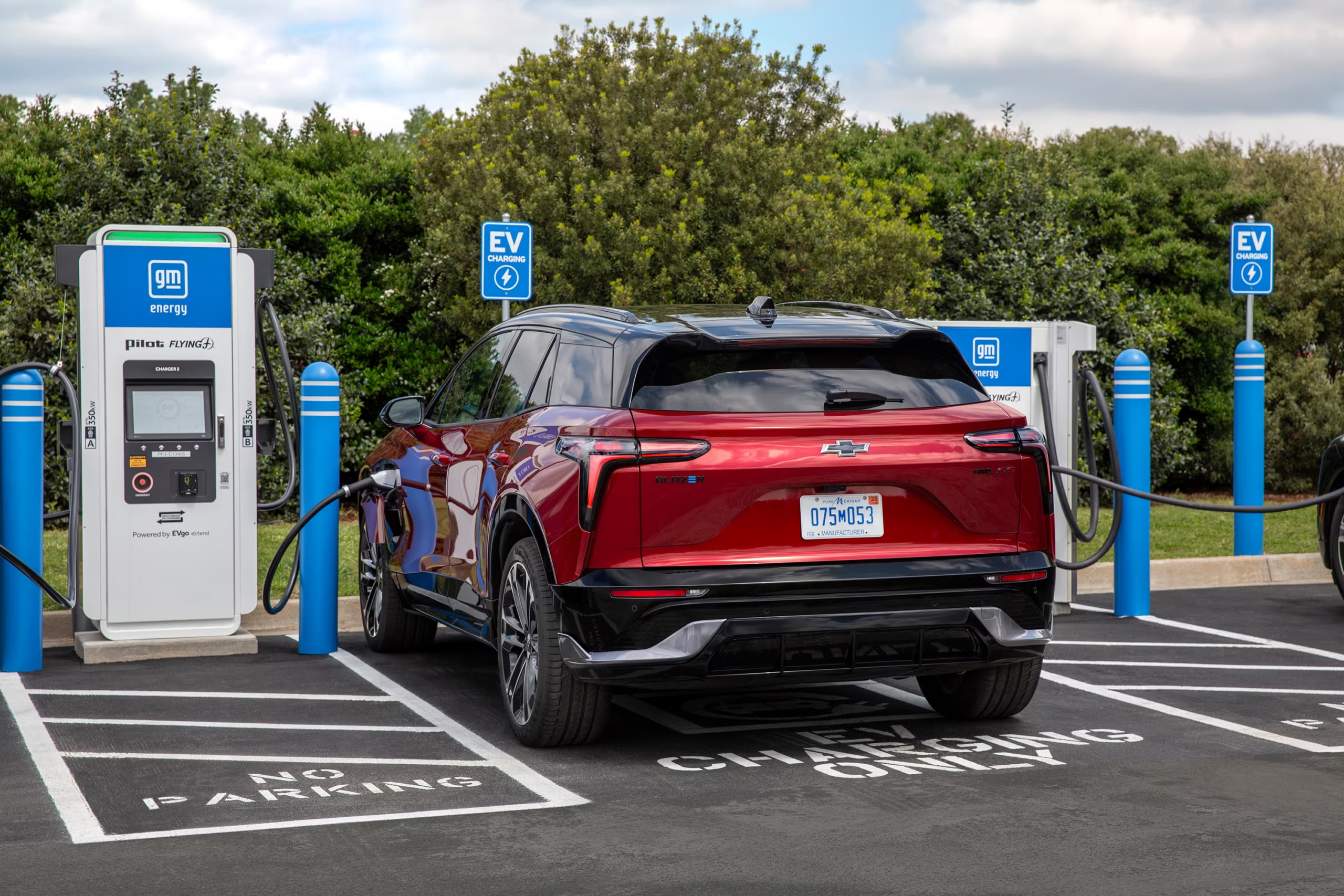
GM EV drivers can now access more than 120 IONNA fast-charging stations across the United States with seamless charging through Energy Pass.
Electric vehicle owners driving Chevrolet, Cadillac and GMC models now have access to an even larger public charging network as IONNA continues expanding across the United States. Backed by General Motors and seven other major automakers, the fast-growing charging network now operates 122 charging locations nationwide with 1,166 DC fast-charging stalls, making long-distance EV travel more convenient than ever.
The expansion also strengthens GM’s charging ecosystem by integrating IONNA directly into the company’s Energy Pass platform, allowing drivers to locate chargers, start charging sessions and pay without downloading additional apps.
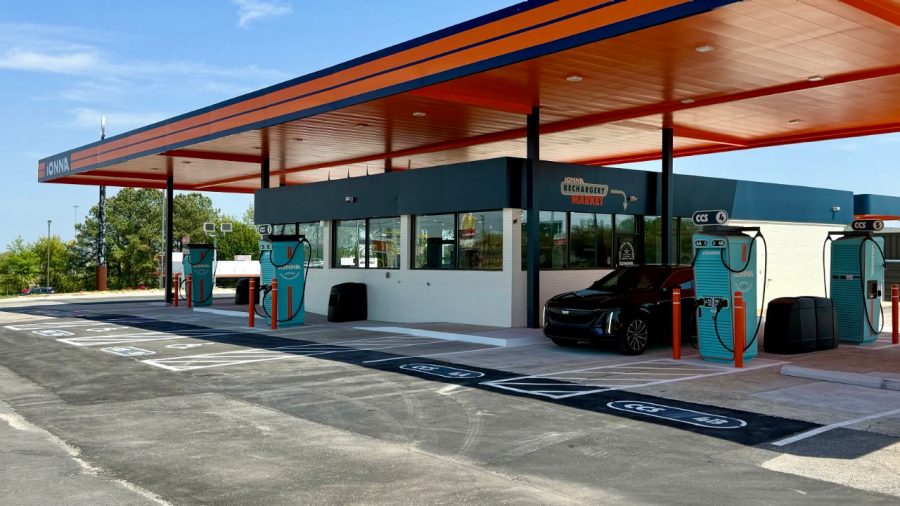
GM EV drivers now have access to more than 120 IONNA fast-charging stations across the United States.
GM expands fast charging across the United States
IONNA continues rapidly expanding its footprint with stations strategically located across major travel corridors.
Many of the new locations feature IONNA Rechargeries, offering drivers amenities such as:
- Fast charging up to 400 kW
- Food and beverage options
- Modern restrooms
- Well-lit charging areas
- Comfortable rest stops during charging sessions
The network is designed to reduce charging times while providing a better experience for EV owners traveling long distances.
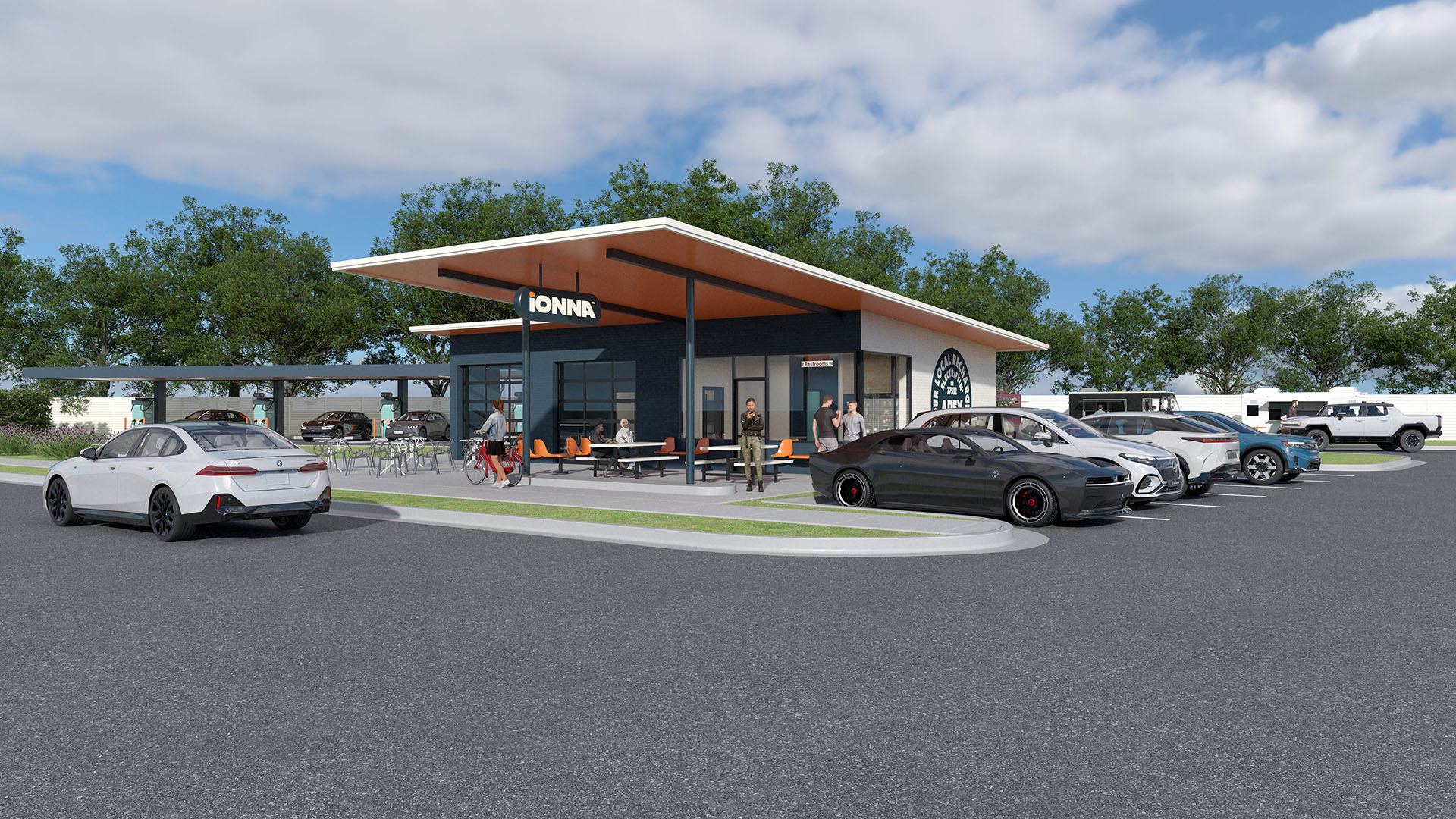
IONNA Rechargery locations combine ultra-fast charging with convenient traveler amenities.
Energy Pass simplifies public EV charging
GM’s new Energy Pass integrates public charging directly into the MyChevrolet, MyCadillac, and MyGMC mobile apps.
Instead of creating multiple charging accounts, drivers can:
- Find compatible charging stations
- Start charging remotely
- Pay directly through one account
- Use Plug & Charge for automatic authentication
- Receive a 10% discount when charging at participating IONNA stations
The system also provides access to multiple charging providers through a single interface.
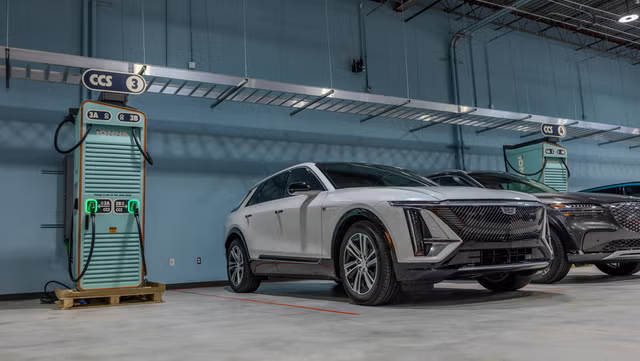
Energy Pass allows GM EV owners to access multiple charging networks from one app.
More charging options for GM electric vehicles
Beyond IONNA, Energy Pass also connects GM customers with several of the nation’s largest charging networks, including Tesla Supercharger, Electrify America, and additional providers that continue expanding throughout the country.
Combined, these networks provide access to nearly 70% of all DC fast chargers in the United States, giving GM EV owners significantly greater charging flexibility whether commuting daily or taking longer road trips.
As IONNA continues opening new locations nationwide, General Motors is strengthening one of the most important aspects of EV ownership: convenient, reliable and easy-to-use public charging infrastructure.

Hyundai expands its connected car experience by integrating myQ Connected Garage technology, allowing drivers to monitor and control compatible garage doors directly from the vehicle’s touchscreen.
Hyundai Motor America has announced a new partnership with Chamberlain Group to introduce Hyundai myQ Connected Garage, a feature that allows drivers to monitor and operate compatible garage doors directly from the vehicle’s infotainment system.
Available on select 2024-2026 Hyundai models in the U.S., the new connected service enhances convenience by integrating smart home technology with Hyundai’s Bluelink platform.
Hyundai myQ Connected Garage adds smarter vehicle connectivity
The new Hyundai myQ Connected Garage system enables owners to check whether their garage door is open or closed and control it remotely without leaving the vehicle.
Once linked to a compatible myQ account and Hyundai Bluelink, the service provides seamless access through the vehicle’s touchscreen display.
Among the new features are:
- Automatic garage door opening and closing through customizable geofencing.
- Remote monitoring and control from virtually anywhere.
- Personalized opening and closing distance settings.
- Valet Mode to temporarily disable garage access.
- Support for multiple garage doors and multiple properties.
- Close Door Reminder notifications if the garage remains open.
Hyundai introduces myQ Connected Garage technology for compatible vehicles.
Compatible with leading smart garage systems
The Hyundai myQ Connected Garage platform works with several of the most popular smart garage door brands in North America, including:
- LiftMaster
- Chamberlain
- Craftsman
Garage door systems from many other manufacturers can also become compatible by adding the myQ Smart Garage Control device, eliminating the need for additional vehicle hardware or manual programming.
Once connected through a Hyundai Bluelink account, drivers can access their garage controls directly from the infotainment screen for a more integrated ownership experience.

The system supports multiple garage doors through a single myQ account.
Three-month free trial available on select Hyundai models
Hyundai is offering a three-month complimentary trial of myQ Connected Garage for eligible customers.
The service is available on select 2024, 2025 and 2026 Hyundai vehicles, depending on model and trim level, giving owners the opportunity to experience expanded smart home integration through their vehicle.
This latest technology further strengthens Hyundai’s connected ecosystem by combining vehicle convenience, home automation and remote accessibility into a single seamless platform.

Eligible Hyundai owners receive a complimentary three-month trial of myQ Connected Garage.
As connected vehicle technology continues to evolve, Hyundai myQ Connected Garage represents another step toward integrating everyday digital services into the driving experience. By allowing drivers to manage their garage doors directly from the vehicle, Hyundai expands its smart mobility ecosystem while offering greater convenience, security and peace of mind for customers across the U.S. market.
-
 TEST DRIVES1 month ago
2026 Subaru Outback Touring
-
 TEST DRIVES2 months ago
2026 Hyundai Santa Cruz Limited AWD
-

 TEST DRIVES1 month ago
Lamborghini prepares multiple launches for 2026 as electrification plans continue
-

 RACING1 month ago
George Russell Leads Final Barcelona Practice As Kimi Antonelli Receives Reprimand
-

 RACING1 month ago
Barcelona-Catalunya Grand Prix: Everything You Need To Know About Formula 1’s Ultimate Benchmark Circuit
-

 NOW TRENDING1 month ago
Porsche Creates A Buzz Lightyear-Inspired 911 GT3 RS That Looks Ready To Go “To Infinity And Beyond”
-

 RACING1 month ago
Why Formula 1 Has Pit Lane Speed Limits And How They Are Measured
-
 NOW TRENDING1 month ago
2026 Audi Q7 Brings New Design, Smarter Technology, And Greater Versatility
You must be logged in to post a comment Login