
As millions of Americans prepare to hit the road for Thanksgiving holiday travel, a new survey conducted by Harris Poll on behalf of Chevrolet reveals that keeping the kids entertained and hearing the ever-present “Are we there yet?†ranked lower than traffic, packing and cost when it comes to the top family road trip stressors. The Harris Poll surveyed 1,063 U.S. parentsof children under 18 to explore the state of the American family road trip.
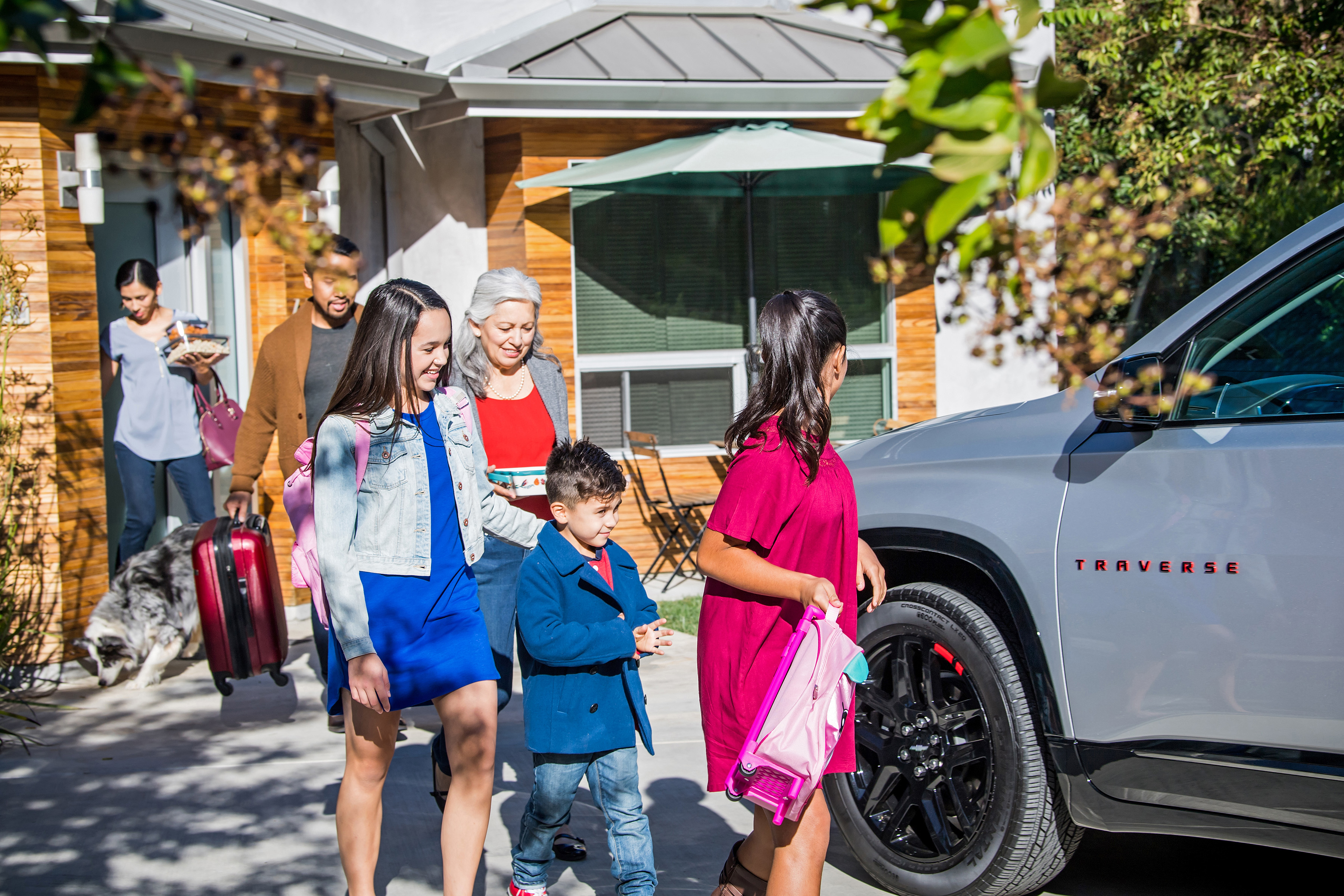
As traffic levels are projected to increase during the upcoming Thanksgiving travel week, parents indicated that in-vehicle technologies can improve the family road trip experience by making gridlock more bearable.
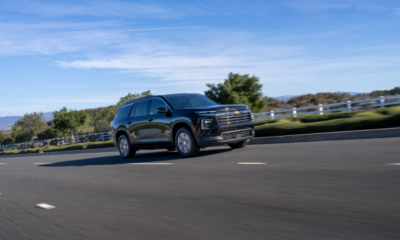
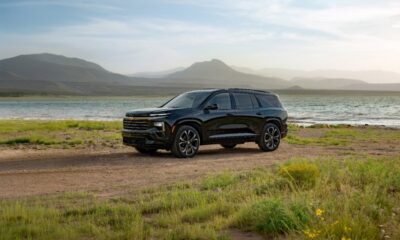
Technology offered in vehicles such as the all-new Chevrolet Traverse can give parents added peace and quiet on the road. More than half of American parents (56 percent) said that Wi-Fi/internet connectivity would help make family road trips more enjoyable, making it the top in-vehicle tech on their wish list for family road trips.
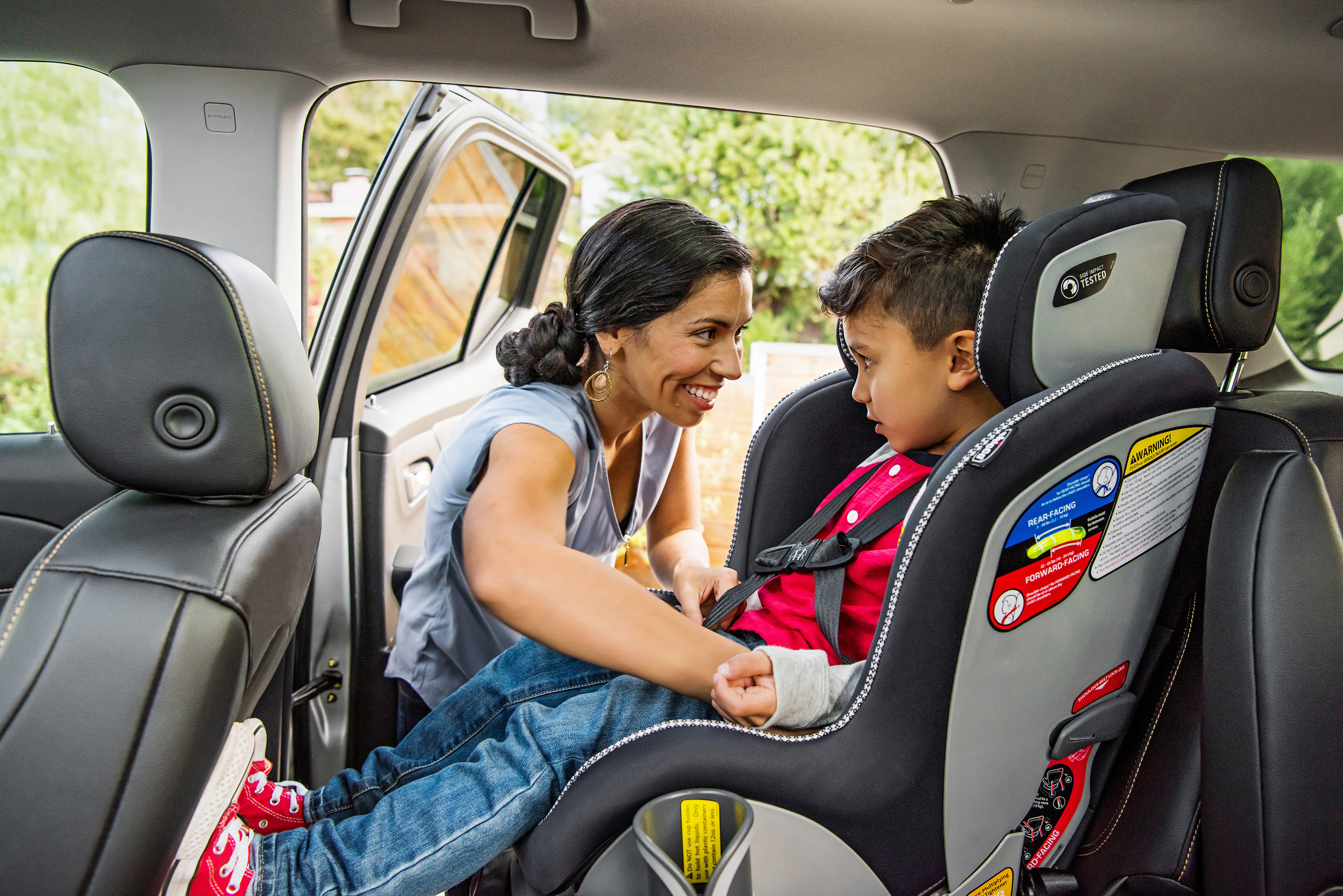
“The vehicle is the new family dinner table, where memories are created and bonds grow strong,†said Steve Majoros, director of marketing, Chevrolet Cars and Crossovers. “As families prepare to hit the road this holiday to spend time with friends and family, they can depend on crossovers like the 2018 Chevrolet Traverse and Equinox to meet their needs, from storage space to USB outlets, available 4G LTE Wi-Fi and Apple CarPlay and Android Autocompatibility.â€
The survey also revealed that, despite stressful or unexpected moments, the spirit of the American family road trip remains alive and well. The vast majority of American parents (93 percent) say they enjoy road trips with their family, with more than half (53 percent) saying they “love†them.
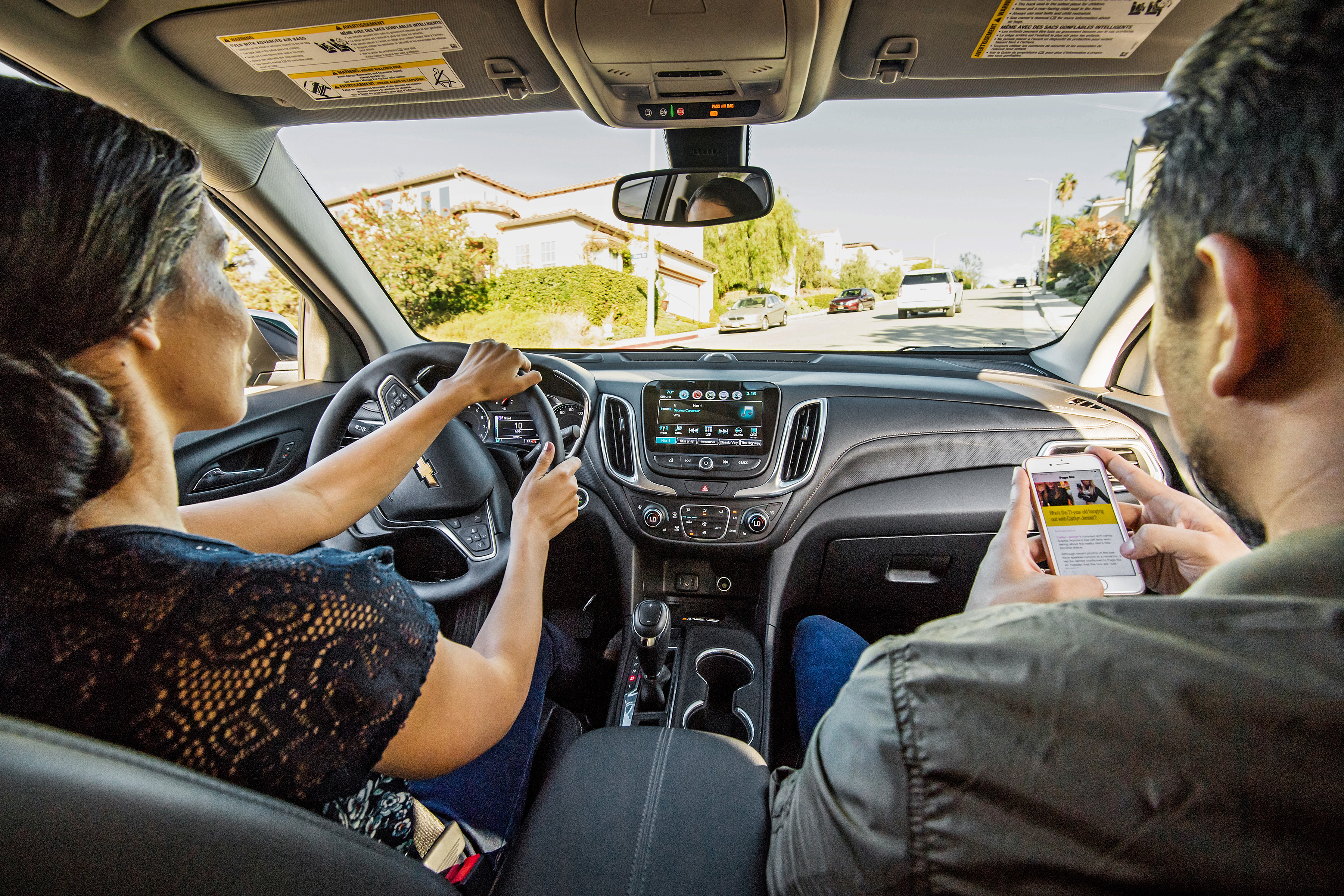
The top reasons for America’s love affair with family road trips? Chevrolet and Harris Poll find that spending time with family (80 percent) ranked as parents’ favorite thing about road trips, followed by exploring and stopping at interesting locations/destinations (69 percent). The following results are based on the survey:
TECHNOLOGY AND ITS IMPACT ON THE FAMILY ROAD TRIP
In-car Wi-Fi sits at the top of parents’ wish list for better road trips:
- 56 percent of parents say that having Wi-Fi/internet connectivity would help make their family road trips more enjoyable.
- Nearly three in 10 parents who take family road trips but do not have Wi-Fi/internet connectivity in their car say they would be more likely to take longer (29 percent) or more frequent (28 percent) family road trips if their vehicle had Wi-Fi/connectivity.
- Of those who do have Wi-Fi/internet connectivity in their cars, more than half of parents who take road trips said they are more likely to take longer (54 percent) or more frequent (56 percent) family road trips because of the feature.
A CLOSER LOOK AT THE LOVE OF THE FAMILY ROAD TRIP
The vast majority of American parents enjoy taking road trips, and so do their kids:
- 93 percent of all parents say they like or love taking road trips with their family, including more than half (53 percent) who “love†it. Of those who take road trips, 95 percent like or love them, including 55 percent who say they “love†them.
- Kids like spending time on the road with their families as well: 90 percent of parents who take road trips say their kids also enjoy time on the road.
- 86 percent of American parents who took road trips when they were growing up say they have “a lot of fond memories†from childhood that took place on family road trips, including nearly half (49 percent) who strongly agree.
Family time and new explorations drive America’s love of road trips:
- Spending time with family (80 percent) and exploring and stopping at interesting locations and destinations (69 percent) are parents’ top two favorite aspects of family road trips.
- Unplugging from everyday life (49 percent), indulging in foods and snacks (44 percent) and being out on the open road (45 percent) round out the top five favorite parts of taking family road trips.
What stresses parents out the most on family road trips? It’s not the kids:
- Traffic and other unexpected delays is by far the most stressful part of the family road trip, according to nearly two in three parents (63%).
- Only about one in four parents (26%) are most stressed by getting asked “are we there yet?†and just under one in three (31%) find it stressful to keep the kids entertained.
BY THE NUMBERS: QUICK STATS ON THE STATE OF THE AMERICAN FAMILY ROAD TRIP
- Is there a “perfect†road trip length? The consensus is yes. American parents who take road trips believe that the “perfect†family road trip length is typically six hours.
- Tech savvy: Parents who take road trips today bring 6.6 mobile devices, on average, in the vehicle.
- Which wheels are best? Nearly two-thirds of all American parents (63 percent) say they would prefer to take a family road trip in an SUV over any other type of vehicle, with more than two in five (42 percent) preferring a large SUV with three rows.
- A family affair: 67 percent of parents who take road trips involve their children in the planning.
A CLOSER LOOK AT CHEVROLET
In time for holiday travel, Chevrolet vehicles provide families a home away from home where they can make special memories on the road.
Chevrolet was the first automaker to offer 4G LTE Wi-Fi on its cars, trucks and crossovers, and has offered Android Auto and Apple CarPlay compatibility in most of its lineup since 2015, helping families stay connected on the road.
Along with available safety features such as the Lane Change Alert with Side Blind Zone Alert, Surround Vision and Lane Keep Assist with Lane Departure Warning, Chevrolet aims to help loved ones stay safe, comfortable and connected on long trips.
Other available technology and safety features include:
- Rear Cross Traffic Alert
- Rear Park Assist
- Forward Collision Alert
- Low Speed Forward Automatic Braking
- Rear Seat Reminder
SURVEY METHODOLOGY
This survey was conducted online within the United States by Harris Poll on behalf of Chevrolet between Oct. 19 and Oct. 27, 2017, among 1,063 adults ages 18+ who are the parent or legal guardian of a child/children under the age of 18 residing in their household (“parentsâ€). For complete research method, including subgroup sample sizes and weighting variables, contact Katie Amann at katie.amann@chevrolet.com






Green SM launches 500 electric SUVs in Southern California with company-employed drivers and a fleet it owns.
Green SM has entered the U.S. market with a 500-vehicle electric fleet in Los Angeles, introducing a ride-hailing model built around company-owned cars and full-time drivers. The Vietnamese company is betting that consistent service and an employment-based workforce can help it stand out in a market dominated by Uber and Lyft.
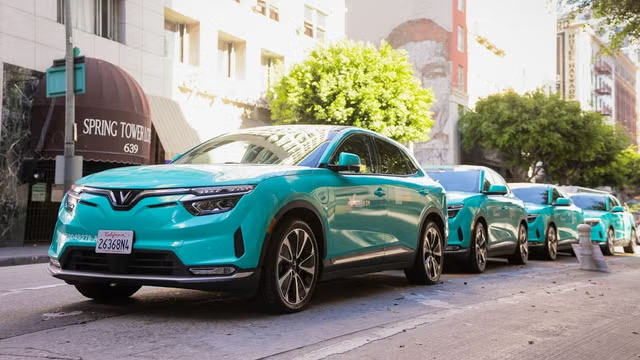
Green SM launches its U.S. ride-hailing service with a fleet of 500 VinFast VF 8 electric SUVs.
A Fleet Built Around the VinFast VF 8
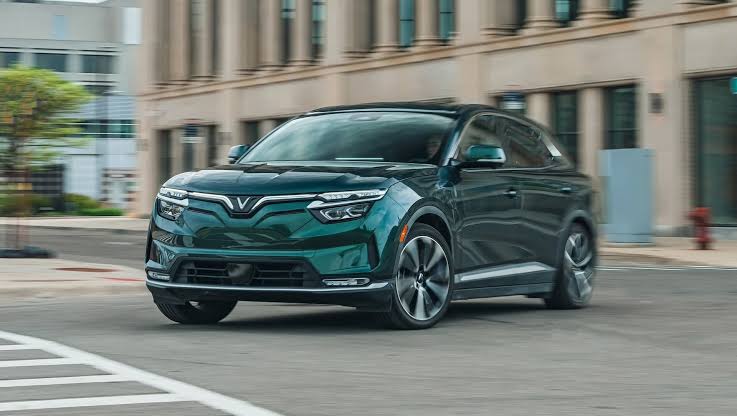
Every vehicle in Green SM’s initial Los Angeles fleet is a five-seat VinFast VF 8 electric SUV. The company says its vehicles are operating across Los Angeles County and extending into Orange County.
Customers can request rides through the Green SM app, call the company’s hotline or hail a vehicle on the street. Fares depend on time and distance, while the company is promoting discounted rides to attract new customers.
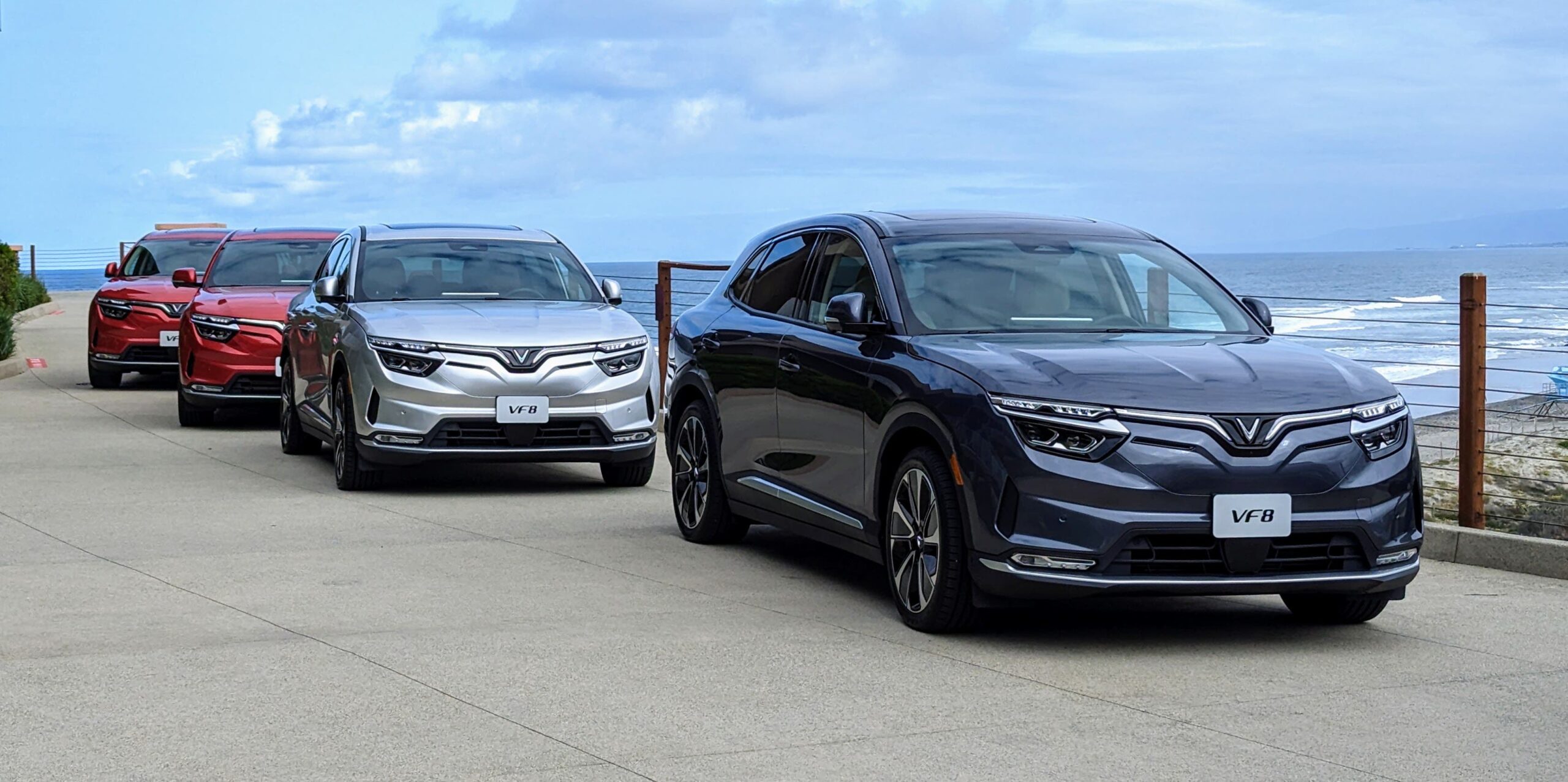
The VF 8 serves as Green SM’s primary vehicle for its Los Angeles operations.
Company Drivers Instead of Gig Workers
Green SM’s main distinction is its employment model. The company owns its vehicles and employs its drivers, providing training, maintenance and scheduled shifts rather than relying on independent contractors using their own cars.
The approach is designed to create a more consistent service experience. Drivers complete a selection and onboarding process before beginning work, while the company manages the vehicles and their upkeep.
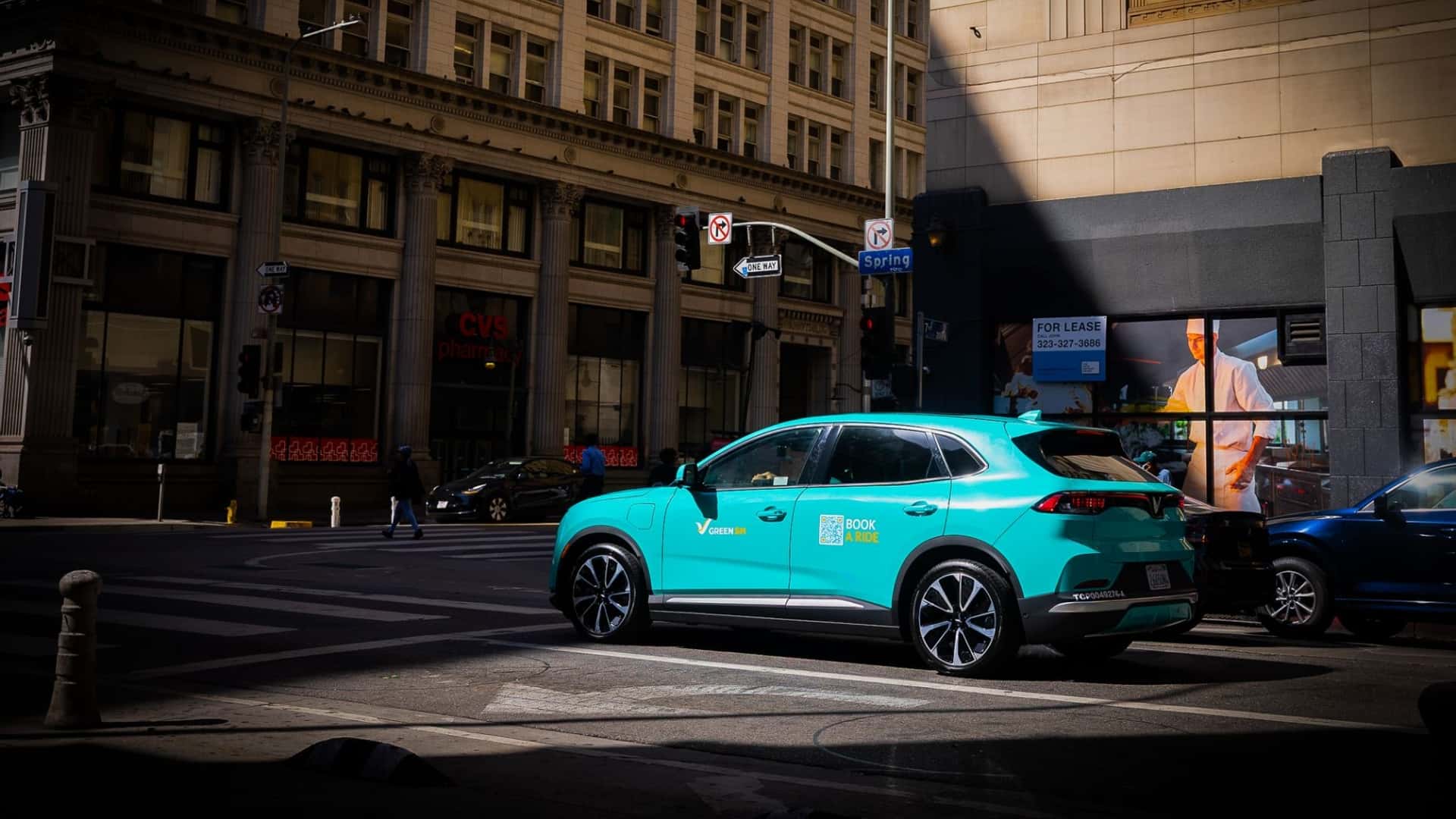
Green SM employs its drivers directly and manages the vehicles used for its ride-hailing service.
Discounts for Early Customers
Green SM is offering new customers 50% off their first five rides, with a maximum discount of $12 per trip. Its Green Pass membership also includes 10 monthly vouchers offering 30% off, capped at $10 per ride.
The company has also identified airport transfers as a potential service. However, the arrangements and timing for operations at Los Angeles International Airport have not been publicly detailed.
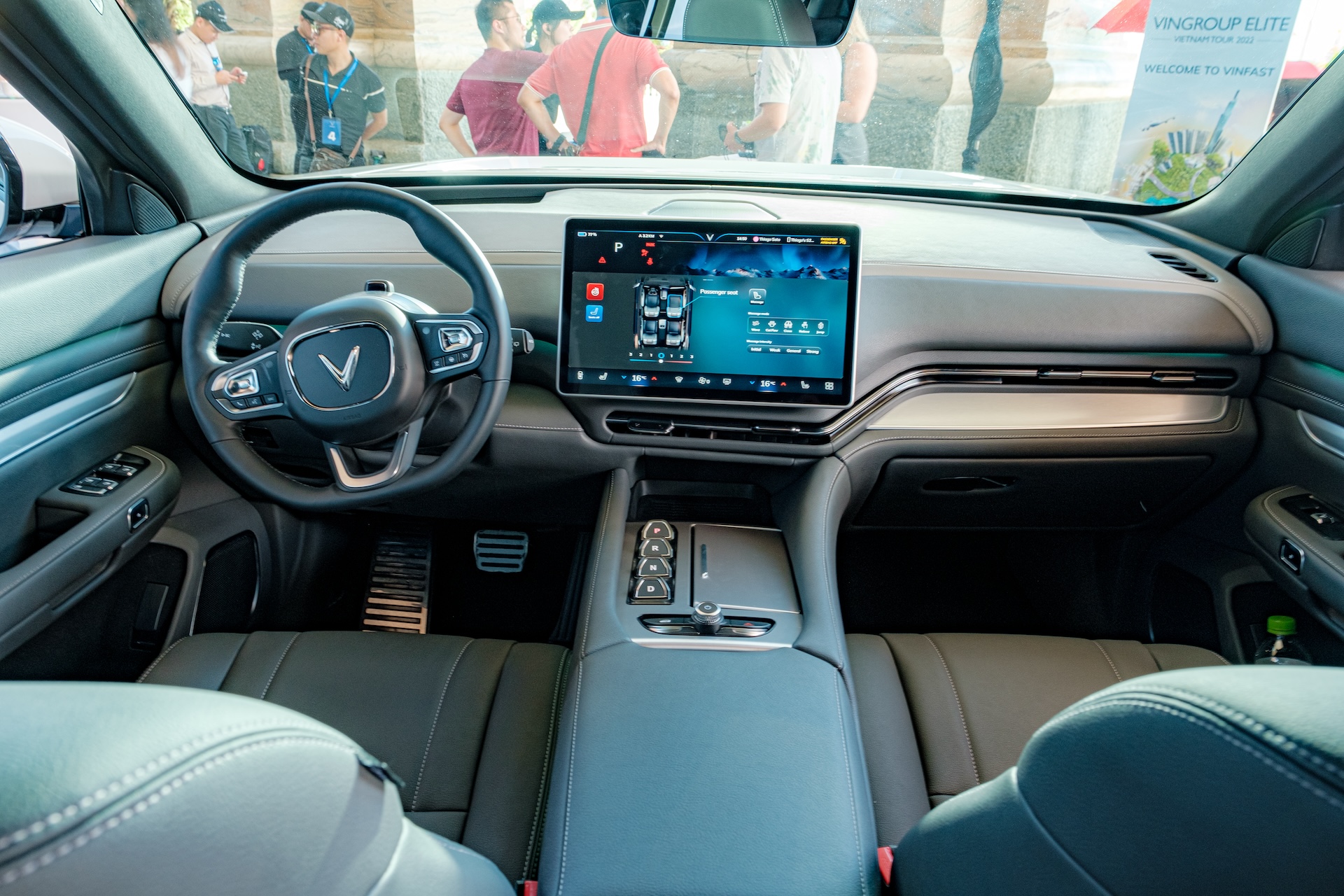
The VF 8’s cabin provides the passenger space used for Green SM’s ride-hailing trips.
Green SM Enters a Competitive Market
Los Angeles is Green SM’s first U.S. market. The business began in Vietnam in 2023 and has since expanded into other international markets.
Its arrival adds another competitor to Southern California’s evolving transportation sector, where conventional ride-hailing companies and autonomous vehicle services are expanding their presence. Green SM’s strategy centers on combining electric vehicles with company-managed operations rather than relying on a gig-based workforce.
Green SM is entering a competitive market as electric and autonomous transportation services continue to expand.
The company’s long-term prospects will depend on customer demand, service reliability and its ability to expand beyond its initial fleet. For now, its Los Angeles launch offers a different approach to electric ride-hailing in the United States.

The automaker is inviting select R1 and R2 owners to try a new route-based driving assistant before a wider U.S. rollout.
Rivian is preparing to expand its driver-assistance technology with Point to Point, a system designed to handle more of a journey than conventional hands-free highway assistance. The first phase will be limited to selected customers, with a broader rollout planned for 2027.
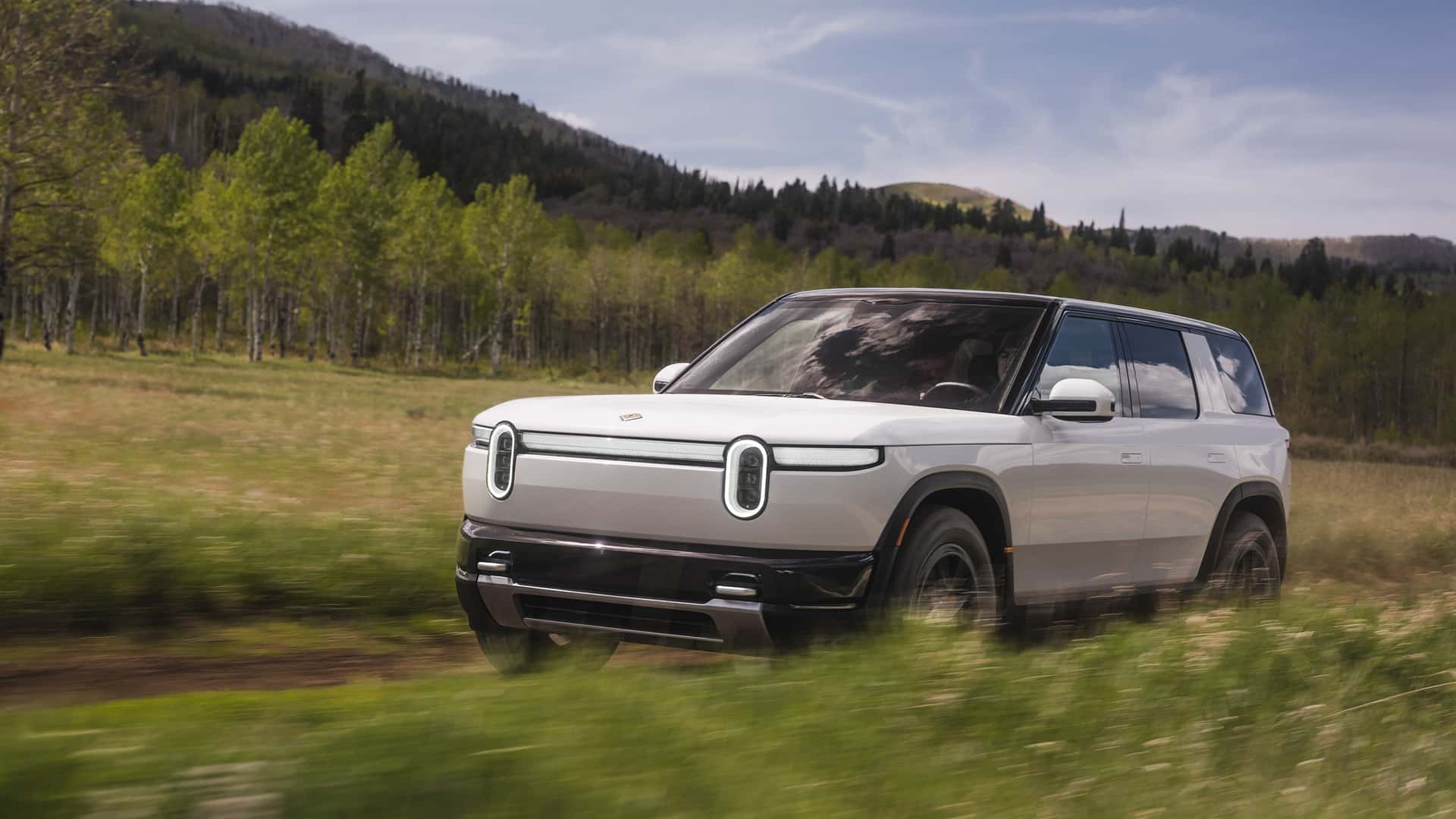
Rivian is starting its latest driving technology program with eligible owners of newer R1 models and the R2.
From Highway Assistance to Full Routes
Point to Point builds on Rivian’s existing Universal Hands-Free system. It is designed to follow a planned route, including turns, highway merges and surface streets, while the driver remains responsible for supervising the vehicle.
The technology combines the vehicle’s sensors and cameras with Rivian’s Large Driving Model, which interprets surrounding conditions and helps determine how the vehicle should respond.
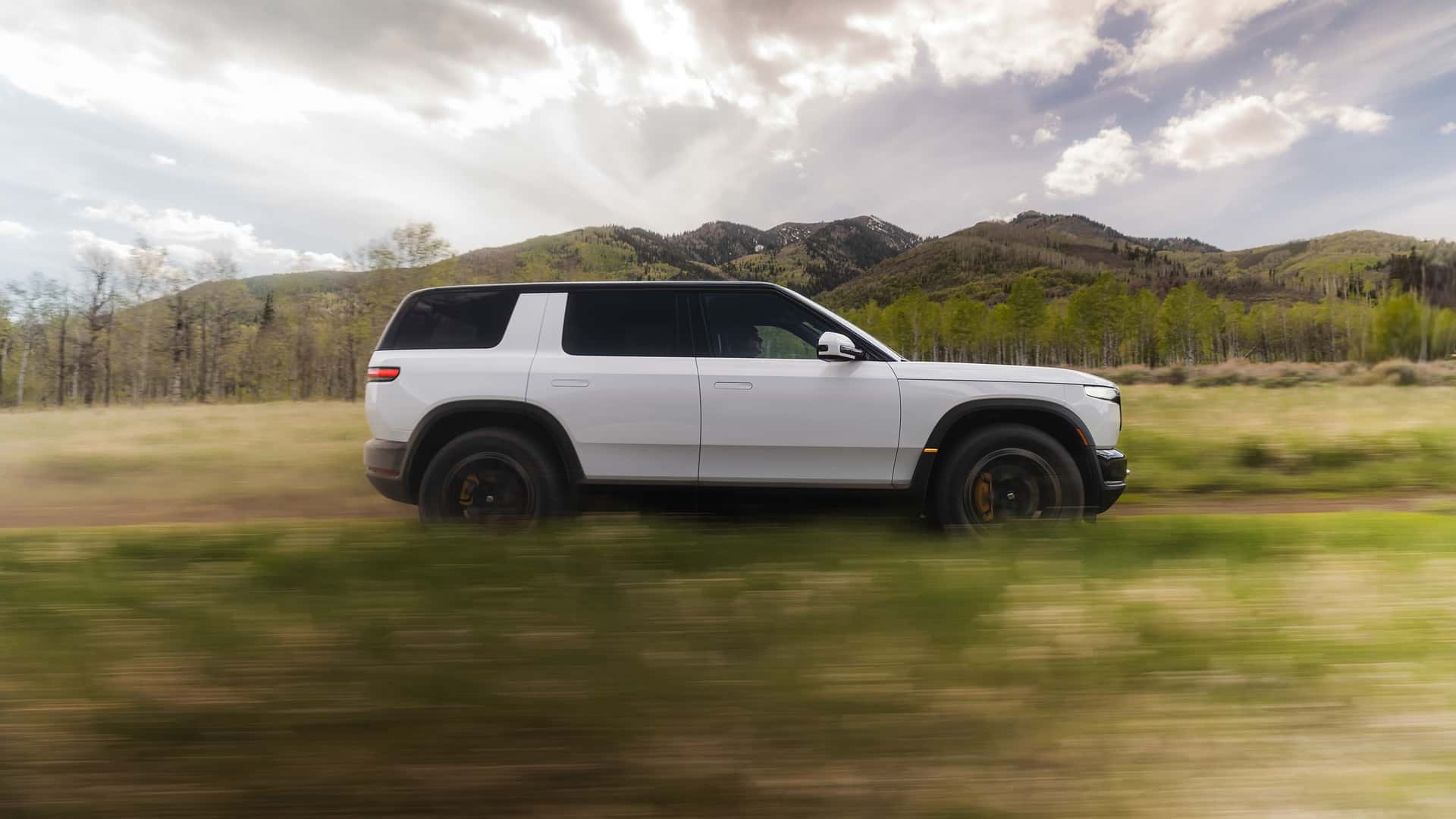
Point to Point aims to manage more of a planned journey while requiring the driver to remain attentive.
Who Can Join the Early Access Program?
The initial program targets eligible Gen 2 R1 and R2 owners in California and Florida. Applicants must have an active paid Autonomy+ subscription; free trials do not qualify.
Rivian will consider existing use of its driver-assistance features, recent safety records and a balance of vehicle models and regions when selecting participants. Owners can register their interest through the Autonomy Early Access tile in their Rivian account.
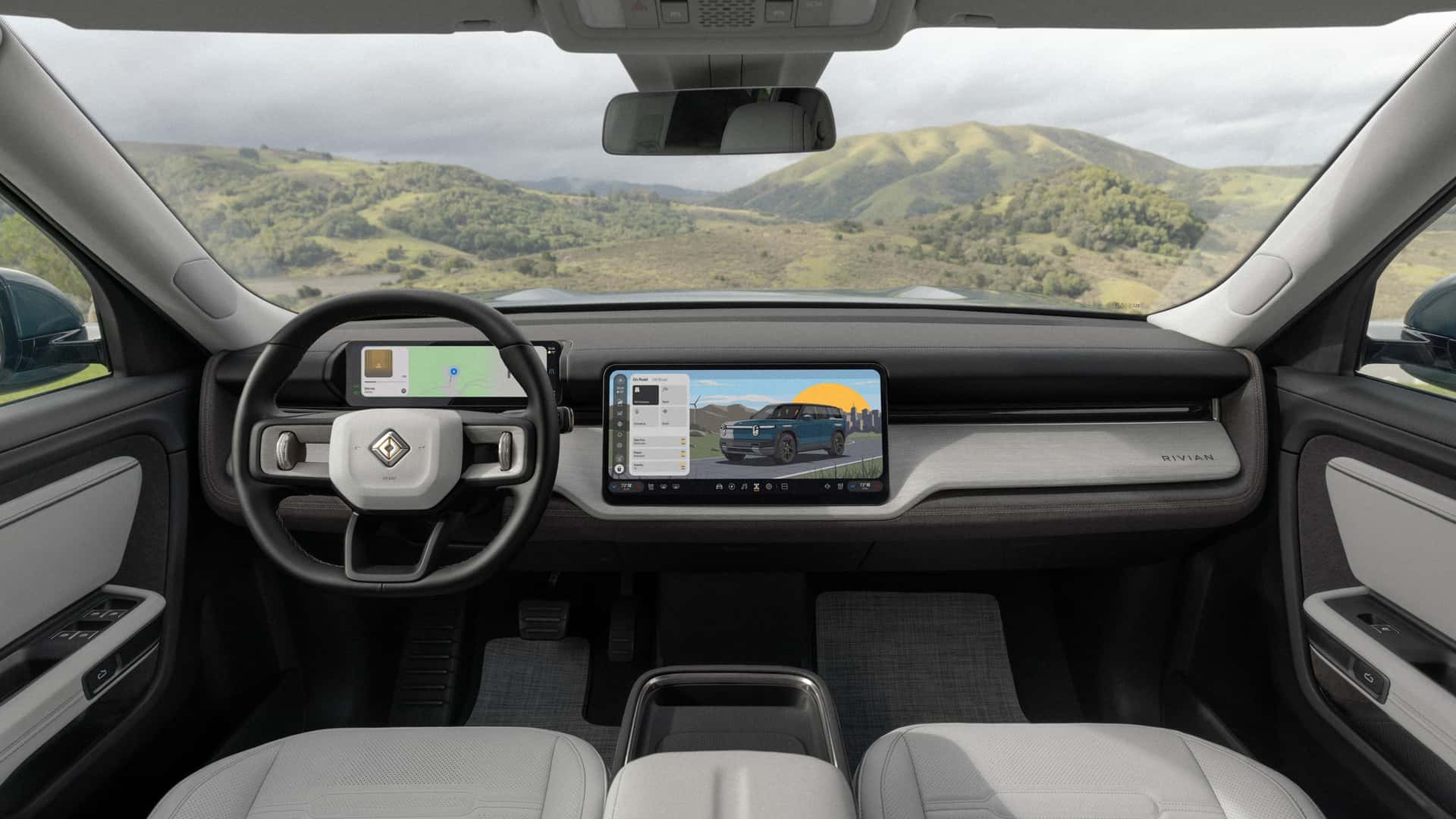
Eligible owners can register their interest through their Rivian account.
Testing Comes With Conditions
Selected participants must use the preview features weekly, report issues and complete monthly surveys. They must also agree to data collection that includes location and camera data, under a non-disclosure agreement.
The program is unpaid, and Rivian can reassess participants’ eligibility every 30 days. First-generation R1 vehicles and Canadian owners are excluded from the initial phase.
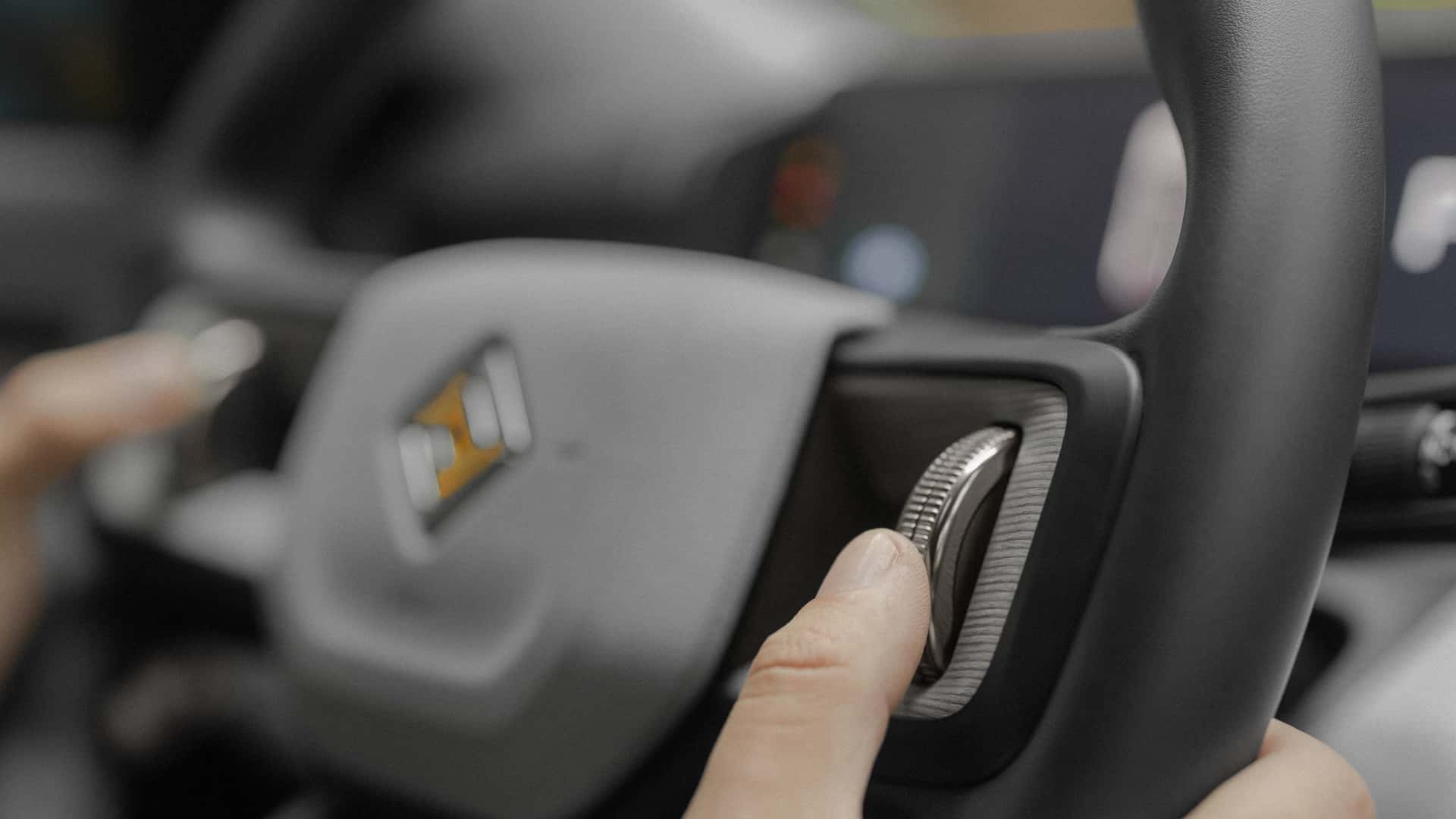
Camera and sensor data are part of the technology Rivian is developing and evaluating.
A Wider Rollout Is Planned for 2027
Rivian expects Point to Point to reach a broader group of Autonomy+ customers in 2027, following the early-access phase. Feedback from interested owners outside California and Florida may also help inform which states are considered for expansion.
The R2 is among the vehicles targeted for the initial program, with wider availability expected to follow.
Point to Point remains a Level 2 driver-assistance system, not fully autonomous driving. Drivers must stay attentive and be ready to take control at all times.
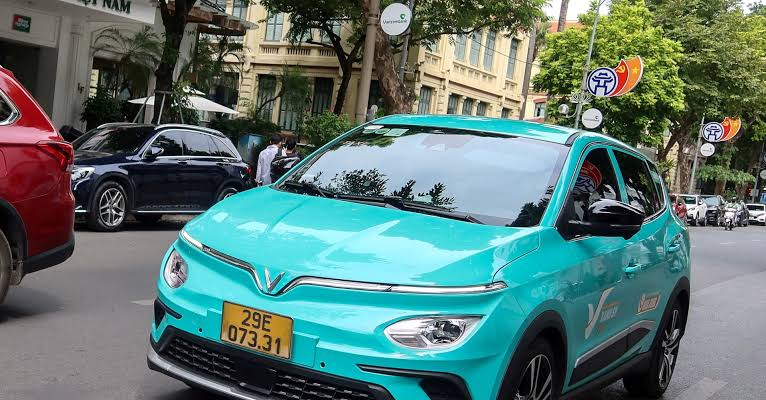
Green and Smart Mobility enters the U.S. market with an all-electric taxi and ride-hailing service.
GSM Expands Into the United States
Los Angeles is GSM’s first U.S. market and its ninth country of operation. Before entering the United States, the company operated in Vietnam, Laos, Indonesia, the Philippines, India, Kazakhstan, Denmark and the Netherlands.
The launch gives GSM a presence in North America as it pursues a broader international expansion strategy. Its all-electric fleet also connects the company’s growth to the development of electric mobility services, particularly in major cities where taxis and ride-hailing vehicles can accumulate substantial daily mileage.

GSM is expanding its all-electric mobility business into the United States with its launch in Los Angeles.
The scale of the company’s U.S. operation, including its initial fleet size, service coverage and passenger pricing, will be important factors in determining how quickly it can establish a presence in the local market.
VinFast Connection and Electric Vehicle Strategy
GSM is closely linked to VinFast, the Vietnamese electric vehicle manufacturer. The taxi operator has previously said it intends to purchase up to one million VinFast electric vehicles between 2026 and 2030, a target that would make fleet demand a significant part of its relationship with the automaker.
The planned purchases could support VinFast by creating a large potential source of demand for its vehicles. For GSM, meanwhile, using electric vehicles across its mobility operations aligns its fleet strategy with its focus on all-electric transportation.

VinFast is the vehicle supplier connected to GSM’s plans for expanding its electric mobility fleet.
However, the stated purchase target is a multi-year intention rather than confirmation that all the vehicles have already been ordered or delivered. The pace of deployment will depend on the company’s expansion plans and the operational requirements of each market.
GSM’s International Expansion Plans
The Los Angeles launch forms part of a wider international growth strategy. GSM has previously outlined plans to deploy fleets in the United States and Sweden, as well as expand its presence in the Netherlands. The company has also indicated that it wants to enter additional European markets in 2027.
Its U.S. entry is therefore one part of a larger effort to build an international electric mobility business. Expanding across multiple markets could increase the company’s operating scale, although each country presents different regulatory requirements, competitive conditions and customer expectations.

GSM is seeking to expand its electric taxi operations beyond its established Asian and European markets.
The company’s financial scale is another area of interest as it prepares for a potential Hong Kong stock market listing. GSM has been preparing for a possible pre-IPO phase, while previous valuation discussions have placed the business at approximately $20 billion, based on advice reportedly received by the company.
Vietnamese brokerage VNDirect estimated that GSM generated approximately $1 billion in gross merchandise value in 2025. Gross merchandise value represents the total value of transactions facilitated through a business and should not be confused with revenue or profit. GSM does not publicly disclose detailed financial results.
What the Los Angeles Launch Means for GSM
GSM’s entry into Los Angeles establishes its first North American operation and expands its international footprint to nine markets. The company’s strategy combines electric vehicle deployment, ride-hailing services and an existing relationship with VinFast.
The next indicators to watch will include fleet expansion, geographic coverage, passenger demand and the company’s ability to compete with established ride-hailing operators. Its potential listing in Hong Kong could also become an important milestone as it seeks to finance and scale its international business.
For now, the Los Angeles launch marks a significant geographic expansion for GSM. Its longer-term success will depend on how effectively it translates its experience in other markets into a competitive U.S. operation.
-

 NOW TRENDING2 months ago
Tesla Cybercab Gets September 3 Austin Launch Date
-
 TEST DRIVES2 months ago
2025 Ford Bronco Sport Badlands: The Adventure SUV You Can Drive Every Day
-

 TEST DRIVES2 months ago
2026 Toyota GR Supra MkV Final Edition
-

 NOW TRENDING1 month ago
Aston Martin DBX Becomes Harry Da Souza’s Ride in MobLand
-

 NOW TRENDING2 months ago
Tesla Cybercab Puts U.S. Regulations to the Test
-

 Formula12 months ago
FIA Reveals Second ADUO Results With Red Bull-Ford Still on Top
-
 NOW TRENDING2 months ago
2027 Hyundai Tucson Hybrid Gets a Power Boost
-
 NOW TRENDING2 months ago
Hyundai Reports Strong Hybrid Sales in August 2026
You must be logged in to post a comment Login