
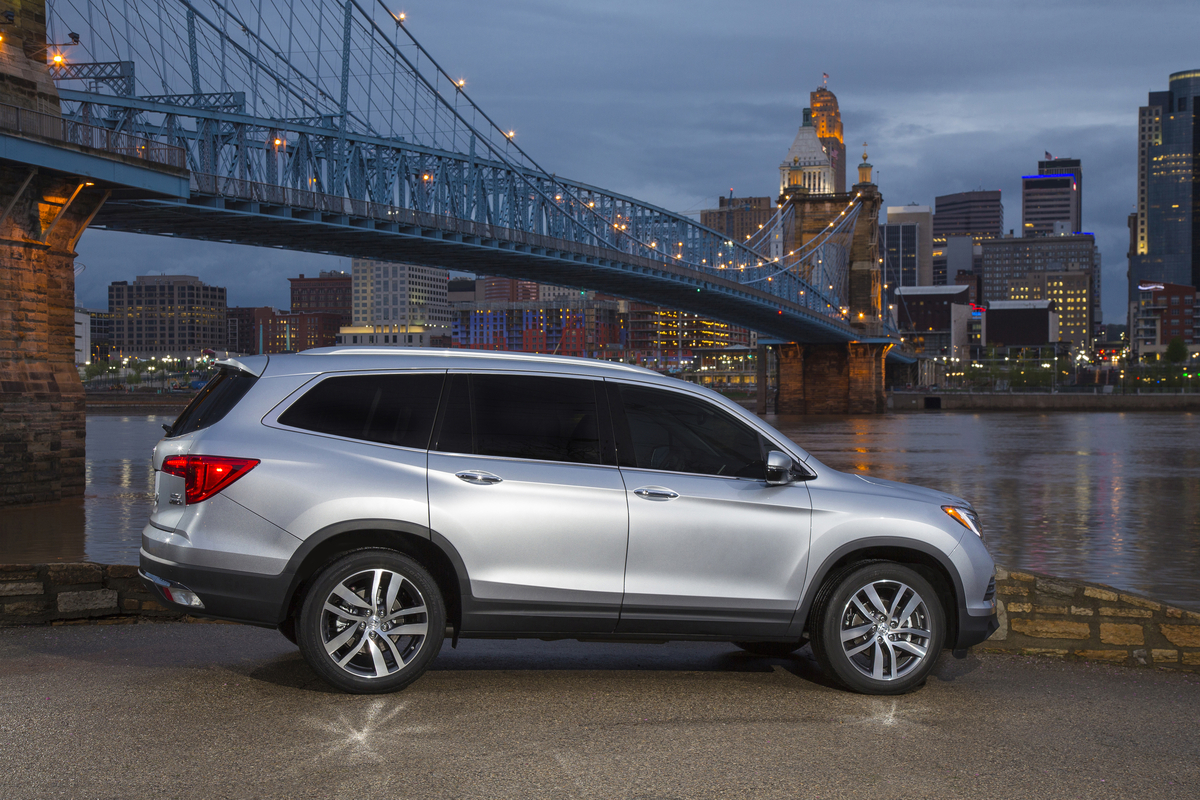
The 2016 Pilot Elite parallels the capability of the Odyssey, without losing any of the utilitarian charm that attracted buyers to the first two Pilots.
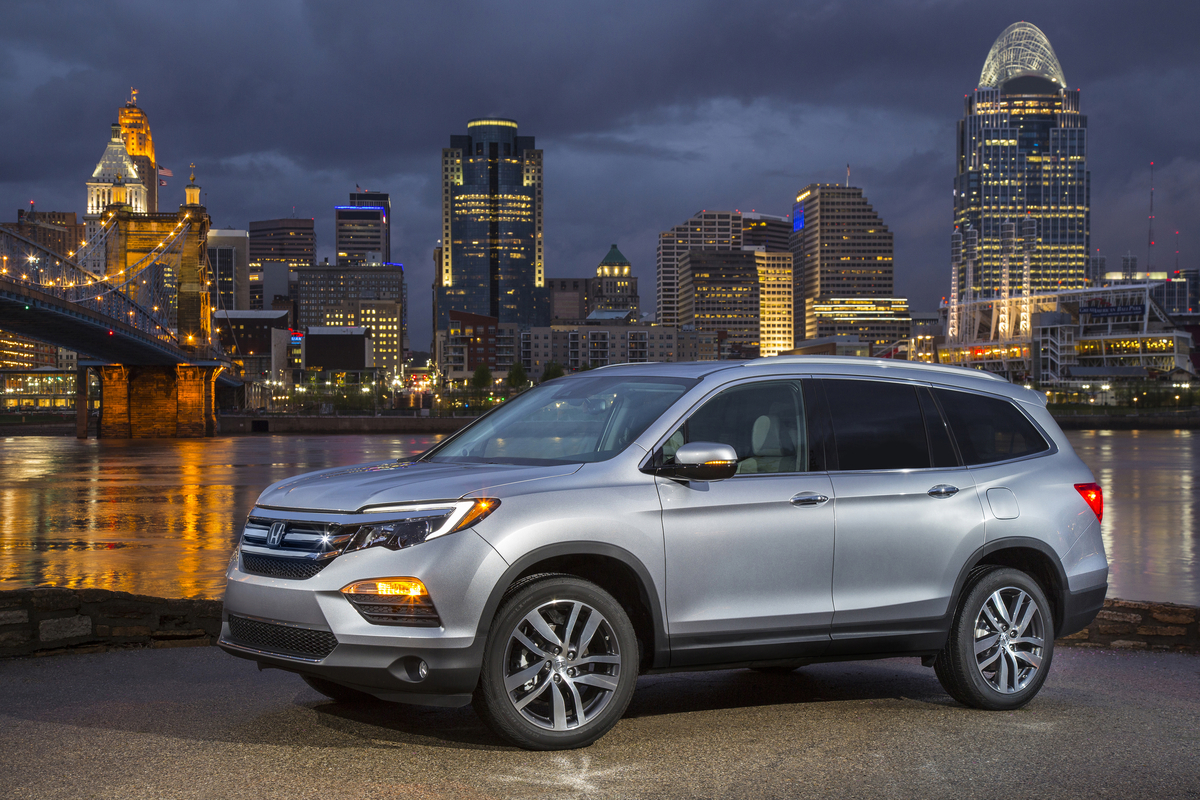
Built on the solid reputation established from the June 2002 introduction of the first generation 2003 model, the 2016 Pilot brings a whole new level of refinement and available content to the segment and with more of what active families seek in a three-row SUV – sleek and athletic styling, outstanding power, sophisticated technology and, new for 2016, an all-new Elite model with a panoramic roof and a vast array of other standard features.
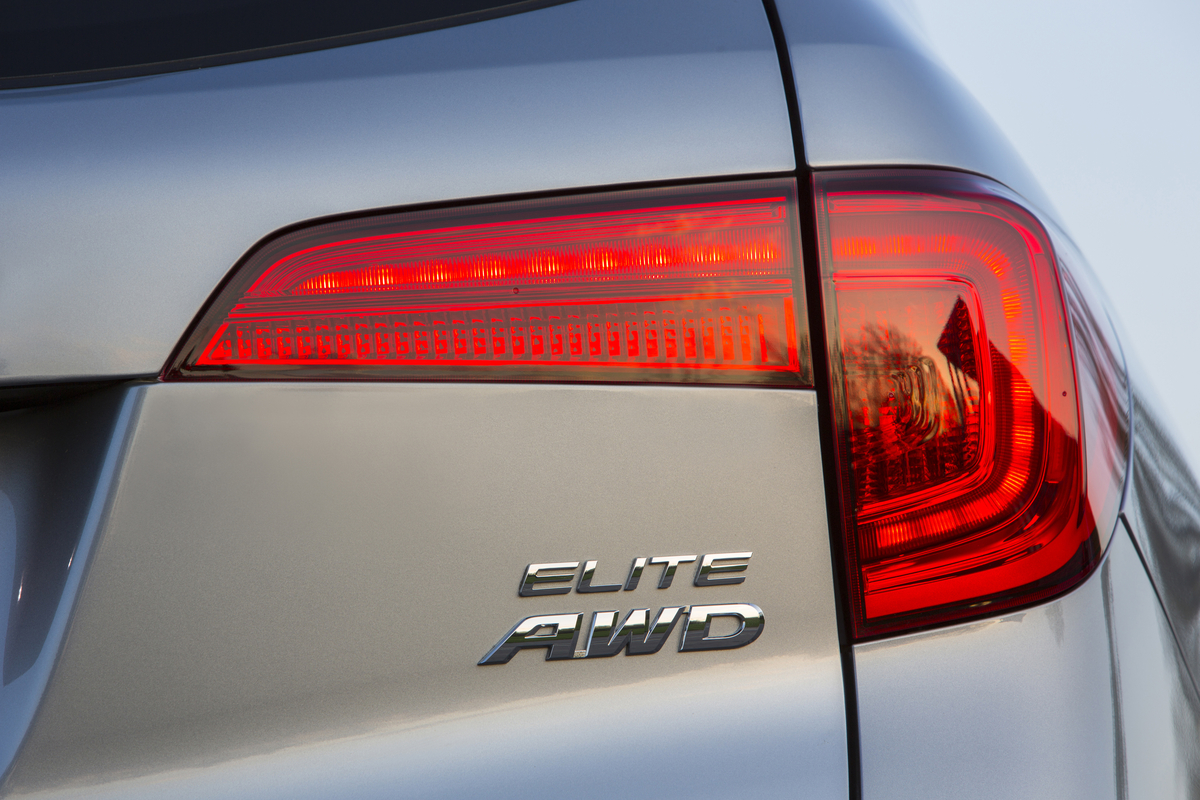
This week in Carsfera.com we drove the newly and modern designed 2016 Honda Pilot AWD Elite through some beautiful country roads.
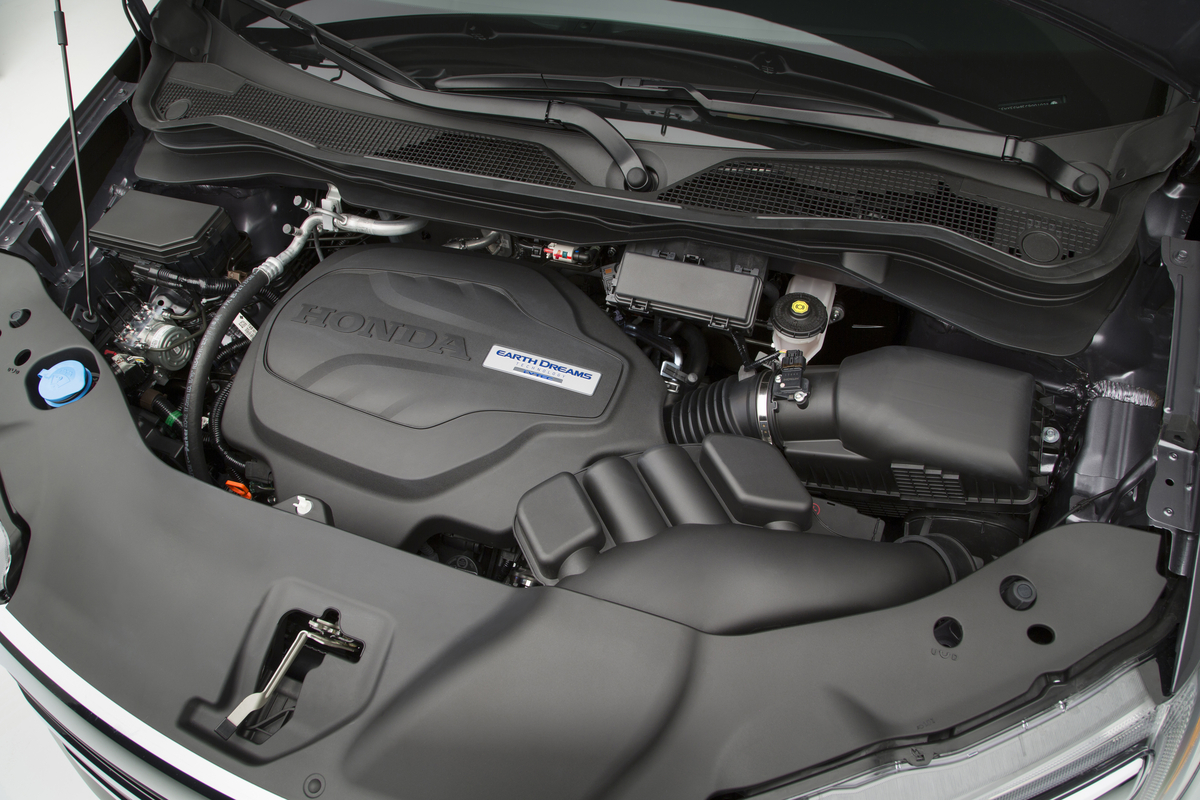
The first impression was a question of power and technology. This new 2016 Pilot AWD Elite is built on a direct injected 3.5-liter SOHC i-VTEC EarthDreams Technology engine that produces 280 horsepower and 262 lb-ft of torque. Yes 280 horsepower…forget the ponies…when we heard the rumble of this engine; it was music to our ears.
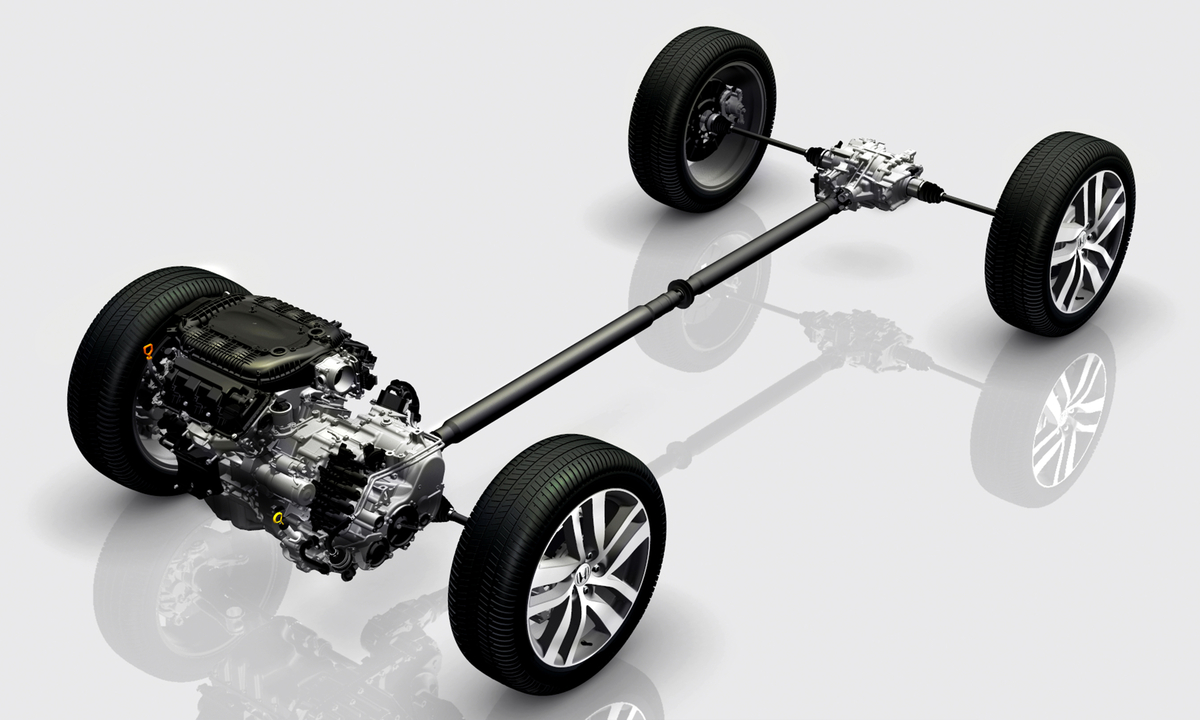
We have to say that Honda has made great technology improvements. Honda has great reputation in the industry, not only because of who they are but also for what they build. From the technical perspective we have to mention the new Intelligent Variable Torque Management (i-VTM4) AWD and the Intelligent Traction Management.
How does this technology work?
The i-VTM4 or Intelligent Variable Torque Management system is so good that you can feel how distributes optimum torque between the front and rear axles and, for the first time ever in a Honda vehicle, dynamically distributes engine torque between the left and right rear wheels using the new, lightweight rear drive unit. The system’s benefits are outstanding and include superior all-weather handling and neutral, accurate steering under power that is unmatched by front-drive, rear-drive or conventional all-wheel-drive system.
The all-new selectable Intelligent Traction Management system featuring Normal, Mud, Sand, and Snow modes allows the driver to select the operating mode that best suits the driving conditions by simply pushing a button on the vehicle’s center console. Based on the setting selected, the system adjusts the drive-by wire map, transmission shift map, Vehicle Stability Assist and i-VTM4 torque distribution for optimal performance in varying road or surface conditions.
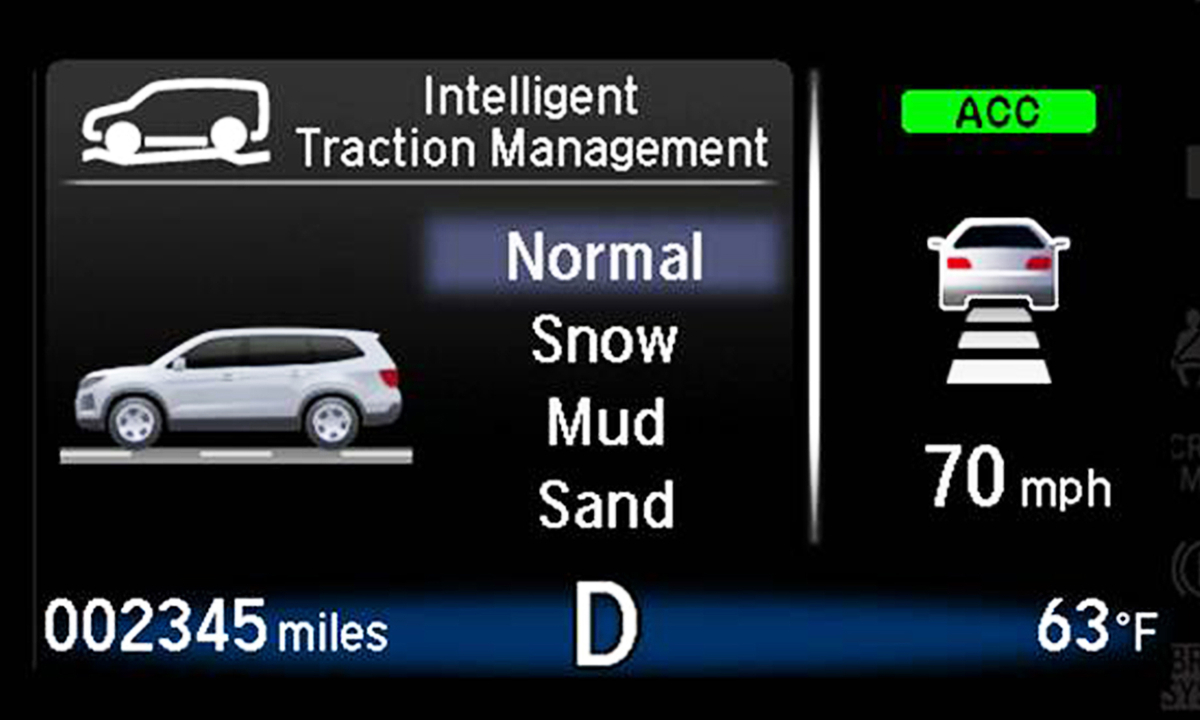
These technologies, combined with a nearly 300-pound reduction in vehicle weight (on upper trims), improved aerodynamics and reduced running resistance, make this the most fuel-efficient offering in the midsize SUV segment, with EPA fuel-economy ratings improved by as much as 22 mpg city/highway/combined over the previous model which is pretty good, considering its size.
Outside, our 2016 Pilot AWD Elite was modern, sleek, commanding and muscular. Starting with the overall body dimensions and shape, continuing with exterior features such as the sculptured side mirrors and rear spoiler, and extending to numerous under-body details such as air strakes and covers, we have to say that the new 2016 Pilot AWD Elite is the most aerodynamically efficient Pilot ever.

The new Pilot’s comprehensive aero-overhaul pays dividends in virtually every part of the driving experience, from fuel efficiency gains (and lower emissions) to dynamic stability on the highway, to reduced interior noise levels that directly contribute to a calmer and more enjoyable ride.
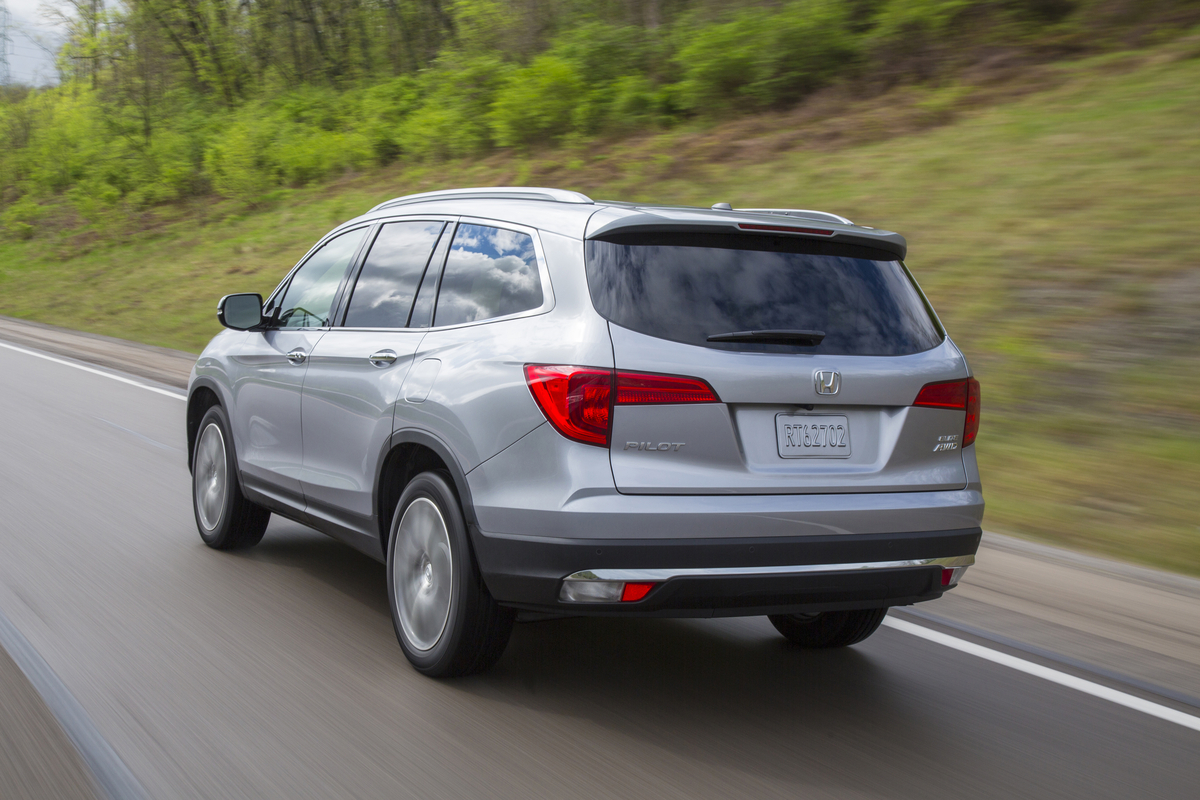
Special aerodynamic details that are readily visible on the body include virtually all of the sheet metal, the headlight lenses, side mirrors, windshield wipers (shape and placement), the door handles, the rear spoiler and even the taillight lenses. Also, the new windshield design sits flush with the upper section of the cowl (at the base of the windshield), further reducing turbulence and wind noise.
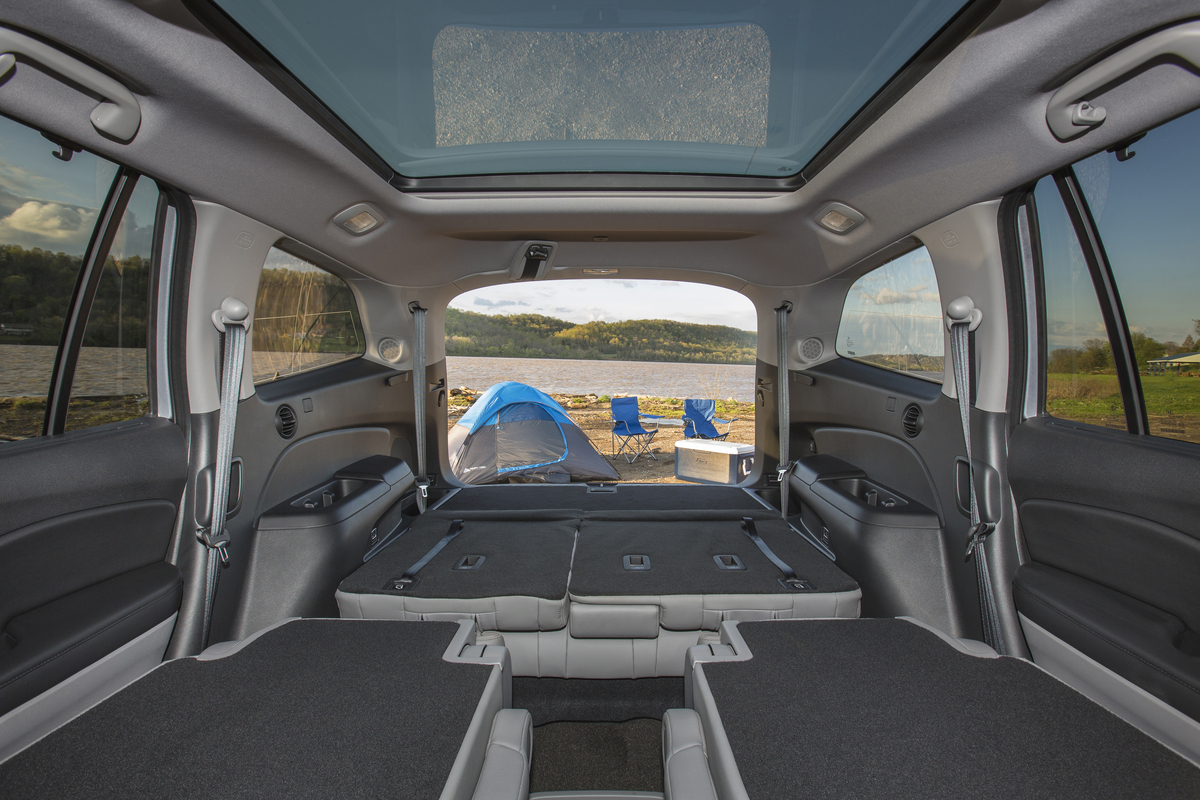
The premium quality of the new Pilot carries over to the interior, where designers have applied high quality, soft-touch materials throughout the cabin and added thoughtful details such as LED map lighting. Additional high-end amenities include a standard 4.2-inch color display, available heated and ventilated front seats, a heated steering wheel and heated second-row seats.
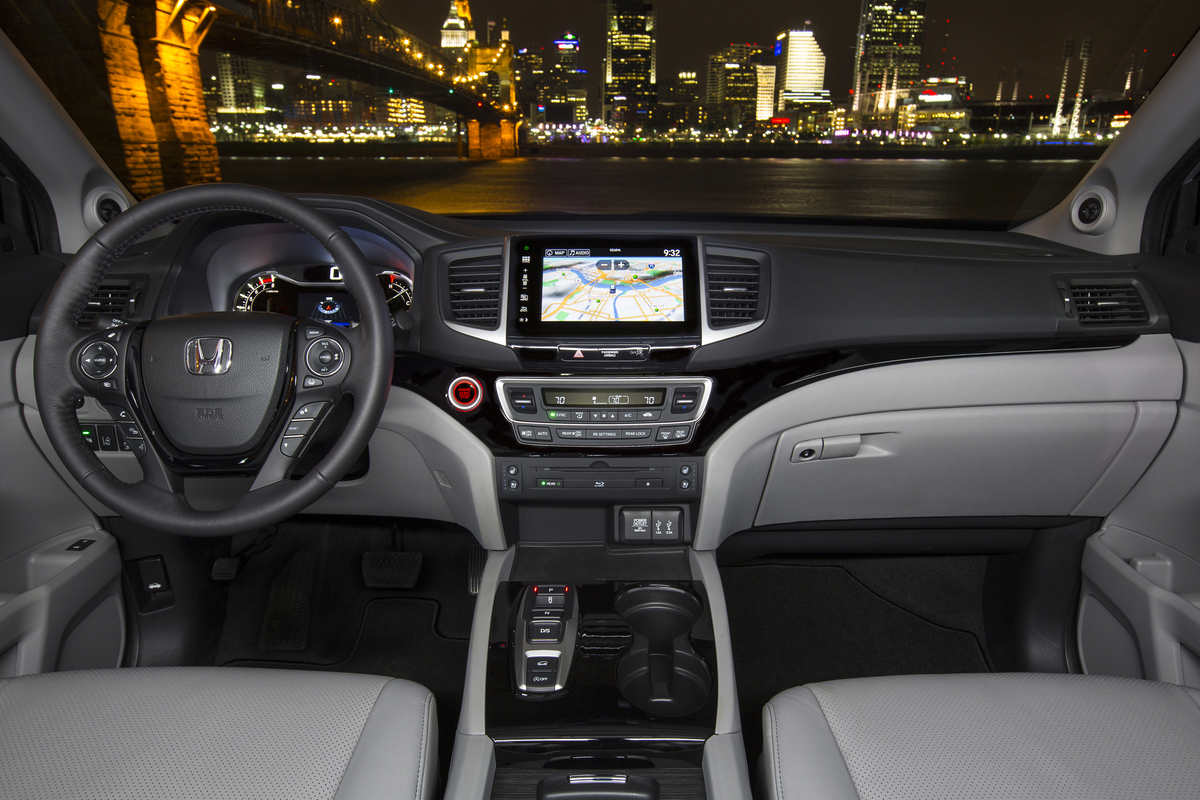
Also significantly upgraded were the Display Audio and navigation systems. The available Honda Sensing suite of safety and driver assistive technologies brings available features that include Collision Mitigation Braking System with Forward Collision Warning, Road Departure Mitigation System, Lane Keeping Assist System with Lane Departure Warning and Adaptive Cruise Control. Providing customers with a greatly increased range of trim levels. The Pilot Elite offers an extensive feature content list, including a panoramic glass roof, heated and ventilated front seats, heated second-row captain’s chairs, LED headlights with auto high-beam, rain sensing windshield wipers and much more. And these are in addition to a long list of standard features throughout the Pilot trim range.
Are you ready to ride with us?









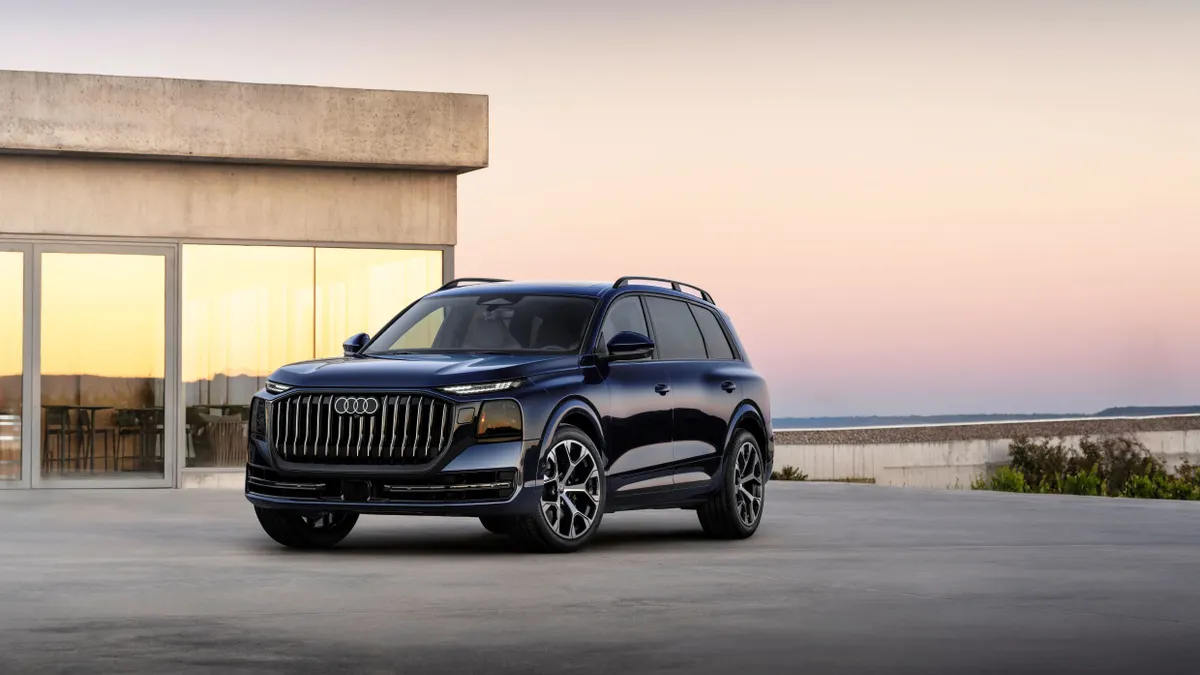
Audi has officially introduced the all-new 2027 Q9 and SQ9, expanding its SUV lineup with two flagship three-row models designed to compete against the BMW X7, Mercedes-Benz GLS and Cadillac Escalade.
The 2027 Audi Q9 marks a major milestone for the German automaker. As Audi’s largest production SUV ever, the new flagship is designed to compete in the premium full-size SUV segment alongside established rivals such as the BMW X7, Mercedes-Benz GLS and Cadillac Escalade.
Moreover, the Q9 arrives as Audi continues reshaping its lineup, giving buyers a spacious three-row luxury SUV with advanced technology, refined comfort and powerful performance.
Audi Introduces Its Biggest SUV Ever
The 2027 Audi Q9 measures approximately 209 inches in length, making it the largest vehicle Audi has ever offered.
Its exterior design shares styling cues with the latest Q7 while adopting a more commanding presence. Furthermore, the SUV fills one of the few remaining gaps in Audi’s lineup by giving the brand a true flagship utility vehicle.
U.S. deliveries are scheduled to begin during the fourth quarter of 2026, with pricing starting at $87,700 for the Q9 and $118,000 for the performance-focused SQ9, excluding destination charges.
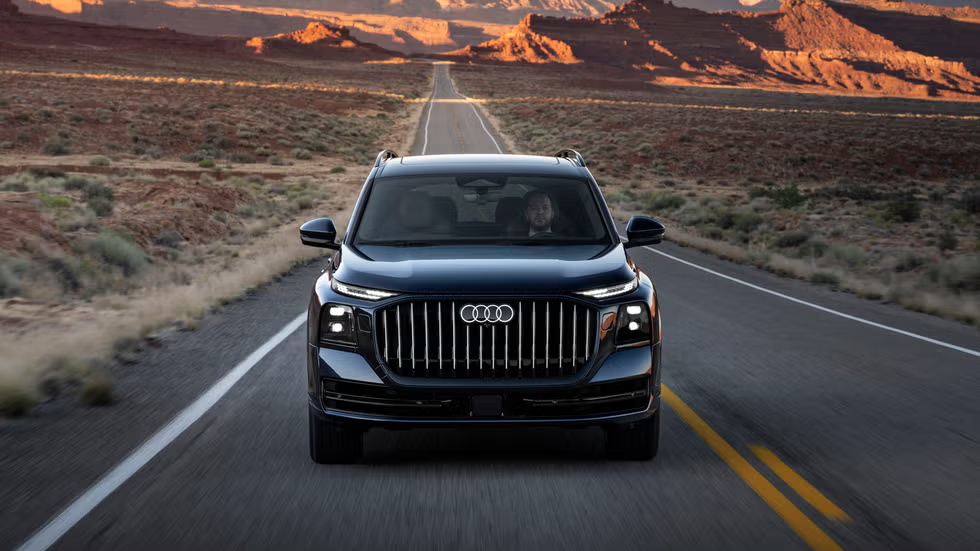
The 2027 Audi Q9 becomes the largest SUV ever introduced by the German luxury brand.
Powerful Engines for Every Driving Style
The 2027 Audi Q9 offers two distinct powertrain options for North American buyers.
The standard model is powered by a twin-turbocharged 2.9-liter V6 producing 429 horsepower and 442 lb-ft of torque. Paired with an eight-speed automatic transmission, quattro all-wheel drive and a 48-volt mild-hybrid system, the SUV accelerates from 0 to 60 mph in 4.9 seconds.
Meanwhile, the high-performance SQ9 features a twin-turbocharged 4.0-liter V8 generating 591 horsepower and 590 lb-ft of torque. Consequently, it reaches 60 mph in just 3.8 seconds, making it one of Audi’s quickest SUVs.
Every model also includes adaptive air suspension, four-wheel steering and a maximum towing capacity of 7,700 pounds.
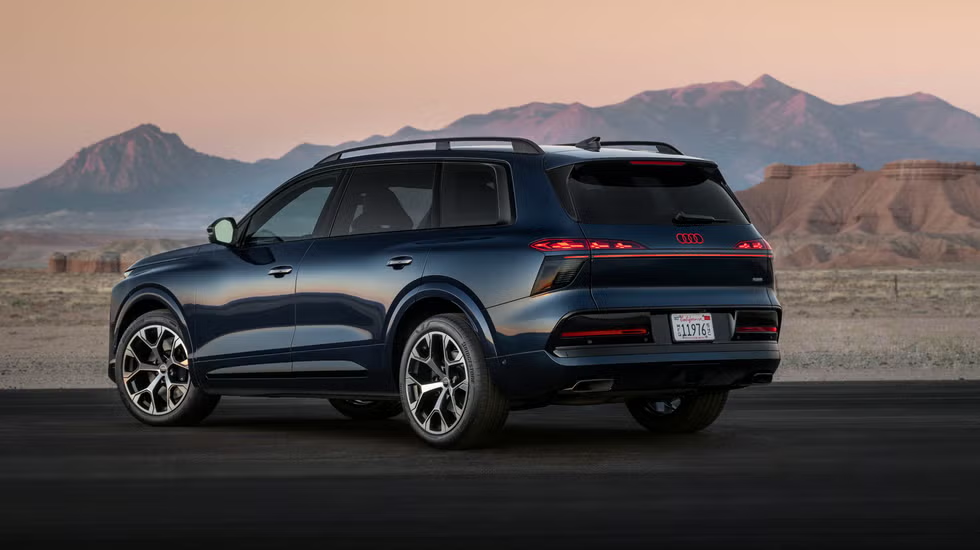
The SQ9 delivers V8 performance while every Q9 benefits from standard quattro all-wheel drive.
Advanced Technology Defines the Cabin
Inside, the 2027 Audi Q9 introduces Audi’s newest digital interior.
Drivers receive a 12.3-inch digital instrument cluster, a 14.5-inch central touchscreen and an available 12.3-inch passenger display. Additionally, the infotainment system runs Android Automotive OS and integrates ChatGPT through Audi Assistant to answer a wider range of voice commands.
Premium features include available five-zone climate control, a 22-speaker Bang & Olufsen audio system, six- or seven-passenger seating and a panoramic glass roof with optional electrochromic technology.
Safety and Innovation Take Center Stage
Audi has equipped the 2027 Audi Q9 with one of its most advanced technology packages to date.
The SUV introduces Digital Matrix LED headlights capable of projecting guidance and warning information directly onto the road. Furthermore, curved digital OLED taillights make their debut, while the latest driver assistance systems include adaptive cruise control, automated parking, trailer assist, blind-spot monitoring and an upgraded emergency assist system.
Practicality also improves through power-closing doors, larger wireless charging pads, higher-output USB-C ports and a redesigned cargo management system.
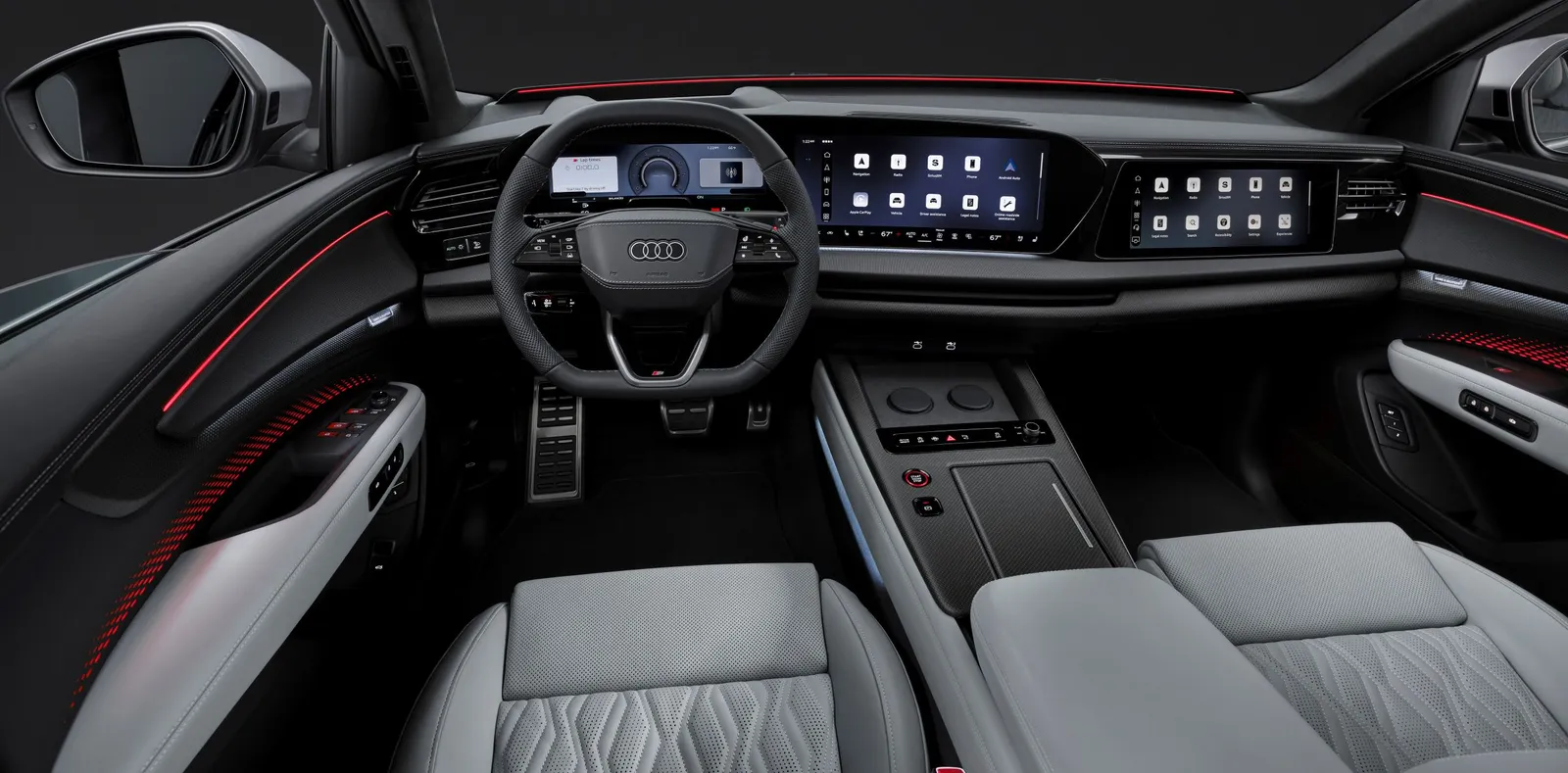
The Q9 combines cutting-edge lighting technology with Audi’s latest digital cabin and driver assistance systems.
A New Flagship for Audi’s SUV Lineup
The 2027 Audi Q9 represents Audi’s most ambitious SUV yet.
Overall, by combining spacious three-row seating, advanced digital technology, premium comfort and powerful gasoline engines, the Q9 and SQ9 position Audi to compete directly with the biggest names in the luxury full-size SUV segment.
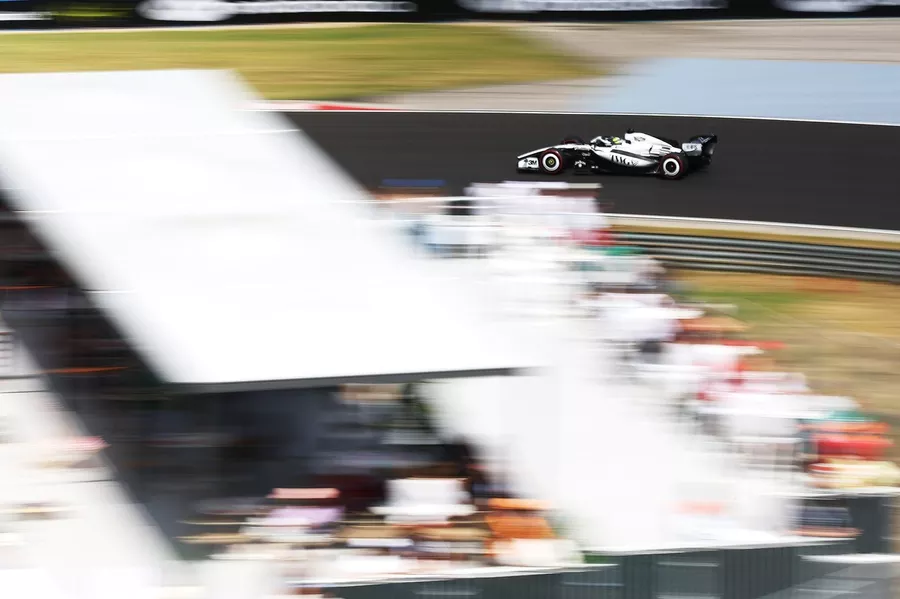
Sergio Pérez was found to have breached Formula 1’s starting procedure during the Hungarian Grand Prix, yet the FIA issued only a warning after determining that a standard penalty would have served no practical purpose.
The Sergio Pérez F1 penalty debate resurfaced after the Hungarian Grand Prix, where the Cadillac driver committed another starting procedure infringement but avoided a sporting penalty. Instead, FIA stewards issued only a warning after reviewing the unusual circumstances surrounding the incident.
Moreover, it was not the first time Pérez has been investigated for a start procedure violation during the 2026 Formula 1 season.
What Happened Before the Race Started?
Pérez began the Hungarian Grand Prix from the pit lane after Cadillac made suspension changes under parc fermé conditions.
During the formation lap, drivers starting from the pit lane must follow a specific procedure before joining the race. However, Pérez moved ahead of teammate Valtteri Bottas before crossing the designated safety car line, an action prohibited by the FIA Sporting Regulations.
As a result, the incident was immediately noted by race stewards.
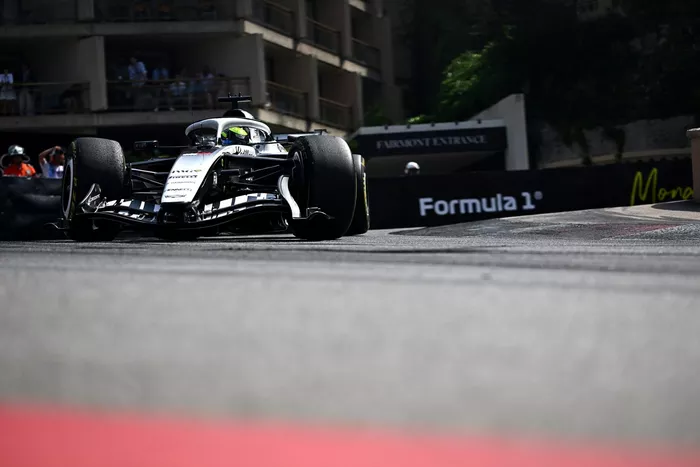
Sergio Pérez was investigated after a starting procedure infringement before the Hungarian Grand Prix.
Why FIA Chose Not to Penalize Pérez
Although stewards confirmed that Pérez had violated the regulations, they decided that a traditional sporting penalty was unnecessary.
According to their findings, Pérez explained that he was focused on reaching the pit exit traffic lights in time and did not realize he had overtaken Bottas before the required line. Furthermore, because he was already starting the race from the pit lane, imposing the usual pit-lane start penalty would have had no practical effect.
Consequently, FIA officials issued only an official warning instead of adding a time penalty or another sporting sanction.
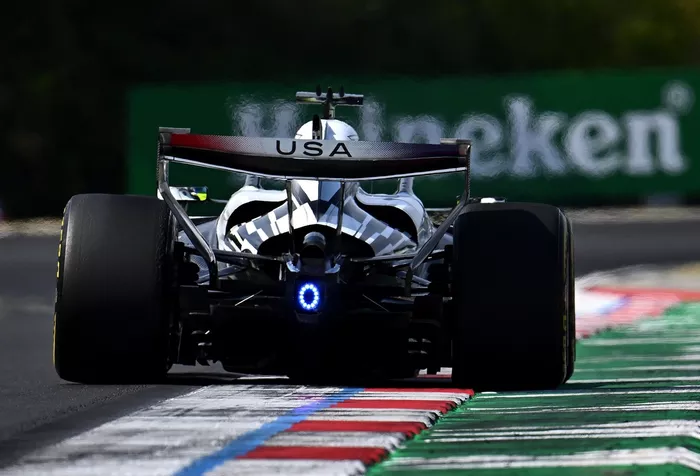
FIA stewards ruled that a warning was sufficient because Pérez had already started from the pit lane.
Another Incident in a Difficult Season
The Sergio Pérez F1 penalty discussion is nothing new in 2026.
Earlier this season, Pérez received penalties in Monaco after separate starting procedure infringements affected Cadillac’s race. Additionally, he was investigated in Austria after moving on the grid before the start, although no penalty was ultimately applied because he had already retired from the race before the stewards reached their decision.
Therefore, Hungary marks another unusual chapter in a season filled with procedural investigations involving the Mexican driver.
Pérez’s Race Ended Early Anyway
Even after avoiding a sporting penalty, Pérez was unable to finish the Hungarian Grand Prix.
A suspension issue forced the Cadillac driver to retire on lap 48, ending another frustrating weekend for both the team and the experienced Formula 1 veteran.
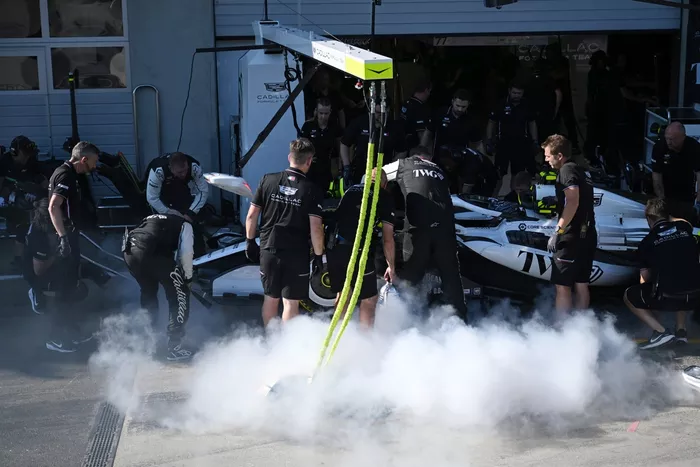
Pérez’s Hungarian Grand Prix ended with a retirement caused by a suspension problem.
Stewards Applied the Regulations to the Situation
The Sergio Pérez F1 penalty case highlights how FIA stewards evaluate each incident based on its specific circumstances.
Overall, while Pérez did commit another starting procedure infringement, officials concluded that issuing a warning was the most appropriate outcome because a conventional penalty would not have altered the way he started the race.
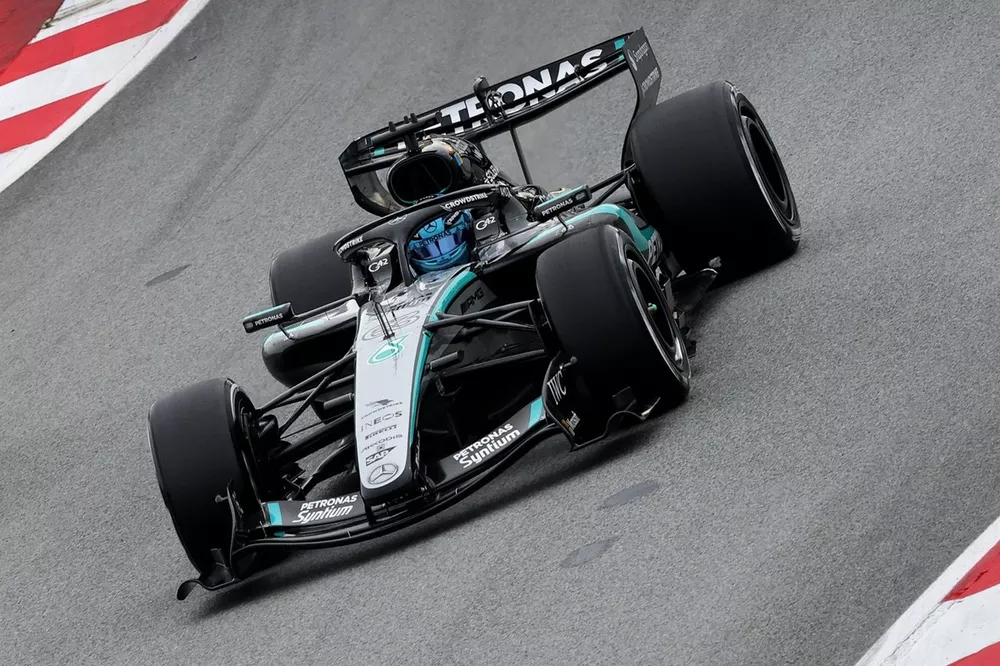
George Russell has reflected on a challenging opening half of the 2026 Formula 1 season, thanking Mercedes and the fans while insisting the team will continue pushing after the summer break.
The George Russell F1 2026 campaign has been filled with both highs and frustrating setbacks. Despite several missed opportunities during the opening half of the Formula 1 season, the Mercedes driver says he remains focused on the positives and is determined to continue fighting when racing resumes after the summer break.
Moreover, Russell believes the championship is still wide open, with plenty of races remaining and opportunities to recover.
A Strong Start Followed by Difficult Moments
Russell opened the 2026 season in impressive fashion by converting pole position into victory at the Australian Grand Prix. He also added another highlight by winning the Sprint race in China.
However, his momentum quickly changed. Mechanical issues during qualifying in Shanghai cost him another pole position, while later races brought a series of setbacks, including strategy problems, penalties, reliability issues and race-ending incidents.
As a result, Russell has often been unable to capitalize on his pace throughout the first half of the season.
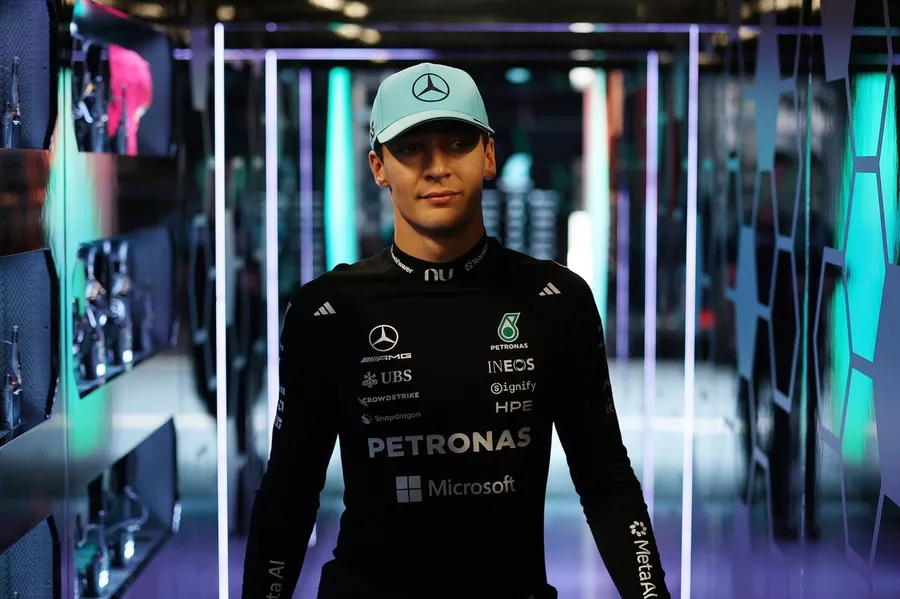
George Russell remains optimistic despite a difficult opening half of the 2026 Formula 1 season.
Mercedes Driver Refuses to Lose Confidence
Despite the challenges, the George Russell F1 2026 story remains one of determination.
Following the Hungarian Grand Prix, Russell shared a message thanking Mercedes for its hard work and expressing gratitude to the fans for their continued support. Furthermore, he emphasized that the team will keep pushing because anything can still happen before the end of the championship.
That positive mindset reflects Mercedes’ determination to improve during the second half of the season.
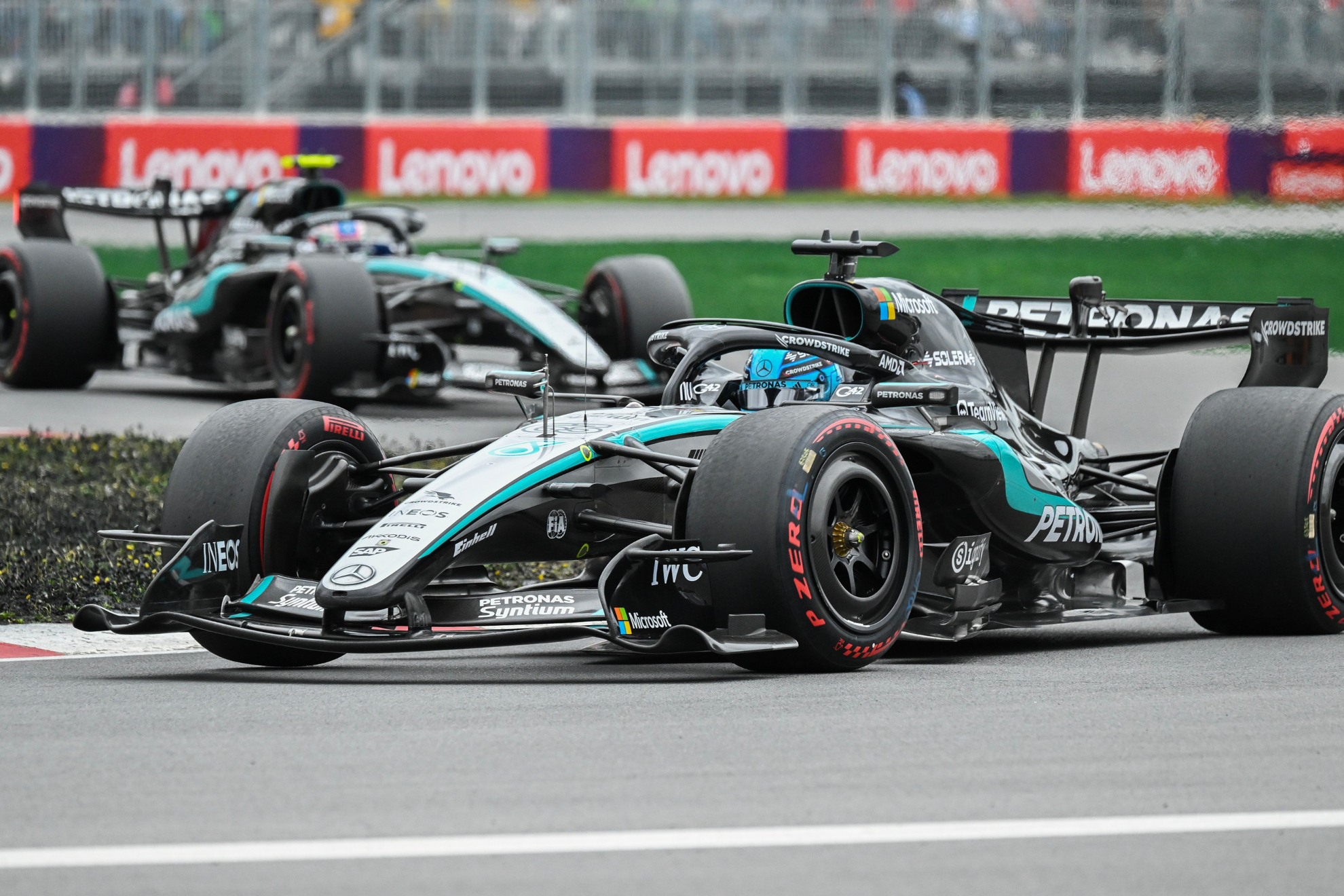
Russell thanked Mercedes and the fans while promising to keep fighting for stronger results.
Third in the Championship Despite the Setbacks
Although luck has rarely been on his side, Russell enters the summer break in third place in the Drivers’ Championship with 160 points.
He currently sits just nine points behind second place, while teammate Andrea Kimi Antonelli leads the standings after an impressive start to his sophomore Formula 1 season.
Consequently, Russell remains well positioned to challenge for higher championship positions once racing resumes.
Everything Still to Play For
The George Russell F1 2026 campaign is far from over.
Mercedes expects to continue developing the car during the second half of the season, giving Russell additional opportunities to convert his pace into stronger results. Therefore, the British driver believes consistency and perseverance will be essential in the races ahead.
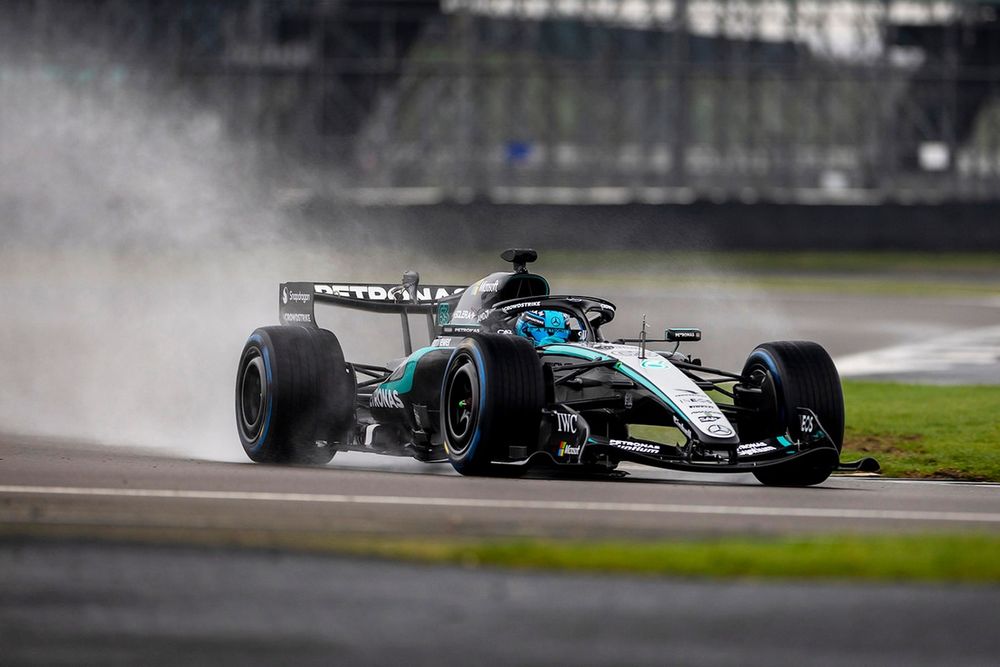
Russell heads into the summer break believing Mercedes can still fight for stronger championship results.
Russell Looks Ahead With Confidence
Although the first half of the season has included its share of disappointment, George Russell F1 2026 remains focused on the bigger picture.
Overall, the Mercedes driver is choosing optimism over frustration, convinced that the combination of hard work, continued development and remaining races can still change the outcome of his championship campaign.
-
 TEST DRIVES2 months ago
2026 Subaru Outback Touring
-
 TEST DRIVES2 months ago
Lamborghini prepares multiple launches for 2026 as electrification plans continue
-
 INTELLIGENT MOBILITY1 month ago
2026 Cadillac Escalade IQL Redefines Luxury In The Electric SUV Segment
-
 RACING2 months ago
Barcelona-Catalunya Grand Prix: Everything You Need To Know About Formula 1’s Ultimate Benchmark Circuit
-
 RACING2 months ago
George Russell Leads Final Barcelona Practice As Kimi Antonelli Receives Reprimand
-
 RACING2 months ago
Why Formula 1 Has Pit Lane Speed Limits And How They Are Measured
-
 NOW TRENDING2 months ago
Porsche Creates A Buzz Lightyear-Inspired 911 GT3 RS That Looks Ready To Go “To Infinity And Beyond”
-
 NOW TRENDING2 months ago
2026 Audi Q7 Brings New Design, Smarter Technology, And Greater Versatility
You must be logged in to post a comment Login