
RACING
Red Bull Baku Upgrade Works as Verstappen Gains Hope

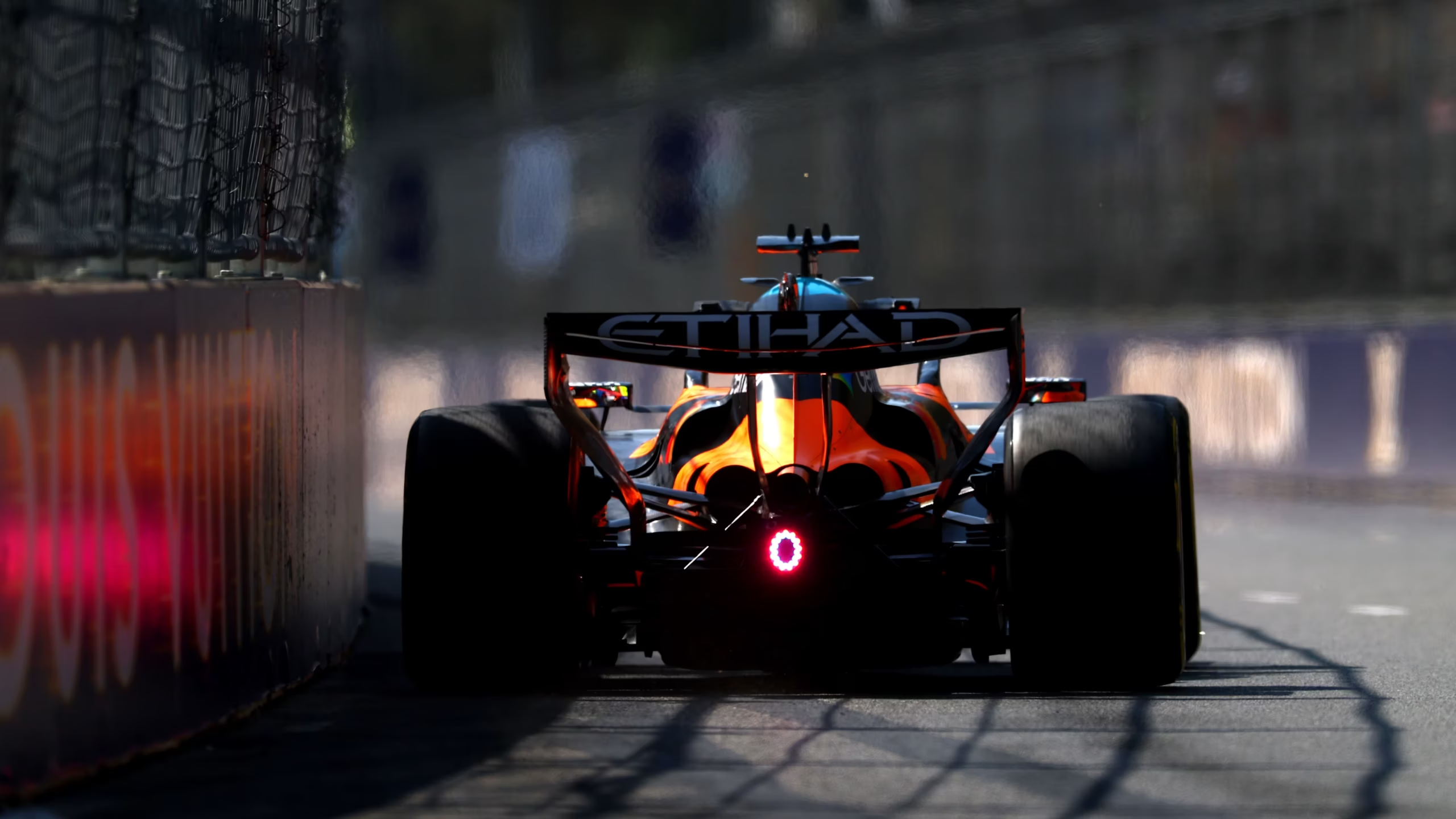
Red Bull’s latest RB22 upgrades are working as expected in Baku, giving Max Verstappen a stronger balance while bumps remain the team’s main weakness.
Red Bull gets a positive first read in Baku
Red Bull arrived in Baku with a major update package for the RB22. After the first two practice sessions, the team has received encouraging signs that the new parts are delivering the performance expected from the simulations.
Max Verstappen finished second in FP1 and third in FP2. More importantly, he said the car felt good enough to fight for a podium, even though Mercedes remained ahead on pure short-run pace.
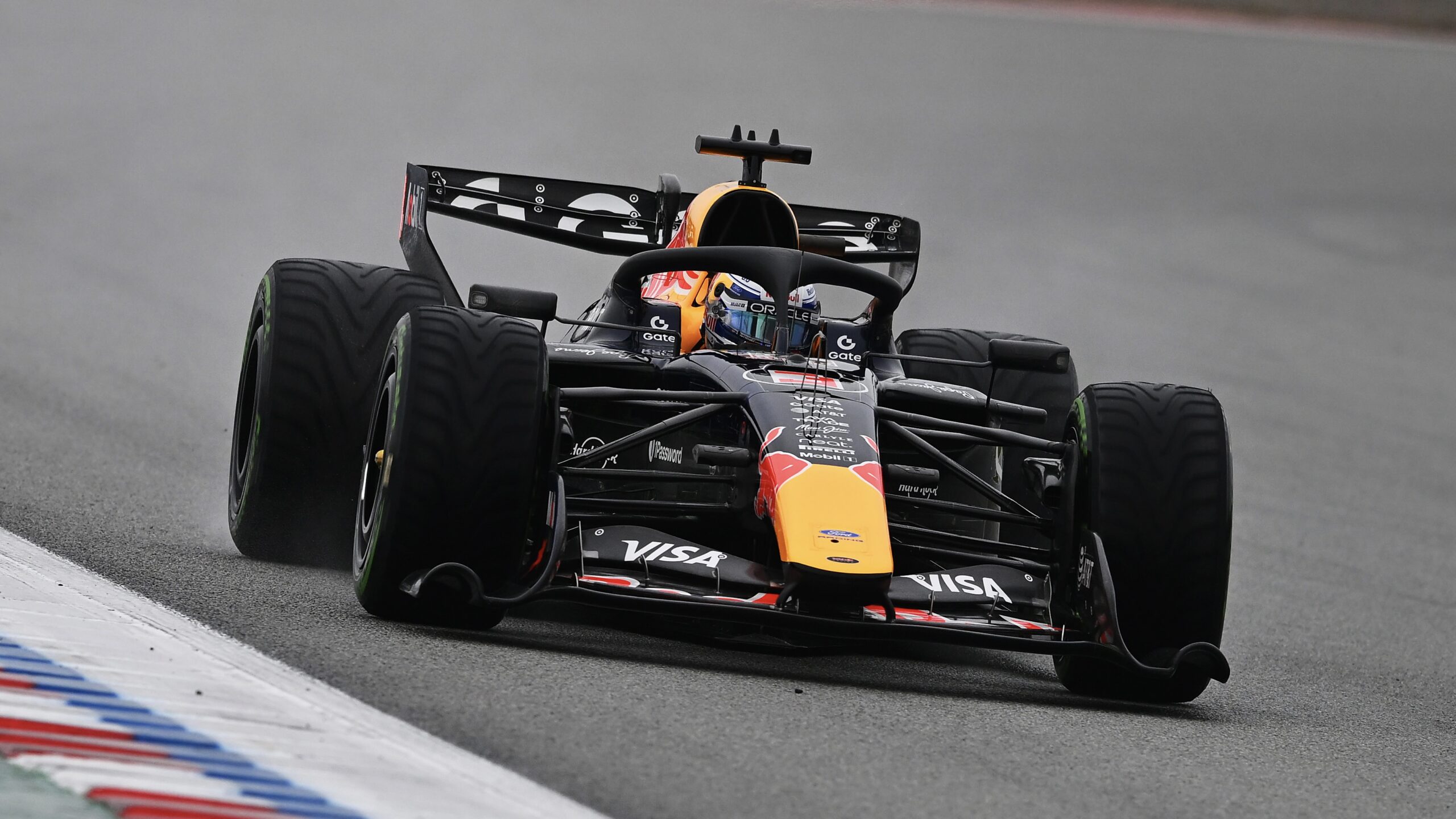
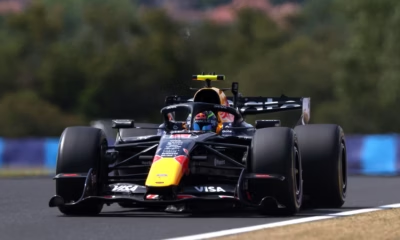
Max Verstappen drives the updated RB22 during Thursday practice at the Baku City Circuit.
The update focuses on several areas of the car.
Formula 1’s technical analysis confirms changes to the floor geometry, diffuser and sidepods. Red Bull also revised the mirror assembly, halo and cooling-louvre layout to improve airflow and increase local aerodynamic load.
That first comparison with the simulation is important.
Technical director Pierre Wache said the team received good feedback from both drivers and that the upgrade delivered roughly what Red Bull expected.
For a team that has already spent heavily developing the RB22 this season, that is a valuable result.
Verstappen is happier with the balance
The strongest positive from Thursday was not the headline lap time.
It was the balance of the car.
Verstappen said he was “pretty happy” with the RB22 after the opening day. He added that the team is now looking for more performance rather than dealing with a fundamental balance problem.
That is an important difference compared with some previous weekends.
Red Bull has often struggled when the car develops too much understeer or oversteer. In Baku, the main complaints have instead centered on how the car reacts to the uneven asphalt.
The RB22 therefore appears to have a clearer performance window.
Bumps remain the biggest problem
Baku creates a very specific technical challenge.
The circuit combines long flat-out sections with slow corners and extremely narrow streets. The Old Town section is only 7.6 meters wide at its narrowest point.
The surface is another issue.
Verstappen complained during FP2 about the ride of the RB22. Formula 1 reported that he was forced to counter-steer because the rear axle was unloading over the bumps.
That is important because Red Bull wants to keep the car low enough to maximize aerodynamic performance along Baku’s long straight.
The compromise is difficult.
A lower ride height can improve aerodynamic efficiency. But an overly stiff setup can make the car unstable when it encounters bumps or aggressive braking zones.
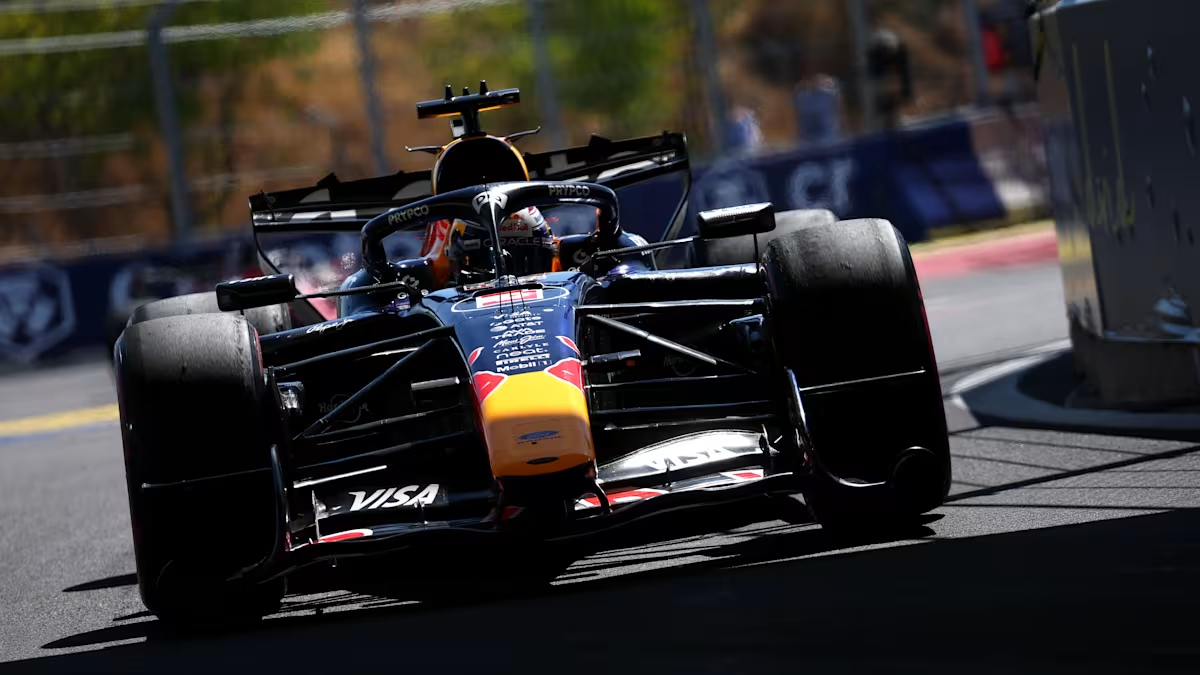
Baku combines long straights with narrow sections that place unusual demands on car stability and setup.
Red Bull therefore needs to find a better compromise overnight.
The objective is not simply to make the car softer. Engineers need to protect the aerodynamic platform while giving the rear axle a more predictable response.
That could be particularly important in qualifying.
Mercedes is still ahead on one-lap pace
The first-day picture was encouraging for Red Bull, but Mercedes remains the benchmark.
George Russell topped both FP1 and FP2, with Kimi Antonelli second in FP2. Verstappen finished third in the afternoon session, 0.827 seconds behind Russell.
Wache therefore admitted that Mercedes looked strongest over the short runs.
At the same time, the Red Bull technical director said the gaps to McLaren and Ferrari were harder to judge because of different run plans and energy deployment.
That leaves Red Bull with room to improve before qualifying.
The team does not need a completely different car. It needs to extract more speed from the package that already appears to be working.
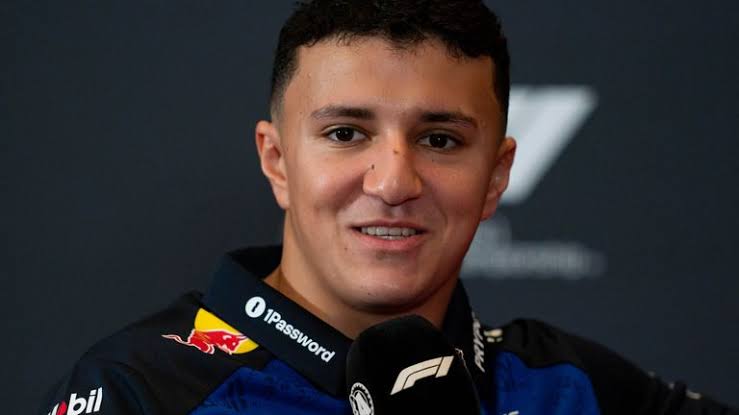
Isack Hadjar also used Red Bull’s new package and described the car as stronger than the version he drove before his injury.
Hadjar’s feedback provides another positive signal.
After missing Zandvoort, Monza and Madrid, the Frenchman returned in Baku and said the upgraded RB22 felt stronger than the car he drove in Hungary. He finished ninth in FP2.
Both Red Bull drivers therefore gave the same broad message.
The new package is working.
Red Bull is already thinking about 2027
The Baku upgrade also arrives at an important point in Red Bull’s development cycle.
The team has already started moving a significant part of its resources toward the 2027 project. That means the remaining 2026 upgrades need to deliver a clear return without consuming excessive manufacturing and development capacity.
The Baku package could be the final major step in that process.
Its early performance is encouraging because the team is getting confirmation from both the simulation tools and the drivers.
That combination matters.
A new component is only useful if its predicted aerodynamic behavior translates to real track performance. In Baku, Red Bull appears to have achieved that first connection.
The remaining issue is the surface.
Red Bull needs the RB22 to remain stable over the bumps without sacrificing the aerodynamic efficiency that gives it potential on Baku’s long straights.
For now, the Red Bull Baku upgrade has delivered the response the team wanted, and Verstappen believes the RB22 has enough balance to fight for a podium. The next step is to find the extra speed needed to close the gap to Mercedes before qualifying.








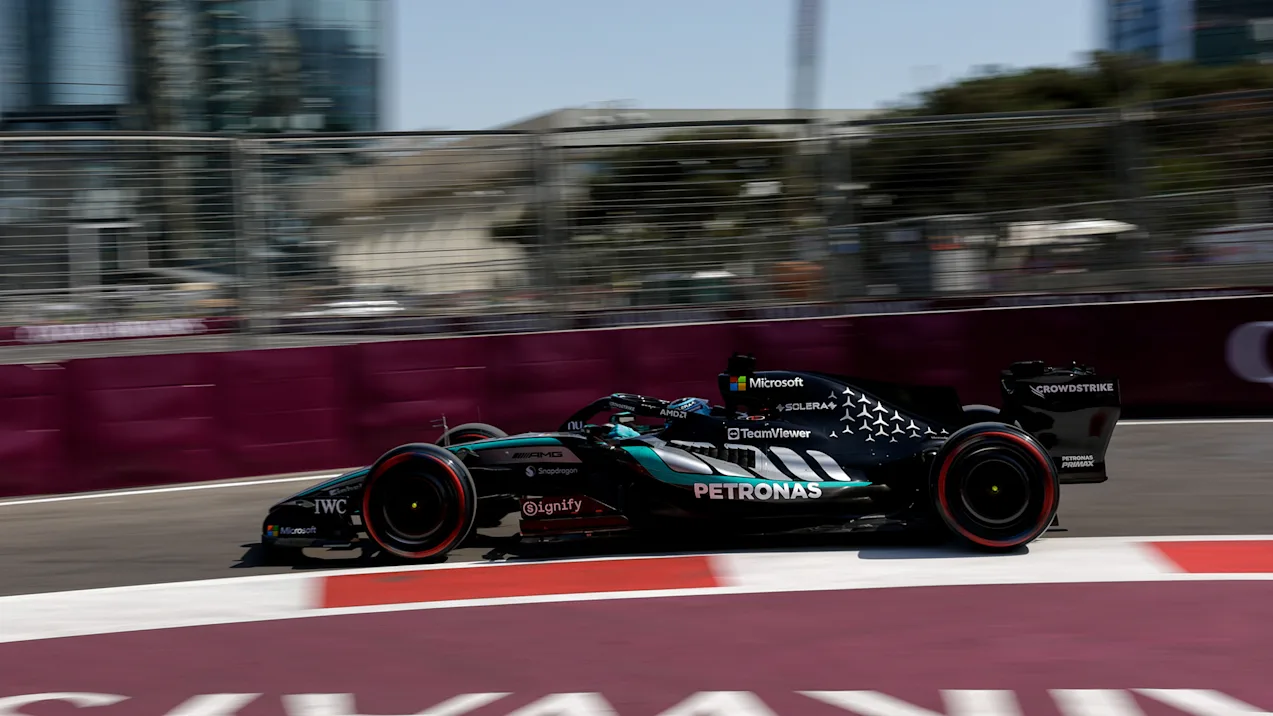
Mercedes dominated Thursday practice in Baku, but the team believes its pace advantage is larger than the real performance gap heading into qualifying and the race.
Mercedes sends a warning in Baku
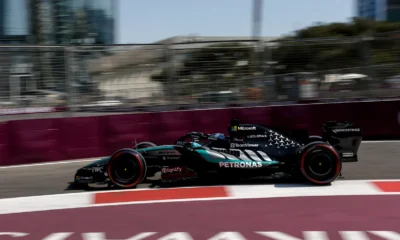
George Russell delivered a strong opening day for Mercedes at the 2026 Azerbaijan Grand Prix.
The Briton topped both practice sessions on Thursday. He finished FP2 with a 1:43.347, putting Mercedes team-mate Kimi Antonelli 0.552 seconds behind and Max Verstappen another 0.275 seconds back.
The headline gap looked even more impressive because the first non-Mercedes car was 0.827 seconds slower than Russell.
However, Mercedes does not believe that difference represents the true competitive order.
Bradley Lord, the team’s deputy team principal, pointed to the different tyre runs and track evolution during FP2. Mercedes completed more qualifying-style runs on the soft tyre, while several rivals had fewer opportunities to extract the same performance.
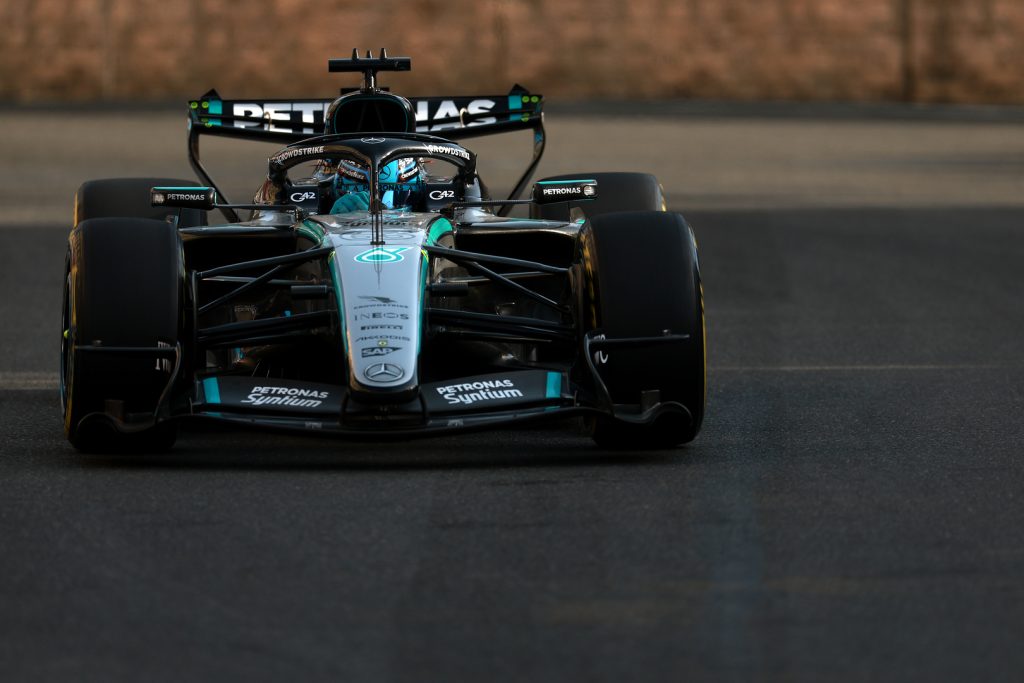
George Russell topped both Thursday sessions as Mercedes opened the Azerbaijan weekend with strong one-lap pace.
The difference was particularly visible in FP2.
Russell reached his best time after several runs on the soft compound. Verstappen, meanwhile, had already shown competitive pace on the medium tyre before switching to the softer rubber.
That makes a direct comparison more complicated.
Mercedes also benefited from a circuit that was improving with every lap. Baku started dusty and slippery, and lap times continued to fall as more rubber went down.
Red Bull was surprised by the gap
Red Bull arrived in Baku with its latest major upgrade package.
Despite that, technical director Pierre Waché admitted that he did not expect such a large difference to Mercedes, particularly on the long straights.
The main question now is whether Mercedes has found a genuine performance advantage or simply optimized its soft-tyre runs more effectively.
That distinction could become clear in qualifying.
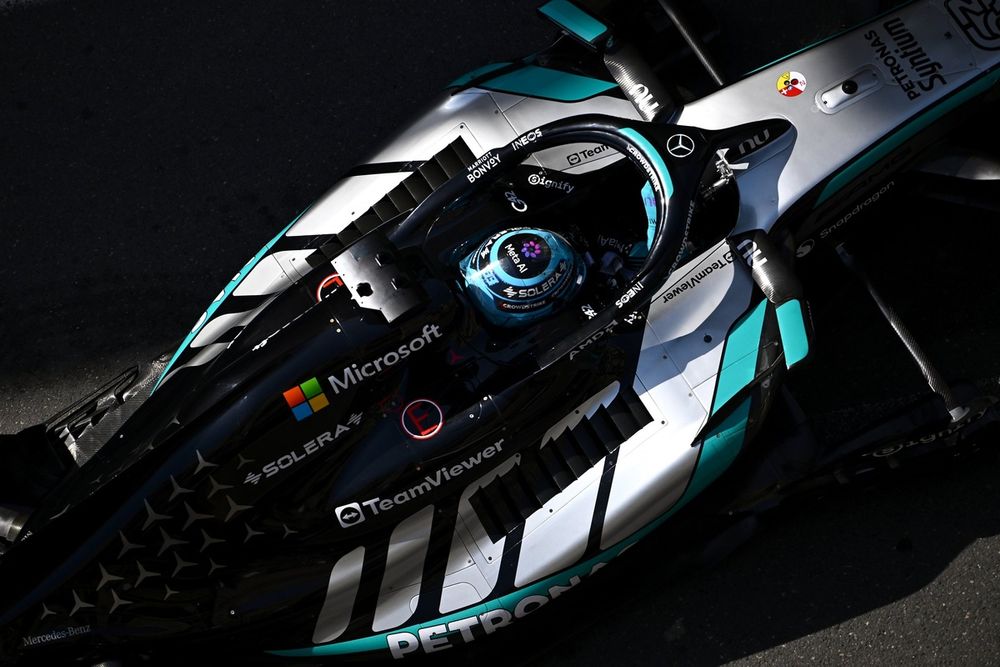
Kimi Antonelli’s Mercedes prepares for running in Baku during a disrupted Thursday for the championship leader.
Isack Hadjar also noticed the difference.
After returning to F1 following his wrist injury, the Red Bull driver said Mercedes looked outside his team’s reach based on Thursday’s pace.
That view was understandable after seeing Russell lead FP1 and FP2. Still, the competitive picture can change quickly on a street circuit.
Antonelli’s difficult Thursday makes the result harder to read
Mercedes also had an unusual problem on the other side of the garage.
Kimi Antonelli lost much of FP1 because of a hydraulic issue. He completed only nine laps in the session and stopped after reporting a loss of hydraulic pressure.
The problem also affected FP2.
Mercedes fitted a replacement power unit during the break, which delayed Antonelli’s return to the track. He therefore missed the opening part of the second session as well.
Despite that, Antonelli recovered to finish second in FP2.
That result is important because it came with significantly less running than Russell. It also suggests Mercedes had enough performance to recover quickly once the car was back on track.
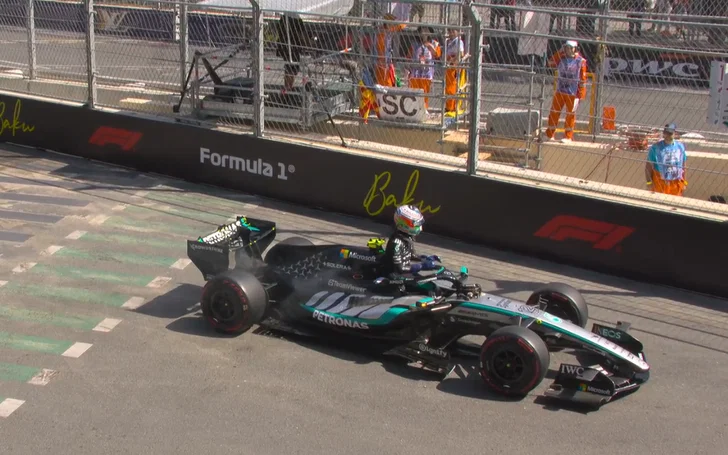
Antonelli still finished second in FP2 despite losing significant track time because of Mercedes’ hydraulic issue.
Mercedes said the power unit change was precautionary and that the replacement unit was already within the team’s available pool. As a result, Antonelli did not face a grid penalty from the change.
That allowed him to salvage an important part of the weekend.
More importantly, his lap time gives Mercedes a second reference point.
Mercedes says its race pace is much closer
The strongest warning against reading too much into Thursday comes from Mercedes itself.
Russell said the car felt competitive over a single lap, but he also believed race pace was closely matched with McLaren and Red Bull.
That is a very different picture from the 0.827-second gap seen at the top of the FP2 order.
Bradley Lord made the same point.
He expects the gaps to tighten once all teams complete comparable tyre runs and qualifying begins. Mercedes therefore does not want Thursday’s times to create unrealistic expectations.
The track layout also contributes to the uncertainty.
Baku combines extremely slow corners with one of the longest full-throttle sections of the F1 calendar. Straight-line efficiency matters, but so do traction, braking and confidence through the narrow castle section. Mercedes itself describes the circuit as one of the most demanding combinations of speed and precision on the calendar.
Mercedes has no new upgrade in Baku
There is another important detail.
Mercedes has not introduced any upgrades for the Azerbaijan Grand Prix. McLaren, Red Bull and several midfield teams have brought new components to Baku, while Mercedes is running its existing package.
That makes the Thursday performance particularly interesting.
Mercedes is producing this level of one-lap pace without a new package specifically designed for Baku.
The team has already confirmed that it plans to bring a larger upgrade package to Malaysia later in the triple-header.
For now, however, Mercedes is relying on its current car.
Qualifying will provide a better answer
The next session should reveal much more.
Qualifying will give every team the same basic objective: extract the maximum performance from the soft tyre over one lap.
That should reduce some of the uncertainty created by Thursday’s different run plans.
If Mercedes remains several tenths ahead, the team’s rivals will have stronger evidence that the W17 genuinely has an advantage in Baku.
If the gaps shrink sharply, Lord’s explanation will have been validated.
For now, the safest conclusion is that Mercedes has looked extremely strong, but Thursday practice did not provide a complete picture of the 2026 Azerbaijan Grand Prix competitive order.
Russell’s double practice lead is significant. The 0.827-second gap to Verstappen in FP2 is impressive, but tyre preparation, track evolution and different run plans mean qualifying remains the more reliable test of Mercedes’ true advantage.
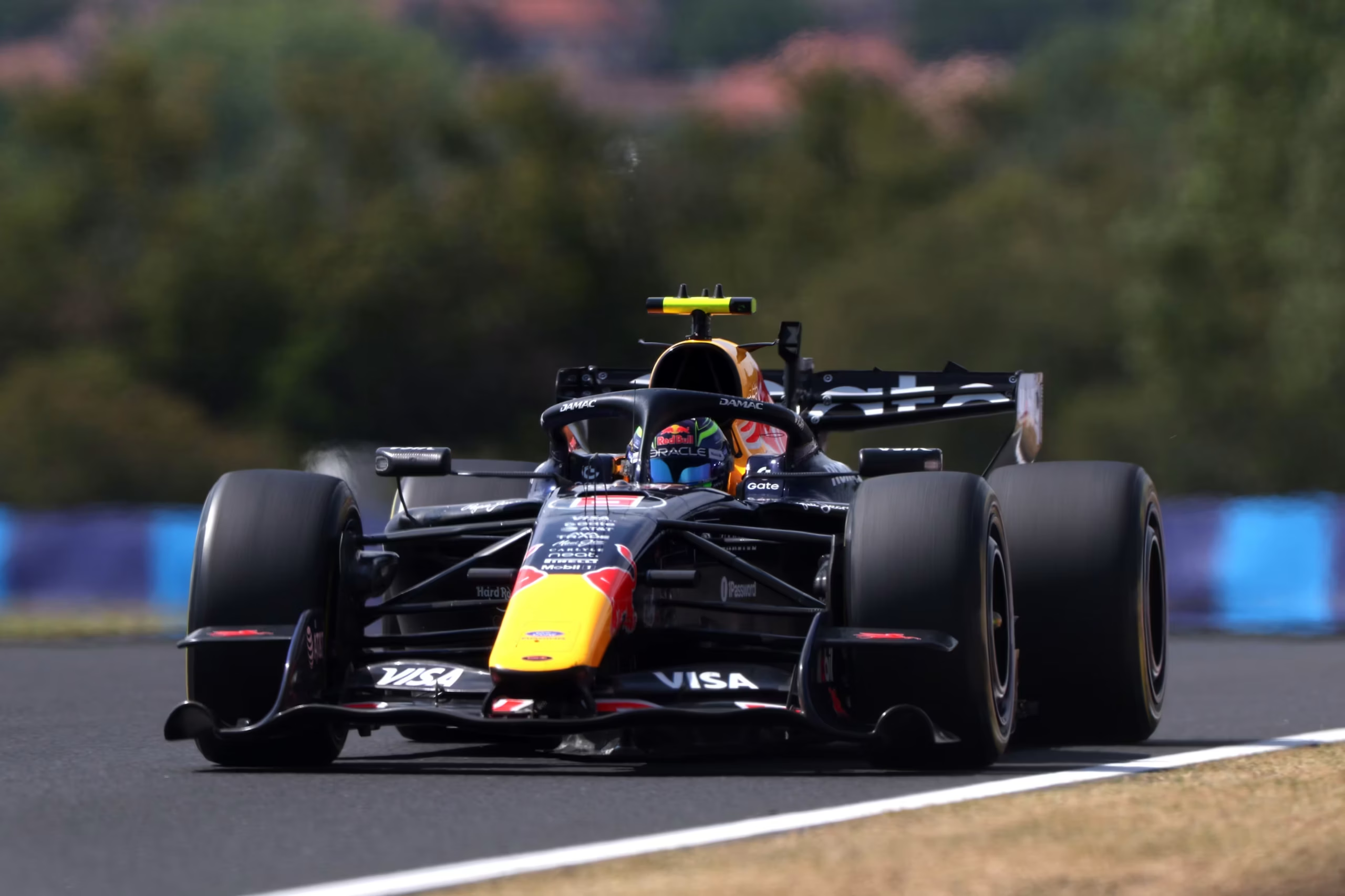
Isack Hadjar returns to Formula 1 in Baku after his wrist injury, while the Red Bull driver says he does not even know how long his new contract runs.
Hadjar returns to Formula 1 in Baku
Isack Hadjar is back in the Red Bull Formula 1 cockpit for the Azerbaijan Grand Prix.
The French driver missed the last three rounds after suffering a small fracture to the outside of his wrist during the summer break. He has now completed his rehabilitation and has been cleared to return alongside Max Verstappen in Baku.
Hadjar has not raced since the Hungarian Grand Prix in July. His return comes after almost six weeks away from the cockpit.
He said the wrist is strong enough to handle the forces involved in Formula 1. However, he also acknowledged that the injury will remain painful for some time.
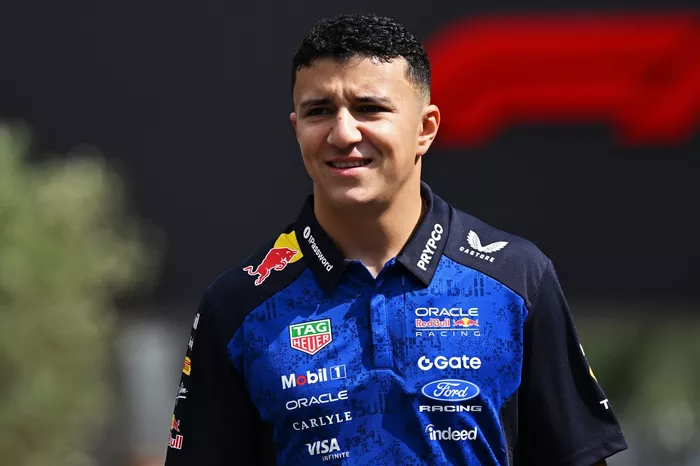
Isack Hadjar returns to the Red Bull cockpit at the Azerbaijan Grand Prix after missing three races with a wrist injury.
Hadjar said he completed a simulator test before his return. The session went well and gave him greater confidence that the wrist could cope with the demands of the real car.
His training routine was much more difficult during the recovery.
The injury limited what he could do with his left arm. Hadjar described that period as frustrating because he was unable to train normally.
Hadjar was advised not to race
The Red Bull driver also revealed a conversation with MotoGP star Marc Márquez after the injury.
Asked what Márquez told him, Hadjar gave a simple answer: he advised him not to race.
Hadjar eventually followed the medical and rehabilitation process instead. Red Bull confirmed that he would return only after recovering sufficiently from the wrist fracture.
The decision kept Liam Lawson in the Red Bull seat for Zandvoort, Monza and Madrid. Yuki Tsunoda also moved back into Racing Bulls during that period.
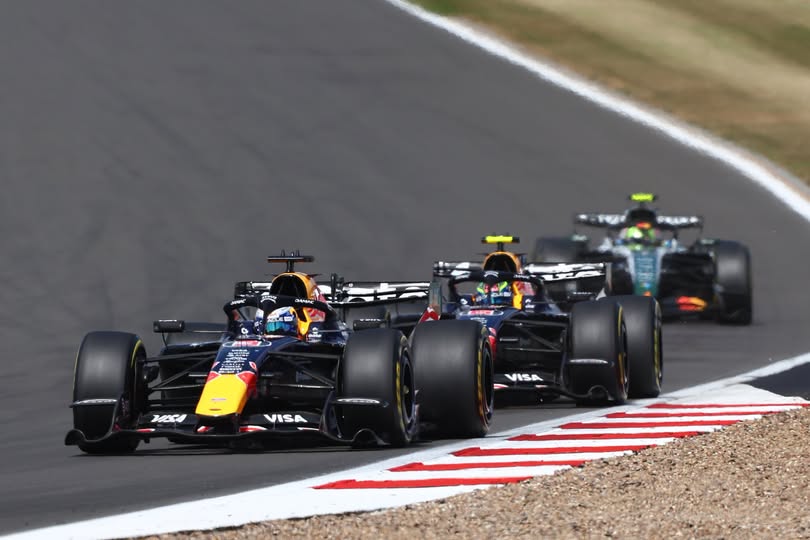
Hadjar’s last Grand Prix appearance came in Hungary before the wrist injury ruled him out of the next three rounds.
The timing of his return is important for Red Bull.
Hadjar had produced a strong run before the injury. Formula 1 says he recorded seven consecutive top-six finishes between Miami and Hungary, including a podium in Monaco.
That form also played a role in his contract extension.
Red Bull confirms Hadjar for 2027
Red Bull confirmed on September 23, 2026 that Hadjar will remain with the team for the 2027 Formula 1 season.
He will continue to partner Verstappen, giving Red Bull continuity in its driver lineup for next year.
The announcement came on the same day as Hadjar’s comments in Baku.
The 21-year-old explained that he did not negotiate the details himself. He said he left those discussions to his representatives and focused on performing on track.
His message was simple: “If you’re good, you stay, and that’s it.”
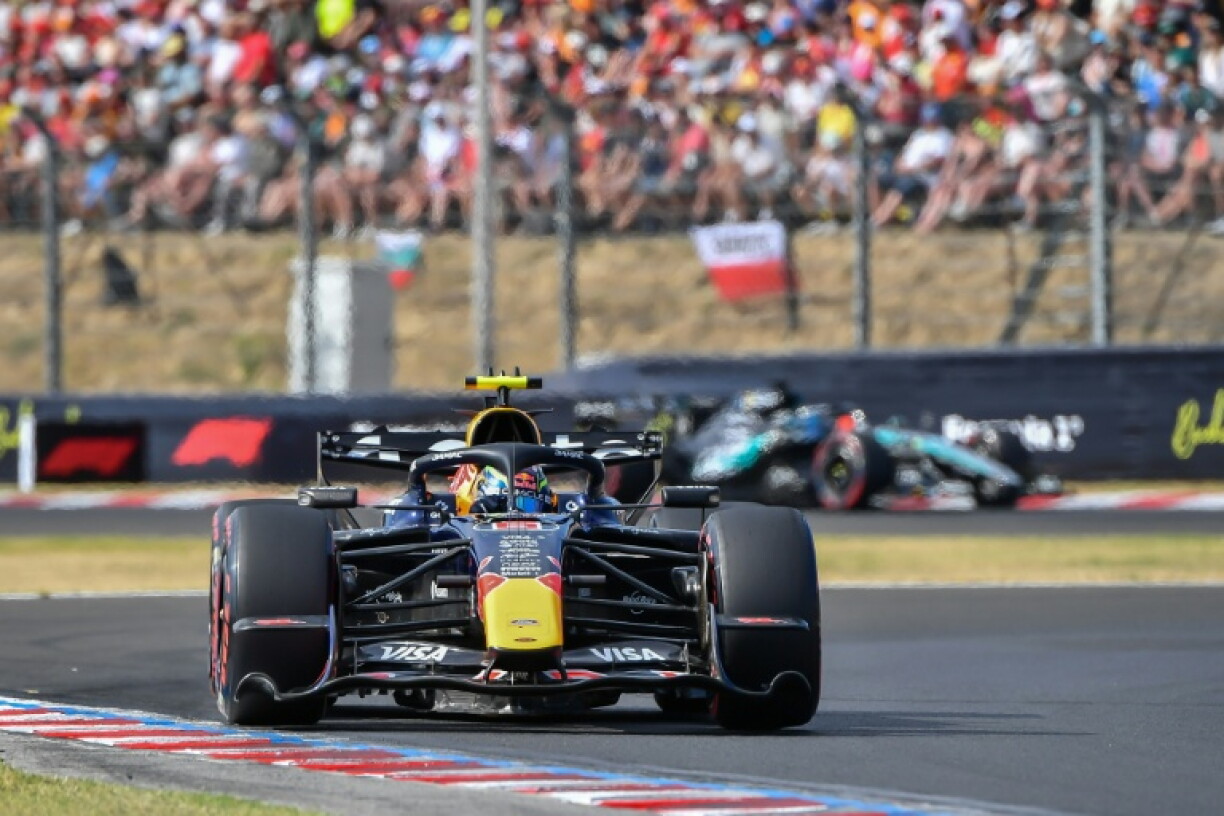
Hadjar will continue alongside Max Verstappen after Red Bull confirmed his contract extension for the 2027 season.
Interestingly, Hadjar admitted that he does not know the exact length of his contract beyond the confirmed 2027 commitment.
Rather than focusing on the paperwork, he prefers to concentrate on his performance. Red Bull’s official announcement confirms that he has committed to an extended contract for next season.
Team principal Laurent Mekies also explained why the decision was straightforward.
He pointed to Hadjar’s performances, his development work with engineers and the progress he made after stepping up to the senior Red Bull team.
Hadjar has no specific target for his return
The driver is also avoiding a specific result target for the Azerbaijan Grand Prix.
Instead, he wants to return to the battle and compete with the drivers immediately ahead of him. The priority is to regain his rhythm after such a long period away from racing.
That task will not be simple.
Baku is a demanding street circuit, with long straights, heavy braking zones and narrow sections through the old city. Red Bull describes it as one of the toughest street tracks on the calendar.
For Hadjar, the biggest challenge may simply be getting comfortable again.
He has already tested himself in the simulator. Now he must find out how the wrist responds to the real forces of an F1 car over a full weekend.
Red Bull now has its 2027 lineup confirmed
With Hadjar’s extension completed, Red Bull’s 2027 driver pairing is settled.
Verstappen already has a contract through 2030. Hadjar’s extension means the team can now focus on developing both drivers and its wider 2027 project without a change in its senior lineup.
For Hadjar, the immediate priority is different.
He wants to put the injury behind him and return to the level of performance he showed before the setback.
The Isack Hadjar Red Bull return therefore begins in Baku with two important developments at once: he is back in the car after three missed races, and he has secured his place alongside Verstappen for the 2027 season.
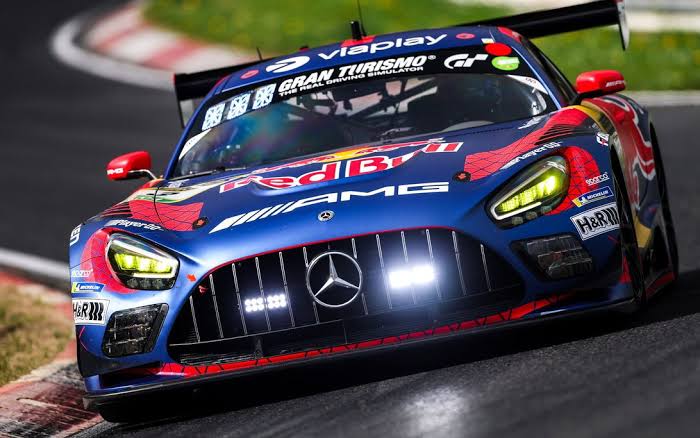
Max Verstappen has ruled out a 2027 Le Mans debut, but the four-time F1 World Champion is targeting the Nürburgring 24 Hours and Spa 24 Hours instead.
Verstappen closes the door on a 2027 Le Mans debut
Max Verstappen has ruled out competing in the 2027 24 Hours of Le Mans.
The decision comes despite the race falling on a weekend without Formula 1. Verstappen confirmed his plans in Baku on Wednesday, saying that the Nürburgring and Spa are more likely options for his 2027 endurance programme.
“Nürburgring and Spa, probably. Le Mans, not. It’s not on my list at the moment,” Verstappen said.
That leaves the Dutchman with two major 24-hour races on his agenda.
Both also fit around the recently announced 2027 F1 calendar.
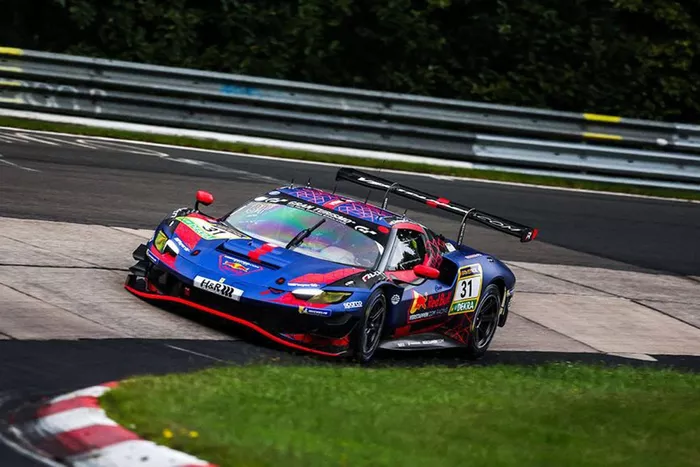
Verstappen wants another opportunity at the Nürburgring after losing the 2026 race because of a late mechanical failure.
The 2027 24 Hours of Nürburgring is scheduled for May 27-30. That puts it before the Monaco Grand Prix, which will take place from June 4-6.
For Verstappen, the event has particular importance.
Nürburgring remains a priority for Verstappen
Verstappen made his Nürburgring 24 Hours debut in 2026 with Verstappen Racing and Mercedes-AMG.
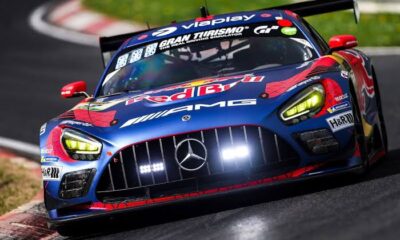
He shared the No. 3 Mercedes-AMG GT3 with Lucas Auer, Jules Gounon and Daniel Juncadella. The car was leading the race deep into the event before a late technical failure ended its challenge.
The result did not change Verstappen’s opinion of the circuit.
After the race, he said he wanted to return. The Dutchman later confirmed that he would try again depending on his schedule.
That opportunity is now available.
The 2027 Nürburgring date does not conflict with an F1 Grand Prix. It also gives Verstappen several weeks before Monaco to complete the endurance event without immediately moving into another F1 weekend.
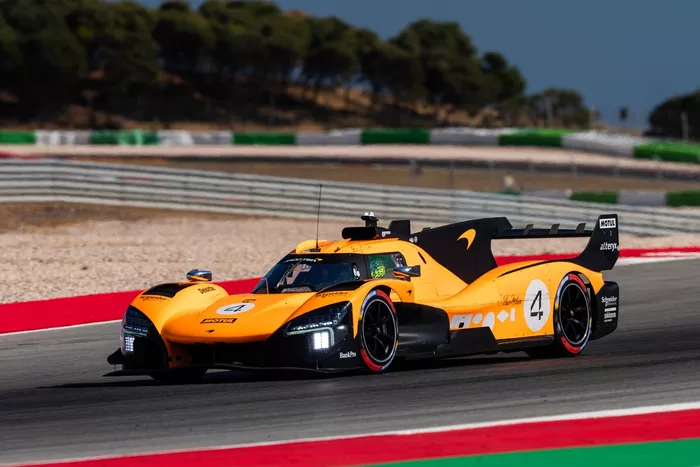
Verstappen continued to build his experience in GT3 machinery during the 2026 Nürburgring programme.
The 2026 programme also gave Verstappen valuable experience on the Nordschleife.
He raced in preparation events before the 24-hour classic and won the second round of the Nürburgring Langstrecken-Serie with the Mercedes-AMG GT3.
That experience is one reason the Nürburgring remains an attractive option for 2027.
Spa is another endurance target
The second race on Verstappen’s radar is the 24 Hours of Spa-Francorchamps.
The Belgian endurance classic is scheduled for June 24-27, 2027. It falls between the Portuguese Grand Prix on June 18-20 and the British Grand Prix on July 2-4.
That makes Spa a realistic option from a calendar perspective.
Verstappen had already expressed interest in competing at Spa. In 2026, he said he would have liked to race there if the event had not clashed with Formula 1.
The 2027 schedule removes that direct conflict.
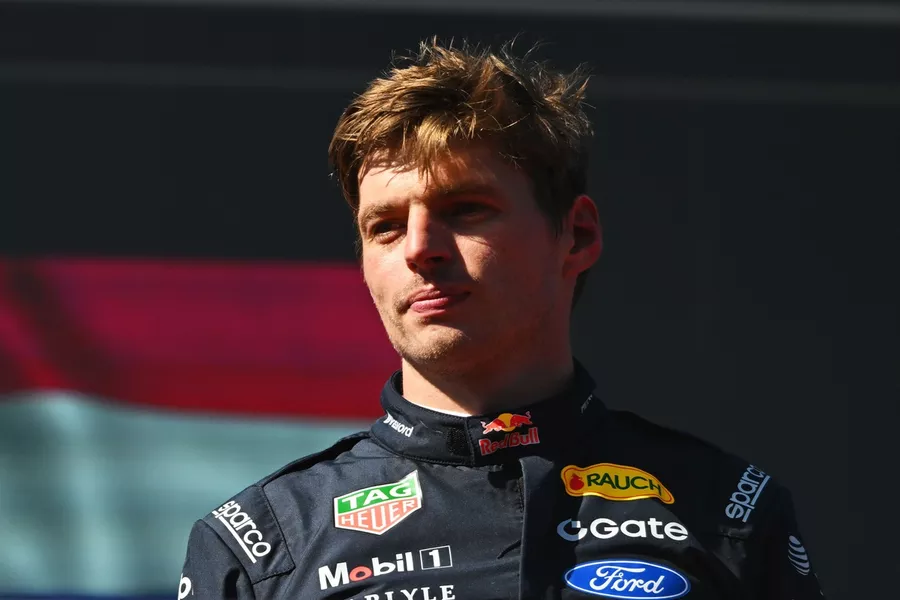
The Spa programme would also be another step for Verstappen Racing, his own GT3 operation.
The team competed at the 2026 24 Hours of Spa with a Mercedes-AMG GT3 EVO driven by Daniel Juncadella, Chris Lulham and Jules Gounon. Verstappen himself could not take part because of the F1 calendar conflict.
That situation changes in 2027.
The official F1 calendar places the Austrian Grand Prix on July 9-11 and the Belgian Grand Prix on July 23-25. Spa’s 24-hour race therefore sits between F1 weekends.
Why Le Mans remains different
Le Mans presents a more complicated challenge.
The 2027 24 Hours of Le Mans runs from June 9-13, with the race itself taking place on June 12-13.
The 2027 F1 calendar places Monaco on June 4-6 and Portugal on June 18-20. So the main 24-hour race does not directly overlap with a Grand Prix.
However, Le Mans requires a much broader commitment than the race itself.
Its race week begins days before the 24-hour contest. There are also preparation and track activities that make the event significantly more demanding for a driver coming directly from an F1 season.
For now, Verstappen has decided that the commitment is not one he wants to make in 2027.
Verstappen’s focus remains split between F1 and GT3
The Dutchman’s endurance plans do not mean that Formula 1 is becoming secondary.
Verstappen remains focused on his F1 programme while developing his GT3 activities outside the championship. His Nürburgring and Spa plans fit into a calendar that was specifically arranged without direct clashes on those weekends.
That gives him the possibility to compete in major endurance events without sacrificing an F1 Grand Prix.
For now, the plan is therefore becoming clearer.
Le Mans is off the 2027 list. Nürburgring and Spa are the races Verstappen is considering.
The Nürburgring is already confirmed for May 27-30, 2027, while Spa is scheduled for June 24-27. Whether Verstappen ultimately enters both events will depend on his final schedule and preparations.
-
 NOW TRENDING1 month ago
Tesla Cybercab Gets September 3 Austin Launch Date
-
 INTELLIGENT MOBILITY2 months ago
GM Updates Infotainment System With Smarter Features
-
 NOW TRENDING2 months ago
2027 Audi Q9 and SQ9 Debut as Brand’s Largest SUVs
-
 NOW TRENDING2 months ago
2027 Hyundai Tucson Spied With New Design and Hybrid Power
-
 NOW TRENDING2 months ago
Every GM Assembly Plant Operating in the U.S. in 2026
-
 NOW TRENDING2 months ago
2026 Toyota GRMN Corolla Debuts as the Ultimate Hot Hatch
-

 NOW TRENDING2 months ago
Ferrari Sold Out Through 2027 as Demand Hits New High
-
 NOW TRENDING1 month ago
Audi’s New SUVs Could Help Reverse Its Sales Decline in 2026
You must be logged in to post a comment Login