
INTELLIGENT MOBILITY
Hyundai Patents a Magnetic Hardtop That Could Make Off-Road Roofs Easier

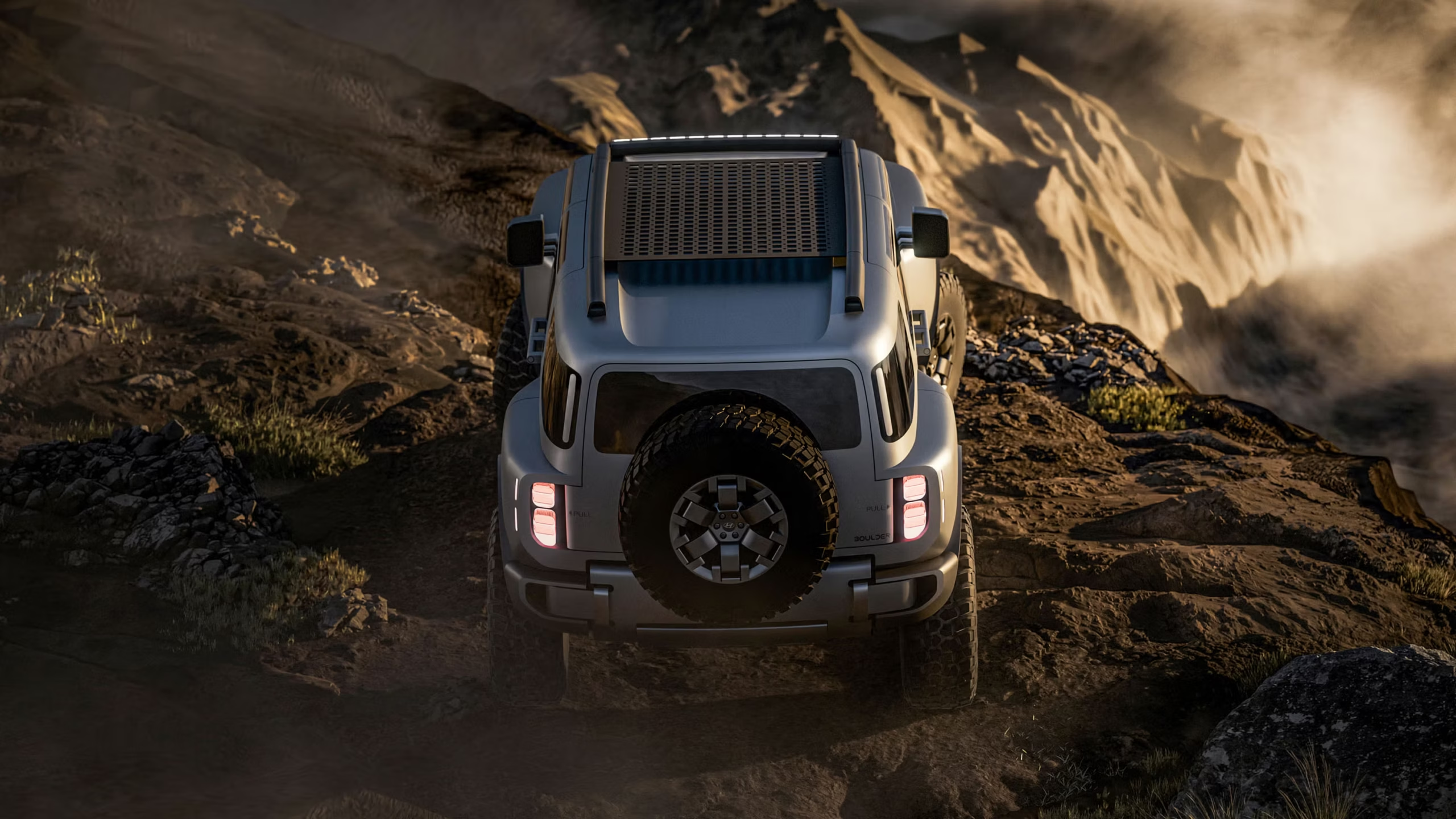
Hyundai and Kia have patented a modular hardtop that uses magnets to simplify roof-panel installation and removal. The technology could eventually find its way onto Hyundai’s upcoming American-built off-road vehicles.
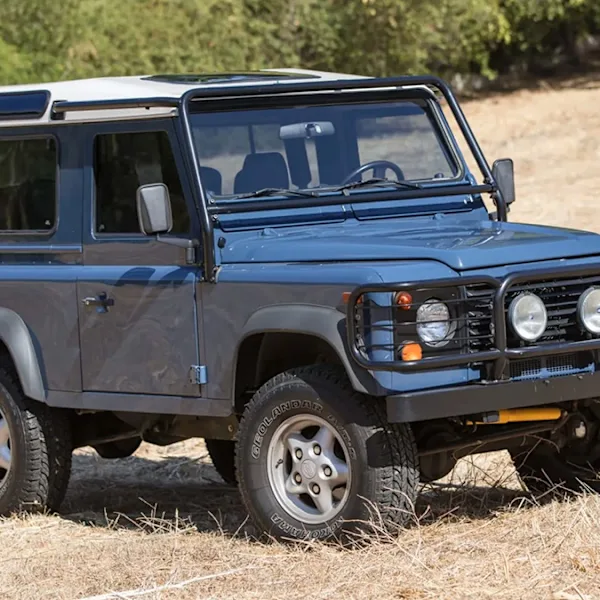
The Hyundai magnetic hardtop could offer a clever solution to one of the most annoying parts of owning a removable-roof off-road SUV. Instead of requiring two people or a garage-mounted hoist, a new Hyundai and Kia patent describes a modular roof system designed to be installed and removed by a single person.
U.S. Patent Application 19/071,347, titled “Modular Canopy Assembly System,” was published September 10, 2026. The filing describes a roof system divided into separate panels that use magnets to help position and temporarily hold the pieces during installation.
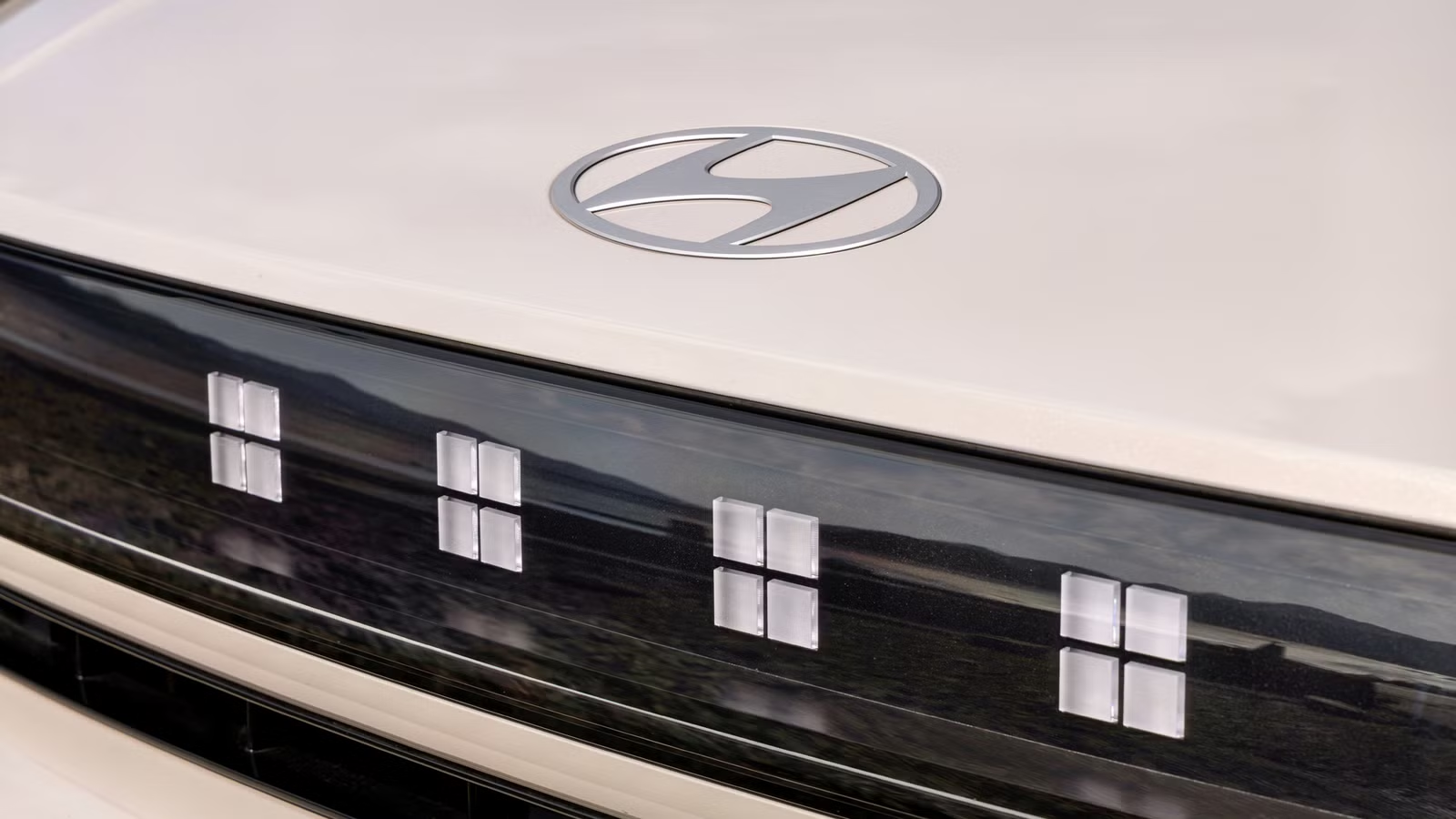
The application does not identify a production vehicle. However, its timing is interesting because Hyundai is preparing a new body-on-frame vehicle program for North America, giving the technology an obvious potential application in the brand’s future off-road lineup.
The Hardtop Is Split Into Four Sections
The patented system is fundamentally different from a conventional one-piece hardtop. It can use two side panels, a rear panel and a separate roof panel, with the pieces installed individually.
That modular approach makes each component easier to handle. The patent specifically describes panels that can be lightweight enough for one person to assemble or remove without external lifting equipment.
Hyundai and Kia’s patent describes a four-piece hardtop system designed to be installed one panel at a time.
The side panels are installed first and positioned using brackets and locating pins. The rear panel can then be placed between them before the roof panel is lowered into position.
That process is designed to eliminate the awkward balancing act associated with large removable roof pieces.
Magnets Do the Alignment Work
The most interesting element is the use of magnets.
According to the patent, magnetic locating mechanisms and mounting plates help the individual sections find their correct positions. The magnetic force holds the panels in place while the user completes the mechanical locking process.
This is not a system in which magnets are solely responsible for securing the roof while driving. Instead, they act as an installation aid.
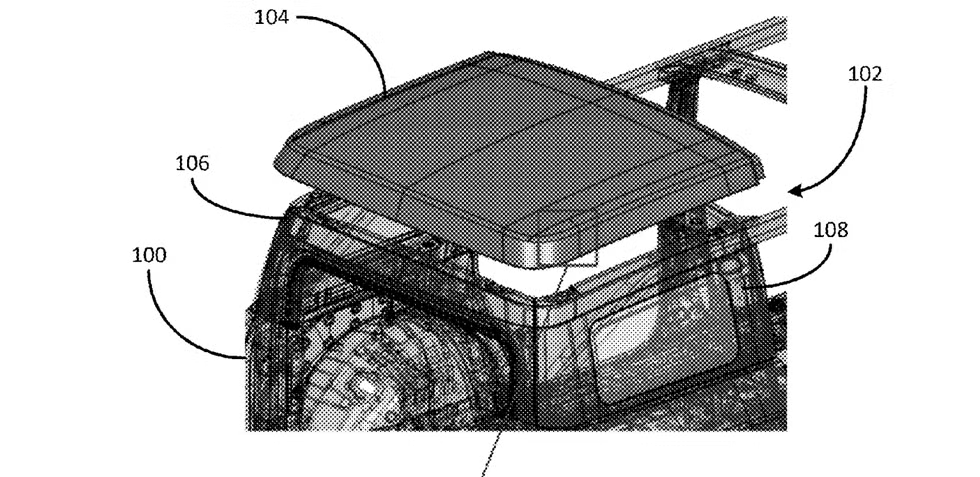
Magnets are designed to align and temporarily hold the hardtop components while mechanical fasteners secure them.
The rear section uses protruding studs that pass through holes in the side panels. Handles can then be connected to those studs to lock the rear panel into position.
Once the roof section is aligned, additional latching handles secure it to the rest of the assembly.
The Roof Uses Conventional Latches Too
Hyundai and Kia are not replacing mechanical fasteners entirely. The patent describes a combination of magnetic locating hardware, guide pins and traditional latching mechanisms.
The roof panel can use guide pins to help position it correctly. Once the panel is sitting in the right location, internal latching handles can be rotated into place to complete the installation.
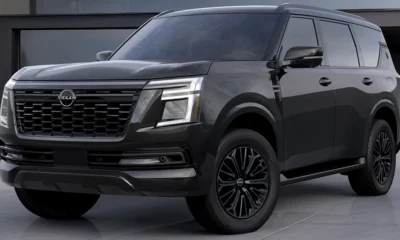
Hyundai’s Boulder Concept previews the company’s upcoming U.S.-focused body-on-frame vehicle strategy.









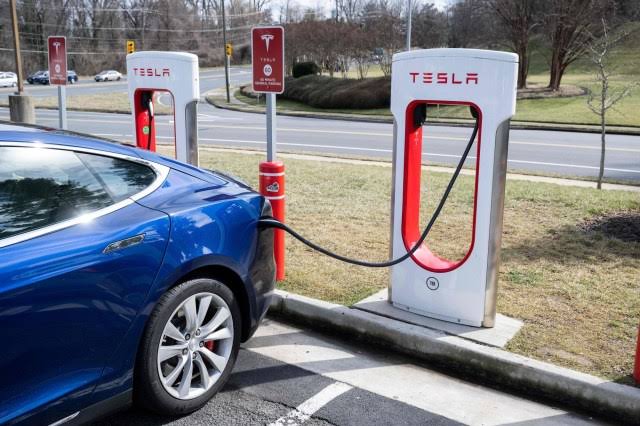
Tesla is expanding its electric-truck charging network in California through a new partnership with Forum Mobility. Four new depots will add 30 megawatts of heavy-duty charging capacity.
Tesla is expanding its heavy-duty charging infrastructure in California through a new partnership with Forum Mobility. The companies are adding 30 megawatts of charging capacity across four new electric-truck depots designed around the needs of commercial fleets.
The new facilities will combine Tesla’s Megawatt Charging System technology with CCS charging ports. Pull-through lanes will also allow trucks to charge without requiring complicated maneuvering at the depot.
The expansion comes as Tesla continues preparing its Semi for a broader rollout and moves closer to expanding the electric truck beyond North America.
Tesla Will Operate Three Public Megacharging Sites
Tesla will operate public Megacharging facilities at three of the new Forum Mobility locations. They are FM Francis in Ontario, California, and FM Adeline and FM Coliseum in Oakland.
The fourth new location is FM Santa Fe in Rancho Dominguez. Forum Mobility says the site already has commitments from fleet operators for more than 330 Tesla Semi trucks, while charging access will also be available to other commercial trucking customers.
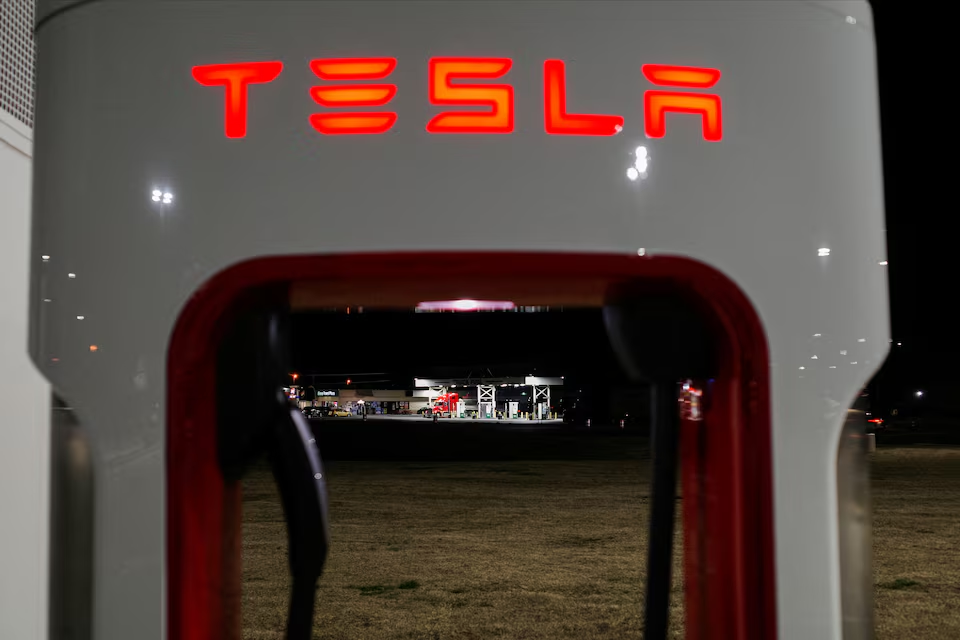
Tesla is expanding public Megacharging access for electric trucks at new Forum Mobility locations across California.
The new network is designed specifically around heavy-duty transportation rather than passenger vehicles. That means charging infrastructure can be integrated into freight operations, where keeping trucks moving is one of the most important considerations.
The use of pull-through lanes is particularly relevant because it allows trucks to enter, charge and leave without the maneuvering required at many conventional charging locations.
Four New Depots Add 30 Megawatts of Charging Capacity
Forum Mobility is developing four new depots across Northern and Southern California as part of the expansion.
The sites will use both MCS and CCS charging, giving commercial operators additional flexibility depending on the type of truck and charging system being used.
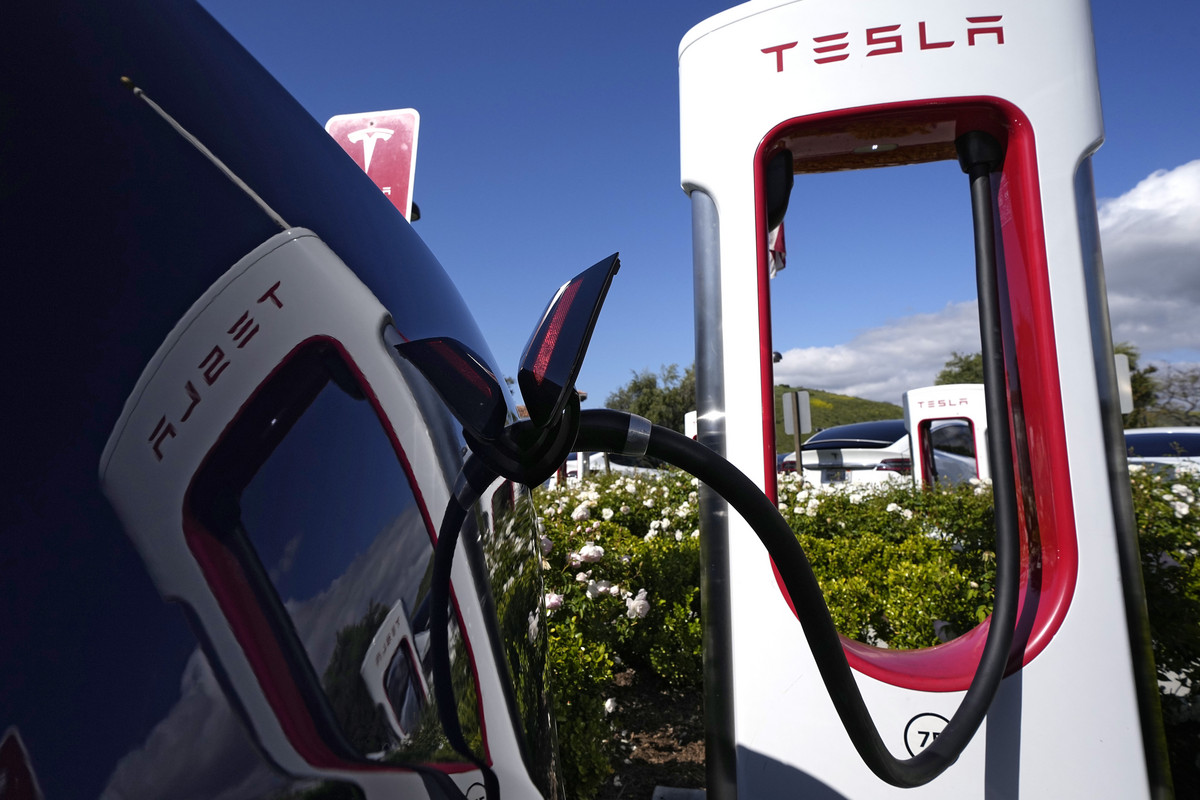
Forum Mobility’s new California depots are designed around pull-through lanes and high-power charging for commercial electric trucks.
The charging infrastructure is being developed around the operational realities of freight companies. Instead of treating charging as a separate stop, the depots are designed to become part of the normal logistics cycle.
That could become increasingly important as more trucking fleets transition from diesel to battery-electric vehicles.
Tesla Semi Fleets Are Already Committing to the Network
The FM Santa Fe location in Rancho Dominguez already has commitments involving more than 330 Tesla Semis, according to Forum Mobility.
The site will also remain open to other commercial trucking customers. That gives fleet operators access to infrastructure without necessarily having to develop and operate their own dedicated charging facility.
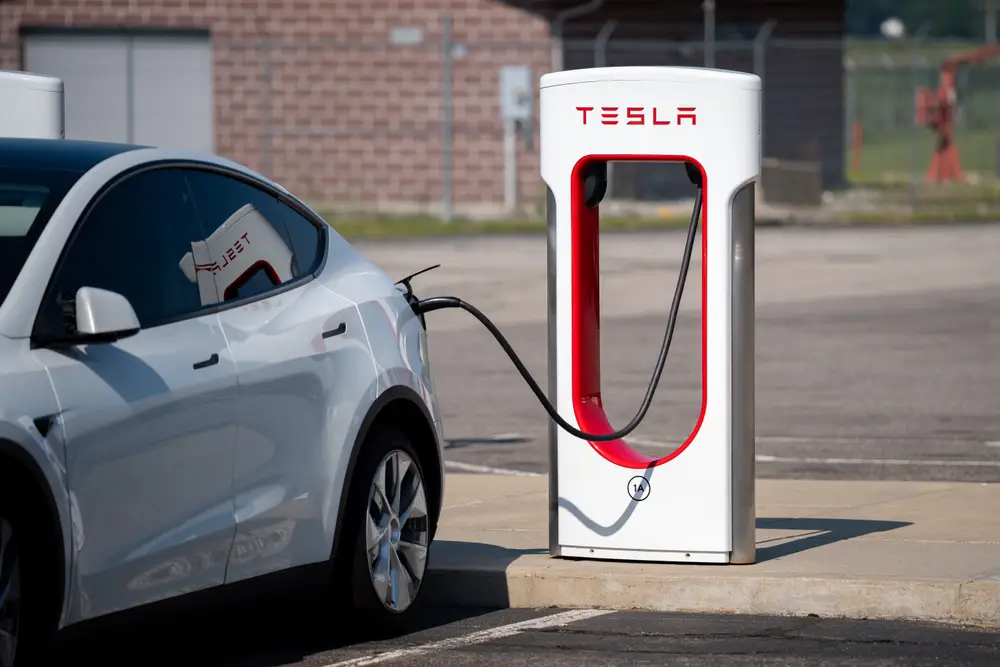
Forum Mobility says fleet operators have already committed to more than 330 Tesla Semi trucks at its Santa Fe facility.
Volkswagen is expanding its IQ.Drive system for the 2027 model year with new lane-change assistance, smarter adaptive cruise control and additional safety technology across several U.S. models.
Volkswagen is giving its Volkswagen IQ.Drive driver-assistance system a significant technology upgrade for the 2027 model year. The latest improvements will arrive on the Atlas, Golf, ID. Buzz and Tiguan in the United States.
The updated system adds several features designed to make highway driving and low-speed maneuvers easier. Among them are driver-initiated automatic lane changes, predictive adaptive cruise control and a new rear camera system capable of detecting pedestrians.
Volkswagen is also introducing a cloud-based data system for the 2027 ID. Buzz designed to improve the performance of its advanced driver-assistance technology.
Travel Assist Gets Automatic Lane Changes
One of the biggest changes to IQ.Drive is an upgraded Travel Assist function that allows the driver to initiate an automatic lane change.
At speeds above 45 mph, the driver can activate the maneuver by using the turn-signal stalk. The system then checks the adjacent lane using rear radar sensors before proceeding.
Three turn-signal flashes confirm that the system has recognized the requested maneuver.
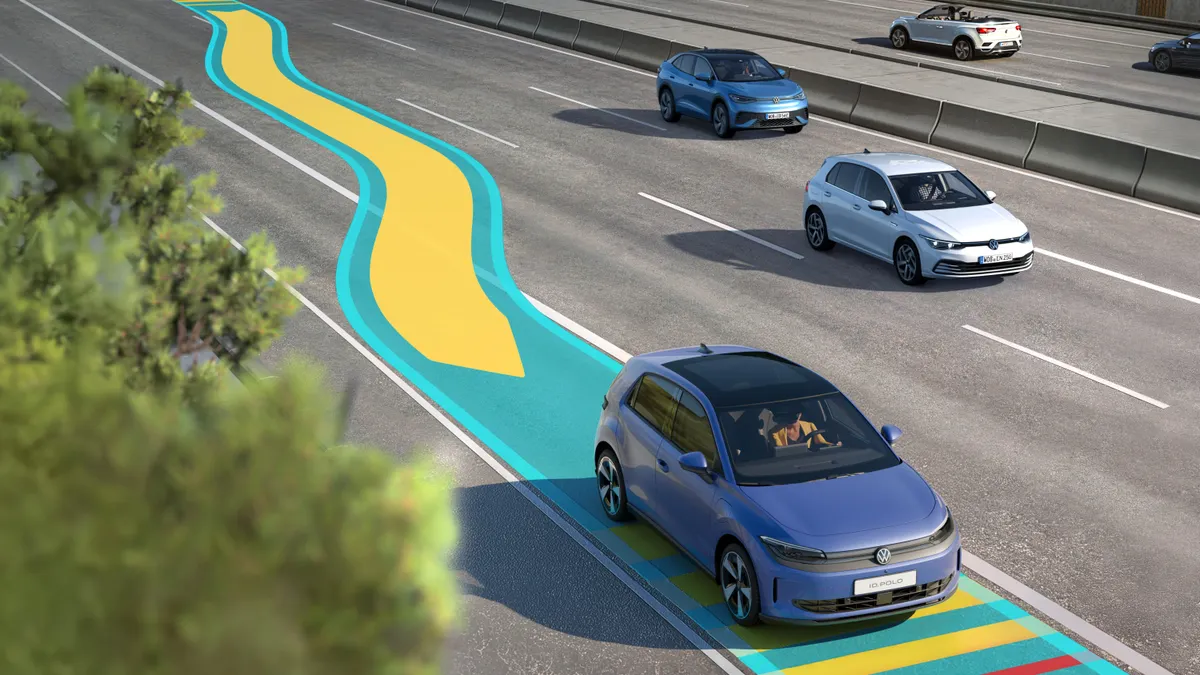
Volkswagen’s updated IQ.Drive system adds driver-initiated automatic lane changes through Travel Assist.
There is also a new “wait-to-clear” function. If another vehicle is blocking the desired lane, the system can pause the lane change for up to 12 seconds.
The driver receives an indication on the instrument cluster when the lane is occupied. Once it becomes clear, a green arrow signals that the automatic maneuver can proceed.
Predictive Adaptive Cruise Control Becomes More Responsive
Volkswagen is also changing how its predictive adaptive cruise control reacts to speed-limit changes.
The updated system is designed to recognize speed-limit increases earlier and reduce delays caused by traffic-sign recognition. That should make the system feel more natural during longer drives.
Before automatically adjusting the vehicle’s speed, the system displays a prompt asking the driver to accept or reject the new limit.
Volkswagen’s upgraded predictive adaptive cruise control is designed to respond more smoothly to changing speed limits.
Drivers can accept the change by pressing the accelerator or using the “Res” button on the steering wheel.
That preserves driver control while reducing the number of steps needed to manage changing speed limits on the road.
Emergency Assist Plus Can Pull the Vehicle Over
Another major addition is Emergency Assist Plus.
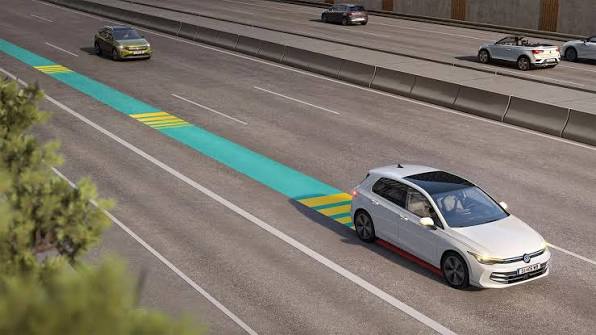
The system can steer the vehicle toward the side of the road if it detects a potential medical emergency involving the driver. However, Lane Assist or Travel Assist must already be activated for the function to operate.
Once the vehicle reaches the shoulder or far-right lane, it can automatically shift into Park, activate the hazard lights and sound the horn.
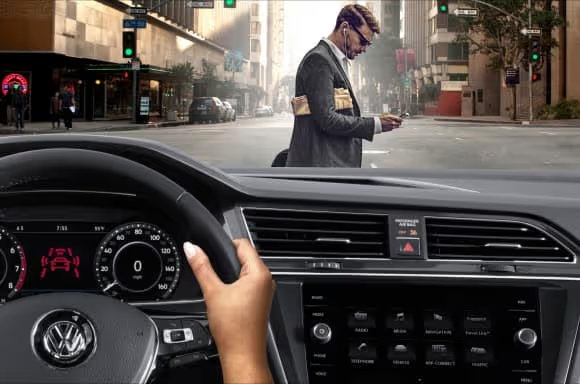
Volkswagen is adding additional emergency and pedestrian-detection technology to its 2027 IQ.Drive-equipped vehicles.
The system can also unlock the doors and switch on the vehicle’s lights before initiating an emergency call.
That makes Emergency Assist Plus different from conventional driver assistance because it is designed to respond to a situation in which the driver may no longer be able to operate the vehicle normally.
ID. Buzz Gets a Cloud-Based Driving Data System
The 2027 ID. Buzz receives another technology called Road Experience Management.
The feature will be part of Volkswagen’s In-Vehicle Premium subscription service. Buyers receive a one-year trial before a paid subscription is required.
The cloud-based system collects real-world information such as lane markings, road signs and street lighting. Volkswagen says that data can improve map quality and, in turn, improve the operation of the vehicle’s driver-assistance systems.
For example, if painted lane markings become difficult for cameras to identify, map data could help the vehicle maintain its lane position.
Rear Cameras Can Detect Pedestrians
Volkswagen is also adding a new rear camera system to select versions of the 2027 Atlas, ID. Buzz and Tiguan.
The system can detect pedestrians behind the vehicle while it is reversing between 1 and 6 mph. When a pedestrian is detected, the vehicle can automatically apply the brakes to help avoid a collision.
That expands IQ.Drive beyond highway assistance and into low-speed situations where visibility can be limited.
Volkswagen Continues Expanding IQ.Drive
The Volkswagen IQ.Drive updates show how automakers are increasingly adding more functions to existing driver-assistance systems rather than treating them as fixed packages.
The 2027 changes cover highway driving, emergency situations, speed-limit management, reversing and even cloud-based mapping data. At the same time, Volkswagen is using the same technology foundation across gasoline-powered and electric models.
For U.S. buyers, the biggest changes will arrive on the 2027 Atlas, Golf, ID. Buzz and Tiguan. The company is positioning the upgrades as a way to make advanced driver assistance more intuitive while giving drivers more information and support in everyday situations.
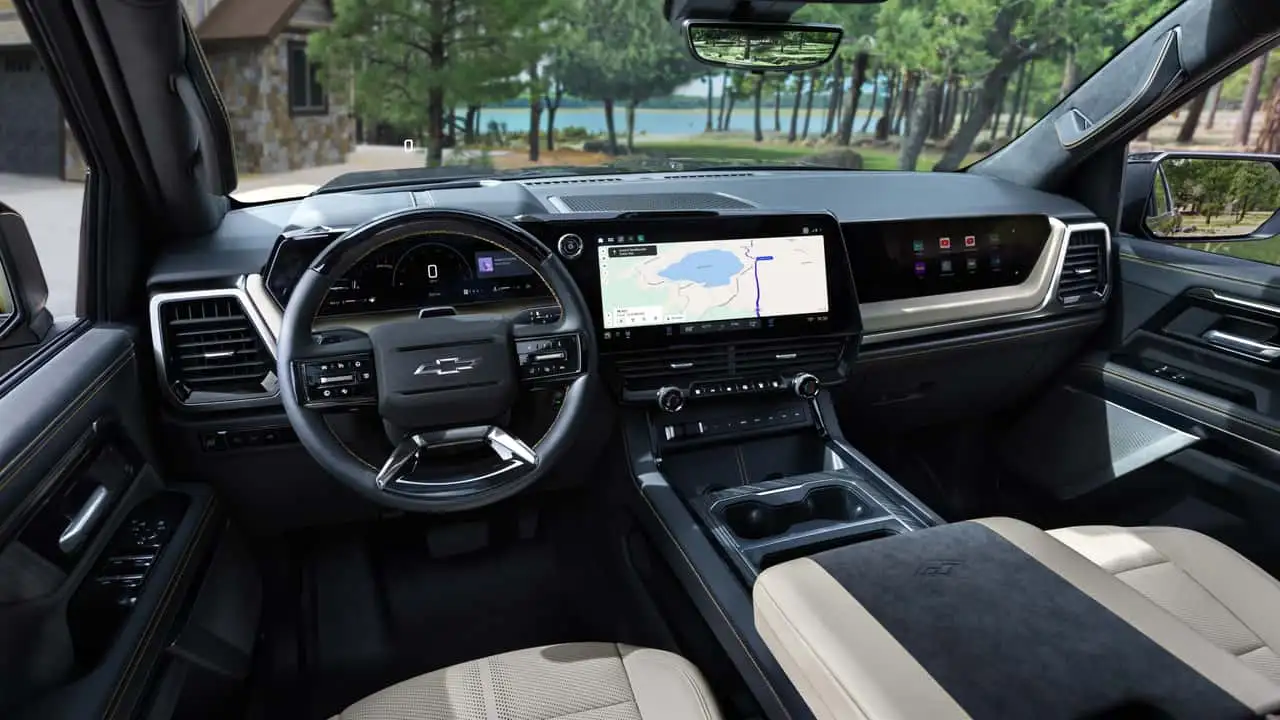
GM is changing its approach to smartphone connectivity with the 2027 Chevrolet Silverado and GMC Sierra. The new interface keeps Apple CarPlay and Android Auto while placing them alongside GM’s native vehicle features.
General Motors is taking a different approach to infotainment with the 2027 Chevrolet Silverado and GMC Sierra. The company’s new interface keeps Apple CarPlay and Android Auto while integrating both smartphone platforms directly into the truck’s native digital environment.
That marks an important change from GM’s previous decision to remove smartphone mirroring from some future vehicles, particularly its electric models. However, the company has clarified that the new software architecture does not mean CarPlay and Android Auto are automatically returning to every GM vehicle.
For now, the redesigned light-duty pickups are the confirmed launch point.
CarPlay and Android Auto Share the Screen With GM Software
The new system allows smartphone applications to appear alongside native GM functions rather than forcing drivers to constantly switch between separate interfaces.
CarPlay or Android Auto can occupy a large portion of the center display while vehicle information remains accessible alongside it. That means drivers can use phone-based navigation or media while still accessing functions such as vehicle status and trailering information.
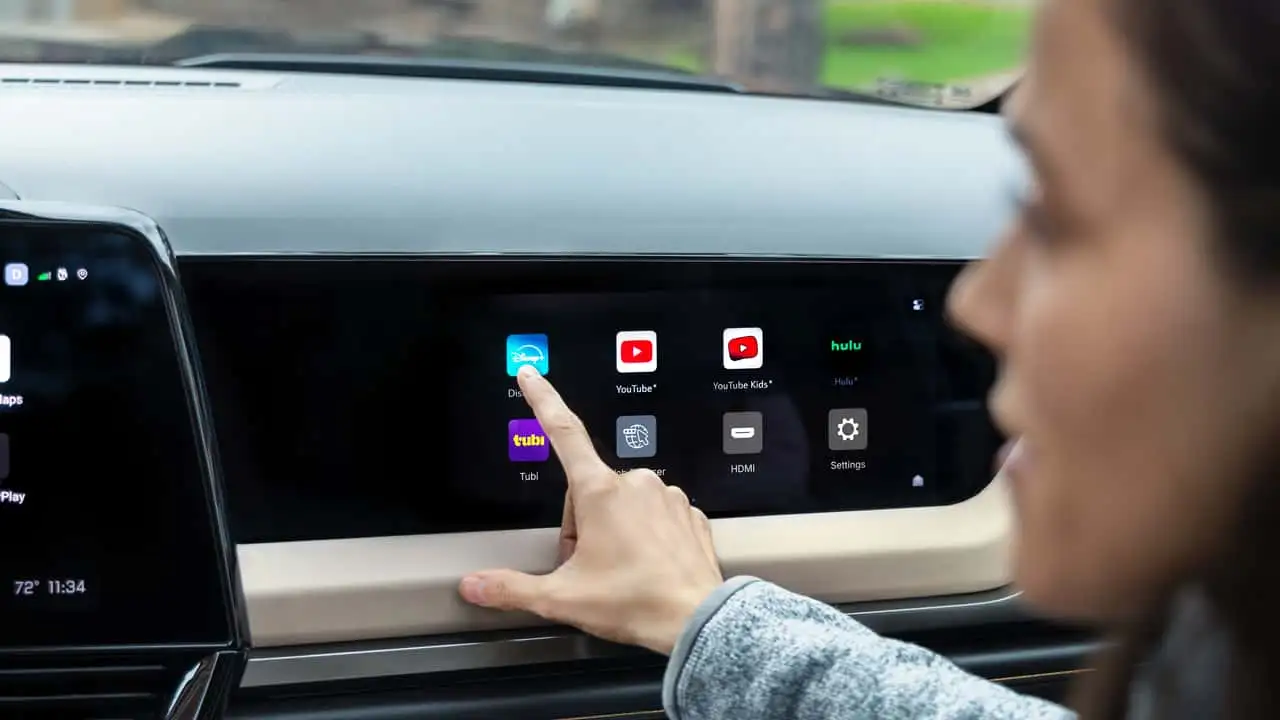
The 2027 Chevrolet Silverado’s large center display integrates Apple CarPlay and Android Auto with GM’s native truck software.
GM says the new interface was developed around reducing the number of steps needed to access frequently used functions. The system uses larger touch targets, simplified layouts and quick-access controls designed around everyday driving.
The approach also means drivers do not have to abandon GM’s truck-specific software when they use their smartphone.
A New Digital Interface Was Designed Around Pickup Trucks
The redesigned system does more than add smartphone mirroring. GM has developed different layouts for situations such as towing, off-road driving and Super Cruise.
The digital instrument cluster can change depending on what the driver is doing, while the center display can surface relevant information automatically.
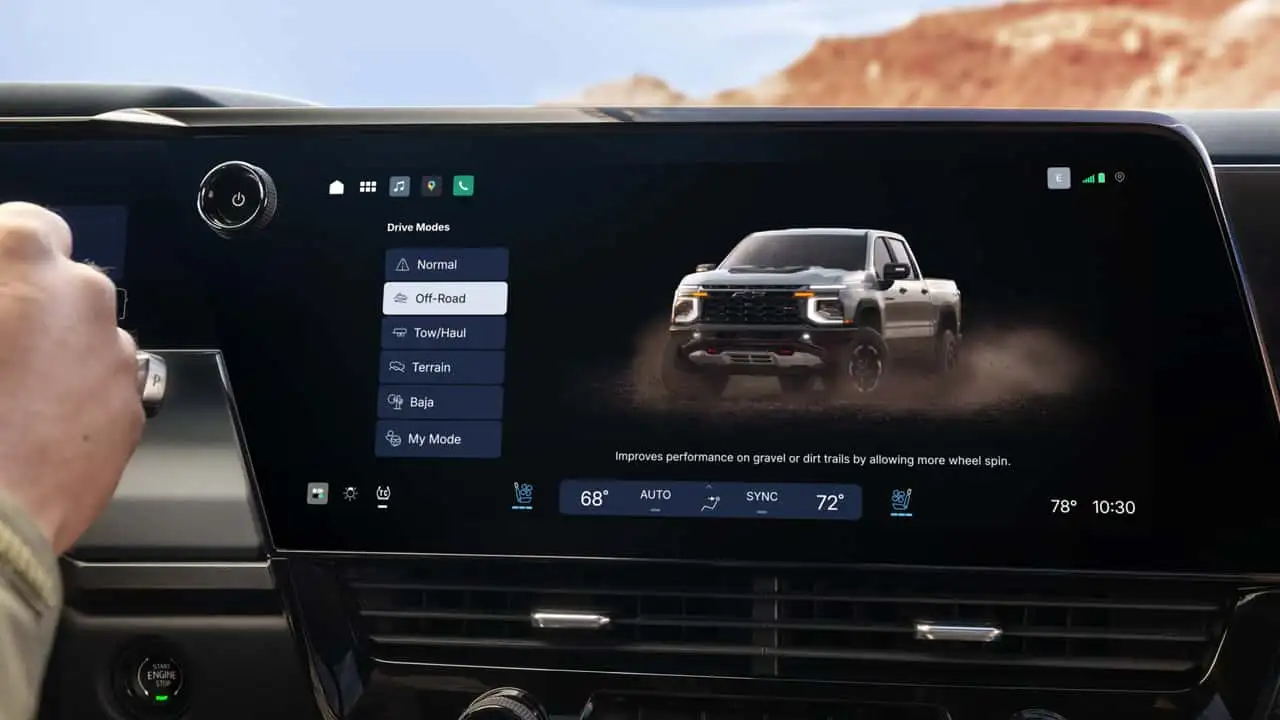
GM’s new interface adapts the digital displays for tasks such as trailering, off-road driving and Super Cruise.
A split-screen home layout keeps navigation visible while allowing drivers to view media, vehicle information or trailering data at the same time. GM says the goal is to reduce the need to navigate through multiple menus.
The system also retains physical controls for key functions, giving drivers an alternative to relying entirely on the touchscreen.
GM Is Not Confirming a Broader CarPlay Return
The new interface is built on a scalable software foundation designed to work with electric, gasoline and diesel vehicles. However, GM has clarified that this does not confirm that the same system or smartphone integration will appear throughout its entire lineup.
A GM spokesperson specifically said the 2027 light-duty pickups are the focus of the current rollout. The Silverado and Sierra are also gasoline-powered trucks, and GM says they were always intended to retain CarPlay and Android Auto.
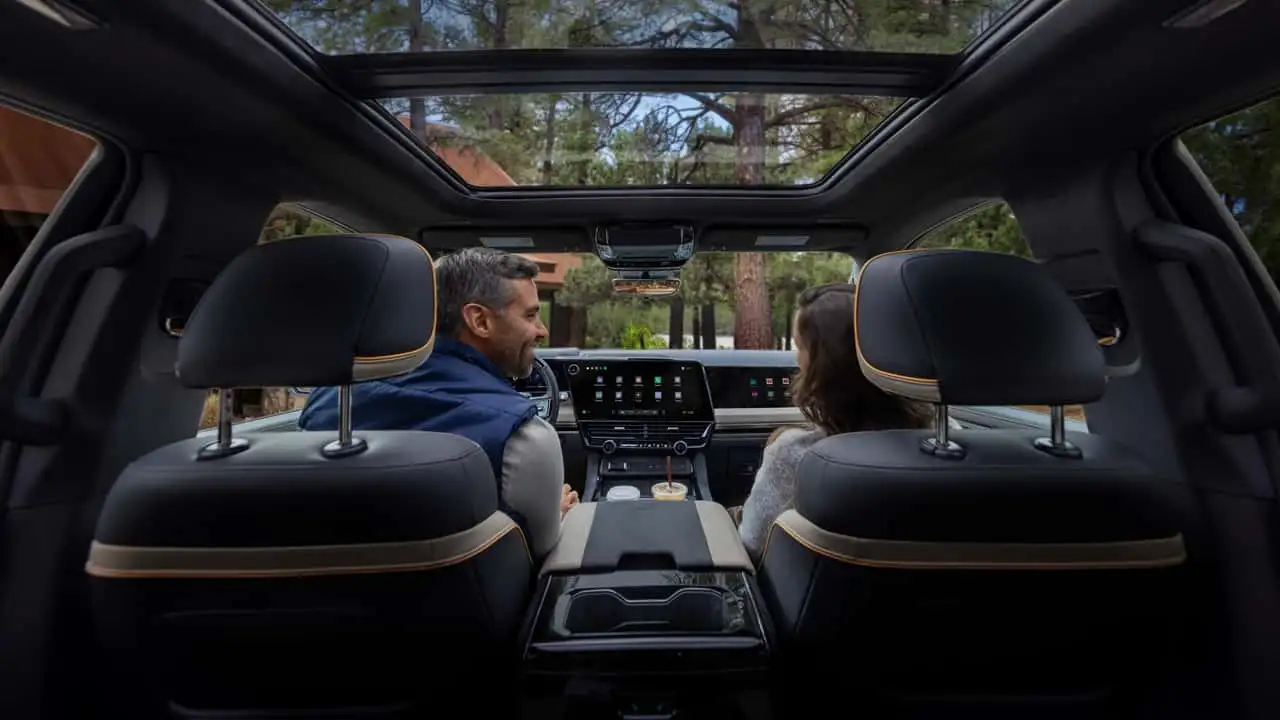
The 2027 GMC Sierra uses GM’s redesigned interface while retaining Apple CarPlay and Android Auto functionality.
That distinction matters because the company’s earlier strategy for certain EVs involved moving away from smartphone projection in favor of its own software ecosystem.
For now, GM is not confirming that the new interface will reverse that decision across its electric lineup.
The New Silverado and Sierra Get a Major Digital Upgrade
The new software arrives alongside significantly upgraded digital hardware. The 2027 Silverado features a 16.3-inch center display and a 12.2-inch driver information display as standard.
Higher trims can add an 11.5-inch front passenger display, creating more than 60 inches of combined digital screen space.
That gives GM plenty of space to integrate smartphone content without completely taking over the driver’s view.
GM Finds a Middle Ground on Smartphone Connectivity
The GM Apple CarPlay Android Auto strategy for the 2027 Silverado and Sierra represents a more integrated approach than the company’s previous systems.
Instead of forcing drivers to choose between GM’s software and their preferred smartphone platform, the new interface puts both experiences on the same screen.
That should make it easier to use familiar phone applications while still accessing functions designed specifically for pickup trucks.
For now, GM is limiting the confirmed rollout to its new light-duty pickups. Whether the same approach eventually appears across more Chevrolet, GMC and Cadillac models remains an open question.
-

 TEST DRIVES2 months ago
2026 Maserati MCPura Cielo
-
 NOW TRENDING2 months ago
Honda Civic Si Production Ends After 2026 Model Year Pause
-

 INTELLIGENT MOBILITY2 months ago
2027 Toyota Crown Gets New Hybrid System and Fresh Design
-

 NOW TRENDING2 months ago
2027 Range Rover GT Debuts as the Brand’s Lowest EV
-

 NOW TRENDING2 months ago
Next-Gen Cadillac CT5-V Blackwing Could Keep the V8 Alive
-
 NOW TRENDING2 months ago
Rolls-Royce’s $32 Million Droptail Took 9 Months of Handcrafted Woodwork
-
 NOW TRENDING2 months ago
2027 Toyota Sequoia Adds Trailhunter Package and New Tech
-

 NOW TRENDING2 months ago
Rezvani Dune Turns the Huracan Into an 800-HP Off-Road Beast
You must be logged in to post a comment Login