
NOW TRENDING
Kia PV7 Wants to Be the Electric Van for Almost Everyone

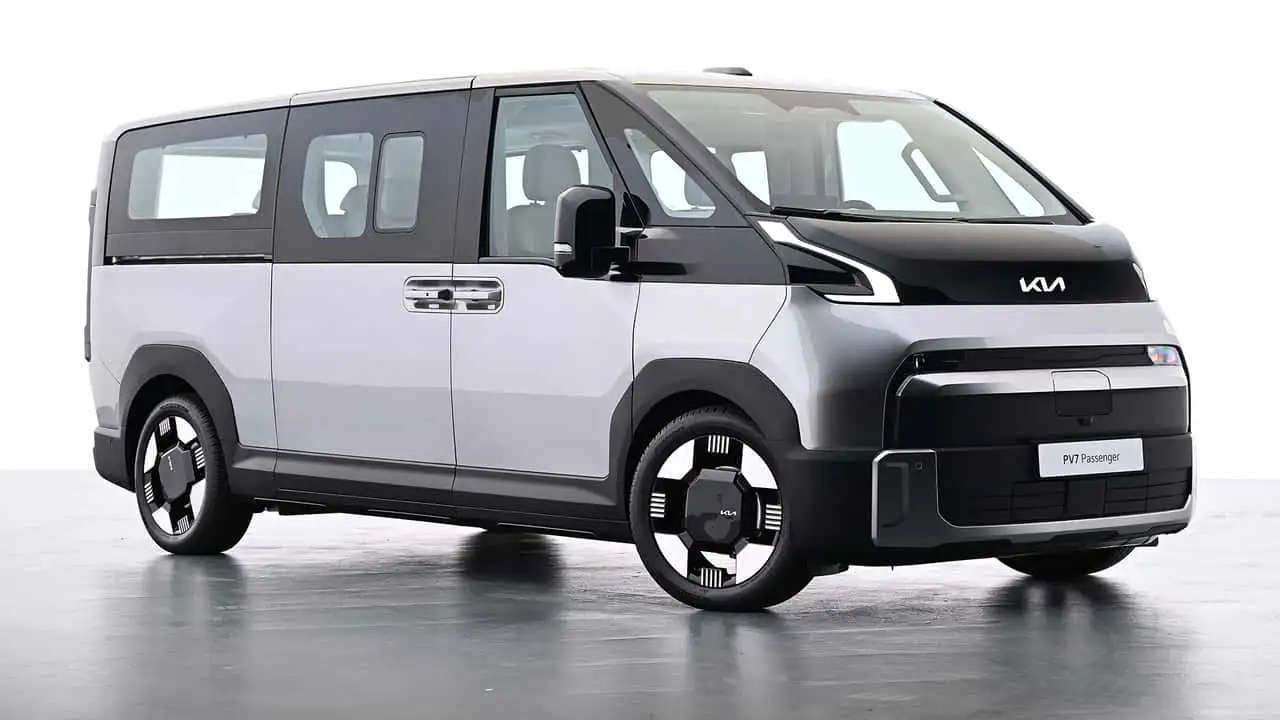
Kia is expanding its electric commercial vehicle lineup with the PV7, a highly flexible van planned in 23 versions for cargo, passenger and specialized uses.
The Kia PV7 is the latest expansion of Kia’s electric commercial vehicle strategy, bringing a much larger and more versatile model to the brand’s growing Platform Beyond Vehicle lineup.
Unveiled at IAA Transportation 2026 in Hannover, Germany, the PV7 will be offered in both Cargo and Passenger configurations. Kia is planning an unusually broad range of versions, with as many as 23 variants expected across different body styles and applications.
The van is built on Kia’s dedicated E-GMP.S architecture, which uses a flat floor to maximize cabin and cargo space.
The PV7 Comes in Cargo and Passenger Forms
The PV7 measures 17.6 feet long, 6.5 feet wide and 6.5 feet tall, with a 11.5-foot wheelbase. That gives Kia plenty of room to tailor the electric van for very different customers.
Cargo versions will be available with two or three seats. The Long model offers up to 215.4 cubic feet of cargo space, while the High Roof variant increases capacity to 282.5 cubic feet.
Depending on the configuration, payload capacity can reach 2,646 pounds.
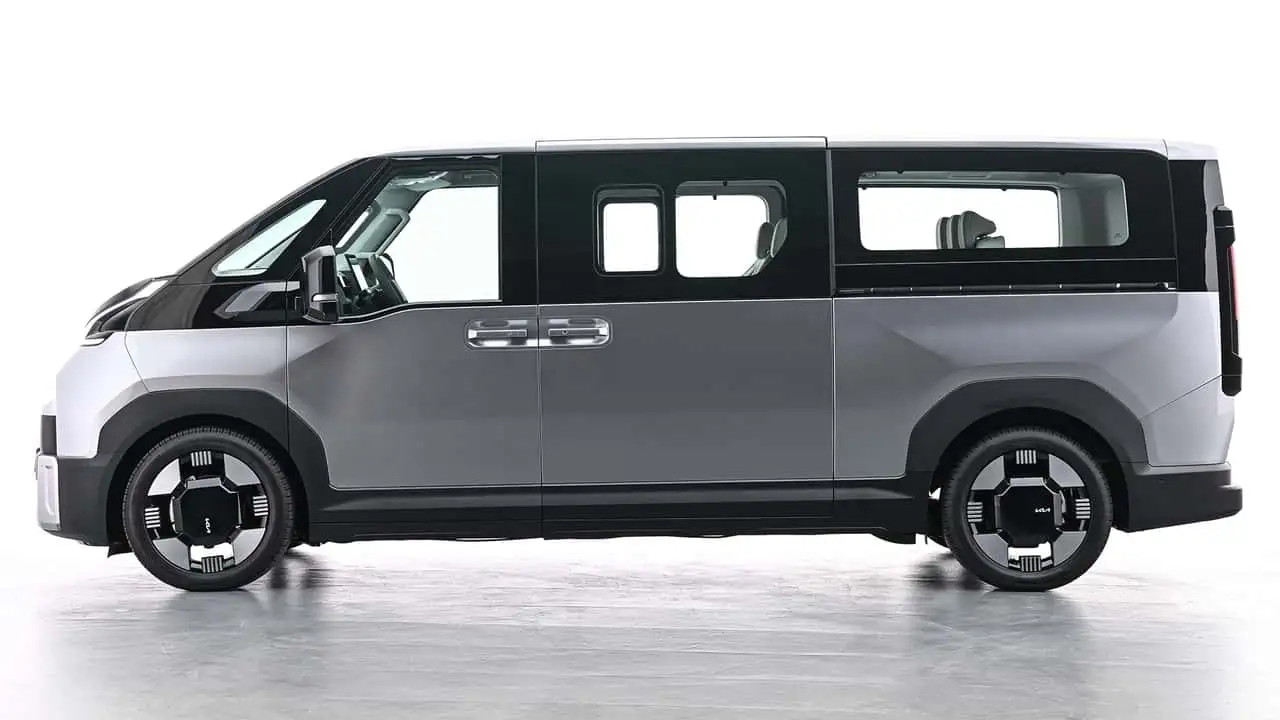
The Kia PV7 Cargo is designed for delivery, logistics and commercial applications, with up to 282.5 cubic feet of cargo space.
The Long version also has a low 21.7-inch loading height and can accommodate up to three Euro pallets.
Kia will offer multiple cargo-floor layouts, while buyers can choose between a traditional lift-up tailgate and twin-swing rear doors designed to make loading easier in tighter locations.
The Passenger PV7 Can Carry Up to 11 People
The passenger version takes the PV7 in a completely different direction.
European models can carry up to nine people, while Korean-market versions will support as many as 11 occupants. Kia is also giving customers considerable flexibility with removable seats mounted on long rails.
The seven-seat configuration can be rearranged, while the nine-seat model can be ordered with or without a fourth row.
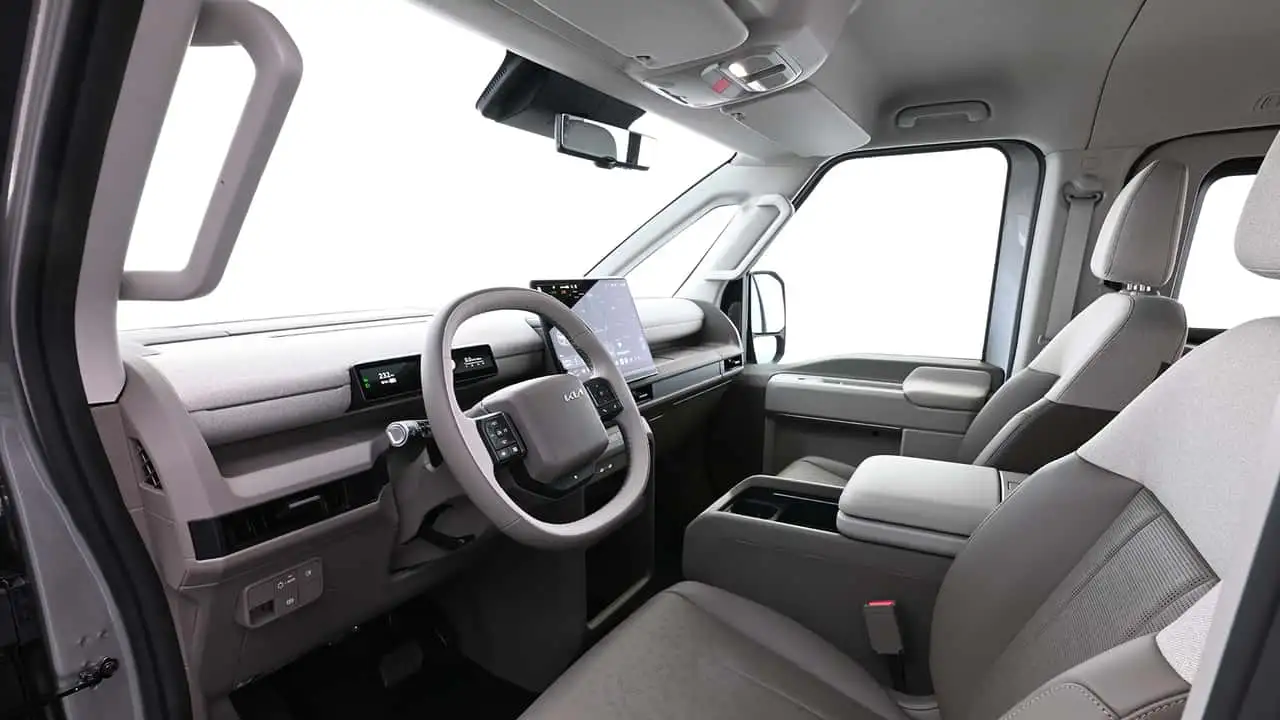
The Kia PV7 Passenger can carry up to nine occupants in Europe, with even greater seating capacity planned for Korea.
That versatility could make the PV7 suitable for employee transportation, rental fleets and tourism operators.
Kia also plans to make the passenger cabin more comfortable with rear climate controls, USB-C ports, additional storage and power-sliding doors.
Two Battery Sizes and Up to 286 Miles of Range
The Kia PV7 will launch with two NCM battery options: 71.5 kWh and 96.2 kWh.
The electric powertrain produces up to 268 horsepower and 310 lb-ft of torque, with power initially sent to the front wheels. An all-wheel-drive version is planned for a later date.
The Long Range Cargo model with the larger battery is expected to travel more than 286 miles on the WLTP cycle.
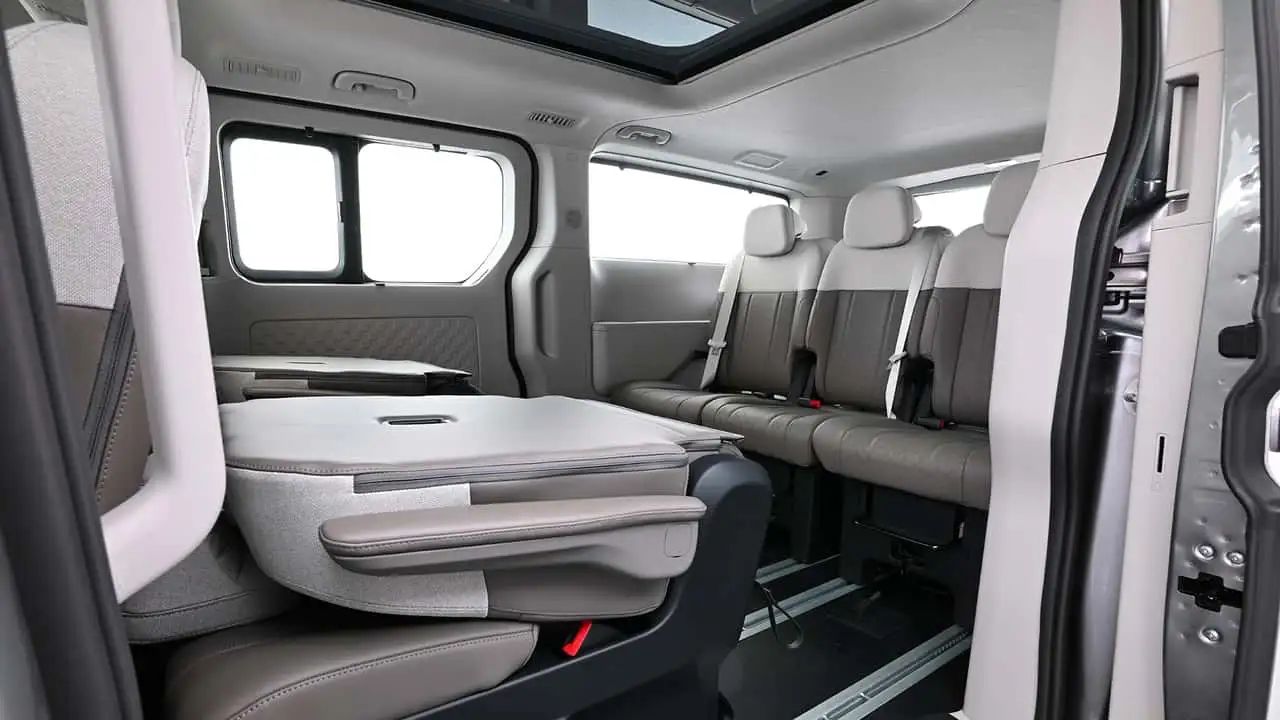
The Kia PV7 offers 71.5-kWh and 96.2-kWh batteries, with the larger pack delivering an expected range of more than 286 miles.
Kia is also taking advantage of an 800-volt electrical architecture. When connected to a 350-kW DC fast charger, the battery can reportedly go from 10% to 80% in the mid-20-minute range.
Another unusual feature is the inclusion of two charging ports. Alongside the front AC/DC port, an optional rear-side AC connection gives fleet operators more flexibility when positioning the van for charging.
The PV7 Can Power Tools and Equipment
Kia is designing the PV7 to do more than transport passengers or cargo.
The van supports Vehicle-to-Load functionality, allowing operators to use the battery to power tools and other equipment. A dedicated heavy-load driving mode can also adjust the vehicle’s behavior depending on how much weight it is carrying.
Inside, the PV7 features 12.9-inch and 14.6-inch displays and uses Kia’s Android Automotive-based Pleos Connect infotainment system.
That combination turns the large commercial vehicle into a more connected workspace rather than simply a basic transportation platform.
Kia Plans 23 PV7 Variants
The Kia PV7 is only the beginning of the broader lineup. Kia plans to offer 23 different versions, including Cargo Compact, Cargo Long, High Roof, Passenger Compact, Passenger Long and Chassis Cab configurations.
Conversion models will further expand the platform’s applications, allowing the same basic vehicle architecture to serve very different commercial needs.
That approach gives Kia a way to compete across multiple parts of the electric van market without developing an entirely different vehicle for every customer.
Kia’s Electric Van Strategy Is Getting Much Bigger
The Kia PV7 is shaping up to be one of the most flexible electric commercial vehicles in Kia’s lineup. With multiple batteries, cargo and passenger versions, fast charging, V2L capability and 23 planned variants, the company is clearly targeting a much wider audience than with a conventional delivery van.
The first versions are not expected to reach Korea and Europe until the second half of 2027. By then, Kia will have had additional time to expand the lineup and prepare the many specialized configurations planned for the platform.
Rather than being just another electric van, the PV7 is designed as a complete commercial vehicle platform that can adapt to different jobs, making flexibility one of its biggest strengths.












-

 NOW TRENDING2 months ago
Aston Martin DBX Becomes Harry Da Souza’s Ride in MobLand
-

 TEST DRIVES1 month ago
2026 Maserati GranTurismo Trofeo Review: Miami
-
 INTELLIGENT MOBILITY1 month ago
Tesla Cybercab Navigation Problem Hits Austin Robotaxis
-
 INTELLIGENT MOBILITY2 months ago
Tesla Cybercab Cannot Be Charged at Home—Here’s Why
-

 TEST DRIVES1 month ago
2026 Maserati GranTurismo Coupe
-
 INTELLIGENT MOBILITY1 month ago
2027 Nissan Rogue Hybrid: e-POWER Comes to America
-
 NOW TRENDING2 months ago
This Lotus Elise Restomod Weighs Just 1,320 Pounds
-

 NOW TRENDING2 months ago
Toyota Recalls Around 10,000 C-HR EVs Over Battery Overcharge Risk