
INTELLIGENT MOBILITY
Energy Shock Could Accelerate Global EV Adoption

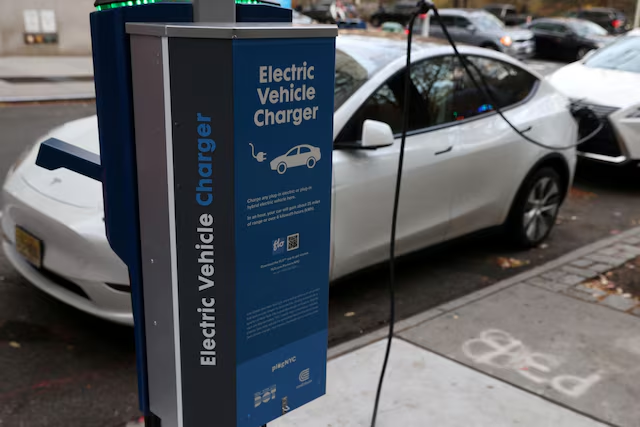
Higher oil prices, faster battery innovation, and new government support could push electric vehicle adoption well beyond current forecasts by 2040.
The global electric vehicle market could accelerate significantly if higher oil prices, faster battery innovation, and stronger government support develop at the same time.
Wood Mackenzie calls this potential outcome its “electric shock” scenario, arguing that several economic forces could push EV adoption substantially beyond its current base-case forecast.
The timing is particularly relevant because the global EV market is already expanding rapidly in several regions. The IEA now expects electric cars to account for 29% of global car sales in 2026, while Europe continues to post strong growth despite weaker demand in some other major markets.
Higher oil prices could push buyers toward EVs
One of the biggest potential catalysts is the cost of gasoline and diesel.
Geopolitical conflicts involving major oil-producing regions can create supply disruptions and increase fuel-price volatility. Wood Mackenzie says that prolonged energy volatility could encourage governments to strengthen domestic EV supply chains while giving consumers another reason to consider switching away from combustion-powered vehicles.
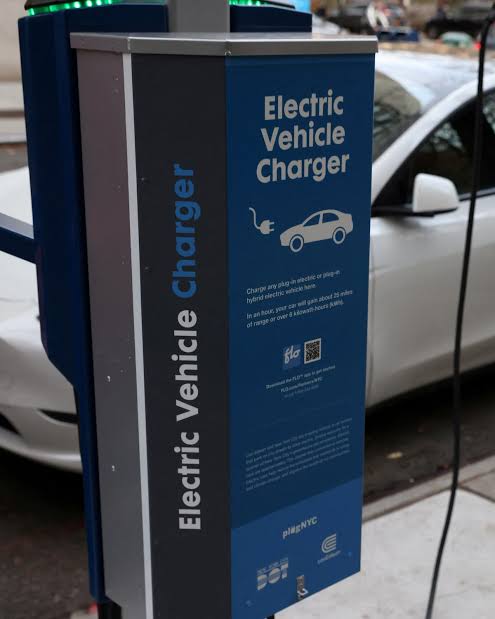
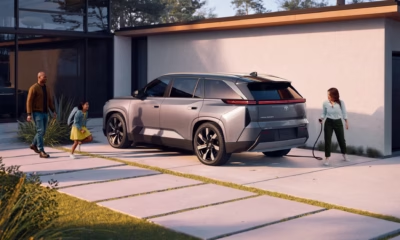
Higher fuel prices could encourage more consumers to consider electric vehicles as governments strengthen domestic supply chains.
The effect is already visible in parts of the global market.
The IEA says road transportation accounts for nearly half of global oil use, meaning changes in vehicle technology can have significant consequences for petroleum demand.
Wood Mackenzie’s base case projects EVs rising from 4% of the global passenger and commercial vehicle fleet in 2025 to 25% by 2040. Its faster-adoption scenario would push the transition considerably further.
China is accelerating battery and EV technology
Technology is another major factor.
China continues to advance rapidly in battery technology, EV manufacturing, and charging, creating pressure on other markets and automakers to keep pace.
Wood Mackenzie highlights developments including five-minute charging, sodium-ion batteries, and lithium-iron-phosphate technology as examples of innovations that could improve the economics and usability of EVs.
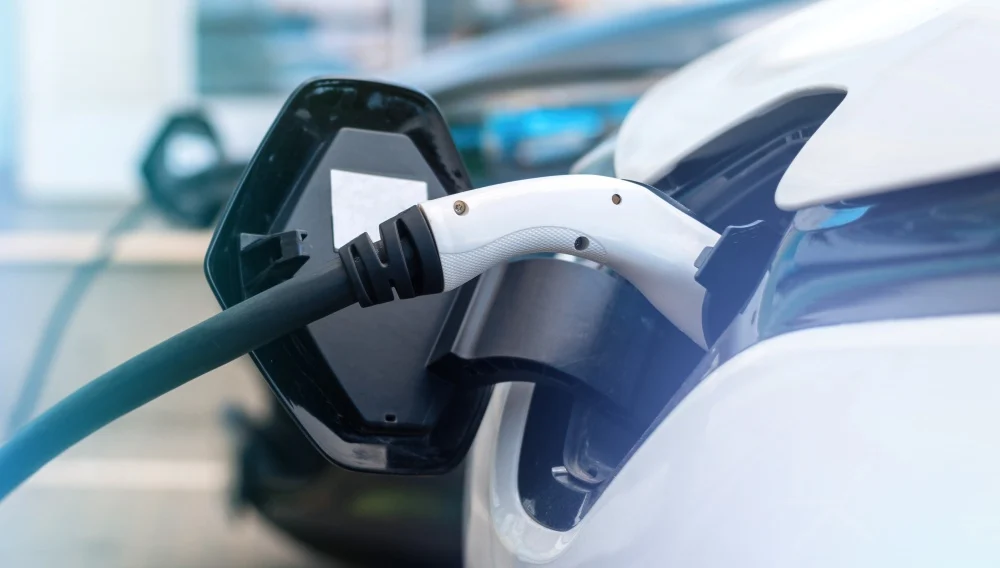
Battery innovation in China is helping improve charging speeds, costs, and the overall competitiveness of electric vehicles.
China is already the world’s largest EV market. Electric vehicles represented 42% of Chinese car sales in the second quarter of 2026, according to Wood Mackenzie.
The broader market is also seeing strong growth outside China. The IEA says EV sales in Europe increased close to 30% year over year during the first half of 2026, while several emerging markets recorded even faster growth.
The U.S. could face a different EV trajectory
The United States presents a more complicated picture.
Wood Mackenzie expects U.S. EV adoption to remain slower than in Europe under its base assumptions, although faster global innovation could increase competitive pressure on American automakers.
The firm argues that the United States may need greater investment in EV manufacturing, technology, and domestic supply chains to remain competitive as Chinese and other international manufacturers continue developing electric vehicles.
Europe, meanwhile, is already experiencing stronger EV momentum. Recent data showed battery-electric vehicles reached 25.7% of new-car registrations across 16 major European markets in July 2026, with France and Germany among the strongest large markets.
Copper could become the biggest bottleneck
Faster EV adoption would not come without challenges.
Battery and electric-drive manufacturing require large quantities of critical minerals, and Wood Mackenzie says the problem is not necessarily a lack of resources. The bigger question is how quickly new mining and processing capacity can be developed.
The firm estimates that an additional $45 billion in investment over the next decade could support the metals supply needed for its faster EV scenario.
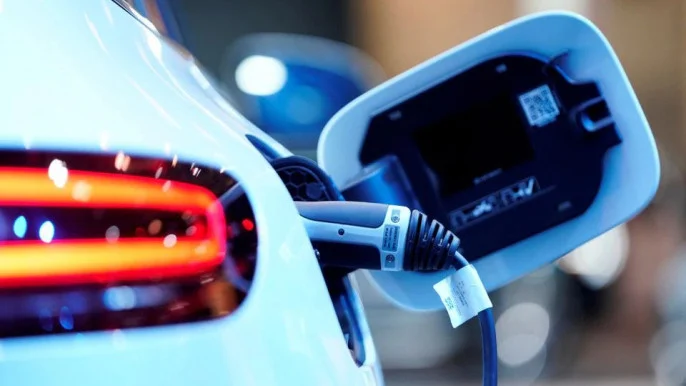
Copper is expected to become the most important mineral bottleneck if global EV adoption accelerates.
Copper is the biggest concern. Wood Mackenzie estimates annual copper-mining capacity additions would need to rise from roughly 850,000 metric tons per year to around 960,000 tons through 2040.
Around $25 billion of additional investment would be required for that extra copper capacity.
That investment could increasingly need to reach higher-risk mining jurisdictions, adding another layer of geopolitical and financial complexity to the EV transition.
Electricity grids will also need to adapt
A rapid increase in EVs would place additional demand on electricity networks.
Wood Mackenzie argues that widespread adoption of managed charging will be critical. Utilities and regulators could encourage vehicles to charge when electricity supply is abundant rather than when the grid is under the most pressure.
This could also help consumers reduce charging costs by shifting electricity consumption toward cheaper periods.
The challenge therefore extends beyond producing more electric vehicles. Charging infrastructure, power generation, transmission networks, and grid-management technology will all need to keep pace.
EVs could reshape the oil market by 2040
The consequences could ultimately reach far beyond the automotive industry.
Under Wood Mackenzie’s base case, global oil demand reaches about 104 million barrels per day in 2040. In its faster EV “electric shock” scenario, demand falls to 99 million barrels per day, roughly 5 million barrels below the base case.
That reduction could have major consequences for the refining industry. Wood Mackenzie estimates that around 40 refineries could face earlier closure if transportation fuel demand falls that quickly.
The global EV adoption story is therefore becoming about much more than car sales. Higher fuel prices, technological advances, government policy, mineral investment, and electricity infrastructure could collectively determine how quickly the world moves away from gasoline and diesel.








-
 NOW TRENDING2 months ago
Land Rover Defender Recall 2026: 23,677 JLR SUVs Affected
-
 NOW TRENDING2 months ago
Hyundai September 2026 Sales Hit Record 77,439
-
 NOW TRENDING2 months ago
2027 Toyota Grand Highlander Woodland Adds Adventure
-

 NOW TRENDING2 months ago
Porsche Gas Macan Returns in 2028 as EV Plans Evolve
-
 INTELLIGENT MOBILITY2 months ago
Waymo Safety Data Shows 82% Fewer Injury Crashes
-

 INTELLIGENT MOBILITY2 months ago
IONNA EV Charging Network More Than Doubles in 2026
-
 NOW TRENDING2 months ago
Tesla Roadster Reveal Delayed Again Until October 15
-
 NOW TRENDING2 months ago
Mercedes Drops Three Models From Its 2027 U.S. Lineup