
NOW TRENDING
Volkswagen Tiguan hybrid is coming to the U.S. to challenge the RAV4

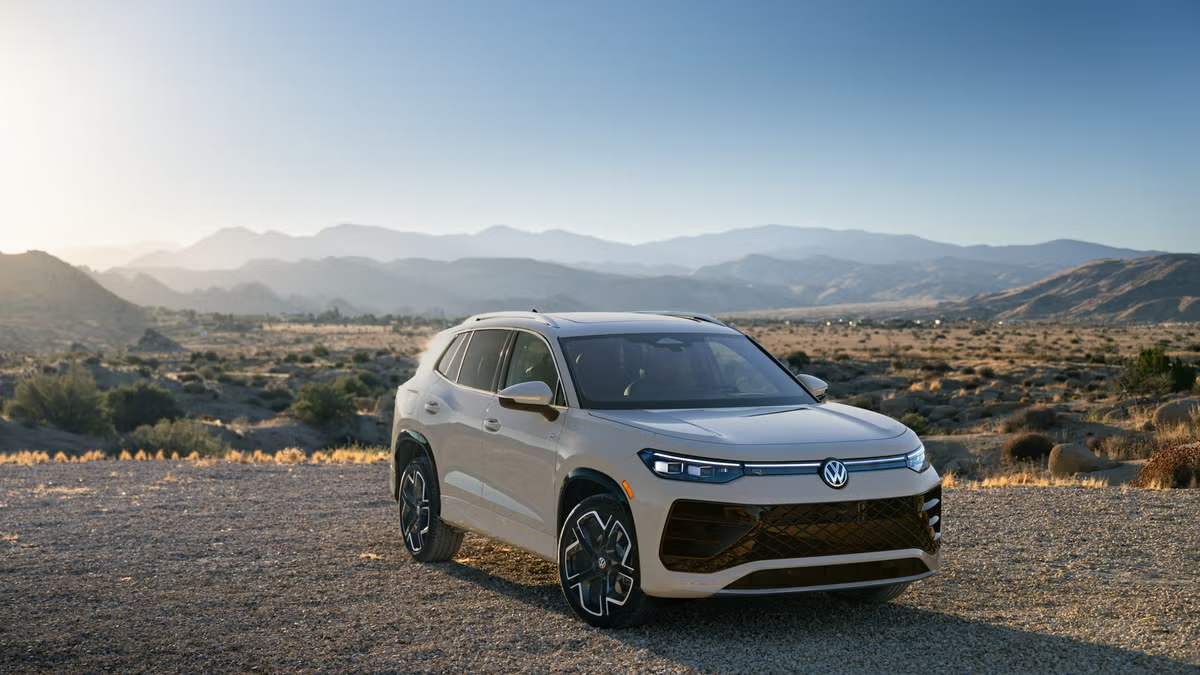
Volkswagen is preparing a hybrid Tiguan for the U.S. market, marking a major shift in its electrification strategy and targeting rivals such as the Toyota RAV4 and Honda CR-V.
Volkswagen is preparing a hybrid version of the Tiguan for the U.S. market, signaling a major change in the company’s electrification strategy. The new model is expected to compete directly with the Toyota RAV4 Hybrid, Honda CR-V Hybrid and Nissan Rogue Hybrid.
The move comes as Volkswagen expands its hybrid lineup and places greater emphasis on fuel-efficient models that do not require external charging.
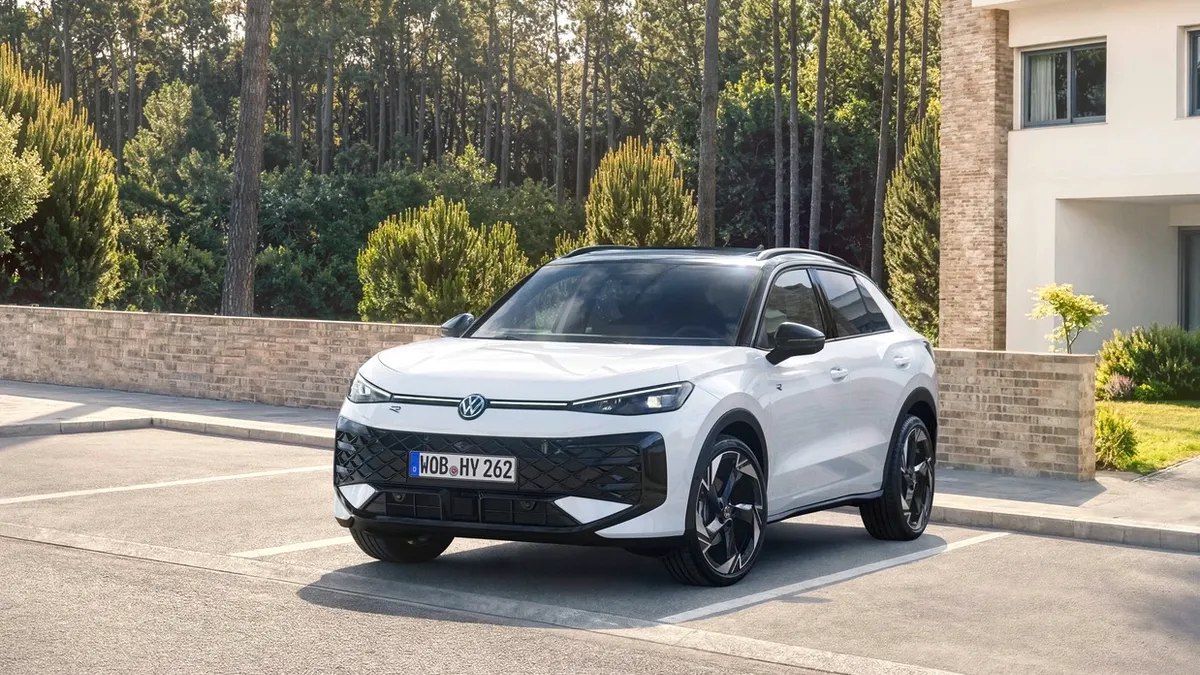
Volkswagen is preparing a hybrid Tiguan for the U.S. market as part of a broader strategy shift.
While the company recently introduced hybrid versions of the Golf and T-Roc in Europe, Volkswagen has indicated that those models are not currently planned for the United States.
Instead, the U.S.-market Tiguan is expected to become the brand’s key hybrid SUV offering.
A new hybrid system with electric driving capability
The new Volkswagen hybrid powertrain combines a turbocharged 1.5-liter four-cylinder engine, two electric motors and a 1.6-kWh lithium-ion battery.
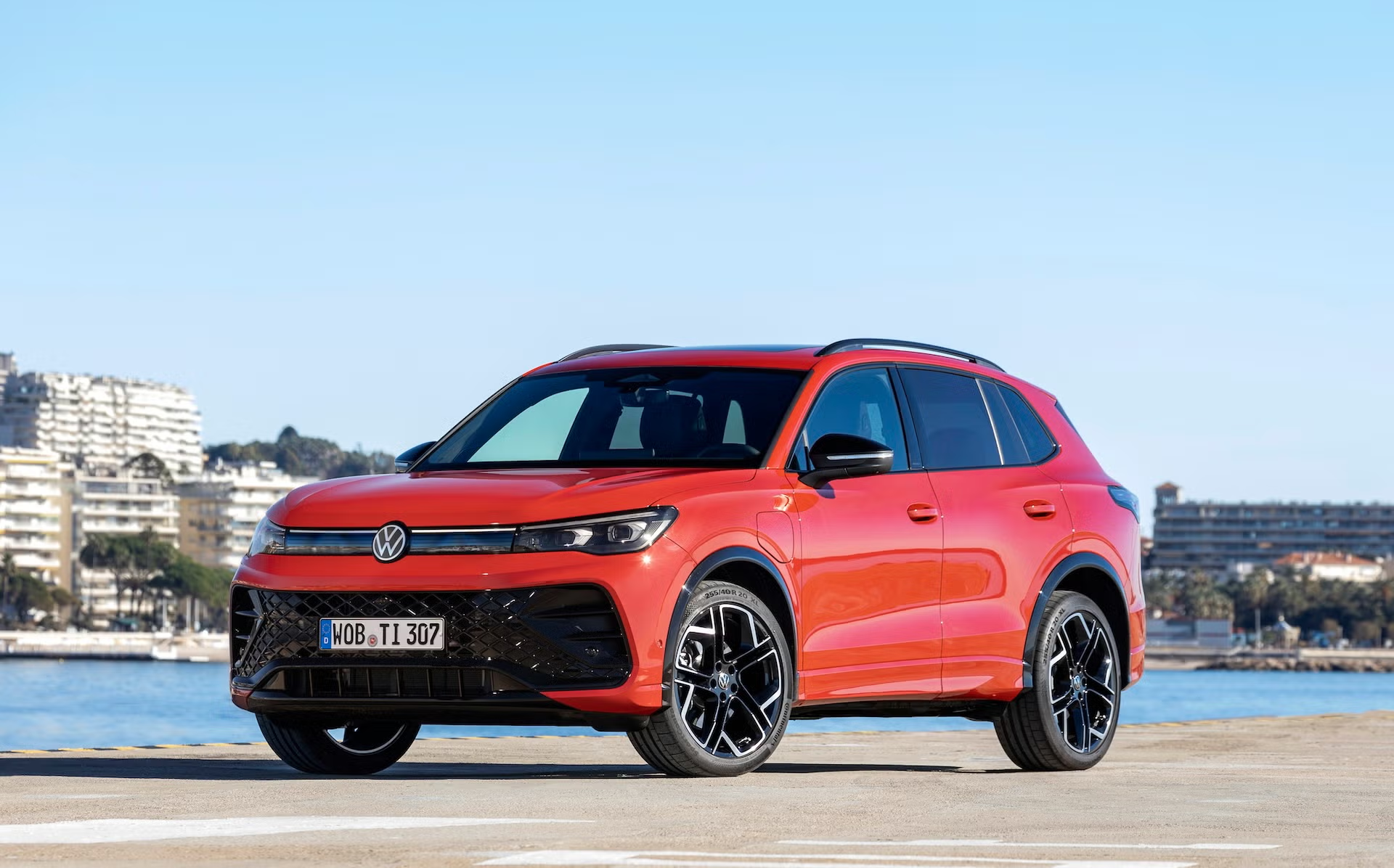
The new hybrid powertrain combines a turbocharged engine, two electric motors and a lithium-ion battery.
The system allows the Tiguan to operate in electric mode at low urban speeds, while the battery can be recharged through regenerative braking and engine-generated electricity.
Volkswagen says the new hybrid setup improves fuel efficiency by 10% to 15% compared with the company’s current mild-hybrid system, with even greater gains in city driving.
The powertrain produces 168 horsepower and 228 lb-ft of torque, and it can operate in electric-only, series-hybrid and parallel-hybrid modes depending on driving conditions.
Volkswagen changes course on hybrids
For years, Volkswagen focused heavily on plug-in hybrids and battery-electric vehicles, often describing conventional full hybrids as a less attractive long-term solution.
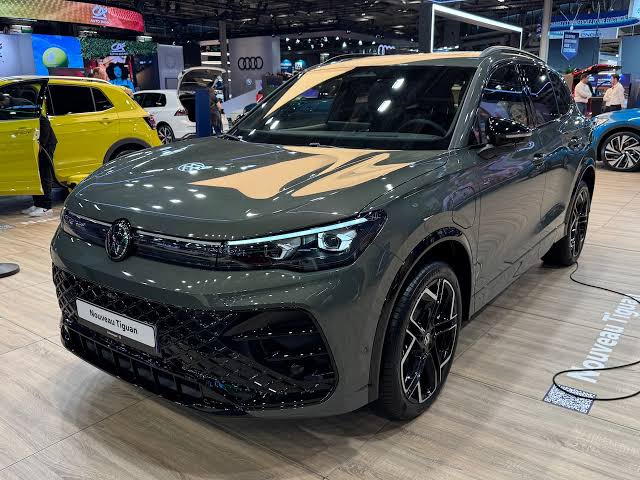
The Tiguan hybrid will become Volkswagen’s main U.S. rival to the RAV4 Hybrid and CR-V Hybrid.
The new Tiguan hybrid represents a significant shift toward a strategy that more closely resembles Toyota’s approach, offering a vehicle that does not depend on charging infrastructure.
Drivers will also be able to select Eco, Comfort and Sport driving modes, with Eco mode prioritizing efficiency and reducing power output to maximize fuel savings.
The Volkswagen Tiguan hybrid U.S. launch could become one of the company’s most important products in North America, giving Volkswagen a stronger position in the highly competitive hybrid SUV segment.


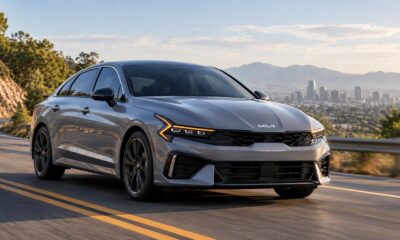










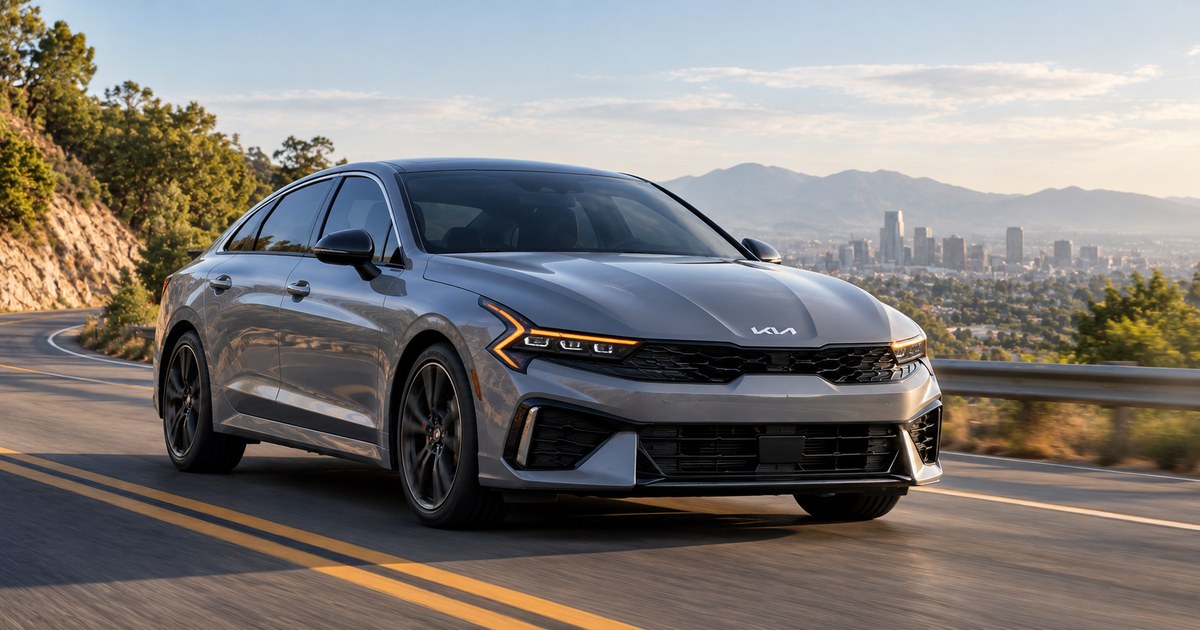
The 2027 Kia K5 starts at $27,690 in the U.S., with three trims, available all-wheel drive and a 290-horsepower GT at the top of the range.
Kia confirms 2027 K5 pricing for the U.S.
Kia America has announced pricing for the 2027 Kia K5, the brand’s midsize sedan for the U.S. market. The new model year is largely a carryover, but the lineup receives equipment updates and a simplified trim structure.
The 2027 Kia K5 starts at $27,690 MSRP, excluding a $1,245 destination charge. Kia has discontinued the EX trim, leaving three versions for American buyers: LXS, GT-Line and GT.
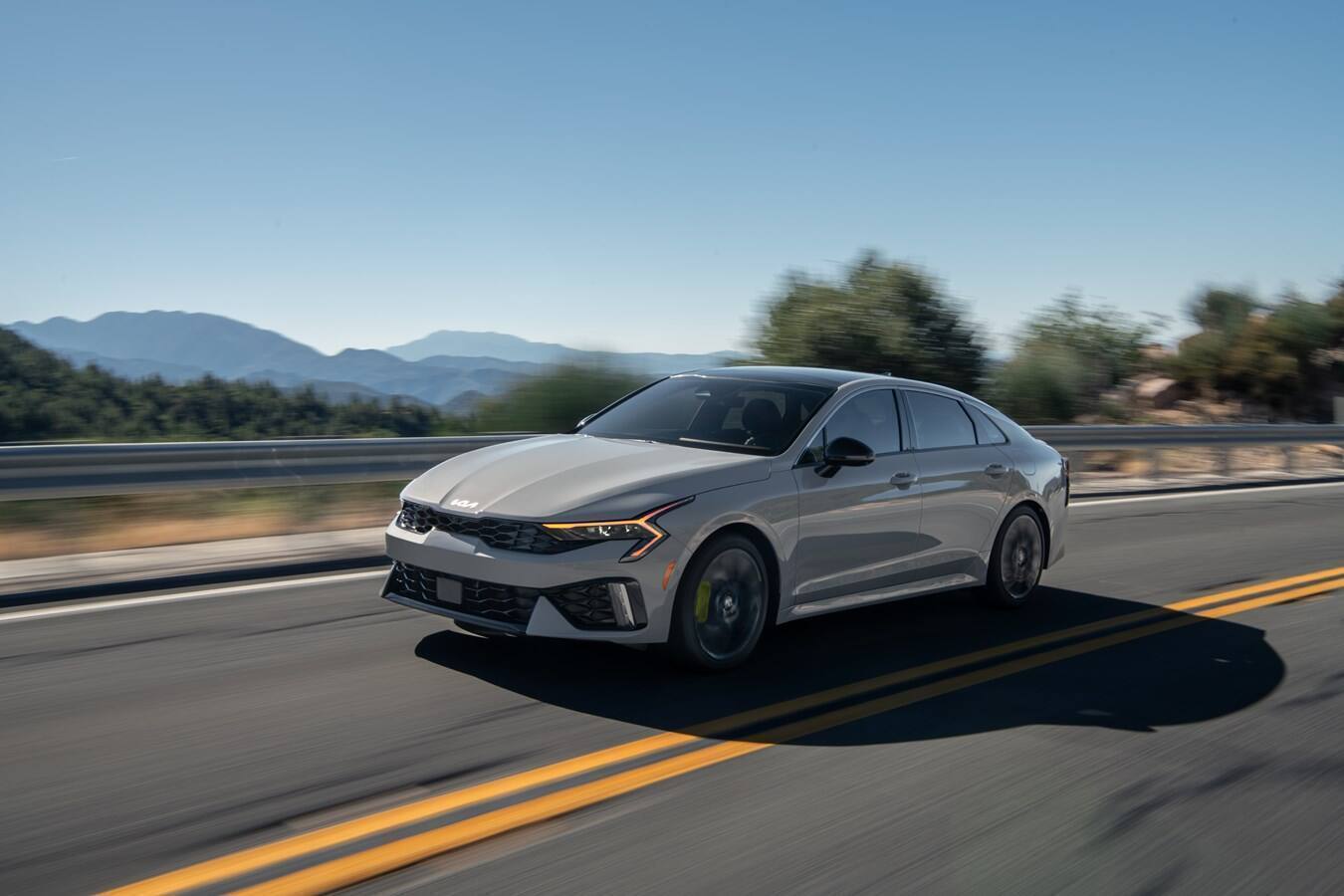
The 2027 Kia K5 carries over its bold sedan design while continuing with three U.S. trim levels.
The entry-level K5 LXS FWD costs $27,690. The GT-Line starts at $28,690, while the GT-Line AWD is priced at $30,290.
At the top of the range, the K5 GT costs $33,790 before destination and other charges. The pricing gives buyers several ways to move from the standard sedan into versions focused more heavily on technology or performance.
Kia has also made all-wheel drive available on the GT-Line. The system is designed to distribute torque between the front and rear axles to provide additional traction and control in different driving conditions.
More standard safety technology
One of the key features of the 2027 K5 is its focus on driver assistance. Kia says the sedan comes with 17 standard collision avoidance and safety-assistance features across the lineup.
The equipment is designed to provide additional support in situations such as forward collision risks, lane departures and blind-spot monitoring. Kia also notes that these systems do not replace attentive driving.
The K5 continues to combine this safety technology with a driver-focused cabin. Available features include a 24-inch combined panoramic display, wireless smartphone integration and a range of convenience features depending on trim.
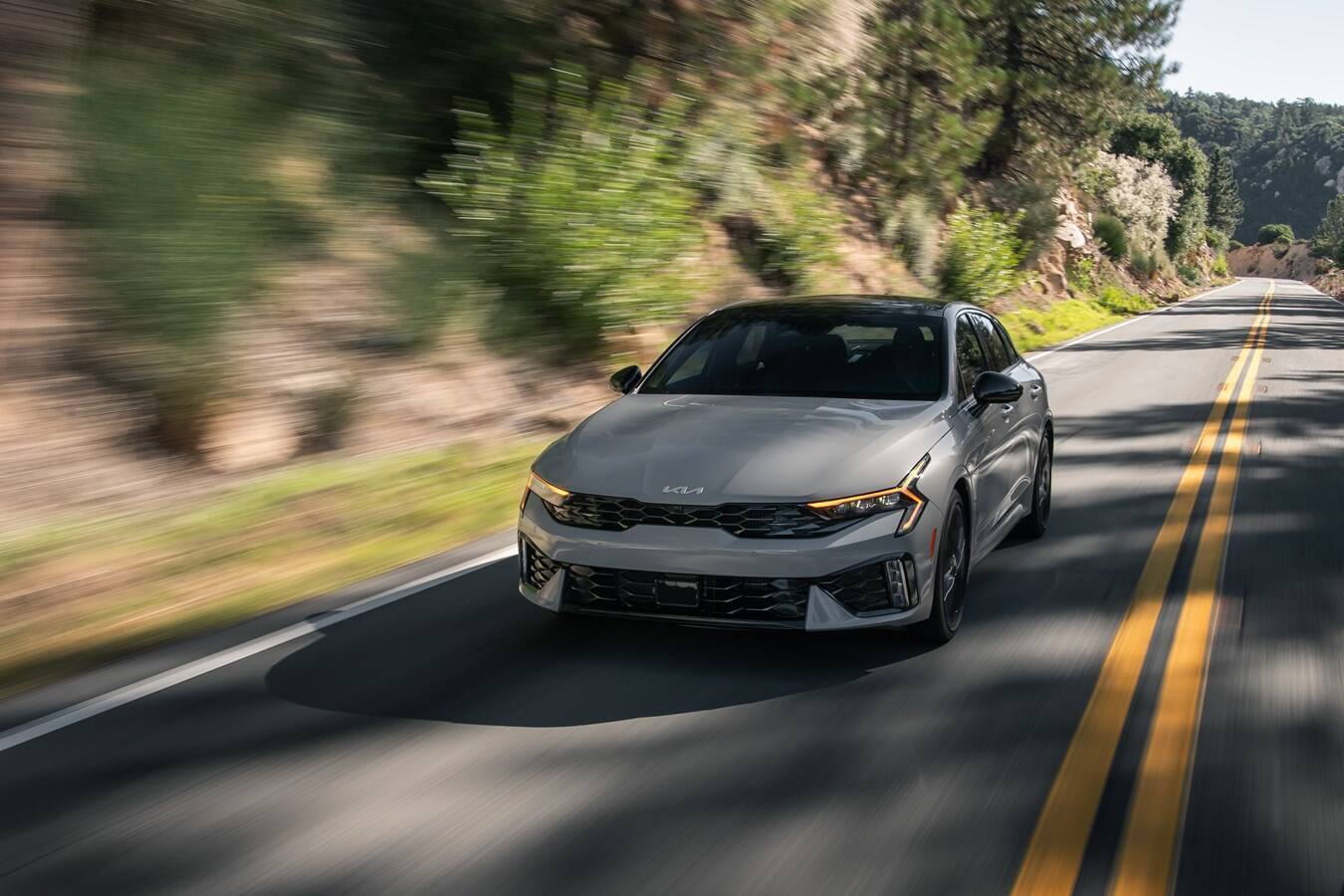
The GT-Line adds sportier exterior styling and remains available with all-wheel drive for 2027.
For 2027, Kia is also adding a new convenience package for the GT-Line. It includes features such as ventilated front seats, a driver memory seat and power-folding outside mirrors.
That makes the GT-Line a stronger middle option in the range. It combines the K5’s sporty design with additional comfort features without moving all the way to the GT.
The K5 also remains focused on technology. Kia’s current U.S. model page highlights an available 12.3-inch touchscreen, Apple CarPlay and Android Auto, along with additional cabin technology depending on configuration.
The K5 GT keeps its 290-hp turbo engine
The K5 GT continues to be the performance-focused model in the 2027 lineup.
It uses a 2.5-liter turbocharged four-cylinder engine producing 290 horsepower and 311 lb-ft of torque. Kia pairs the engine with an eight-speed dual-clutch automatic transmission.
The GT also receives a sport-tuned suspension, 19-inch alloy wheels and a GT-specific steering wheel with paddle shifters.
Kia lists a 0-60 mph time of 5.4 seconds for the K5 GT, based on AMCI Testing Certified results from the 2025 model. The manufacturer notes that actual performance can vary with conditions and equipment.
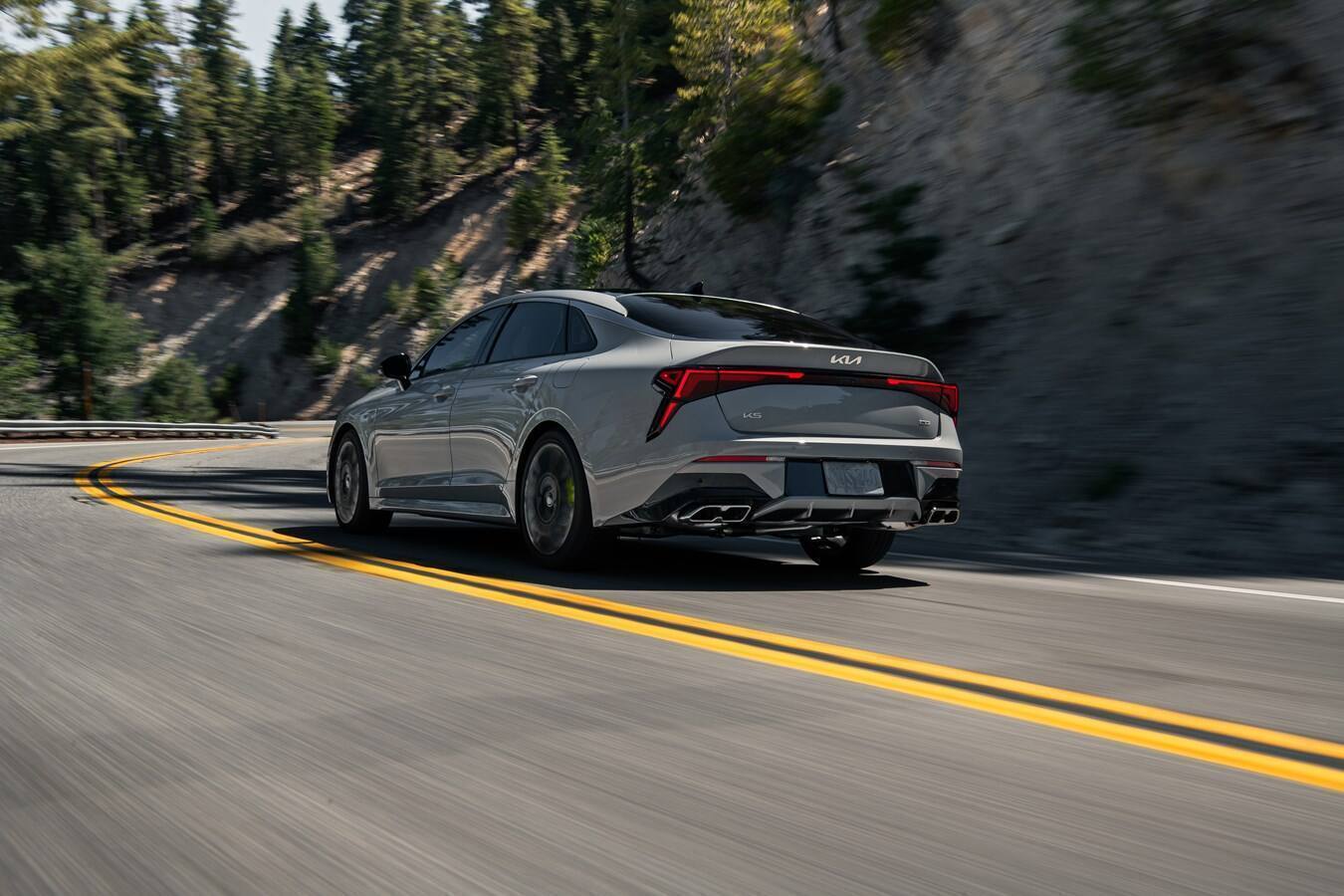
The K5 GT remains the most performance-focused version, with a 290-hp turbocharged engine.
The rest of the lineup continues with the naturally aspirated 2.5-liter four-cylinder engine, which produces 186 horsepower. The GT-Line can also be equipped with AWD, giving buyers another option for additional traction.
Fuel economy varies by trim and configuration. Kia’s U.S. specifications list up to 30 mpg combined for the LXS, while the GT-Line and GT have different ratings based on their engines and equipment.
For American sedan shoppers, the 2027 K5 therefore keeps a familiar formula. Buyers get a midsize four-door with standard safety technology, available AWD and a performance-oriented GT.
The 2027 Kia K5 is a U.S.-market model, and its new pricing starts at $27,690 before the $1,245 destination charge. With the EX removed, the lineup is now focused on LXS, GT-Line and GT versions.
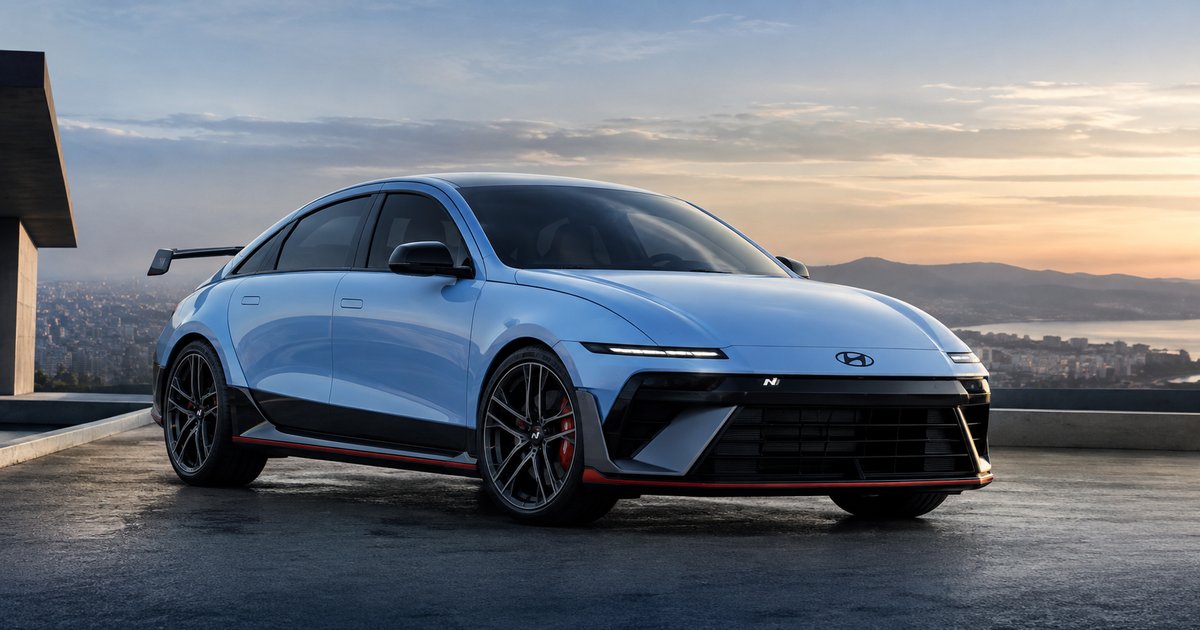
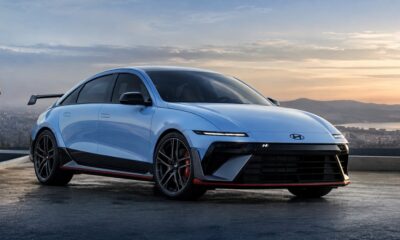
The Hyundai IONIQ 6 N has won the Performance category at the 2027 German Car of the Year Awards, adding another major honor to its growing record.
IONIQ 6 N earns another major award
The Hyundai IONIQ 6 N has added another award to its short but growing history. The all-electric performance sedan has won the Performance category at the German Car of the Year (GCOTY) Awards 2027.
The result was announced on September 22, 2026. An independent jury of around 40 automotive journalists recognized the IONIQ 6 N for its performance, precise handling and driver-focused character.
The award comes only months after the model was named 2026 World Performance Car at the World Car Awards. That gives Hyundai another important international recognition for its high-performance EV.
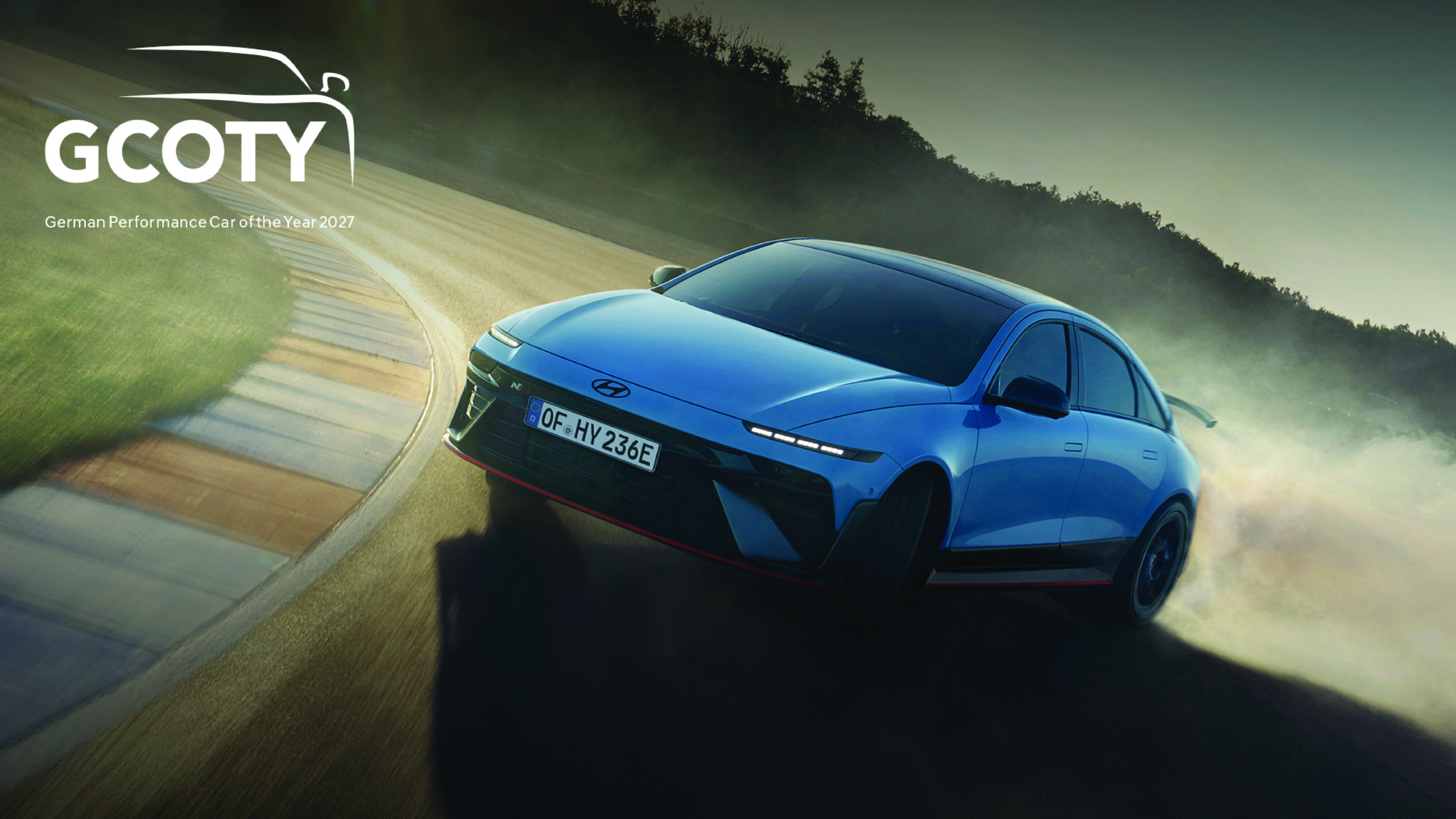
The IONIQ 6 N won the Performance category at the 2027 German Car of the Year Awards.
For Hyundai N, the result also highlights a broader shift toward electric performance. The brand is using the IONIQ 6 N to apply its performance philosophy to an EV.
The car was developed for both road and track use. Hyundai says its three core pillars are Corner Rascal, Racetrack Capability and Everyday Sports Car.
A performance EV built around the driver
The IONIQ 6 N uses a dual-motor electric powertrain with an 84-kWh battery. Its standard output is 601 hp, while N Grin Boost raises peak output to 641 hp for a limited period.
The car can produce up to 568 lb-ft of torque. Hyundai quotes a 0-60 mph time of roughly 3.2 seconds, using its N Launch Control system, while top speed reaches about 160 mph.
These numbers are supported by hardware developed specifically for the N model.
The sedan features a redesigned suspension geometry, electronically controlled dampers and an electronic limited-slip differential. Hyundai says the setup is designed to improve cornering while maintaining comfort during everyday driving.
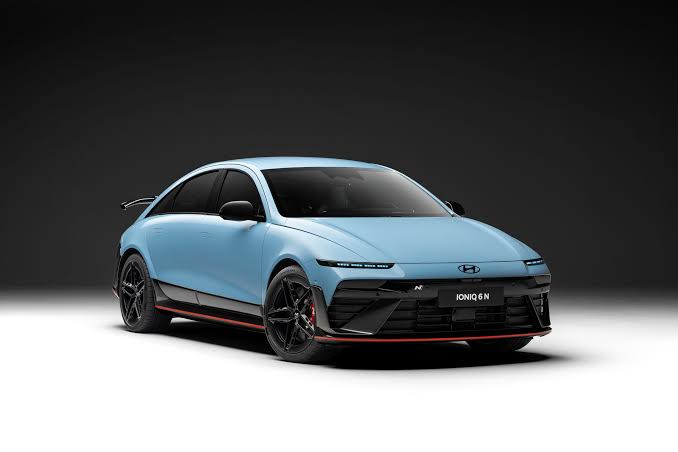
The IONIQ 6 N uses a wider stance, flared bodywork and aerodynamic elements developed for high-speed stability.
Aerodynamics are another major part of the package.
Hyundai gives the IONIQ 6 N flared fenders, lightweight wheels and a large rear wing. The company says these elements help control airflow and provide greater stability at high speeds.
The design also separates the N version from the regular IONIQ 6. Its wider body and motorsport-inspired details give the electric sedan a much more performance-focused appearance.
Inside, Hyundai follows the same philosophy.
The cabin includes N-specific controls, performance-oriented seats and dedicated software functions. The goal is to make the driver more aware of what the car is doing while keeping the vehicle usable on normal roads.
N e-Shift adds a different EV experience
One of the most unusual features is N e-Shift.
Instead of behaving like a conventional single-speed EV, the system simulates gear ratios and shift events. Hyundai designed it to recreate some of the sensations associated with changing gears in a performance car.
The IONIQ 6 N also uses N Active Sound+. The system adds performance-oriented sounds that respond to the car’s operation.
Both systems are designed to increase driver feedback. They do not change the fact that the vehicle is electric, but they add more sensory information behind the wheel.
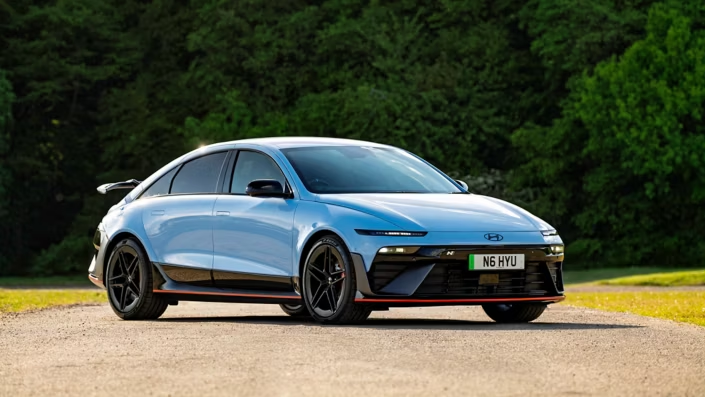
Hyundai developed the IONIQ 6 N with a dual-motor layout, an 84-kWh battery and dedicated N performance technology.
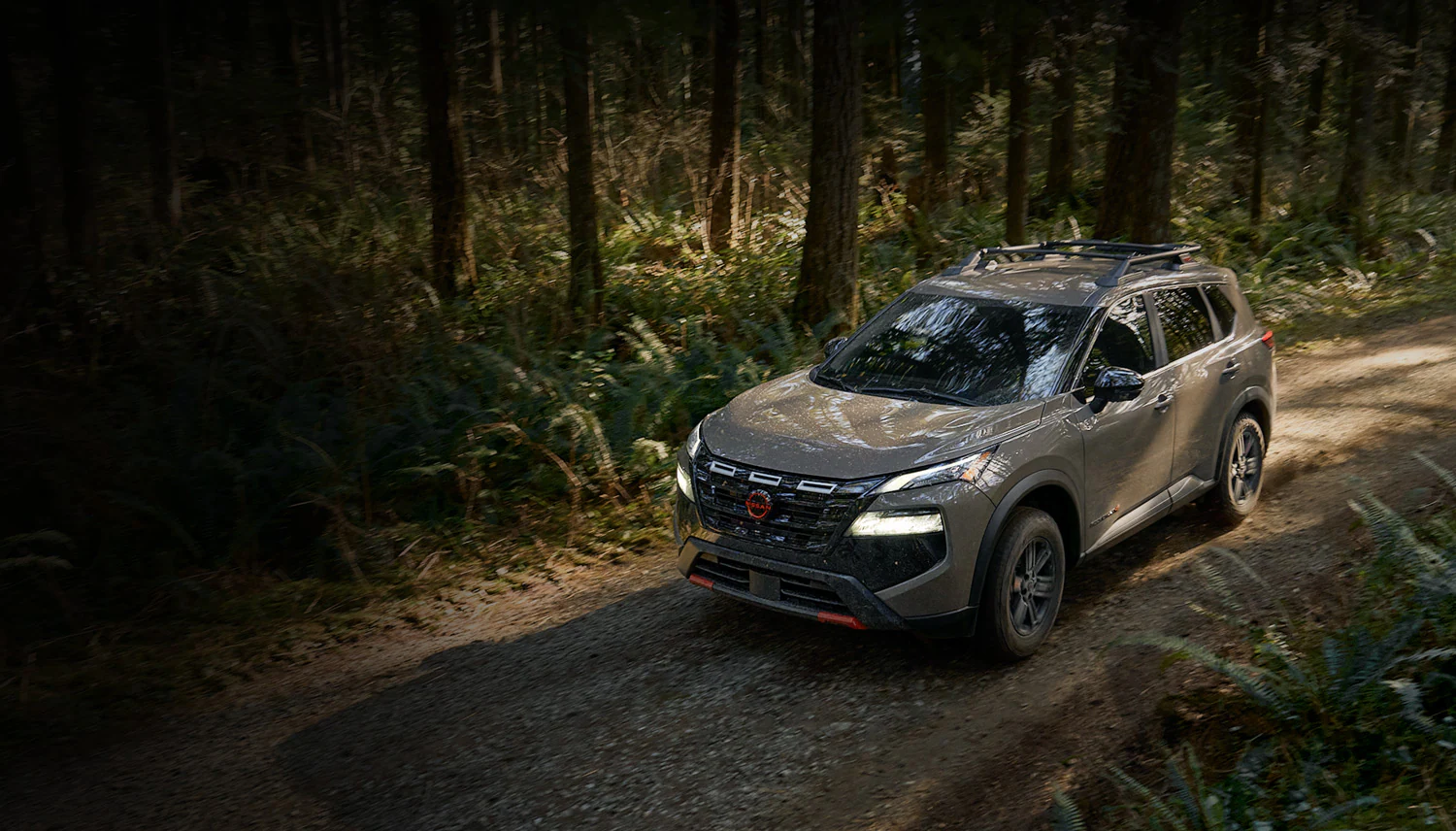
The 2027 Nissan Rogue remains available with a gas engine in the U.S., but its starting price increases as Nissan adds a new hybrid option to the lineup.
The gas-powered Rogue gets a small price increase
The 2027 Nissan Rogue is entering another model year without a major redesign. Instead, Nissan is carrying over the gasoline-powered SUV while introducing an all-new Rogue Hybrid separately for the U.S. market.
For 2027, the gas-powered Rogue starts at $31,265 including destination, according to the pricing information supplied for the model year. Nissan’s current U.S. website lists the 2027 Rogue at a $29,690 MSRP before destination and handling charges, which aligns with the reported $31,265 figure once the destination fee is included.
That makes the entry-level Rogue slightly more expensive than before. The increase is modest, but it comes at a time when buyers have more electrified choices in the compact SUV segment.
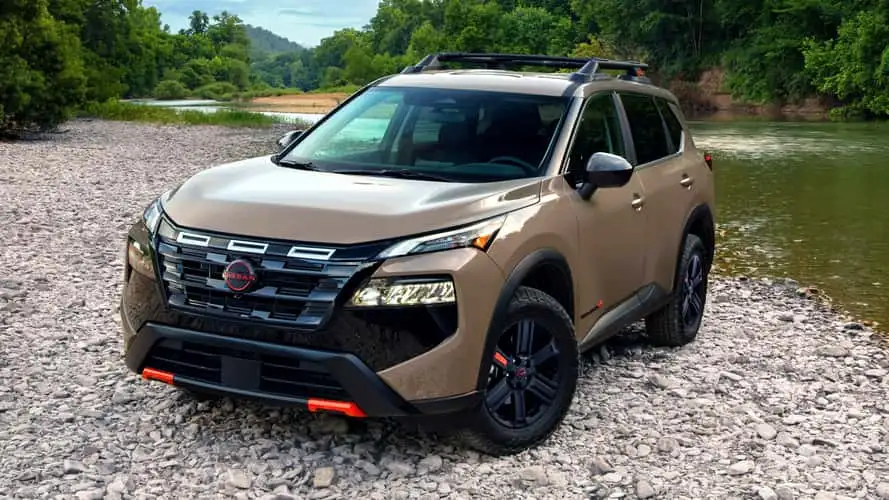
The gasoline-powered Rogue carries over for 2027 with the same basic design and powertrain.
The price structure varies by trim. The Rogue S FWD remains the entry point, while buyers can move into the SV, Dark Armor, Rock Creek and Platinum versions.
All-wheel drive remains available on selected trims, including the S, SV and Rock Creek. The additional cost for AWD is $1,400 on the versions where it is offered.
The Rock Creek sees the largest price increase in the range. The rugged-looking trim is now listed at $36,515 including destination, according to the supplied pricing information.
The Rogue Platinum also moves higher, reaching $41,365 including destination.
The same 1.5-liter turbo engine returns
Under the hood, the 2027 Rogue keeps Nissan’s 1.5-liter three-cylinder VC-Turbo engine.
The engine produces 201 horsepower and 225 lb-ft of torque. It is paired with Nissan’s Xtronic continuously variable transmission.
Nissan has also made calibration changes to the transmission. The company says the updates are intended to provide quicker throttle response and smoother acceleration.
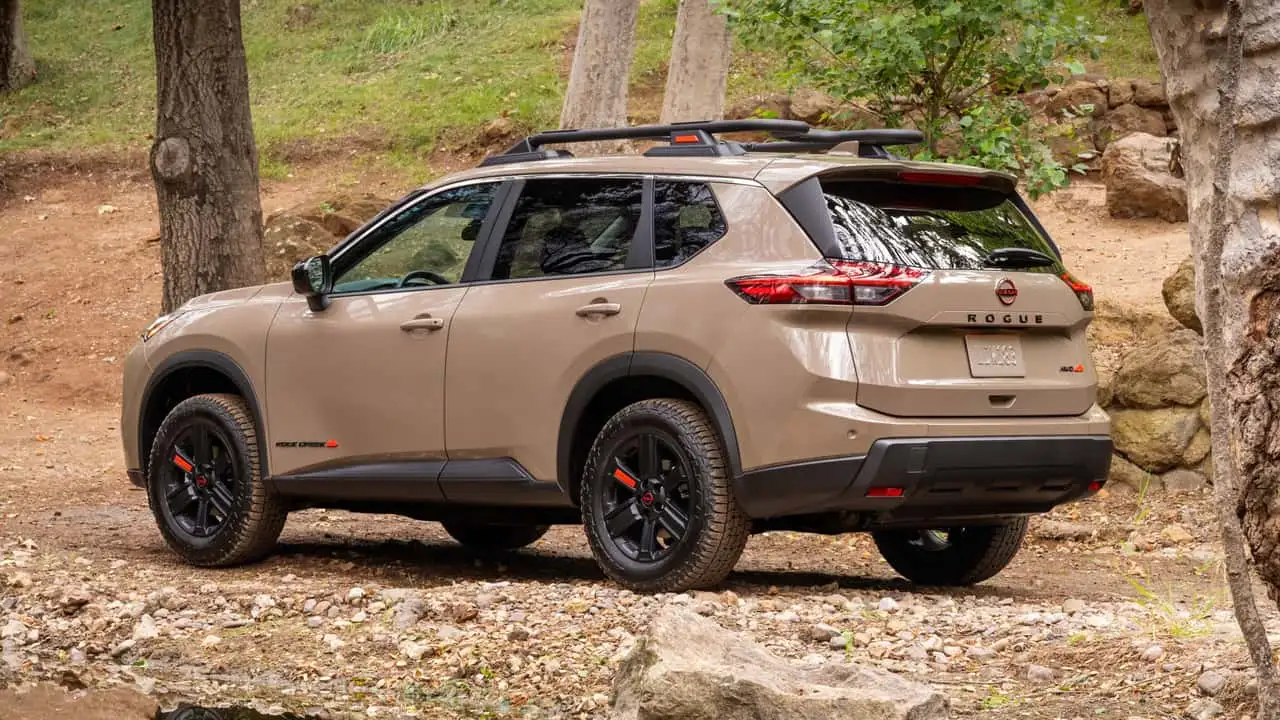
The Rogue’s familiar profile carries into the 2027 model year without a major exterior redesign.
Fuel economy remains competitive for a gasoline-powered compact SUV. Nissan lists an EPA-estimated 28 mpg in the city, 33 mpg on the highway and 30 mpg combined for the gas-powered Rogue.
The rest of the package is largely familiar.
The Rogue continues to offer seating for five passengers, available Intelligent All-Wheel Drive and a range of technology and comfort features. The lineup also includes the more rugged Rock Creek trim and the upscale Platinum model.
This carryover strategy gives Nissan a conventional alternative to its new hybrid model.
The new Rogue Hybrid changes the lineup
The biggest change for 2027 is not under the hood of the gasoline Rogue. It is the arrival of the all-new Rogue Hybrid.
Nissan is introducing the hybrid with its third-generation e-POWER system, which uses electric motors to drive the wheels while a gasoline engine generates electricity.
The new hybrid is also expected to deliver 40 mpg city in its SR AWD configuration. Nissan says the first Rogue Hybrid models will arrive in the U.S. in late fall 2026, with additional trims expected in early 2027.
That creates two distinct Rogue choices.
Buyers who want the familiar gasoline powertrain can stick with the carryover model. Those who want greater fuel efficiency and electric-motor driving can move to the new hybrid.

The conventional Rogue remains focused on value, practicality and everyday usability.
The pricing also keeps the Rogue in a competitive position.
Based on the supplied 2027 pricing figures, the Kia Sportage and Chevrolet Equinox remain less expensive at the entry level. The Honda CR-V starts higher, while the Rogue continues to sit near the middle of the compact SUV price range.
For Nissan, the strategy is straightforward. The company is keeping the established gasoline Rogue in the lineup while adding a more efficient hybrid alternative for customers who want something different.
The 2027 Nissan Rogue remains a U.S.-market compact SUV, and the gasoline model continues into the new model year with familiar technology, the 1.5-liter turbo engine and a slightly higher price.
-
 NOW TRENDING2 months ago
Rolls-Royce’s $32 Million Droptail Took 9 Months of Handcrafted Woodwork
-

 NOW TRENDING4 weeks ago
Tesla Cybercab Gets September 3 Austin Launch Date
-

 INTELLIGENT MOBILITY2 months ago
GM Updates Infotainment System With Smarter Features
-
 NOW TRENDING2 months ago
2027 Audi Q9 and SQ9 Debut as Brand’s Largest SUVs
-
 NOW TRENDING2 months ago
2027 Hyundai Tucson Spied With New Design and Hybrid Power
-
 RACING2 months ago
Aston Martin Upgrades Deliver Alonso’s Best Qualifying of 2026
-

 INTELLIGENT MOBILITY2 months ago
Hyundai Opens UX Studio Shanghai to Drive Global Innovation
-
 NOW TRENDING2 months ago
Low-Mileage Audi S4 Avant Brings V8 Wagon Dream Back
You must be logged in to post a comment Login