
NOW TRENDING
Audi Sales Fall in 2026 Despite Strong Demand for New Models

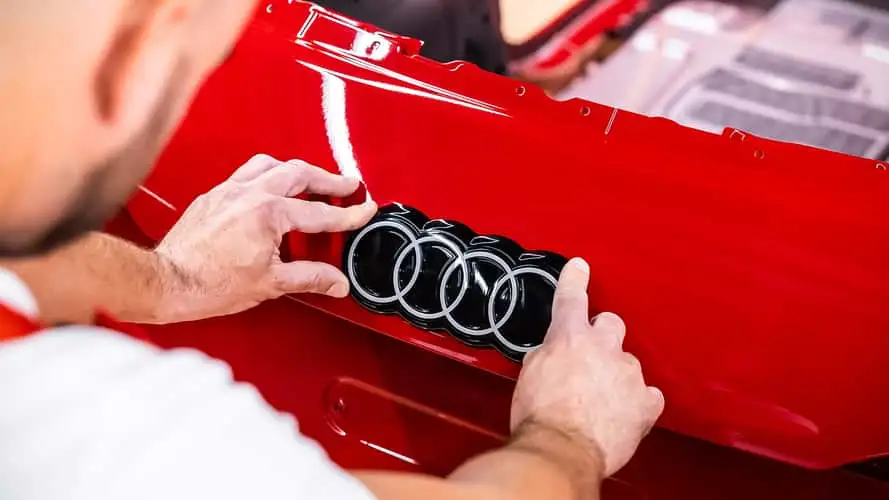
Audi’s latest redesigned models are driving sales growth in key segments, but weak EV demand and lower overall deliveries continue to weigh on the brand’s performance in the U.S. market.
Audi continues to face a challenging year in the United States despite encouraging results from several of its newest vehicles. The German luxury brand reported lower overall deliveries during the second quarter of 2026, although recently redesigned models are attracting more buyers and helping offset declines elsewhere in the lineup.
The latest figures highlight a brand navigating two very different realities: rising demand for its newest gasoline models and a sharp slowdown in electric vehicle sales.
New Audi models drive growth across the lineup
Audi delivered 38,030 vehicles in the United States during the second quarter of 2026, a 3% decline compared with the same period last year.
Year-to-date deliveries reached 67,916 units, representing a 17% decrease versus the first half of 2025.
Despite the overall decline, several redesigned models posted impressive growth:
- Audi A3: +9%
- Audi A5: +9%
- Audi A6: +32%
- Audi Q5: +30%
- Audi Q8: +47%
The strong performance of the A5, A6 and Q5 suggests Audi’s latest product updates are resonating with American buyers.
The redesigned Audi A5 and A6 are among the brand’s strongest performers in 2026.
Electric vehicle sales continue to decline
While Audi’s combustion-powered models are showing positive momentum, its electric lineup continues to struggle throughout 2026.
Some of the largest declines include:
- Audi Q6 e-tron: -83% (Q2)
- Audi Q4 e-tron: -93%
- Audi Q4 Sportback e-tron: -99%
- Audi e-tron GT: -52%
- Audi Q8 e-tron: discontinued
Audi has sold just 1,730 electric vehicles in the U.S. during the first half of 2026, representing an 85% drop compared with the same period last year.
The decline follows reduced consumer demand for EVs and changes in federal incentives, which have significantly impacted the premium electric vehicle segment.
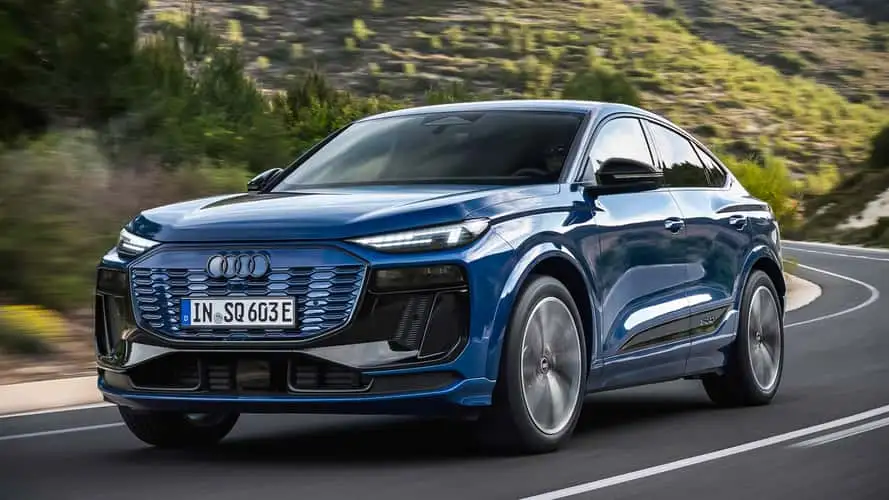
Audi’s electric vehicle lineup continues to face weaker demand in the U.S. market.
Audi looks to new products to regain momentum
Although overall deliveries remain below last year’s levels, Audi appears to be benefiting from a renewed product offensive centered on updated sedans and SUVs.
The redesigned Q5, A5 and A6 have become some of the brand’s strongest performers, while the Q8 continues posting healthy growth in the luxury SUV segment.
Audi will likely rely on additional model launches and refreshed vehicles over the coming months as it works to recover market share and stabilize sales in North America.
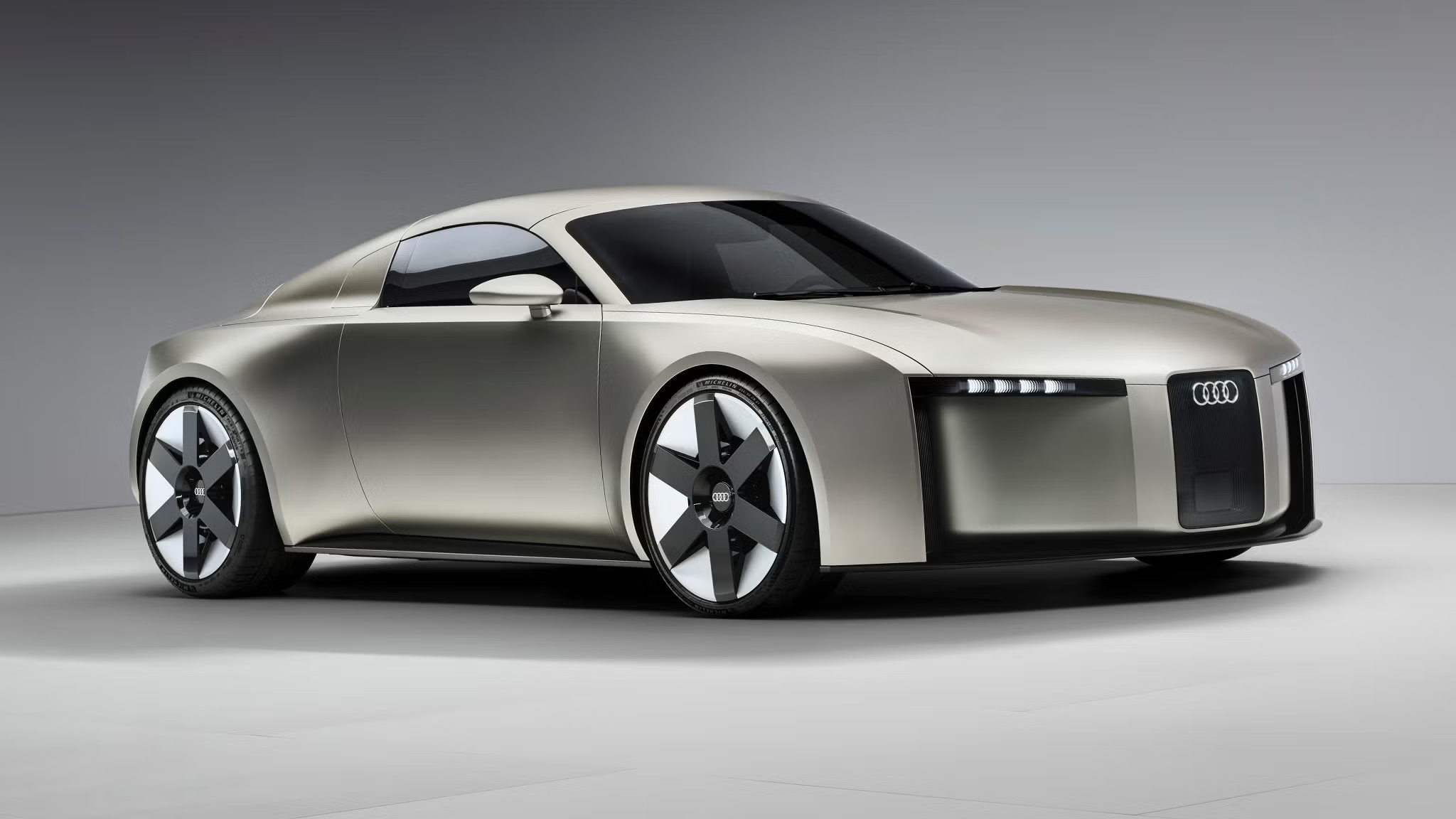
The Audi Q5 remains one of the brand’s most important growth models in the United States.
Even with several successful launches, Audi sales in 2026 demonstrate that fresh products alone may not be enough to reverse broader market challenges. As demand shifts and competition intensifies, the German automaker will need both stronger EV performance and continued success from its redesigned lineup to improve results during the second half of the year.







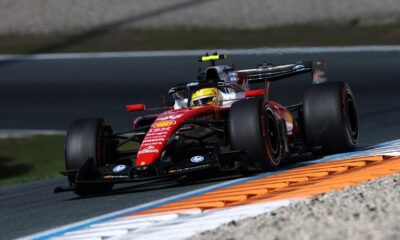

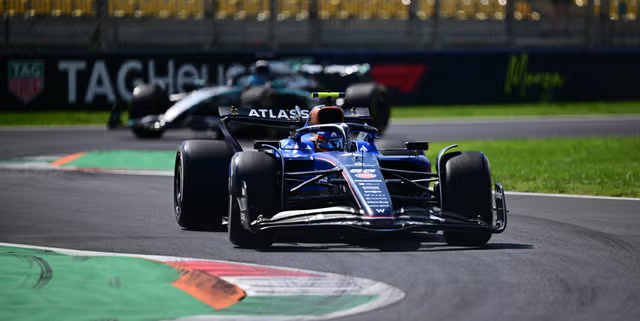
Carlos Sainz believes Williams should use Monza and Madrid to experiment ahead of its major Bakú upgrade after five races without finding answers.
Carlos Sainz believes Williams has reached a point where it needs to change its approach.
The Spaniard endured another difficult weekend at the Dutch Grand Prix, but his main concern is not Zandvoort itself. According to Sainz, Williams’ lack of performance has remained consistent across the last five races.
Williams needs to understand its problems
Sainz said the recent results are not simply the consequence of one particular circuit.
The same performance level has appeared repeatedly, leaving Williams without points in the five races leading into Zandvoort.
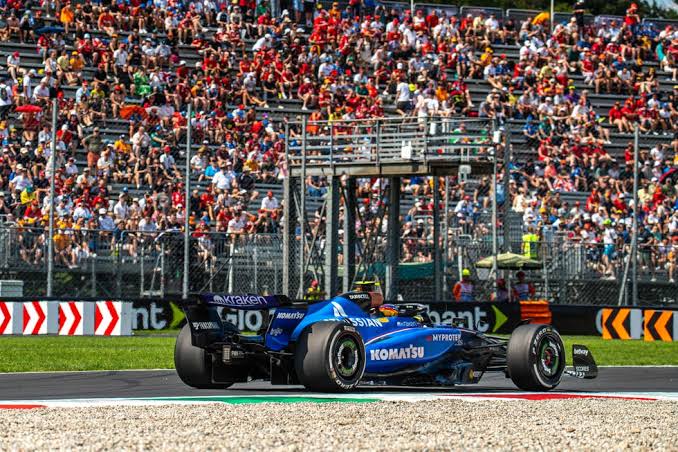
Carlos Sainz believes Williams must use the next two races to better understand its FW48 before the major upgrade arrives.
The Spaniard also experienced a difficult weekend personally, with inconsistent behavior from different components making it harder to find a suitable setup.
That prevented him from properly optimizing the FW48 for the race.
Sainz nevertheless believes the problems themselves could provide valuable information for Williams’ engineers.
Monza and Madrid could become test sessions
Williams is already targeting Bakú as a major turning point.
The team previously indicated that a substantial FW48 update would arrive there, with the goal of addressing several of the car’s behavioral weaknesses.
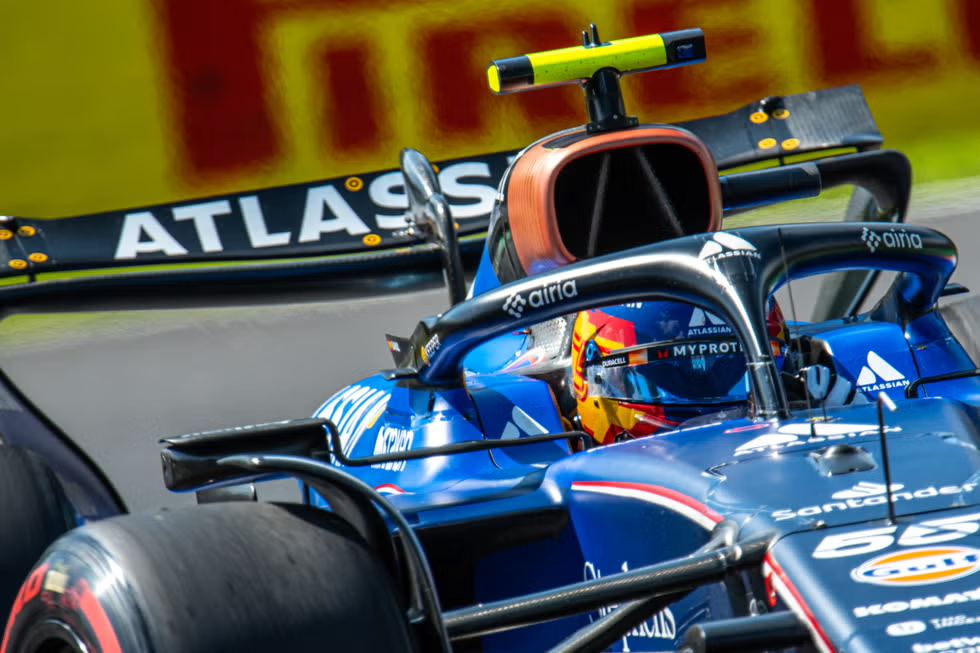
Williams plans a major development for Bakú, making Monza and Madrid important opportunities for further testing.
Before that upgrade arrives, however, Williams has races at Monza and Madrid.
Sainz believes the team should use those events to experiment with solutions that it would not normally consider.
Rather than simply trying to maximize the result at both races, Williams could sacrifice some short-term performance to learn more about the car.
That would give engineers additional information before the major Bakú package is introduced.
Sainz wants Williams to leave its comfort zone
The key objective is to understand why the FW48 has stopped progressing.
Sainz says Williams should try different approaches, even if some experiments fail.
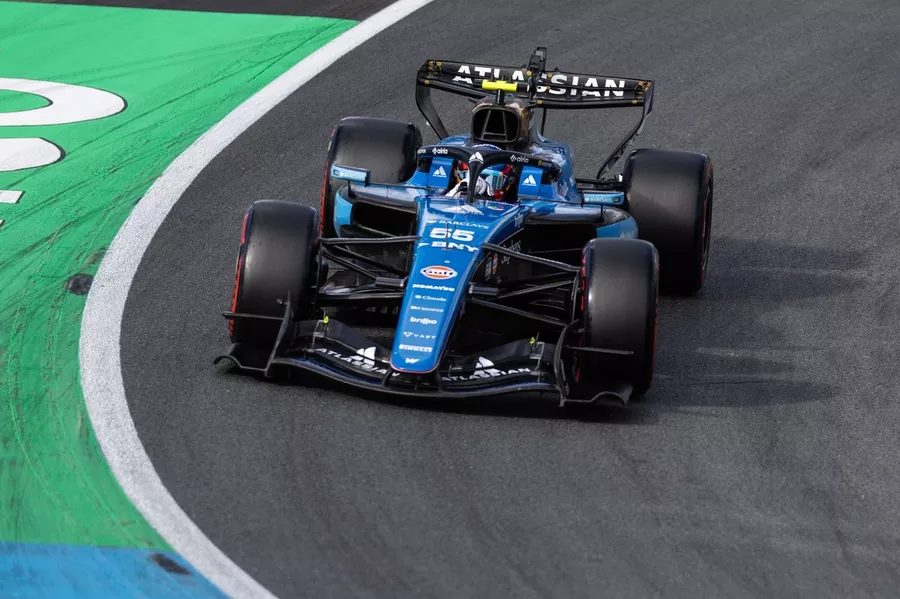
Sainz wants Williams to test outside its normal operating window before introducing the Bakú upgrade.
Those experiments could help the team identify weaknesses that have remained hidden during conventional setup work.
The Spaniard believes that information could make the difference once the major upgrade arrives.
After five consecutive races producing essentially the same picture, Sainz sees little value in simply waiting for the next development package.
The Carlos Sainz Williams partnership therefore enters an important phase. Monza and Madrid could become valuable laboratories for the team, giving Williams a final opportunity to understand the FW48 before the much-anticipated Bakú upgrade arrives.
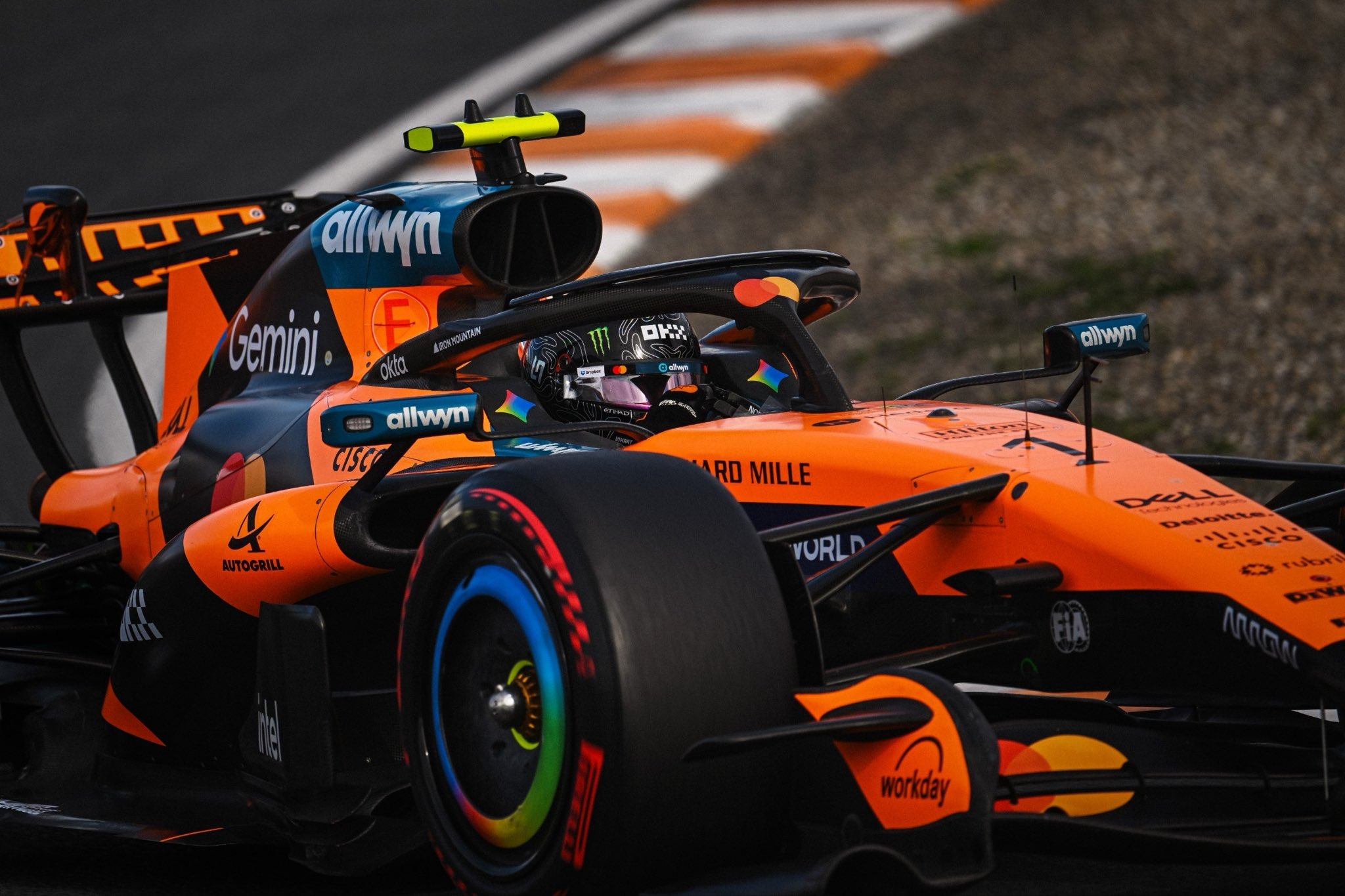
Lando Norris rejected Mercedes’ claim that McLaren has the fastest car, arguing that his recent victories are also the result of extracting more from the MCL40.
Lando Norris has pushed back against Mercedes’ assessment of the Formula 1 pecking order, arguing that McLaren’s recent victories are not simply the result of having the fastest car.
Andrea Kimi Antonelli and George Russell both described McLaren as the team to beat after the Dutch Grand Prix, but Norris believes his own performance has played a major role in allowing the MCL40 to consistently fight at the front.
The reigning world champion has now won the last two Grands Prix in Hungary and Zandvoort, starting both from pole position.
Norris believes his driving is making the difference
Mercedes dominated the opening phase of the 2026 season, winning the first six races from pole. McLaren and Ferrari have since closed the gap with major upgrades.
Antonelli, who finished second at Zandvoort, said Mercedes was clearly behind McLaren. Russell agreed after taking third.
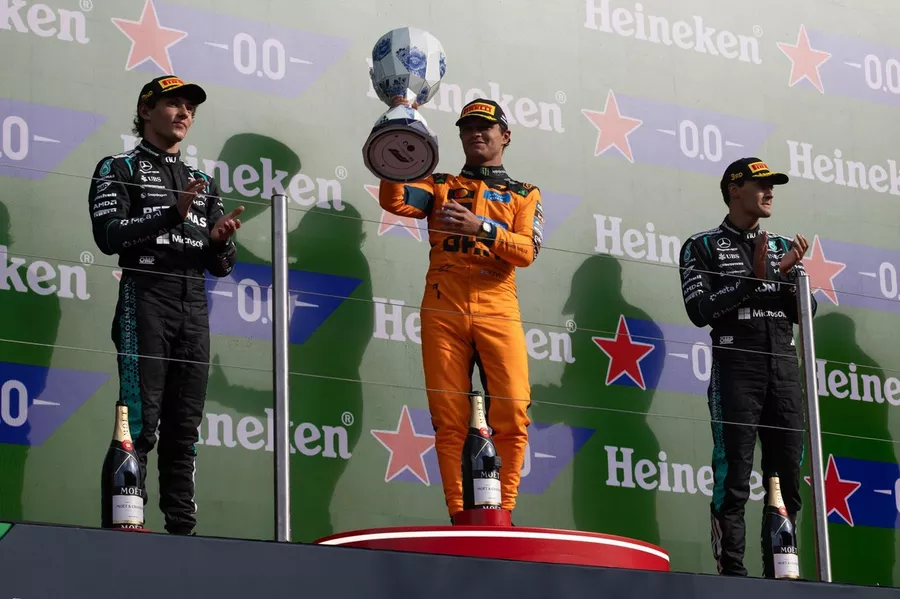
Lando Norris won at Zandvoort after starting from pole and holding off Mercedes during the race.
Norris does not completely agree with that assessment.
The McLaren driver argued that if he had not made the decisive move on Antonelli when he did, he would not have won the Dutch Grand Prix.
He also admitted that he rarely gives himself much credit, making his comments particularly notable.
Norris believes he is currently doing a better job than the rest of the field and that this is helping McLaren appear stronger than it might be on pure car performance.
Mercedes may still have the better all-round car
Norris does not claim that McLaren is definitively the strongest car in every situation.
Instead, he believes Mercedes has a more complete package across different track conditions, while McLaren has a more specific advantage in certain types of corners.
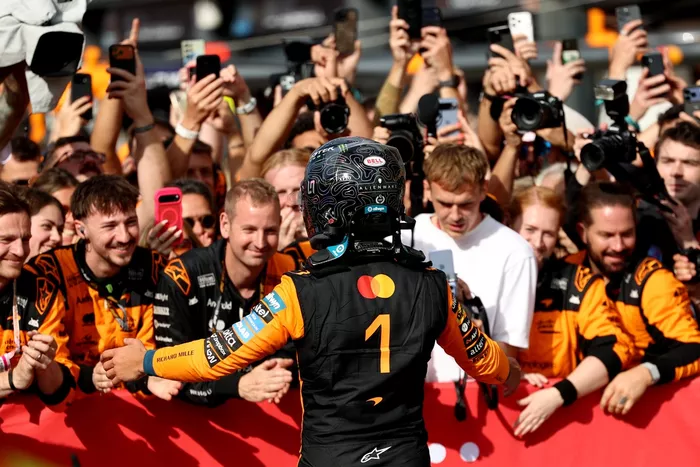
Norris says McLaren is particularly strong through high-speed corners, while Mercedes remains more competitive across a wider range of conditions.
At Zandvoort, Norris highlighted Turns 7 and 8 as areas where McLaren gained significant performance.
That makes circuit characteristics particularly important when comparing the two teams.
According to Norris, McLaren may not be the strongest everywhere, but his ability to maximize the car can close that difference.
Qualifying performances reinforce Norris’ argument
The comparison with Oscar Piastri is another reason Norris believes his own driving is contributing significantly to McLaren’s recent success.
Piastri finished sixth at Zandvoort and sits seventh in the championship, while Norris is fourth.
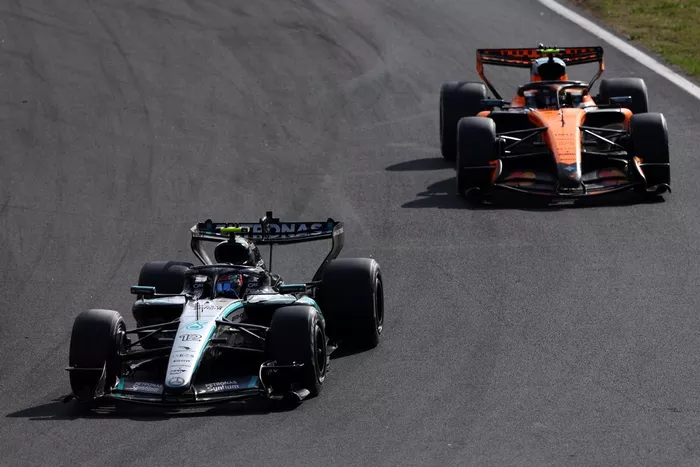
Lando Norris has built a significant qualifying advantage over McLaren teammate Oscar Piastri in 2026.
Norris currently leads Piastri 13-4 in qualifying, including Sprint qualifying sessions.
That gap has become an important reference point for Norris because it suggests that the MCL40’s performance is not the only factor determining McLaren’s results.
He also pointed to Saturday’s Sprint as evidence. Russell dominated from pole, while Norris had to fight to hold off Antonelli for third.
Instead of making major changes to the car overnight, Norris said he focused heavily on improving his driving.
Norris says he turned the weekend around himself
The McLaren driver believes his work between the Sprint and the Grand Prix was critical.
He said he worked extensively on his driving and regained confidence after a less successful Sprint result.
That confidence allowed him to maximize the car when it mattered most and ultimately convert pole position into victory.
For Lando Norris McLaren, the message is clear: the MCL40 is extremely competitive, but Norris believes his ability to extract the final performance is a major reason the team has won the last two races.
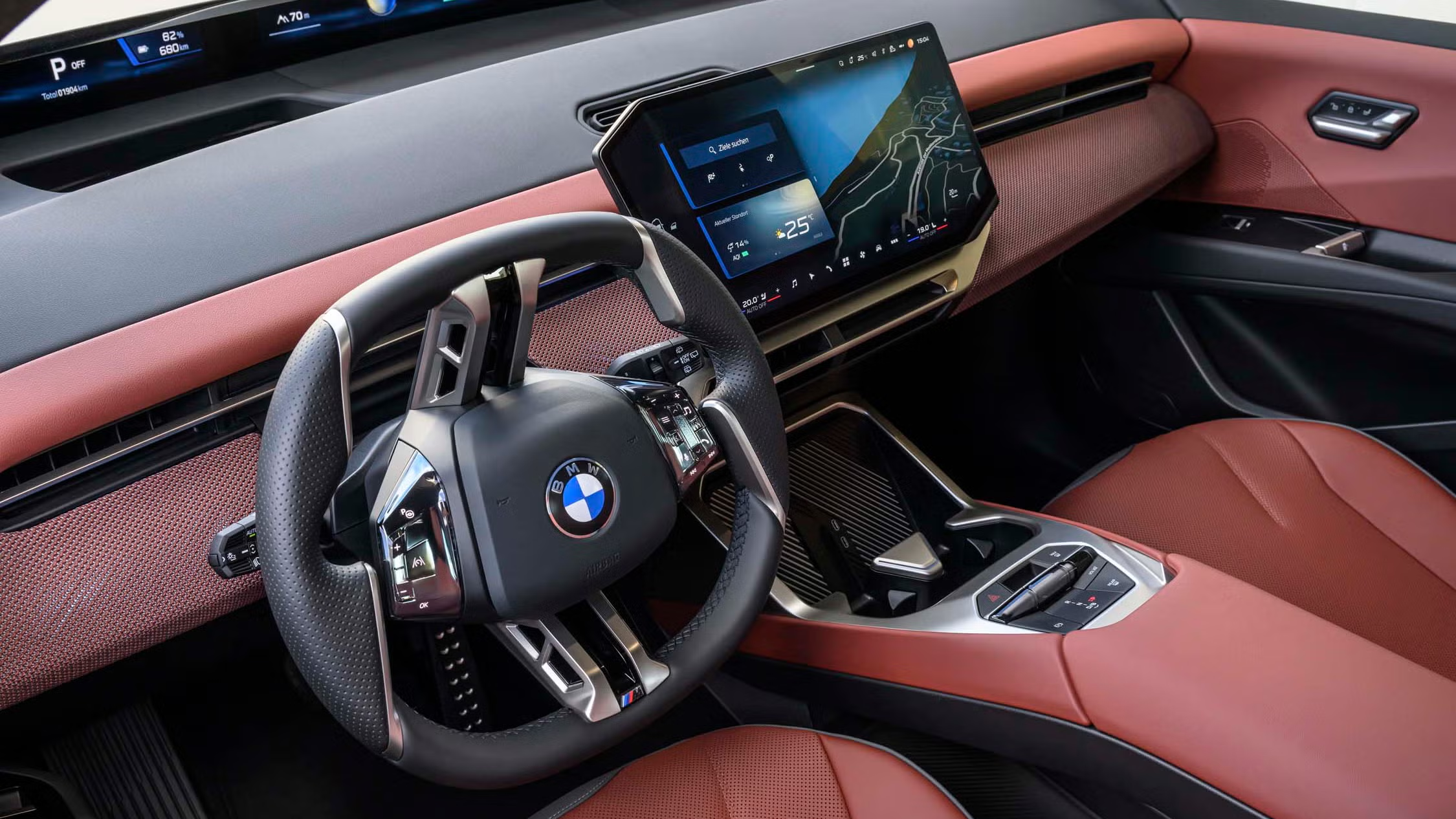
BMW says younger customers increasingly prefer voice and touchscreen controls, helping push the brand toward fewer physical buttons in its newest models.
BMW is moving further away from traditional physical controls in its newest vehicles, and one executive says younger buyers are helping drive the change.
The shift is particularly noticeable in the BMW iX3, one of the first models built around the company’s Neue Klasse platform. The electric SUV places many functions on its central display, including climate controls.
While BMW is far from the only automaker reducing the number of buttons, the company believes changing customer habits are an important reason for the transition.
BMW says younger buyers prefer digital controls
Vikram Pawah, CEO of BMW Group Australia, said younger customers are increasingly comfortable using voice commands and touchscreens instead of traditional switches and knobs.
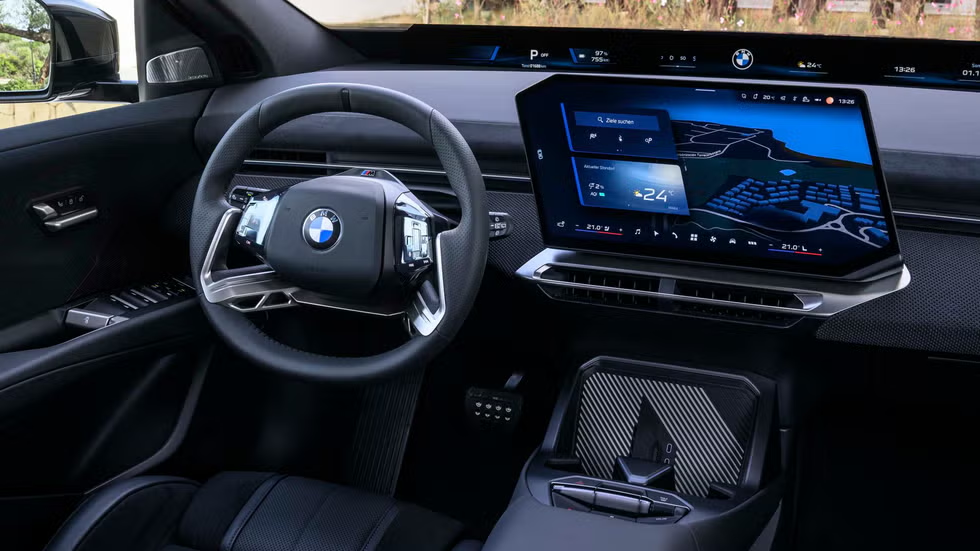
The BMW iX3 uses a touchscreen-heavy interior with fewer traditional physical controls.
Pawah pointed to customers 45 and younger as a group that has adopted these technologies particularly quickly.
According to the executive, younger buyers are also more accustomed to multitasking and expect technology to complete tasks quickly.
That means automakers are increasingly designing vehicle interfaces around the same habits people already have with smartphones and other connected devices.
The Neue Klasse pushes BMW further toward screens
BMW’s Neue Klasse platform represents a major change in the brand’s approach to vehicle interiors.
The iX3 is among the clearest examples, with many functions integrated into the center display rather than controlled through dedicated physical switches.
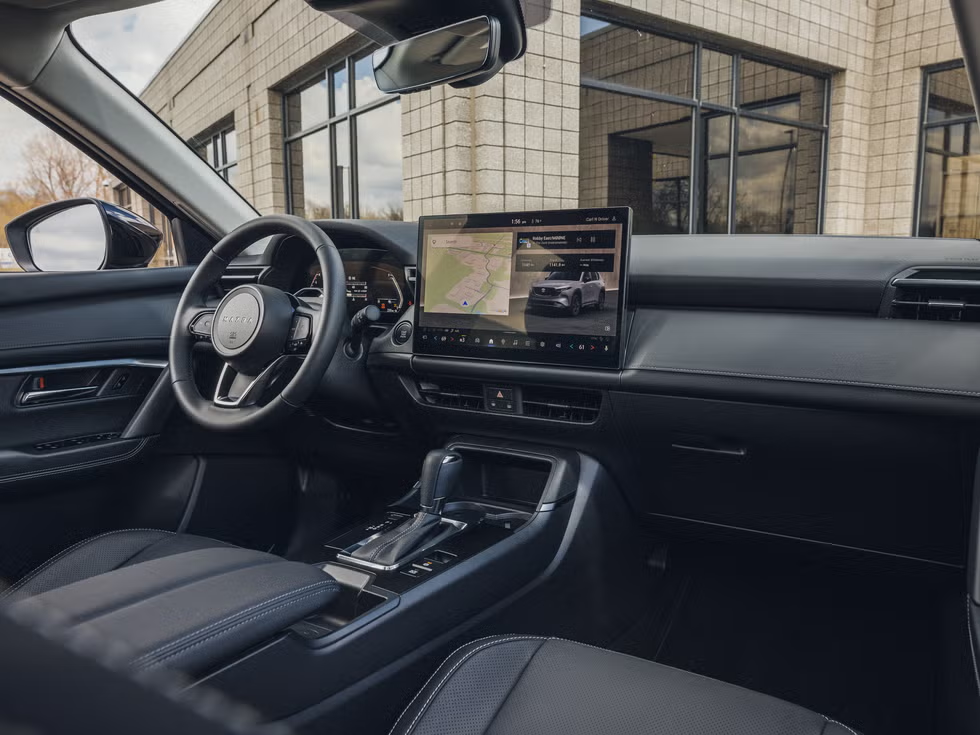
BMW’s Neue Klasse models are reducing traditional switchgear in favor of touchscreen and voice controls.
BMW is not alone in taking this approach.
Tesla has relied heavily on central touchscreens for years, while newer manufacturers such as Rivian have also adopted screen-based controls.
Established automakers including Mazda and Mercedes-Benz have similarly moved more functions into digital interfaces.
The result is a broader industry trend toward software-defined vehicle cabins.
Convenience versus physical controls
The move away from buttons is not without controversy.
Physical controls can be operated by feel, while touchscreen menus often require drivers to look away from the road to locate a function.
That creates an important debate over whether the convenience of a digital interface outweighs the potential drawbacks.
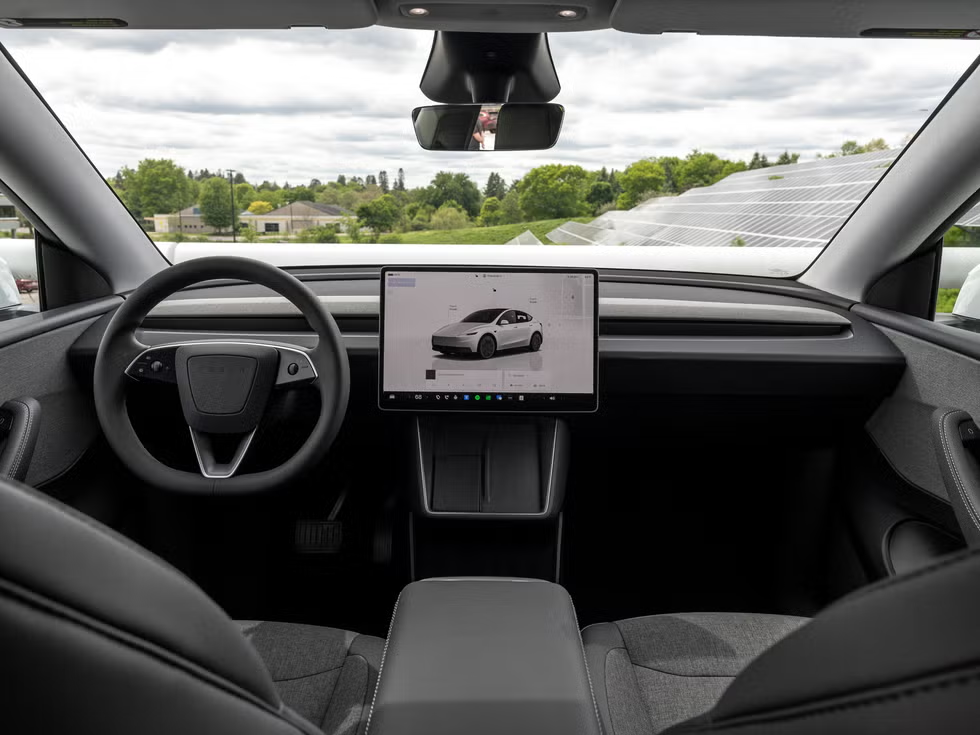
BMW is increasingly replacing dedicated controls with touchscreen and voice interfaces as vehicle interiors become more software-driven.
BMW’s argument is that vehicle technology needs to reflect how society is changing.
Pawah described the modern automobile as something that is increasingly connected to the wider digital environment rather than functioning as a completely standalone product.
That philosophy suggests BMW’s newest interiors will continue moving toward voice interaction, touch controls, and software-based functions.
For BMW physical buttons, the trend is clear: traditional knobs and switches are becoming less common as automakers try to match the digital habits of newer generations.
-

 NOW TRENDING2 months ago
Polestar to Exit U.S. Market After 2026 Due to Connected Vehicle Rules
-
 NOW TRENDING2 months ago
Tesla Model Y L Arrives in the U.S. With More Space and Three Rows
-

 RACING2 months ago
McLaren F1 Unveils Special Silverstone Livery Honoring Its History
-
 INTELLIGENT MOBILITY2 months ago
Audi A4 E-tron and Q7 E-tron Confirmed as New Electric Models
-
 TEST DRIVES2 months ago
A Week Driving Honda’s New Hybrid Coupe
-
 TEST DRIVES2 months ago
Ford Recalls More Than 741,000 Trucks and SUVs Over Rollaway Risk
-
 NOW TRENDING2 months ago
Toyota Reports Strong June and Q2 2026 U.S. Sales Growth
-

 INTELLIGENT MOBILITY2 months ago
GM Expands Super Cruise With Exclusive Hands-Free Towing Technology
You must be logged in to post a comment Login