
NOW TRENDING
Mazda Expects SUVs to Remain the World’s Most Popular Vehicle Segment

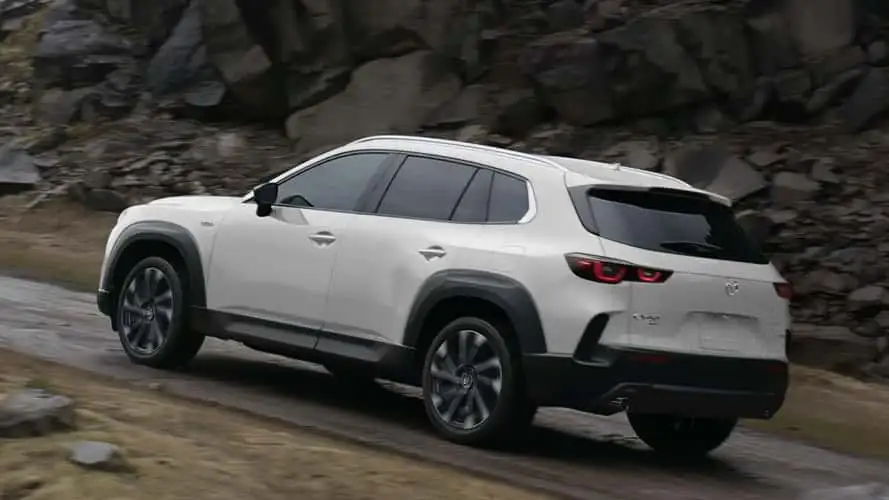
Mazda SUVs are expected to remain at the center of the brand’s global strategy as the automaker forecasts continued demand for crossovers despite renewed interest in sedans.
Despite growing attention surrounding new electric sedans, Mazda SUVs are expected to remain the company’s biggest priority for years to come. The Japanese automaker believes demand for crossovers will continue expanding worldwide, particularly in the compact SUV segment.
According to Mazda, changing consumer preferences and global market trends continue favoring SUVs, making them one of the strongest growth opportunities across multiple regions.
Mazda SUVs remain the brand’s global priority
Mazda believes the SUV segment still has significant room for expansion despite recent launches of new passenger cars in several international markets.
The company expects compact crossovers to remain its strongest products, especially as customers continue prioritizing practicality, versatility and elevated driving positions.
This strategy reflects current buying trends across North America, Europe and Asia.

Mazda expects SUVs to remain its fastest-growing vehicle segment.
Compact crossovers continue leading demand
The automaker sees compact Mazda SUVs as one of the largest opportunities for future growth.
Urban environments, evolving customer preferences and the increasing popularity of electrified vehicles continue driving demand for smaller crossover models that combine efficiency with everyday practicality.
Several upcoming Mazda products are expected to strengthen the brand’s position in this highly competitive segment.
Sedans are returning, but SUVs remain dominant
Although some markets are showing renewed interest in sedans, Mazda believes SUVs will continue representing the majority of global vehicle sales.
Crossovers remain especially popular in North America, where buyers continue favoring larger, more versatile vehicles for both family and recreational use.
The company expects that trend to continue throughout the coming years.

Compact crossovers continue driving global sales for Mazda.
Mazda continues investing in future SUVs
Alongside new passenger cars, Mazda is also preparing additional crossover models as part of its future product strategy.
The company believes expanding its SUV lineup will allow it to remain competitive while responding to growing customer demand for electrified and technology-focused vehicles.

Mazda plans to expand its global SUV lineup in the coming years.
Mazda SUVs will continue shaping the brand’s future
Mazda’s latest outlook reinforces the importance of SUVs within the global automotive industry.
While sedans may regain some popularity in selected markets, the company expects crossovers to remain the foundation of future growth thanks to their versatility, practicality and broad consumer appeal.

Mazda expects SUVs to remain the most popular vehicle category worldwide.
Mazda’s long-term strategy makes it clear that Mazda SUVs will continue playing a central role in the brand’s global expansion. As customer preferences evolve and electrification advances, compact crossovers are expected to remain among the company’s most important products across major automotive markets.








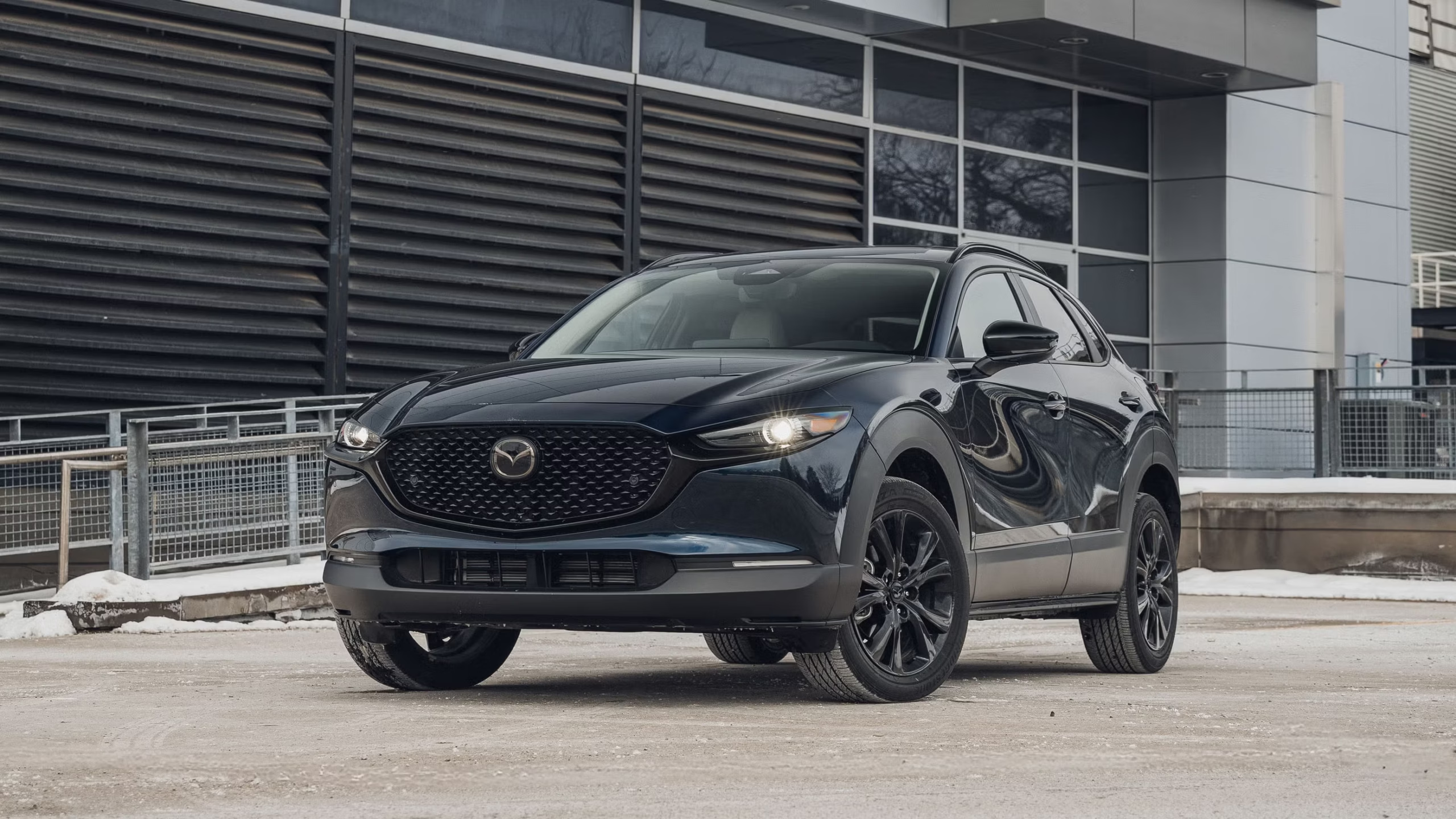
Mazda’s popular subcompact SUV will remain in its current generation for years longer than expected as rising costs and U.S. tariffs delay its replacement.
Mazda is delaying the next generation of the CX-30 until 2031, meaning the current subcompact SUV could remain on sale for more than a decade.
The news comes from Mazda CEO Masahiro Moro, who told Japanese newspaper Chugoku Shimbun that the replacement is planned for the company’s fiscal 2030. That fiscal year runs through March 2031.
The decision highlights the financial pressure facing Mazda as the automaker deals with higher production costs, economic uncertainty, and increased U.S. tariffs on Japanese-built vehicles.
The CX-30 will have a long life cycle
The Mazda CX-30 first arrived in the United States for the 2020 model year. Under a traditional product cycle, the current generation would normally be approaching its replacement much sooner.
Instead, Mazda plans to keep the model in production well into the next decade.
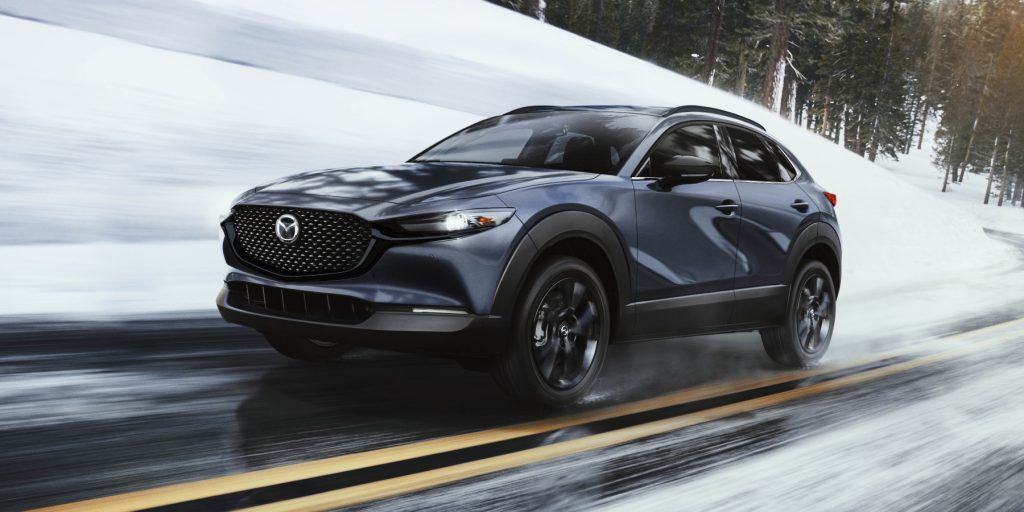
The Mazda CX-30 launched in the U.S. for 2020 and is now expected to remain on sale until the next generation arrives.
Moro said the company is facing several global challenges, including economic instability in key markets and rising raw material costs.
U.S. tariffs are another major concern.
Mazda currently has only one vehicle built in the United States, the CX-50. The company’s Japanese-built vehicles have been affected by a 15% U.S. tariff, increasing the cost pressure on the business.
Rising costs are forcing Mazda to rethink timing
Developing a completely new vehicle requires a major investment. For a smaller automaker such as Mazda, delaying a new generation can help control spending during a difficult economic period.
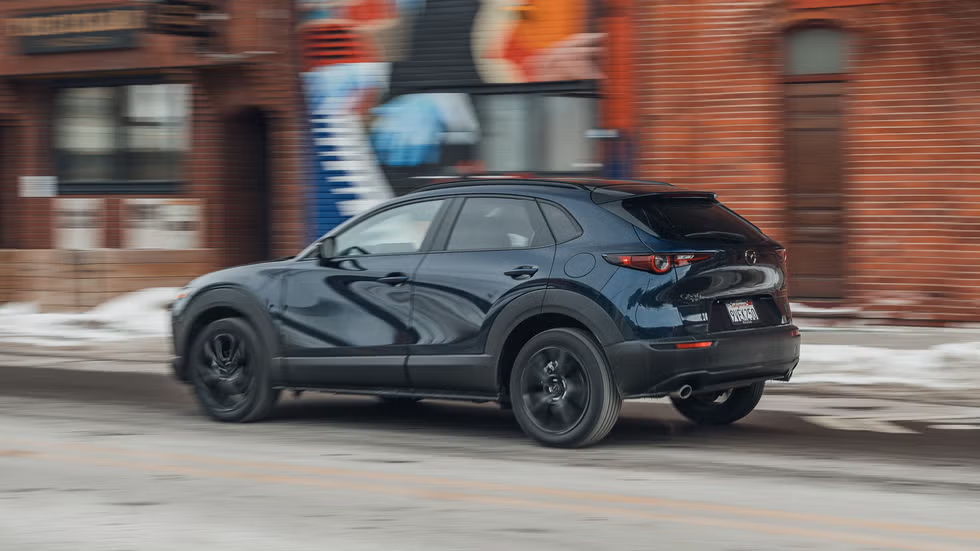
Rising production costs and U.S. tariffs are contributing to the delay of the next-generation Mazda CX-30.
The strategy does come with risks.
The CX-30 competes in a segment where rivals are constantly adding new technology, updated styling, and improved efficiency. Keeping the same basic generation for so long could make it harder for Mazda to stay competitive.
Still, the company has another option.
Mazda could introduce one or more significant refreshes before the new generation arrives. That would allow the automaker to update the SUV’s appearance, technology, and equipment without the expense of developing an entirely new vehicle.
The CX-30 remains important to Mazda
Despite the delay, the CX-30 remains an important part of Mazda’s global lineup.
In the United States, it was the brand’s third-best-selling model in 2025, with 56,684 units sold.
That figure was down significantly from the 96,515 units sold in 2023, showing that demand has weakened even though the model remains a key product.
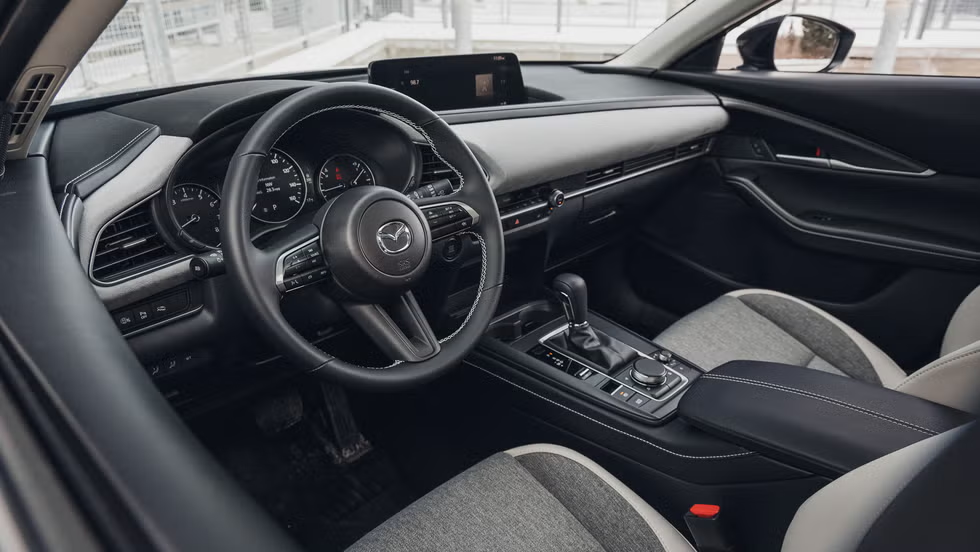
The CX-30 remains one of Mazda’s most important models despite declining U.S. sales in recent years.
Globally, the CX-30 is even more significant. Mazda sold 208,869 units worldwide, making it the company’s second-most-popular vehicle.
Those numbers make it unlikely that Mazda will simply leave the CX-30 unchanged until 2031.
The company has not announced specific future updates, but a substantial refresh during the current model’s extended life cycle would make sense.
A longer wait for Mazda’s next small SUV
The delayed Mazda CX-30 replacement reflects the financial realities facing smaller automakers.
Rather than rushing into a costly new generation, Mazda appears willing to extend the current model while dealing with tariffs, material costs, and economic uncertainty.
That means customers should expect the existing CX-30 to remain part of Mazda’s U.S. lineup for several more years. The company may use updates along the way to keep the SUV competitive until its true successor arrives around 2031.
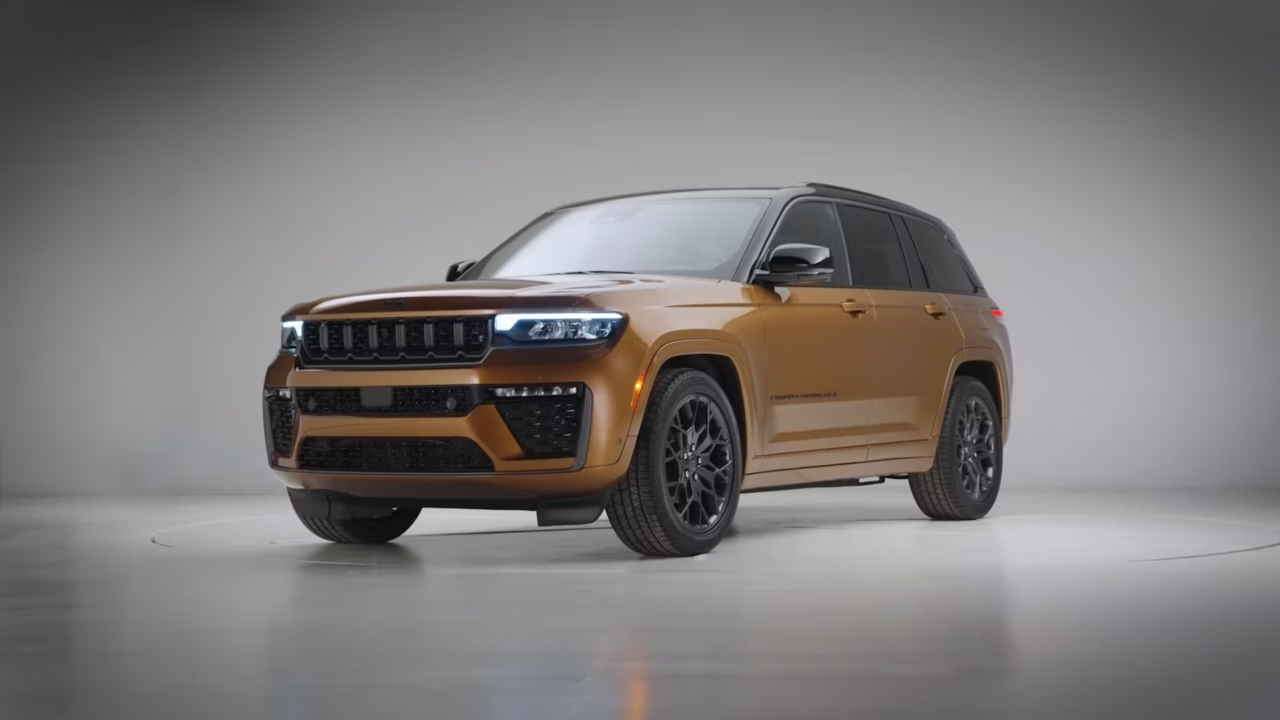
The latest Jeep Grand Cherokee combines modern turbocharged power, improved comfort, strong off-road capability, and greater flexibility than before.
The 2026 Jeep Grand Cherokee has always occupied a unique position in the SUV market. It offers more refinement than a dedicated off-roader while retaining far more capability than a typical family crossover.
That balance has not always been easy to achieve. Previous generations could be highly capable without feeling particularly refined. They could also offer premium features while leaving buyers with questions about long-term reliability.
The latest Grand Cherokee takes a different approach. Jeep has focused on improving the areas that matter most in everyday ownership while preserving the model’s off-road character.
The result is arguably the most balanced Grand Cherokee yet.
Modern Turbo Power Changes the Formula
One of the biggest changes is under the hood. Jeep has moved toward smaller turbocharged engines, replacing the larger naturally aspirated engines that traditionally defined the Grand Cherokee.
The turbocharged inline-four delivers strong torque at low engine speeds. That makes the SUV feel responsive in everyday traffic and useful when driving over difficult terrain.
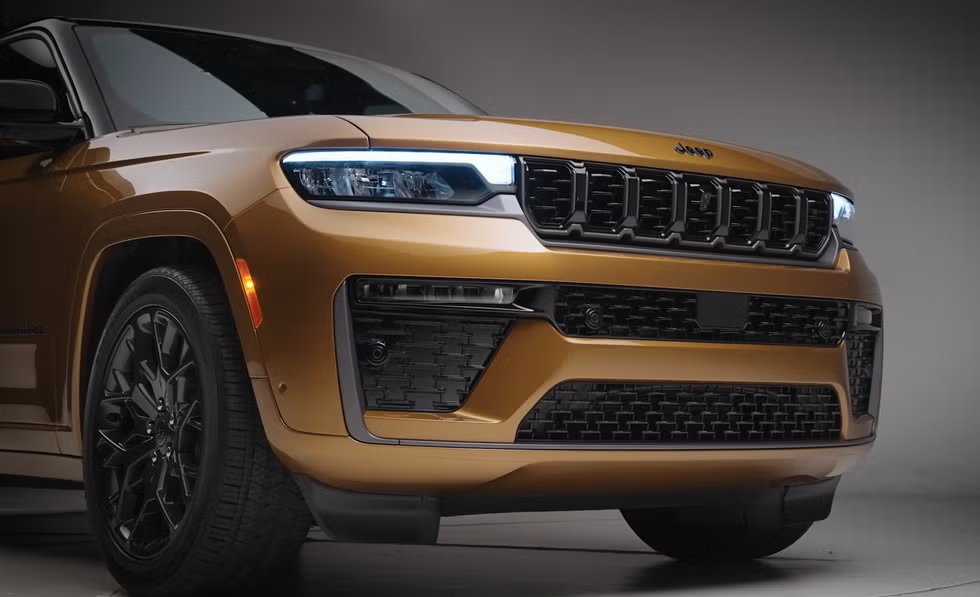
The 2026 Jeep Grand Cherokee uses modern turbocharged power to balance performance and everyday efficiency.
The turbocharged engine also brings several advantages:
- Strong low-rpm torque for everyday driving and off-road use
- Performance comparable with older V6 engines
- Improved efficiency
- Lower engine weight
- Compatibility with electrified technology such as the 4xe
That last point is especially important as buyers increasingly expect SUVs to combine performance with better efficiency.
The available 4xe plug-in hybrid further expands the Grand Cherokee lineup and gives buyers another way to reduce fuel consumption without abandoning the SUV’s capability.
The Grand Cherokee Still Feels Like a Jeep
Despite the move toward modern powertrains, Jeep has not abandoned the Grand Cherokee’s core identity.
The SUV remains a serious off-road machine, particularly when equipped with advanced four-wheel-drive systems and an available adjustable air suspension.
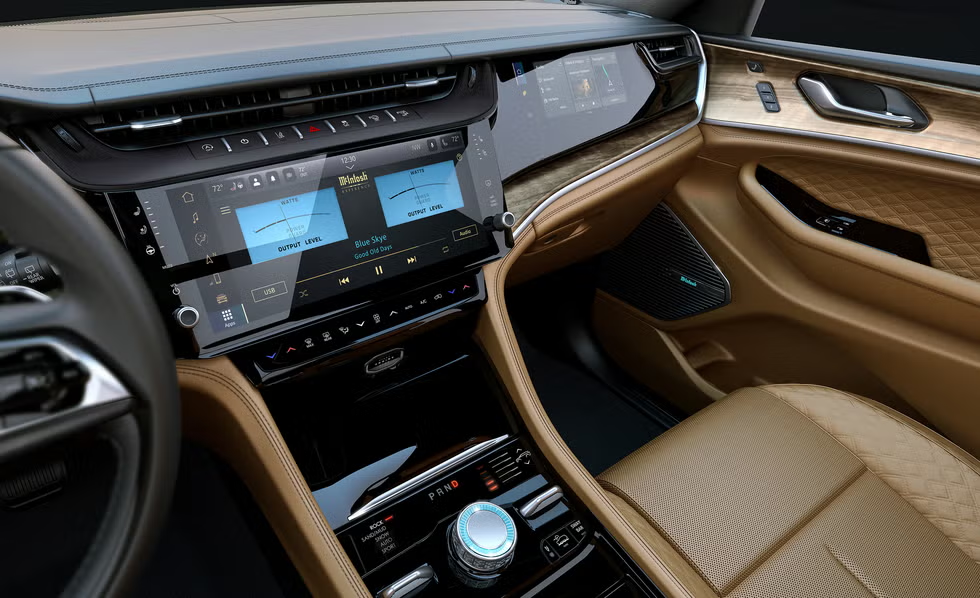
The Grand Cherokee retains genuine off-road capability while adding more refinement for daily driving.
That combination allows the SUV to move from city streets to demanding trails without feeling out of place in either environment.
Many competitors have moved in the opposite direction. They use rugged styling but focus primarily on paved-road driving.
The Grand Cherokee remains different.
Its design may have become more refined, but its hardware still reflects Jeep’s off-road heritage. That is one of the reasons the model remains relevant in an increasingly crowded SUV market.
More Space and Greater Flexibility
Another important advantage is the availability of a three-row configuration.
Buyers can choose between the traditional two-row Grand Cherokee and a longer version designed for families that need additional seating and cargo flexibility.
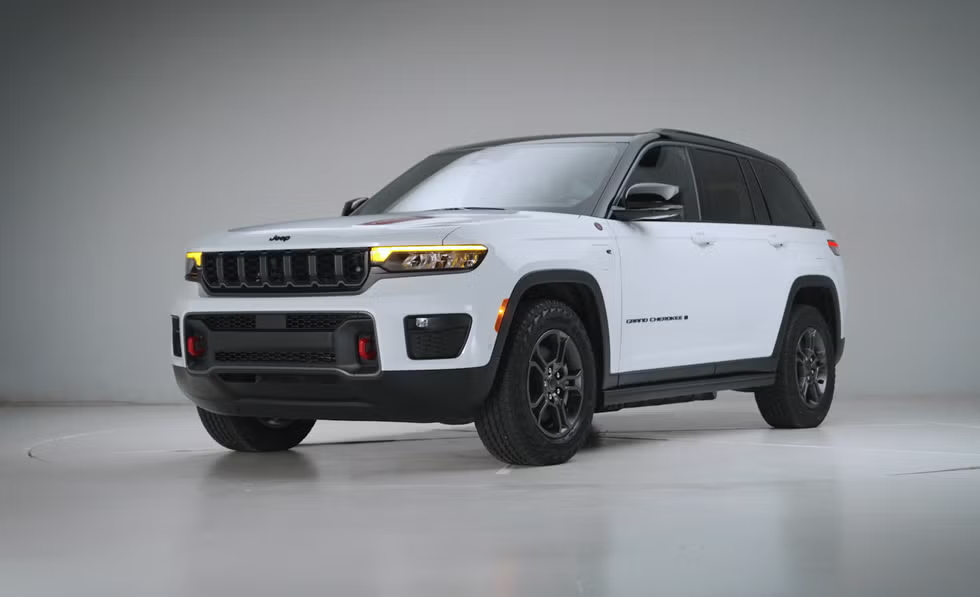
The three-row Grand Cherokee expands the SUV’s appeal while maintaining the model’s familiar design and capability.
Jeep has managed to increase practicality without completely changing the character of the Grand Cherokee.
The larger version still feels like part of the same family. It also allows Jeep to compete across a wider section of the midsize SUV market.
That versatility is becoming increasingly important as buyers expect one vehicle to handle commuting, family trips, road trips, and outdoor adventures.
The Interior Finally Matches the Mission
The cabin has also become one of the strongest parts of the latest Grand Cherokee.
Older models could feel expensive without always delivering the level of refinement buyers expected. The current generation addresses much of that criticism with better materials, improved fit and finish, and a more modern dashboard.
Technology is also more competitive. Larger screens and a cleaner interface make the cabin feel more contemporary.
Most importantly, the Grand Cherokee no longer forces buyers to choose between comfort and capability.
It delivers both in a more cohesive package.
Reliability and Competition Remain Challenges
The Grand Cherokee still has obstacles to overcome.
Jeep’s historical reliability reputation has not disappeared overnight. Some buyers may continue to favor competitors with stronger reputations for long-term dependability.
The SUV also faces strong competition from Toyota, Honda, Hyundai, and other midsize SUV manufacturers.
Those rivals often compete aggressively on value, comfort, efficiency, and ownership costs.
Pricing can create another challenge. As higher Grand Cherokee trims move further into premium territory, shoppers may start comparing them with luxury SUVs rather than mainstream competitors.
Is This the Best Grand Cherokee Yet?
The 2026 Jeep Grand Cherokee may not be the perfect SUV for every buyer.
Some shoppers will prioritize long-term reliability. Others may want a more luxurious interior, lower operating costs, or a lower purchase price.
But the Grand Cherokee’s biggest strength remains its versatility.
It can function as a comfortable daily driver, a family SUV, and a genuine off-road vehicle. Few competitors offer that same combination without forcing major compromises.
That broader range of abilities is what makes the latest model so compelling.
For buyers who want one SUV that can handle almost everything, the 2026 Jeep Grand Cherokee has a strong argument for being the best version yet.
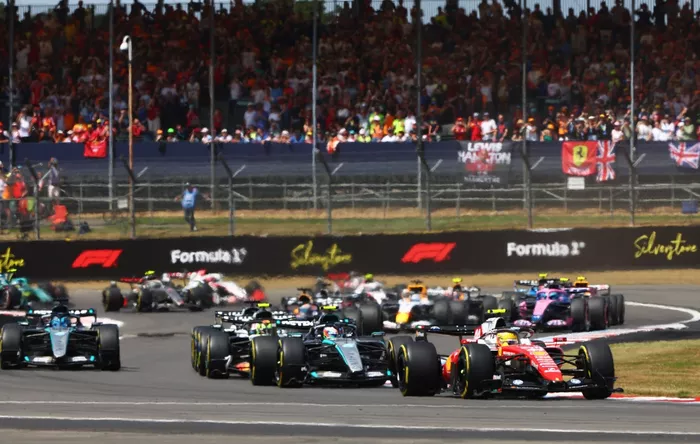
Formula 1’s $215 million budget cap has changed how teams develop their cars, making timing, validation, and development efficiency just as important as finding performance.
Formula 1’s budget cap has transformed the way teams approach car development. Teams are still free to introduce as many upgrades as they want, but every new floor, wing, or bodywork component must come from the same limited pool of money.
That makes one question increasingly important: when is the right time to spend the development budget?
The answer can determine whether a team gains performance at the right moment or wastes valuable resources on upgrades that fail to deliver on track.
Every upgrade now has a financial cost
Ferrari attracted attention earlier in the season with its relentless flow of new parts. Rival teams questioned how the Scuderia could continue bringing upgrades at such a rapid pace.
Toto Wolff described Ferrari’s development program as seemingly “unlimited,” while Fernando Alonso joked that some teams might have a money-printing machine at the factory. Carlos Sainz also admitted that Williams was surprised by how frequently the leading teams were introducing new components.
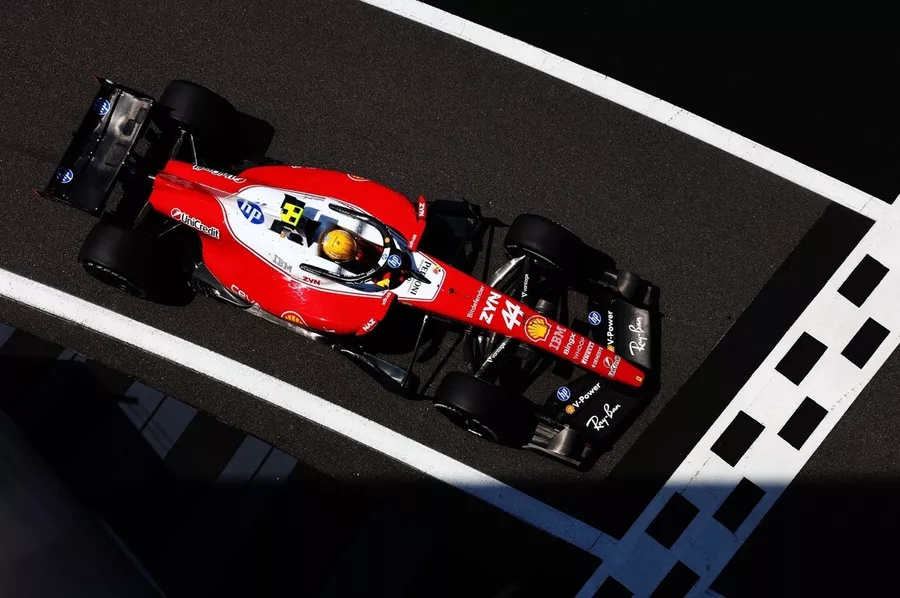
The reality, however, is that every upgrade consumes part of the same $215 million budget.
Money spent on a new floor today cannot be used for another development later in the season. That makes the timing of upgrades almost as important as the size of the performance gain they are expected to deliver.
Ferrari team principal Frédéric Vasseur warned about this before the season began. He suggested that logistics alone could consume a significant portion of the development budget when teams send new parts to distant races.
Ferrari and Aston Martin chose different strategies
Ferrari and Aston Martin have offered two very different approaches to managing development under the budget cap.
Ferrari has continued producing updates throughout the season. Aston Martin, meanwhile, deliberately waited for a much larger package before introducing major changes.
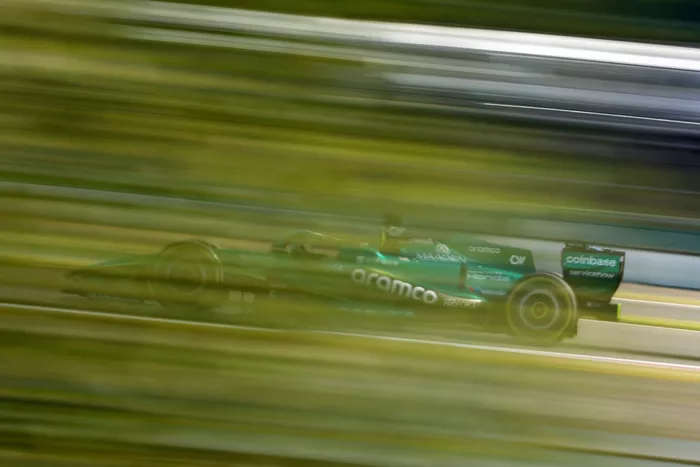
Aston Martin chose to delay its major upgrade package, accepting short-term difficulties in search of a larger performance step.
Ferrari brought 11 updates to Miami, more than any other team. However, part of that investment produced little additional lap time because the car behaved differently on track than expected in simulation.
The team did not stop developing. Instead, Ferrari continued bringing new parts in an attempt to recover the lost performance.
Aston Martin took the opposite approach.
Adrian Newey described the decision to delay the team’s major package until Hungary as painful but deliberate. The idea was to accept weaker results for longer in exchange for a potentially larger gain from a carefully developed package.
That strategy carries its own risk.
If the major upgrade fails to deliver, months of work and a large portion of the budget have already been spent.
Correlation has become more valuable than ever
The two approaches ultimately depend on the same thing: confidence in development data.
A team that can accurately predict how a component will perform before manufacturing it can avoid wasting resources.
That is particularly important under a budget cap because a failed upgrade does more than cost time. It also consumes money that cannot simply be recovered later.
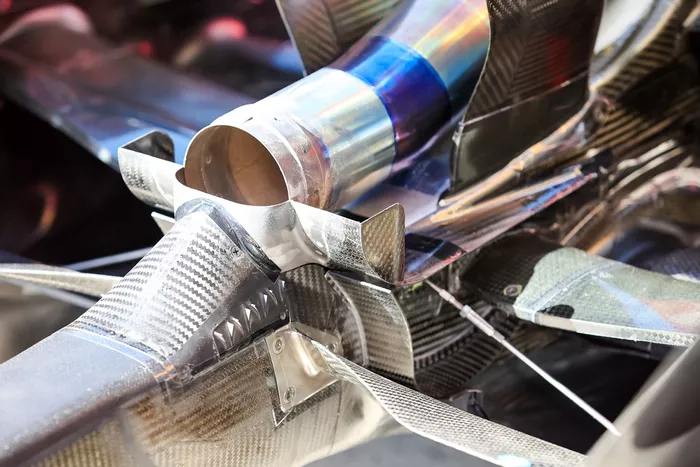
Accurate simulation and track correlation are becoming increasingly important as teams manage development under a fixed budget.
Newey has acknowledged that Aston Martin’s simulation tools are not yet as sophisticated or well correlated as the team would like.
That uncertainty makes development decisions much harder.
If simulation predicts a major gain and the part produces little performance on track, the team has lost both development time and budget.
The same principle applies to Ferrari. Its frequent upgrades make sense only if the team can identify improvements quickly enough to justify the cost of manufacturing and transporting them.
The calendar also affects development strategy
The race calendar has become another factor in the financial equation.
With races removed or replaced, teams do not automatically receive a smaller budget. That means money allocated for those weekends can remain available for development elsewhere in the season.
According to estimates from the paddock, each canceled race can effectively free roughly $1 million per team in potential spending that might otherwise have gone toward operations.
That creates another strategic variable.
Teams must decide whether to use the additional resources on upgrades immediately or preserve them for later stages of the championship.
The biggest risk is getting an upgrade wrong
Before the budget cap, teams could often respond to a failed upgrade by spending more money on another solution.
That option is far more limited today.
A new floor that fails to deliver cannot simply be followed by another expensive experiment without affecting the rest of the development program.
That is why F1 budget cap strategy increasingly revolves around avoiding mistakes rather than simply producing more parts.
Ferrari’s approach is based on maintaining a constant flow of improvements. Aston Martin has chosen to place greater emphasis on validating a larger package before bringing it to the circuit.
Neither strategy is automatically better.
Ferrari has the pressure of fighting for the championship and therefore needs performance as quickly as possible. Aston Martin, after a difficult start to the 2026 regulations, has had more reason to prioritize the future and concentrate its resources on rebuilding its development direction.
Under the budget cap, the real advantage may belong to the team that can predict performance most accurately before spending the money to build it.
The development race has therefore changed. Teams are no longer competing only to find more downforce or reduce lap time. They are competing to decide where, when, and how to spend a limited budget without making an expensive mistake.
-

 NOW TRENDING2 months ago
Polestar to Exit U.S. Market After 2026 Due to Connected Vehicle Rules
-
 TEST DRIVES2 months ago
Subaru’s New Uncharted GT Could Be The Brand’s Most Interesting Small EV Yet
-
 NOW TRENDING2 months ago
Tesla Model Y L Arrives in the U.S. With More Space and Three Rows
-
 NOW TRENDING2 months ago
The 2026 Kia Sportage Is More Than A Mid-Cycle Refresh — It’s Kia’s Play To Keep Its Best-Seller At The Center Of America’s SUV Market
-
 NOW TRENDING2 months ago
The 2026 Lexus ES Is No Longer Just A Hybrid Sedan — It’s Now A Three-Way Luxury Play With Hybrid And EV Power
-
 RACING2 months ago
Why F1 2026 Batteries Have Become The Biggest Reliability Headache On The Grid
-
 INTELLIGENT MOBILITY2 months ago
Bolt, Pony.ai and Stellantis launch autonomous mobility pilot in Luxembourg
-

 RACING2 months ago
McLaren F1 Unveils Special Silverstone Livery Honoring Its History
You must be logged in to post a comment Login