
NOW TRENDING
2028 Jeep Grand Cherokee Hurricane: What We Know


The 2028 Jeep Grand Cherokee could gain a 420-hp Hurricane inline-six, giving the U.S.-market SUV more power, torque and potential towing capability.
Jeep could bring the Hurricane six-cylinder to the Grand Cherokee
The 2028 Jeep Grand Cherokee could receive one of the most significant powertrain changes in the model’s current generation. A new report indicates that Jeep is considering the 3.0-liter twin-turbo Hurricane inline-six for the 2028 model year.
The information has not been officially confirmed by Jeep. However, the reported engine would give the Grand Cherokee a major increase in performance compared with the current 2.0-liter Hurricane four-cylinder.
For the U.S. market, the current 2027 Grand Cherokee lineup offers the 3.6-liter Pentastar V6 on Laredo and Laredo X models, while the 2.0-liter Hurricane 4 Turbo is standard on higher trims. Jeep lists up to 324 horsepower and 332 lb-ft of torque for the four-cylinder.

The current Grand Cherokee combines traditional Jeep proportions with modern styling and off-road capability.
The reported Hurricane six-cylinder would sit above the current four-cylinder in the range. More importantly, it could address the gap left after Jeep discontinued the 5.7-liter HEMI V8 from the Grand Cherokee.
The standard-output Hurricane produces 420 horsepower and 468 lb-ft of torque in other Stellantis applications. That would represent a substantial increase over the current Hurricane 4 and the Pentastar V6.
The higher-output Hurricane produces significantly more power, but the reported Grand Cherokee application is expected to use the standard-output configuration rather than the high-output version. That distinction is important because it suggests Jeep could prioritize strong everyday performance and towing rather than chase extreme horsepower numbers.
More power could mean greater towing capability
The potential engine change could also improve one of the Grand Cherokee’s most important capabilities in the U.S. Jeep currently lists a maximum towing capacity of 6,200 pounds for the 2027 Grand Cherokee when properly equipped.
A larger six-cylinder engine with substantially more torque could give Jeep additional flexibility when towing trailers, boats and recreational equipment.
That could be especially relevant for buyers who want a more powerful SUV without moving into a larger full-size vehicle. The Grand Cherokee occupies an important position between traditional midsize SUVs and larger three-row models.

The current Grand Cherokee is rated to tow up to 6,200 pounds when properly equipped.
The potential Hurricane installation would therefore be more than a simple horsepower upgrade. It could change the way the Grand Cherokee is positioned within Jeep’s U.S. lineup.
It would also provide a different solution from the 2.0-liter turbocharged four-cylinder. The current Hurricane 4 already delivers strong output for its size, but an inline-six could offer a smoother power delivery and significantly more torque.
The reported engine would also preserve a conventional gasoline powertrain at a time when automakers continue to expand hybrid and electric options.
The V8 question is still complicated
The arrival of a Hurricane inline-six would also reinforce the possibility that the 5.7-liter HEMI V8 will not return to the standard Grand Cherokee lineup.
The outgoing HEMI produced around 360 horsepower and 390 lb-ft of torque, meaning a 420-hp Hurricane six would surpass it in both power and torque while using a smaller displacement.
Jeep has already taken steps to differentiate the Grand Cherokee from the Dodge Durango. That strategy makes a direct return of the regular HEMI less certain.
However, a separate Grand Cherokee SRT program could change the equation. Jeep has indicated that an SRT version is coming, although its final powertrain has not been fully detailed.
That leaves room for a future high-performance model while a Hurricane-powered Grand Cherokee handles the role of the more powerful mainstream version.

The current Grand Cherokee cabin combines premium materials with digital technology and a driver-focused layout.
There is also another reason the Hurricane six-cylinder story deserves attention. Jeep previously showed a Grand Cherokee prototype equipped with a modified high-output Hurricane engine and eBoost Air technology. That system was designed to reduce turbo lag and could theoretically raise output considerably.
However, there is currently no confirmation that the eBoost Air technology will reach the production Grand Cherokee for 2028.


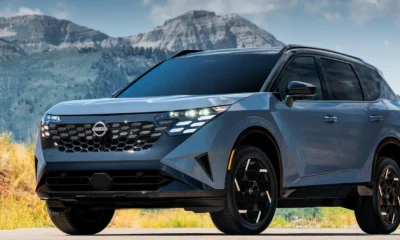





The 2027 Nissan Rogue Hybrid brings e-POWER to the U.S. with 225 hp, standard dual-motor AWD, up to 40 mpg city and a major technology upgrade.
Nissan brings e-POWER to the U.S.
The 2027 Nissan Rogue Hybrid marks an important change for Nissan in America. It introduces the company’s e-POWER hybrid system to the U.S. market for the first time.
The technology has already been used globally for years. Nissan says nearly 2 million e-POWER vehicles have been sold in 68 countries since 2016.
The new Rogue Hybrid uses the third generation of that system. It combines a gasoline engine with electric motors that drive the wheels.
There is no traditional transmission connecting the engine directly to the wheels. Instead, the engine works mainly as a generator for the battery and electric motors.
That creates a different hybrid experience. Nissan says the system delivers quick acceleration, smooth power and quieter operation.

The first Rogue Hybrid will reach U.S. dealers in late fall 2026. Nissan will initially launch the SR with Technology Package in limited quantities.
Other trims will follow in early 2027.
The lineup will include SV, SR and Platinum versions. Pricing starts at $35,490 for the SV, while the SR with Technology Package starts at $41,490. The Platinum starts at $43,490.
Every version uses dual-motor all-wheel drive.
That is a major part of the Rogue Hybrid’s identity. Nissan does not offer a front-wheel-drive version of this hybrid.
The two electric motors constantly adjust torque between the front and rear axles. The system can also apply light braking to the inside wheels to improve cornering control.
The hybrid system makes 225 horsepower
Under the hood, the Rogue Hybrid uses a 1.5-liter turbocharged gasoline engine. Its main role is to generate electricity for the hybrid system.
The engine can shut off when the battery has enough energy.
The complete system produces 225 horsepower. Nissan estimates fuel economy of up to 40 mpg city, 36 mpg highway and 38 mpg combined for the appropriate SR AWD configuration.
The system also reaches 42 percent thermal efficiency, according to Nissan’s internal testing.

The Rogue Hybrid also introduces two braking technologies.
The first is e-Pedal, which allows the driver to slow the vehicle by lifting off the accelerator. The system can bring the SUV to a complete stop in many situations.
The second is Smooth Stop.
This technology automatically adjusts brake pressure near the end of a stop. Nissan says the system can reduce head movement and create a smoother stop in traffic.
The goal is simple. Make everyday driving feel more natural.
Nissan has also focused on cabin refinement.
The Rogue Hybrid uses acoustic-laminated glass, improved door sealing and aerodynamic mirror designs to reduce outside noise.
The seats have also been redesigned. For the first time in the Rogue, climate-controlled front seats are available.
The cabin gets a major technology upgrade
The 2027 Nissan Rogue Hybrid receives a large amount of new technology.
A 12.3-inch touchscreen is standard. Wireless Apple CarPlay and wireless Android Auto are also included.
Higher versions can receive a 14.3-inch display with Google built-in. That system includes Google Maps, the Play Store and Google Gemini.
The Platinum version also adds a 10-speaker Bose Premium Audio system.
Nissan has also made wireless charging easier.
Every Rogue grade gets the company’s new 15-watt Qi2 magnetic wireless charger. The Platinum version can add a second wireless charger.

Driver assistance is another major part of the new Rogue Hybrid.
The latest ProPILOT Assist system uses a new front radar sensor and a front camera with a 20 percent wider field of view.
Nissan also revised the software to make the system work more naturally.
Intelligent Cruise Control now offers four following-distance settings instead of three. Low-speed operation improves down to 12 mph, while low-speed acceleration is 11 percent quicker.
The system can also detect slowing or stopped vehicles 33 percent sooner than before.
Available features include Auto Lane Change and Hands-off Traffic Jam Support.
The Rogue Hybrid can also use the available 3D HD Enhanced Intelligent Around View Monitor. It creates a virtual view around the vehicle to help with parking and tight manoeuvres.
The Rogue gets bigger and more practical
Nissan has also redesigned the Rogue’s cabin around daily usability.
The SUV offers seating for five people and up to 39 cubic feet of cargo space with the rear seats upright. Five LATCH anchor positions also give families more flexibility when installing child seats.
The rear doors open to nearly 90 degrees.
That makes it easier to load passengers and child seats.
Nissan has also expanded storage solutions inside the cabin. The centre-console storage area now has a wider opening.
The design follows Nissan’s new “Refined and Tough” theme. The exterior combines sharp surfaces with a wider stance and a geometric front fascia.
The front end uses a honeycomb grille with integrated LED headlights. A full-width LED rear light is also available.
The Rogue Hybrid will be offered in eight exterior colours, along with five two-tone combinations featuring a black roof. Three colours are new: Horizon Blue Pearl Metallic, Alpine Metallic and Aurora Dune Pearl.
The 2027 Nissan Rogue Hybrid will arrive in the U.S. later this year. The SR with Technology Package will lead the launch, with additional trims following in early 2027.
With 225 horsepower, standard dual-motor AWD, e-Pedal and advanced ProPILOT Assist technology, Nissan is giving the Rogue a much broader hybrid role.
The biggest change is e-POWER, which brings a gasoline-powered generator together with electric motors to create a hybrid system designed around smooth and immediate response.

GM is doubling down on diesel power for its next-generation full-size pickups, targeting more than 900 miles of highway range while rivals expand their hybrid strategies.
GM chooses diesel for its next-generation pickups
General Motors is taking a different route from several competitors as it prepares the next-generation 2027 Chevrolet Silverado 1500 and GMC Sierra 1500. Instead of moving its light-duty pickups toward a hybrid-focused strategy, GM is continuing with the 3.0-liter Duramax Turbo-Diesel.
The redesigned trucks are expected to reach customers in late 2026. They represent a major update for two of GM’s most important vehicles in the U.S. pickup market. Chevrolet describes the Silverado as completely redesigned inside and out, while GMC is also introducing a new-generation Sierra with redesigned interiors and new technology.

The 2027 Chevrolet Silverado 1500 receives a completely redesigned exterior for the U.S. market.
The main argument behind GM’s decision is efficiency combined with truck capability. The automaker says the upgraded diesel, when combined with an available 34-gallon fuel tank, can provide a highway driving range of more than 900 miles. That figure is particularly relevant for owners who use their pickups for long-distance travel, towing or heavy-duty daily work.
The updated Duramax remains a major part of the Silverado and Sierra strategy. GM lists 305 horsepower and 495 lb-ft of torque, with the diesel paired with a 10-speed automatic transmission. The engine also receives several technical updates aimed at emissions performance, durability and overall operation.
Diesel versus hybrids in the U.S. pickup battle
GM’s strategy stands out because the full-size pickup segment is moving in several different directions. Ford continues to offer the F-150 PowerBoost full hybrid, while Ram is preparing its range-extended electric pickup strategy.
Ford’s current F-150 PowerBoost combines a 3.5-liter EcoBoost V6 with a hybrid system. The manufacturer lists 420 horsepower and an EPA-estimated 23 mpg combined rating for the 2026 F-150 PowerBoost 4×4 configuration.
Ram, meanwhile, has promoted the Ram 1500 REV, a range-extended electric pickup with a 92-kWh battery and a 130-kW generator. Ram projects up to 690 miles of total driving range for the truck.
GM’s approach is therefore based on extracting more efficiency from a conventional internal-combustion powertrain. The company argues that diesel technology can deliver a strong combination of fuel economy, torque and long-distance range without adding the complexity of a hybrid system.

The 2027 GMC Sierra 1500 also retains the Duramax 3.0L Turbo-Diesel in its next-generation lineup.
Diesel also has another advantage for pickup buyers: torque delivery. High low-end torque can be useful when towing trailers, carrying heavy loads and climbing steep grades.
That remains an important consideration in the U.S., where full-size pickups are frequently purchased for work as well as personal transportation. GM is not abandoning that traditional truck formula. Instead, it is updating the technology around it.
New V8 engines join the diesel
The diesel engine is not the only major powertrain change for the 2027 Silverado and Sierra. GM is also introducing a new generation of gasoline V8 engines.
The company has confirmed new 5.7-liter and 6.6-liter V8s, both part of its sixth-generation Small Block architecture. The 6.6-liter unit produces 481 horsepower, making it the most powerful naturally aspirated V8 in the segment according to GM. The new engines are paired with 10-speed automatic transmissions.
Chevrolet will continue offering four powertrain choices for the 2027 Silverado 1500, including the enhanced TurboMax, the Duramax diesel and the two new V8 engines. The lineup is expected to cover work-oriented models as well as higher-end versions such as High Country and off-road-focused ZR2 and Trail Boss trims.
That gives GM a broad powertrain strategy rather than a single solution. Buyers can choose between turbocharged gasoline power, diesel efficiency or traditional V8 performance.
Technology becomes another major selling point
The redesign also goes beyond the engine bay. GM is introducing a new user interface on both pickups, with a more modern digital environment designed around simpler controls and faster access to vehicle functions.
The Silverado can offer more than 60 inches of combined digital displays, including a 16.3-inch center screen and a 12.2-inch driver information display. Higher trims can also receive an 11.5-inch front passenger screen.

The new Silverado interior combines large digital displays with a redesigned dashboard and updated controls.
The GMC Sierra follows a similar technological path. Its next-generation cabin offers more than 60 inches of combined digital displays, along with a 16.3-inch center display and an available 11.5-inch passenger touchscreen. GMC is also adding features such as its new MultiPro center console and available Super Cruise with trailering.
For GM, the objective is clear: keep the traditional advantages of diesel and V8 power while adding the technology expected from a modern full-size pickup.
The 2027 Chevrolet Silverado and GMC Sierra are U.S.-market pickups, with both next-generation models scheduled to become available in late 2026. Their decision to retain diesel alongside new V8 engines puts GM on a distinct path as Ford and Ram expand electrified solutions in the full-size truck segment.

The 2027 Nissan Rogue Hybrid brings a completely new exterior and interior design to the U.S. market, combining sharper styling, advanced technology and the brand’s latest e-POWER system.
Nissan Reinvents the Rogue Hybrid for America
The 2027 Nissan Rogue Hybrid marks an important change for Nissan in the United States. The new model introduces the brand’s third-generation e-POWER hybrid technology while also receiving a completely redesigned exterior and a more sophisticated cabin.
Nissan has developed the Rogue Hybrid specifically for the U.S. market. The company says it will arrive in late fall 2026, with additional versions expected during early 2027. The first launch configuration will be the SR with Technology Package, available in limited quantities.

The new 2027 Nissan Rogue Hybrid combines a sharper front end with a more muscular SUV profile.
The exterior was designed to give the Rogue a stronger road presence. Its front section features a large geometric grille, slim lighting elements and a more sculpted bumper. The body also uses sharper surfaces around the doors and wheel arches.
This new approach gives the compact SUV a more technical appearance. At the same time, Nissan has maintained the practical proportions that have defined the Rogue in the American market.
The design team also focused on visual details that make the hybrid version immediately recognizable. The body has a wider-looking stance, while the lighting signature creates a more distinctive appearance at night.
The wheels contribute to that effect as well. Depending on the trim, the Rogue Hybrid can feature 18- or 19-inch wheels, with the sportier SR configuration receiving a more aggressive design.
A New Design Language Inside and Out
According to Nissan’s design direction for the new Rogue Hybrid, the exterior combines modern proportions with subtle references inspired by Japanese aesthetics. One of the most notable details is the treatment around the C-pillar, which incorporates a motif inspired by the shape of Mount Fuji and the movement of clouds.
That detail is part of a broader design philosophy. Nissan wanted the Rogue Hybrid to look sophisticated without losing the utility expected from a compact crossover.
The rear design follows the same philosophy. The SUV receives a cleaner tailgate, distinctive taillights and a more horizontal visual treatment that makes the vehicle appear wider.
The result is a Rogue that looks substantially different from earlier generations. Yet its proportions remain familiar enough for it to retain the model’s identity in the highly competitive U.S. crossover segment.

The redesigned front end combines the new grille, slim lighting and sharper bodywork.
Inside, Nissan took a different approach. Instead of filling the dashboard with screens alone, the company combined digital technology with physical controls for key functions.
The cabin uses soft-touch surfaces, matte finishes and redesigned seats to create a more refined atmosphere. The available quilted TailorFit seating also adds a more premium appearance on higher trims.
The dashboard is one of the biggest changes. Depending on configuration, the Rogue Hybrid can feature dual 14.3-inch displays, creating a wide digital interface for navigation, vehicle information and entertainment.
Nissan also incorporates Google built-in, wireless smartphone connectivity and a Qi2 wireless charging system. These features are designed to make the technology easier to use during everyday driving.
e-POWER Changes the Rogue Hybrid Formula
The new design is only part of the story. Underneath the body, the 2027 Rogue Hybrid introduces Nissan’s third-generation e-POWER system to the U.S. market.
The system uses two electric motors to drive the wheels, while a gasoline engine works as a generator. As a result, the wheels are driven electrically without the need for a conventional transmission.
This configuration gives the Rogue Hybrid an electric-car-style response while maintaining the convenience of gasoline refueling. It also means the vehicle does not need to be plugged in.
Every Rogue Hybrid trim is equipped with Dual Motor All-Wheel Drive, according to Nissan. The automaker also estimates up to 40 mpg city for the SR AWD configuration.

The redesigned cabin combines a digital dashboard with physical controls and modern materials.
Another important feature is Nissan’s Smooth Stop technology. The system uses braking software and integration with the e-POWER drivetrain to make deceleration more progressive, particularly in stop-and-go traffic.
The Rogue Hybrid also keeps practicality at the center of the cabin. Nissan says the SUV offers seating for up to five occupants, five LATCH points and 39 cubic feet of cargo capacity with the rear seats upright.
For U.S. buyers, that combination is particularly relevant. The new Rogue Hybrid is not simply an electrified version of an existing SUV. It represents the introduction of Nissan’s e-POWER technology to this market together with a completely redesigned vehicle.
The 2027 Nissan Rogue Hybrid will therefore arrive in America with a new visual identity, a technology-focused interior and a hybrid system designed to combine electric-style driving with conventional refueling.
-

 NOW TRENDING2 months ago
Honda Civic Si Production Ends After 2026 Model Year Pause
-
 NOW TRENDING2 months ago
Rolls-Royce’s $32 Million Droptail Took 9 Months of Handcrafted Woodwork
-

 NOW TRENDING4 weeks ago
Tesla Cybercab Gets September 3 Austin Launch Date
-

 INTELLIGENT MOBILITY2 months ago
GM Updates Infotainment System With Smarter Features
-
 NOW TRENDING2 months ago
2027 Audi Q9 and SQ9 Debut as Brand’s Largest SUVs
-
 NOW TRENDING2 months ago
2027 Hyundai Tucson Spied With New Design and Hybrid Power
-

 RACING2 months ago
Aston Martin Upgrades Deliver Alonso’s Best Qualifying of 2026
-

 INTELLIGENT MOBILITY2 months ago
Hyundai Opens UX Studio Shanghai to Drive Global Innovation
You must be logged in to post a comment Login