
NOW TRENDING
2027 Kia EV3 debuts in New York as Kia’s new entry electric SUV for the U.S.


The 2027 Kia EV3 has made its North American debut at the New York International Auto Show, introducing a smaller and more affordable electric SUV with up to 320 miles of range, available AWD and the latest Kia EV technology.
The 2027 Kia EV3 has officially arrived in the United States. Unveiled at the New York International Auto Show, the all-new electric SUV becomes the most attainable model in Kia’s growing EV lineup and gives the brand a much more accessible entry point below the EV6 and EV9. That matters because the 2027 Kia EV3 is not just another electric crossover joining an already crowded market. It is Kia’s attempt to bring many of the design, technology and usability ideas from the EV9 into a smaller, cheaper and easier-to-live-with package for American buyers.
In that sense, the 2027 Kia EV3 could become one of the brand’s most important launches in the U.S. over the next year. Kia is positioning it as an entry EV SUV aimed at a wide audience, from younger first-time EV shoppers to families and commuters who want a compact electric utility vehicle without giving up range, cargo space or modern tech. Built on Kia’s 400V E-GMP platform, the EV3 will launch with up to 320 miles of Kia-estimated range on certain trims, fast-charging capability, available all-wheel drive and a cabin that borrows heavily from the brand’s larger electric models.
The timing also makes sense. The U.S. EV market continues to demand more affordable entries with practical range, SUV packaging and familiar technology, and Kia clearly believes the 2027 Kia EV3 can sit right in the middle of that conversation. It will go on sale in late 2026 and be offered in five trims: Light, Wind, Land, GT-Line and GT.
2027 Kia EV3 design brings EV9-inspired styling to a smaller electric SUV
Visually, the 2027 Kia EV3 follows the same broad formula that has shaped Kia’s latest electric vehicles, especially the EV9. Kia says the design is guided by its Opposites United philosophy, which mixes geometric surfaces, strong lighting signatures and SUV-like proportions into a more futuristic package.
Up front, the 2027 Kia EV3 uses Kia’s Star Map lighting signature along with standard small cube LED projector headlamps. The vertically arranged lighting elements help emphasize the SUV’s width, while the front fascia adopts the latest version of Kia’s Tiger Face identity. The result is a vehicle that clearly belongs to the same family as the EV6 and EV9, but in a tighter footprint designed to appeal to buyers who do not need a three-row electric SUV.
The side profile also plays an important role in the EV3’s look. Short overhangs, a sloping roofline and hidden rear door handles help give the 2027 Kia EV3 a cleaner, more premium silhouette than many entry-level EVs. Flush-type roof rails come standard, while bridge-type rails will be optional. At the rear, the taillamps mirror the front lighting theme, reinforcing the sense that this is a scaled-down Kia flagship rather than a stripped-down budget EV.
Wheel choices will include 17-inch and 19-inch alloys, while the GT-Line and GT versions add more aggressive trim-specific details. The GT in particular gets unique 19-inch wheels and green brake caliper covers that match neon green accents elsewhere inside and out. Kia will also offer a Nightfall appearance package on certain trims for the U.S. market, bringing gloss-black wheels, black emblems, bridge-type roof rails and a darker interior treatment.

The 2027 Kia EV3 makes its North American debut in New York as Kia’s new entry electric SUV, bringing EV9-inspired styling to a smaller and more affordable package.
Inside the 2027 Kia EV3, Kia is aiming for comfort, utility and EV9-like tech
If the exterior is meant to pull EV9 ideas into a smaller SUV, the same is true inside. Kia says the 2027 Kia EV3 has been designed to feel open, practical and modern, with a cabin focused on usability as much as visual appeal.
The dashboard is dominated by a panoramic display setup that combines dual 12.3-inch screens with a 5-inch climate display, effectively creating one of the more advanced digital layouts in the entry EV SUV segment. The layout also houses Kia’s connected car Navigation Cockpit (ccNC), the same broader infotainment ecosystem that has helped define the EV9 experience. In the 2027 Kia EV3, that means over-the-air updates, integrated navigation, strong connectivity features and support for a growing list of entertainment and personalization functions.
The cabin design itself leans into simplicity. An open center console with retractable cupholders provides more flexibility for everyday storage, while both open and covered compartments help the EV3 adapt to family and commuting duties. Kia also says the 2027 Kia EV3 will offer standard dual-zone automatic climate control, optional heated and ventilated front seats, and optional multicolor ambient lighting. GT-Line trims add a three-spoke steering wheel, metal pedals and two-tone seats, while the GT model pushes further with sport bucket front seats and neon green interior details.
Rear-seat passengers have not been forgotten either. Kia says the second-row seatbacks can recline up to 39 degrees, and rear air vents come standard. Those details may sound small, but they matter in a compact electric SUV that is expected to serve as a daily family vehicle rather than just a city commuter.
2027 Kia EV3 cargo space and utility could make it one of the most practical small EV SUVs
Kia is also making a strong practicality play with the 2027 Kia EV3, and on paper the numbers are promising. The rear seats fold in a 60/40 split, while cargo capacity reaches 56.5 cubic feet behind the first row and 26.1 cubic feet behind the second row. There is also a two-position luggage board with underfloor storage, plus a 0.9-cubic-foot frunk—a useful addition in a segment where front trunks are still far from guaranteed.
That combination could become one of the EV3’s biggest strengths in the U.S. market. Buyers shopping for an affordable electric SUV are not just looking at range or charging speed. They are also asking whether the vehicle can handle groceries, strollers, luggage, gym bags and weekend-road-trip gear without becoming a compromise. The 2027 Kia EV3 seems designed to answer that question with a firm yes.
Kia will also offer an optional Smart Power Liftgate, which can open automatically via the Smart Key and allows owners to adjust opening height and speed through the infotainment system. Again, that is the kind of feature that helps the EV3 feel less like an entry-level compromise and more like a smaller premium-adjacent EV.

The 2027 Kia EV3 cabin borrows heavily from Kia’s larger EVs, with dual 12.3-inch displays, a 5-inch climate screen and a more open, utility-focused center console.
2027 Kia EV3 range, battery options and charging: up to 320 miles on certain trims
The powertrain story is where the 2027 Kia EV3 becomes especially interesting for the U.S. market. Kia will offer the SUV with two battery options. The base Light trim uses a 58.3-kWh battery, while Wind, Land, GT-Line and GT models get a larger 81.4-kWh battery.
According to Kia, the smaller battery is good for up to 220 miles of range, while the larger battery can deliver up to 320 miles of Kia-estimated range in front-wheel-drive form. That is a serious number for an entry electric SUV and could put the 2027 Kia EV3 in a very strong position if final EPA figures land close to Kia’s internal estimate.
The battery setup also influences drivetrain availability. The 58.3-kWh battery is front-wheel drive only, while the larger battery makes all-wheel drive possible. AWD will be optional on Wind and Land trims and standard on GT-Line and GT. That flexibility is important because it gives Kia room to target both value-minded buyers and customers who want stronger four-season capability without stepping into a larger and more expensive EV.
Charging times also look competitive. Kia says the 2027 Kia EV3 can go from 10 to 80 percent in around 29 minutes with the standard-range battery and 31 minutes with the long-range battery when using DC fast charging. The EV3 also gets a native NACS charging port on the front passenger side, a major plus for U.S. buyers, and includes Plug and Charge capability for a more seamless public-charging experience.
Kia EV3 GT adds more power and a sportier edge to the 2027 lineup
For buyers who want more than just efficiency, the 2027 Kia EV3 GT adds a meaningful performance upgrade. Kia says the range-topping GT produces 288 horsepower, compared with 261 horsepower in other AWD EV3 models. That gives the GT a clear place in the lineup as the enthusiast-friendly version, even if the EV3’s primary mission is affordability and everyday usefulness.
Kia is also trying to make the EV3 more engaging from behind the wheel. The GT can be equipped with Virtual Gear Shift (VGS) and Active Sound Design (ASD), both of which are intended to add more interaction and drama to the driving experience. Suspension tuning changes also help distinguish the GT from the rest of the range, with a sport-tuned suspension and steering setup aimed at making the performance flagship feel more responsive.
At the same time, Kia says it worked extensively on ride comfort, stability and NVH reduction across the EV3 lineup. The SUV uses a MacPherson strut front suspension and multi-link rear suspension, while sound absorption and damping materials have been added to improve quietness on the highway and around town. Aerodynamic work also played a role, with lightweight body materials, aero wheels, an active air flap and a full underbody cover helping the EV3 achieve a 0.275 Cd drag coefficient.
2027 Kia EV3 technology includes AI Assistant, V2L, V2H and digital key features
Kia is loading the 2027 Kia EV3 with a surprisingly broad technology set for a compact EV SUV. One of the more notable features is Digital Key 2.0, which lets a compatible smartphone act as a virtual key and also allows remote sharing of vehicle access. Wireless Apple CarPlay and Android Auto come standard, while Kia’s connected ecosystem can be expanded with entertainment and data services that include available video streaming, gaming and productivity apps.
The EV3 will also feature Kia’s AI Assistant, a voice-recognition-based system designed to improve over time and create a more natural interaction between the driver and the vehicle. Other available tech includes a 12-inch head-up display, a Harman Kardon premium audio system, wireless phone charging, a 360-degree Surround View Monitor and MyQ Connected Garage integration.
On the energy side, the 2027 Kia EV3 also adds features that go beyond normal charging. Vehicle-to-Load (V2L) capability allows the SUV to power external devices such as laptops, e-bikes or coffee makers directly from the battery, while Vehicle-to-Home (V2H) functionality—available through a Wallbox bidirectional setup—can send power back to a home during peak utility periods or outages. For a compact EV, that is a notably ambitious list of capabilities.

The 2027 Kia EV3 will offer up to 320 miles of range on certain trims, plus native NACS charging, available AWD and vehicle-to-load functionality.
Safety and driver assistance are a major part of the 2027 Kia EV3 package
Kia is also making safety a major selling point of the 2027 Kia EV3. The SUV comes with eight standard airbags, including rear side airbags, and offers a broad suite of advanced driver-assistance systems.
Among the key systems is Forward Collision Avoidance Assist, which can apply emergency braking in certain situations to help avoid a collision or reduce crash severity. Kia has not yet detailed the full U.S.-spec feature breakdown trim by trim, but the company is clearly positioning the EV3 as a high-tech and family-friendly electric SUV rather than a bare-bones entry point.
That is important because the compact EV space in the U.S. is only going to get more competitive over the next two years. For the 2027 Kia EV3 to stand out, it needs more than range and styling. It needs to convince shoppers that it is a complete product—safe, comfortable, practical, connected and easy to use every day. On paper, Kia seems to understand that.
Why the 2027 Kia EV3 matters for Kia in the U.S.
The bigger picture here is simple: the 2027 Kia EV3 gives Kia a badly needed bridge between its mainstream gasoline SUVs and its more expensive EV6 and EV9 electric models. That is a strategically important role.
Not every U.S. buyer can jump into a larger EV9 or spend for a premium-positioned electric crossover. The EV3 changes that equation by creating a smaller and more approachable entry point into Kia’s EV ecosystem while still preserving much of the design language, digital architecture and feature content that have made the brand’s recent EVs so compelling.
That could make the 2027 Kia EV3 one of Kia’s most important launches for the second half of the decade. It has the right body style for the U.S. market, a range target that should be competitive, available AWD, modern charging hardware and enough cabin space to function as a real household vehicle. If pricing lands in the right spot when Kia announces it closer to launch, the EV3 could quickly become one of the brand’s most relevant electric products in North America.
The 2027 Kia EV3 looks ready to become Kia’s most important affordable EV yet
Kia has not announced U.S. pricing yet, and that will obviously shape the final verdict. But even without that key detail, the early formula looks strong. The 2027 Kia EV3 appears to combine the styling cues of the EV9, the practicality of a compact SUV, the technology expected from a modern Kia and the range figures needed to make EV ownership feel realistic for a much larger group of buyers.

The 2027 Kia EV3 is designed to bring Kia’s EV strategy to a lower price point, blending compact SUV practicality with the range, tech and usability U.S. buyers expect from a modern electric vehicle.
If Kia can deliver the right sticker price, the 2027 Kia EV3 has a real shot at becoming one of the most important affordable electric SUV launches in the U.S. market. It is smaller than the EV9, likely cheaper than the EV6, and still ambitious enough in its design, charging tech and utility to feel like a proper next-generation EV rather than a stripped-down entry model. And in a market that increasingly wants attainable EVs without major compromises, that may be exactly what gives the EV3 its opening.








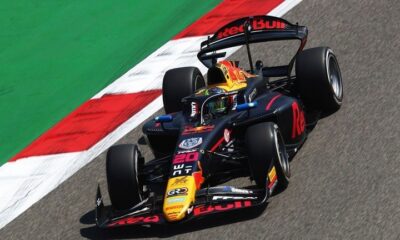

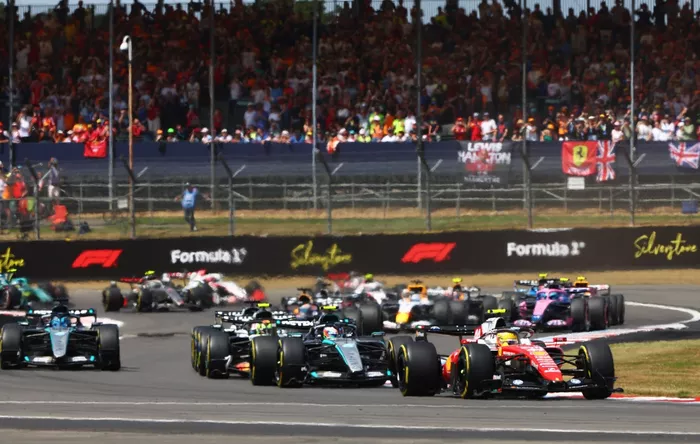
Formula 1’s $215 million budget cap has changed how teams develop their cars, making timing, validation, and development efficiency just as important as finding performance.
Formula 1’s budget cap has transformed the way teams approach car development. Teams are still free to introduce as many upgrades as they want, but every new floor, wing, or bodywork component must come from the same limited pool of money.
That makes one question increasingly important: when is the right time to spend the development budget?
The answer can determine whether a team gains performance at the right moment or wastes valuable resources on upgrades that fail to deliver on track.
Every upgrade now has a financial cost
Ferrari attracted attention earlier in the season with its relentless flow of new parts. Rival teams questioned how the Scuderia could continue bringing upgrades at such a rapid pace.
Toto Wolff described Ferrari’s development program as seemingly “unlimited,” while Fernando Alonso joked that some teams might have a money-printing machine at the factory. Carlos Sainz also admitted that Williams was surprised by how frequently the leading teams were introducing new components.
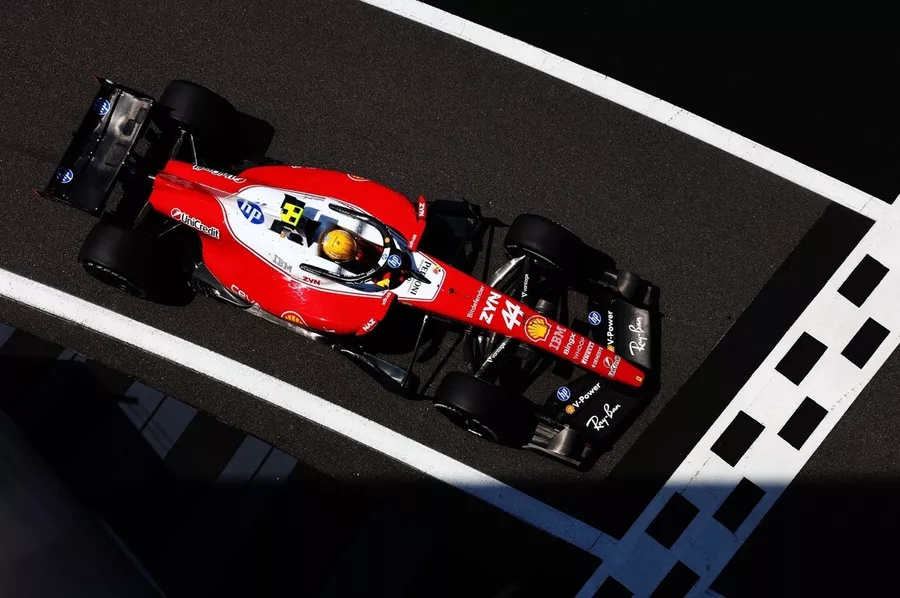
The reality, however, is that every upgrade consumes part of the same $215 million budget.
Money spent on a new floor today cannot be used for another development later in the season. That makes the timing of upgrades almost as important as the size of the performance gain they are expected to deliver.
Ferrari team principal Frédéric Vasseur warned about this before the season began. He suggested that logistics alone could consume a significant portion of the development budget when teams send new parts to distant races.
Ferrari and Aston Martin chose different strategies
Ferrari and Aston Martin have offered two very different approaches to managing development under the budget cap.
Ferrari has continued producing updates throughout the season. Aston Martin, meanwhile, deliberately waited for a much larger package before introducing major changes.
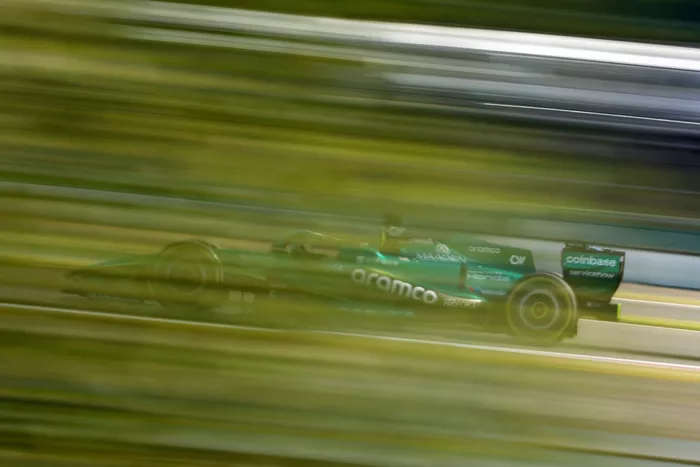
Aston Martin chose to delay its major upgrade package, accepting short-term difficulties in search of a larger performance step.
Ferrari brought 11 updates to Miami, more than any other team. However, part of that investment produced little additional lap time because the car behaved differently on track than expected in simulation.
The team did not stop developing. Instead, Ferrari continued bringing new parts in an attempt to recover the lost performance.
Aston Martin took the opposite approach.
Adrian Newey described the decision to delay the team’s major package until Hungary as painful but deliberate. The idea was to accept weaker results for longer in exchange for a potentially larger gain from a carefully developed package.
That strategy carries its own risk.
If the major upgrade fails to deliver, months of work and a large portion of the budget have already been spent.
Correlation has become more valuable than ever
The two approaches ultimately depend on the same thing: confidence in development data.
A team that can accurately predict how a component will perform before manufacturing it can avoid wasting resources.
That is particularly important under a budget cap because a failed upgrade does more than cost time. It also consumes money that cannot simply be recovered later.
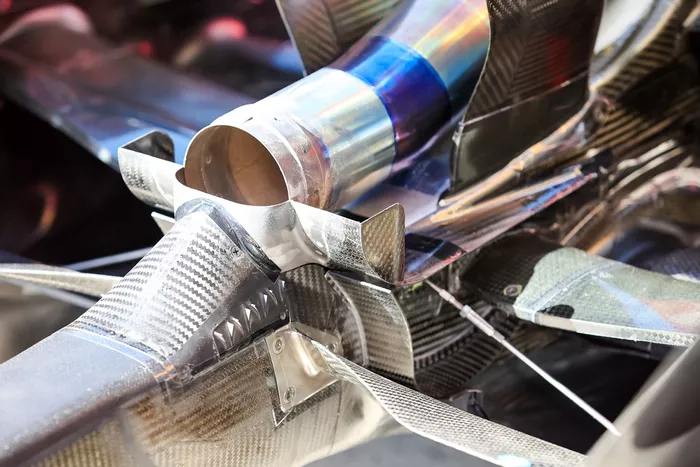
Accurate simulation and track correlation are becoming increasingly important as teams manage development under a fixed budget.
Newey has acknowledged that Aston Martin’s simulation tools are not yet as sophisticated or well correlated as the team would like.
That uncertainty makes development decisions much harder.
If simulation predicts a major gain and the part produces little performance on track, the team has lost both development time and budget.
The same principle applies to Ferrari. Its frequent upgrades make sense only if the team can identify improvements quickly enough to justify the cost of manufacturing and transporting them.
The calendar also affects development strategy
The race calendar has become another factor in the financial equation.
With races removed or replaced, teams do not automatically receive a smaller budget. That means money allocated for those weekends can remain available for development elsewhere in the season.
According to estimates from the paddock, each canceled race can effectively free roughly $1 million per team in potential spending that might otherwise have gone toward operations.
That creates another strategic variable.
Teams must decide whether to use the additional resources on upgrades immediately or preserve them for later stages of the championship.
The biggest risk is getting an upgrade wrong
Before the budget cap, teams could often respond to a failed upgrade by spending more money on another solution.
That option is far more limited today.
A new floor that fails to deliver cannot simply be followed by another expensive experiment without affecting the rest of the development program.
That is why F1 budget cap strategy increasingly revolves around avoiding mistakes rather than simply producing more parts.
Ferrari’s approach is based on maintaining a constant flow of improvements. Aston Martin has chosen to place greater emphasis on validating a larger package before bringing it to the circuit.
Neither strategy is automatically better.
Ferrari has the pressure of fighting for the championship and therefore needs performance as quickly as possible. Aston Martin, after a difficult start to the 2026 regulations, has had more reason to prioritize the future and concentrate its resources on rebuilding its development direction.
Under the budget cap, the real advantage may belong to the team that can predict performance most accurately before spending the money to build it.
The development race has therefore changed. Teams are no longer competing only to find more downforce or reduce lap time. They are competing to decide where, when, and how to spend a limited budget without making an expensive mistake.
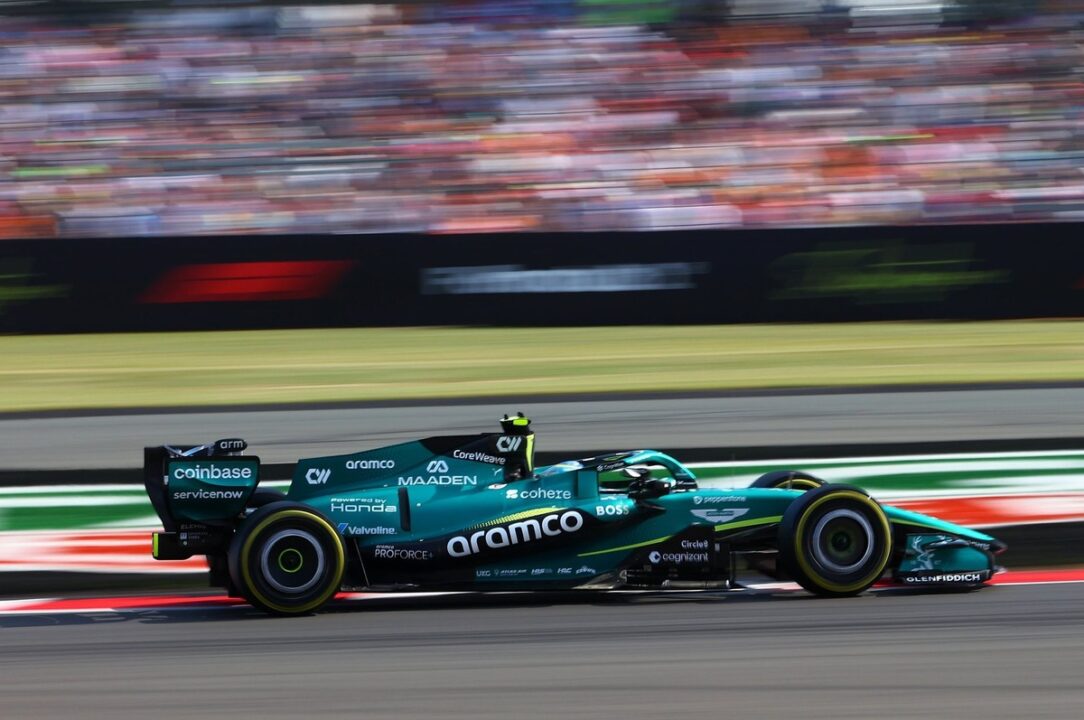
Aston Martin will introduce new aerodynamic upgrades at the Dutch Grand Prix alongside Honda’s latest power-unit update, building on the progress made in Hungary.
Aston Martin is continuing its push to recover from a difficult start to the 2026 Formula 1 season. The team will bring additional aerodynamic upgrades to the Dutch Grand Prix at Zandvoort, adding to the work already introduced in Hungary.
The latest changes will arrive alongside an important Honda power-unit update, giving the AMR26 several opportunities to improve its performance.
Aston Martin builds on its Hungary progress
The previous race in Hungary marked an important turning point for Aston Martin.
The team introduced a major B-specification AMR26 after deciding to focus its development effort on a larger package rather than bringing small upgrades to every race.
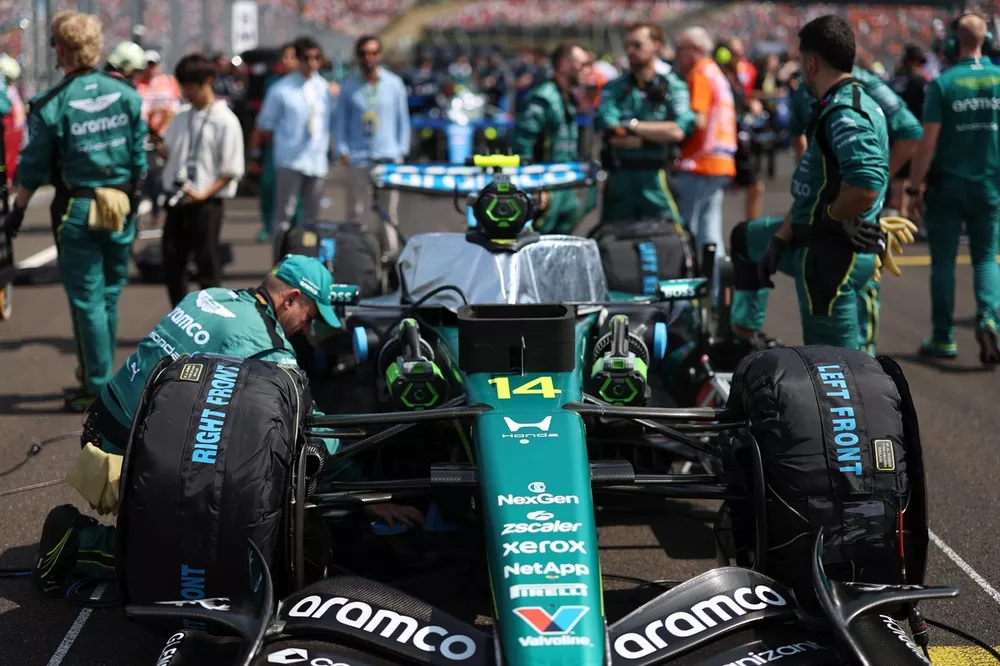
The Aston Martin AMR26 showed improved pace after receiving its major B-specification package in Hungary.
The result was encouraging.
Aston Martin moved closer to the midfield after struggling at the back of the grid earlier in the season. Fernando Alonso and Lance Stroll both reached Q2 and finished 13th and 14th at the Hungaroring.
The improvement was still not enough to challenge consistently for points, but it gave the team a stronger foundation for the second half of the season.
New aero upgrades are coming to Zandvoort
The improvements will continue in the Netherlands.
Aston Martin trackside operations chief Mike Krack confirmed that the team will introduce another group of aerodynamic changes for Zandvoort.

Mike Krack confirmed that Aston Martin will introduce aerodynamic changes to the floor and front wing at Zandvoort.
The upgrades focus on two important areas of the AMR26:
- The floor
- The front wing
Krack said the parts were developed from the lessons Aston Martin learned during the Hungarian Grand Prix.
The team expects the changes to provide a small performance step, although it will not have much opportunity to test the aerodynamic package during Friday’s running.
Honda also brings a new power-unit update
The aerodynamic changes are not the only development arriving at Zandvoort.
Honda will also introduce an update to its power unit through the FIA’s ADUO system. Aston Martin hopes the revised engine will provide additional performance as the team works to close the gap to its rivals.
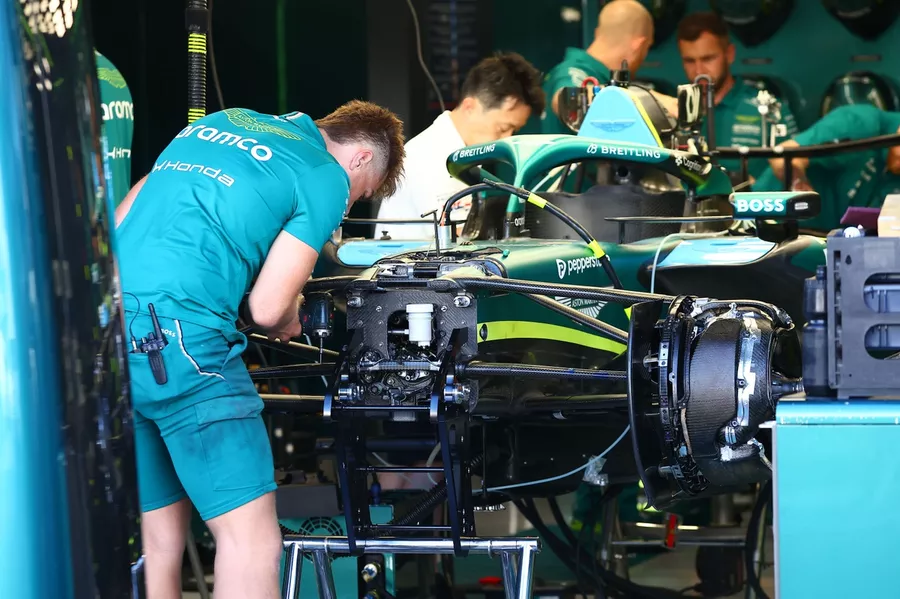
Honda’s latest power-unit update will debut alongside Aston Martin’s aerodynamic developments at Zandvoort.
However, the team will need to manage its track time carefully.
Zandvoort features only one free-practice session, making it more difficult to evaluate new aerodynamic components while also working through the engine update.
Weather could make the situation even more complicated.
A crucial weekend for Aston Martin
Aston Martin therefore arrives at Zandvoort with several important changes at once.
The B-specification car already produced a noticeable improvement in Hungary. The new aerodynamic upgrades could add another step, while Honda’s power-unit development could provide additional performance on top of that.
The team will now need to understand the new package quickly and extract as much performance as possible from a limited amount of practice time.
For Aston Martin AMR26 upgrades, Zandvoort could become another important checkpoint in the team’s recovery. After a difficult opening phase to the 2026 season, every development gain matters as Aston Martin tries to move closer to the midfield and eventually back into regular contention for points.
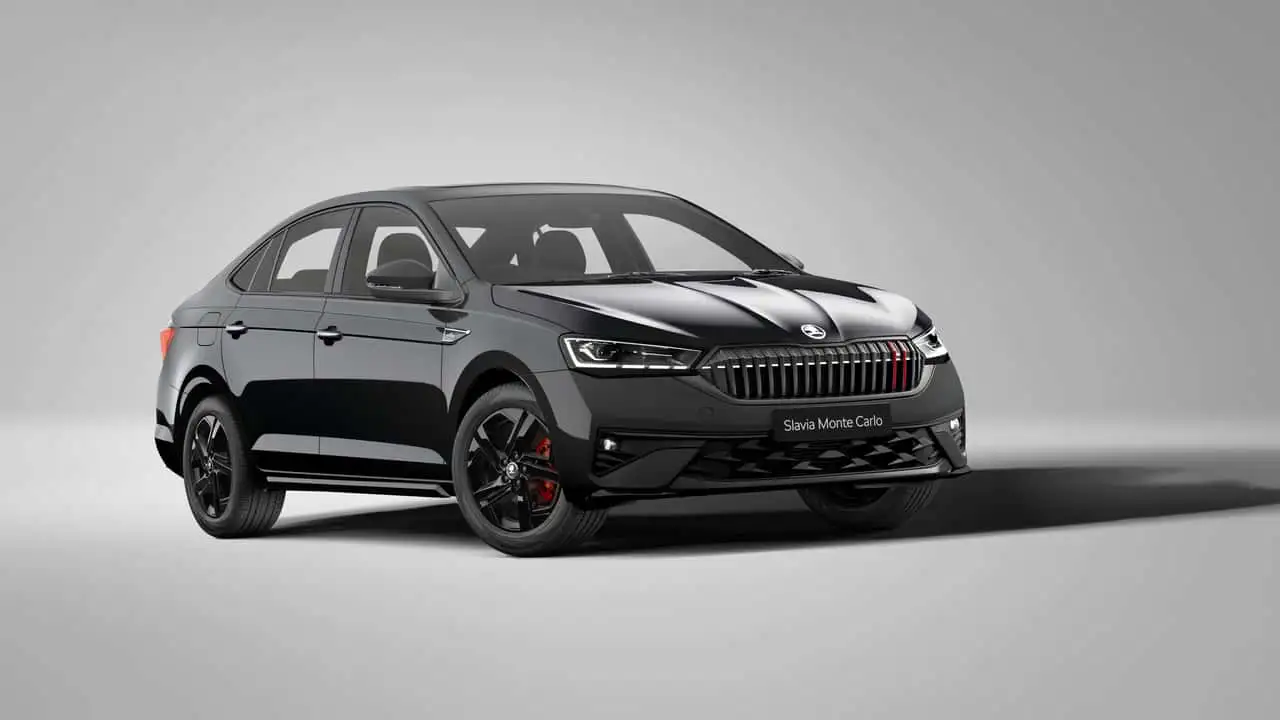
Skoda has refreshed the Slavia for India with updated styling, more technology, new automatic transmissions, and a rear-seat massage function.
Skoda has unveiled the updated Slavia sedan for the Indian market, adding new technology, improved comfort features, and revised styling.
The facelifted model remains based on the local MQB-A0-IN platform, developed and produced in India. It forms part of Skoda’s “made in India, for India” strategy alongside the Kushaq and Kylaq.
The Slavia is also exported to markets in the Middle East, Africa, and Vietnam.
Updated exterior design
The Skoda Slavia first arrived in 2022 and has now reached almost 80,000 sales in India.
The refreshed sedan keeps its overall dimensions, with a length of 178.7 inches, but receives several exterior updates.
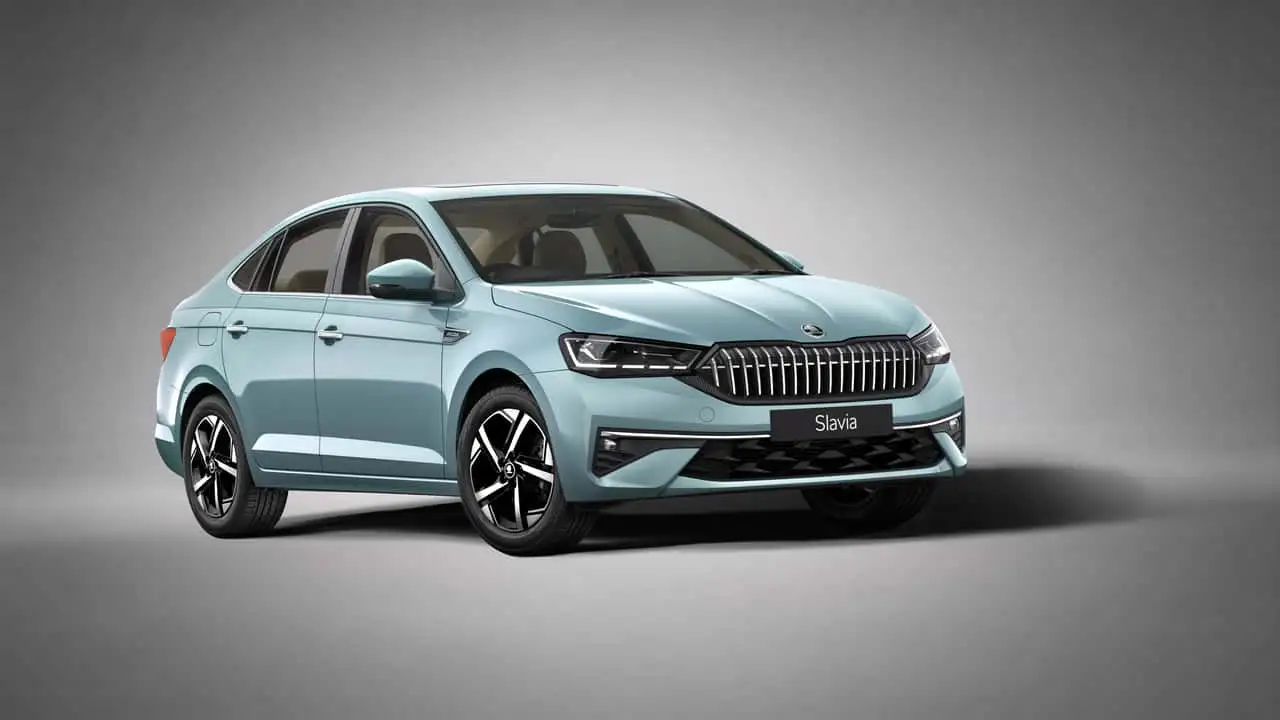
The facelifted Skoda Slavia gets new LED headlights and redesigned taillights with sequential turn signals.
The most noticeable change comes at the front, where new LED headlights give the sedan a fresher appearance.
At the rear, Skoda has redesigned the taillights and added sequential turn signals.
The range-topping Monte Carlo version also receives two-tone exterior paint, black accents, and exclusive badging.
More technology and comfort inside
The cabin receives several important updates for the facelift.
A 10.3-inch digital instrument cluster now works alongside a 10.1-inch infotainment display. Wireless Apple CarPlay and Android Auto are also available.
Skoda has also introduced an AI Companion based on Google Cloud’s Automotive AI Agent.
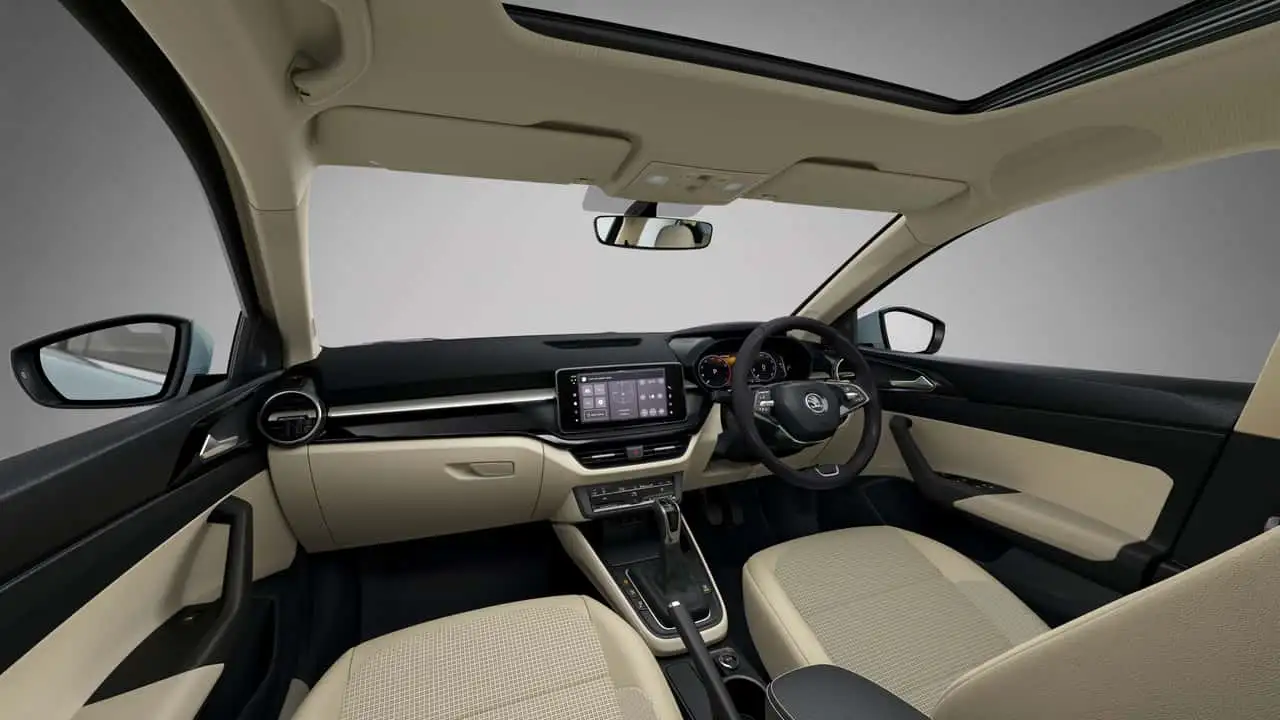
The updated Slavia combines digital displays with an AI assistant designed specifically for Indian English voice commands.
The system can recognize Indian English accents and respond to voice commands. Drivers can use it for music, phone calls, climate control, and other functions while also requesting real-time information.
However, the most unusual addition is aimed at passengers in the back.
The updated Slavia introduces a rear-seat massage function, which Skoda describes as a segment-first feature.
Other available equipment includes a 360-degree Area View camera, front parking sensors with Park Pilot, and additional convenience features.
Safety remains a major focus
Skoda has also expanded the Slavia’s safety package.
The sedan comes with six airbags as standard and more than 25 active and passive safety systems.
The Slavia has also earned a five-star Global NCAP rating for both adult and child occupant protection.
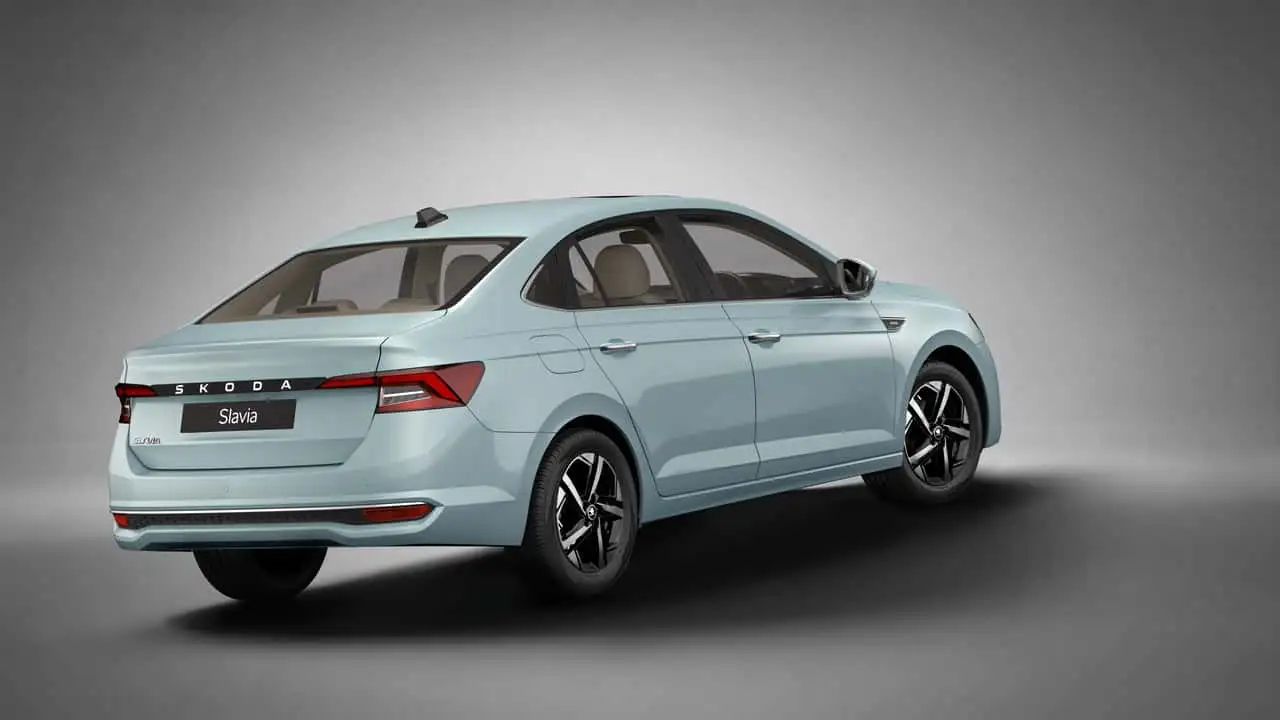
The Slavia combines six standard airbags with more than 25 active and passive safety systems.
That safety equipment adds to the sedan’s appeal in a market where buyers are increasingly focused on advanced driver assistance and occupant protection.
The updated technology package also makes the Slavia more competitive against newer rivals.
New eight-speed automatic transmission
The powertrain lineup continues to use TSI gasoline engines, but Skoda has introduced an important transmission update.
The 1.0 TSI can now be paired with a new eight-speed automatic transmission with a torque converter. Skoda says this setup is a segment-first feature.
A six-speed manual transmission remains available for buyers who prefer a more traditional driving experience.
The larger 1.5 TSI continues with a seven-speed DSG automatic transmission.
Vehicles equipped with the 1.5-liter engine also gain rear disc brakes, adding another technical upgrade to the revised model.
Pricing has not been announced
Skoda has not yet revealed pricing for the updated Slavia.
For reference, the outgoing model currently ranges from approximately $13,000 to $22,000 at current exchange rates, depending on the selected trim.
The updated Skoda Slavia gives the Indian-market sedan a substantial technology boost while retaining its compact dimensions and gasoline powertrains.
-

 NOW TRENDING2 months ago
Polestar to Exit U.S. Market After 2026 Due to Connected Vehicle Rules
-
 TEST DRIVES2 months ago
Subaru’s New Uncharted GT Could Be The Brand’s Most Interesting Small EV Yet
-
 NOW TRENDING2 months ago
Tesla Model Y L Arrives in the U.S. With More Space and Three Rows
-
 NOW TRENDING2 months ago
The 2026 Lexus ES Is No Longer Just A Hybrid Sedan — It’s Now A Three-Way Luxury Play With Hybrid And EV Power
-
 NOW TRENDING2 months ago
The 2026 Kia Sportage Is More Than A Mid-Cycle Refresh — It’s Kia’s Play To Keep Its Best-Seller At The Center Of America’s SUV Market
-
 RACING2 months ago
Why F1 2026 Batteries Have Become The Biggest Reliability Headache On The Grid
-
 INTELLIGENT MOBILITY2 months ago
Bolt, Pony.ai and Stellantis launch autonomous mobility pilot in Luxembourg
-

 RACING2 months ago
McLaren F1 Unveils Special Silverstone Livery Honoring Its History
You must be logged in to post a comment Login