
The 2001 Japanese prototype combined motorcycle and car technology in an ultralight, futuristic concept.

A Unique and Absurd Concept Car
The Suzuki GSX-R/4 is one of the most original and extreme concept cars in automotive history. Unveiled at the 2001 Frankfurt Motor Show, this prototype transferred the performance and technology of the legendary GSX-1300R Hayabusa motorcycle into a car. With a design that looked like it came straight out of a video game, Suzuki aimed to demonstrate the potential of combining automotive and motorcycle engineering.
Ultralight and Incredibly Fast
The GSX-R/4 featured a 1.3-liter inline-four engine derived from the Hayabusa, producing 173 hp. Its weight of only 640 kg, thanks to a custom aluminum chassis, allowed the prototype to accelerate from 0 to 100 km/h in just 3.5 seconds, reaching speeds above 220 km/h. The mid-rear engine layout and six-speed sequential gearbox emphasized track-focused dynamics, complemented by Formula 1-inspired suspension and ultralight wheels.
Cutting-Edge Technology for Its Time
Beyond performance, the GSX-R/4 incorporated advanced technology for 2001. Its cockpit included a GPS system, a camera projecting images onto a central screen, and track-oriented features, including the “Circuit Navigation Function”, which helped drivers navigate major racing circuits worldwide. Drivers could also replay driving sessions and select performance modes tailored to the track.
A Video Game Roadster Made Real

The futuristic design of the GSX-R/4 and its technological platform made it an icon among Japanese prototypes. Despite never entering production, its legacy lives on: the car appeared in the Gran Turismo series and was reproduced as a 1/64 scale Hot Wheels model, cementing its place in automotive pop culture.
Legacy and Historical Significance
The GSX-R/4 remains a benchmark for how Japanese engineering can merge motorcycle and car technologies in a single project. Its combination of lightweight construction, power, and advanced technology not only marked a milestone for Suzuki but also inspired future concept cars aiming to push the boundaries of modern automotive design.


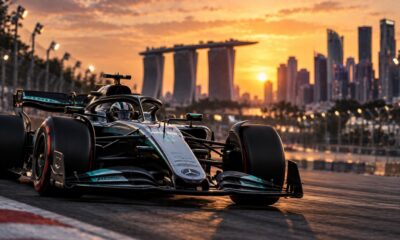










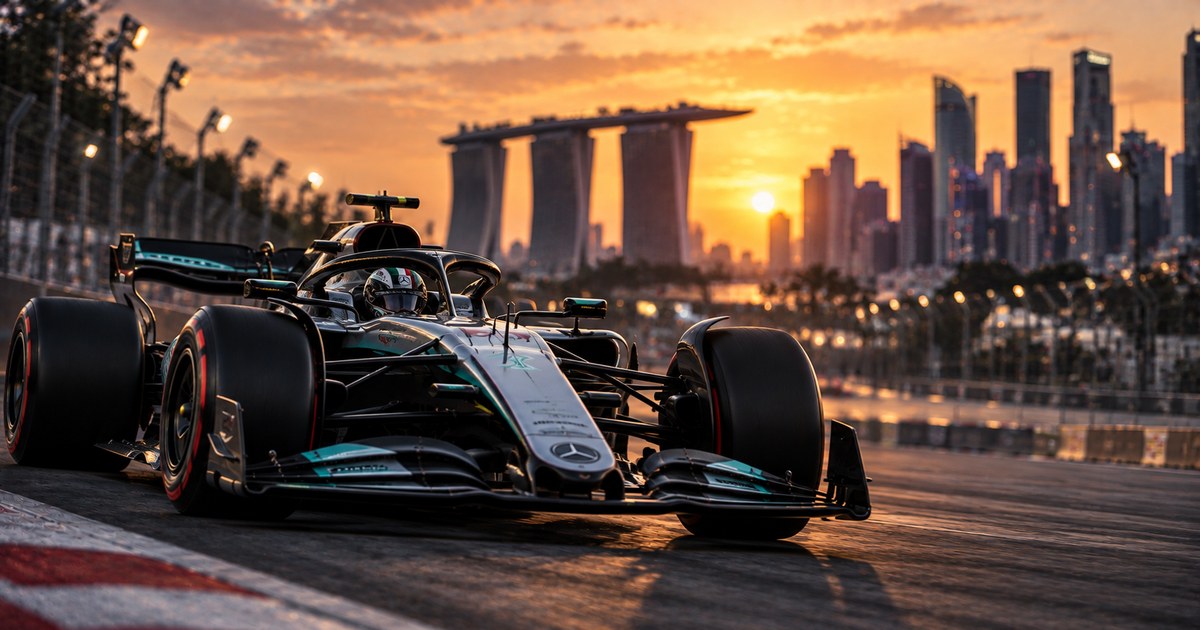
Kimi Antonelli leads the 2026 Formula 1 standings by 81 points and could mathematically secure his maiden World Championship as early as the Singapore Grand Prix.
Antonelli has the title within mathematical reach
Kimi Antonelli has held the lead of the 2026 Formula 1 Drivers’ Championship since the Japanese Grand Prix. His victory in Spain strengthened that advantage and moved the Mercedes driver closer to his first world title.
After 14 rounds, Antonelli has 292 points. George Russell is second with 211, while Lewis Hamilton sits third with 191. That gives Antonelli an 81-point lead over Russell and a 101-point advantage over Hamilton.
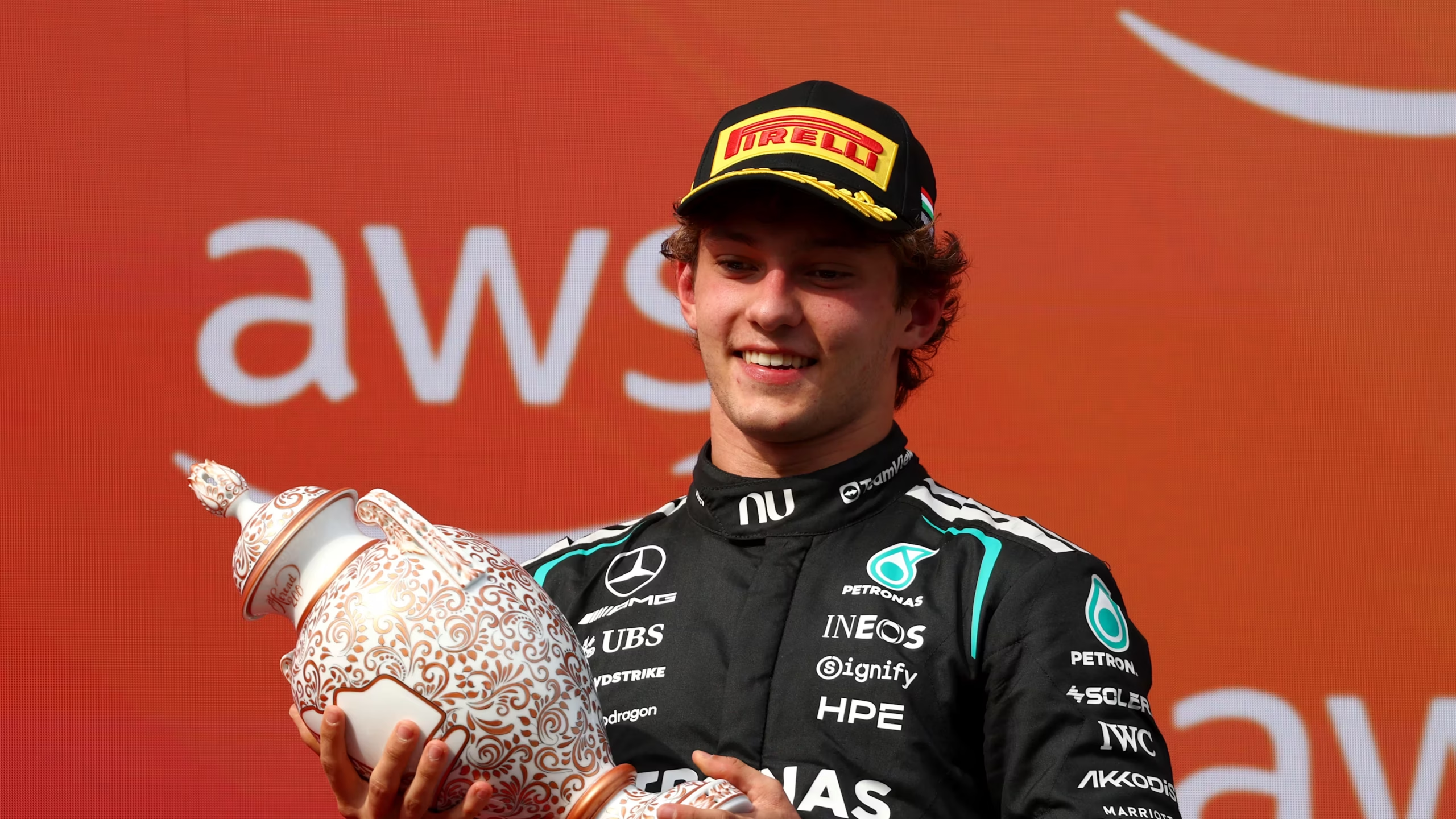
Kimi Antonelli remains at the top of the 2026 Drivers’ Championship after 14 rounds.
There are 233 points still available to a driver who wins every remaining Grand Prix and the Singapore Sprint.
That means the championship is not mathematically over. However, Antonelli already has enough of a cushion to create several possible title-clinching scenarios.
The official F1 calculations show that the earliest possible clinching point is Round 17 in Singapore.
Eight other drivers remain mathematically alive
Antonelli is not the only driver who can still win the championship on paper.
The list includes George Russell, Lewis Hamilton, Lando Norris, Charles Leclerc, Max Verstappen, Oscar Piastri, Isack Hadjar and Liam Lawson.
The situation is very different across the standings.
Drivers farther down the order would need Antonelli to stop scoring entirely. They would also need their own results to remain strong enough to pass his current total of 292 points.
Under those mathematical conditions, Russell could first become champion in São Paulo. Hamilton, Norris and Leclerc could do it in Las Vegas. Verstappen and Piastri would have to wait until Qatar.
That shows how large Antonelli’s current advantage has become.
Singapore is Antonelli’s earliest possible title venue
The earliest possible championship clincher comes at the Singapore Grand Prix.
To make that happen, Antonelli would need to win Azerbaijan, Bahrain and Singapore, while also winning the Singapore Sprint. At the same time, Russell would have to score zero points across those events.
That extreme combination would give Antonelli a total of 375 points.
Russell would then be 164 points behind.
With only 150 points remaining after Singapore, Russell would no longer be able to catch his Mercedes team-mate.
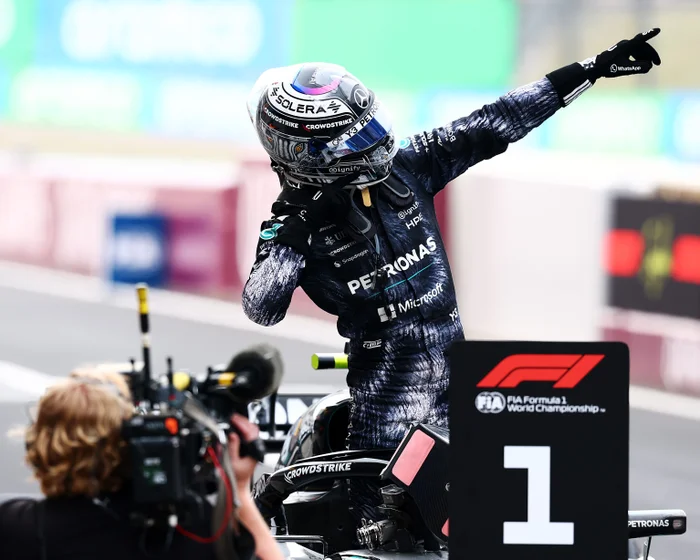
Antonelli took control of the championship after winning in Japan earlier in the 2026 season.
The scenario is extreme, but it establishes the earliest mathematical date.
The Singapore Grand Prix takes place on October 9-11, according to the official 2026 F1 calendar.
The Azerbaijan and Bahrain rounds come immediately before it. Bahrain will be held at the Sepang International Circuit in Malaysia in the revised 2026 calendar.
That creates a demanding three-race sequence before the championship calculation reaches Singapore.
A more realistic scenario points to Mexico
There is another calculation that produces a later title-clinching date.
F1’s data team also looked at what would happen if Antonelli and Russell continued around their median finishing positions from the season so far. Antonelli’s average finishing position is currently P1, while Russell’s is 3.5.
Under that model, Antonelli would first become champion at Round 19 in Mexico.
The calculation gives him a 112-point advantage at that stage.
Russell would then have too few points available in the remaining rounds to mathematically close the gap.
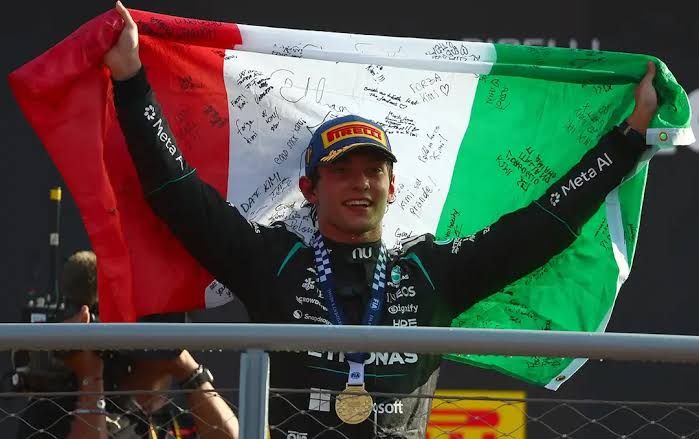
Antonelli has built his championship lead through a string of strong results during his second Formula 1 season.
The difference between the two scenarios is important.
Singapore is the earliest mathematical possibility. Mexico is the projected clinching point in the median-finish scenario.
Neither scenario guarantees what will happen on track. The first is based on a highly specific set of results, while the second depends on the continuation of the season’s median finishing patterns.
The championship still has several races ahead, including Azerbaijan, Bahrain, Singapore, the United States, Mexico, Brazil, Las Vegas, Qatar and Abu Dhabi.
Antonelli therefore remains in control of the mathematical equation, but the exact date of his first Formula 1 world championship will depend on how the remaining races unfold.
For now, the Kimi Antonelli 2026 title calculation is clear: he can become World Champion at the earliest in Singapore, while the median-results model points to Mexico as the next major possibility.
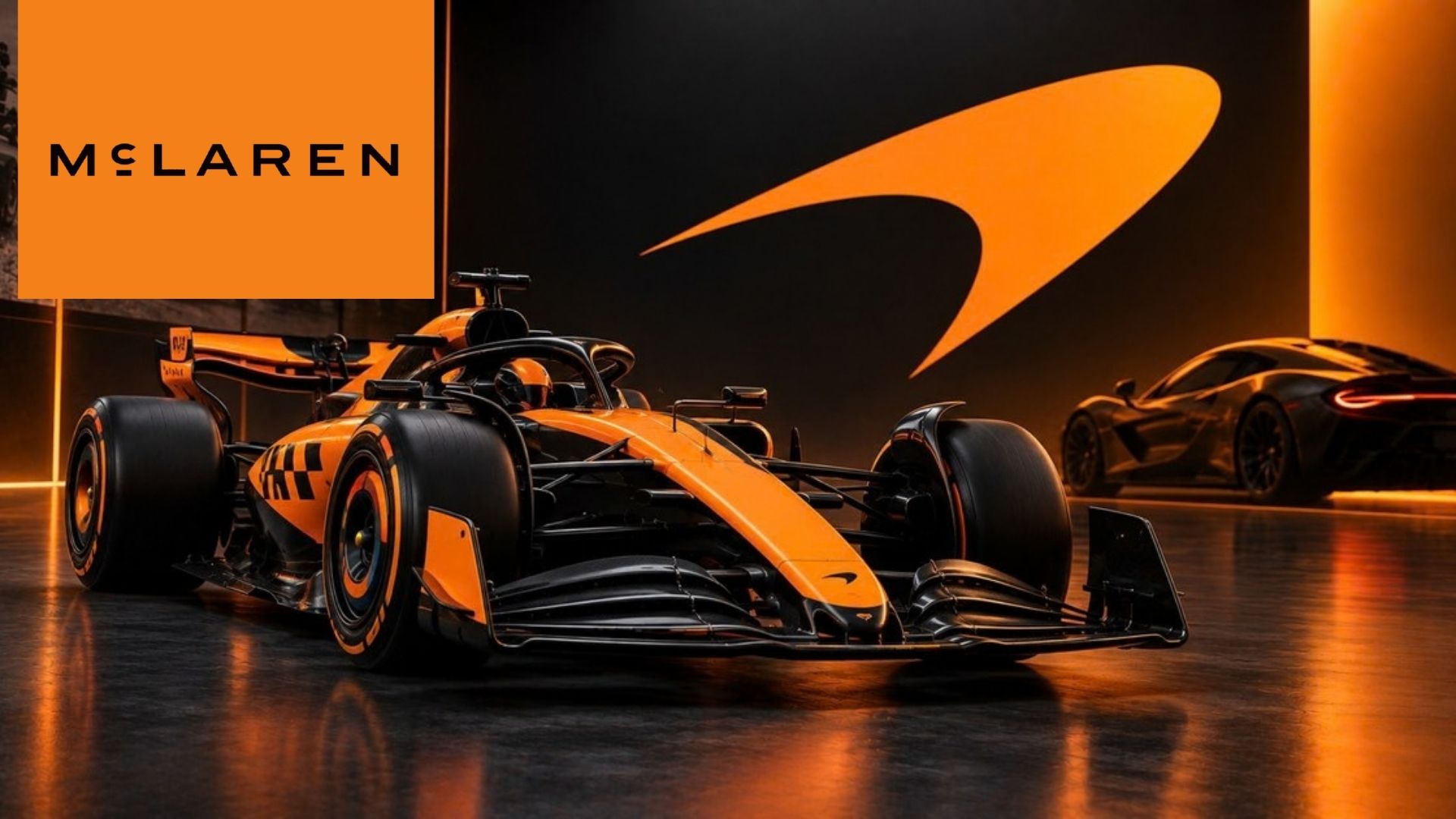
McLaren has revealed an evolved brand identity and a redesigned logo that connects its racing and automotive divisions while returning to key elements of Bruce McLaren’s heritage.
McLaren begins a new chapter with an updated identity
McLaren has unveiled a new brand identity ahead of the 2026 Azerbaijan Grand Prix.
The change brings McLaren Racing and McLaren Automotive closer together under one visual system. The company says the goal is to connect its past, present and future while creating a clearer expression of the McLaren brand.
The announcement was made on September 22, 2026. It comes after more than six decades of development in motorsport and road-car engineering.
The updated identity is built around several familiar symbols. It also introduces a new McLaren wordmark inspired by the company’s early history.
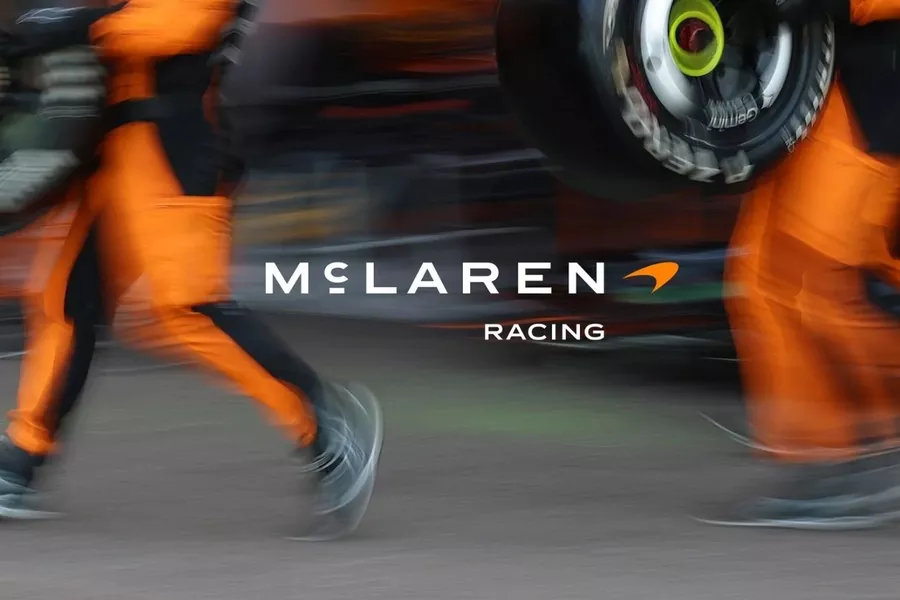
The new McLaren Racing wordmark is part of the brand’s evolved identity unveiled in September 2026.
McLaren says the new identity is inspired by Bruce McLaren’s vision and ambition.
The company also wants the brand to represent more than cars and racing results. Its stated aim is to strengthen the connection with customers, employees, fans and the wider global community.
That approach is especially important because McLaren now operates across several major racing programs.
Its current motorsport portfolio includes Formula 1, IndyCar and the World Endurance Championship, while McLaren Automotive continues to develop high-performance road cars.
The new wordmark looks back to Bruce McLaren
One of the most interesting details is the origin of the new wordmark.
McLaren says it was inspired by the sign above the family service station in Remuera, Auckland, which was owned by Bruce McLaren’s parents, Les and Ruth.
That location has a special place in McLaren history. According to the company, it was where Bruce built the car that later took him to his first racing victory.
The updated design therefore does more than modernize the logo.
It creates a direct visual link between the modern McLaren organization and its New Zealand roots. The company says the new treatment gives those historic elements a stronger visual language for the future.

The family service station in Remuera, Auckland, inspired the design of McLaren’s new wordmark.
The move also shows how heavily the identity relies on heritage.
McLaren has spent much of 2026 revisiting important moments from its history. Those projects include a renewed focus on Bruce McLaren and the company’s early work in motorsport and road-car development.
The new logo is the latest expression of that strategy.
The Speedmark and papaya color remain
McLaren is not abandoning its most recognizable symbols.
The Speedmark remains at the heart of the brand. The company says keeping it is important because it represents continuity and remains strongly connected with fans around the world.
The famous papaya color also stays.
However, McLaren is adding a broader color palette inspired by important moments in its history. That gives the company more freedom to adapt the visual identity across different products, racing series and experiences.
The Speedy Kiwi also remains part of the identity.
That symbol pays tribute to Bruce McLaren’s New Zealand heritage. It also preserves a link to one of the earliest visual elements associated with the company.
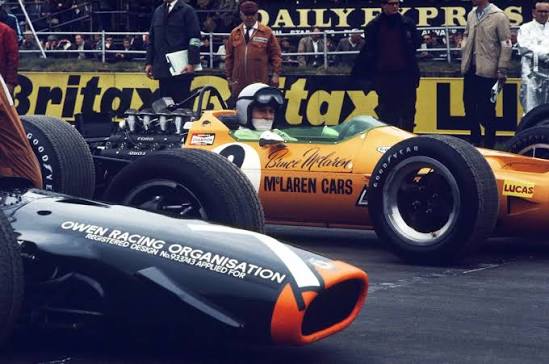
Bruce McLaren’s legacy remains a central part of the brand’s updated identity.
One identity for racing and automotive
The new identity is designed to work across McLaren’s entire organization.
That includes Formula 1, IndyCar, WEC and McLaren Automotive. The idea is to create a more unified visual presence instead of treating each part of the company as a separate brand expression.
The timing is also significant.
McLaren Racing recently marked its 1,000th Formula 1 Grand Prix, while the company has also announced its new WEC Hypercar project. At the same time, McLaren Automotive is expanding its UK manufacturing and engineering operations through a reported £500 million investment program.
These projects all point in the same direction.
McLaren is expanding its presence while trying to keep its historic identity recognizable.
A visual update without abandoning the past
The new McLaren identity is therefore not a complete break from the past.
The Speedmark remains. Papaya remains. The Speedy Kiwi remains. The main change is the way those elements are brought together with a new wordmark and a broader visual system.
That balance is central to McLaren’s message.
The company wants its new identity to feel modern without losing the stories that made the brand distinctive in the first place. The result is designed to connect its historic racing roots with its growing presence in motorsport, road cars and fan experiences.
The McLaren new logo marks the start of that next chapter, bringing the Racing and Automotive sides of the company under a more unified identity while keeping Bruce McLaren’s heritage at its core.
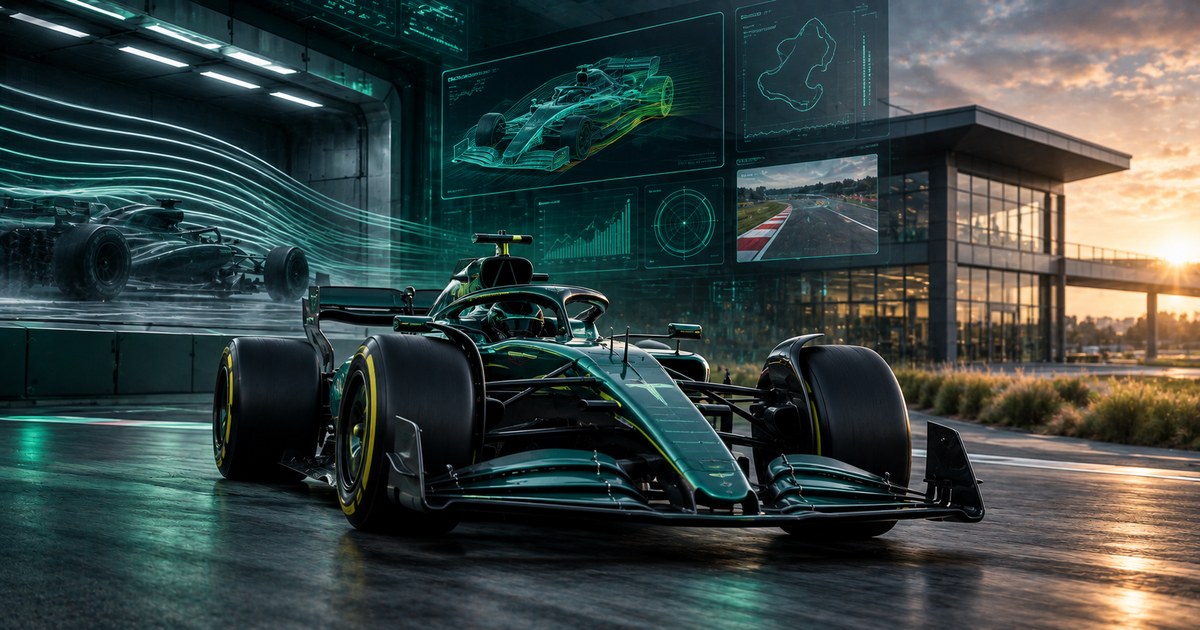
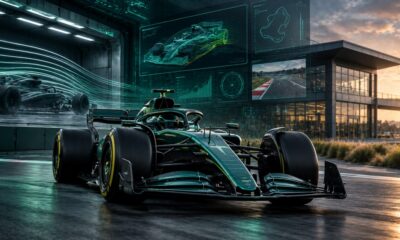
Aston Martin is using artificial intelligence with its CoreWeave AI.R Tunnel to improve aerodynamic correlation and turn massive amounts of F1 data into faster decisions.
Aston Martin is putting AI to work in Formula 1
Artificial intelligence is becoming part of Aston Martin’s daily Formula 1 operation.
The team is working with CoreWeave to process large amounts of information and turn it into useful engineering and race-strategy insights. The project covers areas that range from aerodynamic correlation to competitor radio analysis.
The latest details were published by Aston Martin on September 21, 2026. The team says millions of data points are generated during every Grand Prix weekend, making speed of analysis increasingly important.
The objective is not to replace engineers.
Instead, Aston Martin wants its engineers to find important information faster. In Formula 1, saving even a few seconds can affect a setup change or a strategy decision.
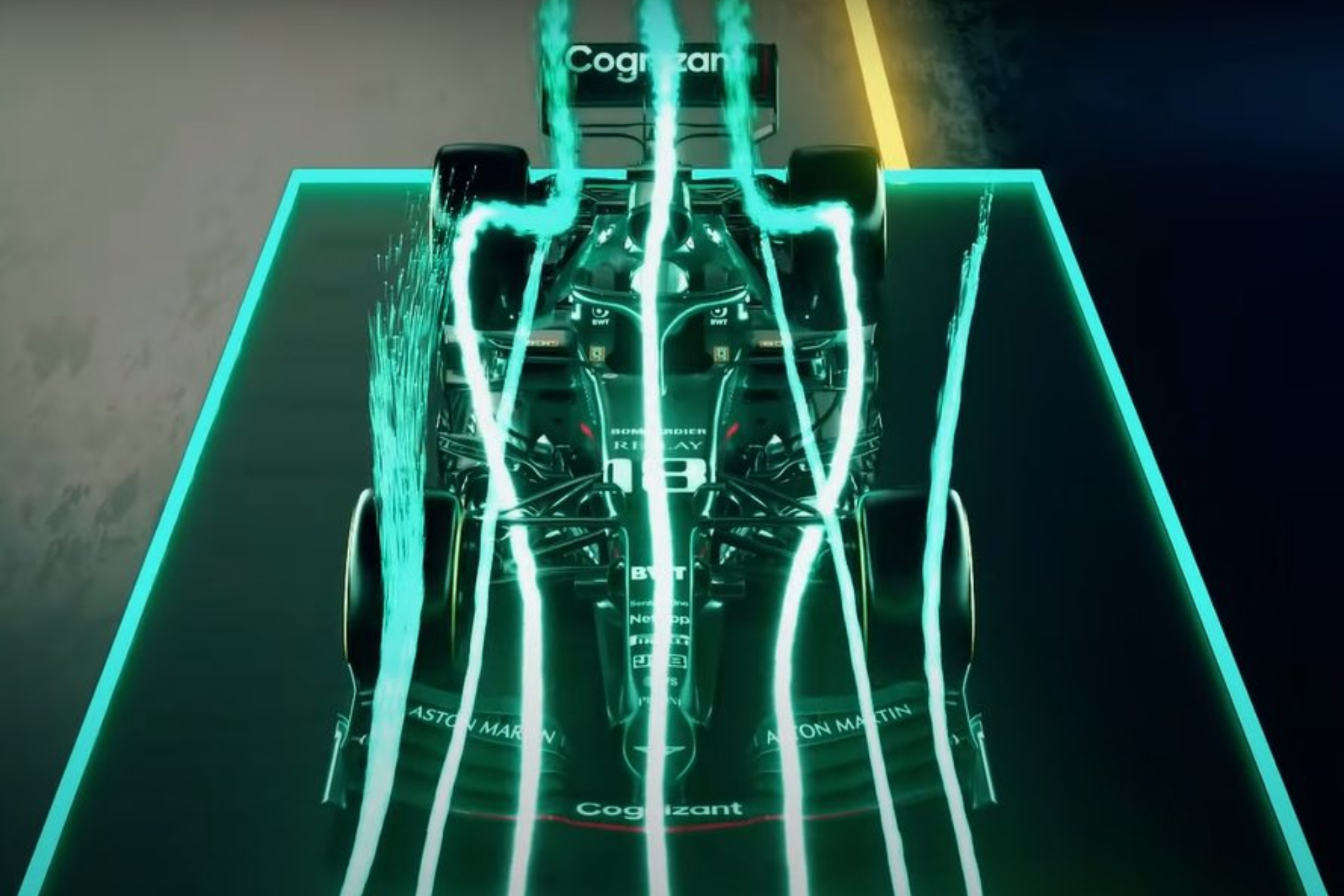
The CoreWeave AI.R Tunnel became a central part of Aston Martin’s technical operation as the team prepared for the 2026 regulations.
The wind tunnel is at the center of the first application.
Aston Martin’s CoreWeave AI.R Tunnel provides precise aerodynamic measurements. However, a laboratory cannot reproduce every condition found at a Formula 1 circuit.
The team points to changing kerb heights, weather conditions and dirty air as examples.
Those variables can create a gap between what simulations predict and what the driver experiences on track. That difference is known as aerodynamic correlation.
AI helps Aston Martin close the correlation gap
Aston Martin describes correlation as one of the biggest challenges in modern F1 aerodynamics.
The team and CoreWeave developed analytical methods that compare historical race data with vehicle-dynamics research. The goal is to identify the factors that can cause real-world performance to differ from controlled testing.
The result is a more accurate prediction of how aerodynamic components could behave at a Grand Prix.
That information can then be used before the cars arrive at the circuit.
Aston Martin says its Vehicle Engineering team uses the insights in the week before a race to help calibrate the car’s setup. The aim is simple: make the car behave as closely as possible to the engineers’ expectations during the first practice session.
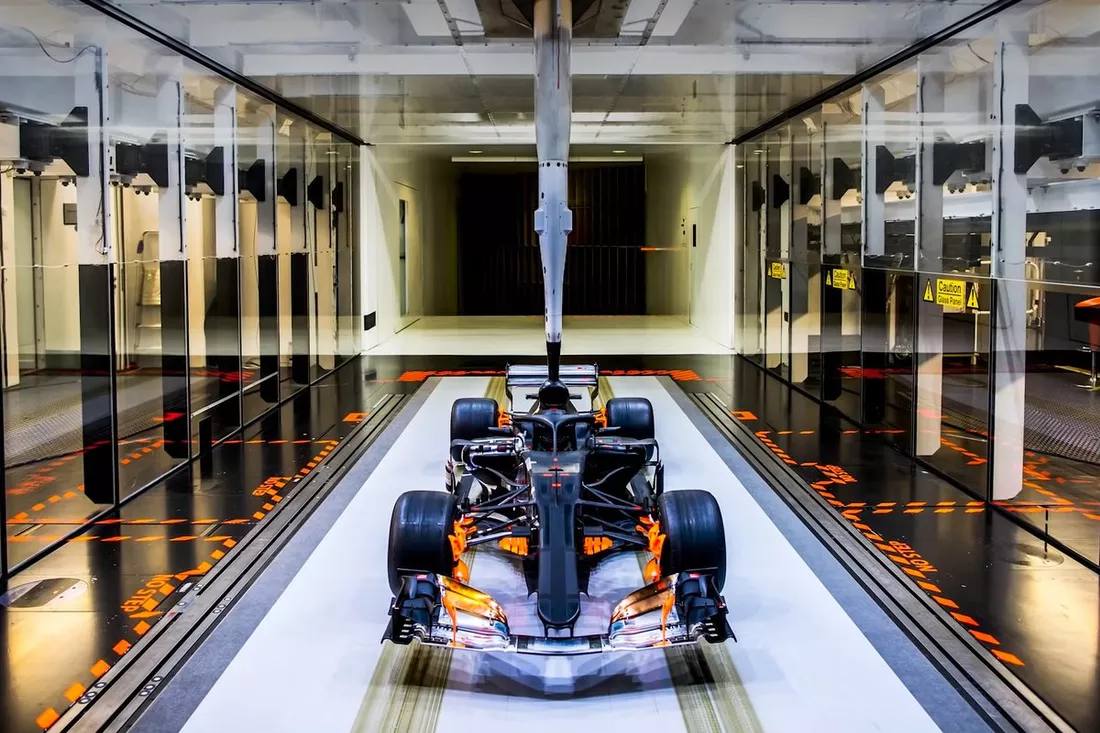
CoreWeave branding is visible on Aston Martin’s Formula 1 machinery as the partnership expands into AI-powered engineering.
The second application happens during the race itself.
Aston Martin says engineers can face 22 competitor radio channels plus more than 15 internal channels at the same time. Finding a specific piece of information manually can take valuable minutes.
That becomes a problem when a strategy decision has to be made quickly.
AI turns F1 radio into searchable data
CoreWeave has built a system that listens to, transcribes and categorizes radio communications.
The tool processes competitor and internal audio. Engineers can then search the information through a dedicated interface instead of manually reviewing long audio streams or noisy transcripts.
The system also uses a large language model to standardize terms.
For example, different ways of saying “Turn 1” can be organized as T1, making the information easier to filter.
This can help answer questions about tire performance, grip, strategy or driver feedback much faster.
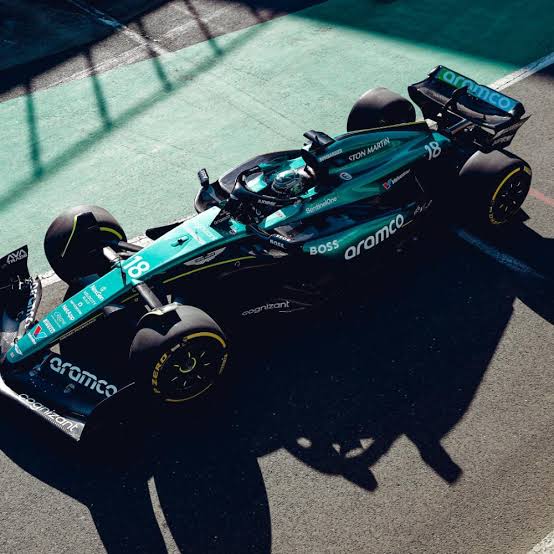
Race engineers remain responsible for interpreting the data and making the decisions during a Grand Prix.
The scale of the system is significant.
At the 2026 Monaco Grand Prix, Aston Martin says the platform processed tens of hours of radio, thousands of messages and hundreds of thousands of words.
CoreWeave has also described a broader system capable of processing 40 radio channels simultaneously. Its technical report says the platform can transcribe, categorize and make those feeds searchable within seconds.
That system was tested during the final two races of the 2025 season before being deployed for 2026. CoreWeave says its development included 75 model iterations, seven hours of hand-annotated F1 radio and more than 3,000 labeled samples.
AI is another tool for Aston Martin’s engineers
Aston Martin is clear about the role of the technology.
AI is not replacing the people making decisions. Instead, it changes how much information those people can process and how quickly they can access it.
That distinction matters in Formula 1.
An AI system can organize data. It can identify patterns. It can surface relevant information.
But engineers still need to decide what that information means for the car.
The same principle applies to aerodynamic development. The AI can help predict how a component will behave, but the engineering team still decides which solution should be developed and tested.
The AI work fits a larger technical transformation
Aston Martin’s AI project is part of a much broader investment at its AMR Technology Campus in Silverstone.
The team’s new wind tunnel began operation in 2025 and was created to support both the existing car and the transition to the 2026 regulations.
Adrian Newey has also acknowledged that Aston Martin started its 2026 development cycle later than many rivals. He said the first 2026 model did not enter the AI.R Tunnel until mid-April, leaving the team roughly four months behind in that phase of aerodynamic testing.
That makes efficient use of every available development tool even more important.
The AI work is therefore not a separate experiment. It is part of Aston Martin’s effort to connect simulation, wind-tunnel data, vehicle dynamics and race information more effectively.
The Aston Martin AI and CoreWeave partnership shows how Formula 1 is moving beyond simply collecting more data. The focus is increasingly on finding the right information quickly and turning it into decisions that can improve the car on the track.
-
 NOW TRENDING2 months ago
Rolls-Royce’s $32 Million Droptail Took 9 Months of Handcrafted Woodwork
-
 NOW TRENDING4 weeks ago
Tesla Cybercab Gets September 3 Austin Launch Date
-
 INTELLIGENT MOBILITY2 months ago
GM Updates Infotainment System With Smarter Features
-
 NOW TRENDING2 months ago
2027 Audi Q9 and SQ9 Debut as Brand’s Largest SUVs
-
 NOW TRENDING2 months ago
2027 Hyundai Tucson Spied With New Design and Hybrid Power
-
 RACING2 months ago
Aston Martin Upgrades Deliver Alonso’s Best Qualifying of 2026
-
 INTELLIGENT MOBILITY2 months ago
Hyundai Opens UX Studio Shanghai to Drive Global Innovation
-
 NOW TRENDING2 months ago
Low-Mileage Audi S4 Avant Brings V8 Wagon Dream Back
You must be logged in to post a comment Login