
RACING
Red Bull’s Hungary Podium Shows Progress but Exposes Key Weakness


Max Verstappen’s second-place finish at the Hungarian Grand Prix provided a welcome boost for Red Bull, but the result also revealed the team’s ongoing struggles with the RB22’s balance and overall performance.
The Red Bull Hungary performance offered reasons for optimism after Max Verstappen finished second at the Hungarian Grand Prix. However, beneath the podium result, the race also exposed several weaknesses that continue to prevent Red Bull from consistently fighting at the front of the Formula 1 field.
Moreover, while strategy and execution played a major role in securing the result, the RB22 still lacks the balance and consistency needed to match its closest rivals.
A Strong Result That Doesn’t Tell the Full Story
After a difficult Friday, Red Bull would have gladly accepted a second-place finish before Sunday’s race.
Verstappen capitalized on smart strategy calls and strong race execution to secure the podium, despite admitting afterward that he was surprised to finish in that position. Furthermore, team principal Laurent Mekies acknowledged that Red Bull still faces significant challenges as development opportunities become more limited during the second half of the season.
As a result, the Hungarian Grand Prix highlighted the team’s ability to maximize race weekends even when the car is not among the fastest.

Max Verstappen secured second place in Hungary despite ongoing performance challenges with the RB22.
Balance Remains the RB22’s Biggest Challenge
Although Red Bull remains competitive, the RB22 continues to struggle with its operating window.
Throughout the weekend, Verstappen reported persistent oversteer and inconsistent balance, particularly through Budapest’s medium-speed corners. Additionally, the car appeared to lose electrical deployment on the straights sooner than expected, reducing its effectiveness during key overtaking opportunities.
Consequently, the lack of aerodynamic stability and overall balance continues to limit the car’s performance across different circuit characteristics.

Red Bull continues working to improve the RB22’s balance and aerodynamic consistency.
Red Bull Still Searching for the Final Step
Despite finishing on the podium, Red Bull knows there is still considerable work ahead.
According to the team, race strategy and Verstappen’s driving made the biggest difference in Hungary, allowing Red Bull to outperform several rivals despite not having the quickest package. Meanwhile, Mekies believes the current car still has untapped potential if engineers can improve its balance and make its performance window more consistent.
Therefore, solving those issues will be critical if Red Bull hopes to challenge regularly for victories during the remainder of the Formula 1 season.

Red Bull believes improving the RB22’s balance will be key to fighting for more victories.
Red Bull Hungary Performance Highlights the Road Ahead
The Red Bull Hungary performance demonstrated the team’s ability to maximize opportunities even when the RB22 is not operating at its best.
Overall, Verstappen’s runner-up finish was an encouraging result, but it also reinforced that Red Bull still needs meaningful improvements in balance, aerodynamics and overall consistency before it can consistently challenge for wins against Formula 1’s current frontrunners.


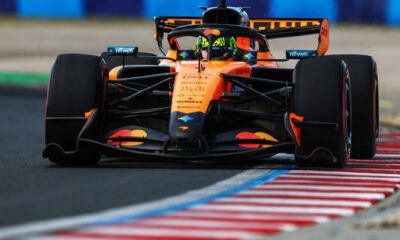




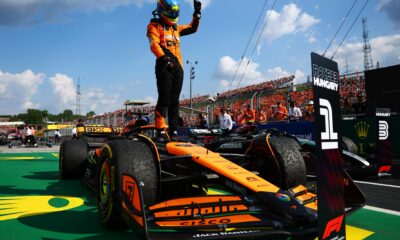


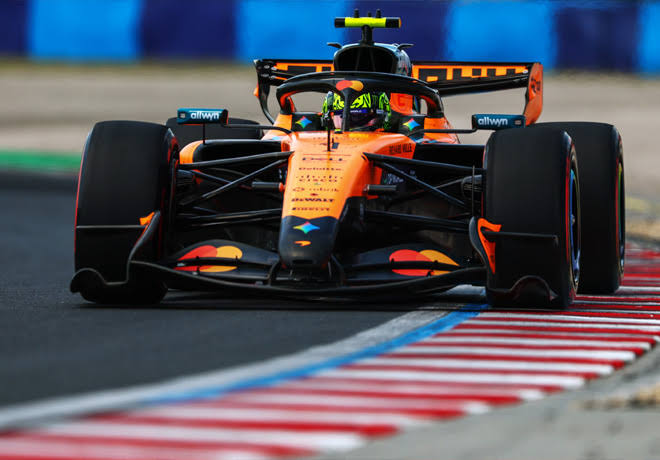
Lando Norris says his dominant Hungarian Grand Prix victory proves he is performing at a higher level than when he won the Formula 1 world championship, despite McLaren no longer having the fastest car.
The Lando Norris driving better discussion gained momentum after the McLaren driver delivered one of the most dominant performances of the Formula 1 season at the Hungarian Grand Prix. Although defending his world title appears increasingly difficult, Norris believes his overall level behind the wheel has improved compared to his championship-winning campaign.
Moreover, the British driver feels his recent performances demonstrate that he is extracting everything possible from his current car.
Hungarian Grand Prix Showed Norris at His Best
Norris secured his first victory of the season with an impressive drive at the Hungaroring.
After briefly losing track position to teammate Oscar Piastri on the opening lap, Norris remained patient before reclaiming the lead through strategy during the pit stop phase. Once back in front, he quickly built a commanding advantage and comfortably controlled the remainder of the race.
As a result, the McLaren driver described the performance as one of the strongest of his Formula 1 career.

Lando Norris dominated the Hungarian Grand Prix to secure his first victory of the 2026 Formula 1 season.
Norris Believes His Driving Has Reached Another Level
Following the race, Norris explained that his confidence and consistency have improved significantly.
According to the reigning world champion, extensive work with his engineers and continuous development in several areas have allowed him to perform closer to the car’s limits on every lap. Furthermore, he believes those improvements are evident even though McLaren no longer has the fastest package on the grid.
Consequently, Norris considers his current performances stronger than those that earned him the Formula 1 title.

Norris believes his current level behind the wheel surpasses his championship-winning season.
McLaren Sees Major Progress
McLaren Team Principal Andrea Stella also praised Norris’ development.
Stella highlighted the driver’s improved confidence, emotional control and technical understanding, noting that Norris has become more effective at managing difficult race situations. Additionally, he pointed to Norris’ patience while following Piastri in Hungary as an example of the maturity that ultimately helped secure victory.
Therefore, McLaren believes Norris continues to evolve despite facing stronger competition this season.

McLaren believes Norris has become a more complete and consistent Formula 1 driver.
Lando Norris Driving Better Despite a Tougher Championship Fight
The Lando Norris driving better debate reflects how Formula 1 success depends on more than simply having the fastest car.
Overall, Norris believes his personal performance has reached a higher standard than during his championship campaign, and his commanding victory in Hungary provided strong evidence that his development as a driver continues even in a far more competitive season.
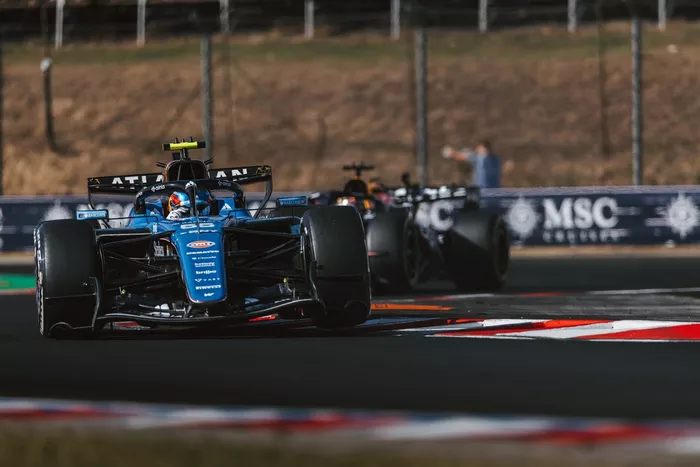
A technical issue with Formula 1’s blue flag system caused widespread confusion during the Hungarian Grand Prix, forcing Race Control to rely on traditional flag marshals and creating several costly incidents.
The Hungarian GP blue flag failure became one of the biggest talking points following the Formula 1 race at the Hungaroring. A malfunction in the electronic blue flag system prevented drivers from receiving the usual dashboard notifications, creating confusion throughout the field and forcing Race Control to revert to traditional flag marshals.
Moreover, the unexpected problem contributed to several incidents, penalties and heated reactions from teams after the checkered flag.
Electronic Blue Flag System Stopped Working
Normally, Formula 1 drivers receive blue flag warnings through illuminated trackside panels and dashboard notifications that display their car number.
However, during the Hungarian Grand Prix, the electronic system failed to identify the correct drivers. As a result, competitors only saw blue flag signals without knowing whether the warning actually applied to them.
Consequently, many drivers had to rely on radio messages from their engineers while trying to manage traffic during the race.

A failure in Formula 1’s electronic blue flag system created confusion throughout the Hungarian Grand Prix.
Several Drivers Were Caught Out by the Confusion
The system failure had a direct impact on multiple battles throughout the race.
Carlos Sainz collided with Oscar Piastri while fighting Fernando Alonso, explaining afterward that he had no indication the McLaren was attempting to lap him. Meanwhile, Oliver Bearman received a five-second penalty after failing to immediately respect blue flags, later describing the situation as a “nightmare.”
Furthermore, Esteban Ocon admitted that drivers often had no way of knowing whether the blue flag warning referred to their own car or another competitor.

Several drivers struggled to identify blue flag warnings because dashboard notifications were unavailable.
Teams Were Forced to Rely on Radio Communication
With the electronic alerts unavailable, race engineers became responsible for warning drivers about approaching leaders.
However, radio communication could not always provide information quickly enough during intense wheel-to-wheel battles. As a result, several drivers defended positions unintentionally while faster cars attempted to lap them.
Mercedes Team Principal Toto Wolff also criticized the situation, arguing that the technical failure created unnecessary confusion during an already demanding race.

Teams depended on radio communication after the electronic blue flag system stopped working.
Hungarian GP Blue Flag Failure Exposed a Critical Weakness
The Hungarian GP blue flag failure demonstrated how heavily modern Formula 1 relies on electronic race management systems.
Overall, the unexpected malfunction forced officials to return to traditional flag procedures, while drivers and teams faced confusion that influenced penalties, overtaking battles and race strategy throughout one of the season’s most chaotic Grands Prix.
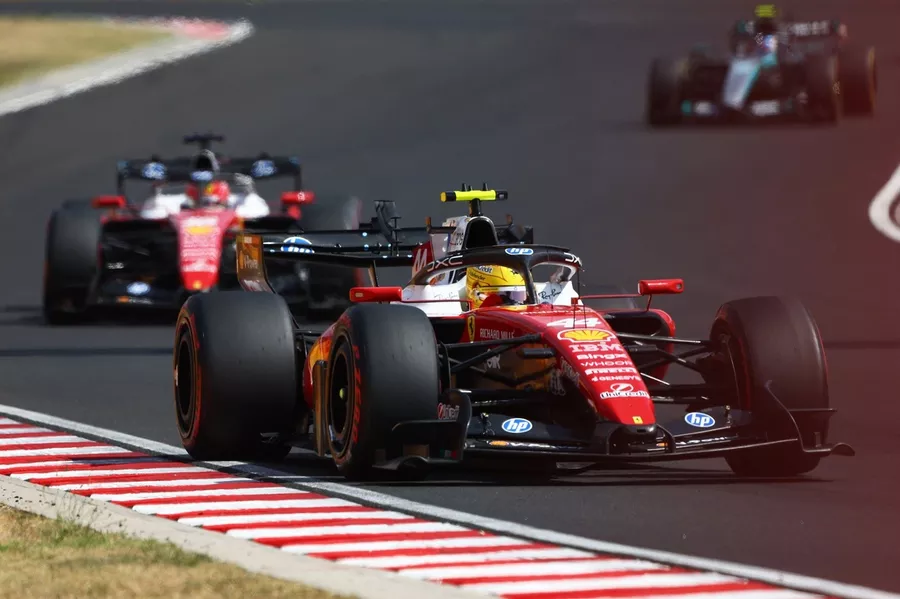
Lewis Hamilton lost valuable positions in the Hungarian Grand Prix after a sequence of pit lane errors resulted in a five-second penalty and another frustrating weekend for Ferrari.
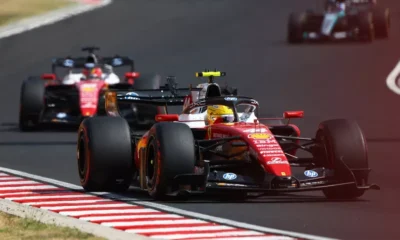
The Lewis Hamilton Hungarian GP penalty became one of the defining moments of Ferrari’s race at the Hungaroring. Running near the front under Virtual Safety Car conditions, Hamilton’s race unraveled after a series of mistakes during his pit stop ultimately resulted in a five-second penalty.
Moreover, Ferrari admitted that several small errors combined to turn what could have been a strong result into a disappointing finish.
Three Mistakes Changed Hamilton’s Race
Hamilton entered the pits while running second after the Virtual Safety Car was deployed.
However, the stop quickly became complicated. The Ferrari driver first locked his tires entering pit lane, then failed to position the car perfectly in his pit box, costing valuable time during the tire change.
Finally, Hamilton activated the pit lane speed limiter too early, causing the car to exceed the speed limit by just 0.1 km/h as he exited the pits. Although the margin was extremely small, the stewards still issued a five-second penalty.

Lewis Hamilton received a five-second penalty after exceeding the pit lane speed limit by just 0.1 km/h.
Ferrari Admits a Chain of Errors
Ferrari team principal Frédéric Vasseur acknowledged that the team made too many mistakes throughout the weekend.
According to Vasseur, the pit stop was affected by a succession of small errors rather than a single major problem. Consequently, Hamilton lost track position and dropped behind rivals after serving the penalty.
Furthermore, Ferrari admitted the execution during the stop failed to match the pace the team needed while fighting at the front.

Ferrari admitted that several mistakes during the pit stop contributed to Hamilton’s disappointing result.
Another Difficult Weekend for Hamilton
The Hungarian Grand Prix added to a growing list of penalties for Hamilton in recent races.
Earlier weekends also featured sanctions following incidents at Silverstone and Spa-Francorchamps, while Hamilton received a three-place grid penalty in Hungary after impeding Oscar Piastri during qualifying.
As a result, Ferrari left Budapest believing the team’s pace was competitive but recognizing that execution ultimately prevented a stronger finish.

Hamilton’s Hungarian Grand Prix became another frustrating weekend despite Ferrari’s competitive pace.
-

 TEST DRIVES2 months ago
2026 Subaru Outback Touring
-
 TEST DRIVES2 months ago
Lamborghini prepares multiple launches for 2026 as electrification plans continue
-
 TEST DRIVES2 months ago
2026 Hyundai Santa Cruz Limited AWD
-
 INTELLIGENT MOBILITY1 month ago
2026 Cadillac Escalade IQL Redefines Luxury In The Electric SUV Segment
-
 RACING2 months ago
Barcelona-Catalunya Grand Prix: Everything You Need To Know About Formula 1’s Ultimate Benchmark Circuit
-
 RACING2 months ago
George Russell Leads Final Barcelona Practice As Kimi Antonelli Receives Reprimand
-
 RACING2 months ago
Why Formula 1 Has Pit Lane Speed Limits And How They Are Measured
-
 NOW TRENDING2 months ago
Porsche Creates A Buzz Lightyear-Inspired 911 GT3 RS That Looks Ready To Go “To Infinity And Beyond”
You must be logged in to post a comment Login