
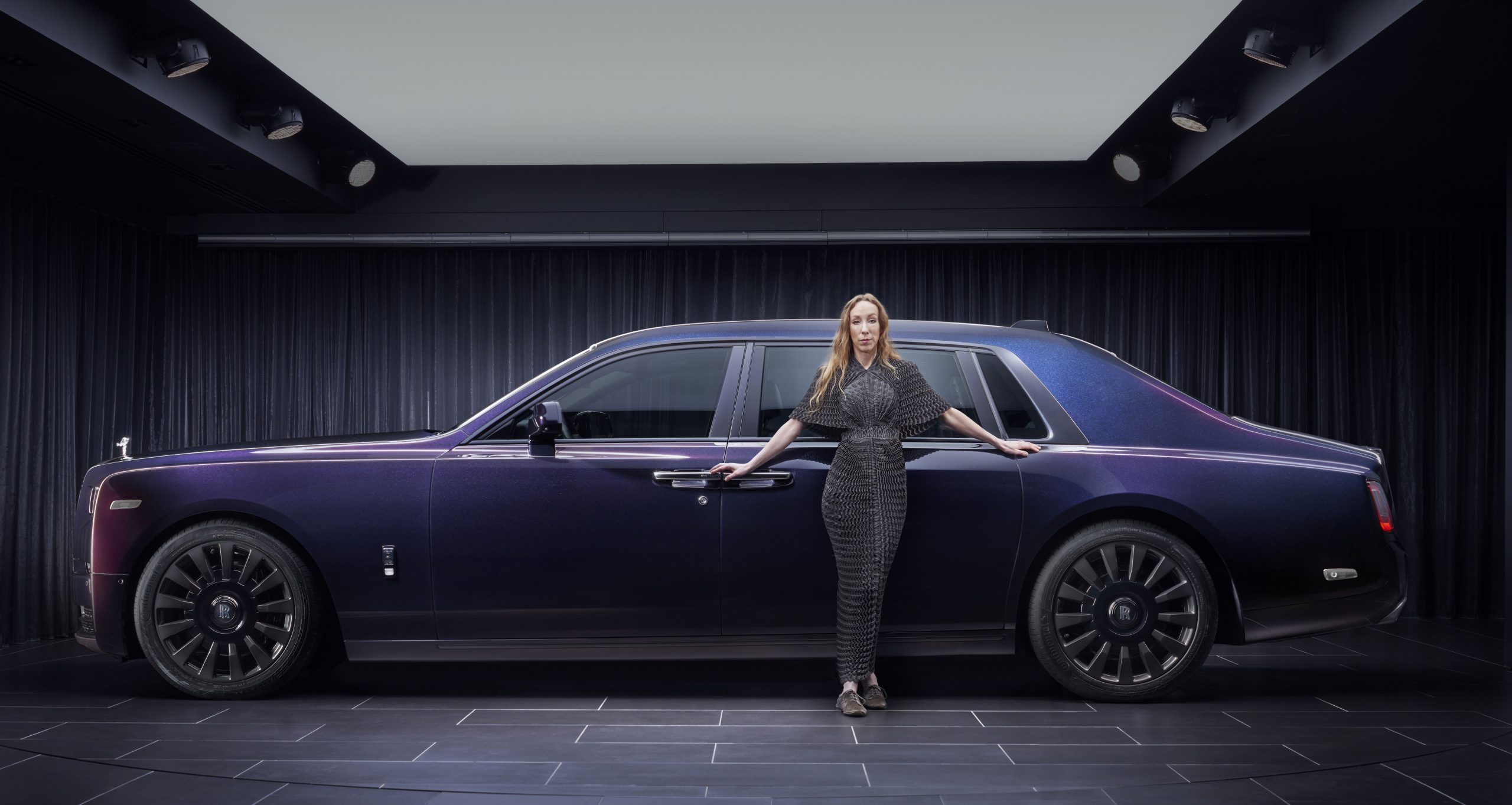
“Phantom Syntopia is the most ambitious, singular and highly Bespoke Phantom we have ever created, and a clear statement of Rolls-Royce’s standing as a true luxury house. Building on two decades of joint undertakings with the world’s most celebrated design houses, artists, horologists and jewellers, Phantom Syntopia secures Phantom’s standing as the ultimate blank canvas for Bespoke personalisation. In collaborating with internationally renowned designer and Haute Couturière Iris van Herpen, we once again redraw the boundaries of innovation, craftsmanship and Bespoke possibility; not just for a motor car but across the wider luxury sector.”
Torsten Müller-Ötvös, Chief Executive Officer, Rolls-Royce Motor Cars

“For this special collaboration I was inspired by the concept of ‘Weaving Water’ and transformed the sense of being in movement into an immersive experience of fluidity inside the Phantom. I wanted this to become a state-of-the-art experience being overwhelmed by the forces of nature. The powerful movement of the Phantom is woven into the shifting three-dimensional waves inside the car to embody the ingenuity of nature.
“When I met the Bespoke Collective, I discovered that the world of Rolls-Royce is very similar to Haute Couture. Every garment I create is a one-off, tailor-made to my clients’ individual measurements, just like every Rolls-Royce.My clients come to our atelier in Amsterdam for fittings, just as Rolls-Royce clients are invited to Goodwood throughout the design and craft process. On many levels, this collaboration was a natural symbiosis.”
Iris van Herpen
Rolls-Royce Motor Cars today unveils Phantom Syntopia, an intricate, Haute Couture-inspired masterpiece created in collaboration with renowned Dutch fashion designer and Haute Couturière Iris van Herpen. Based on Phantom Extended – the ultimate blank canvas for personalisation – it is the most technically complex commission ever undertaken by the Rolls-Royce Bespoke Collective. Now, after four years of continuous development, this extraordinary and unique creation is complete; it will soon take its place in the private collection of discerning patrons of the brand.
Phantom Syntopia takes its name from Iris van Herpen’s landmark 2018 collection, designed on the principles of biomimicry in which art is inspired by patterns and shapes found in nature. Like the collection, which comprises a series of highly sculptural garments brought to life through movement, Phantom Syntopia seeks to represent the elusive, ethereal beauty of fluid motion in solid materials through its ‘Weaving Water’ theme.
“From the very beginning, this truly was a meeting of minds: two luxury houses that share the innovative vision and ambition to transcend the boundaries of luxury design,” says Gavin Hartley, Head of Bespoke Design, Rolls-Royce Motor Cars.“Together, we further explored the potential of Phantom as a perfect canvas for individualisation. Phantom Syntopia literally takes Rolls”‘Royce interior design into a new dimension with its immersive, sculptural elements, reinterpreting the elusive fragility of nature’s forms in a perfectly engineered reality.”
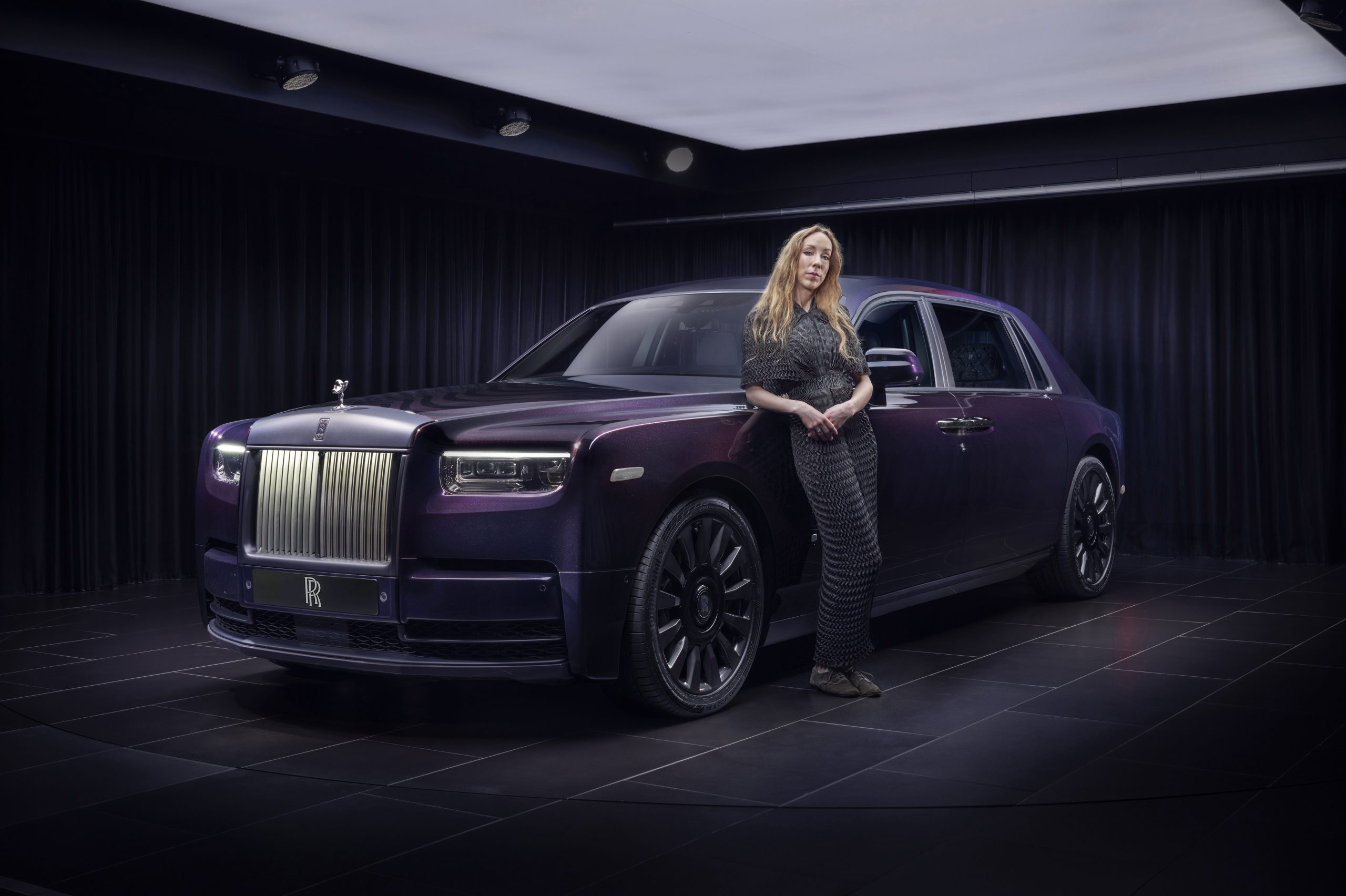
EXTERIOR COACHWORK: IRIDESCENT MAGNETISM
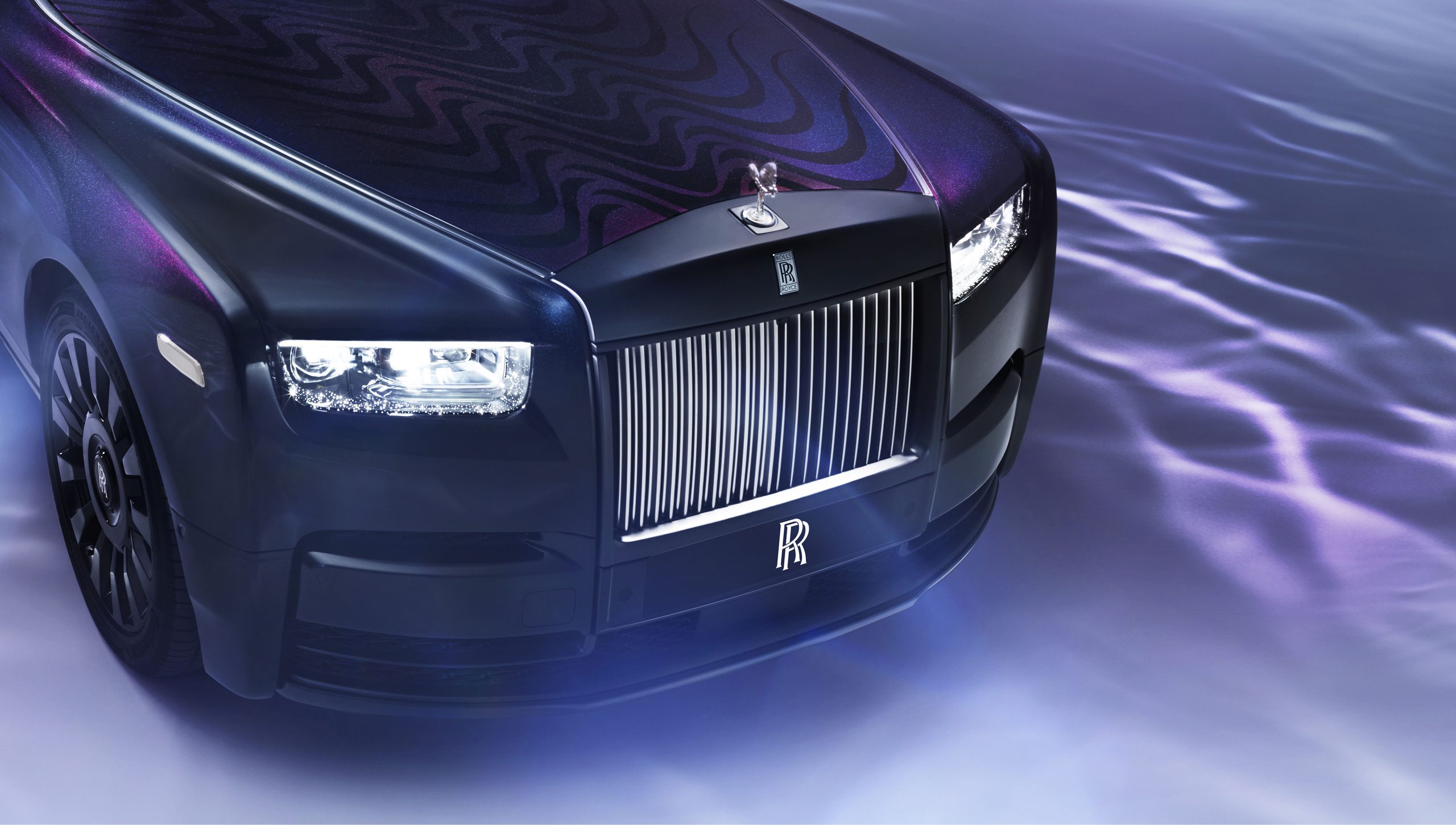
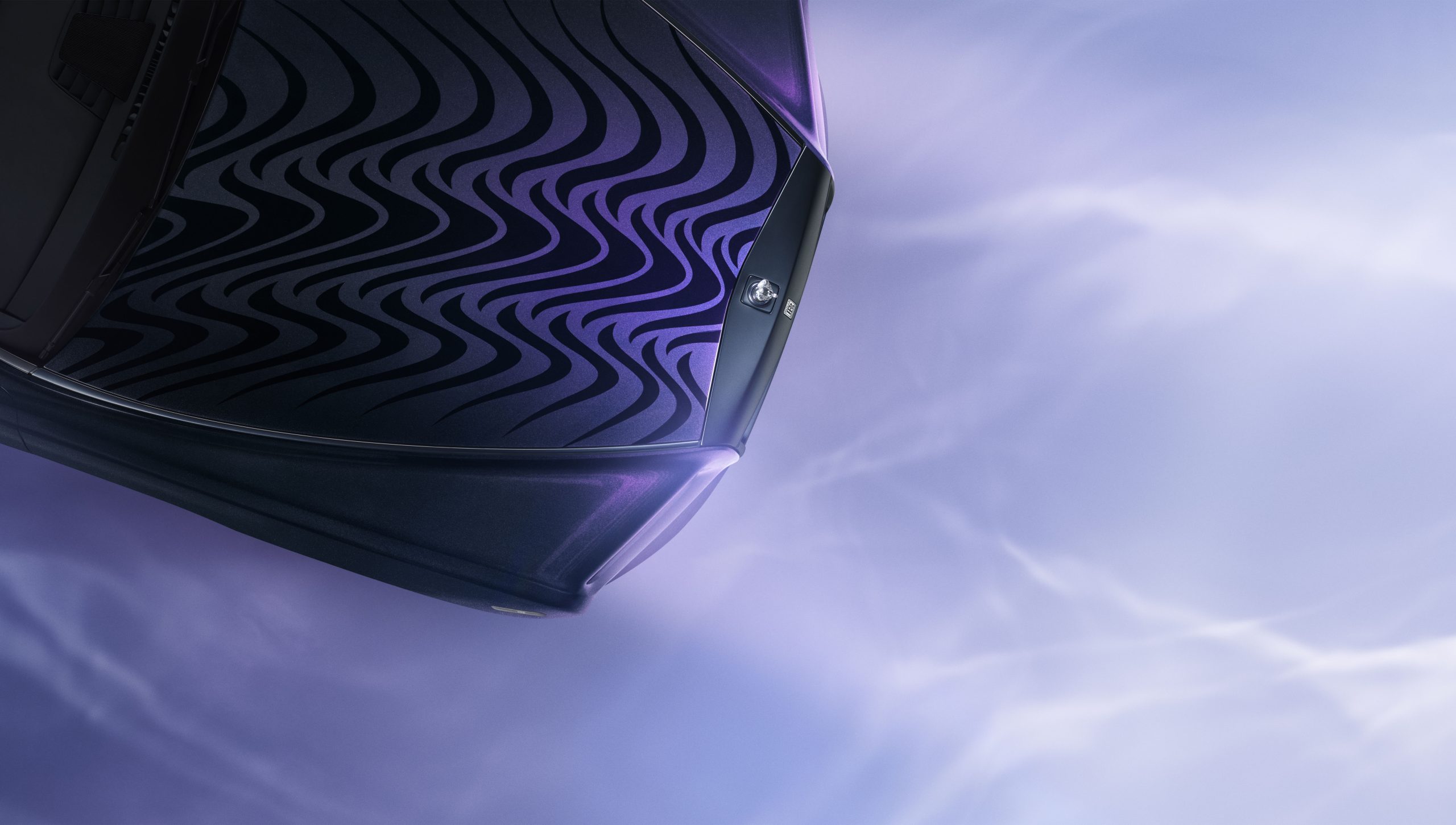
To create the stunning, shimmering exterior, the Rolls-Royce Bespoke Collective developed a one-off Liquid Noir paint. Iridescent in sunlight, it reveals Purple, Blue, Magenta and Gold undertones when viewed at different angles. To achieve this effect, the marque’s darkest solid-black paint is overlaid with a finish incorporating a mirror-like pigment, selected for its colour-shifting properties. To add a subtle, elegant shimmer, the team developed a brand-new technique for applying pigment to the clearcoat – a process that took several months, including over 3,000 hours of testing and validation alone.
On closer inspection, the motor car’s bonnet is seen to feature a subtle rendering of the Weaving Water motif that appears throughout the interior, produced by carefully redistributing the pigment during the finishing process.
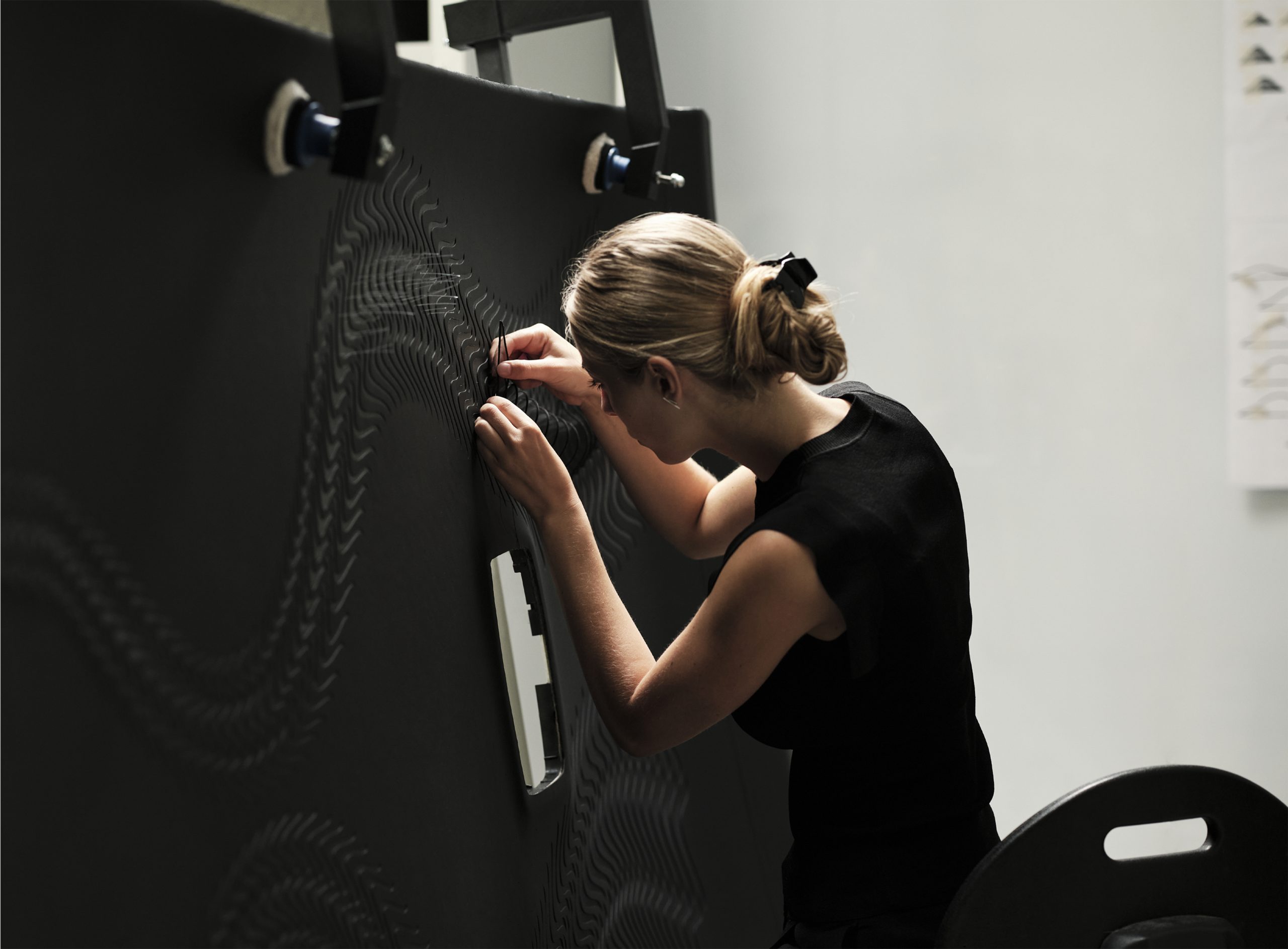
INTERIOR SUITE: THREE-DIMENSIONAL ART
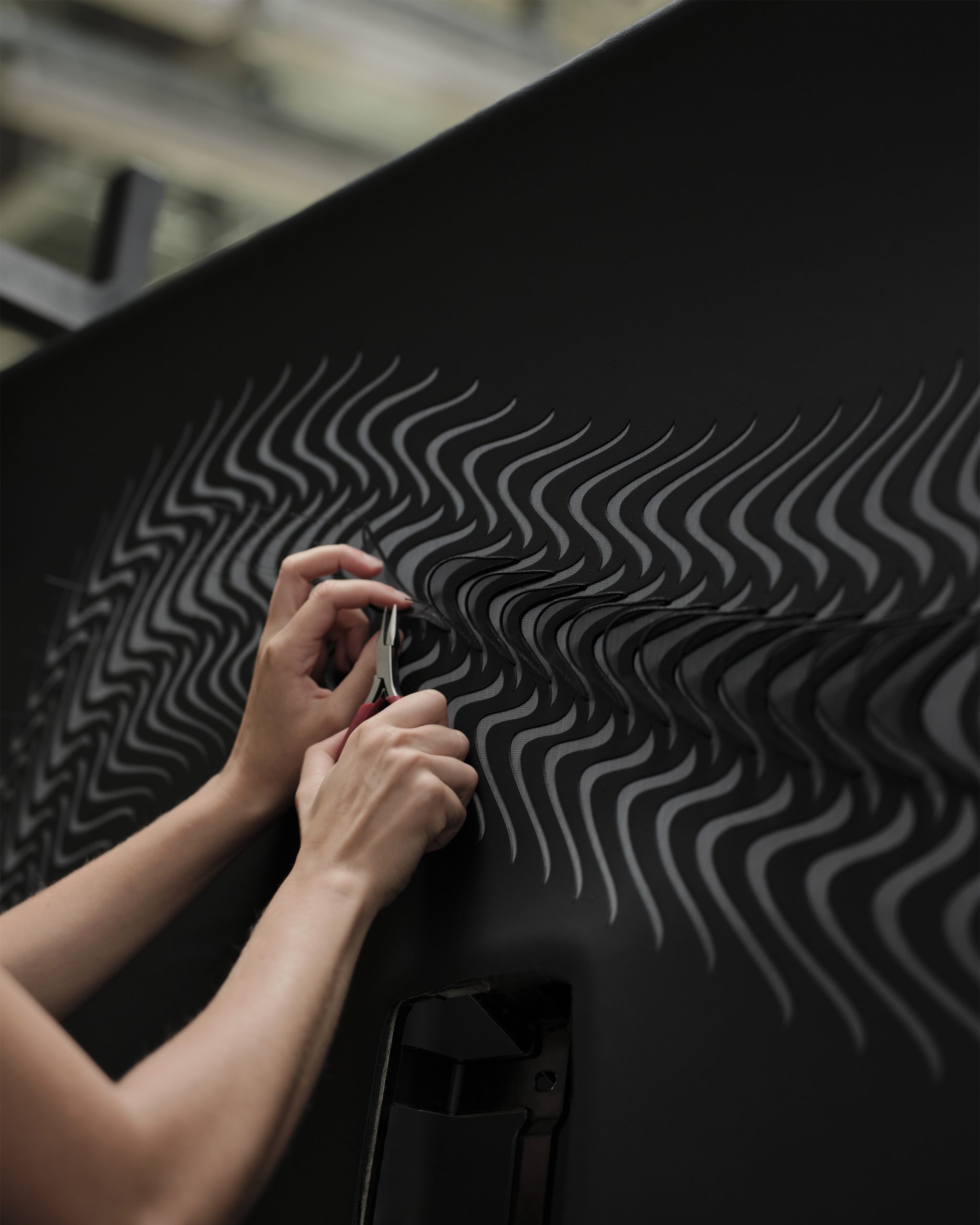
Phantom Syntopia’s interior suite incorporates magnificent features which were co-created in a creative and technical meeting of minds by the Rolls-Royce Bespoke Collective and Iris van Herpen. Some interior elements were handcrafted at the Home of Rolls-Royce by the company’s leading craftspeople working alongside members of Iris van Herpen’s team, while others were created in Iris van Herpen’s Amsterdam atelier, alongside her Haute Couture garments.
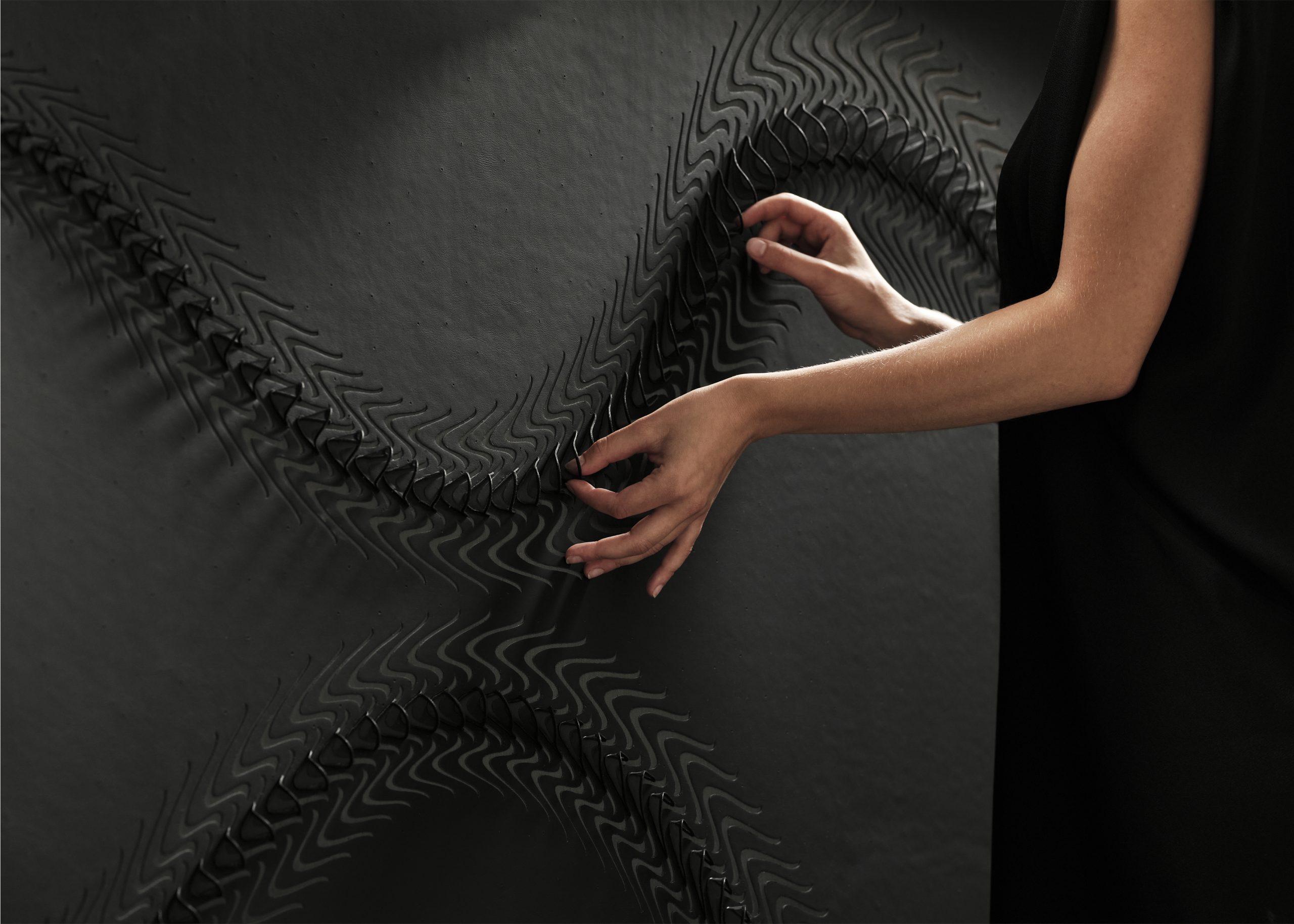
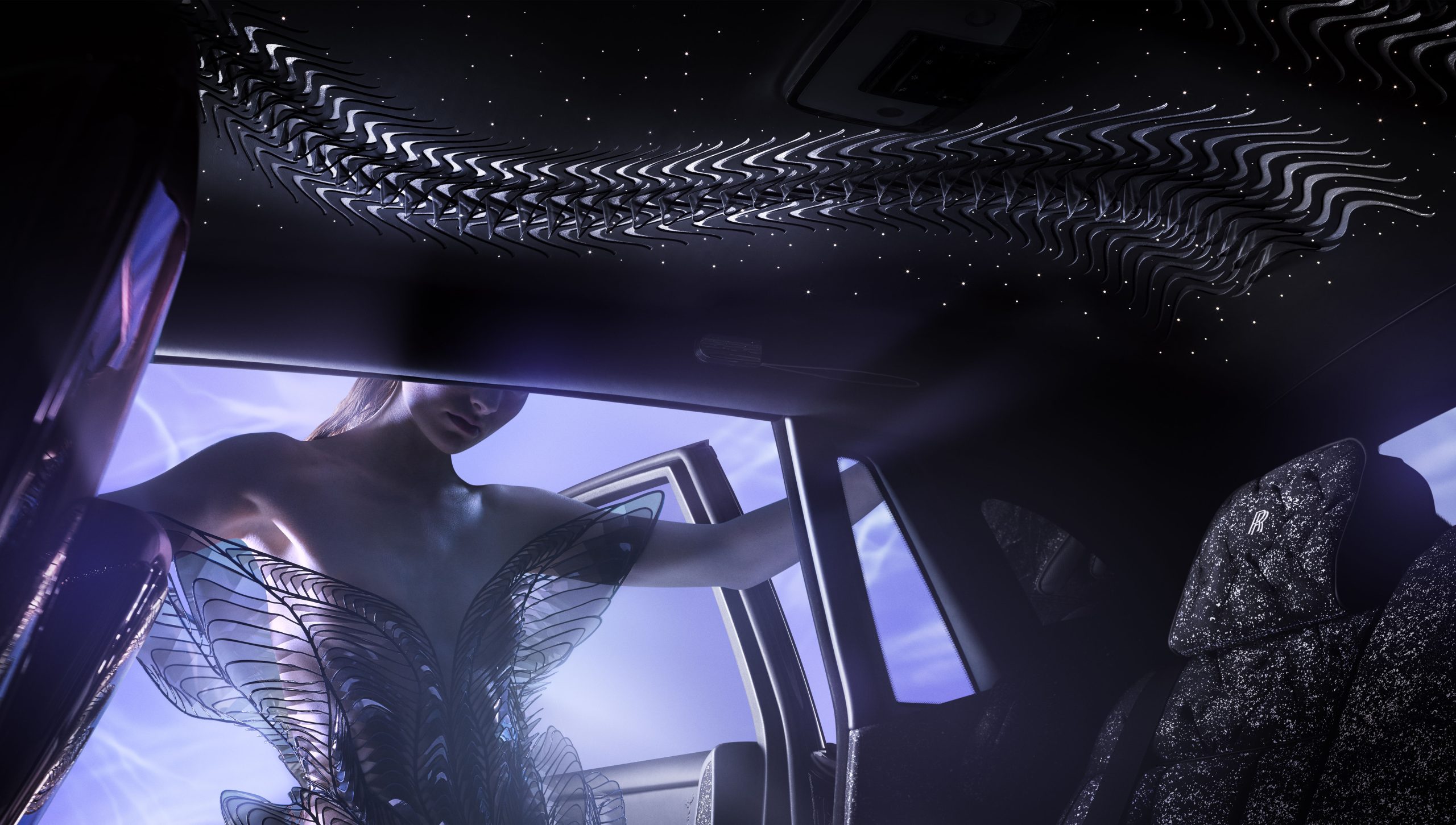
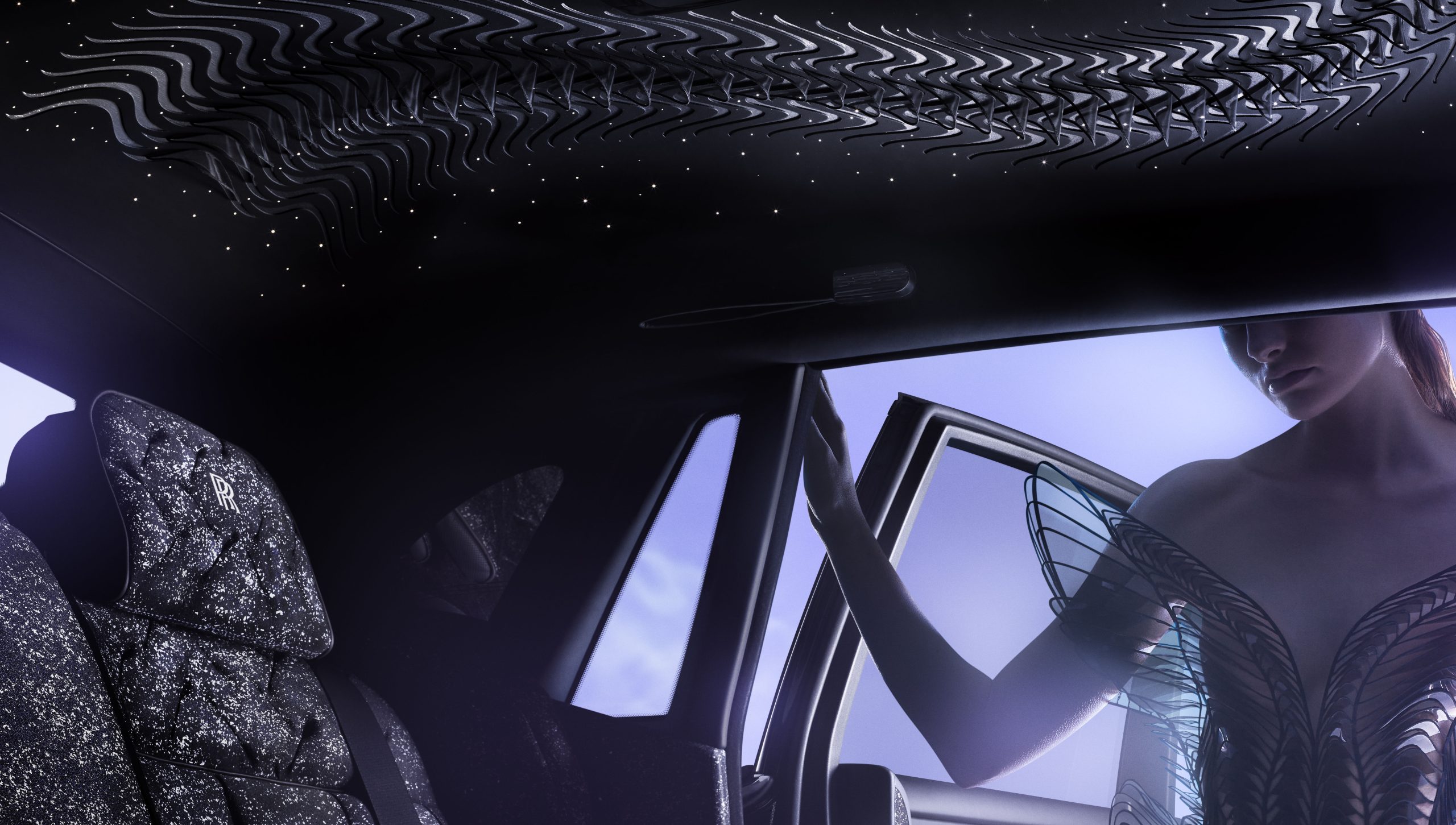
On opening the magnificent coach doors, the eye is immediately drawn to the Weaving Water Starlight Headliner, the most technically challenging version of this signature Rolls-Royce feature ever produced. It was crafted using a single sheet of flawless leather, selected from over 1,000 hides. Precise symmetrical cuts reveal a silver ‘liquid metal’ texture made from woven nylon fabric underneath, used in Iris van Herpen’s ‘Embossed Sounds’ collection, giving the Headliner a three-dimensional appearance. It is finished with 162 delicate petals made of glass organza, applied by members of Iris van Herpen’s Couture team who travelled to Goodwood to undertake the work – a process that took nearly 300 hours. In addition, 187 of the 995 sparkling fiberoptic ‘stars’ were individually placed by hand alongside the artwork; illuminating sequentially, starting from the rear and moving to the front, they create a feeling of movement. In total, the entire Headliner alone involved almost 700 collective hours of work.

The ‘Weaving Water’ theme continues throughout the unique artwork in the Gallery, which runs the width of the Phantom’s fascia. Combining traditional Haute Couture techniques and innovative visual forms, this highly expressive work includes a further 85 petals, which were also attached by hand by Iris van Herpen’s team working at Goodwood, representing almost 60 hours’ painstaking work.
The design to be found on the picnic tables and the passenger panel just below the Gallery mirrors the Weaving Water artwork on the bonnet. The motif was achieved by combining multiple coats of paint and lacquer containing different quantities of glass particles. First, the surfaces were covered with a black paint mixed with 0.9% glass particles. Then the artisans applied the Weaving Water motif with a clear coat mixed with 1.4% of shimmer – an extraordinarily complex process that took over three weeks to complete. Before commencing the work, the Exterior Surface Centre team had spent four months perfecting the formula, running nine trials before identifying the ideal proportion of glass particles: across the entire car, precisely one tablespoon has been used.

NEXT CHAPTER IN TEXTILE EXPLORATION
Phantom Syntopia continues the Bespoke Collective’s exploration of textiles. In homage to Rolls-Royce’s heritage, this unique motor car recalls an era where a driver’s seat was trimmed in hardwearing leather and the rear compartment in luxurious, inviting fabrics. The front seats of Phantom Syntopia are finished in Magic Grey leather, distinguished by its lustrous finish. The rear seats are upholstered with a specially created silk-blend fabric, featuring a distinctive pattern which recalls the patterns cast by light reflecting on water at night.
The seats are quilted with a Weaving Water motif, inspired by a tufting technique often employed in fine furniture-making in which embroidery is applied to the reverse side of the textile. This creates a three-dimensional depth while achieving a smooth, seamless, uninterrupted surface.
“The result of four years’ continuous development, Phantom Syntopia is a magnificent testament to the skill, talent, passion for materials and commitment to excellence of our exceptional Bespoke Collective team,”says Jonathan Simms, General Manager, Bespoke, Rolls-Royce Motor Cars.“To bring the client’s vision to life, our engineers and craftspeople pushed their own limits and challenged existing notions of what’s possible in their pursuit of perfection.Phantom Syntopia is the most technically complex commission we have ever created and it was an exceptional experience to work alongside and collaborate with the incredible team at Iris van Herpen’s atelier.”
AN IMMERSIVE EXPERIENCE: STIMULATING ALL SENSES
In keeping with the highly innovative approach taken with Phantom Syntopia, it is the first Rolls-Royce motor car to incorporate a Bespoke scent, creating a truly immersive expression of luxury. It was developed by an expert perfumer – now affectionately known as ‘the Nose of the Bespoke Collective’ – in close collaboration with the clients. Designed to create a lasting memory, the fragrance is subtle and perfectly complements other aromas arising from the materials used in the car.
The Bespoke fragrance expert tested numerous combinations before settling on the perfect blend. The core scent is cedarwood and as part of this project’s constant quest for the ultimate in personalisation, the cedarwood used was carefully sourced specially from the clients’ home region. The scent’s base combines powdery notes of Iris, obtained using a fluid extraction technology, with added hints of leather, finally blended with rose from Patagonia and a mild lemon.
The specially-developed scent-releasing mechanism is housed within the headrests. This patented technology, which incorporates innovative materials originally used in the field of medicine, ensures the fragrance is released in suitably delicate doses for a long-lasting, sophisticated sensory experience. The development process took more than two years, including rigorous testing in both very hot and very cold temperatures, to ensure the scent maintains its distinctive profile in all conditions.
PINNACLE LUXURY MEETS HAUTE COUTURE
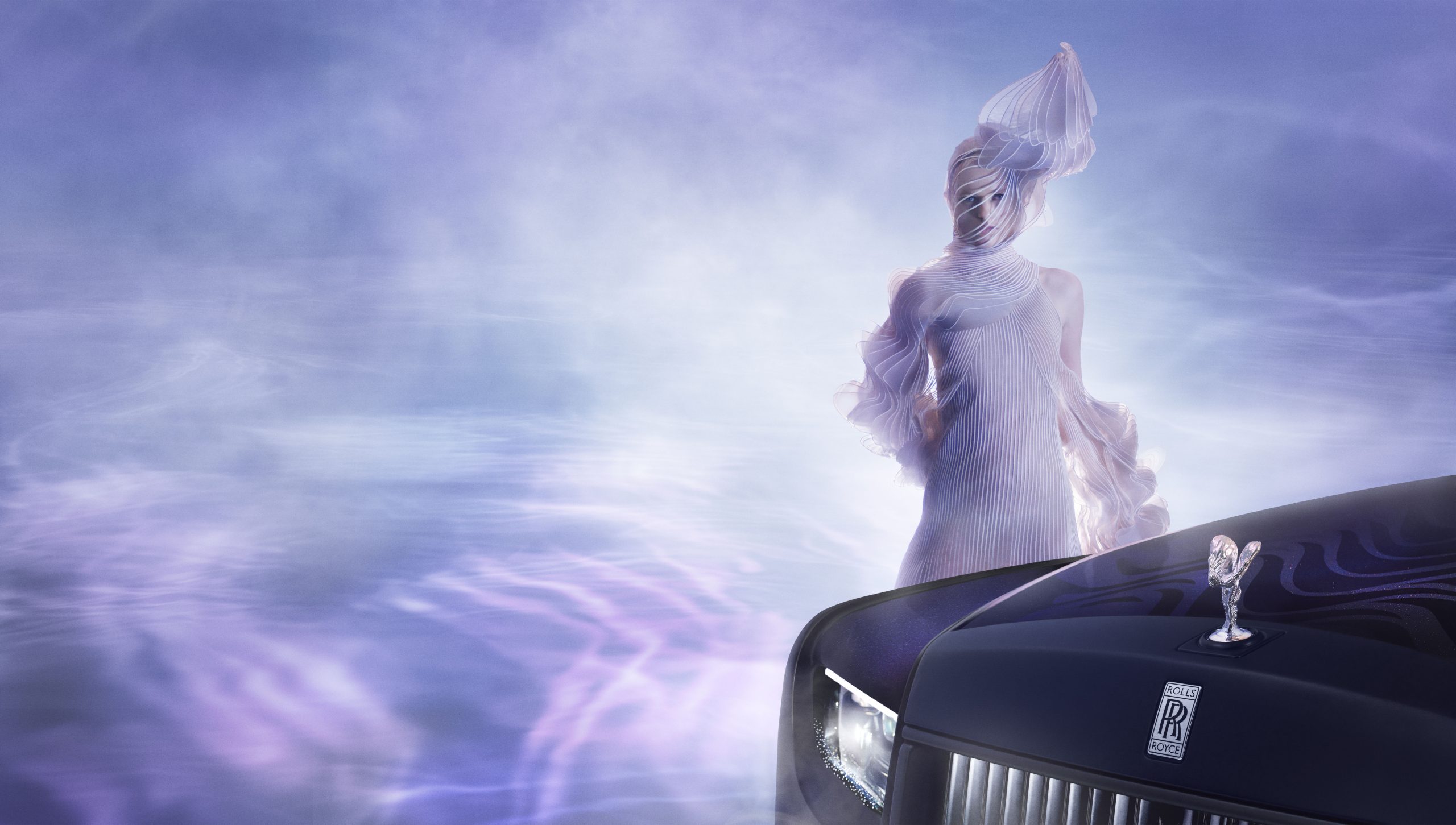
For a truly Haute Couture experience, Iris van Herpen will design a one-off garment especially for the clients of this transformative commission. The sculptural design of the dress echoes the Weaving Water theme explored in Phantom Syntopia’s Starlight Headliner, featuring an elegant application of the ‘liquid metal’ fabric and the glass organza petals, laser-cut and hand-stitched in a pattern resembling undulating waves. This exquisite garment, reflective of Iris van Herpen’s newly developed Haute Couture techniques, is expected to take around six months of work, including pattern development, crafting and applying the petals, embroidery, fitting and tailoring.
Phantom Syntopia will take its place in the clients’ private collection in May. As a true one-of-one commission, Rolls-Royce has undertaken that it will never be replicated.










Subaru’s new electric SUV combines 375 horsepower, standard all-wheel drive and up to 281 miles of estimated range.
The 2026 Subaru Trailseeker brings a new level of performance to the brand’s electric SUV lineup. With dual electric motors, 375 horsepower and standard all-wheel drive, the new crossover combines the utility Subaru buyers expect with acceleration that makes it the quickest vehicle the automaker has produced, according to the company.
The Trailseeker arrives as U.S. buyers gain more electric SUV options across different sizes, performance levels and price points. Its combination of power, ground clearance and cargo versatility gives Subaru a new way to appeal to drivers who want electric performance without giving up the capabilities associated with the brand.
2026 Subaru Trailseeker Offers 375 Horsepower
The Trailseeker uses two AC synchronous permanent-magnet electric motors, one mounted on each axle. Each motor produces 224 horsepower and 198 lb-ft of torque, while the combined system delivers up to 375 horsepower and 396 lb-ft of torque.

The 2026 Subaru Trailseeker combines a streamlined crossover design with a dual-motor electric powertrain.
Each motor forms part of an integrated transaxle that includes a single-speed reduction gear and power inverter. This configuration allows the vehicle to distribute power between the front and rear axles while supporting electronic torque management.
The result is a significant performance step for Subaru. The company says the Trailseeker can accelerate from 0 to 60 mph in 4.4 seconds, making it the brand’s quickest vehicle yet. Instant electric torque and the combined output of the two motors are central to that performance.
Subaru Trailseeker AWD Adds Off-Road Capability
All-wheel drive is a key part of the Trailseeker’s setup. Its electric motors drive both axles, while Subaru’s revised Symmetrical All-Wheel Drive system works with a dual-mode X-MODE system designed to improve traction on challenging surfaces.
Drivers can select Snow/Dirt or Deep Snow/Mud settings. The SUV also includes Grip Control and Hill Descent Control, features intended to help maintain control on slippery roads and uneven terrain.

The Trailseeker’s dual-motor AWD system and X-MODE settings are designed to support traction on varied surfaces.
Acceleration sensors at the front and rear provide information that helps the vehicle manage torque distribution and maintain stability. The system is designed to combine the rapid response of electric motors with Subaru’s focus on all-weather capability.
However, the Trailseeker’s specific off-road performance will depend on terrain, tires, ground clearance and driving conditions. Its traction technology should not be interpreted as a guarantee of capability on every surface.
Battery, Range and Charging Efficiency
The 2026 Trailseeker uses a 74.7-kWh lithium-ion battery pack containing 104 cells. The battery supplies energy to both electric motors, supporting the SUV’s combined power output while providing an estimated driving range of up to 281 miles.

The Trailseeker pairs its electric powertrain with the space and everyday utility expected from a Subaru crossover.

Larte Design gives Cadillac’s 682-hp luxury SUV an aggressive makeover with red accents and oversized aerodynamic elements.
The Cadillac Escalade-V already stands out for its supercharged V-8 and imposing size, but Larte Design has created an even more dramatic version. The Esthete body kit adds extensive carbon-fiber components, contrasting red details and an exterior design intended for owners who want their luxury SUV to attract attention.
The modified Escalade-V retains the model’s bold proportions while introducing a more extreme appearance. Its combination of gloss-black surfaces, red accents and oversized aerodynamic elements creates a sharp contrast with the relatively restrained styling of the standard SUV.
Cadillac Escalade-V Gets an Aggressive New Look
Cadillac updated the Escalade for the 2025 model year, but the Escalade-V maintained much of the same exterior design as other versions. Its performance credentials are less subtle: a supercharged 6.2-liter V-8 produces 682 horsepower, making it one of the most powerful versions of Cadillac’s full-size luxury SUV.

Larte Design gives the Cadillac Escalade-V a more dramatic appearance than the standard factory styling.
For buyers who want the vehicle’s exterior to reflect its performance, Larte Design offers the Esthete package. The body kit changes the SUV’s visual character through redesigned bodywork and contrasting finishes rather than relying on the factory design alone.
Dry Carbon Fiber and Red Exterior Details
The Esthete package features a two-tone exterior combining gloss black with red accents. Larte Design uses dry carbon fiber for the exterior components, including a vented hood, a redesigned front grille and extended wheel arches.

The Esthete package combines carbon-fiber components with gloss-black finishes and red detailing.
The modifications continue along the sides, where carbon-fiber rings surround the 24-inch multispoke wheels. At the rear, a spoiler and diffuser add further visual emphasis, giving the Escalade-V a more motorsport-inspired appearance.
The prominent front splitter is another defining feature. Although it contributes to the kit’s aggressive styling, its low, projecting shape could require extra care around steep driveways, parking curbs and other obstacles. Owners considering the package should also confirm ground clearance and any practical limitations associated with the added bodywork.
Larte Design Focuses on Visual Impact
Larte Design has built a reputation for bold exterior modifications for high-performance luxury vehicles, including the Mercedes-AMG G 63, BMW X6 M and Lamborghini Urus. The company’s approach generally emphasizes a more distinctive appearance than the original factory styling.

The rear design adds a prominent spoiler and diffuser to the modified luxury SUV.
The company has also explored unconventional finishes in previous projects. One earlier Escalade-related design featured pink carbon fiber, with the color incorporated into the material’s weave rather than applied only as a tinted surface coating.
The Esthete package follows that same emphasis on visual differentiation. Its combination of dry carbon-fiber components, red detailing and oversized exterior elements is aimed at customers who want their Escalade-V to be immediately recognizable.
The modifications are primarily about styling, and the supplied information does not establish any additional engine output or performance gains from the body kit. The Escalade-V’s headline specification remains its factory-rated 682-horsepower supercharged V-8. For buyers who prefer a more understated luxury SUV, the standard design may be the better fit; for those seeking maximum visual impact, Larte Design offers a far more conspicuous alternative.

The three-row SUV earns recognition for its 329-hp hybrid system, all-wheel-drive capability and long estimated driving range.
The 2026 Hyundai Palisade Hybrid has earned a place on WardsAuto’s 10 Best Engines & Propulsion Systems list, highlighting the SUV’s combination of power, efficiency and everyday utility. Its turbocharged hybrid powertrain delivers 329 horsepower and an estimated driving range of up to 619 miles, according to Hyundai.
The award marks Hyundai’s 18th product win in the competition and the second time one of its three-row SUVs has received recognition from the program. The annual awards evaluate powertrain technology, performance and efficiency, giving manufacturers an opportunity to demonstrate advances in conventional, hybrid and electric propulsion.
Hyundai Palisade Hybrid Combines Power and Efficiency
The 2026 Hyundai Palisade Hybrid uses a 2.5-liter turbocharged four-cylinder engine paired with an electrified powertrain. The system produces a combined 329 horsepower and 339 lb-ft of torque, giving the large SUV performance intended to suit family travel and longer journeys.

The 2026 Hyundai Palisade Hybrid combines a three-row layout with a turbocharged hybrid powertrain.
Power is delivered through a six-speed automatic transmission. Buyers can choose front-wheel drive or Hyundai’s HTRAC all-wheel-drive system, allowing the Palisade Hybrid to serve drivers with different traction and driving requirements.
Hyundai estimates more than 30 mpg on the highway, while the SUV’s estimated 619-mile driving range is intended to reduce the need for frequent fuel stops. These figures are manufacturer estimates, and actual results can vary depending on driving conditions, configuration and driving style.
All-Wheel Drive and Towing Capability
The Palisade Hybrid is designed to combine improved fuel efficiency with the utility expected of a three-row SUV. Its available HTRAC all-wheel-drive system uses a mechanical arrangement intended to provide traction on slippery surfaces, according to Hyundai and WardsAuto’s award commentary.

The available HTRAC all-wheel-drive system adds traction capability to the hybrid SUV.
The hybrid model also has an estimated maximum towing capacity of 4,000 pounds. That figure adds versatility for owners who need to tow compatible small trailers or recreational equipment, although the actual permissible load depends on vehicle configuration and applicable towing requirements.
Hyundai has also introduced Stay Mode, a function designed to monitor the hybrid battery system while the vehicle is parked. It allows extended use of selected features, including the infotainment system and climate controls, helping support an experience that draws on some of the conveniences associated with electric vehicles.
Why the Hyundai Palisade Hybrid Won the Award
WardsAuto judges assessed 26 powertrain nominees under real-world driving conditions. Their evaluation considered horsepower, torque, noise, vibration and harshness (NVH), observed efficiency and technological innovation.

The Palisade Hybrid pairs its electrified powertrain with technology designed for everyday family use.
The judges highlighted the combination of smooth, quiet hybrid operation and mechanical all-wheel-drive capability. That balance is particularly relevant in a large SUV, where buyers may want strong performance and traction without sacrificing fuel economy.
The award is part of a broader evaluation process in which only all-new or significantly improved powertrains, along with returning winners from the previous year, are eligible. Hyundai’s latest recognition reflects the engineering behind the Palisade Hybrid’s propulsion system rather than the vehicle’s design or technology package alone.
For the 2026 model year, the Palisade Hybrid strengthens Hyundai’s position in the three-row SUV segment by combining a 329-hp output, available all-wheel drive, an estimated 4,000-pound towing capacity and a long claimed driving range. The award recognizes that balance of performance and efficiency, while real-world fuel economy and range will depend on how and where the vehicle is driven.
-
 NOW TRENDING2 months ago
Tesla Cybercab Gets September 3 Austin Launch Date
-
 TEST DRIVES2 months ago
2025 Ford Bronco Sport Badlands: The Adventure SUV You Can Drive Every Day
-
 TEST DRIVES2 months ago
2026 Toyota GR Supra MkV Final Edition
-
 NOW TRENDING1 month ago
Aston Martin DBX Becomes Harry Da Souza’s Ride in MobLand
-
 NOW TRENDING2 months ago
Tesla Cybercab Puts U.S. Regulations to the Test
-
 Formula12 months ago
FIA Reveals Second ADUO Results With Red Bull-Ford Still on Top
-
 NOW TRENDING2 months ago
2027 Hyundai Tucson Hybrid Gets a Power Boost
-
 NOW TRENDING2 months ago
Hyundai Reports Strong Hybrid Sales in August 2026
You must be logged in to post a comment Login