
Formula1
McLaren Explains Why Norris Could Not Win at Madring


Lando Norris had the fastest car at Madring, but McLaren says the main problem was not his pit stop. The circuit itself made overtaking almost impossible.
Norris started from pole and quickly established control of the race. The McLaren driver built a lead of more than six seconds during the opening stages, putting himself in an ideal position before the Virtual Safety Car changed the strategy.
The timing of the neutralization forced Norris to stop after several rivals had already benefited from the reduced pit-lane time. However, Stella believes the final result would probably have been the same even with a faster stop.
Norris Had the Pace to Win
Norris had looked extremely comfortable at the front during the first part of the race. He managed his tires while gradually increasing the gap to Kimi Antonelli behind him.
By the time the Virtual Safety Car was deployed, Norris had already passed the pit entry. That allowed Antonelli, Max Verstappen and George Russell to pit immediately while Norris had to complete another lap before making his stop.
The timing cost Norris valuable track position.
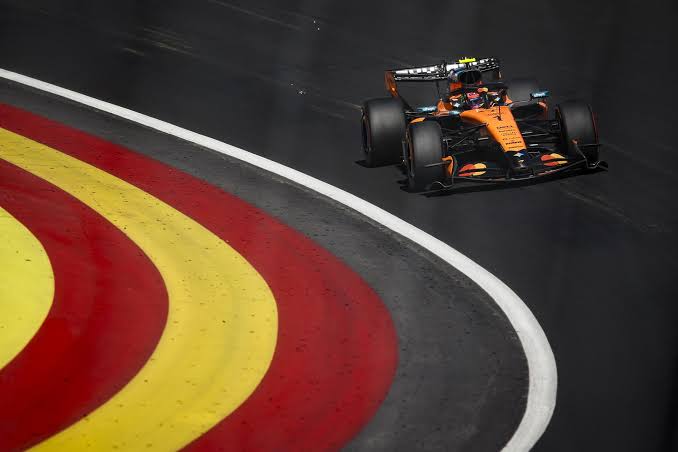
Lando Norris controls the opening stages of the Spanish Grand Prix after starting from pole position at Madring.
However, Stella does not believe the pit-stop deficit itself decided the race.
“Even if it had not been like this, it would not have been possible to overtake Verstappen and Antonelli,” he explained.
That distinction is important. McLaren acknowledges that its pit-stop operation needs reviewing, but the team does not believe a faster stop would have changed the final outcome.
Madring Made Overtaking Almost Impossible
The circuit’s layout became the bigger issue.
Only around 10 overtakes were recorded during the entire race, making Madring the least productive overtaking venue of the 2026 season so far. Even Monaco had produced more passing opportunities, with 11.
The problem was particularly obvious at Turn 5.
The braking zone was the circuit’s strongest opportunity to gain a position, but its positioning and narrow entry made side-by-side racing extremely difficult.
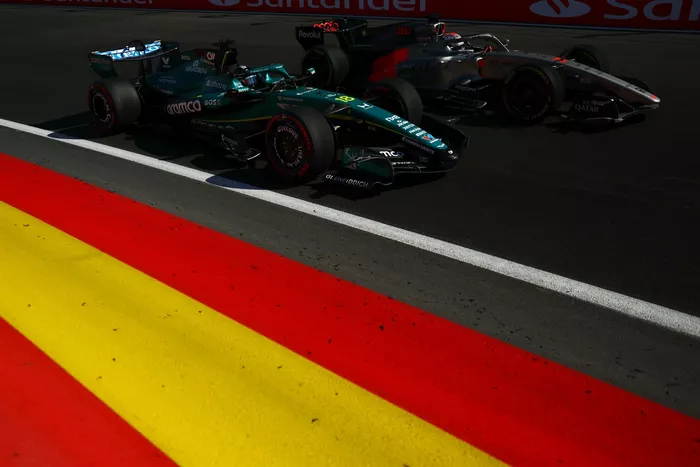
The narrow approach to Turn 5 made it extremely difficult for faster cars to turn a pace advantage into an overtaking opportunity.
Stella believes that the Formula 1 community may now need to consider modifications to the circuit before future races.
“It is a shame that it is so difficult to overtake,” Stella said. “You need a very, very large lap-time difference to overtake.”
The issue was not necessarily a lack of straight-line speed. Instead, the cars could not enter Turn 5 side by side without an extremely high risk of contact.
Norris Closed the Gap but Could Not Pass
The clearest evidence came late in the race.
After his recovery, Norris steadily reduced the gap to Verstappen and Antonelli. By Lap 48, the McLaren had caught the cars ahead and appeared to have enough pace to challenge for the lead.
But catching a car and overtaking it were two completely different tasks at Madring.
Norris had significantly more pace than Verstappen during the closing stages. Nevertheless, the Red Bull remained ahead because the circuit provided almost no realistic passing opportunity.
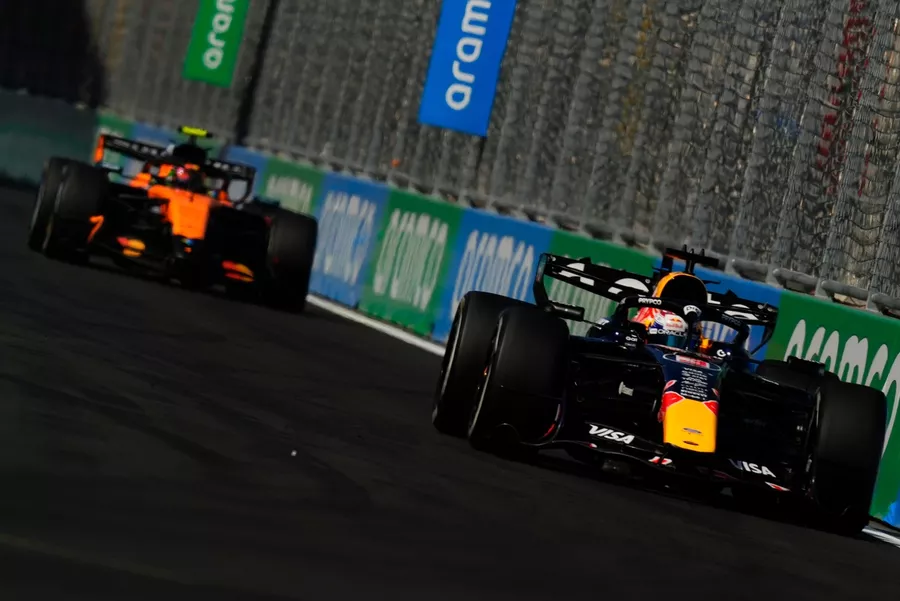
Norris had a clear pace advantage in the closing laps but could not find a way past Verstappen at Madring.
Stella believes that this was the decisive factor.
“If overtaking had been possible today, Lando would have recovered the lead,” he said, pointing to the significant pace advantage shown by the McLaren.
That assessment also explains why McLaren does not consider the slow pit stop the central reason Norris finished third.
McLaren Wants Changes at Madring
The first Spanish Grand Prix at Madring exposed a major weakness in the new circuit. Qualifying produced extremely close competition, but the race itself offered very few opportunities for drivers to use differences in pace.
Norris demonstrated that clearly. He started from pole, built a substantial advantage and later recovered much of the lost ground, yet he still could not convert that speed into a victory.
The result has already raised questions about whether the circuit needs changes to create more effective overtaking zones for future Formula 1 races.
Lando Norris Had the Fastest Car but Not the Track to Win
The Lando Norris Madring story ultimately became a demonstration of how circuit design can override raw car performance.
McLaren had the pace. Norris had the qualifying position. He also had enough speed late in the race to close down the leaders.
What he did not have was a realistic place to make the final move.
The Virtual Safety Car changed the race, and McLaren will review its slow pit stop. However, Stella’s central argument is that neither factor would have been enough to overcome Madring’s lack of overtaking opportunities.
At a circuit where even a significant pace advantage was not enough to complete a pass, Norris was left with a third-place finish despite having a car capable of winning the Spanish Grand Prix.








-

 NOW TRENDING2 months ago
Aston Martin DBX Becomes Harry Da Souza’s Ride in MobLand
-
 TEST DRIVES2 months ago
2026 Maserati GranTurismo Trofeo Review: Miami
-

 INTELLIGENT MOBILITY2 months ago
Tesla Cybercab Navigation Problem Hits Austin Robotaxis
-

 INTELLIGENT MOBILITY2 months ago
Tesla Cybercab Cannot Be Charged at Home—Here’s Why
-

 INTELLIGENT MOBILITY2 months ago
2027 Nissan Rogue Hybrid: e-POWER Comes to America
-

 TEST DRIVES2 months ago
2026 Maserati GranTurismo Coupe
-
 Formula12 months ago
Cadillac F1 2026 Faces an Eight-Race Logistics Challenge
-

 NOW TRENDING2 months ago
2027 Lexus LS Gets Another Update, But Not in America