
NOW TRENDING
Honda Pilot XXL: Bigger Three-Row SUV Could Arrive in 2032

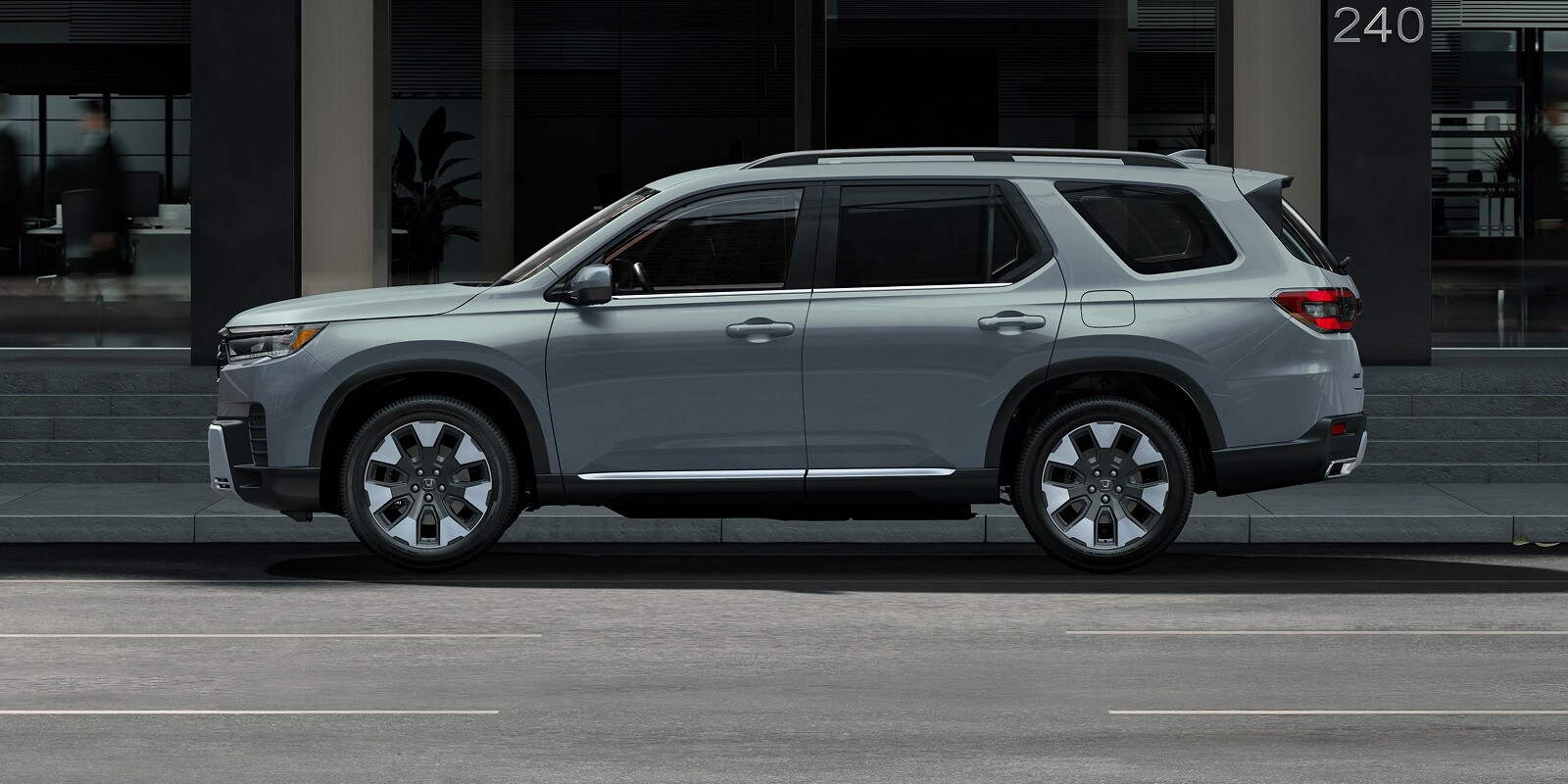
Honda is reportedly planning a larger three-row SUV above the Pilot, with a hybrid powertrain and more third-row space for U.S. buyers as early as 2032.
Honda could make the Pilot much bigger
Honda may be preparing a new flagship SUV for the United States.
According to a report citing a Honda planning document, the automaker is considering a vehicle known internally as the “Pilot XXL.” The proposed three-row SUV would sit above the current Pilot and could enter production in early 2032.
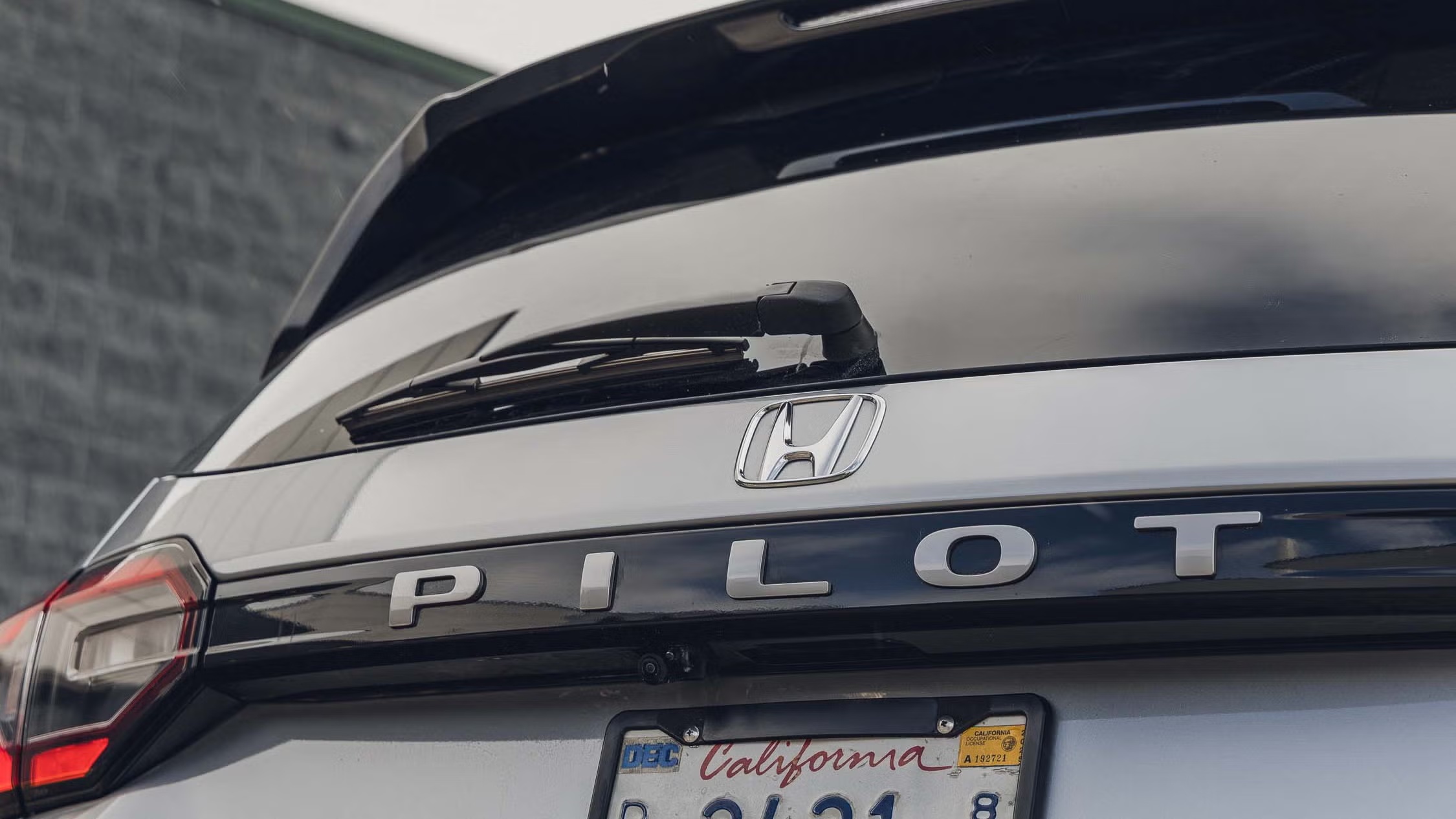
The current Pilot is Honda’s only three-row SUV and would provide the foundation for the reported larger flagship.
The reported vehicle would be about eight inches longer than today’s Pilot.
That would create additional room for passengers and cargo. It would also move the new Honda into a larger part of the three-row SUV segment.
The current Pilot measures 200.1 inches long in most configurations. Adding roughly eight inches would put the proposed SUV near the size of much larger three-row vehicles.
The third row is the main target
Honda already offers a spacious three-row Pilot.
The current model provides seating for up to eight passengers and offers as much as 113.7 cubic feet of cargo space with the seats configured appropriately.
However, competitors have moved further into the large-SUV segment.
The reported Pilot XXL would target vehicles such as the Toyota Grand Highlander and Ford Explorer, while adding more space than the current Pilot. The extra length could be used primarily to improve third-row legroom and cargo capacity.
That would give Honda a new model between its current Pilot and the largest SUVs sold in the U.S.
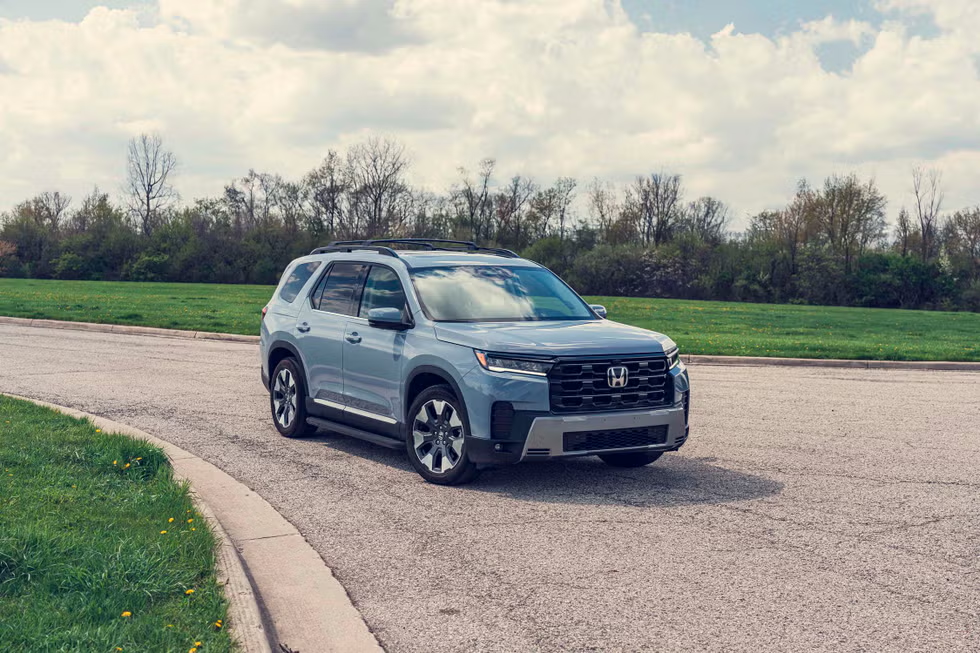
The Pilot TrailSport shows the rugged direction Honda has already taken with its current three-row SUV.
The current Pilot is already positioned as a family-oriented SUV with strong towing capability.
Honda rates the 2026 model for up to 5,000 pounds of towing when properly equipped. The available i-VTM4 all-wheel-drive system also provides additional traction.
The larger model could therefore keep those priorities while adding more passenger space.
A hybrid V6 could power the larger SUV
The powertrain may be one of the most important parts of the project.
Honda is preparing a new generation of hybrid technology for larger vehicles in North America. The company says it will launch D-segment and larger hybrid models in 2029 as part of its next-generation hybrid rollout.
Honda also says its next-generation hybrid system should improve fuel economy by more than 10% compared with the current system. The company is targeting a cost reduction of more than 30% for the hybrid system introduced in 2023.
The reported Pilot XXL could use this next-generation architecture.
According to the current report, the large SUV is expected to combine a V6 engine with multiple electric motors. An electric motor at the rear axle could also provide electronic all-wheel drive.
Honda has not confirmed those details.
The Pilot XXL could share a platform with Acura
The reported Honda would not be developed alone.
The same architecture is expected to underpin a new large three-row Acura SUV, reportedly called the Acura XL. That model is expected to enter production before the Honda, potentially in 2029.
The two vehicles would serve different parts of the market.
The Acura would target higher-end competitors such as the Lexus TX and Buick Enclave. The Honda could focus on the broader family-SUV market.
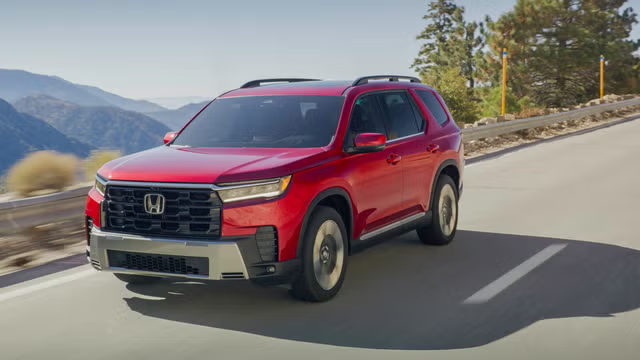
Honda’s current Pilot already offers three rows, while the reported XXL would add additional length and passenger space.
Production would also likely take place in North America.
Honda currently operates multiple plants across the region. The company is also evaluating how to expand its North American manufacturing footprint as it prepares for more hybrid production.
The reported annual production target for the Pilot XXL is more than 40,000 units. However, Honda has not confirmed a production plant or final volume.
Honda is shifting toward larger hybrids
The timing fits Honda’s wider product strategy.
Honda announced in May that it plans to launch 15 next-generation hybrid models globally by the end of fiscal 2029, with North America a primary region. The company is also making its North American plants capable of producing hybrid vehicles.
For large vehicles, Honda specifically says North America will receive D-segment and larger hybrid models from 2029.
That creates a clear technological path for a future flagship SUV, even though Honda has not officially connected that plan to the reported Pilot XXL.
Pricing and production remain unknown
Honda has not announced a price for the rumored SUV.
The current 2026 Pilot starts at $42,395 in the U.S. A future larger hybrid model would likely sit above it, but any specific price estimate remains speculative.
The production target is also still several years away.
The reported 2032 launch means Honda has plenty of time to finalize the design, powertrain, manufacturing location and positioning of the new SUV.
For now, the Honda Pilot XXL remains an unconfirmed program, but the reported plan would give Honda a much larger three-row SUV with more third-row space and a next-generation hybrid powertrain.
If the project reaches production in 2032, it would expand Honda’s U.S. lineup into a segment currently dominated by larger three-row SUVs such as the Grand Highlander and Explorer.










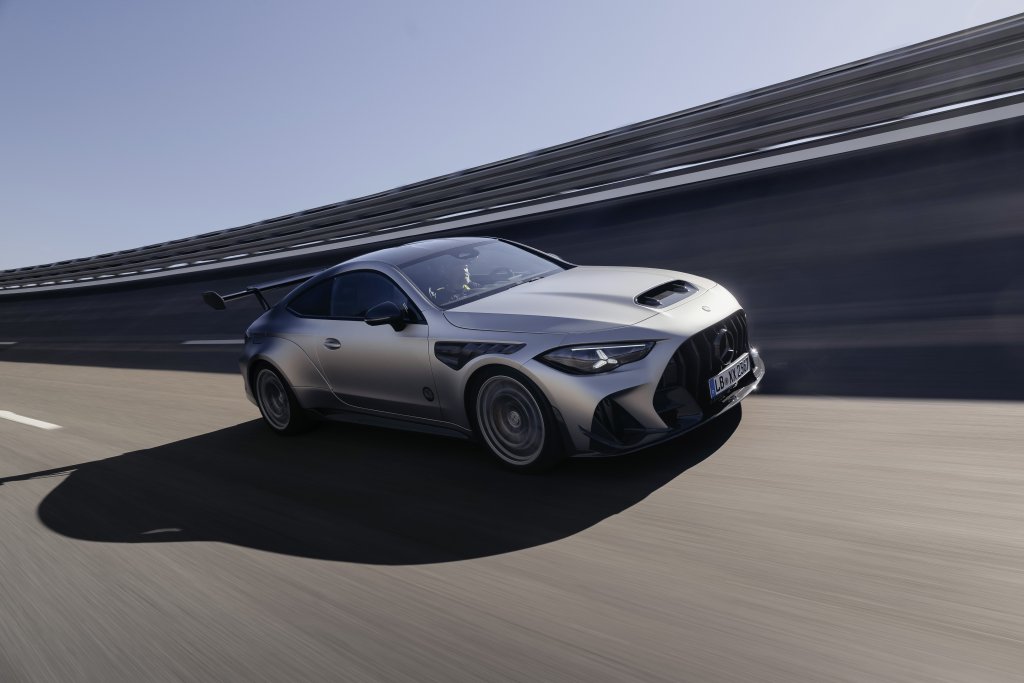
The Mercedes-AMG CLE 646 Spezialanfertigung adds a 637-hp twin-turbo V8, rear-wheel drive and extreme aero to the CLE, with only 30 cars built worldwide.
Mercedes-AMG gives the CLE a V8 transformation
Mercedes-AMG has created one of the most exclusive versions of its CLE Coupe.
The new Mercedes-AMG CLE 646 Spezialanfertigung uses a 4.0-liter twin-turbo V8 and sends all of its power to the rear wheels. Only 30 examples will be built worldwide. Every car is hand-built at AMG’s headquarters in Affalterbach.
There is another remarkable detail.
The entire production run was sold out before the car’s world premiere. Mercedes-AMG has not disclosed the purchase price.
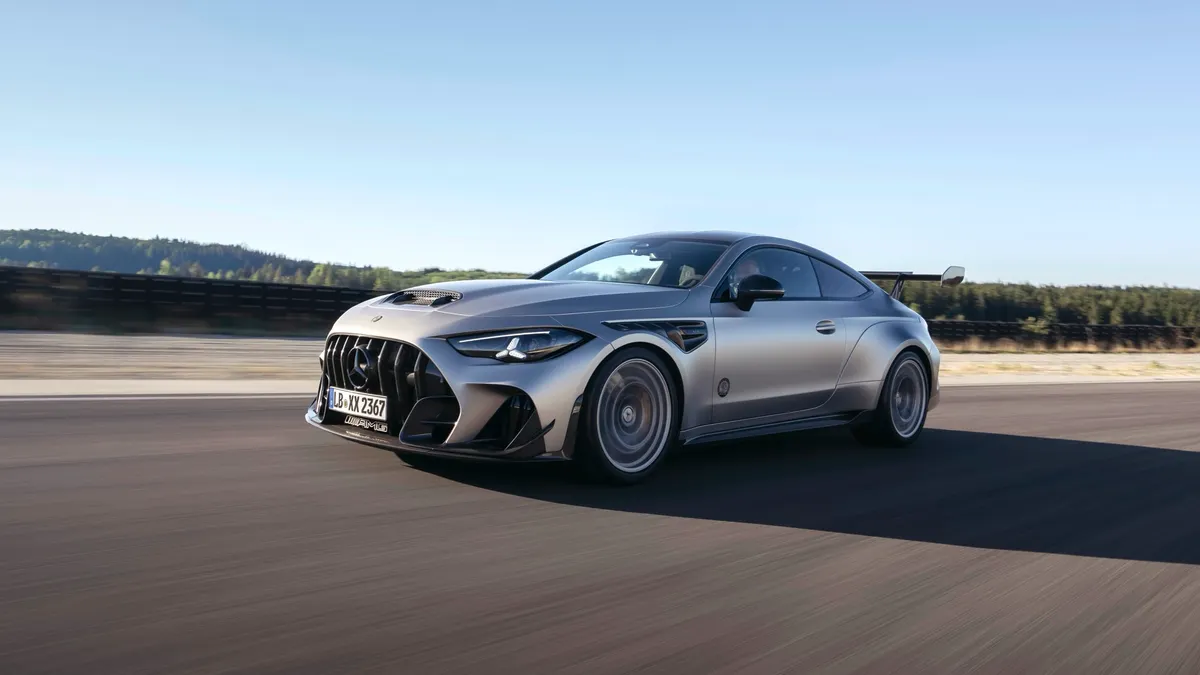
The CLE 646 is the second model in Mercedes-Benz’s limited Mythos Series.
The model begins life as a Mercedes-AMG CLE 53.
From there, AMG extensively changes the car. The modifications include a new drivetrain, wider bodywork, a dedicated suspension, revised aerodynamics and extensive weight reduction.
The result is much more than a cosmetic special edition.
Mercedes-AMG describes it as a complete performance system developed around driving dynamics.
The 4.0-liter V8 delivers 637 horsepower
The main attraction sits beneath the hood.
The CLE 646 uses the latest evolution of AMG’s M177 EVO 4.0-liter V8 biturbo engine. It produces 637 horsepower and 627 lb-ft of torque.
The engine uses a flat-plane crankshaft.
That reduces rotating mass and helps improve engine response. AMG also developed dedicated engine mapping to sharpen throttle response.
A bespoke high-performance exhaust system adds a stronger V8 character. Mercedes-AMG worked with Akrapovič on the exhaust’s cold-end design and used titanium to help reduce weight.
The transmission is an AMG SPEEDSHIFT TCT 9G automatic.
Rear-wheel drive replaces 4MATIC+
The drivetrain is one of the biggest changes.
The donor CLE 53 uses AMG Performance 4MATIC+ all-wheel drive. Mercedes-AMG removes that system completely for the CLE 646.
Power now goes exclusively to the rear wheels.
An electronically controlled limited-slip differential manages torque between the rear wheels. AMG says the system improves traction and stability while also allowing controlled drifting in suitable conditions.
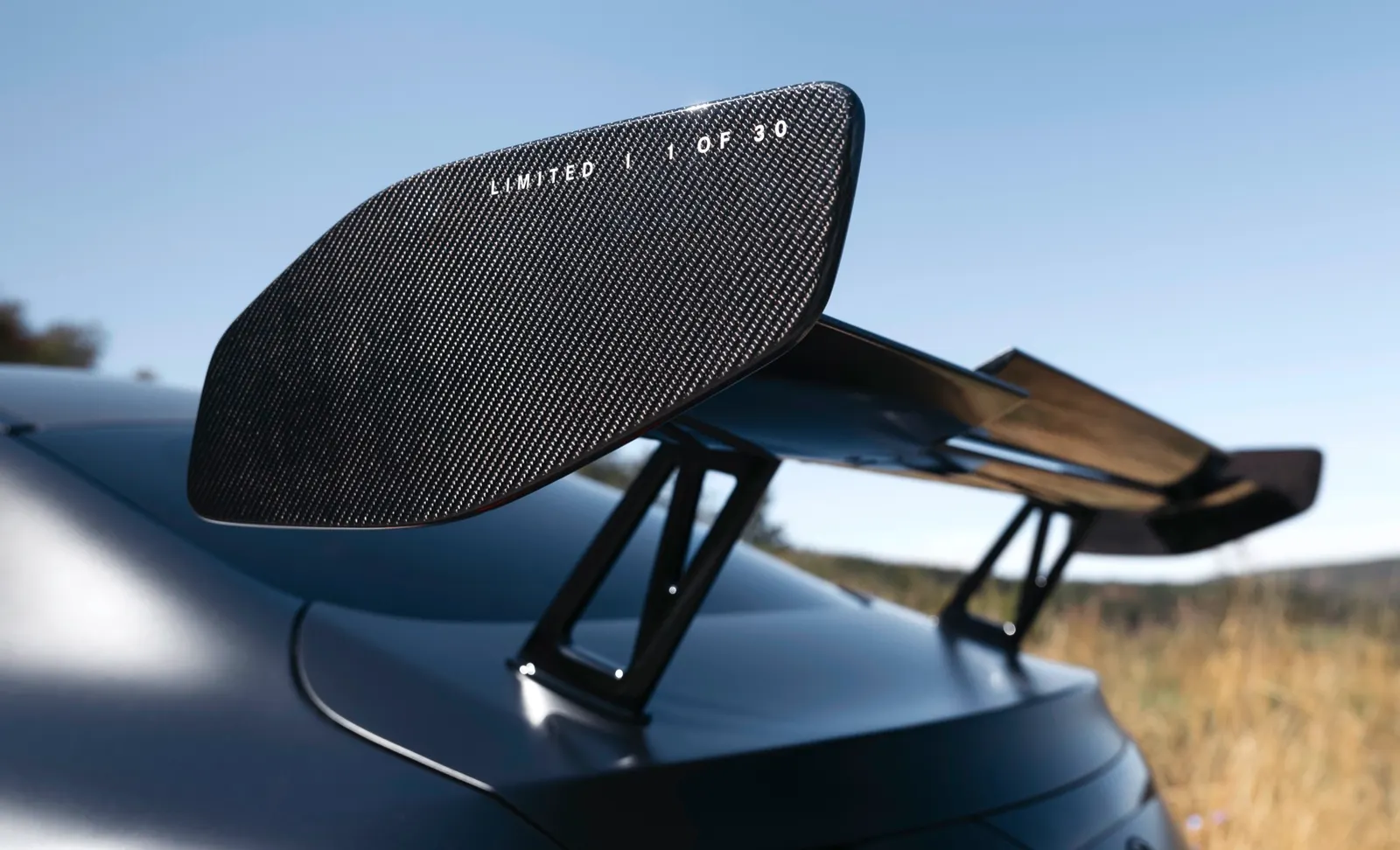
The large rear wing is part of the CLE 646’s dedicated aerodynamic package.
Performance figures are equally serious.
Mercedes-AMG quotes 0-62 mph in 3.9 seconds. The CLE 646 reaches 124 mph in 11.4 seconds and has a claimed top speed of 193 mph.
The coupe weighs 4,178 pounds.
That number would normally sound high for a two-seat performance coupe. AMG, however, reduced the CLE 646’s weight by roughly 375 pounds compared with the donor vehicle.
Carbon fiber makes the body wider and lighter
The CLE 646 is also considerably wider than the regular CLE.
The body is 2.4 inches wider at both the front and rear. AMG reinforces the body structure while adding extensive carbon-fiber components.
Carbon fiber is used for the front fenders, hood, roof, side sills, rear apron and other components.
The rear windows are made from polycarbonate. AMG also removes the rear seats and acoustic insulation to reduce mass.
The result is a much more focused two-seat configuration.
Suspension and brakes are built for the track
AMG developed a four-way adjustable coilover suspension with KW automotive.
The dampers can be configured independently for low- and high-speed compression and rebound. That gives owners the ability to adjust the chassis for different driving conditions and circuits.
The braking system is equally serious.
The CLE 646 receives AMG Ceramic High-Performance Composite Brakes. The front discs measure 16.5 inches, while the rear discs measure 14.2 inches.
The front brakes use six-piston fixed calipers.
AMG also developed additional cooling ducts to help control temperatures during intensive track use.
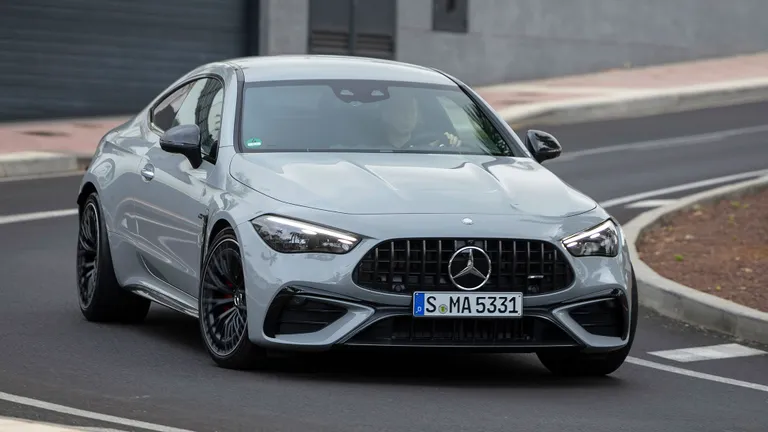
The two-seat cabin uses racing-style bucket seats, a roll bar and lightweight carbon-fiber components.
The aerodynamic package is another major part of the car.
The front diffuser can be manually adjusted between Street and Race positions. The rear wing can also be adjusted to increase rear downforce on a circuit.
Together, the aerodynamic elements generate more than 550 pounds of downforce at top speed.
That makes the CLE 646 much more track-focused than the standard CLE.
Its wheels are also significantly wider.
AMG fits 20-inch forged wheels, measuring 11 inches wide at the front and 12 inches at the rear. The tires measure 305/30 ZR20 up front and 335/30 ZR20 at the rear.
The second Mythos Series model
The CLE 646 is the second model in the Mercedes-Benz Mythos Series.
The first was the Mercedes-AMG PureSpeed, limited to 250 units worldwide.
The CLE 646 goes even further with only 30 examples. Each one is individually hand-built at AMG’s Affalterbach headquarters.
Mercedes-AMG has not announced the price.
However, the fact that all 30 examples were sold before the public unveiling shows the car’s position as a collector-focused model.
For the U.S. market, the vehicle has been featured in the Mercedes-Benz USA Media Newsroom, although the 30-car production run is global and Mercedes-Benz has not publicly disclosed how many examples, if any, are allocated specifically to the United States.
The Mercedes-AMG CLE 646 Spezialanfertigung therefore turns the familiar CLE into an ultra-limited V8 performance machine. With 637 hp, rear-wheel drive, a 193-mph top speed and more than 550 pounds of downforce, it represents one of AMG’s most focused special builds yet.
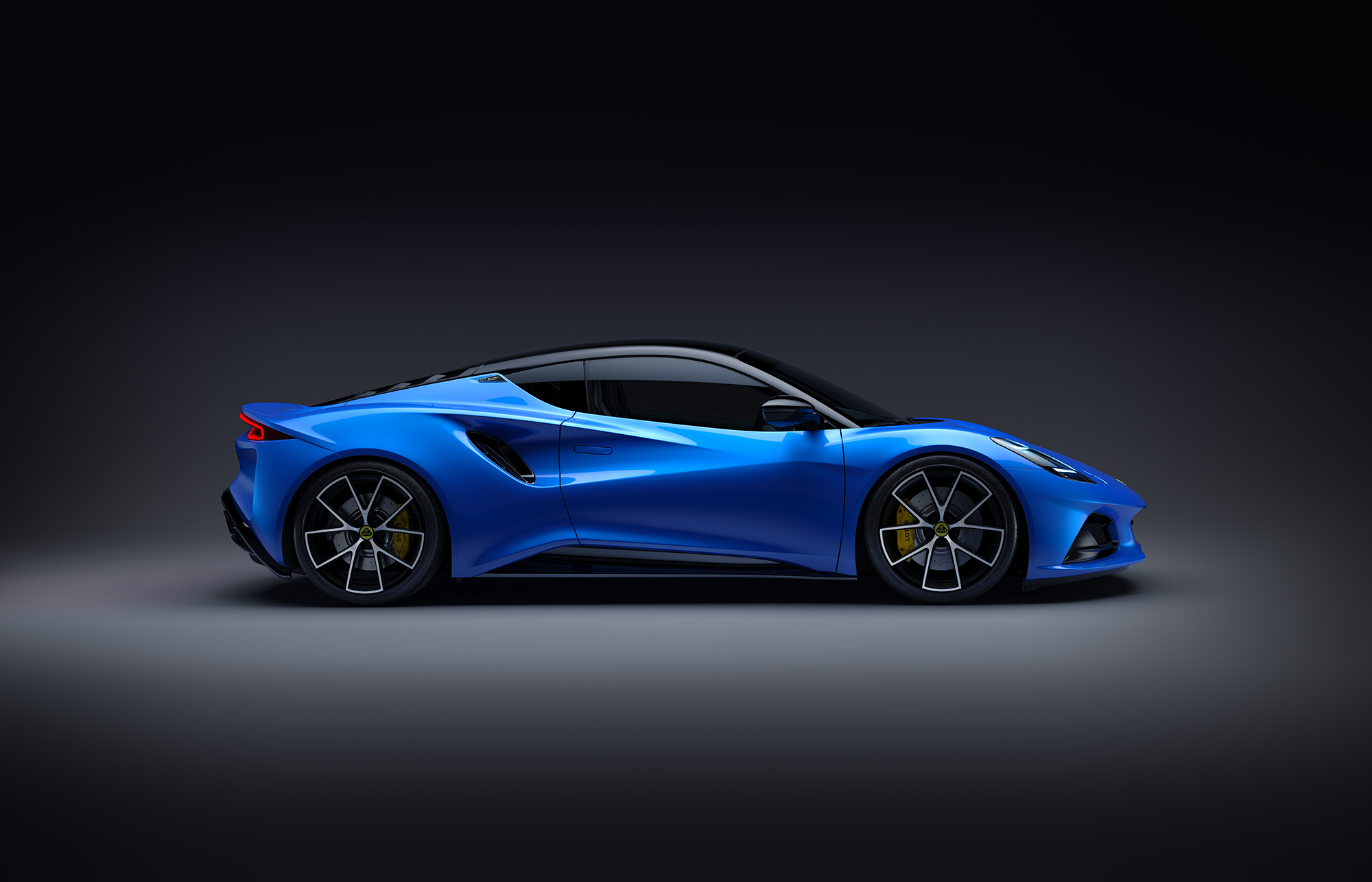
Lotus is looking to the U.S. market to drive growth while protecting its sports-car identity, with the Emira leading the strategy and future PHEV models set to follow.
Lotus sees the U.S. as a key growth market
Lotus is making the U.S. market a central part of its turnaround strategy.
The company wants to return to sustainable profitability without chasing sales volume at any cost. Instead, Lotus says it wants growth that protects its pricing power and the value of the brand.
That approach puts the U.S. in a particularly important position.
Lotus Chief Financial Officer Daxue Wang said American buyers are expected to remain especially interested in the company’s internal-combustion sports cars. The Emira is currently the key example.
Lotus’ U.S. website currently lists the Emira, Eletre, Emeya and Evija, confirming a broad presence in the American market.

The Lotus Emira remains the brand’s main internal-combustion sports car and a key part of its U.S. strategy.
The Emira is important because it keeps Lotus connected to its traditional sports-car identity.
The company currently offers the Emira in multiple configurations. Lotus’ latest range includes the Emira 420 Sport, Turbo SE and V6 SE, among others depending on market.
The car also remains closely tied to Hethel, where Lotus has manufactured its sports cars for decades. The company says Hethel has remained its manufacturing heart since 1966.
Lotus does not want growth at any cost
Sales are only one part of the turnaround plan.
Wang said Lotus is putting more emphasis on the quality of growth than on headline sales numbers. He also said the company’s gross margin has reached around 10%, with a 20% gross-margin target under its Focus 2030 strategy.
That strategy is broader than simply selling more cars.
Lotus officially announced Focus 2030 in May 2026. The plan includes greater flexibility in powertrain strategy and a new hybrid-V8 performance model.
The company is therefore trying to balance three priorities.
It wants to grow. It wants to improve margins. And it wants to preserve the character that makes Lotus different from larger luxury manufacturers.
The next sports cars will move toward PHEV power
The U.S. strategy is also connected to Lotus’ future product planning.
Wang said the company’s next generation of sports cars will move toward plug-in hybrid technology. He specifically pointed to the future Type 135, a high-performance V8-powered PHEV expected to reach global markets in 2028.
That represents an important shift.
Lotus had moved aggressively toward electrification with models such as the Eletre and Emeya. The company is now expanding its powertrain approach rather than relying on a single technology path.
For U.S. buyers, that could mean the future Lotus sports-car lineup will combine combustion power with electric assistance instead of moving directly to fully electric performance cars.

The Eletre represents Lotus’ electric “lifestyle car” strategy alongside the combustion-powered Emira.
The Eletre and Emeya occupy a different position within Lotus’ strategy.
Wang described the company’s EVs as “lifestyle cars”, while the internal-combustion models remain focused on the traditional sports-car side of the business. The executive also identified China as an important market for those lifestyle vehicles, with Europe remaining strategically important as well.
That distinction helps explain why Lotus is not abandoning its sports-car roots while it expands its EV range.
The U.S. could become Lotus’ main sports-car market
Lotus sees a particularly strong opportunity in America.
According to Wang, the U.S. is expected to be the company’s main market for sports cars. That makes the country especially important for the next generation of performance models.
The current American lineup already reflects that strategy.
Lotus USA sells the Emira alongside the Eletre and Emeya, while the Evija remains the ultra-low-volume flagship.
The company is also continuing to expand its U.S. retail and customer experience network.
Its U.S. website currently offers sales, available-car searches and test-drive opportunities for the Emira and Eletre.
That infrastructure will become more important if Lotus increases American sales with future PHEV sports cars.

The Emeya is one of Lotus’ electric performance models and is already offered in the U.S. market.
The Emeya shows how far Lotus has expanded beyond traditional sports cars.
Its current U.S. specification uses a dual-motor electric architecture with 905 horsepower and 985 Nm of torque. Lotus also highlights an 800-volt electrical system and rapid charging capability.
Those products give Lotus another way to reach customers.
But the company appears to be drawing a clear distinction between the role of high-volume lifestyle vehicles and the role of its core sports cars.
Hethel remains part of the long-term plan
The turnaround is not only about markets and products.
Lotus is also keeping its historic manufacturing base at Hethel in Norfolk, England.
Wang said the company remains committed to the site while investing in manufacturing capability, workforce development and operational efficiency.
That commitment fits Lotus’ own description of Hethel as the home of its sports-car production since 1966.
The company is also undergoing a broader organizational change.
In August 2026, Lotus announced the completion of its UK acquisition, creating one integrated global business structure for the brand.
The goal is to bring its different operations closer together as Lotus prepares for its next phase.
Lotus’ U.S. strategy will depend on margins as well as sales
The message from Lotus is becoming clearer.
The company wants the U.S. to drive growth, but it does not want to sacrifice brand value to achieve higher sales. The Emira remains central to that plan, while future PHEV sports cars are expected to broaden Lotus’ performance offering.
At the same time, the Eletre and Emeya give Lotus a presence in the growing luxury EV market.
That leaves the brand with several paths to growth.
The challenge will be making those products profitable while preserving the lightweight, driver-focused identity that defines Lotus. Its Focus 2030 strategy is designed to move the company in that direction, with higher margins and a wider range of powertrains.
For the Lotus U.S. strategy, the priorities are therefore clear: expand sales, protect pricing power and use the American market to support the next generation of Lotus sports cars. The Emira leads that effort today, while future hybrid models are expected to carry the strategy into the next decade.
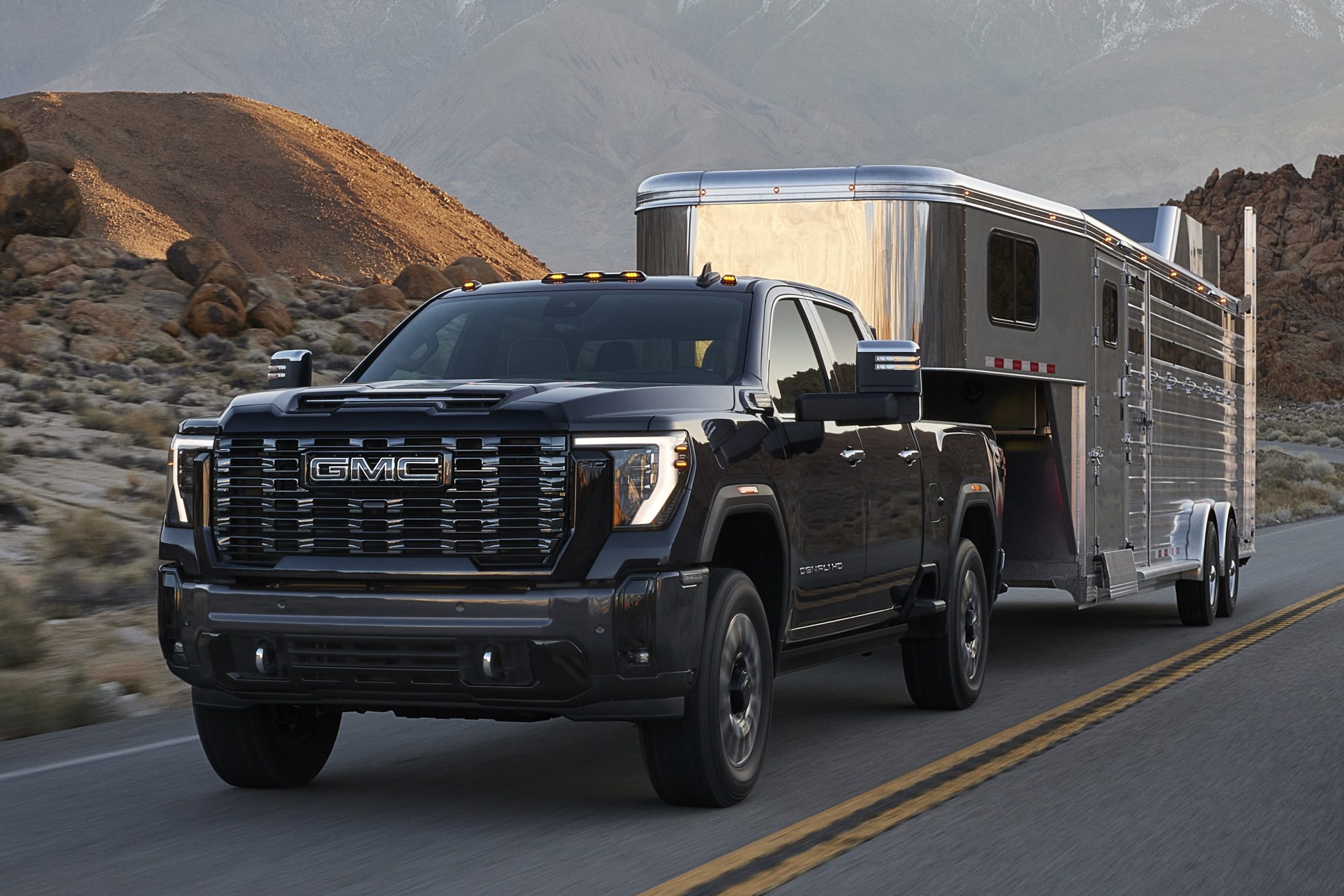
GM is raising the capability of its 2027 heavy-duty pickups with a new 8.3-liter Duramax V8, electric steering, electronic braking and up to 38,000 pounds of gooseneck towing.
GM introduces a new era for its HD pickups
General Motors is giving the 2027 Chevrolet Silverado HD and GMC Sierra HD a major technical update.
The biggest change is under the hood. GM has introduced an all-new 8.3-liter Duramax Turbo-Diesel V8 designed specifically for its heavy-duty pickup trucks.
The engine produces 555 horsepower and 1,230 lb-ft of torque. GM identifies those figures as best-in-class diesel output.
The new powertrain is also part of a wider redesign.
GM has updated the steering, braking and drive-mode systems. The goal is to make the trucks easier to control while towing, hauling and driving off-road.

The 2027 GMC Sierra combines the new Duramax V8 with upgraded towing, steering and braking technology.
GM says the new diesel is its first clean-sheet HD V8 designed, developed and manufactured in-house for heavy-duty pickup applications.
The engine uses a compacted graphite iron block, a forged crankshaft, forged connecting rods and steel pistons. These components were designed around the sustained loads expected during heavy-duty use.
The engine also gets a variable-geometry turbocharger and a compact dual-stage air-to-water charge-cooling system.
GM has also redesigned the cooling strategy and combustion system. The company says those changes are intended to improve refinement while maintaining consistent performance under heavy loads.
The Duramax is paired with an Allison 10-speed
The new 8.3-liter diesel works with an Allison 10L1000 10-speed automatic transmission.
GM has also updated the shift logic to keep the engine in its most useful operating range. An upgraded exhaust-braking system is part of the package as well.
The combination is designed for customers who spend long periods towing.
GM says the new engine can provide stronger acceleration when launching heavy trailers. It is also designed to maintain power while climbing grades and improve control while carrying a heavy load.

The 2027 Chevrolet Silverado HD receives the same new Duramax 8.3L diesel and chassis technology as the GMC Sierra HD.
The gasoline engine also receives an update.
The 6.6-liter gas V8 now produces 412 horsepower and 472 lb-ft of torque. GM says the engine gets a new intake manifold, revised lubrication hardware, an engine-mounted oil cooler and a digital oil-level display.
Both engines use the same Allison 10-speed transmission.
That gives the 2027 HD lineup two different approaches. Buyers can choose the high-torque diesel or the updated gasoline V8.
Electric steering replaces the hydraulic system
One of the less visible changes could have a major impact on everyday driving.
GM has introduced rack-and-pinion electric power steering to its heavy-duty pickups. The company describes it as a segment-first system for HD trucks.
The new system provides roughly 30% more steering output than the previous hydraulic system.
It can also be tuned through the truck’s drive modes. GM says it improves on-center feel, reduces steering kickback and operates more quietly than the previous setup.
The move to electric steering also removes the hydraulic pump, hoses and fluid used by the previous architecture.
That simplifies the system while giving engineers more control over steering assistance.
Electronic braking adds more control
The 2027 Silverado HD and Sierra HD also receive a new electronic brake-boost system.
GM describes it as the first electronic braking architecture in a heavy-duty pickup in the segment. The trucks also receive larger 14.6-inch front rotors and four-piston fixed front calipers.
The new system is designed to provide a more consistent pedal feel.
It also supports faster integration with driver-assistance systems such as adaptive cruise control and automatic emergency braking.
That matters when towing a large trailer.
More consistent braking can help make repeated stops and downhill sections easier to manage, especially when the truck is operating close to its limits.

The new Duramax 8.3L V8 is assembled at GM’s DMAX operation in Ohio.
Up to 38,000 pounds of gooseneck towing
Towing remains one of the central goals of the redesign.
GM says properly equipped 2027 Silverado HD and Sierra HD models can tow up to 20,000 pounds with a conventional trailer. The maximum rises to 38,000 pounds with a gooseneck trailer.
That 38,000-pound figure is available on specific configurations.
GM also says every diesel dual-rear-wheel model will be capable of towing 30,000 pounds or more, depending on configuration.
The trucks also receive new camera technology.
Up to 14 available camera views can help with hitching, reversing, trailer monitoring and lane changes. The system can include Transparent Trailer View, Bed View and Surround Vision.
New Terrain Mode targets off-road driving
GM is also changing the way its off-road HD trucks operate.
The ZR2 and AT4X can receive a new Terrain Mode. It enables one-pedal off-road driving in 4HI and 4LO.
When the driver lifts off the accelerator, the system automatically applies braking.
That can make low-speed driving easier on steep grades and technical terrain. The steering, braking and powertrain systems work together to provide a more controlled response.
A major powertrain statement from GM
The 2027 heavy-duty trucks are therefore changing in several areas at once.
The new 8.3L Duramax V8 brings 555 horsepower and 1,230 lb-ft of torque. The gas V8 gains output, while electric steering and electronic braking introduce new hardware to the HD segment.
The new diesel will be built at GM’s expanded DMAX facility in Brookville, Ohio. GM previously invested $920 million to support the engine program.
The first 2027 Chevrolet Silverado HD and GMC Sierra HD trucks are expected to arrive at U.S. dealerships later this year.
For the American heavy-duty market, GM’s new formula centers on one major number: 1,230 lb-ft of torque, supported by redesigned steering, braking and towing systems engineered around the same goal: giving the new HD trucks more capability and control.
-

 NOW TRENDING1 month ago
Tesla Cybercab Gets September 3 Austin Launch Date
-

 INTELLIGENT MOBILITY2 months ago
GM Updates Infotainment System With Smarter Features
-
 NOW TRENDING2 months ago
2027 Hyundai Tucson Spied With New Design and Hybrid Power
-
 NOW TRENDING2 months ago
2027 Audi Q9 and SQ9 Debut as Brand’s Largest SUVs
-
 NOW TRENDING2 months ago
2026 Toyota GRMN Corolla Debuts as the Ultimate Hot Hatch
-
 NOW TRENDING2 months ago
Every GM Assembly Plant Operating in the U.S. in 2026
-
 NOW TRENDING2 months ago
Ferrari Sold Out Through 2027 as Demand Hits New High
-

 NOW TRENDING1 month ago
Audi’s New SUVs Could Help Reverse Its Sales Decline in 2026
You must be logged in to post a comment Login