
NOW TRENDING
Honda Brings U.S.-Built Acura Integra Type S And Passport To Japan In Strategic Reverse-Import Move


Honda will begin selling two U.S.-built models in Japan in the second half of 2026, using a new certification pathway to bring the Acura Integra Type S and Honda Passport TrailSport Elite back into its home market.
Honda is set to do something unusual in 2026: send two North America-focused vehicles back to Japan.
The company has confirmed that it will begin sales of the Acura Integra Type S and Honda Passport TrailSport Elite in Japan during the second half of 2026, giving its domestic lineup two U.S.-built models with very different personalities. One is a performance-oriented liftback with a manual transmission and 320 horsepower; the other is a midsize SUV designed around off-road capability and everyday comfort.
What makes the move especially interesting is the context behind it. Honda is taking advantage of a newly simplified Japanese certification system for U.S.-made passenger vehicles, creating a path for reverse-imported models that previously would have been much harder to bring to market. In practical terms, that means Japanese buyers will soon have access to two products that were developed primarily for North American tastes, but now arrive as part of Honda’s effort to broaden its appeal at home. Honda says the decision is meant to strengthen its lineup and better match the increasingly diverse needs of customers in Japan.

Honda will begin selling the U.S.-built Acura Integra Type S in Japan in the second half of 2026, giving the domestic market a 320-hp manual performance model originally developed for North America.
Honda Is Using A New Certification Path To Open Japan’s Door To U.S.-Built Models
The real story here is not just the cars themselves, but the mechanism that makes the launch possible.
Honda says the Integra Type S and Passport TrailSport Elite will be introduced in Japan through a simplified certification system for U.S.-made passenger vehicles established by Japan’s Ministry of Land, Infrastructure, Transport and Tourism. That matters because it creates a much more realistic route for automakers to bring American-built products into Japan without treating them as one-off curiosities. For Honda, it also creates an opportunity to expand its domestic range with vehicles that already exist, rather than developing Japan-specific alternatives from scratch.
In that sense, this is more than a simple product announcement. It’s also a sign of how Honda is thinking about flexibility in a global portfolio. Instead of keeping North American products isolated in North America, the brand is now using them to fill specific gaps in Japan as well. That could become increasingly important if customer demand continues to fragment between traditional passenger cars, performance models, lifestyle SUVs, and more niche enthusiast-oriented products.
The Acura Integra Type S Brings A Very Unusual Formula To Japan
Of the two vehicles Honda is sending to Japan, the Acura Integra Type S is arguably the more surprising one.
That’s because it brings a formula that feels increasingly rare in any market, not just Japan. The Integra Type S combines a turbocharged 2.0-liter inline-four, front-wheel drive, and a 6-speed manual transmission, while producing 320 horsepower and 310 lb-ft of torque. Honda also lists a curb weight of 1,460 kilograms for the U.S.-spec model, along with a body measuring 186.0 inches long, 74.8 inches wide, and 55.4 inches tall.
In other words, Honda is not sending Japan a softened premium hatchback or a mild performance package. It is sending a full-strength Acura performance model that has already built its identity around driver engagement and enthusiast appeal in North America. That alone makes this launch noteworthy. Japanese buyers will not simply be getting a dressed-up Honda with an Acura badge; they will be getting one of the most distinctive performance-oriented front-drive models in Honda’s broader global orbit.
Honda describes the Integra Type S as a high-performance variant that combines the premium character of the Acura brand with a strong street presence. But the more important detail may be what the car represents strategically. In a market where manual transmissions and enthusiast-focused premium cars have become increasingly niche, the Integra Type S gives Honda a halo-style import that can speak to buyers looking for something more emotional than a conventional domestic sedan or crossover.
The Passport TrailSport Elite Gives Honda A New Kind Of SUV Play In Japan
If the Integra Type S is the enthusiast piece of the story, the Honda Passport TrailSport Elite is the lifestyle and utility play.
The Passport has always been a North America-first SUV, and in Japan it will arrive as a very different kind of proposition from the compact and midsize crossovers that dominate much of the local market. Honda says the Passport TrailSport Elite will be the version introduced in Japan, meaning buyers will get the trim with enhanced off-road capability rather than a more road-focused variant. The U.S.-spec Passport TrailSport Elite uses a 3.5-liter V6, all-wheel drive, and a 10-speed automatic transmission, with output rated at 285 horsepower and 262 lb-ft of torque. It also rides with 8.3 inches of ground clearance and measures 191.5 inches long, 79.4 inches wide, and 73.1 inches tall.
That is a large footprint by Japanese-market standards, and it tells you a lot about Honda’s confidence in the product. The company is not trying to squeeze in a lightly adapted crossover that blends into the local landscape. It is bringing in a midsize SUV with a clear North American identity, one built around rugged styling, trail-focused branding, and a much more substantial physical presence than the average Japanese domestic SUV.
That could make the Passport one of the more intriguing parts of this strategy. For buyers in Japan who want something more adventurous, more spacious, and more overtly SUV-like than a typical urban crossover, the Passport TrailSport Elite may fill a niche Honda previously didn’t really address with its home-market lineup.

Honda will also launch the Passport TrailSport Elite in Japan, giving the market a U.S.-built midsize SUV with a 3.5-liter V6, AWD and a more rugged TrailSport identity.
Why Honda Chose These Two Models Matters Just As Much As The Specs
There is a clear logic behind the pairing of these two vehicles.
Honda could have used the new certification path to bring over something safer or more conventional. Instead, it chose two products that sit at the edges of its current lineup strategy. The Integra Type S targets the performance-minded customer who still values driver involvement, manual shifting and a more premium sport-compact experience. The Passport TrailSport Elite goes after buyers who want a large SUV with genuine off-road flavor and a more adventurous image.
That combination suggests Honda is not using this reverse-import move simply to pad out its Japanese lineup with extra volume. It appears to be using it to test or strengthen two very specific customer spaces: enthusiast performance and rugged SUV lifestyle. Those are both segments where differentiation matters more than sheer sales numbers, and where a U.S.-developed product can bring something fresh to the domestic portfolio.
There is also a branding angle here. Acura does not have the same market role in Japan that it does in North America, so bringing in the Integra Type S gives Honda a chance to showcase a more premium performance product without building an entirely new Japan-specific halo model. The Passport, meanwhile, allows Honda to tap into the broader global appetite for SUVs that look and feel more capable, even if most of their time is spent on paved roads.
Both Models Were Already Generating Interest In Japan Before The Launch Was Confirmed
Honda also isn’t making this decision in a vacuum.
The company says it displayed both models at Tokyo Auto Salon 2026 and Osaka Auto Messe 2026, where visitors showed strong interest and voiced expectations for a market launch. That’s an important detail because it suggests these vehicles were not chosen purely from a corporate planning spreadsheet. Honda had already tested the waters publicly and found an audience willing to look seriously at both of them.
That early reaction matters even more in the case of the Passport. The vehicle’s size, powertrain and positioning are all very U.S.-centric, so bringing it into Japan only makes sense if Honda believes there is a meaningful niche for a larger, more adventure-oriented SUV. The Integra Type S is easier to understand from an enthusiast perspective, but even there, Honda appears to have seen enough interest to justify taking the next step.
This Is Also A Quietly Important Win For Honda’s U.S. Manufacturing Footprint
There’s another layer to this story, and it sits on the manufacturing side.
Honda notes that both vehicles will come from Honda Development & Manufacturing of America (HDMA). The Acura Integra Type S is built at the Marysville Auto Plant, while the Passport TrailSport Elite is produced at the Alabama Auto Plant. That gives the move a broader significance beyond Japan alone, because it reinforces the role of Honda’s U.S. factories as export-capable production hubs rather than facilities focused only on local North American demand.
For Honda, that is strategically valuable. It shows the company can leverage U.S. production not just for scale in one region, but also for selective global deployment when regulations and market demand line up. In a period where automakers are constantly reevaluating where vehicles should be built, sourced and sold, the ability to take a U.S.-built performance model and a U.S.-built SUV and send both into Japan is not a trivial detail. It speaks to flexibility in the production network, and it hints at how Honda could approach similar opportunities in the future.

The Integra Type S heads to Japan with a 2.0-liter turbo engine, 6-speed manual gearbox and 320 horsepower, positioning it as one of the most distinctive enthusiast-focused reverse imports in Honda’s lineup.
Honda’s Japan Strategy Gets More Interesting When You Look At The Bigger Picture
Viewed on their own, the Integra Type S and Passport TrailSport Elite are interesting launches. Viewed together, they may say something larger about where Honda sees opportunity in Japan.
The domestic market has long rewarded compact efficiency, packaging intelligence and urban-friendly vehicle footprints, but it is also changing. Buyers are increasingly fragmented in their tastes, and automakers are under more pressure to serve smaller enthusiast, premium and lifestyle niches without exploding development costs. Reverse-importing already-developed U.S. models gives Honda a way to do that with much lower risk.
It also gives the brand a way to add emotional and aspirational products to its home-market story. The Integra Type S is not about rational transportation; it is about performance credibility and driver appeal. The Passport TrailSport Elite is not about fitting neatly into a kei-car-sized parking spot; it is about adventure positioning, utility and a broader interpretation of what a Honda SUV can be. Put together, they give Honda two very different tools to widen its domestic identity.
Honda’s Reverse-Import Move Could Be The Start Of Something Bigger
For now, Honda has only confirmed these two models for launch in the second half of 2026. But the significance of the move may go beyond the Integra and Passport themselves.
If the simplified certification system works smoothly and customer response proves strong enough, it would not be surprising to see other U.S.-built products considered for Japan in the future. Honda has now shown a willingness to use its American portfolio as a source of domestic-market differentiation, not just as a separate regional business. That opens the door to a much more flexible product strategy than the one Japanese buyers have traditionally seen.
And it gives this announcement more weight than a typical “new market launch” story. Honda is not just adding two vehicles. It is testing a new channel for bringing American-built products into Japan, and doing so with two models that say a lot about where the brand sees opportunity: performance on one side, rugged SUV appeal on the other.

The Passport TrailSport Elite could give Honda a new kind of SUV presence in Japan, pairing North American size and V6 power with a more adventure-focused image than the brand’s typical domestic-market crossover offerings.
That is what makes this story worth watching through the rest of 2026. The sales numbers will matter, of course, but so will the broader signal behind them. If Japanese buyers respond well to a manual Acura performance model and a V6 off-road-oriented Honda SUV built in the United States, Honda may have found a smarter and faster way to diversify its domestic lineup without reinventing its product pipeline from scratch.










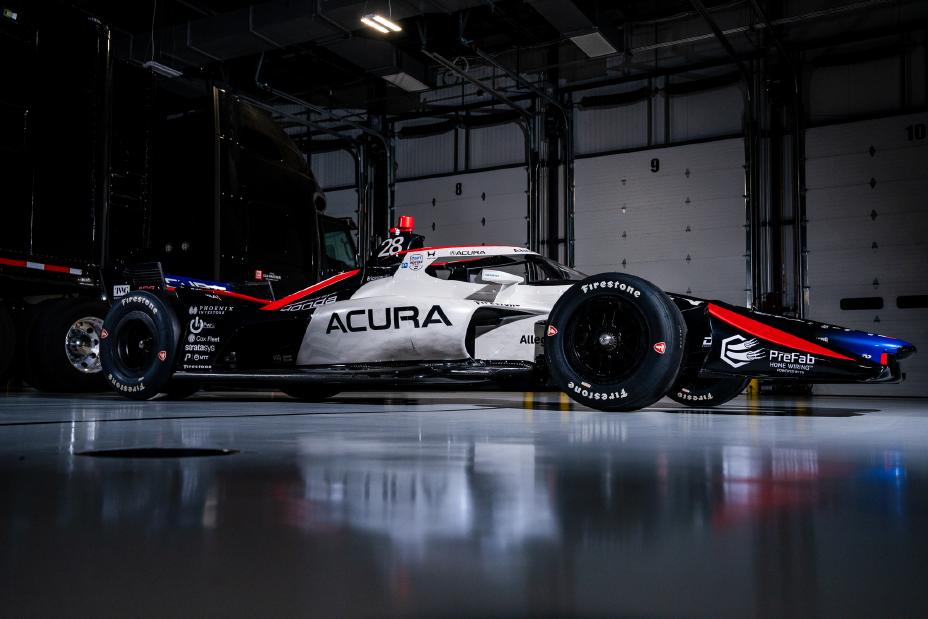
Honda-powered teams head to Washington, D.C., for the inaugural Freedom 250 Grand Prix with Alex Palou leading the title fight and Honda seeking another street-course win.
The Freedom 250 Grand Prix of Washington will bring the NTT INDYCAR SERIES to the streets of Washington, D.C., for the first time on Sunday, August 23, 2026.
The race will begin at 1 p.m. ET, with pre-race coverage starting at 11:30 a.m. ET and live coverage on Fox.
The inaugural event will take drivers around the nation’s capital and past some of its most recognizable museums and monuments. The race also celebrates 250 years since the signing of the Declaration of Independence.
Honda enters another major street-course test
Honda arrives in Washington with a strong record on street circuits during the 2026 season.
Honda-powered drivers have won all five street-course races held so far this year. Four of those victories were part of all-Honda podium sweeps.
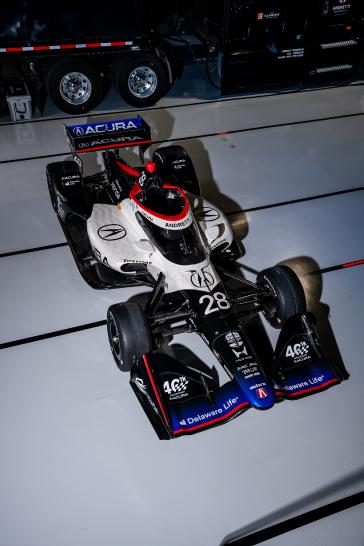
Honda-powered teams have won every street-course race of the 2026 IndyCar season ahead of the Washington debut.
Alex Palou opened the season with a victory at St. Petersburg before leading all-Honda podiums at Long Beach and Detroit.
Kyle Kirkwood then won the inaugural race in Arlington, while Marcus Ericsson followed with victory at Markham last weekend.
The results have helped Honda build a 169-point lead in the manufacturers’ championship.
Palou leads a major championship fight
The Washington race could also have a major impact on the 2026 drivers’ championship.
Alex Palou currently leads the standings by 133 points, giving the Chip Ganassi Racing driver a significant advantage heading into the second half of the season.
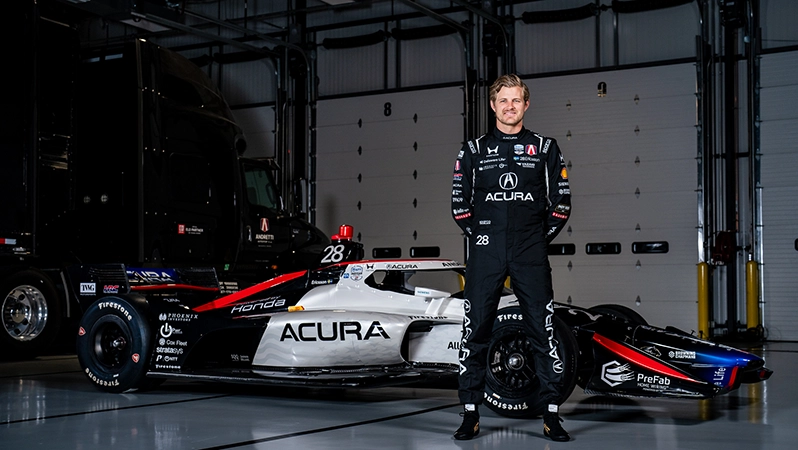
Alex Palou holds a 133-point championship lead heading into the inaugural Washington street race.
Palou has collected victories at St. Petersburg, Barber, Long Beach, Detroit, Nashville, and Portland during the 2026 campaign.
Andretti Global’s Kyle Kirkwood is currently second and represents one of the biggest threats to Palou’s championship advantage.
The Washington street circuit gives Palou’s rivals another opportunity to reduce the gap. A strong result for the championship leader, however, could bring him significantly closer to a fifth NTT INDYCAR SERIES title.
Acura joins the Washington celebration
The inaugural race will also feature an important Acura celebration.
Marcus Ericsson’s No. 28 Andretti Global Honda will carry an Acura-themed livery during the Washington race.
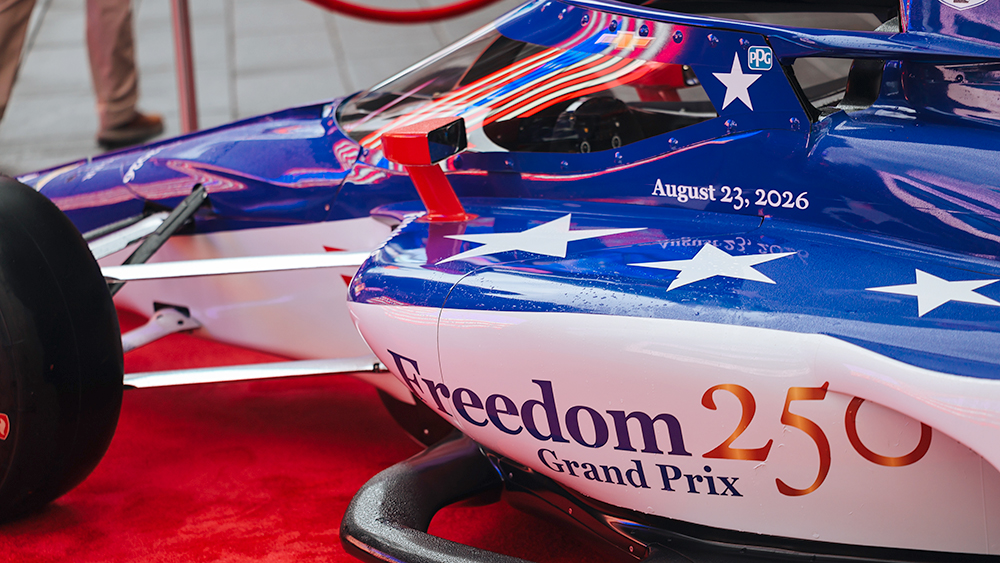
Marcus Ericsson’s No. 28 will feature an Acura livery celebrating both America’s 250th anniversary and 40 years of Acura.
The special design celebrates 250 years of the United States while also marking 40 years of Acura, which entered the American market in 1986 as the first Japanese luxury car brand.
The partnership gives Acura another opportunity to connect with motorsport fans through the NTT INDYCAR SERIES.
Honda lineup for the Freedom 250 Grand Prix
Honda will field a strong group of drivers across its participating teams in Washington.
Andretti Global
- No. 26 Will Power — Series Champion, Indianapolis 500 winner, Race Winner
- No. 27 Kyle Kirkwood — Race Winner
- No. 28 Marcus Ericsson — Indianapolis 500 winner, Race Winner
Chip Ganassi Racing
- No. 8 Kyffin Simpson
- No. 9 Scott Dixon — Series Champion, Indianapolis 500 winner, Race Winner
- No. 10 Alex Palou — Series Champion, Indianapolis 500 winner, Race Winner
Dale Coyne Racing
- No. 18 Romain Grosjean
- No. 19 Dennis Hauger — Series Rookie
Meyer Shank Racing
- No. 60 Felix Rosenqvist — Indianapolis 500 winner, Race Winner
- No. 66 Marcus Armstrong
Rahal Letterman Lanigan Racing
- No. 15 Graham Rahal — Race Winner
- No. 45 Louis Foster
- No. 47 Mick Schumacher — Series Rookie
With Honda already dominant on street circuits and Palou holding a commanding championship lead, the Honda IndyCar Washington GP will provide another important test for both the manufacturer and its leading drivers.
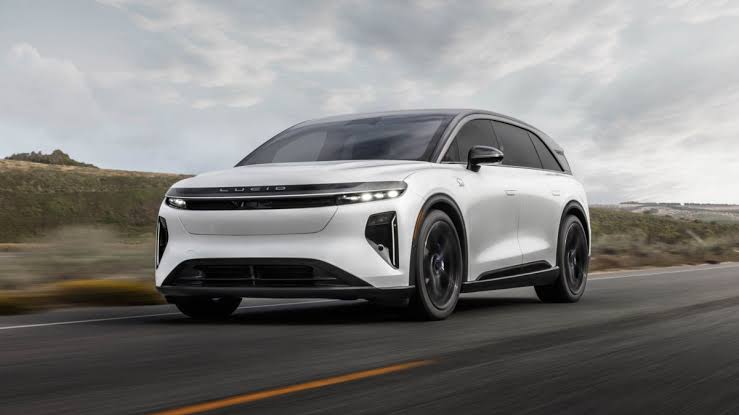
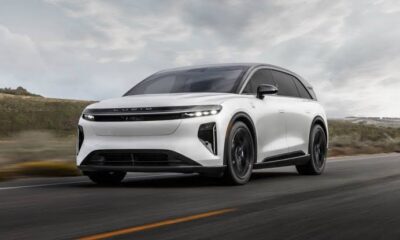
Lucid has introduced the new Gravity GT-S, a 1,070-horsepower three-row electric SUV that combines supercar performance with seating for up to seven adults.
Lucid is expanding its electric SUV range with the Gravity GT-S, a new performance-focused version of the Gravity. The model brings technology and ideas from the Lucid Air Sapphire into a larger, more versatile package.
With 1,070 horsepower, the Gravity GT-S becomes one of the most powerful three-row SUVs in the United States. It can accelerate from 0 to 60 mph in just 3.1 seconds while still offering seating for up to seven adults.
The model made its global debut during Monterey Car Week, where Lucid displayed it alongside the Air Sapphire at Pebble Beach.
A Three-Row SUV With Supercar Performance
The new Gravity GT-S is designed to combine extreme performance with the practicality expected from a family SUV.
Its 1,070-horsepower output comes with standard performance hardware designed to keep that power under control. The SUV receives Lucid’s Dynamic Handling Package, which includes independent rear-wheel steering and an adaptive three-chamber air suspension.
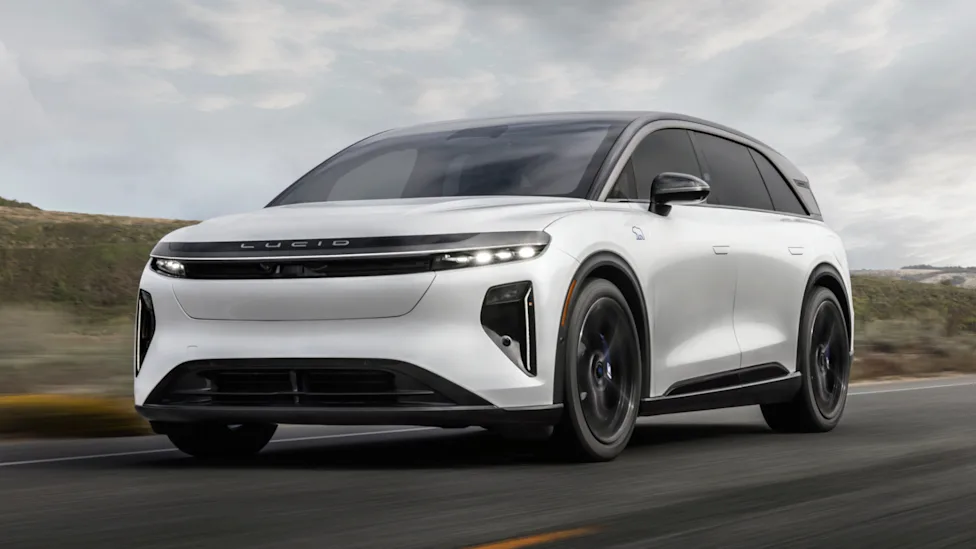
The Lucid Gravity GT-S combines three-row practicality with 1,070 horsepower and performance-focused chassis technology.
The air suspension can lower the vehicle at higher speeds, helping improve stability and aerodynamic performance.
The rear-wheel-steering system also makes the large SUV more agile. By turning the rear wheels, the system can improve response during cornering while making the vehicle easier to maneuver at lower speeds.
Lucid says the GT-S was developed to provide a more expressive driving experience without sacrificing the space and comfort that define the Gravity.
A More Aggressive Gravity Design
The Lucid Gravity GT-S also receives several visual changes that separate it from the standard Gravity.
The exterior features blue accents and painted blue brake calipers, creating a more distinctive appearance for the performance model.
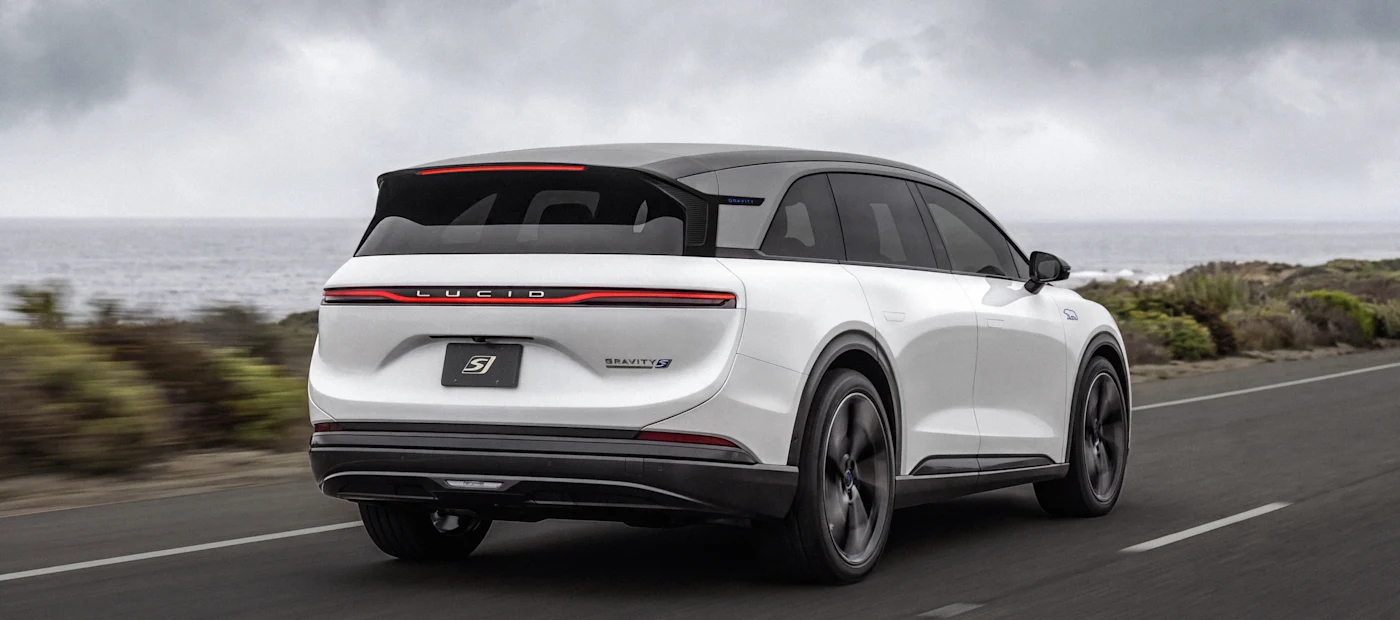
Blue exterior accents and painted blue brake calipers distinguish the Gravity GT-S from other versions of the electric SUV.
Inside, Lucid continues the performance theme with a Mojave PurLuxe Premium interior.
Blue stitching and piping are used across the first and second rows. The SUV also receives blue seatbelts, blue stitching on the steering wheel and center armrest, and a blue steering wheel marker.
The front seat headrests feature an embossed Lucid Bear logo, adding another exclusive detail to the cabin.
Performance Without Losing Practicality
Unlike many high-performance EVs, the Gravity GT-S does not sacrifice its family-oriented layout.
The SUV can accommodate up to seven adults and provides generous cargo capacity. That makes its 1,070-horsepower output even more unusual because the vehicle remains suited to everyday transportation.
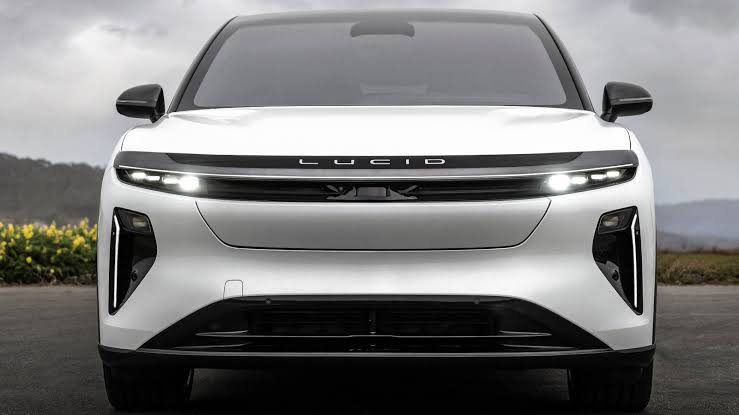
he Gravity GT-S retains the Gravity’s spacious interior while adding performance-focused details throughout the cabin.
The model also benefits from Lucid’s broader electric vehicle technology platform.
The current Gravity range offers up to 450 miles of EPA-estimated range, depending on configuration. Lucid lists the GT-S with a projected range of 373 miles, while charging capability can add up to 200 miles in approximately 14 minutes under the appropriate conditions.
For the GT-S specifically, Lucid’s configurator currently lists the model as a 2027 vehicle with a starting price of $125,900. The company lists the GT-S as available in Q4 2026.
Pricing and Availability
The Lucid Gravity GT-S starts at $125,900 in the United States, before taxes, title, registration, options, destination, and documentation fees. Lucid’s current configurator lists it for the 2027 model year and indicates availability in the fourth quarter of 2026.
The GT-S is positioned above the regular Gravity Touring and Grand Touring models. Lucid currently lists those versions from $79,900 and $98,900 respectively, giving the GT-S a significant premium for its additional performance hardware and 1,070-horsepower powertrain.
Lucid’s Monterey Car Week program ran from August 13 through August 16, 2026, providing the setting for the Gravity GT-S global debut.
The Lucid Gravity GT-S represents a different approach to the high-performance SUV. Instead of choosing between extreme acceleration and everyday practicality, Lucid is trying to combine both. With 1,070 horsepower, three-row seating, advanced suspension technology, and a projected 373-mile range, the GT-S pushes the Gravity into a much more performance-focused category.

Jeep has unveiled the 2027 Wrangler Smoky Mountain Special Edition, adding exclusive styling, Trail Rated capability, 33-inch tires, and unique details inspired by the Great Smoky Mountains.
Jeep has introduced the 2027 Wrangler Smoky Mountain Special Edition, a new four-door model created to celebrate the brand’s off-road community. The special edition debuted at the 14th annual Smoky Mountain Invasion in Pigeon Forge, Tennessee.
The event attracts nearly 50,000 people and 20,000 Jeep vehicles, making it one of the largest Jeep enthusiast gatherings in the United States.
The new Wrangler is the 10th installment in Jeep’s Twelve 4 Twelve series and is based on the Wrangler Willys platform.
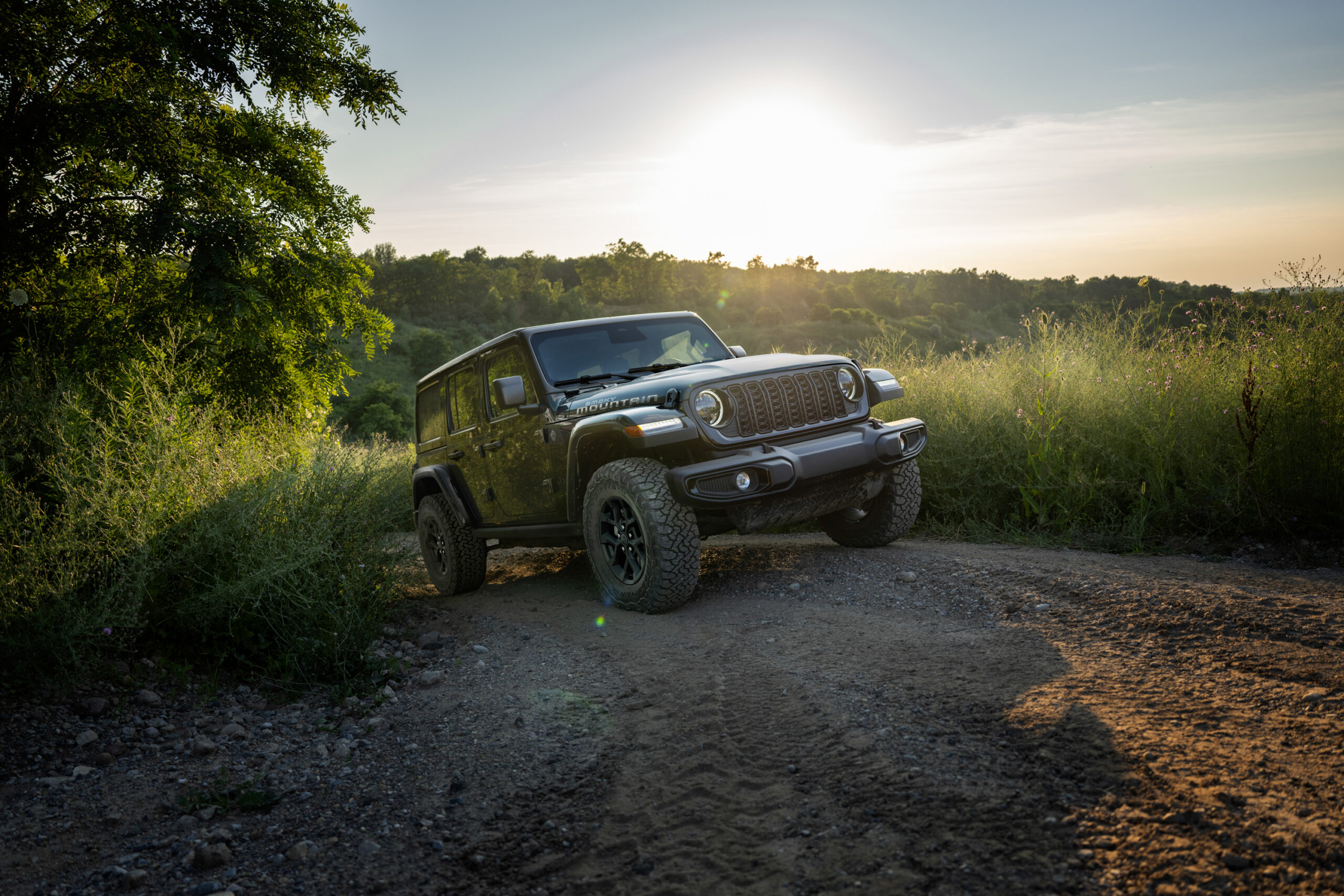
The 2027 Jeep Wrangler Smoky Mountain features exclusive graphics, dark wheels, and a body-color hardtop.
The exterior package includes Smoky Mountain hood-side decals, 17-inch smoky black wheels, and a gloss-black seven-slot grille.
The Wrangler also receives a body-color hardtop and fender flares, while a Sky One-Touch power top remains available.
For off-road driving, the special edition comes with 33-inch BFGoodrich KO2 all-terrain tires as standard. Buyers can also choose available 35-inch KO2 tires.
Trail Rated hardware comes standard
The Smoky Mountain package is more than an appearance upgrade. Jeep has included several mechanical features designed for demanding terrain.
The Wrangler comes with steel rock rails, Dana 44 front and rear axles, a locking rear differential, a 4.10 axle ratio, and a trailer hitch.
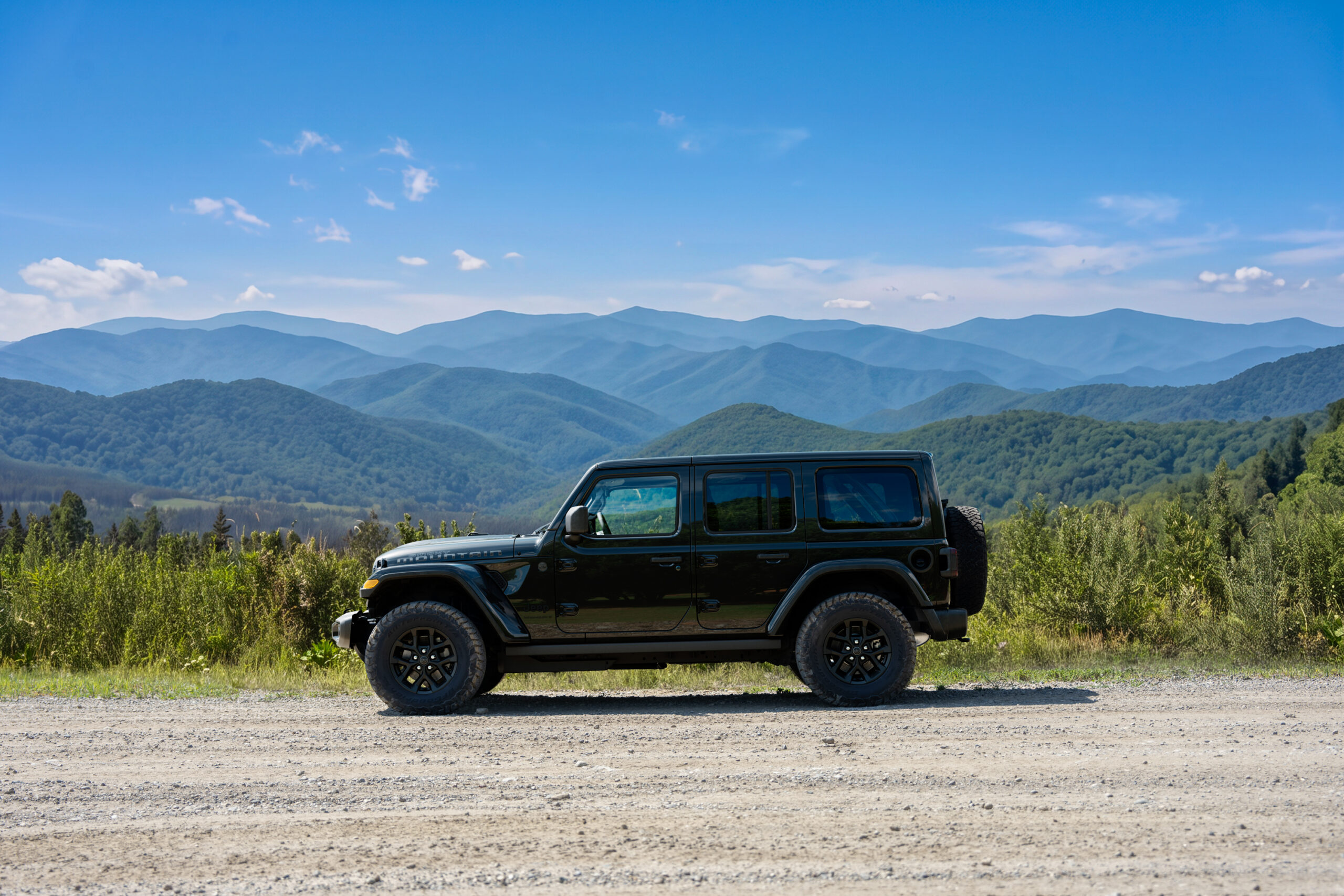
The Smoky Mountain edition combines Willys hardware with Trail Rated components designed for demanding off-road terrain.
Those features give the special edition the hardware needed to tackle rocky trails, steep climbs, and uneven surfaces.
The four-door configuration also gives the Wrangler enough room for passengers and outdoor gear, keeping the vehicle practical for longer adventures.
A cabin with exclusive Smoky Mountain details
Inside, Jeep continues the theme with a combination of durable materials and special commemorative touches.
The seats use Premium Black Ferndale cloth with a rugged texture and deeper side bolsters. The upper seat sections feature an embossed 1941 Willys parachute graphic, connecting the special edition to Jeep history.
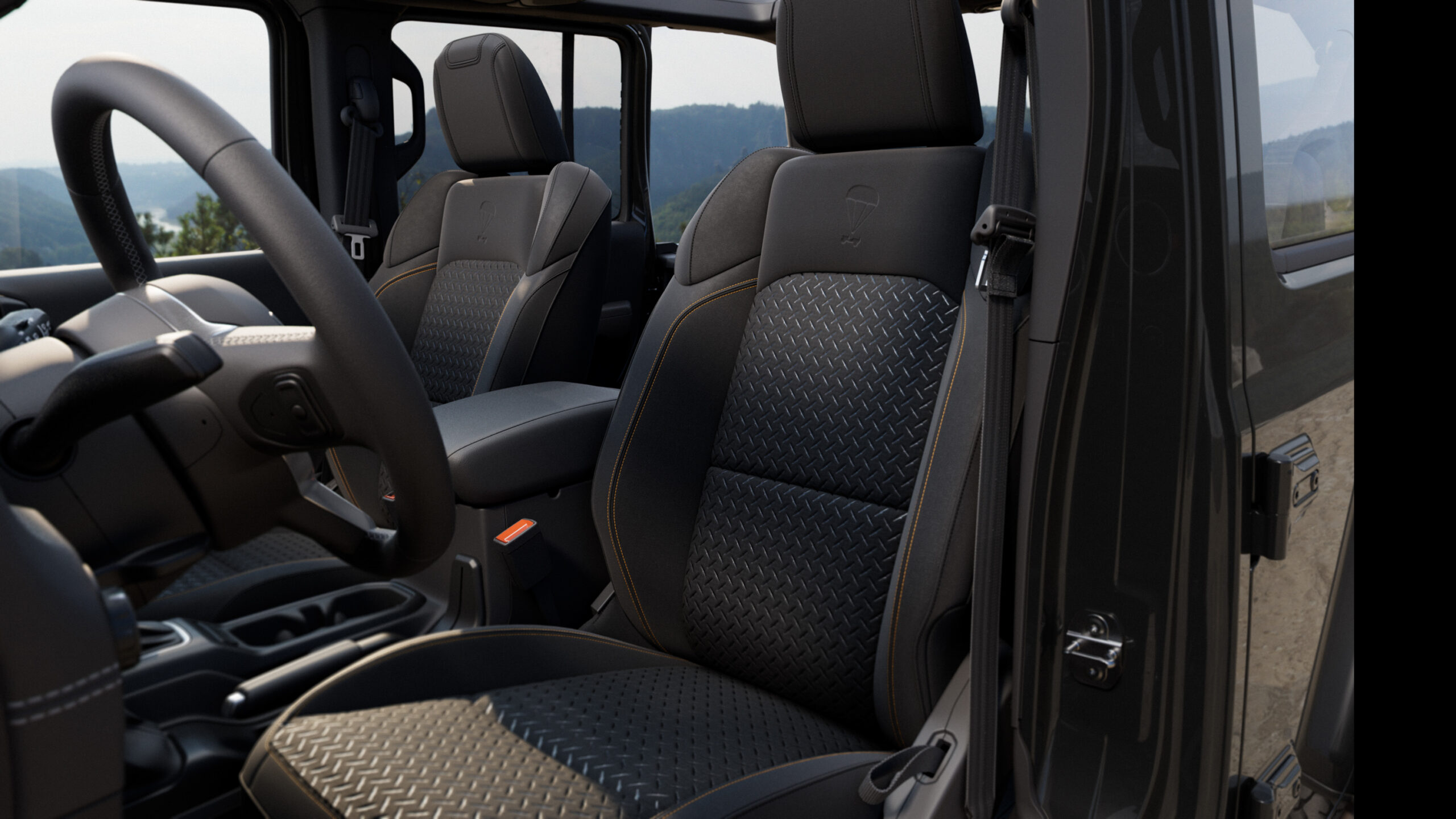
The cabin features exclusive seating, Terracotta stitching, Blaze Orange details, and commemorative Smoky Mountain graphics.
The interior also includes Terracotta contrast stitching, metallic Blaze Orange accents, Addax technical-pattern trim, and smoked-finish carbon details.
A commemorative plaque on the rear swing gate features the Wrangler drop motif with a 1941 Willys parachute against a star-filled Smoky Mountain night sky.
Additional standard equipment includes heated front seats, a heated steering wheel, dual-zone automatic climate control, and a universal garage-door opener.
Pricing and availability
Orders are now open for the 2027 Jeep Wrangler Smoky Mountain Special Edition.
The package is offered on the four-door Wrangler with either the 2.0-liter automatic or 3.6-liter automatic powertrain.
Jeep says the special edition costs only $80 more than a comparably equipped Wrangler Willys, giving buyers a relatively affordable way to add exclusive styling and equipment.
With its distinctive design, Trail Rated hardware, larger tire options, and limited-series status, the 2027 Jeep Wrangler Smoky Mountain is designed to appeal directly to the enthusiasts who have made Jeep culture such a major part of the brand.
-

 NOW TRENDING2 months ago
Polestar to Exit U.S. Market After 2026 Due to Connected Vehicle Rules
-
 TEST DRIVES2 months ago
Subaru’s New Uncharted GT Could Be The Brand’s Most Interesting Small EV Yet
-
 NOW TRENDING2 months ago
Tesla Model Y L Arrives in the U.S. With More Space and Three Rows
-
 NOW TRENDING2 months ago
The 2026 Lexus ES Is No Longer Just A Hybrid Sedan — It’s Now A Three-Way Luxury Play With Hybrid And EV Power
-
 NOW TRENDING2 months ago
The 2026 Kia Sportage Is More Than A Mid-Cycle Refresh — It’s Kia’s Play To Keep Its Best-Seller At The Center Of America’s SUV Market
-
 RACING2 months ago
Why F1 2026 Batteries Have Become The Biggest Reliability Headache On The Grid
-

 INTELLIGENT MOBILITY2 months ago
Bolt, Pony.ai and Stellantis launch autonomous mobility pilot in Luxembourg
-

 RACING2 months ago
McLaren F1 Unveils Special Silverstone Livery Honoring Its History
You must be logged in to post a comment Login