
Formula1
Why Ferrari Accepted Hamilton’s Failed Strategy in Singapore

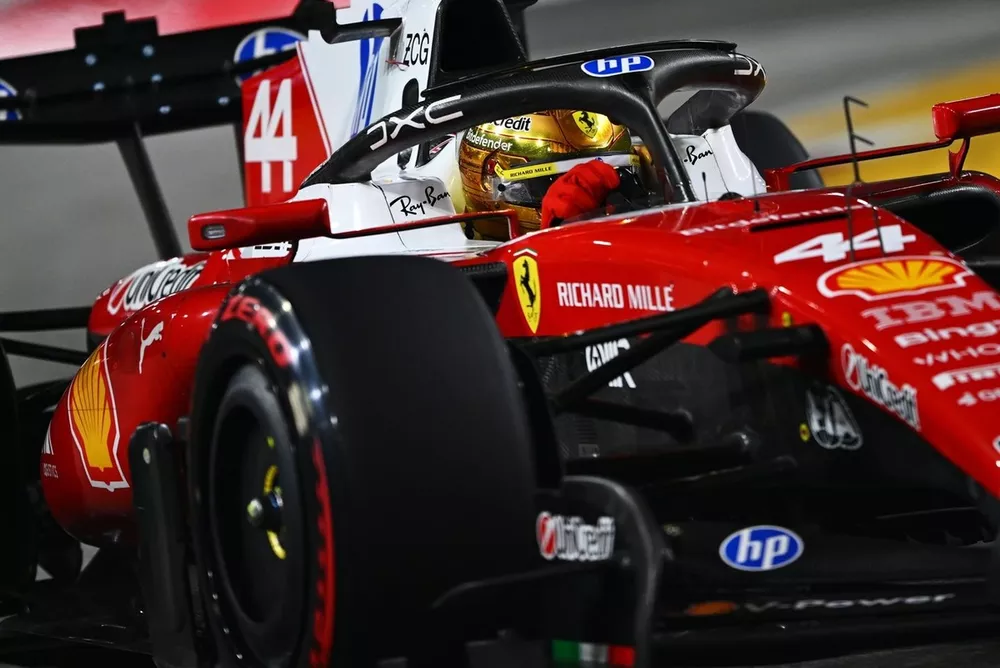
Lewis Hamilton lost three positions at the 2026 Singapore Grand Prix after choosing to stay out during a Virtual Safety Car period. Ferrari team principal Fred Vasseur explained how the decision unfolded.
Ferrari faced difficult questions after the 2026 Singapore Grand Prix, where Lewis Hamilton dropped from third to sixth following a strategic gamble that did not pay off. The seven-time world champion stayed on track during a Virtual Safety Car (VSC) period, committing to an extended 44-lap stint on soft tires.
The decision proved costly during the closing stages at Marina Bay. Over the final 22 laps after the neutralization, Hamilton lost an average of 2.5 seconds per lap compared with Ferrari teammate Charles Leclerc. Andrea Kimi Antonelli and both McLaren drivers ultimately finished ahead of the British driver.
Hamilton was unwell after the race and was excused from his media commitments to visit the medical center. As a result, Ferrari team principal Fred Vasseur faced questions about the strategy and the reasoning behind the decision.
Vasseur appeared reluctant to let the discussion dominate the team’s weekend, interrupting the first question to suggest that the incident was not necessarily the biggest story of the event. However, Hamilton’s post-race radio apology indicated that the decision to remain on track had come from the driver.

Hamilton’s decision to stay out during the VSC ultimately cost him positions in Singapore.
Fred Vasseur Explains Hamilton’s Decision
Vasseur described the radio exchange as straightforward. Ferrari had been running second and third with its two cars and instructed both drivers to pit after the Virtual Safety Car period.
“[It was] very clear. We were running second and third on track. We called both cars: ‘Guys, come into the pits after the VSC.’ One of my drivers said, ‘No, I prefer to stay out.’ Or perhaps he didn’t say that, but said, ‘I’ve missed the pit entry,’” Vasseur explained.
The Ferrari team principal was keen to make clear that the decision should not be blamed on the pit wall. Hamilton’s choice to remain on track left him with a lengthy stint on soft tires, which became increasingly difficult to manage as the race progressed.
“Don’t blame the team,” Vasseur added.

Ferrari’s strategy team had instructed both drivers to pit following the VSC period.
Vasseur had not yet spoken directly with Hamilton when he addressed the media. Nevertheless, he characterized the decision as an error and acknowledged that the outcome had been unfavorable for the team.
Why Ferrari Still Has to Listen to Its Drivers
The incident also raised a broader question about decision-making in Formula 1: should a driver be allowed to override a strategy recommended by the team?
Engineers have access to extensive telemetry, tire data and race simulations. Drivers, however, experience grip levels, tire behavior and changing track conditions directly from the cockpit. Balancing those two perspectives is a central part of race strategy.
Vasseur acknowledged that the result showed Hamilton’s choice had not worked, while also explaining why teams must consider a driver’s feedback.
“Looking at the result, it wasn’t a good decision,” Vasseur admitted. “But, on the other hand, you often tell us that we have to listen to the drivers because they’re the ones in the car, feeling the tires and everything else.”

Vasseur emphasized the balance between a driver’s feedback and the team’s wider strategic view.
The Frenchman maintained that Hamilton’s decision was clear in this particular situation, but stressed that Ferrari still had to respect the driver’s impressions from behind the wheel.
“But I think in this case it was clear. Nevertheless, I also have to respect his feelings when he’s driving,” Vasseur concluded.
Hamilton’s Singapore result highlighted the risks involved when a driver’s judgment differs from the team’s preferred strategy. Ferrari had an opportunity to protect its track position, but the decision to stay out left Hamilton struggling on aging soft tires during the closing laps.
The episode also underlined the complexity of Formula 1 strategy, where teams must weigh real-time driver feedback against the broader picture provided by engineers. For Ferrari, the challenge is to ensure that both perspectives lead to a consistent decision when the next critical moment arrives.








-

 NOW TRENDING2 months ago
Aston Martin DBX Becomes Harry Da Souza’s Ride in MobLand
-

 TEST DRIVES2 months ago
2026 Maserati GranTurismo Trofeo Review: Miami
-

 INTELLIGENT MOBILITY2 months ago
Tesla Cybercab Navigation Problem Hits Austin Robotaxis
-

 INTELLIGENT MOBILITY2 months ago
2027 Nissan Rogue Hybrid: e-POWER Comes to America
-

 TEST DRIVES2 months ago
2026 Maserati GranTurismo Coupe
-
 Formula12 months ago
Cadillac F1 2026 Faces an Eight-Race Logistics Challenge
-

 NOW TRENDING2 months ago
Land Rover Defender Recall 2026: 23,677 JLR SUVs Affected
-
 NOW TRENDING2 months ago
Every 2026 Chevrolet With AWD or 4WD