
NOW TRENDING
BMW Survey Reveals the EV Range Americans Really Want

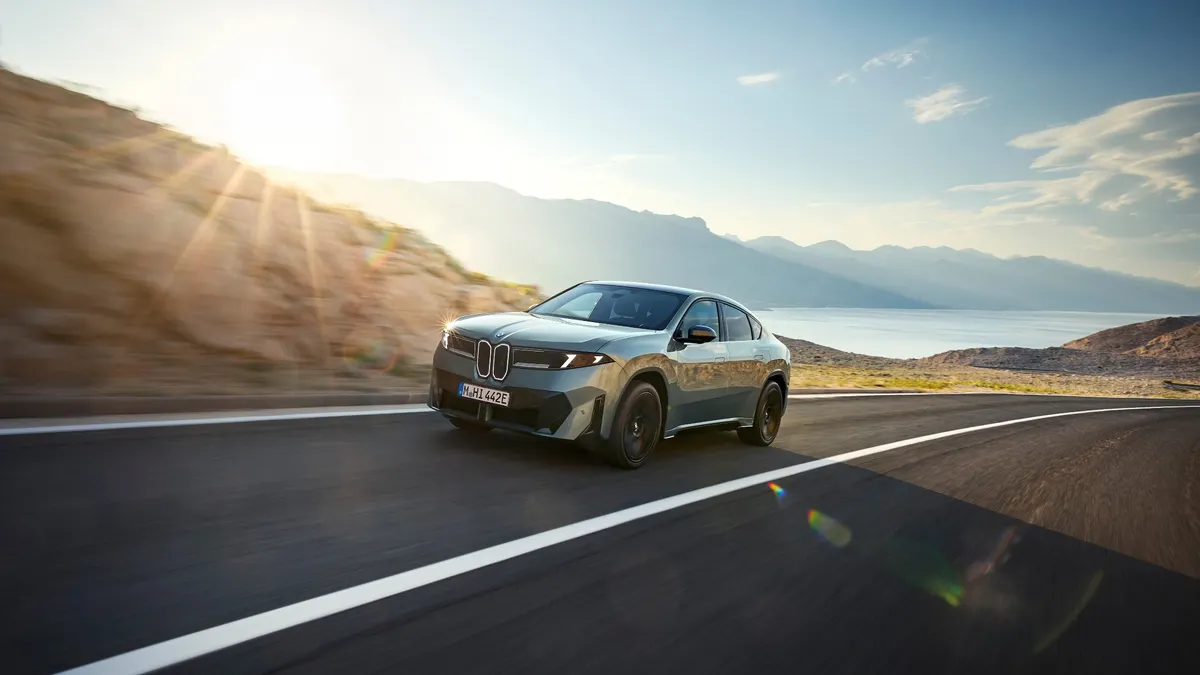
A BMW survey found that 73% of Americans say 75 miles or less covers their daily driving needs, yet 42% want an electric vehicle capable of traveling at least 300 miles per charge before buying one.
American drivers may not need as much electric vehicle range as they think, according to a new survey commissioned by BMW. While most respondents said relatively short driving distances would cover their daily routines, many still want at least 300 miles of range before considering an EV purchase.
The online survey, conducted September 11–13, 2026, included 1,005 U.S. adults aged 18 and older. Its findings highlight the continuing gap between everyday driving requirements and consumer expectations for electric vehicle range.
BMW found that 73% of respondents selected 25, 50 or 75 miles when asked how much range they needed for their daily driving. However, 42% said they would want an EV capable of traveling at least 300 miles on a full charge before considering a purchase.

BMW’s survey highlights the difference between daily driving needs and the range consumers want before purchasing an EV.
Why Americans Still Want 300 Miles of EV Range
Range anxiety remains a significant consideration for prospective electric vehicle buyers, even when their typical driving distances are well below the capabilities of many current EVs.
A vehicle with approximately 300 miles of range can provide considerable flexibility for commuting, errands and longer journeys. For drivers who can charge at home, that capacity may also reduce the need for frequent public charging during the week.
Research cited in the survey discussion suggests that the average American drives just under 40 miles per day. That makes a 300-mile EV capable of covering several days of typical driving before requiring another charge, depending on driving conditions and energy consumption.
However, daily mileage is only part of the decision. Drivers may also consider road trips, limited access to charging stations, cold-weather range reductions and the time required to recharge away from home. These factors can make additional range appealing even when everyday driving needs are modest.
BMW’s findings suggest that manufacturers must address both practical driving requirements and consumers’ expectations when developing and marketing electric vehicles.
BMW’s Neue Klasse EVs Push Range Further
BMW is investing in its next generation of electric vehicles through its Neue Klasse platform, which introduces advances in efficiency and electric powertrain technology.
According to the supplied information, the all-electric BMW iX4 has an EPA-estimated range of 435 miles. If achieved under the applicable testing conditions, that figure would give drivers considerably more range than they need for a typical day of commuting.

BMW’s Neue Klasse technology is designed to improve electric vehicle efficiency and driving range.
Longer range can help reduce the frequency of charging stops on road trips, but it is not the only factor determining an EV’s usefulness. Charging speed, battery efficiency, vehicle price and access to reliable charging infrastructure also influence the ownership experience.
The survey also found that 68% of respondents would consider purchasing an electric vehicle. Among those expressing interest, 27% cited lower ownership and operating costs as a purchase consideration.
That finding suggests the appeal of EVs extends beyond environmental considerations. Running costs, convenience and the ability to meet everyday transportation needs can all influence a buyer’s decision.
Faster Charging Could Make EVs More Attractive
Charging speed is another important factor in electric vehicle adoption. BMW reported that 53% of respondents would be more likely to purchase an EV if it could add approximately 150 miles of driving range in just 10 minutes using a DC fast charger.
Interest was even stronger among younger consumers. Among Gen Z respondents, 65% said this level of fast-charging capability would increase their consideration of an electric vehicle.

High-powered DC fast charging can reduce waiting times on longer journeys when the vehicle and charger support the required power levels.
The appeal is straightforward: shorter charging stops could make electric vehicles more convenient for drivers who regularly travel longer distances or cannot charge at home. However, actual charging speeds vary according to battery temperature, charging infrastructure, vehicle capabilities and the battery’s state of charge.
BMW also found that 57% of respondents would be more likely to buy an EV if it supported vehicle-to-home charging. This technology can allow a compatible vehicle to supply electricity to a home during a power outage, provided the necessary equipment and installation are available.
Such capabilities could expand the role of electric vehicles beyond transportation, making them potential components of household energy management and backup power systems.
Charging Infrastructure and Used EVs Could Expand Adoption
BMW is also involved in efforts to expand public charging infrastructure in the United States through Ionna, a joint venture backed by eight automakers. The network is developing high-powered charging locations intended to improve access for electric vehicle drivers.
According to the supplied figures, Ionna had more than 180 sites hosting over 1,600 charging bays since launching in 2024. Continued expansion could help address concerns about finding reliable charging stations, particularly for drivers who frequently travel beyond their local areas.
BMW’s survey also examined how consumers perceive the electric vehicle market. The share of respondents who viewed EV drivers as “early adopters” fell from 62% in 2025 to 56% in 2026, suggesting that this perception may be gradually changing.
Used electric vehicles could offer another route into the market. BMW found that 55% of respondents would consider a certified pre-owned or used EV if it provided sufficient savings compared with a new model.
Lower purchase prices could make electric vehicles accessible to a broader range of consumers, although used-EV buyers may also need to evaluate battery health, remaining warranty coverage, charging capability and the vehicle’s expected range.
Alexander Schleicher, head of e-mobility at BMW Group North America, said consumers are increasingly evaluating EVs based on range, charging capability, performance, features and value rather than outdated assumptions about electric driving.
The survey points to a market in which range remains an important psychological and practical consideration, even as charging technology and vehicle efficiency improve. For automakers, the challenge is not simply to deliver more miles per charge, but to combine usable range with fast charging, competitive ownership costs and convenient infrastructure.









-

 NOW TRENDING2 months ago
Aston Martin DBX Becomes Harry Da Souza’s Ride in MobLand
-

 TEST DRIVES2 months ago
2026 Maserati GranTurismo Trofeo Review: Miami
-
 INTELLIGENT MOBILITY2 months ago
Tesla Cybercab Navigation Problem Hits Austin Robotaxis
-

 INTELLIGENT MOBILITY2 months ago
Tesla Cybercab Cannot Be Charged at Home—Here’s Why
-
 INTELLIGENT MOBILITY2 months ago
2027 Nissan Rogue Hybrid: e-POWER Comes to America
-

 TEST DRIVES2 months ago
2026 Maserati GranTurismo Coupe
-

 Formula12 months ago
Cadillac F1 2026 Faces an Eight-Race Logistics Challenge
-

 NOW TRENDING2 months ago
2027 Lexus LS Gets Another Update, But Not in America