
NOW TRENDING
Acura previews a new design language with upcoming concept car


Acura will unveil a new concept car at Monterey Car Week that introduces a fresh design language set to influence future models across the lineup.
Acura is preparing to reveal a new concept car that will introduce the brand’s new design language for future models. The concept will make its world debut during Monterey Car Week in California, with the official unveiling scheduled for August 14 at The Quail.
The company has released a teaser image showing the rear of the concept. Although Acura has not confirmed the vehicle’s name or body style, the image provides a first look at the styling direction that is expected to influence the lineup over the coming years.
The teaser hints at a dramatic new design direction
The preview image focuses on the taillight design. Two sharp light signatures angle toward the center of the vehicle, directing attention to the illuminated Acura emblem.
Thin vertical LED elements positioned above and below the logo add a distinctive lighting signature. Together, these details suggest a cleaner and more aggressive rear design than current Acura models.

Acura’s teaser image previews the lighting signature of its upcoming concept car.
Future Acura models will adopt the new styling
Acura has confirmed that the concept’s new design language will gradually appear across future production models. The taillight treatment closely resembles the styling seen on the Acura Hybrid SUV prototype revealed earlier this year.
That connection is particularly important because the design language is expected to influence the next-generation Acura RDX, which is anticipated to adopt a hybrid powertrain in the coming years.

The concept’s styling is expected to influence the next generation of Acura SUVs.
The official debut is just days away
The concept car will be unveiled at The Quail during Monterey Car Week and will also appear on the Concept Lawn at the Pebble Beach Concours d’Elegance on August 16.
For now, Acura has revealed only a small portion of the vehicle. However, the Acura new design language is expected to become one of the brand’s most important styling developments as it prepares the next generation of SUVs and performance models.

The new Acura design language is expected to shape future production models across the lineup.
With the reveal only days away, the concept will provide the clearest look yet at how Acura plans to evolve its design identity for the next generation of vehicles.









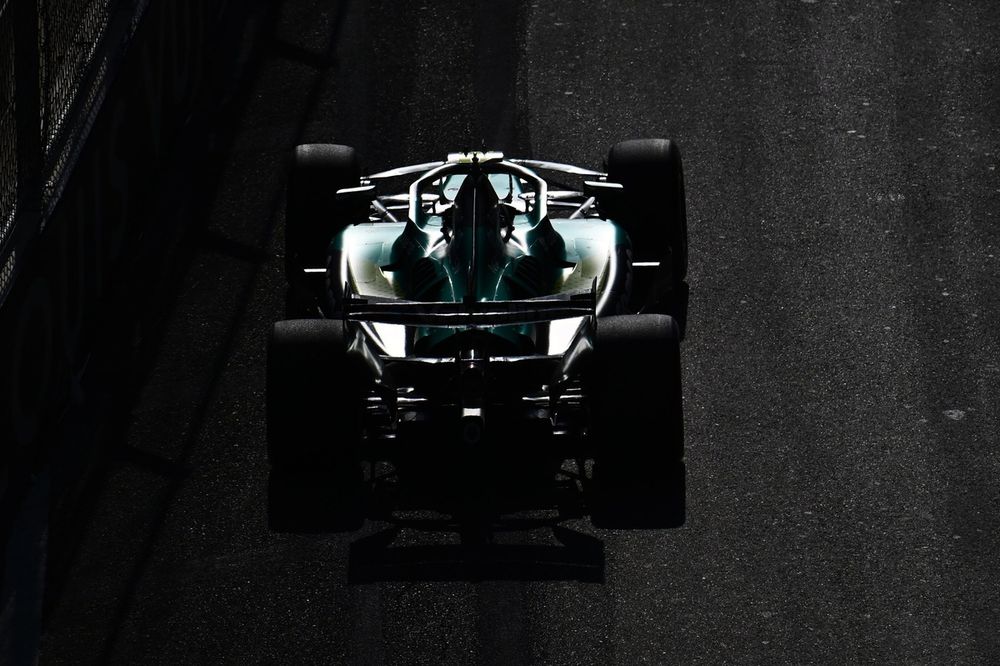
Honda says it has found no fault in Fernando Alonso’s new power unit after his abnormal loss of speed in the 2026 Azerbaijan Grand Prix.
Honda finds no engine fault in Alonso’s Baku car
Honda says Fernando Alonso’s new Formula 1 power unit is in good condition after the difficult Azerbaijan Grand Prix.
Alonso reported an unusual loss of power on the Baku straights before retiring on lap 20. Honda then reviewed the available data and found no confirmed engine fault.
The result was another difficult weekend for Aston Martin. Both Alonso and Lance Stroll retired, with Stroll stopping after seven laps and Alonso ending his race after 20 laps.
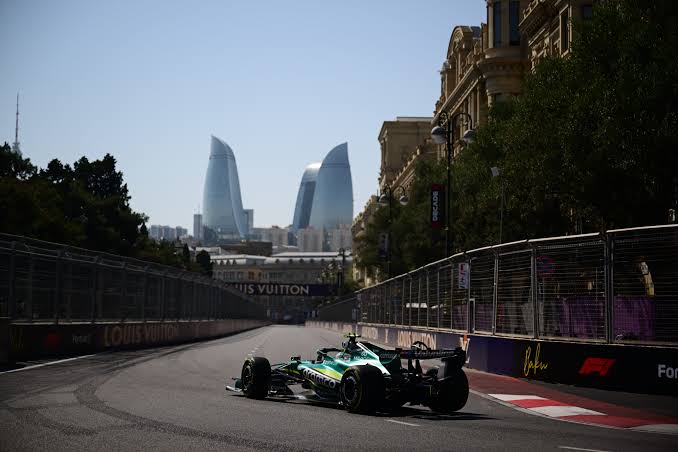
Fernando Alonso’s Aston Martin ended its Baku race early after the driver reported an unusual loss of speed on the straights.
Honda F1 trackside chief engineer Shintaro Orihara said the initial data review showed the engine was operating normally.
The investigation is not finished, however. Honda plans to examine the power delivery, energy management and GPS information in greater detail.
That distinction is important.
Honda has not identified the cause of Alonso’s reported loss of speed. It has only confirmed that the data currently available does not show an engine failure.
The new Honda engine had already needed attention
There was another issue earlier in the weekend.
The new power unit installed in Alonso’s Aston Martin produced irregular signals in the oil system during FP2. Honda chose to stop using it for the session and inspect the unit.
Engineers then identified the cause and replaced the affected components.
After that intervention, Honda says it saw no further engine problem in FP3, qualifying or the race.
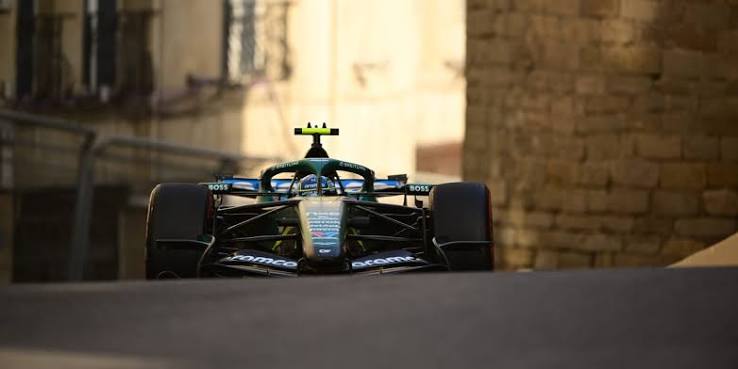
Shintaro Orihara is leading Honda’s trackside power-unit operation with Aston Martin in 2026.
That gives Honda confidence that the new unit can continue to be used.
Orihara also indicated that the engine is expected to remain in service for the rest of the 2026 season.
The statement comes after Aston Martin introduced several new Honda power-unit components for Baku. Those changes pushed both drivers beyond their permitted seasonal allocations and resulted in grid penalties.
Baku exposed Aston Martin’s lack of straight-line speed
The engine investigation comes against a wider performance problem.
Aston Martin struggled badly on Baku’s long straights. Alonso qualified 19th, while Stroll was 21st, and both drivers were sent to the back of the grid after their power-unit component penalties.
Alonso had already warned that the car was losing significant time on the straights.
That became even more visible during the race. The Aston Martin driver said the team appeared to be losing a large amount of time and needed to understand why.
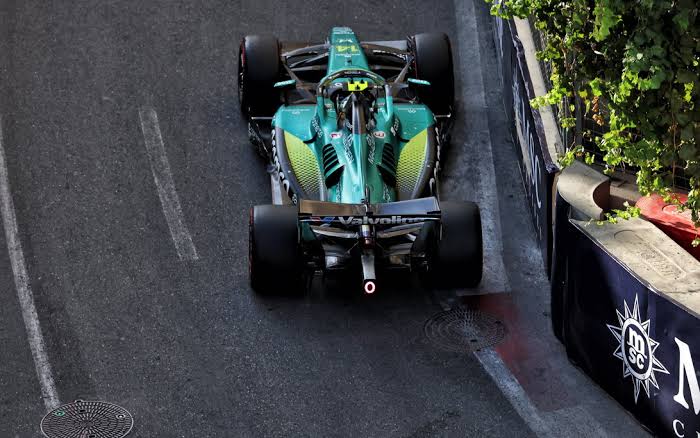
The AMR26 has struggled to generate the required combination of power and straight-line efficiency during the 2026 season.
Baku was always expected to be difficult for the Aston Martin package.
The circuit features two major straight-line sections, including a very long full-throttle run. That makes power delivery, energy deployment and aerodynamic drag especially important.
Honda had already acknowledged before the race that its current power-unit performance was a weakness on circuits with long straights.
That means Alonso’s reported loss of speed cannot automatically be attributed to a mechanical failure.
Honda still believes the power unit is usable
For now, Honda’s position is clear.
The manufacturer has not found evidence of an engine fault in the data reviewed so far. More analysis will follow at Honda’s facilities.
The earlier oil-system issue was addressed during the Baku weekend. Honda says the engine then completed FP3, qualifying and the race without detecting another power-unit fault.
That allows Aston Martin to move into the next races without automatically replacing Alonso’s new engine.
The bigger problem remains performance.
Aston Martin finished the Azerbaijan Grand Prix with both cars retired, while George Russell won ahead of Max Verstappen and Isack Hadjar.
For Honda and Aston Martin, the next step is therefore to determine whether Alonso’s unusual straight-line loss was caused by energy deployment, vehicle configuration, GPS data or another factor rather than a fundamental engine failure.
For now, the Honda Alonso Baku 2026 investigation remains open, but Honda says the new power unit itself is healthy and can continue through the rest of the season.
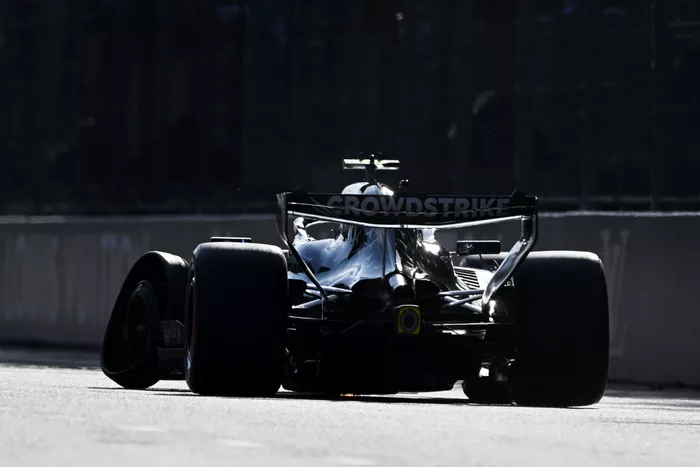
Mercedes never expected Kimi Antonelli to repeat his Monza comeback in Baku, where a difficult weekend ended with a fifth-place finish.
Baku was a very different challenge for Antonelli
Kimi Antonelli arrived in Azerbaijan after one of the biggest comebacks of his young Formula 1 career.
Three weeks earlier, the Mercedes driver had started the Italian Grand Prix from 19th and won at Monza. In Baku, however, the circumstances were completely different. A technical problem reduced his practice running, then a qualifying crash left him 16th on the grid.
Antonelli completed only 25 laps across Thursday’s practice sessions, while many rivals managed around 45. He then hit the inside wall at Turn 1 during Q1, causing enough damage to end his qualifying session.
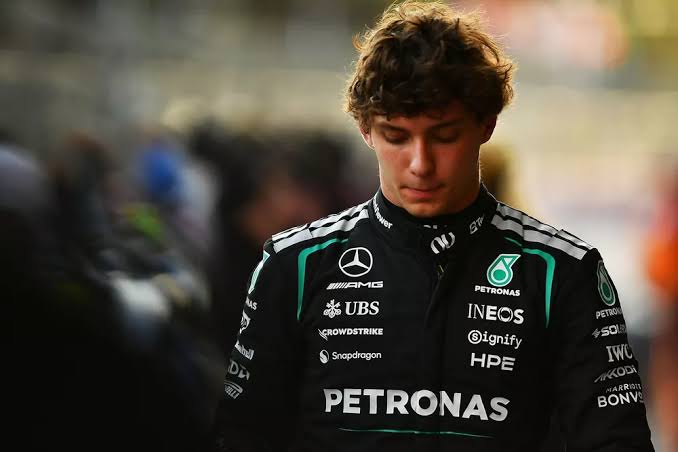
Antonelli’s difficult Baku weekend included limited practice running and a major Q1 accident.
That left Antonelli with very little time to understand the Mercedes before the race.
The difference was obvious compared with Monza. In Italy, he was already second by Lap 16. In Baku, he did not reach the top 10 until Lap 17.
He eventually finished fifth.
For Mercedes deputy team principal Bradley Lord, that result had to be judged on its own terms. Baku has different characteristics, different overtaking challenges and different demands on the car.
Mercedes therefore did not want Antonelli approaching the race expecting another Monza-style charge from the back.
Mercedes saw a strong recovery despite the difficult weekend
Antonelli’s race also required discipline.
He lost a position at the start, then worked through traffic without repeating the kind of aggressive approach that helped him win at Monza.
Lord highlighted that the Italian remained alert during the safety-car restarts. He also avoided several incidents that affected other drivers.
That was especially important at Baku.
The street circuit leaves very little margin for error. A mistake can quickly mean contact with the walls or another car.
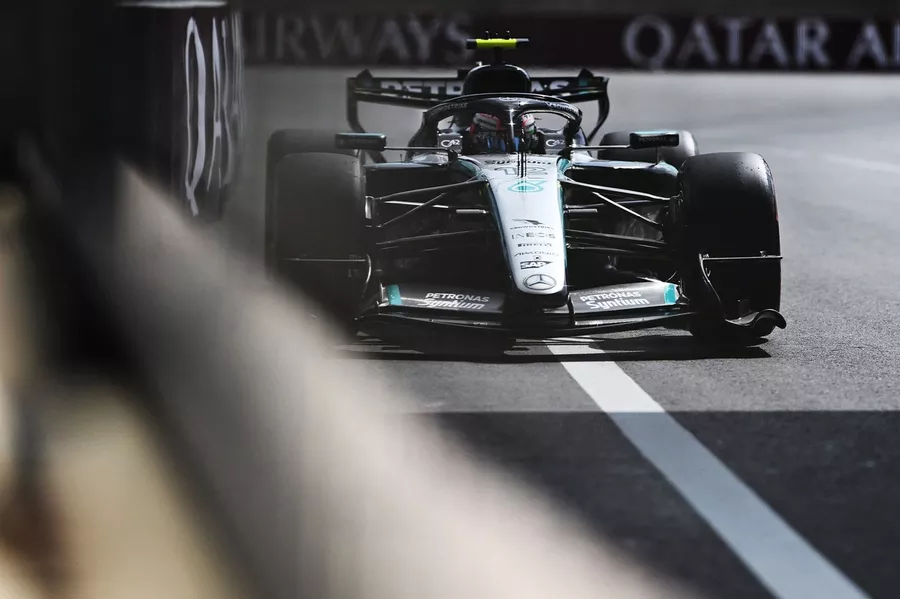
Antonelli won the Italian Grand Prix from 19th on the grid, creating the benchmark that made comparisons with Baku inevitable.
The contrast with Monza could hardly have been greater.
At his home race, Antonelli climbed through the field with strong pace and eventually passed George Russell for victory. Formula 1 described the result as a P19-to-P1 recovery.
In Baku, Antonelli did not have the same confidence in the car.
He said afterward that he had been “a step behind” throughout the weekend. He also described the race as a damage-limitation exercise after his qualifying mistake and later floor damage.
That explains why the fifth-place finish mattered.
The result was not another spectacular comeback. Instead, it was a controlled recovery from a difficult starting position.
Russell was operating at a different level
Another major factor was the performance of the other Mercedes.
George Russell delivered an exceptionally strong weekend in Baku. He topped practice, secured pole position and then converted it into his third victory of the 2026 season.
That made Antonelli’s task even harder.
Lord noted that Antonelli was behind Russell’s pace even when he had clear track ahead. Mercedes attributed that partly to Russell’s very strong weekend and partly to Antonelli not finding the same connection with the car.
The championship picture changed as a result.
Russell reduced Antonelli’s advantage from 81 points to 66 after winning in Baku.
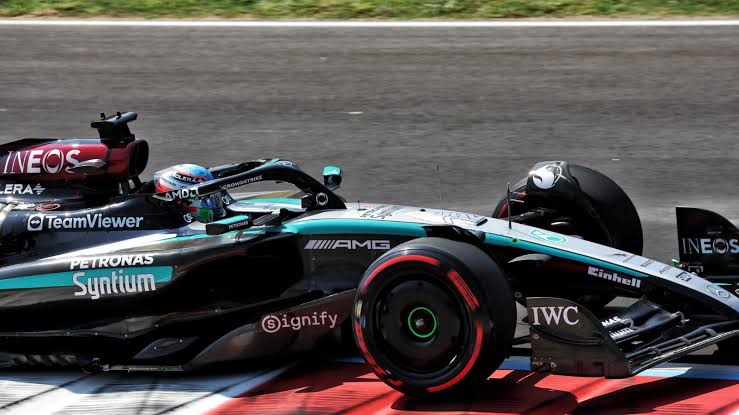
Russell’s Baku victory cut Antonelli’s championship lead to 66 points.
Still, Mercedes does not see the result as a major psychological concern.
Lord said the team’s drivers set their own demanding standards. Having two drivers capable of fighting for wins and poles is viewed internally as one of Mercedes’ strengths.
For Antonelli, the weekend was more about learning than momentum.
He called Baku his worst weekend of the season, but also said it had taught him a lot. His focus is already on returning to his previous performance level at the next race.
The championship fight moves on
The biggest difference between Monza and Baku was not simply the final result.
It was the amount of information available to Antonelli.
At Monza, he entered the race with strong confidence and quickly understood what the Mercedes could do. In Baku, his limited practice running and qualifying crash left him without the same reference points.
That made a second P19-to-P1 style recovery unrealistic.
Yet the fifth-place finish still limited the damage. Antonelli remains 66 points ahead of Russell in the championship after 15 rounds.
The next races will show whether Baku was simply a difficult weekend or the start of a more important change in the title battle.
For Mercedes, though, the message from Baku is already clear: Antonelli did not need a second Monza. He needed to recover, score solid points and move on.
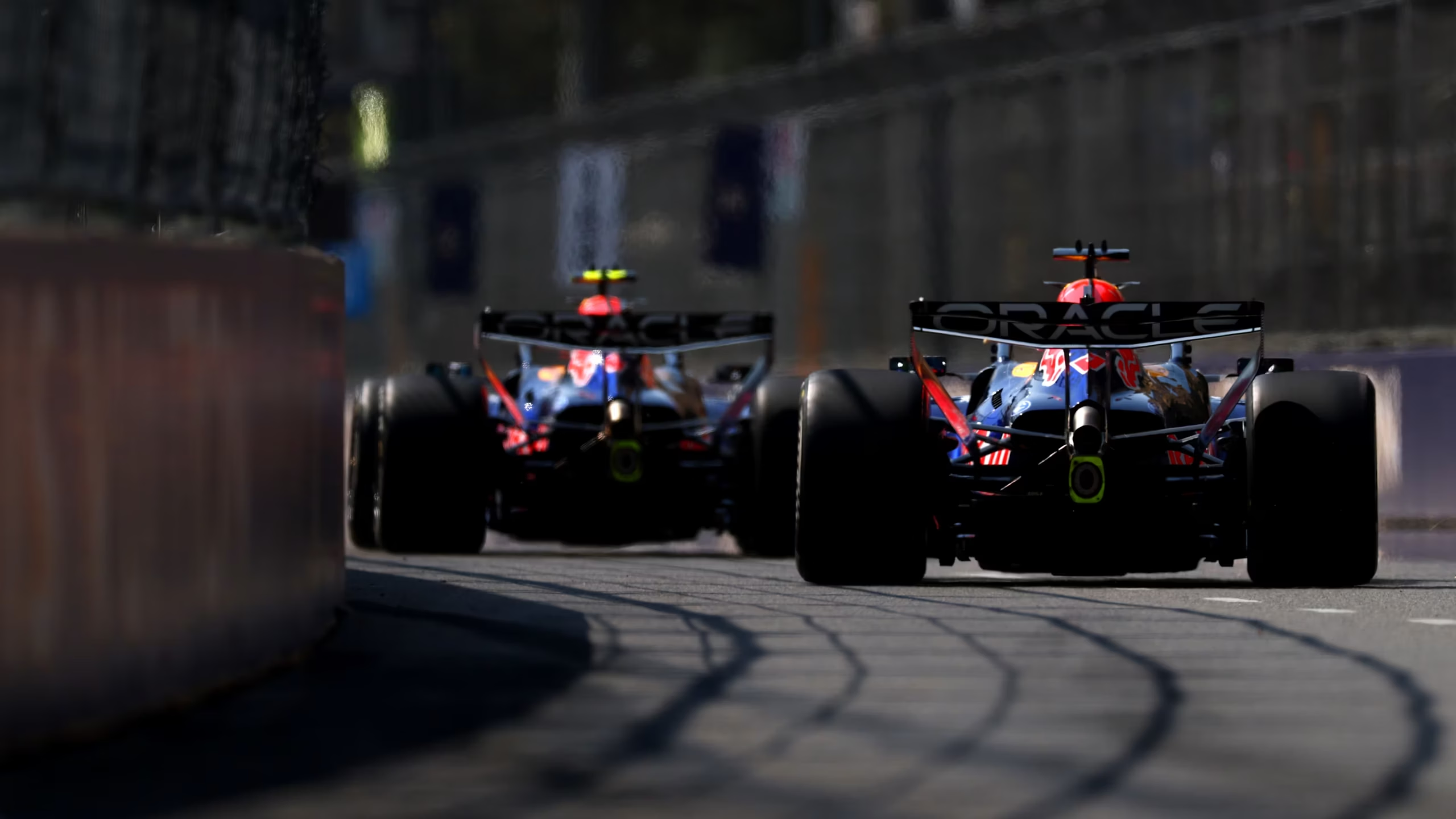
Hadjar delivers one of his strongest Red Bull weekends
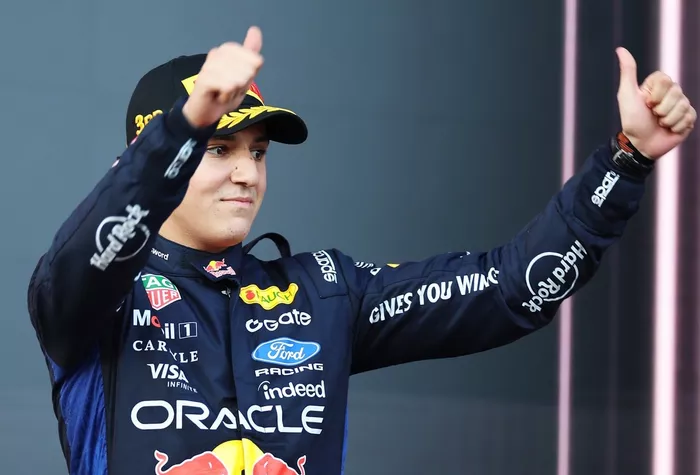
Isack Hadjar returned to Formula 1 in Baku after missing three races with a wrist injury. He immediately delivered a fourth-place qualifying result and then finished third in the Azerbaijan Grand Prix, completing his comeback with his second podium of the 2026 season and the third of his F1 career.
The performance impressed Red Bull team principal Laurent Mekies. He described Hadjar’s weekend as “outstanding” and highlighted not only his pace, but also the way he managed the race and communicated with the team.
Hadjar’s return was especially demanding because Baku leaves almost no room for mistakes. The Frenchman built his speed gradually through practice before qualifying fourth. He then converted that confidence into a podium over 51 laps.
Hadjar’s Baku return ended with his third F1 podium
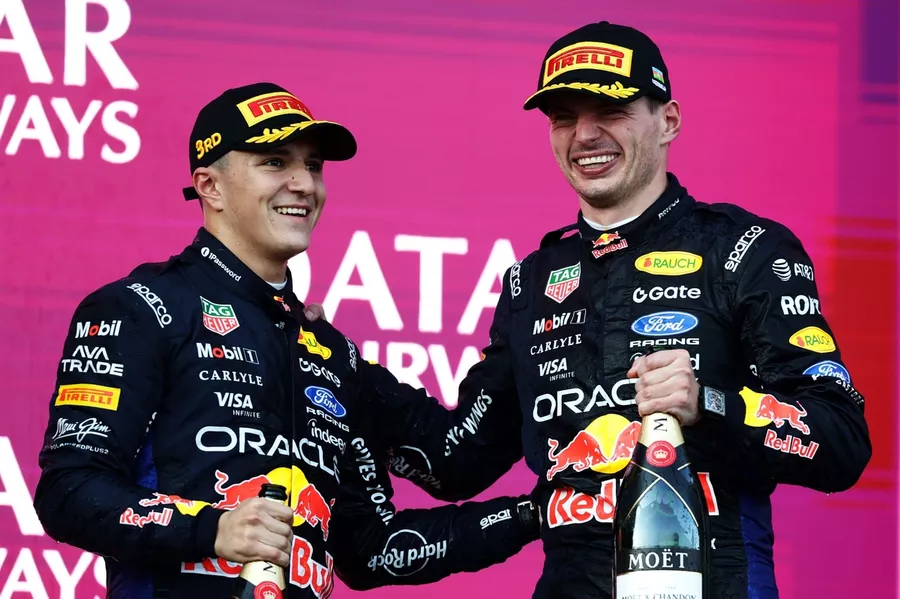
Hadjar finished third in Baku, calling it his first “proper” podium earned on pure pace.
The result came after a lengthy absence.
Hadjar injured his wrist during the summer break and missed Zandvoort, Monza and Madrid. Red Bull only confirmed his return for Baku after his recovery progressed sufficiently.
Once back in the car, however, he avoided taking unnecessary risks.
Mekies said Hadjar approached the weekend calmly. That was important on a street circuit where one mistake can end a session immediately.
The Frenchman also said after the race that he built his weekend “step by step.” His wrist held up through the race, although he noted that it was still somewhat numb afterward.
Red Bull noticed something beyond the raw pace
Hadjar’s speed was only part of the story.
Red Bull was particularly impressed by his race management and radio communication. During the opening stint, the team asked Hadjar to allow Max Verstappen through.
Hadjar followed that instruction without compromising either Red Bull car.
He stayed close enough to Verstappen while managing his tires. Later, he asked whether he had permission to attack, but the team instructed him to maintain a clean approach.
That restraint was important.
Hadjar understood that fighting his teammate unnecessarily could damage both cars. Instead, he focused on maximizing Red Bull’s overall result.
Hadjar qualified fourth on his F1 return
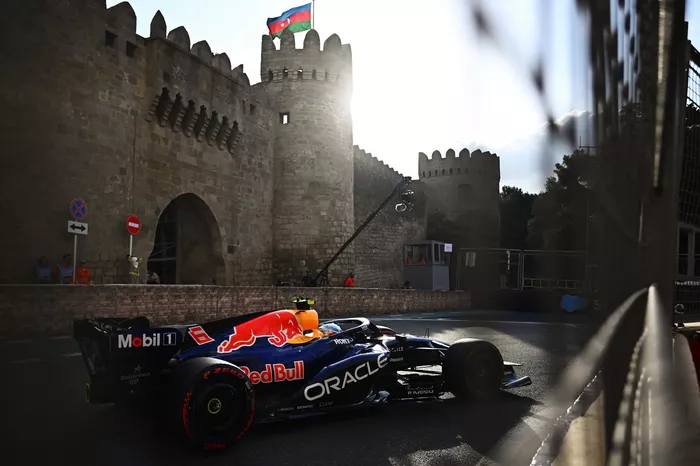
Hadjar qualified fourth in Baku, finishing ahead of Max Verstappen and showing strong pace immediately after his three-race absence.
His qualifying performance was already a major indicator.
Hadjar reached Q3 and posted a 1:43.500, placing fourth on the grid. He was the highest-placed Red Bull driver because Verstappen qualified eighth after a difficult session.
It was also Hadjar’s first qualifying session since the Hungarian Grand Prix.
The weekend therefore showed that his speed had not disappeared during his time away.
More importantly for Red Bull, his performance was supported by a more measured approach. Mekies specifically pointed to his emotional control and the progress he has made in handling difficult situations from inside the cockpit.
Hadjar is showing more maturity alongside speed
The change is notable because Hadjar’s development has not been limited to lap time.
Mekies said Red Bull has seen progress in several areas since the driver joined the team. That includes technical feedback, maturity, team integration and speed.
The Baku weekend brought those elements together.
Hadjar did not need to force the issue against Verstappen. He stayed disciplined, protected his tires and remained ready to capitalize when the opportunity arrived.
That approach helped him move into third after Oscar Piastri made a mistake at Turn 1 late in the race.
Red Bull’s upgraded RB22 also responded well
Hadjar returned to an updated Red Bull in Baku, with changes to the floor, diffuser and sidepods.
The car also played a role.
Red Bull introduced updates in Baku, including changes to the floor, diffuser and sidepods. Hadjar said the RB22 felt better than when he last drove it in Hungary.
He initially lost track time because of a gearbox issue in FP1. Even so, he completed enough laps in FP2 to begin rebuilding his confidence.
By qualifying, the package was competitive enough to put both Red Bull drivers near the front.
Hadjar then delivered the result that Red Bull wanted.
A strong weekend after Red Bull renewed his contract
The Baku podium also came only days after Red Bull confirmed that Hadjar would continue alongside Verstappen for 2027.
The team activated its option to retain him. Mekies said the decision was straightforward after seeing Hadjar’s progress in his first part-season with the senior Red Bull team.
The timing now looks significant from a sporting perspective.
Hadjar returned from injury and immediately produced one of his most complete F1 weekends. He showed speed in qualifying, discipline during the race and stronger control over the radio.
The Isack Hadjar Baku return therefore gave Red Bull more than a podium. It provided another indication that the 21-year-old is developing into a more complete Formula 1 driver.
For Red Bull, the next step is to see whether that combination of speed, maturity and race discipline continues through the final races of 2026.
-

 NOW TRENDING1 month ago
Tesla Cybercab Gets September 3 Austin Launch Date
-
 INTELLIGENT MOBILITY2 months ago
GM Updates Infotainment System With Smarter Features
-
 NOW TRENDING2 months ago
2027 Audi Q9 and SQ9 Debut as Brand’s Largest SUVs
-
 NOW TRENDING2 months ago
2027 Hyundai Tucson Spied With New Design and Hybrid Power
-
 NOW TRENDING2 months ago
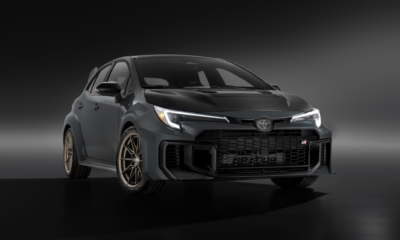
2026 Toyota GRMN Corolla Debuts as the Ultimate Hot Hatch
-

 NOW TRENDING2 months ago
Every GM Assembly Plant Operating in the U.S. in 2026
-

 NOW TRENDING2 months ago
Ferrari Sold Out Through 2027 as Demand Hits New High
-

 NOW TRENDING1 month ago
Audi’s New SUVs Could Help Reverse Its Sales Decline in 2026
You must be logged in to post a comment Login