
Ayrton Senna
The McLaren Senna has been designed, engineered and developed with single-minded purpose: to be the ultimate McLaren track-concentrated car for the road. Legalised for road use, but not sanitised to suit it, the new Ultimate Series deliberately compromises McLaren’s trademark breadth of supercar daily usability; instead it provides the purest connection between driver and car, to deliver the most intense circuit experience of any road McLaren.
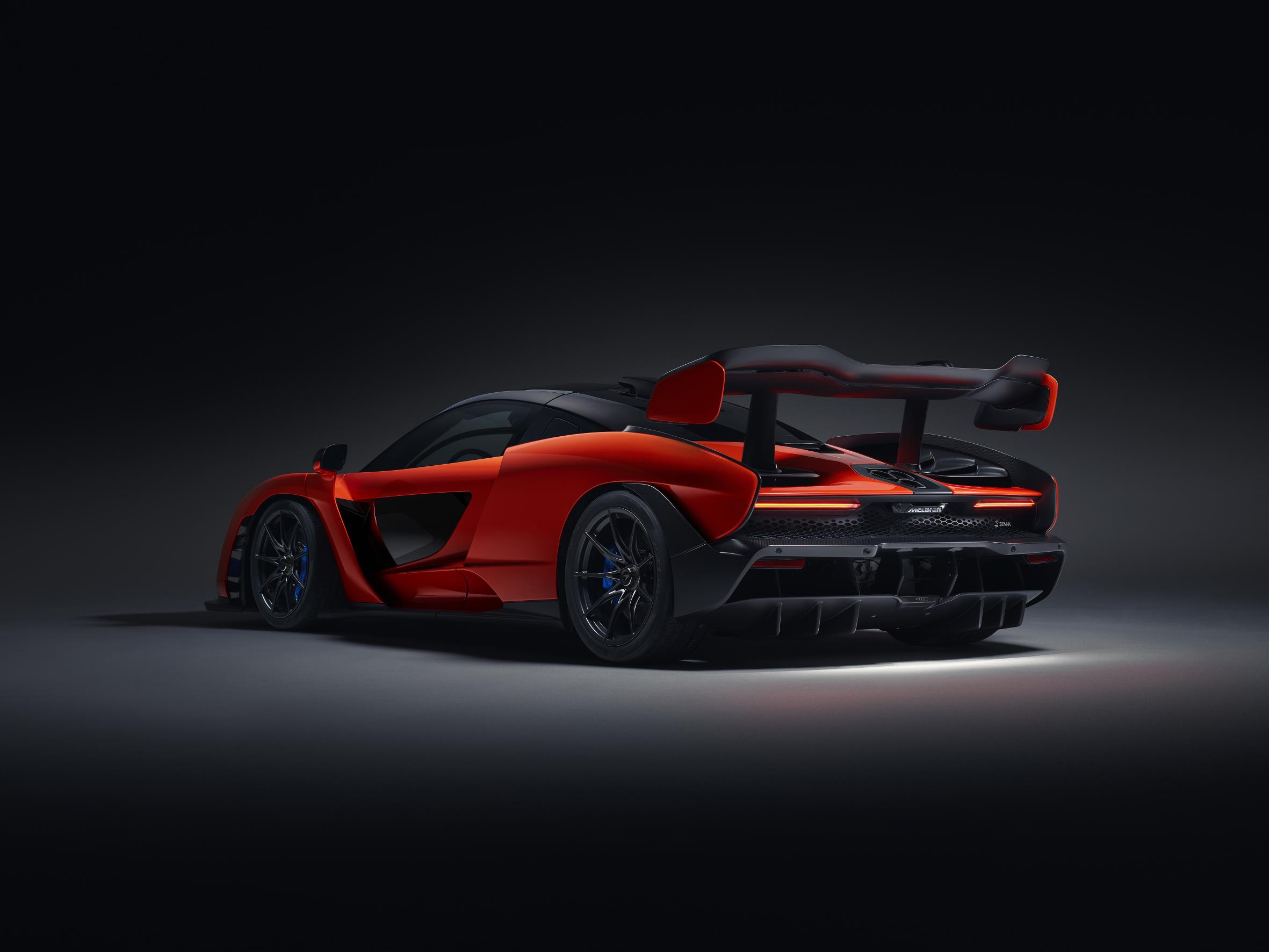
The technical recipe is classic McLaren Automotive supercar, a pedigree established and earned in the short time elapsed since the pioneering sports and supercar company was founded in 2010, but taken to another level entirely in the McLaren Senna. Ultra-lightweight construction, with carbon fibre chassis and body panels. Mid-mounted, twin-turbocharged V8 McLaren engine. Rear wheel drive. Sophisticated race-derived suspension that delivers an unparalleled blend of control and dynamic balance. Electro-hydraulic steering that rewards accurate inputs and gives the purest feedback. And two seats – but with absolute focus on the importance of the one that the driver occupies.
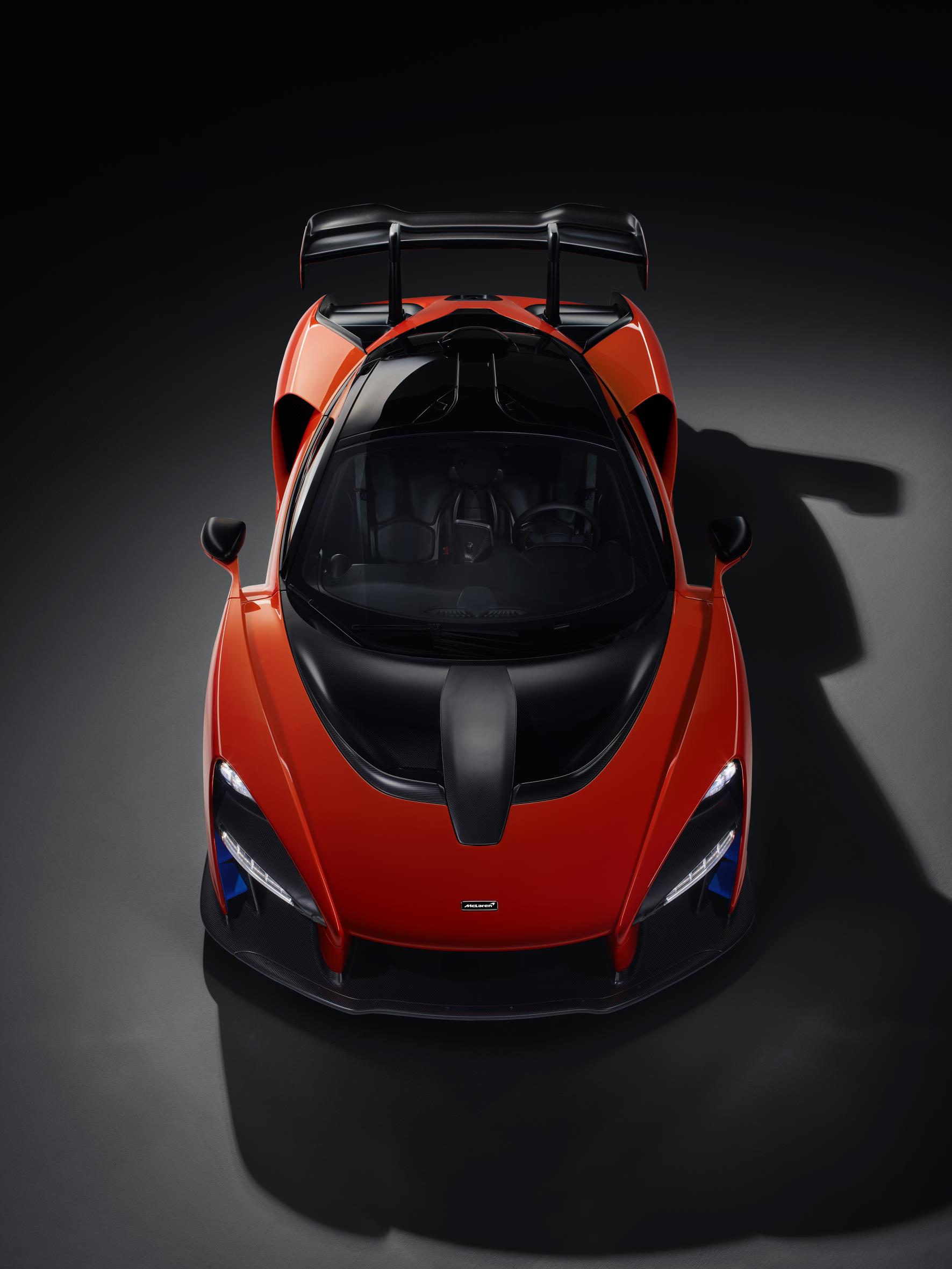
The carbon fibre Monocage III chassis that forms the core of the McLaren Senna is a further development of the structure that underpins the McLaren 720S and the strongest monocoque ever built by McLaren for a road-legal vehicle. Every body panel is made from carbon fibre, in line with a relentless focus on the weight of every individual component that has resulted in the McLaren Senna being the lightest road-legal McLaren since the iconic F1 road car, at just 1,198kg.
With maximum power of 800PS (789bhp), the McLaren Senna enjoys a power-to-weight ratio of 668PS per tonne. This statistic immediately underlines the performance credentials of the newcomer to the McLaren Ultimate Series, a product family introduced with the McLaren P1â„¢ that is reserved for the rarest and most extreme McLaren cars.

Unsurprisingly, there are strong echoes in the new McLaren Senna of the incredibly focused philosophy behind the McLaren P1™; where the latter was designed to be the best driver’s car on road and track, the ambition for the McLaren Senna is for it to be the best road-legal track car, setting a new benchmark for circuit excellence with track prowess absolutely taking precedence.
“The McLaren Senna is a car like no other: the personification of McLaren’s motorsport DNA, legalised for road use but designed and developed from the outset to excel on a circuit. Every element of this new Ultimate Series McLaren has an uncompromised performance focus, honed to ensure the purest possible connection between driver and machine and deliver the ultimate track driving experience in the way that only a McLaren can.â€
Mike Flewitt, Chief Executive Officer, McLaren Automotive
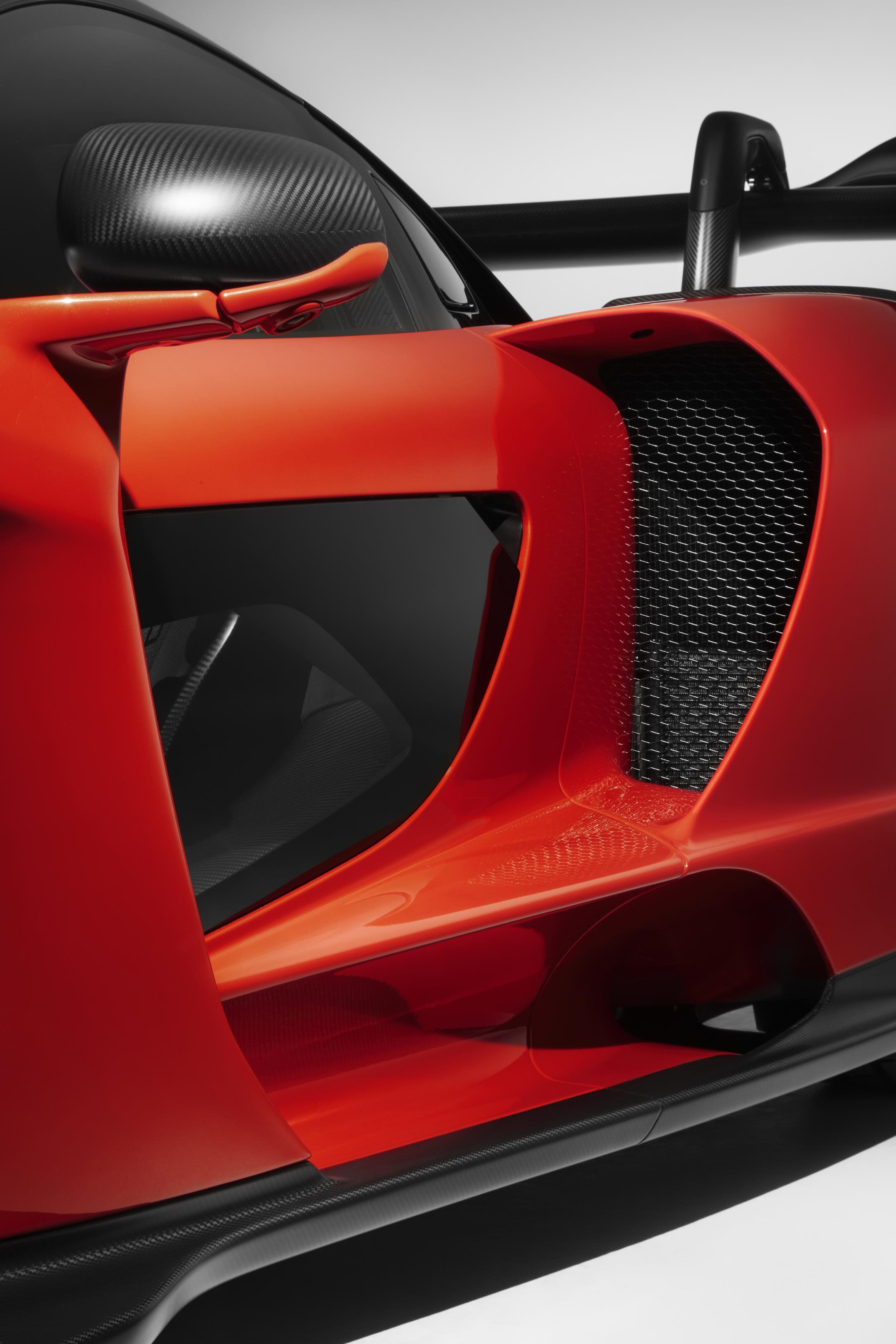
Given the famous name that this new McLaren bears, its unrivalled extreme performance and dynamic excellence should be no surprise. The legendary Formula 1 racing driver was renowned for his exceptional powers of concentration and single-minded focus on being the best on the track. The McLaren Senna driver is hardwired into the dynamic experience the car delivers. Their connection to the car comes through the steering wheel, the pedals and the seat. Every sensation that comes from driving at speed is precisely communicated, putting the driver in total control.
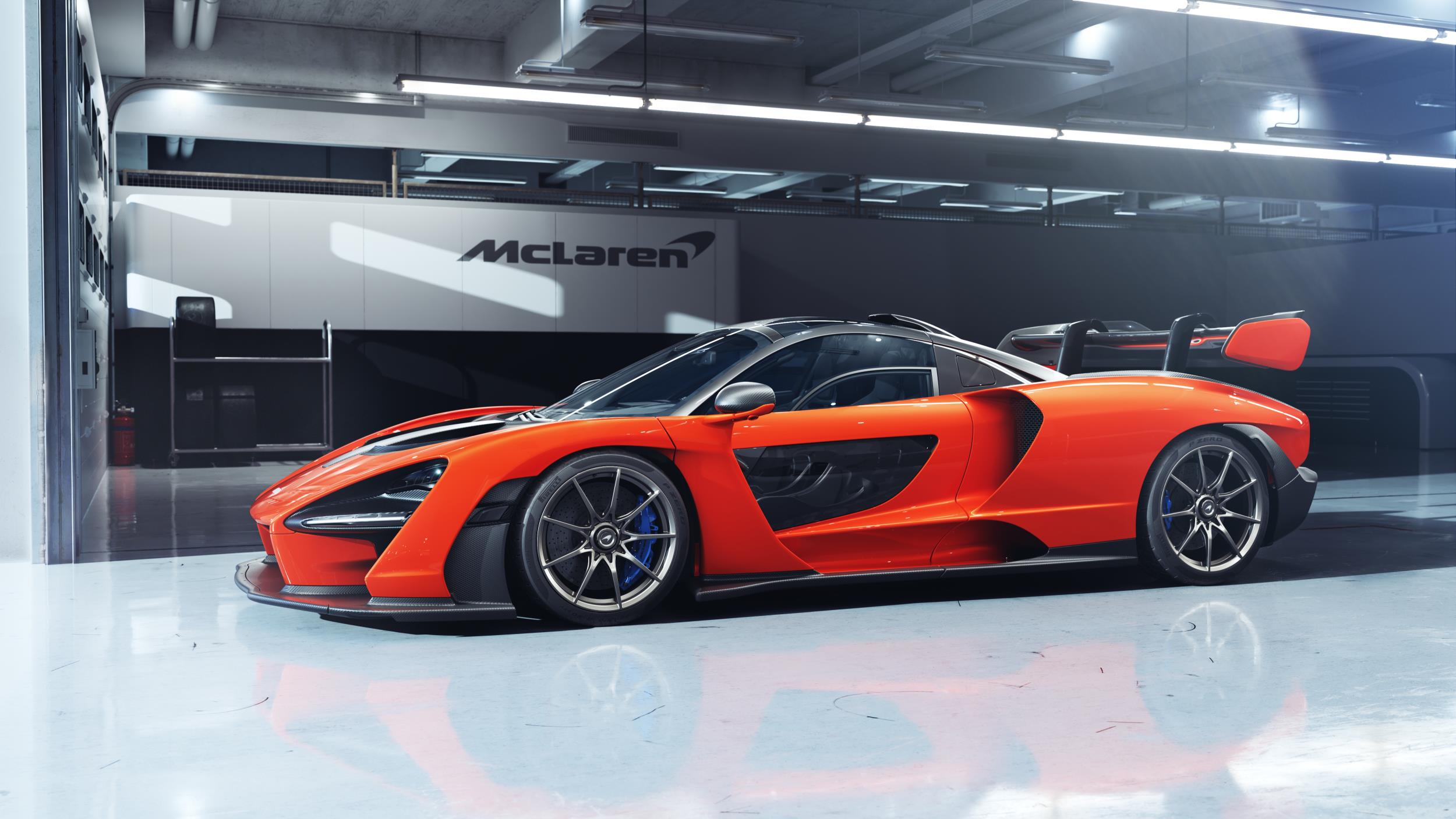
The indomitable spirit of Ayrton Senna has always been alive at McLaren and the McLaren Senna will further amplify his global legacy and link to the McLaren brand.
“Our family is extremely proud of the naming of the new Ultimate Series McLaren Senna. This is the first project that really connects with Ayrton’s racing spirit and performance. The McLaren Senna honours my uncle because it is so utterly dedicated to delivering a circuit experience that allows a driver to be the best they can possibly be. There is an absolute, seamless connection between car and driver and this pure engagement, these sensory cues that a driver responds to and relies upon, ensure an experience so focused and immersive that you are left in awe of the depths of excellence the McLaren Senna possesses.â€
Bruno Senna, racing driver and McLaren Ambassador

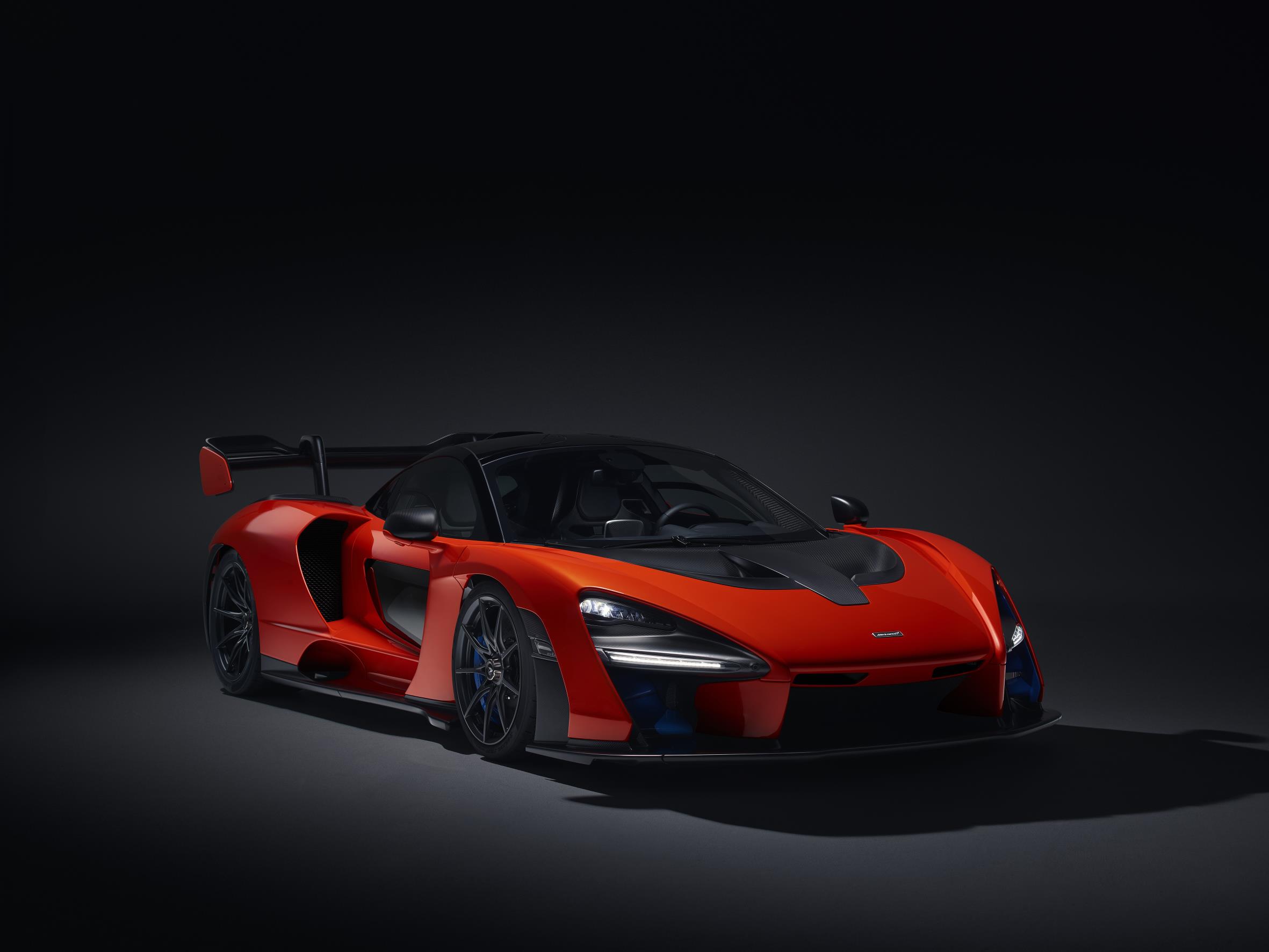
Visually, the McLaren Senna shocks. The first impression is of an aggressive, unforgiving machine, organic shapes having given way to a design language that is purposely fragmented in pursuit of absolute performance. With downforce and aerodynamic balance the guiding principles, this car is the purest expression yet of the ‘form follows function’ design philosophy embraced by McLaren.
Viewed from above, the body is nature’s most efficient shape – a teardrop – with body components ‘clipped’ onto the cabin to deliver optimal aerodynamic performance. McLaren’s designers went to extremes by cutting open the ‘shrink-wrapped’ body to reduce weight visually and functionally; while recognisably a McLaren in proportional terms, you cannot follow a single line from the front to the rear without it passing through a functional air intake or vent.
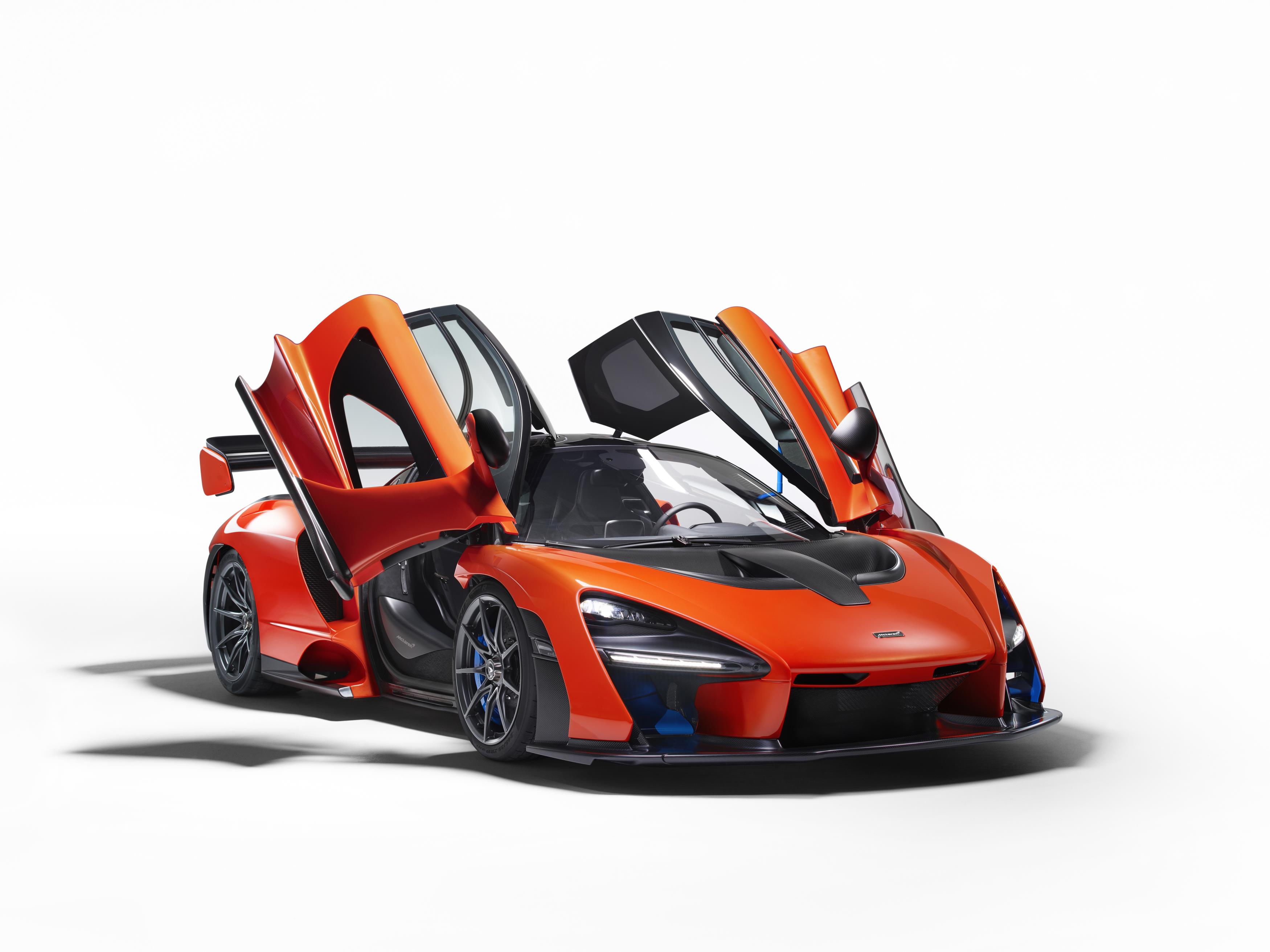
The McLaren Senna introduces a new generation of ground-breaking front and rear active aerodynamics, raising downforce and aero control to an unprecedented level to ensure the performance potential can be fully exploited. Every element of the body design, from the front splitter to the double diffuser at the rear, has been developed to optimise downforce and aerodynamic balance, whether under braking, adjusting the throttle mid corner, or applying power on corner exit. There is also an opportunity for added visual drama, with the front aero blades available finished in one of five ‘By McLaren’ theme specifications that include Azura Blue and McLaren Orange. The same linked accent colour can also feature on the brake calipers, visible door gas struts and seat trims.
Cooling requirements played an equally crucial role in the overall design of the McLaren Senna: the rear clamshell, for example, was born from the twin demands of aerodynamic and cooling performance, with prominent ‘gurney’ flaps ahead of a succession of stepped louvres directing air away from the rear deck and down the sides of the body. The resulting area of low pressure draws hot air out from the high-temperature radiators and engine bay, with the louvres ensuring that the airflow does not impact the efficiency of the rear wing. The ‘slash cut’ finishers of the unique Inconel and titanium exhaust exit through the lowest rear deck (measured at the trailing edge) of any McLaren road car, the angle of the pipes directing exhaust gas away from the rear wing. The slim, rear LED taillights have been subject to the same exacting attention to detail as the headlights and every other aero-relevant component, the single-blade design minimising interruptions to airflow.
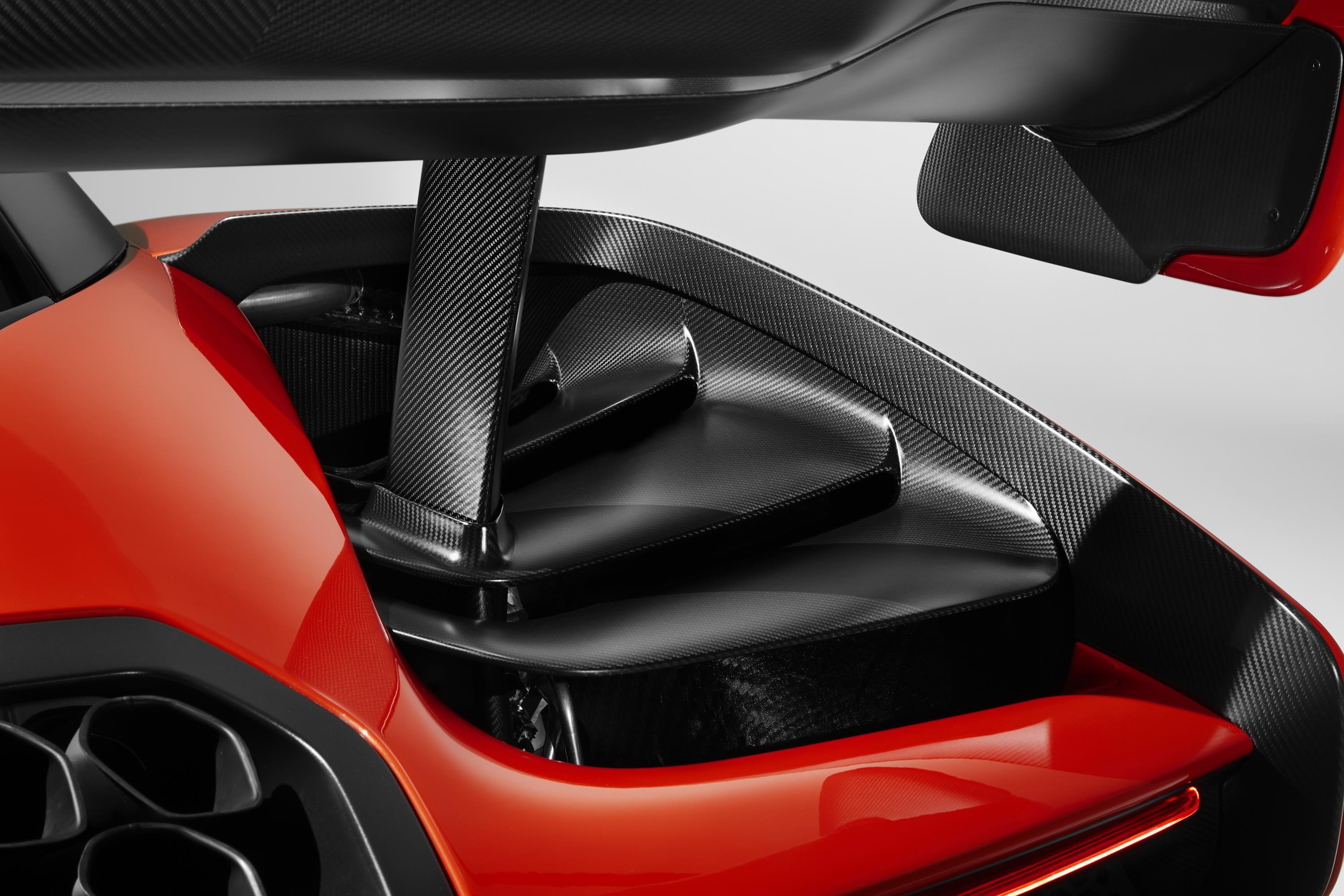
The double diffuser at the rear of the car is unmistakable. Created as a single piece of carbon fibre, it begins under the rear axle and as it increases in height accelerates air out from under the vehicle. This creates a low-pressure zone that sucks the McLaren Senna even tighter to the ground. Equally unmissable is a huge, double-element carbon fibre rear wing that at its highest point sits 1,219mm from the road when the car is stationary. Hydraulically actuated and with a planform surface area of more than 6,500cm2, the wing constantly adjusts to optimise the levels of downforce and aerodynamic balance and functions as an airbrake under heavy braking.
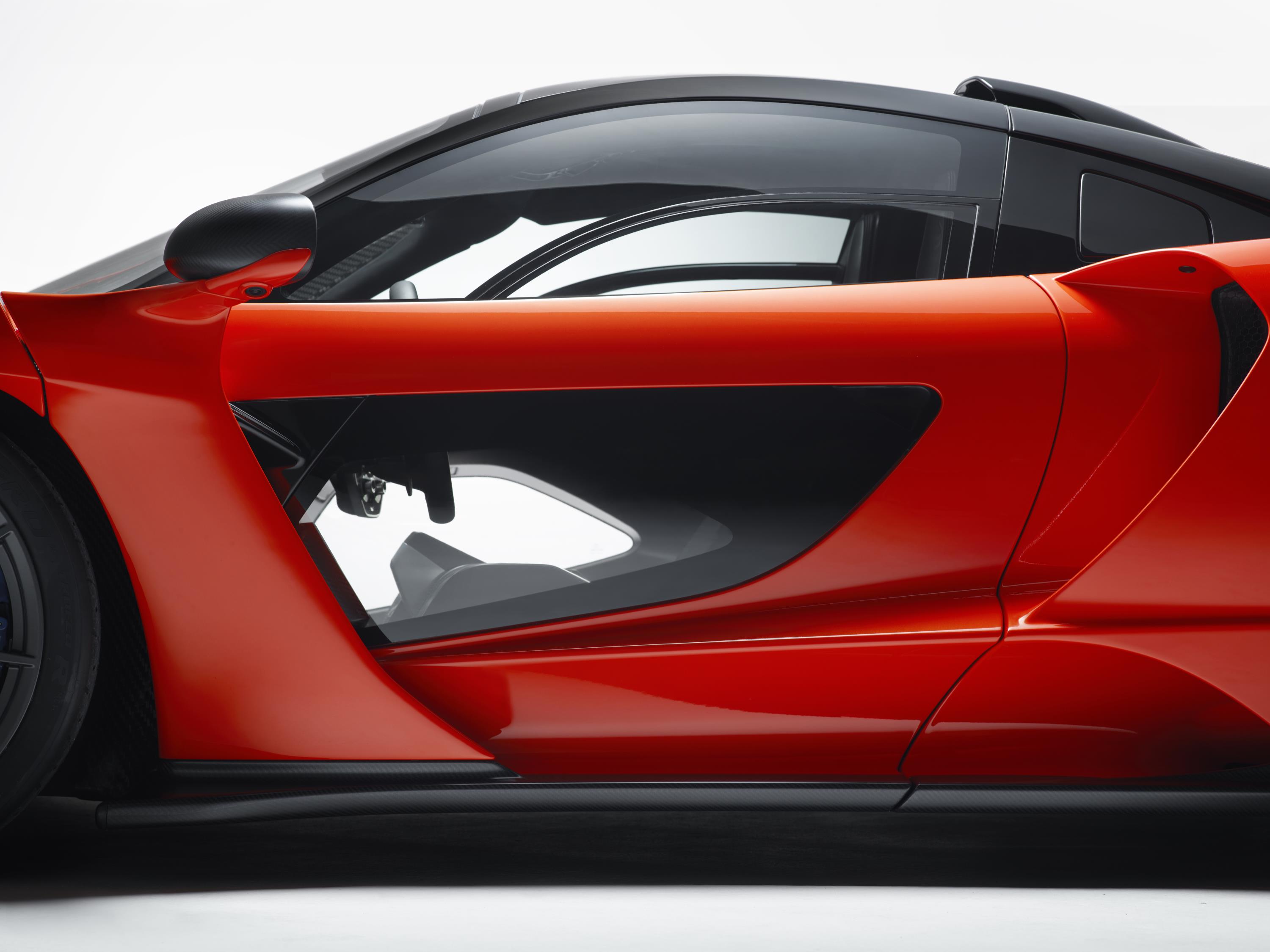
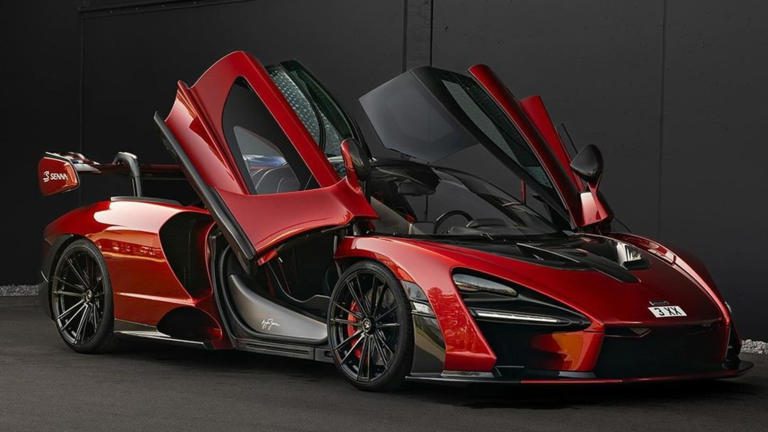
The depths of connection with the new Ultimate Series car will be experienced in full once in the driver’s seat and on a circuit, but the intimate relationship with the McLaren Senna begins before that, simply by entering the car. McLaren F1-inspired dihedral doors hinge forwards and upwards, opening with a portion of the roof to expose noticeably low sills and an aperture of sufficient size for drivers or passengers to easily enter or leave the cockpit, even when wearing a helmet and a race suit.
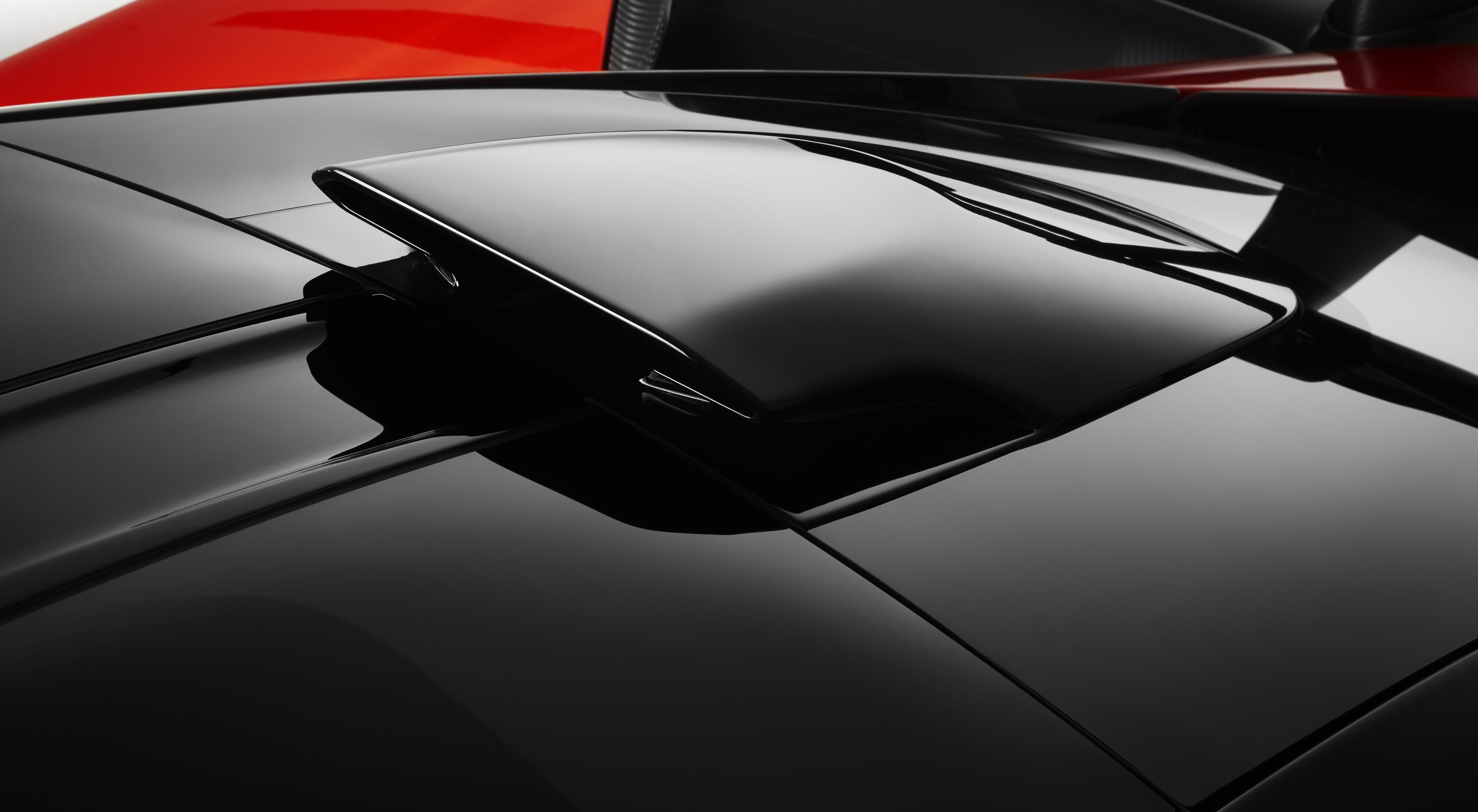
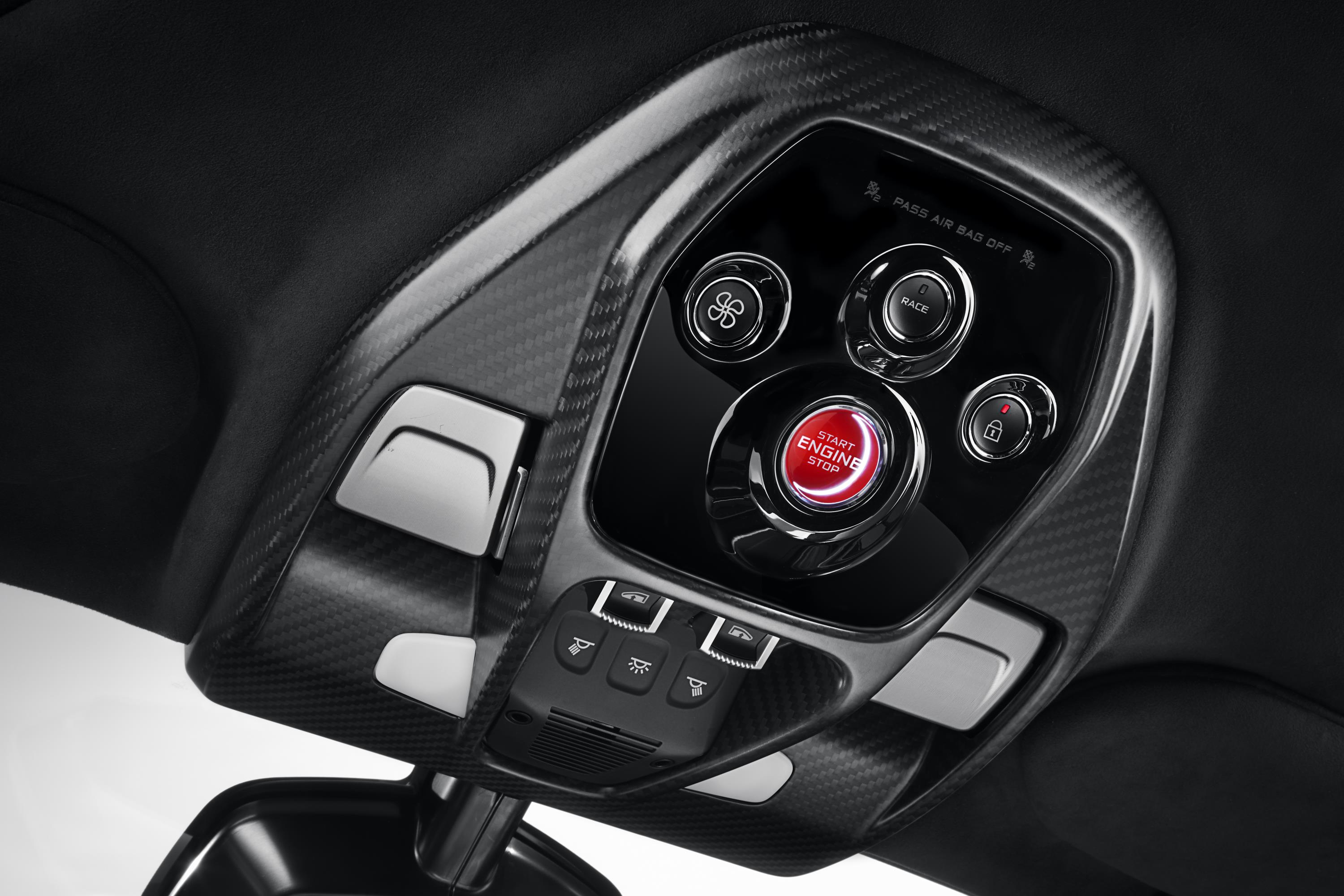
The doors, which are constructed of carbon fibre, feature two-piece glass side windows with a fixed top part and a smaller opening section below. Both the door upper (effectively part of the roof) and the lower half of the door side can be specified with glass as a replacement for the carbon fibre panels that are standard-fit. This enhances the sense of space inside the cockpit and in the case of the glazed door lower, dramatically reinforces the visual connection between driver and track environment. To accommodate the door design, the release mechanisms and window switches are housed alongside the engine start button in a carbon fibre console above the driver’s head.
The cockpit environment reflects the stripped-back, functional nature that is evident in every aspect of the McLaren Senna. Visual carbon fibre is used extensively. Dependent on customer preference, Alcantara® or leather covers the seats, facia and side airbags, but the absence of any other interior trim both saves weight and reveals the construction of the doors. Even the gas struts are exposed to save vital grams.
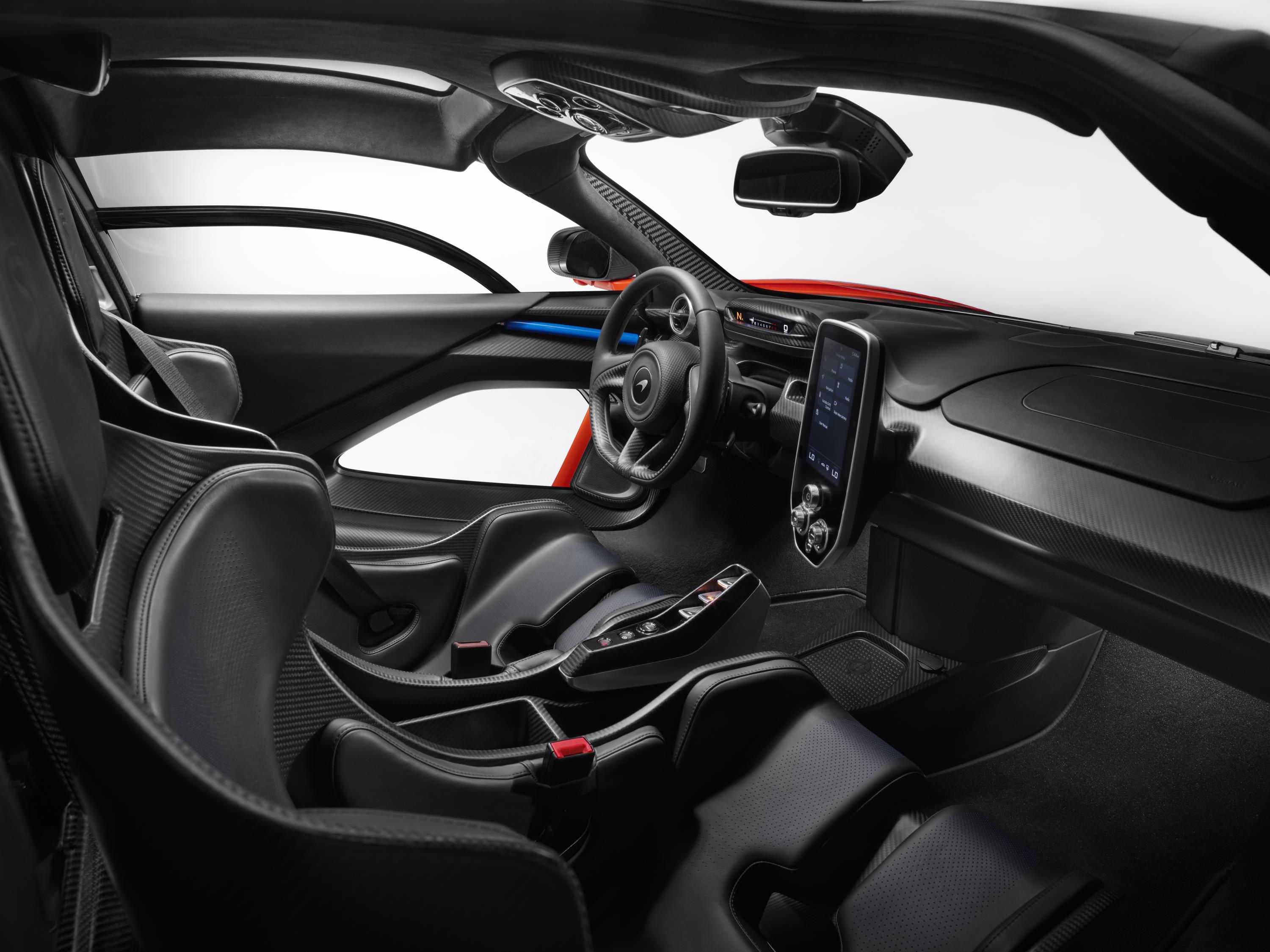
Driver controls have been deliberately kept to a minimum to reduce ‘cockpit clutter’ and the three-spoke steering wheel is free of buttons and switches, creating a pure focus on sensory feedback. All the information the driver needs comes from the high-definition McLaren Folding Driver Display and central infotainment screen. And while McLaren designers stopped short of removing the second seat altogether, there is no contingency for excess baggage; storage space is restricted to a chamber behind the seats integral to the Monocage III with just enough room for two helmets and race suits.
Codenamed M840TR, the 4.0-litre twin-turbocharged V8 engine at the heart of the McLaren Senna is the most powerful road car internal combustion engine ever created by McLaren, producing 800PS (789bhp) and torque of 800Nm (590 lb ft). The engine’s dry sump lubrication and flat-plane crankshaft are technologies with their roots in motorsport. Lightweight internal components reduce mass in the powertrain and combine with ultra-low inertia, twin-scroll turbochargers and electronically controlled wastegates to deliver lightning-quick throttle responsiveness.
From the outset of the programme, McLaren engineers determined that the full mechanical symphony of the engine – from intake to combustion to exhaust – had to be central to the sensory experience. Those fortunate enough to drive the McLaren Senna will feel the cockpit come alive with the sound of air rushing into the roof-mounted ‘snorkel’ intake and mixing in the carbon fibre plenum, producing precisely tailored high-frequency sounds that deliver a vivid experience. At the same time, low-frequency sounds from the engine are transferred into the cockpit through unique engine mounts, exciting the double-walled rear structure of the carbon fibre Monocage and amplifying every change in engine revs, making it seem almost as if the V8 is sitting alongside the driver.
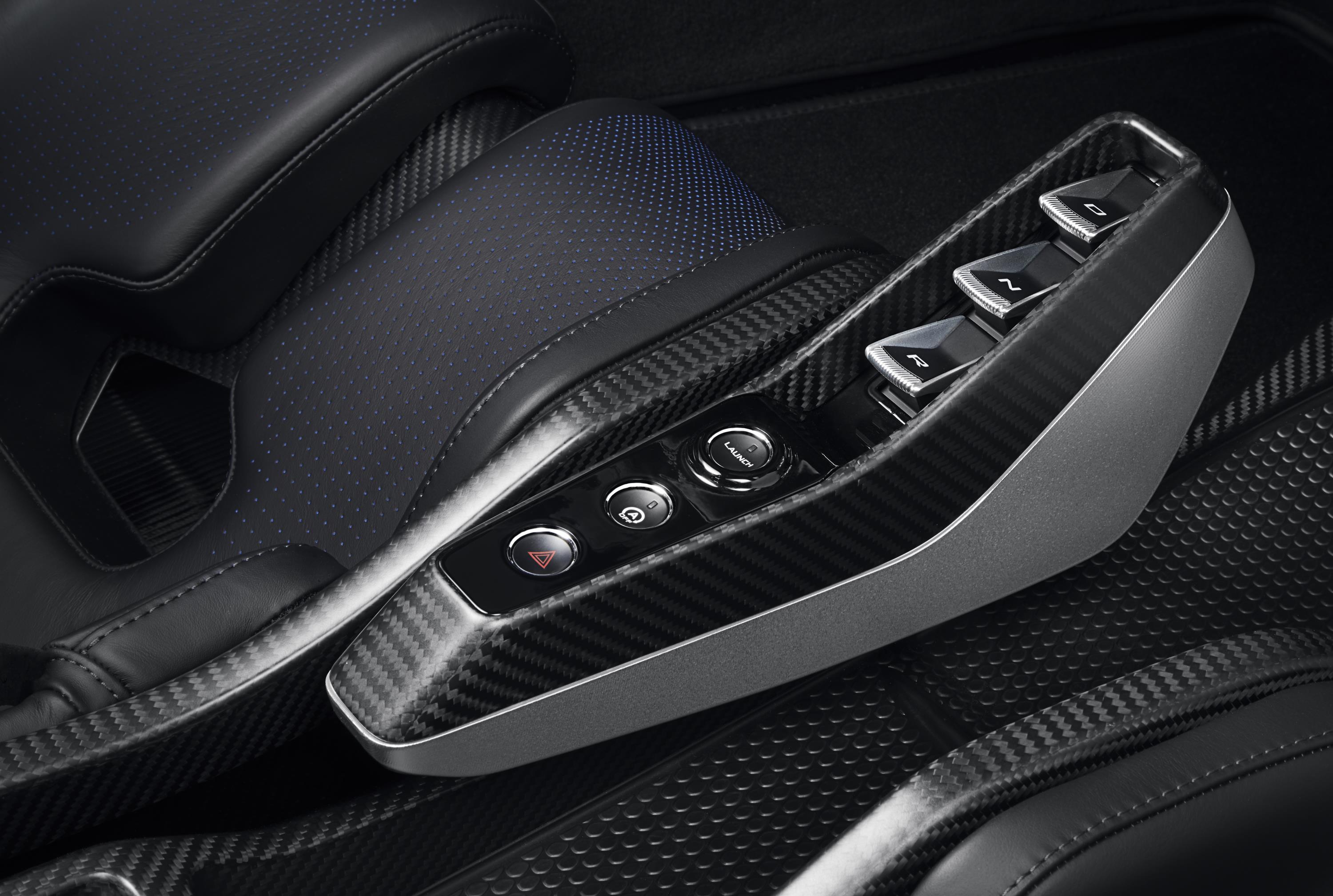
A dual-clutch, seamless-shift, seven-speed gearbox delivers power to the rear wheels. A fully automatic mode is the default, with the driver able to choose full manual control of gear shifts via paddles mounted on a rocker behind the steering wheel. The elongated carbon fiber paddles are optimized to be used both with or without racing gloves, and create a deep sense of mechanical connection with the McLaren Senna.
The character of the 4.0-litre twin-turbo McLaren V8 and the transmission can be tailored using the Active Dynamics Panel, with the driver having a choice of Comfort, Sport or Track powertrain modes. Whatever the mode, performance is suitably savage. Throttle response is immediate and neck-snapping, pinning the driver back into their seat.
“The McLaren Senna delivers true performance, all the way to the limit of a driver’s ability. With a truly astonishing power-to-weight ratio, this car is about performance that is accessible and attainable, yet at the same time exciting and challenging for the very best drivers in the world – and with an intense, sensory experience to match.â€
Andy Palmer, Vehicle Line Director, McLaren Ultimate Series
RaceActive Chassis Control II (RCC II) hydraulic suspension works in harmony with front and rear active aerodynamics and the ultra-rigid Monocage III to deliver an incredibly intensive experience on a circuit. Every element of the McLaren Senna has been designed to maximise the connection between driver and car, at all speeds and in every situation. Painstaking work on the damping and steering weight has ensured that the car feels fully ‘alive’ well below its upper limits; even when the suspension is not fully loaded and tyres not absolutely compressed, the rich texture of communication blends with the feedback transmitted to the driver as aero levels and cornering speeds build.
RCC II is a double-wishbone suspension system that additionally features hydraulically interconnected dampers and a hydraulic replacement for conventional mechanical anti-roll bars. It also further develops the variable stiffness and ride height technology first seen in the pioneering hydraulic system in the McLaren P1â„¢.
The adaptive dampers are interconnected hydraulically, both left to right and front to back, with two valves per damper to independently adjust for compression and rebound. The stiffness of the McLaren Senna is separately controlled using a kinetic roll system, or K-damper. The continuously variable RCC II system advances the control strategy introduced on the McLaren 720S and also adds a Race mode, which introduces a lower ride height, lower centre of gravity and significantly stiffer suspension.
Dynamic parameters are adjusted by the driver through the Active Dynamics Panel located on the centre console to select Comfort, Sport or Track modes or via a switch in a roof-mounted panel to access Race mode.
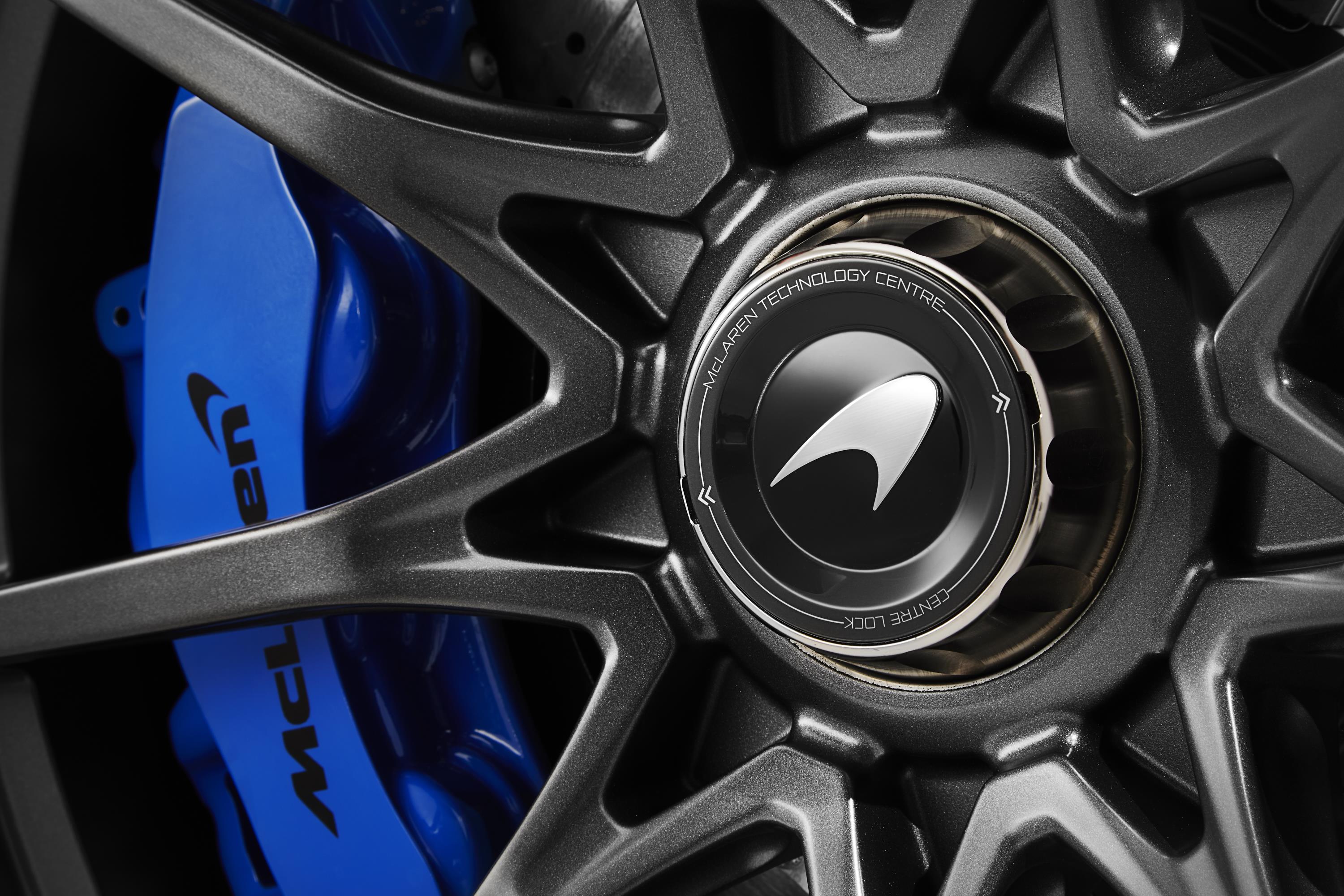
The braking system of the McLaren Senna is the most advanced ever fitted to a McLaren road car, using carbon ceramic discs and motorsport technologies to deliver extreme performance. Tyre choice is equally focused, with bespoke Pirelli P Zeroâ„¢ Trofeo R tyres developed in conjunction with McLaren technical partner, Pirelli. Designed for race tracks but approved for road use, they enable a McLaren Senna to be driven to a circuit. Only one style of wheel is available: an ultra-lightweight alloy wheel with a race-inspired centre lock system.
The third model introduced under the McLaren Track22 business plan, the McLaren Senna will be hand-assembled in England at the McLaren Production Centre. Production will be limited to 500 vehicles, each costing from £750,000 including taxes (UK price) and all already allocated.
The ultimate road-legal, track-concentrated McLaren hypercar will make its public debut in March, at the 88thGeneva International Motor Show. More information about the McLaren Senna, together with images and films, is available now athttp://cars.mclaren.com/ultimate-series/mclaren-senna.



What if your next luxury SUV could drive on electricity during the week and take the entire family on a road trip without worrying about charging stations?
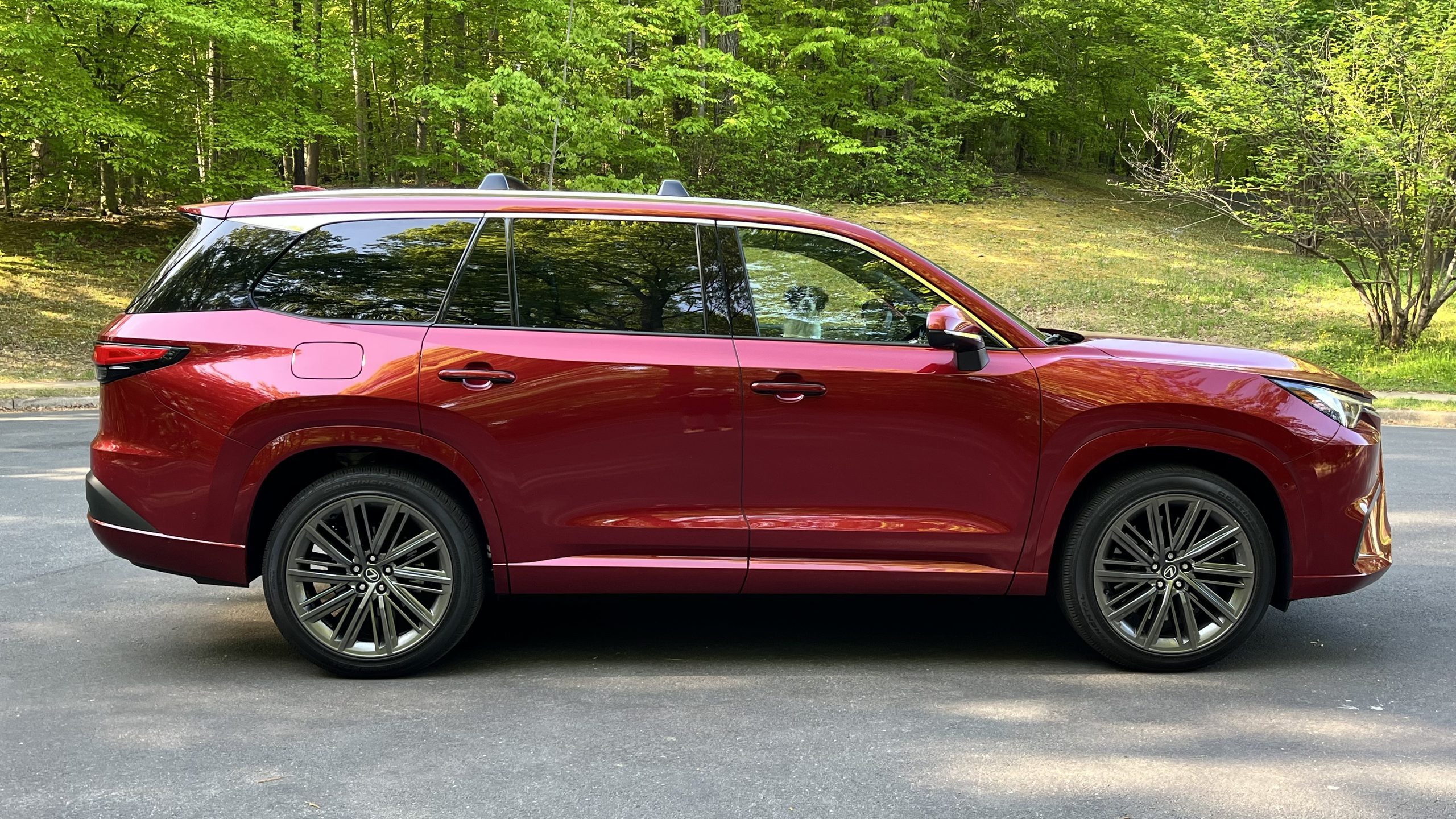
That’s the promise of the 2026 Lexus TX 550h+ Luxury AWD, a three-row plug-in hybrid that combines 404 horsepower, an estimated 33 miles of all-electric range, and the comfort expected from a flagship Lexus family SUV.
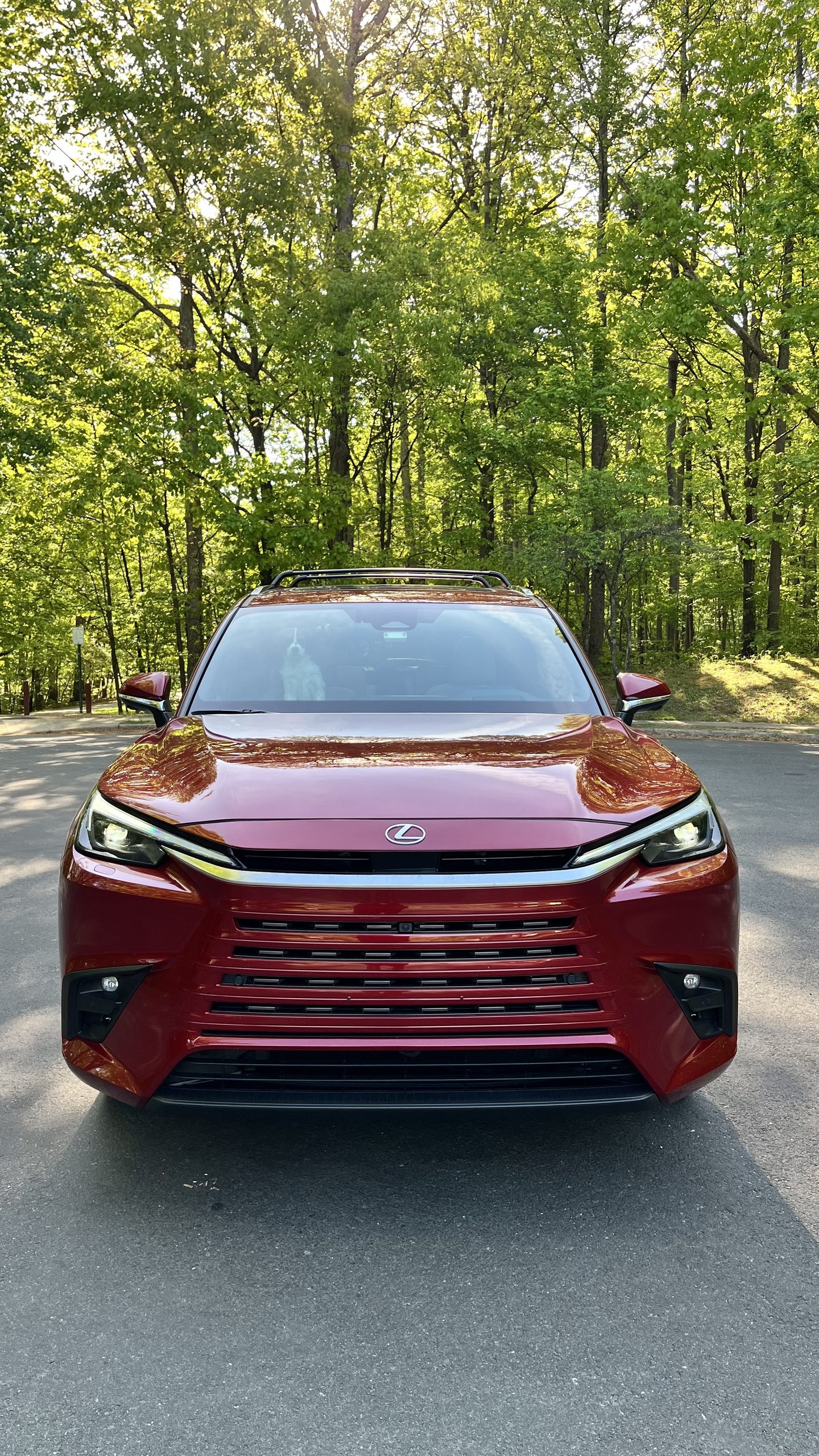
In a market where electrification often forces buyers to reconsider how they drive, the TX 550h+ offers a refreshingly practical alternative. It doesn’t ask families to change their routines. Instead, it adapts to them.
With a featured price of $85,639, however, this level of flexibility doesn’t come cheap. The question is whether Lexus has created one of the smartest luxury family SUVs available or simply one of the most expensive ways to save gasoline.
33 Electric Miles That Could Change Your Daily Routine
The most important number in the TX 550h+ isn’t its horsepower. It’s 33.
That’s the estimated distance this Lexus can travel using electricity alone before relying on its gasoline engine.
For families with relatively short commutes, those miles could cover school drop-offs, grocery shopping, office trips, and afternoon activities without consuming gasoline. Charge at home overnight, and the next morning begins with another opportunity to drive electrically.
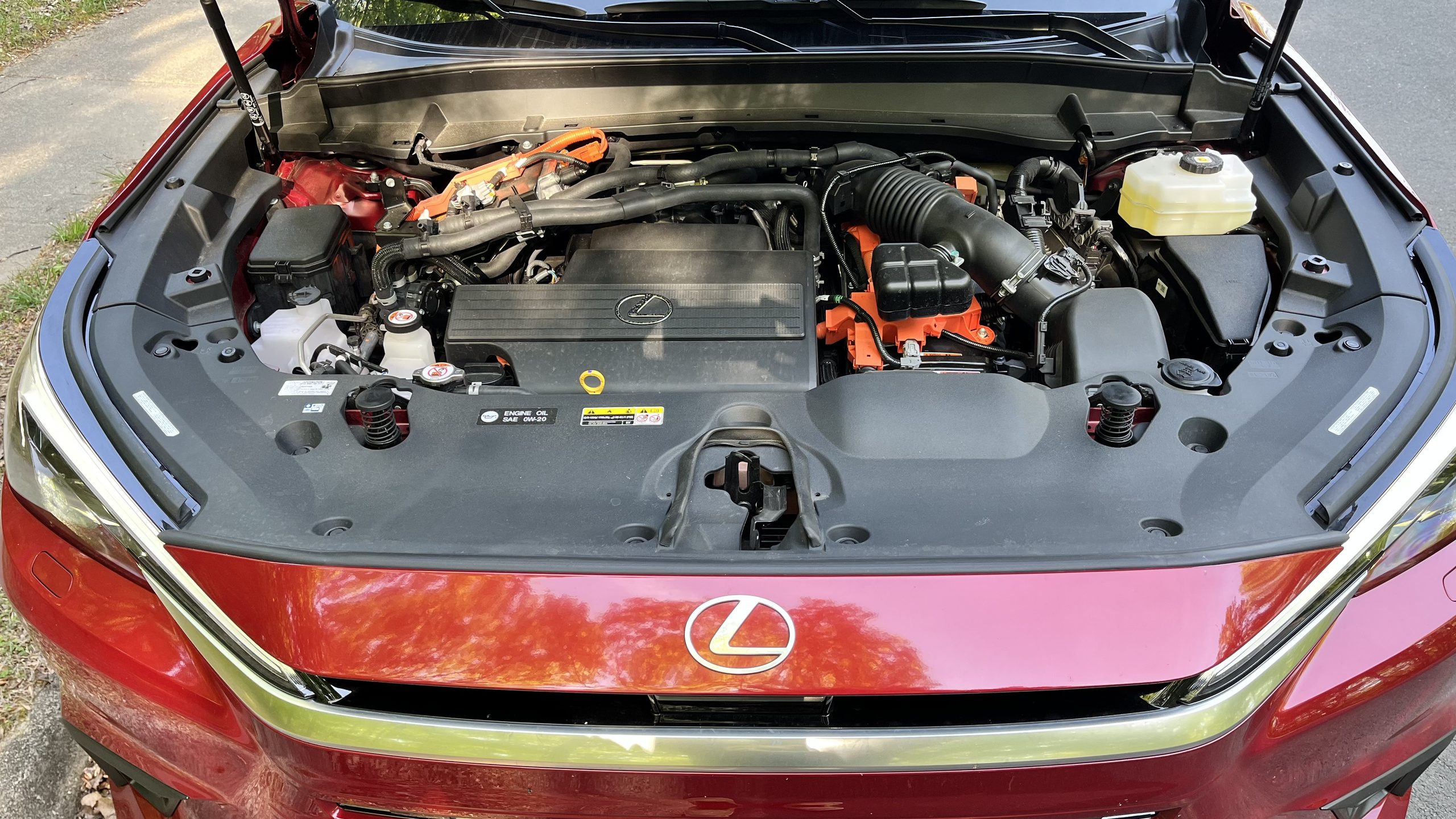
The system uses an 18.1-kWh lithium-ion battery that can be fully recharged in approximately three hours using a compatible 240-volt Level 2 charging setup under ideal conditions. A standard 120-volt household outlet is also supported, although charging takes considerably longer.
And when the battery’s usable electric range is depleted, the TX continues operating as a conventional hybrid, delivering an EPA-estimated 29 mpg combined. Its overall efficiency rating reaches 76 MPGe when accounting for electricity and gasoline use.
The result is a vehicle that makes electrification convenient rather than complicated.
Of course, 33 miles won’t cover every family’s daily driving, and colder temperatures, highway speeds, and climate-control demands can reduce electric range. But for households able to charge regularly, the potential to significantly reduce gasoline consumption is substantial.
A 404-Horsepower V6 With Nothing to Prove
Luxury doesn’t always need to announce itself.
Under the hood, Lexus combines a naturally aspirated 3.5-liter V6 with electric motors, an electronically controlled continuously variable transmission, and DIRECT4 all-wheel drive.
Together, they produce 404 horsepower—enough for Lexus to estimate a 0–60 mph time of approximately 5.9 seconds.
That’s impressive performance for a three-row SUV weighing roughly 5,400 pounds.
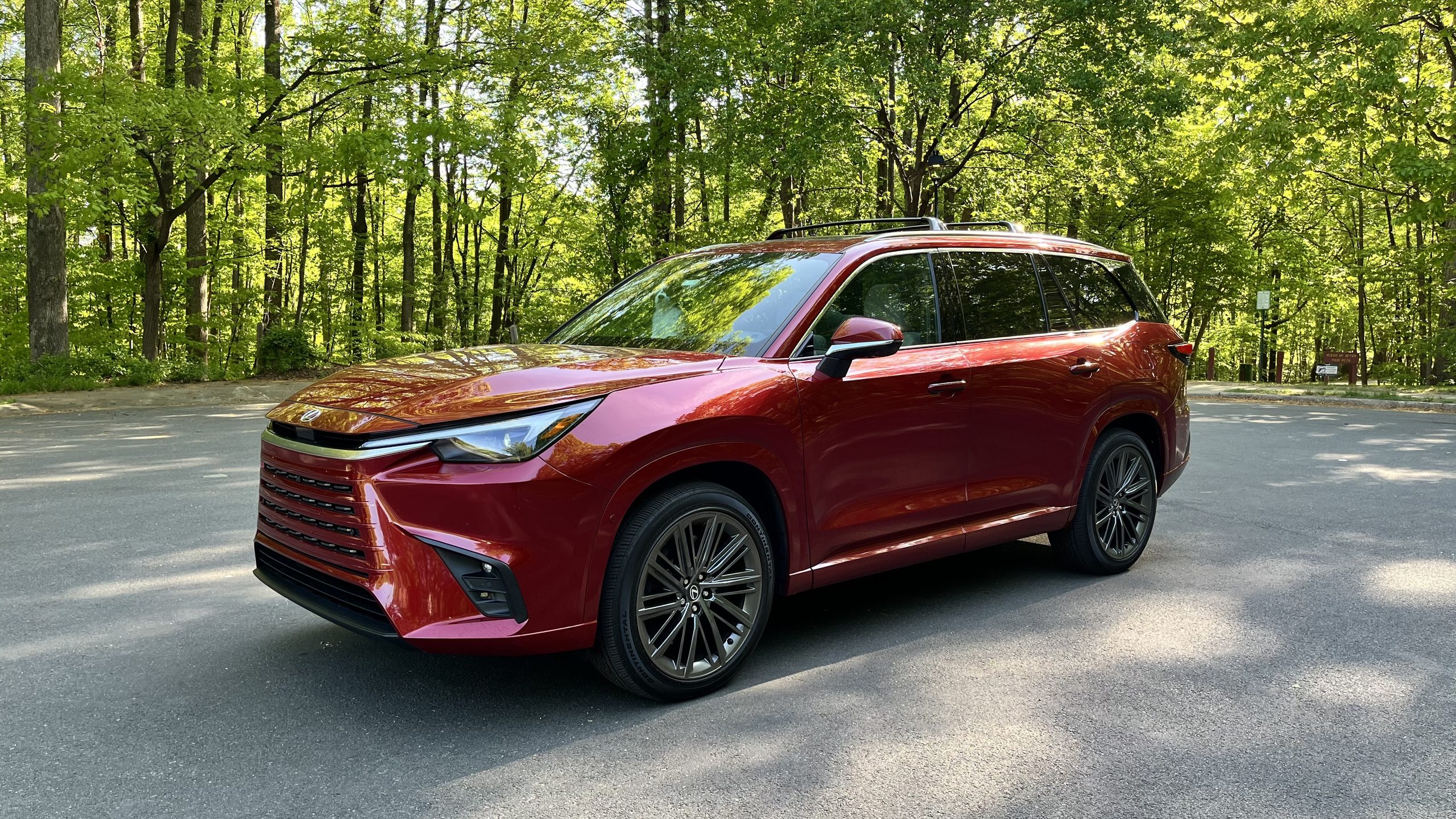
Yet the TX 550h+ isn’t designed to compete with aggressively tuned performance SUVs. Its mission is different: delivering confident acceleration, smooth power delivery, and the kind of effortless capability that makes everyday driving feel less demanding.
The V6 also gives the TX a distinctive position within the Lexus lineup. While the TX 500h uses a turbocharged four-cylinder hybrid powertrain, the plug-in model pairs electrification with the character of a six-cylinder engine.
The electronically controlled transmission prioritizes smoothness and efficiency rather than traditional gear changes. Drivers expecting the sharper responses of a sport-oriented SUV may find its character less engaging.
But that’s not necessarily a weakness.
For a vehicle designed around family comfort, refinement matters more than drama.
Inside, Lexus Understands What Families Actually Need
The TX 550h+ makes one of its strongest arguments the moment passengers settle into the cabin.
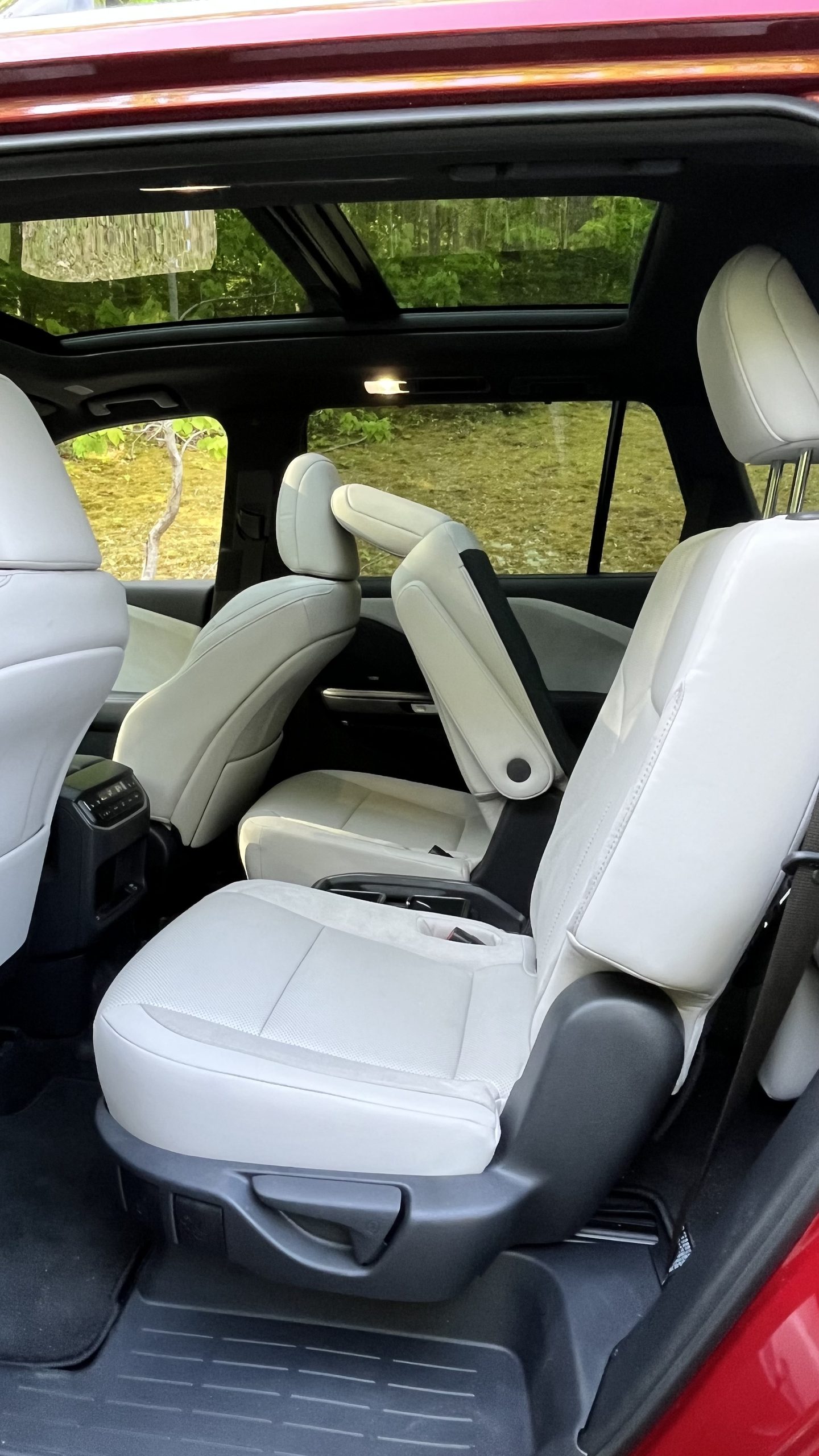
Rather than treating the third row as an afterthought, Lexus designed the TX around genuine three-row usability.
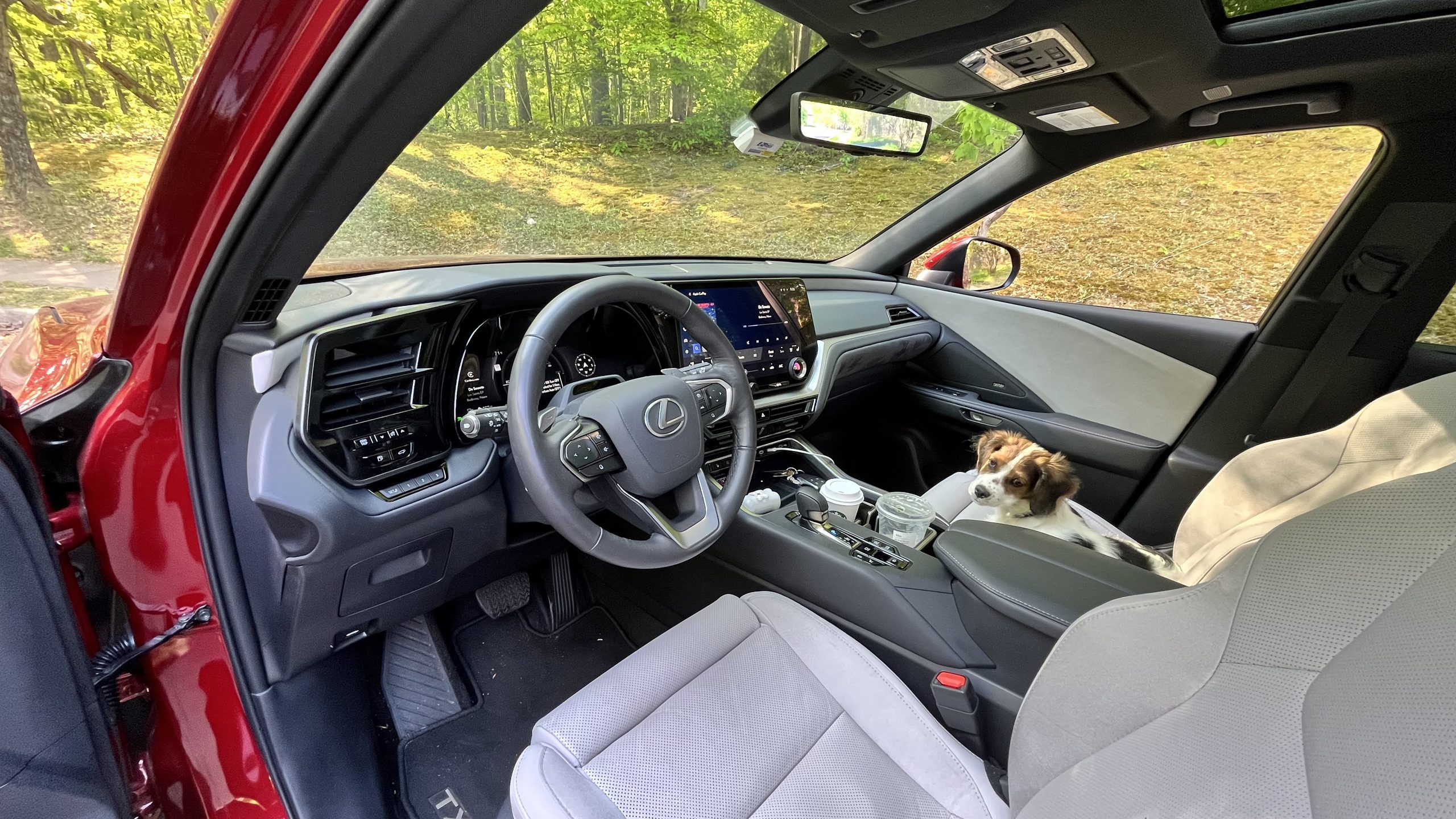
The six-passenger configuration features second-row captain’s chairs, creating a more spacious environment while allowing easier access to the rear seats. Available comfort amenities include heated and ventilated second-row seating and sunshades.
Up front, semi-aniline leather upholstery, heated and ventilated seats, and a heated steering wheel reinforce the premium atmosphere.
Technology is equally prominent. A 14-inch Lexus Interface touchscreen anchors the dashboard, complemented by a 12.3-inch digital instrument display, wireless smartphone integration, and available premium features such as a head-up display and Mark Levinson audio system.
But the TX’s greatest luxury may be its practicality.
With 20.2 cubic feet of cargo space behind the third row and up to 97 cubic feet with the rear seating folded, it can transition from family transportation to a surprisingly capable cargo carrier.
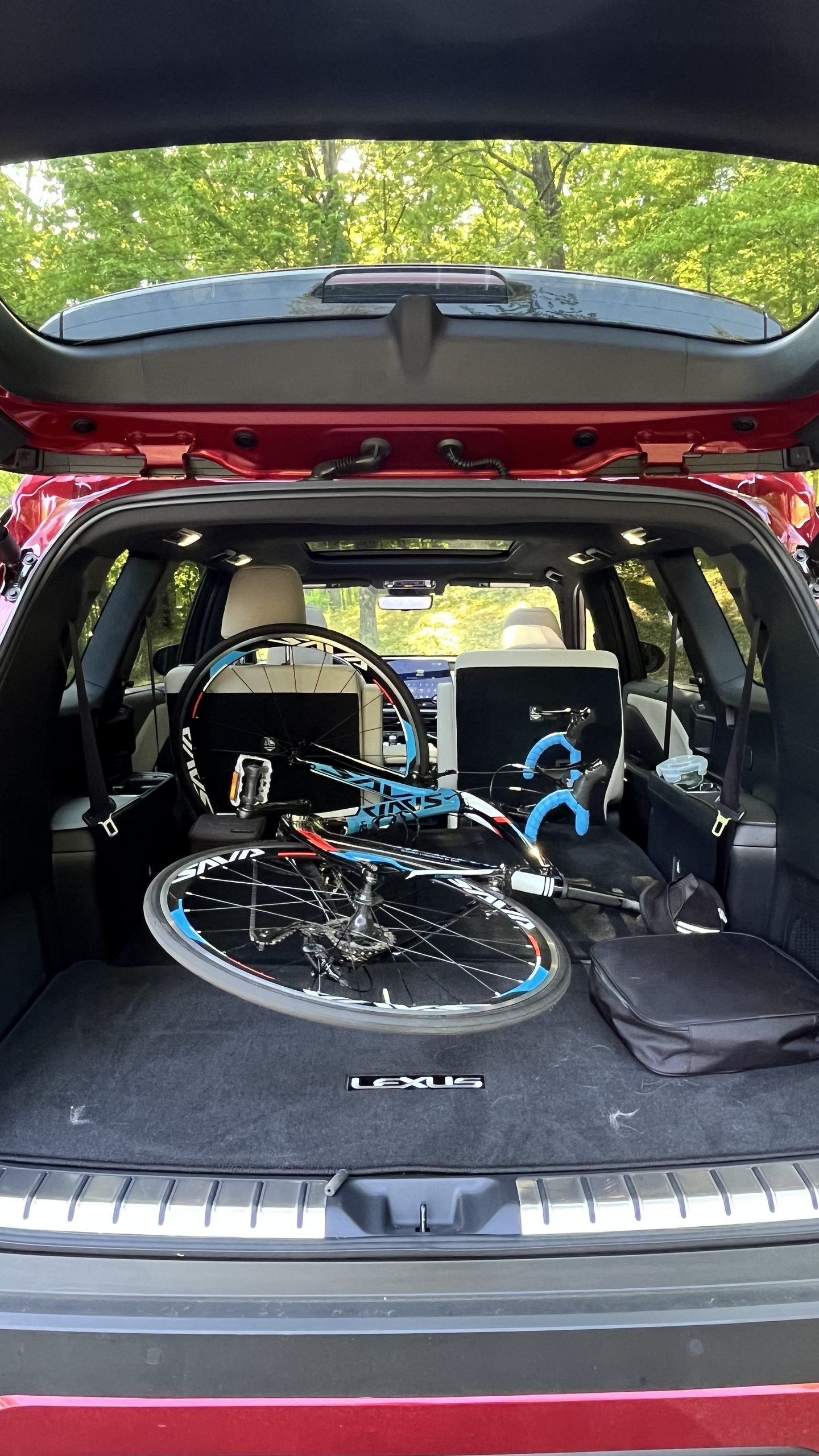
There are compromises. Six seats won’t satisfy families needing seven or eight passenger positions, and using all three rows naturally limits luggage capacity.
Still, Lexus has clearly prioritized the needs of passengers rather than simply maximizing the number of seats.
Technology That Makes a Large SUV Easier to Live With
At more than 203 inches long, the TX is a substantial vehicle. Maneuvering something this size through crowded parking lots and narrow urban spaces can become part of the ownership experience.
Lexus addresses that challenge with an extensive collection of driver-assistance and convenience technologies.
Lexus Safety System+ 3.0 comes standard, providing features designed to assist with collision avoidance, lane keeping, and highway driving.
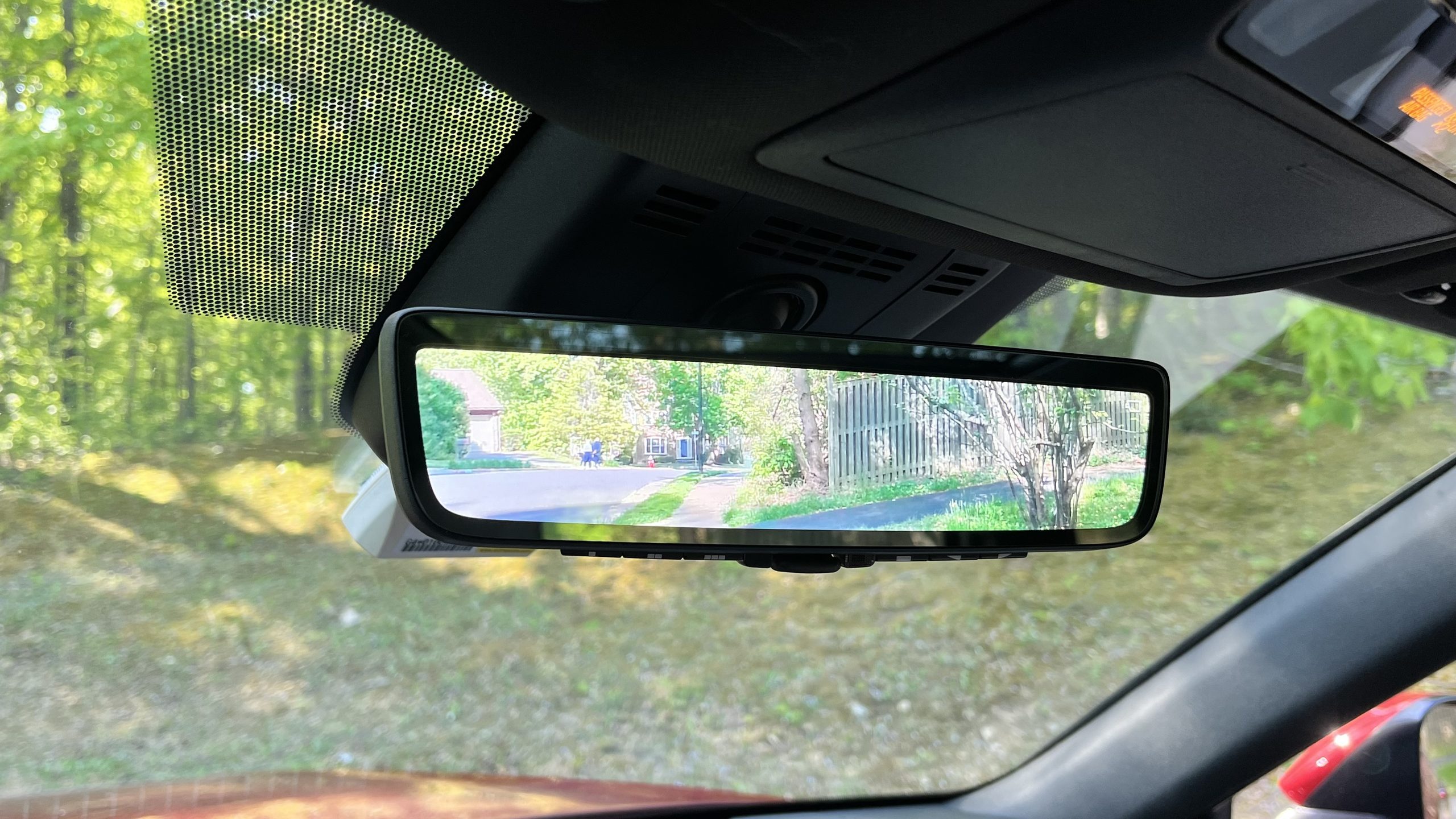
Depending on equipment, additional systems such as a panoramic view monitor, Traffic Jam Assist, and Advanced Park can make daily driving and parking less stressful.
These systems don’t replace an attentive driver, but they can reduce some of the effort associated with operating a large family SUV.
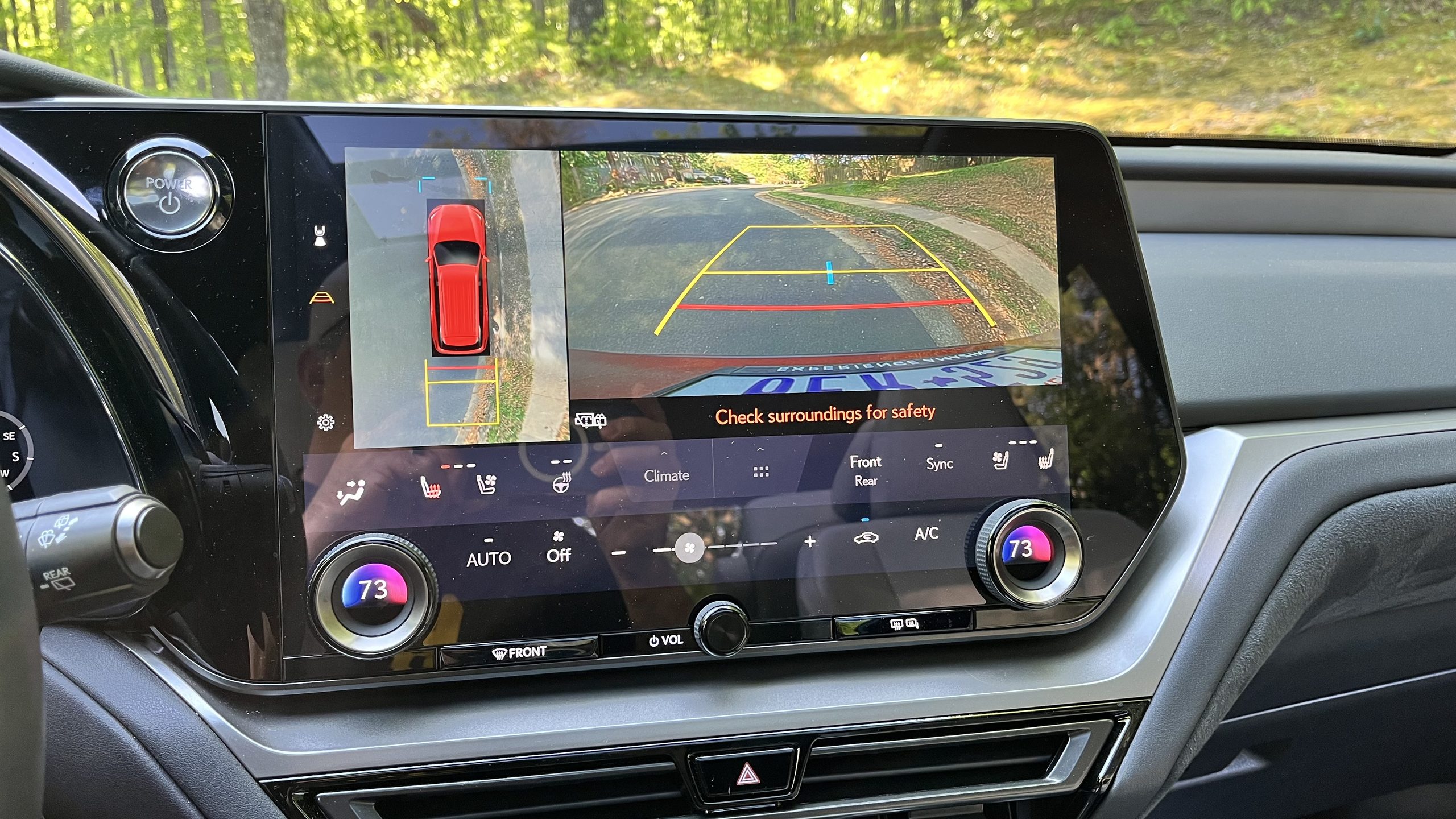
And that’s precisely where the TX makes sense: technology should make life easier, not more complicated.
Is an $85,639 Lexus Really Worth It?
This is where the conversation becomes more interesting.
The 2026 TX 550h+ Luxury AWD carried an announced starting MSRP of $81,060 including delivery, while the featured vehicle is priced at $85,639.
That’s a considerable investment, even in today’s luxury SUV market.
For comparison, Lexus also offers the TX 500h, a conventional hybrid producing 366 horsepower and delivering an estimated 27 mpg combined.
The TX 500h costs considerably less, making it an attractive alternative for drivers who don’t have convenient access to home charging.
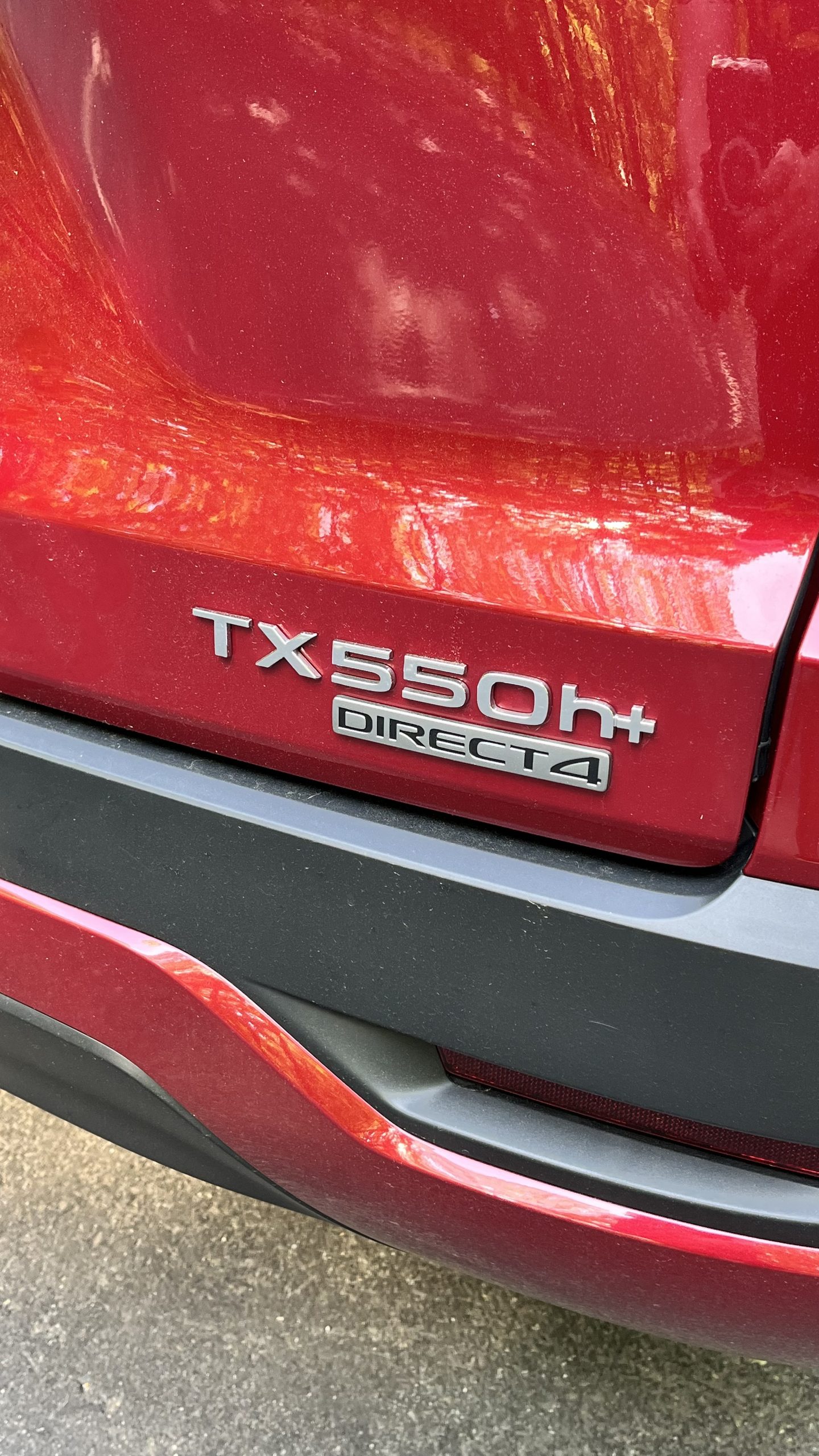
And that’s the important distinction.
The TX 550h+ doesn’t automatically become the more economical choice simply because it can run on electricity. Actual savings depend on electricity costs, gasoline prices, driving distances, charging habits, and the initial purchase-price difference.
Buyers who rarely plug in may struggle to justify the premium.
But for families who can recharge consistently, the appeal extends beyond fuel savings. There’s the convenience of electric driving around town, the flexibility of gasoline for longer journeys, and the ability to enjoy both without committing to a fully electric vehicle.
The TX 550h+ is less about finding the cheapest way to drive and more about finding a comfortable balance between two technologies.
One More Reason the 2026 Model Matters
There’s an unexpected twist to the TX 550h+ story.
Lexus has confirmed that the plug-in hybrid version will be discontinued for the 2027 model year.
That makes the 2026 TX 550h+ the final model-year opportunity to purchase this particular combination of V6 power, plug-in hybrid efficiency, and three-row Lexus luxury, subject to remaining inventory.
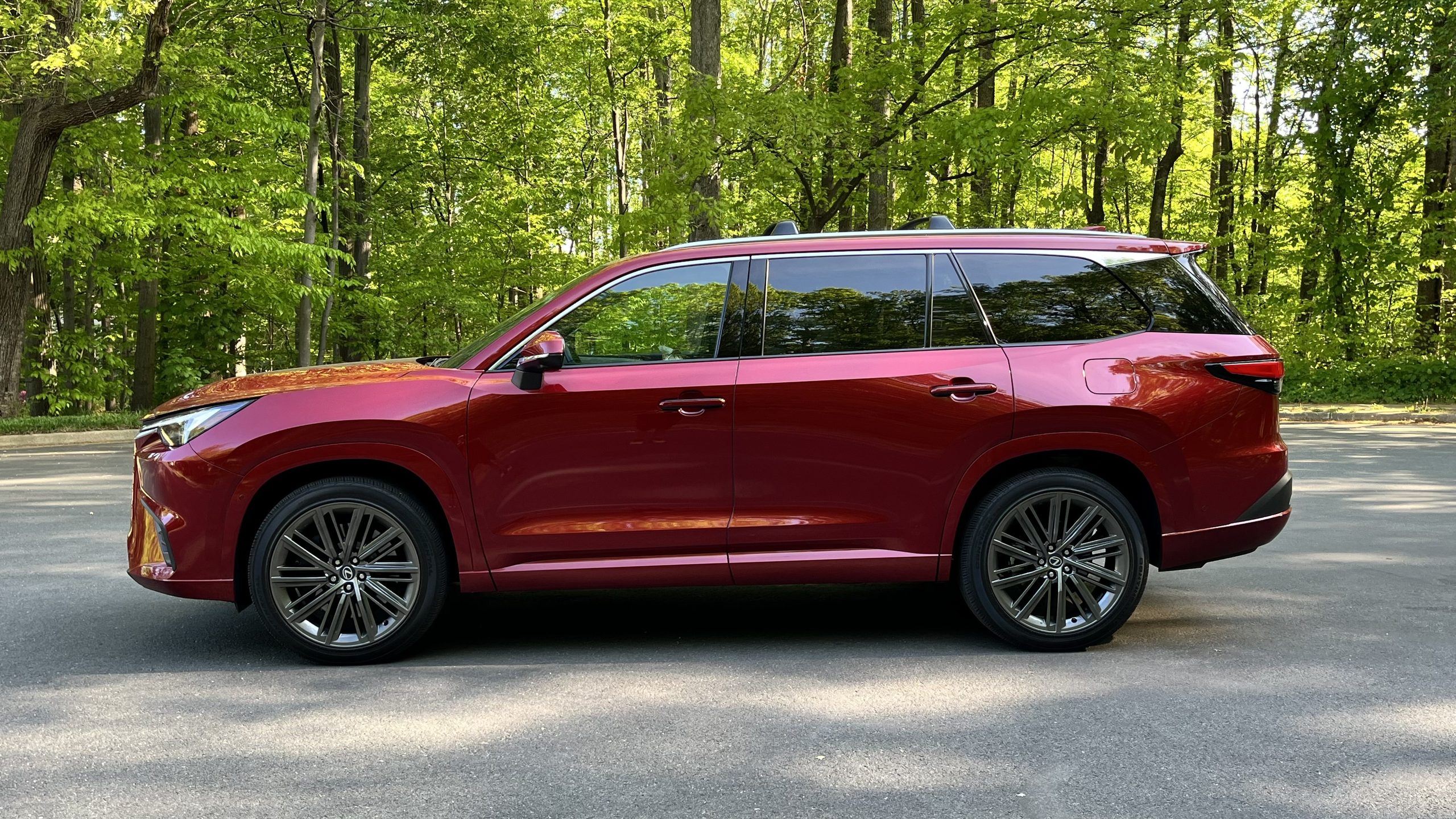
It also makes the vehicle more distinctive within the Lexus lineup, although discontinuation alone shouldn’t be interpreted as a guarantee of stronger resale value.
For buyers who specifically want a plug-in hybrid luxury SUV with a six-cylinder engine, the decision may now carry greater urgency.
The Carsfera Verdict: Luxury That Fits Real Life
The 2026 Lexus TX 550h+ doesn’t need dramatic styling, an aggressive exhaust note, or extraordinary acceleration figures to make its point.
Its appeal is more intelligent than that.
It offers the possibility of electric driving for everyday errands, the freedom of a gasoline-backed hybrid for longer journeys, and a spacious, beautifully equipped cabin designed around the people who matter most.
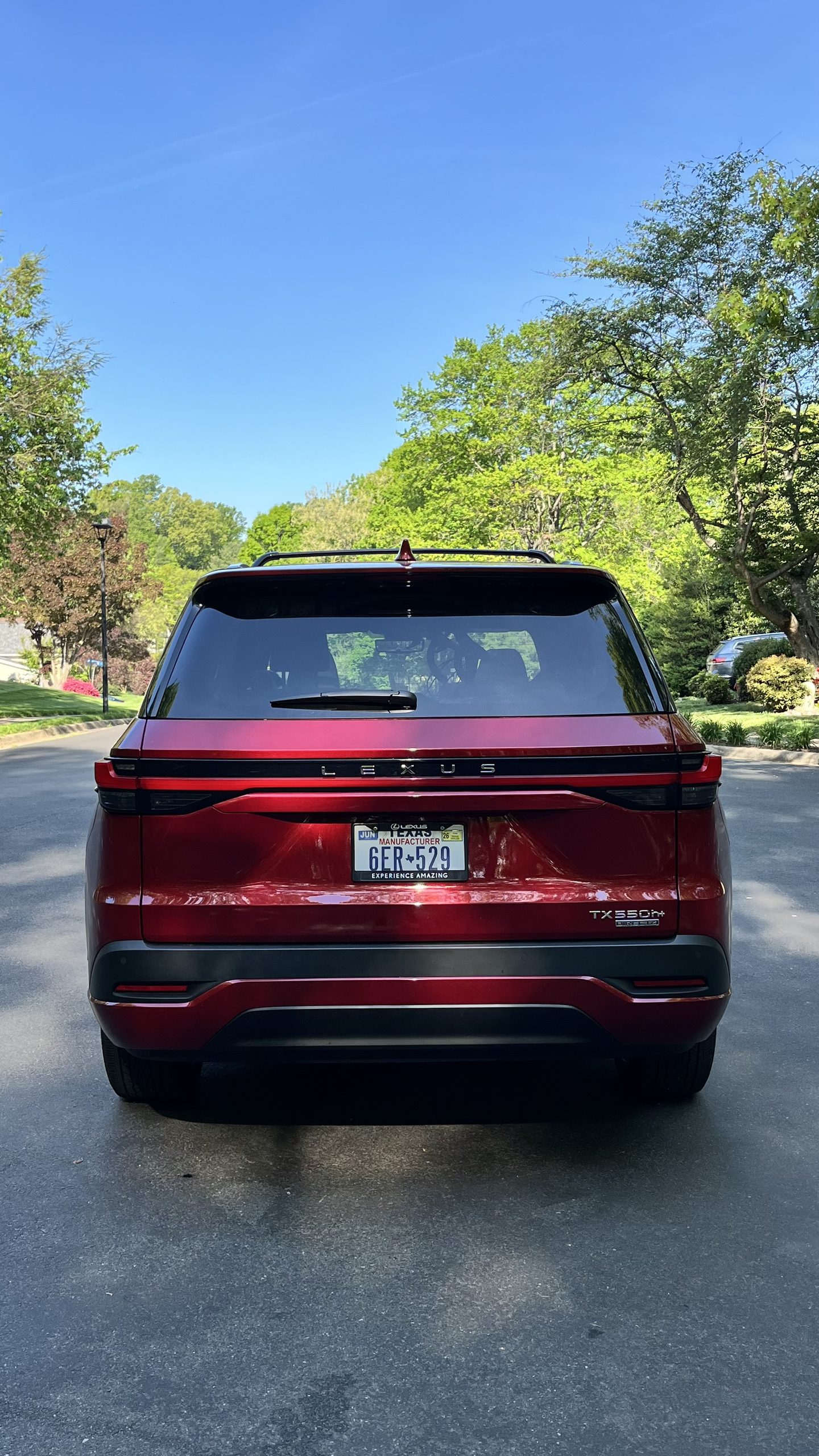
It’s not perfect. The price is substantial, the electric range is limited compared with a fully electric SUV, and buyers who cannot charge regularly may find better value elsewhere in the TX lineup.
But for the right household, those compromises may be surprisingly easy to accept.
The TX 550h+ represents a compelling vision of luxury: not simply having more power, more technology, or more expensive materials, but having a vehicle that asks less of you.
And perhaps that’s what modern family luxury should be about.
Would you spend $85,000 on a three-row Lexus that could handle much of your weekly driving on electricity? Or would you choose a conventional hybrid instead?
The compact SUV market is packed with practical choices. Most offer similar features, similar fuel economy, and similar levels of comfort. For many buyers, that’s enough.
Mazda has taken a different approach.
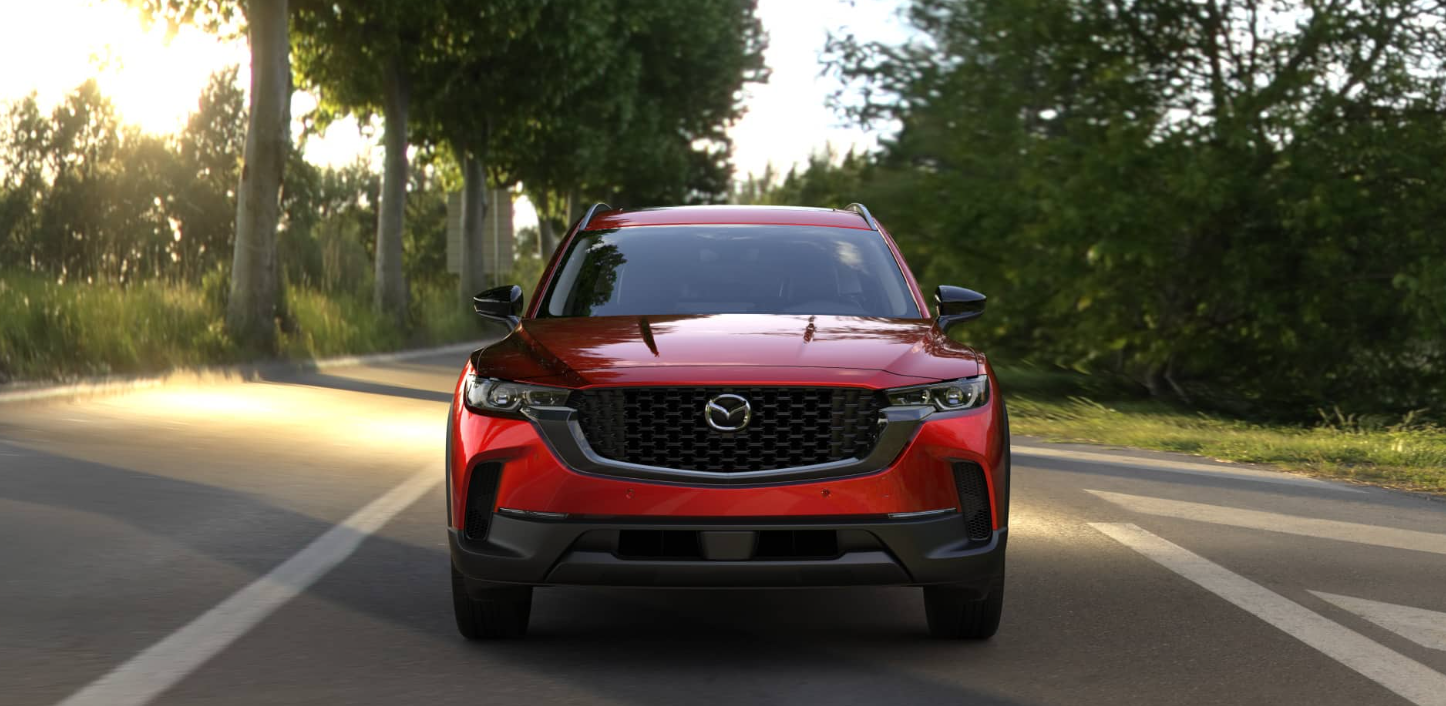
The 2026 Mazda CX-50 2.5 Turbo Premium Plus AWD isn’t trying to be just another crossover designed to blend into traffic. Instead, it targets drivers who want the practicality of an SUV without losing the engagement and confidence that make driving enjoyable in the first place.
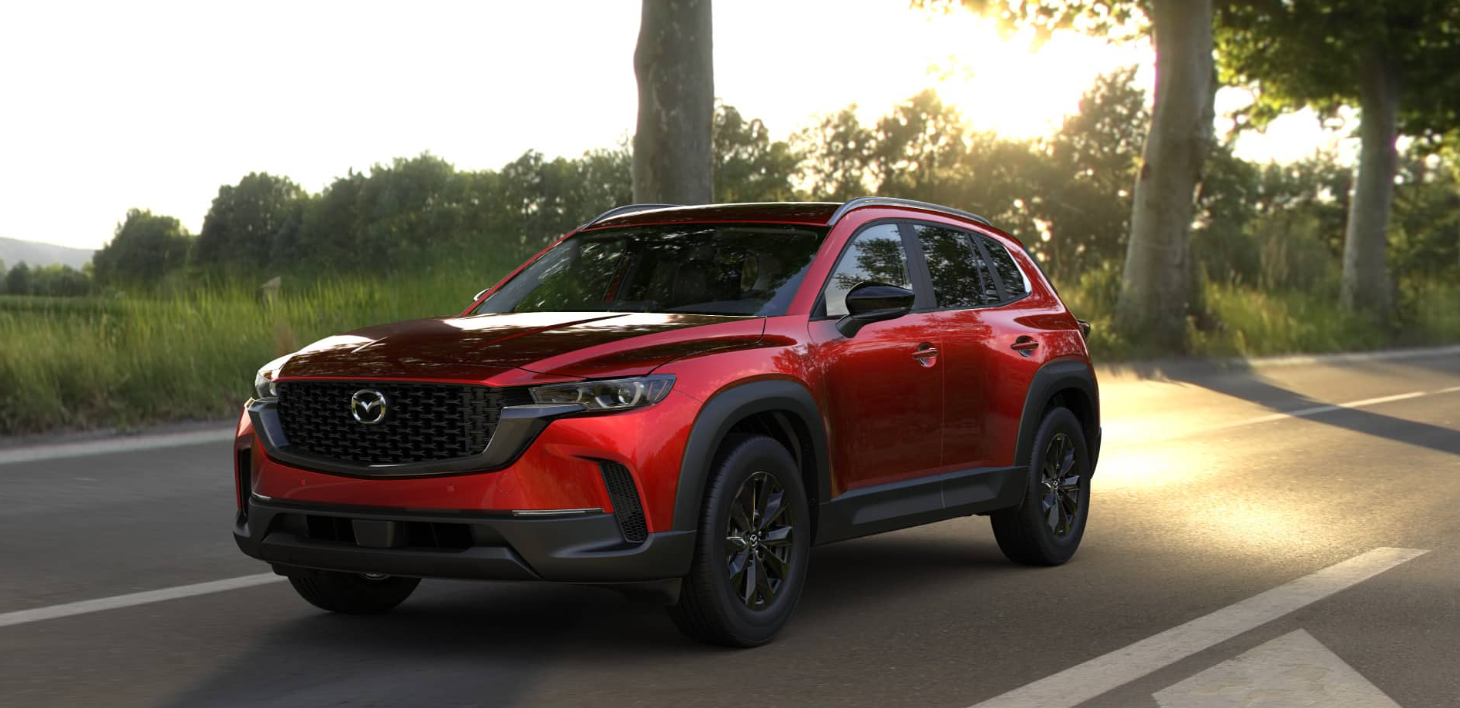
After spending time evaluating the CX-50 Turbo Premium Plus, it’s clear that Mazda continues to focus on something many competitors have largely abandoned: creating vehicles with genuine personality.
Refined
One look at the CX-50 explains why it stands out in crowded parking lots.
Compared to many compact SUVs, the CX-50 sits wider and lower, giving it a more athletic stance. The proportions feel purposeful, with styling that balances rugged capability and premium design. The vehicle presents an especially upscale appearance that wouldn’t look out of place next to luxury-branded competitors.
Mazda has done an impressive job creating a crossover that feels adventurous without looking overstyled. The design is clean, mature, and likely to age well.
For buyers who value appearance as much as practicality, the CX-50 immediately makes a strong first impression.
Turbo Power Makes a Difference
The biggest reason many shoppers gravitate toward this trim level is what’s under the hood.
The CX-50 Turbo Premium Plus is powered by Mazda’s turbocharged 2.5-liter four-cylinder engine, producing up to 256 horsepower and 320 lb-ft of torque when using premium fuel.
Those numbers translate into real-world performance that feels noticeably stronger than many competitors in the segment.
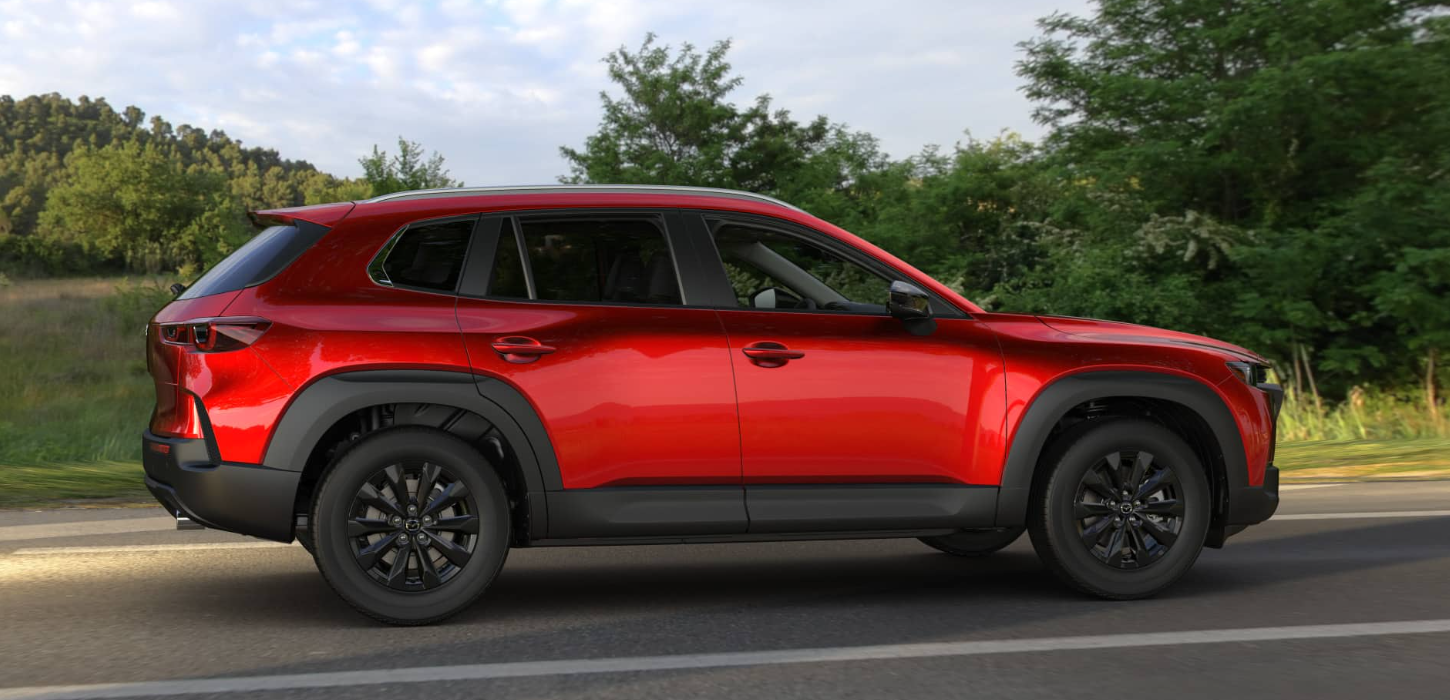
Whether entering a fast-moving highway, overtaking slower traffic, or tackling steep grades, the turbocharged engine delivers power with minimal effort. The SUV never feels strained or underpowered, even with passengers and cargo onboard.
It’s not a performance SUV in the traditional sense, but it offers enough acceleration to make everyday driving more enjoyable and less stressful.
That’s something many compact crossovers struggle to achieve.
One of the Best Driving Experiences in the Segment
Where the CX-50 truly separates itself from many rivals is in how it drives.
Mazda has built a reputation for creating vehicles that feel more connected to the road than their competitors, and the CX-50 continues that tradition.
The steering has a natural weight that inspires confidence without feeling heavy. The suspension strikes an effective balance between comfort and control, allowing the vehicle to remain composed through corners while still providing a comfortable ride during daily commuting.
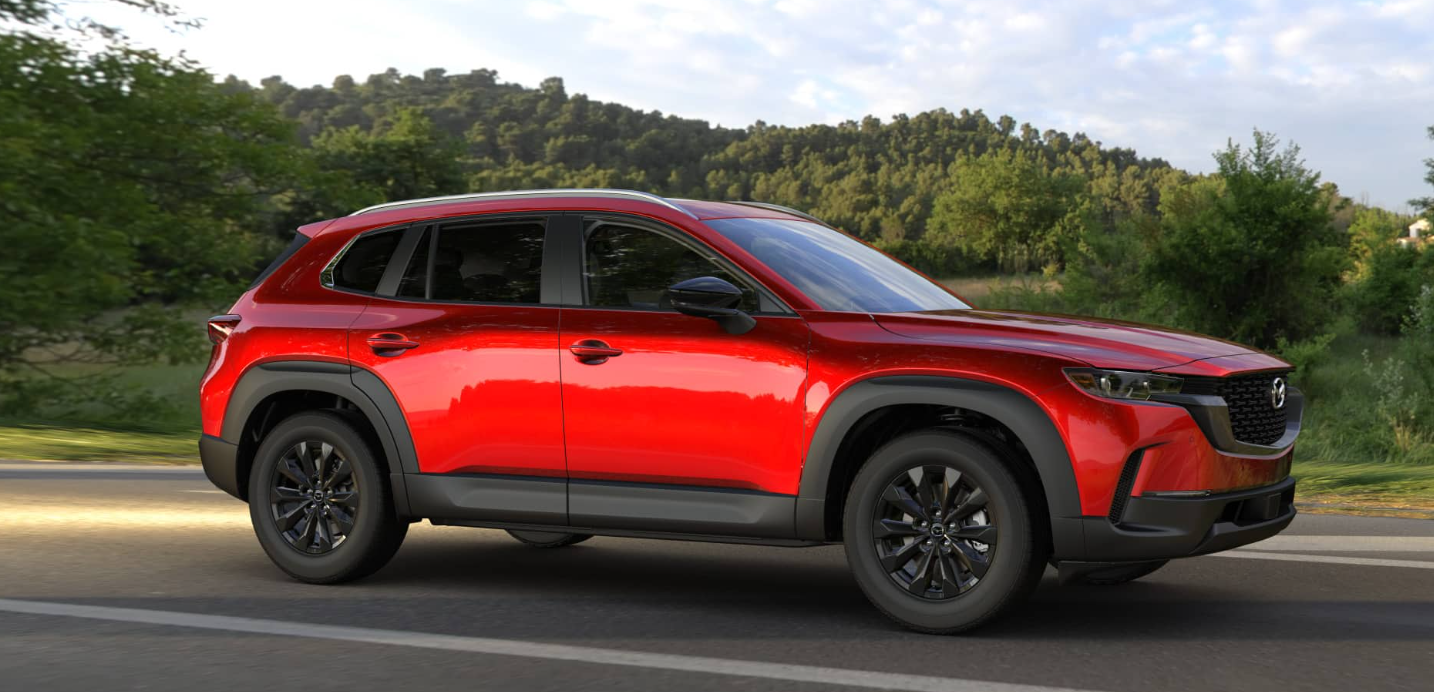
Unlike some crossovers that feel disconnected or overly soft, the CX-50 maintains a sense of responsiveness that drivers will notice immediately.
Standard all-wheel drive further enhances that confidence.
Whether driving through rain, snow, gravel roads, or simply navigating winding back roads, the CX-50 feels secure and predictable. The AWD system works seamlessly in the background, helping the vehicle maintain traction without drawing attention to itself.
For buyers comparing the CX-50 against popular options like the Toyota RAV4, Honda CR-V, Hyundai Tucson, or even Mazda’s own CX-5, driving dynamics remain one of Mazda’s strongest advantages.
Premium Features Without a Luxury Badge
The Premium Plus trim sits at the top of the CX-50 lineup, and it shows.
The cabin feels thoughtfully designed and well executed, with materials and technology that create a near-luxury experience.
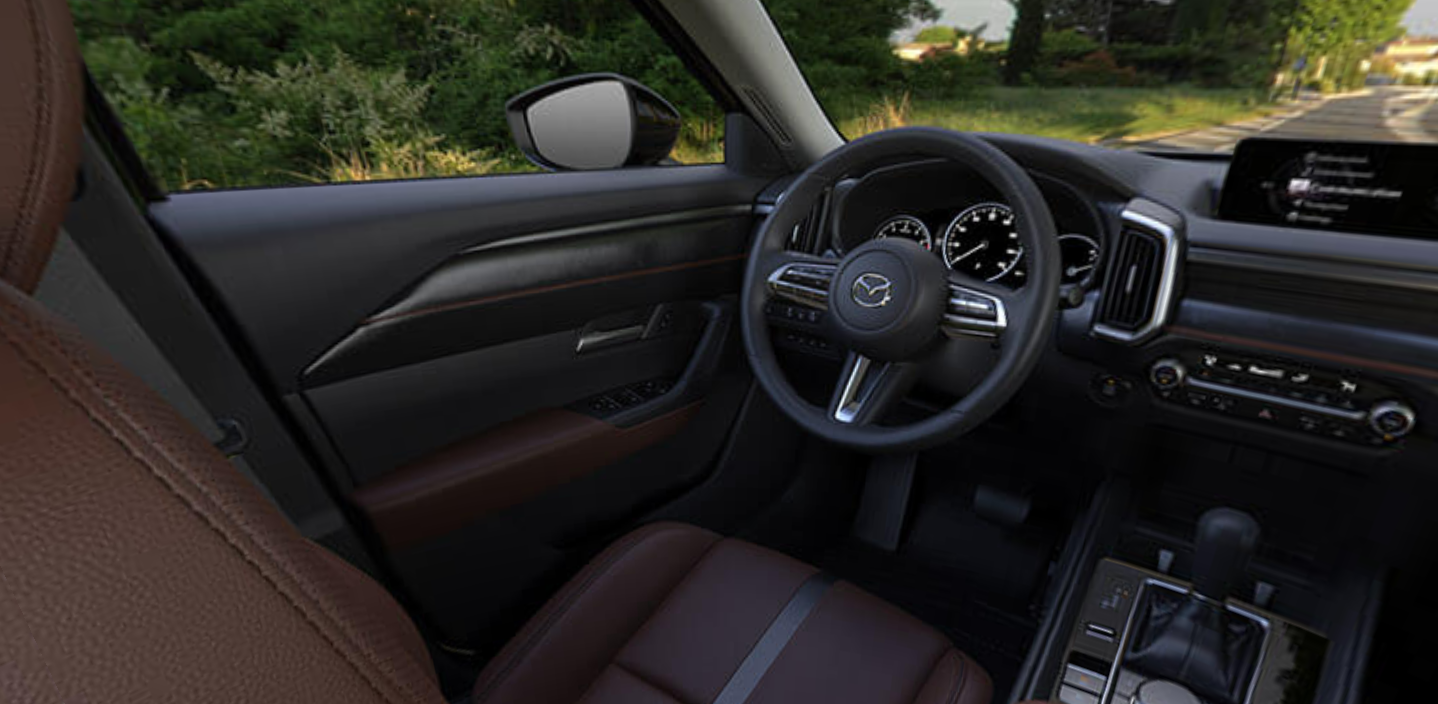
Leather-trimmed seating surfaces, ventilated front seats, heated rear seats, a panoramic moonroof, wireless smartphone connectivity, wireless charging, and a Bose premium audio system all contribute to a cabin that feels more expensive than its price tag suggests.
The available 360-degree camera system and front and rear parking sensors also make maneuvering easier in tight spaces, while Mazda’s suite of advanced safety technologies provides additional peace of mind for families and commuters alike.
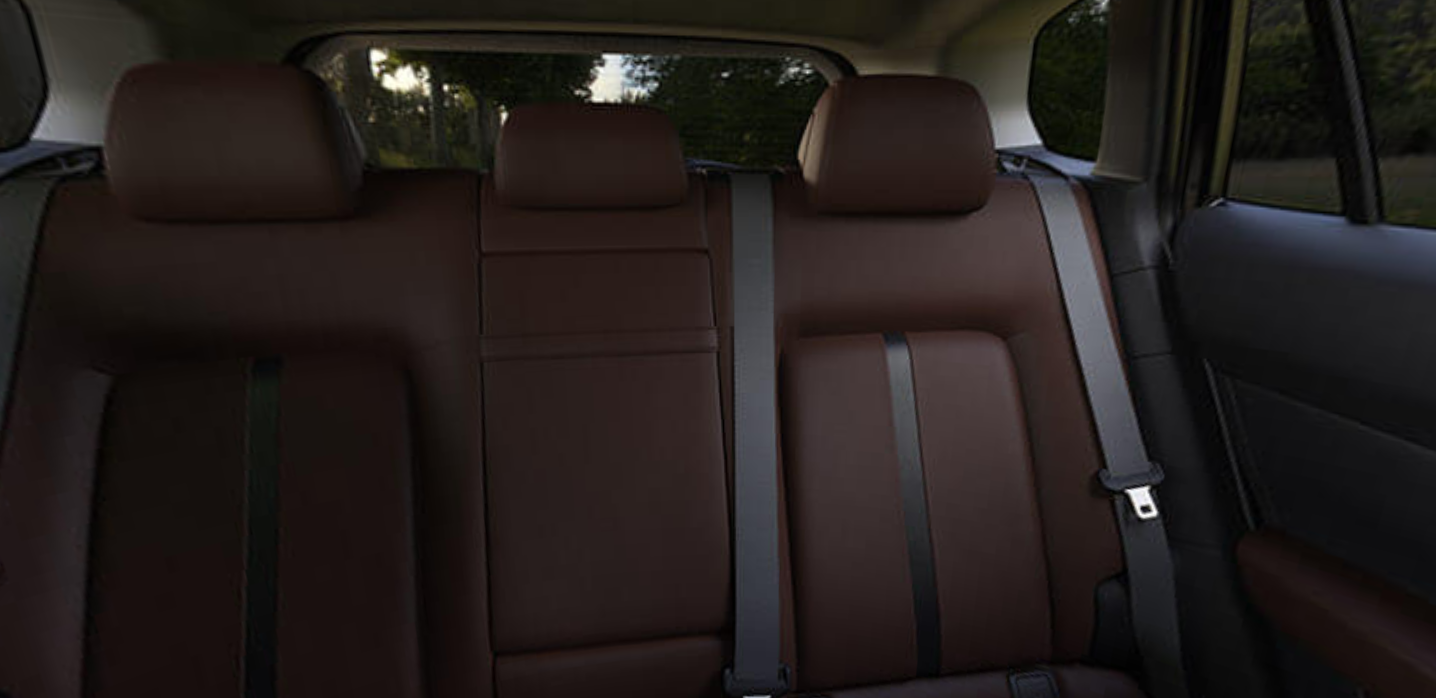
One of Mazda’s greatest strengths continues to be interior design. Rather than overwhelming drivers with excessive screens and flashy gimmicks, the company focuses on creating a clean, functional, and upscale environment.
The result is a cabin that feels premium without trying too hard.
Fuel Economy Remains Competitive
Performance often comes at the expense of efficiency, but the CX-50 Turbo manages to strike a reasonable balance.
EPA estimates are rated at 23 mpg in the city, 29 mpg on the highway, and 25 mpg combined.
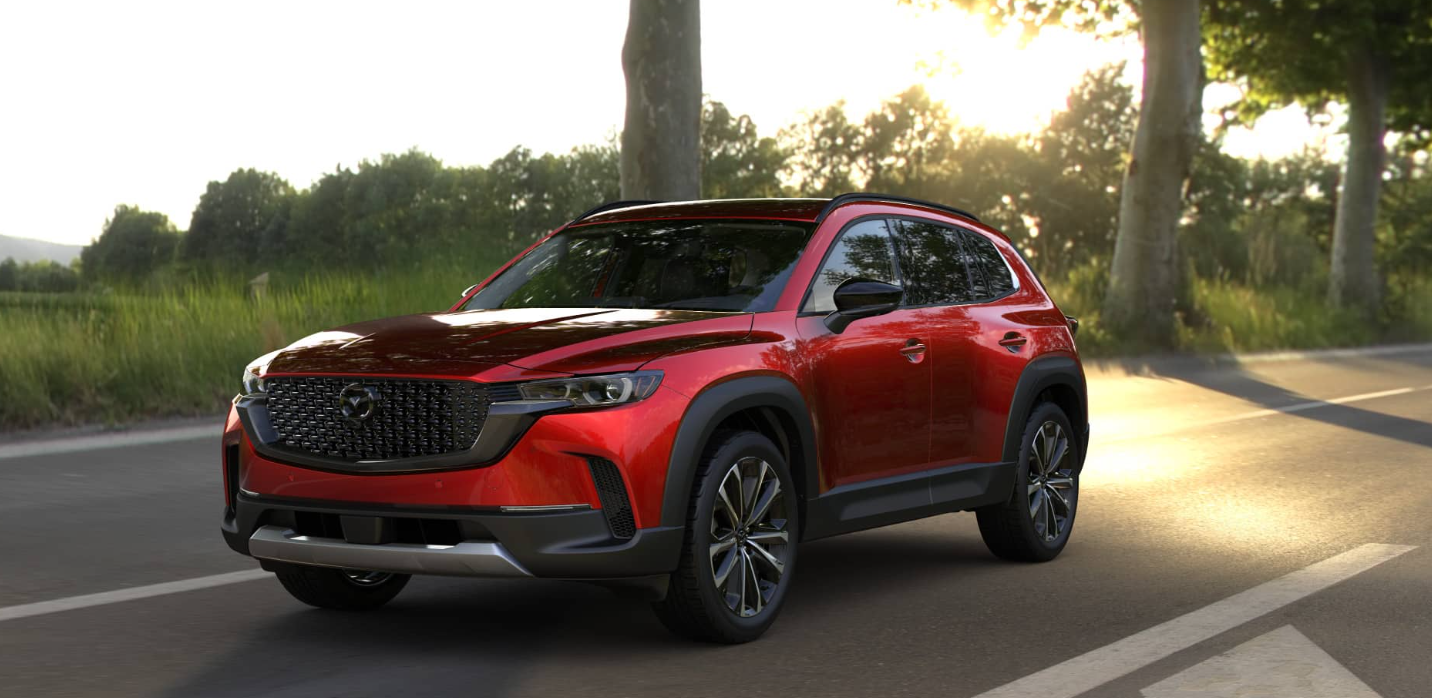
Those figures won’t lead the segment, but they remain competitive considering the turbocharged engine, standard all-wheel drive, and strong performance capabilities.
For most buyers, the slight tradeoff in fuel economy will be worth the added power and driving enjoyment.
Utility That Fits Most Lifestyles
Despite its focus on driving dynamics, the CX-50 still fulfills the practical expectations buyers have for a compact SUV.
Cargo space measures 31.4 cubic feet behind the second row. While that figure doesn’t lead the class, it provides enough room for groceries, luggage, sports equipment, and the demands of everyday life.
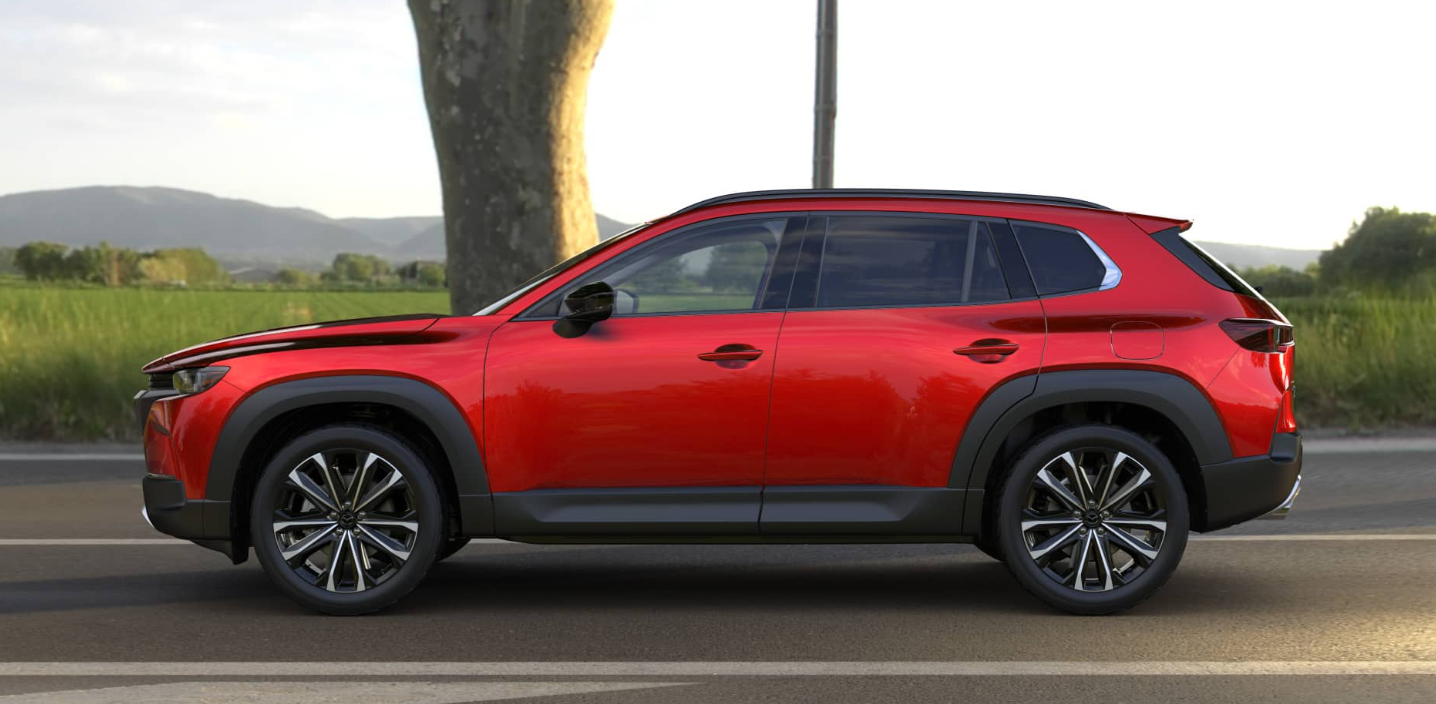
The turbocharged model also offers a towing capacity of up to 3,500 pounds, making it capable of handling small boats, utility trailers, personal watercraft, or lightweight campers.
For outdoor enthusiasts and active families, that extra capability adds meaningful versatility.
The CX-50 may not be the largest vehicle in its segment, but it delivers enough utility for most real-world situations.
Value and Pricing
With a total MSRP of approximately $45,215 including destination and options, the CX-50 Turbo Premium Plus competes in the upper end of the compact SUV category.
At first glance, that price may seem ambitious.
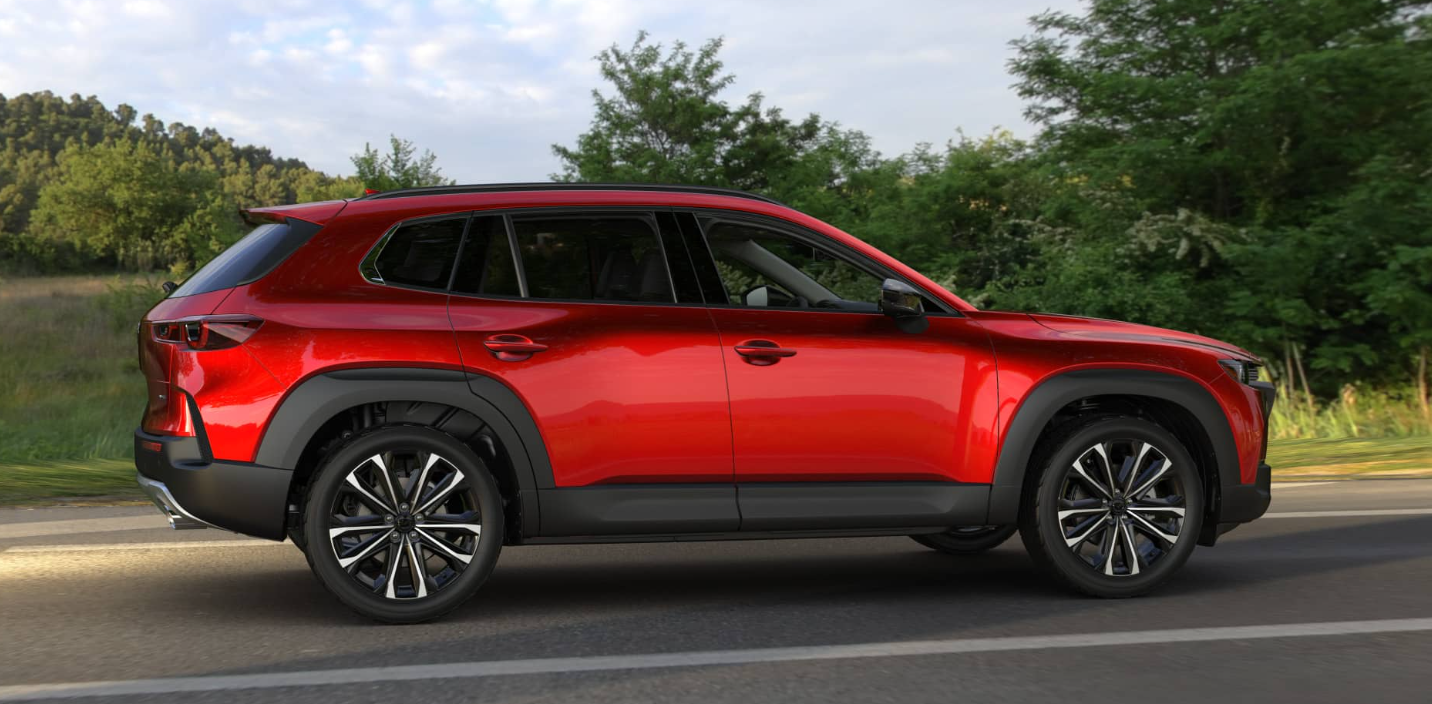
However, when buyers consider the level of equipment, premium interior quality, standard all-wheel drive, turbocharged performance, advanced safety features, and distinctive design, the value proposition becomes easier to understand.
In many ways, the CX-50 offers a near-luxury experience without requiring buyers to step into a luxury brand.
That alone will make it appealing to many shoppers.
Final Thoughts
The 2026 Mazda CX-50 2.5 Turbo Premium Plus AWD won’t be the ideal choice for someone whose only priority is maximum cargo capacity.
There are larger and roomier options available.
What Mazda offers instead is something increasingly rare in the crossover segment: character.
The CX-50 combines strong performance, confident handling, premium features, attractive styling, and everyday practicality into a package that feels genuinely enjoyable to drive.
For buyers who view driving as more than simply getting from one place to another, that’s a meaningful advantage.
The compact SUV segment is full of competent vehicles. The CX-50 stands out because it manages to be competent while still feeling special.
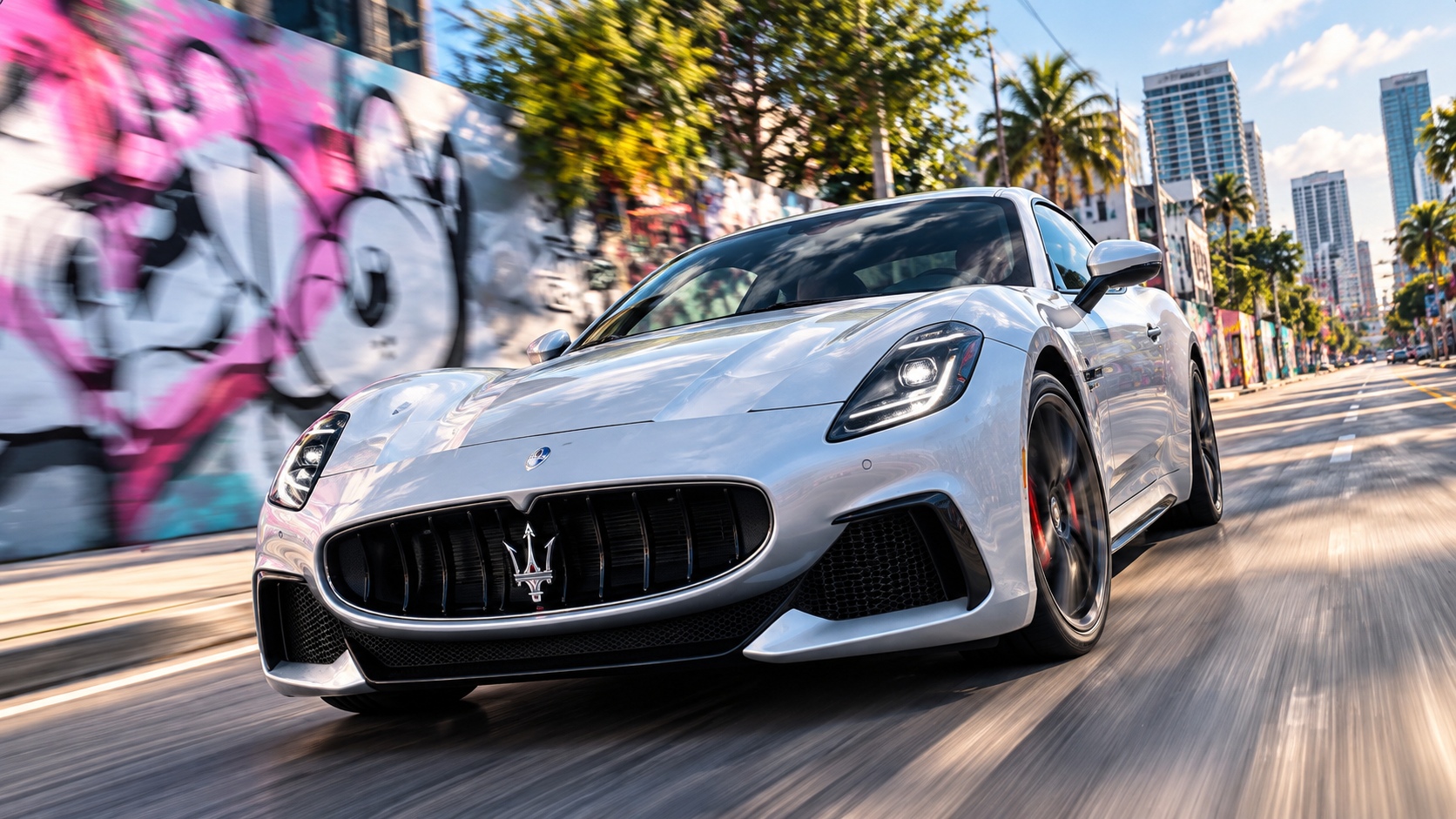
Carsfera takes Maserati’s performance-focused GranTurismo through Miami and Wynwood to discover what happens when 542 horsepower, Italian craftsmanship and one of America’s most expressive cities meet.

There are certain cars that make more sense once you spend several days with them. The specifications may tell you how much power they produce, how quickly they accelerate and how much they cost, but they don’t necessarily explain what it feels like to have one sitting outside your hotel in the morning, drive it through traffic in the afternoon and then take the longer route home simply because you’re enjoying the car.
The 2026 Maserati GranTurismo Trofeo became that kind of car for me in Miami.

I had already spent time with the GranTurismo in Virginia, where the highways and secondary roads gave me an opportunity to appreciate what Maserati has done with this generation. What stood out wasn’t one dramatic performance number. It was how naturally the car combined speed, comfort and sophistication. It felt like a proper grand tourer, something you could genuinely imagine driving for hours rather than something designed around a ten-minute burst of excitement.
Miami introduced me to the other side of that personality.
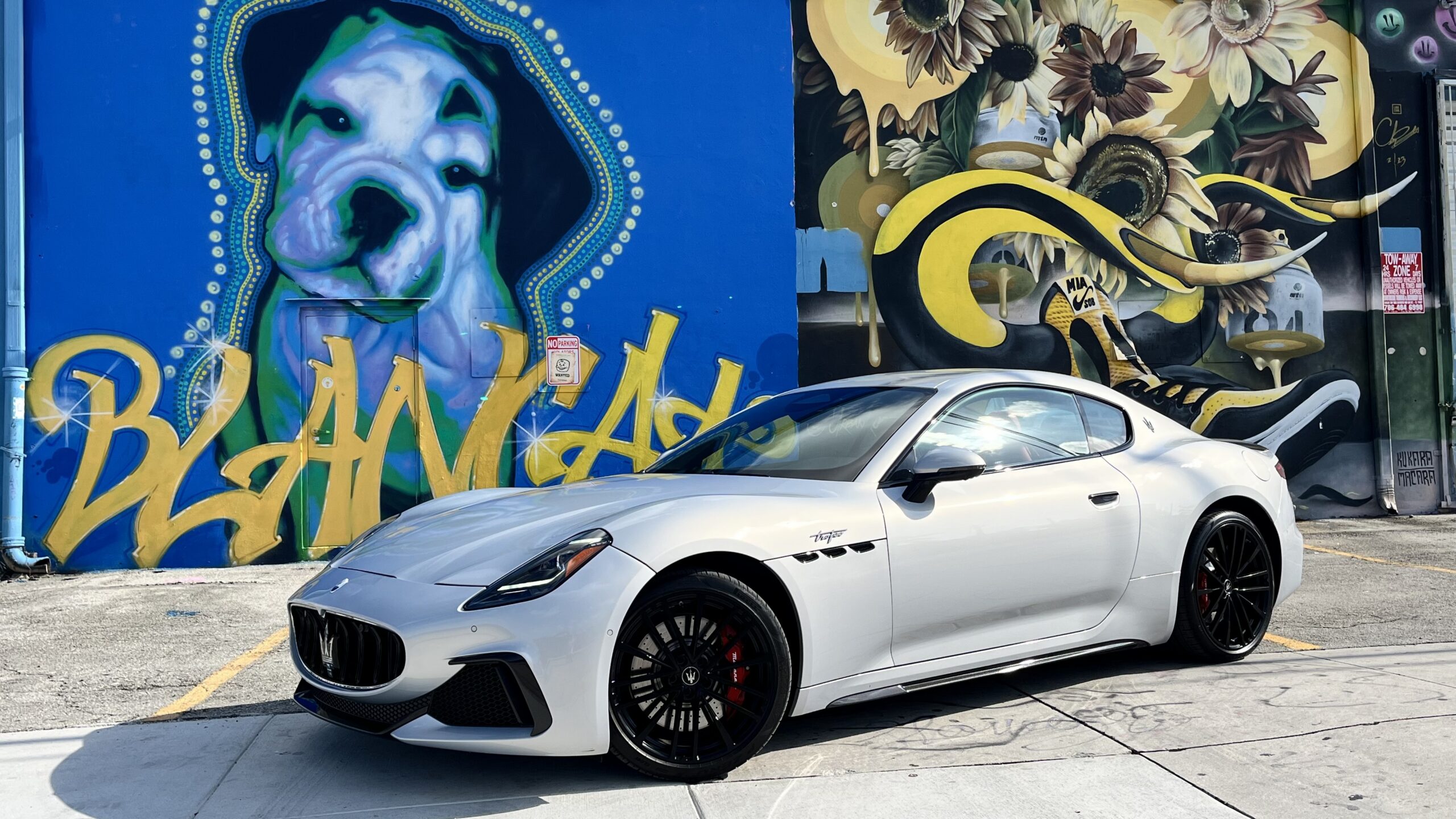
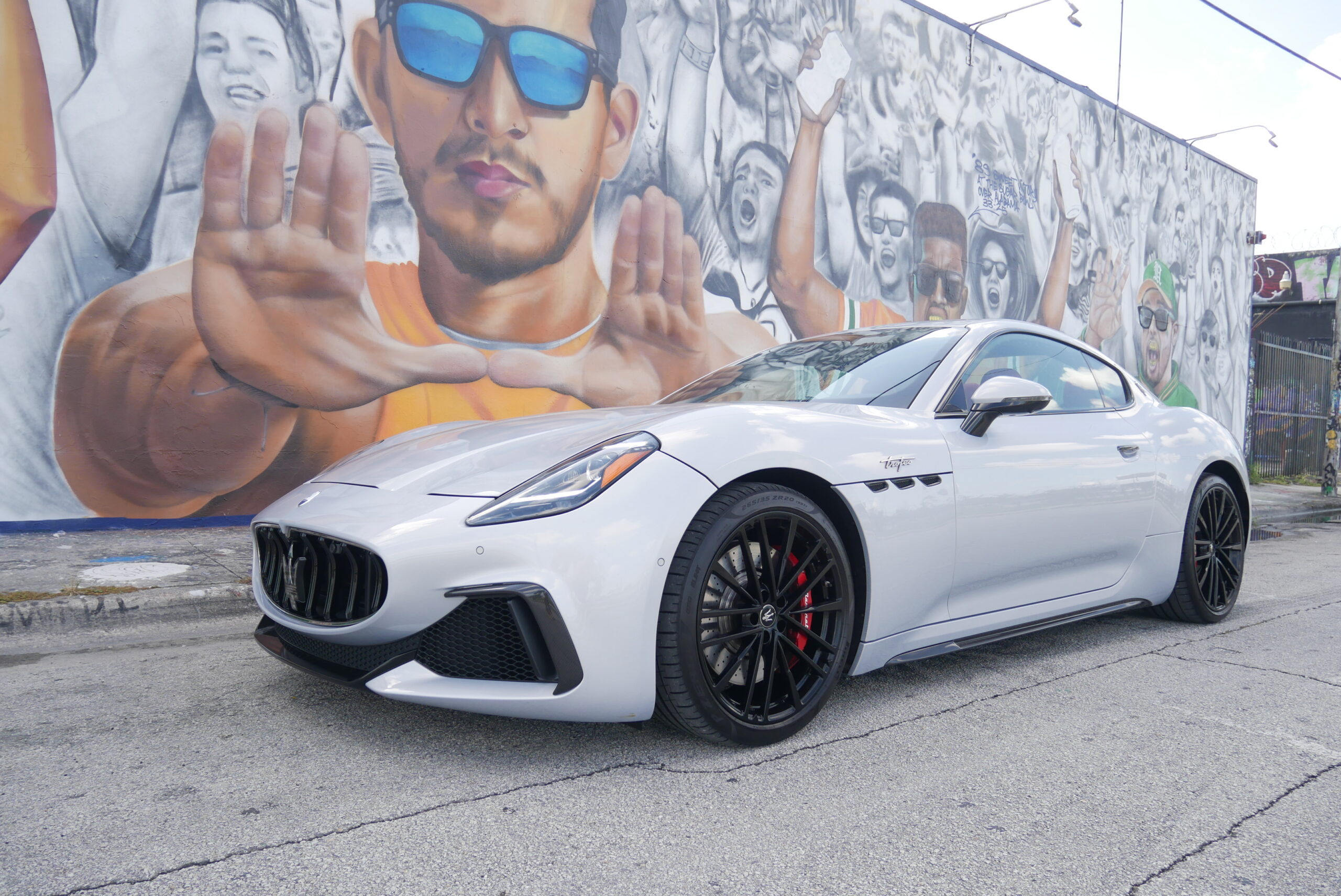
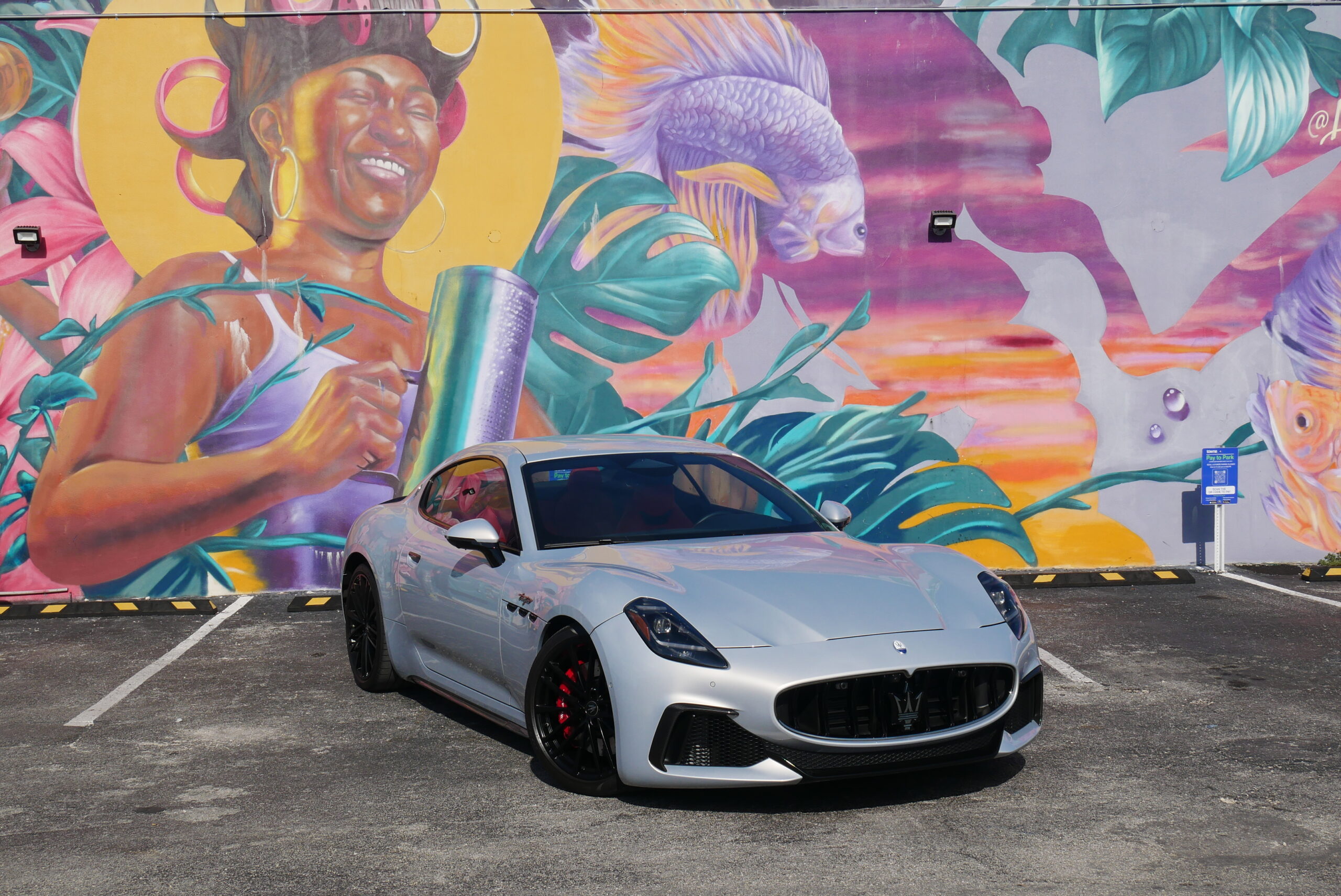
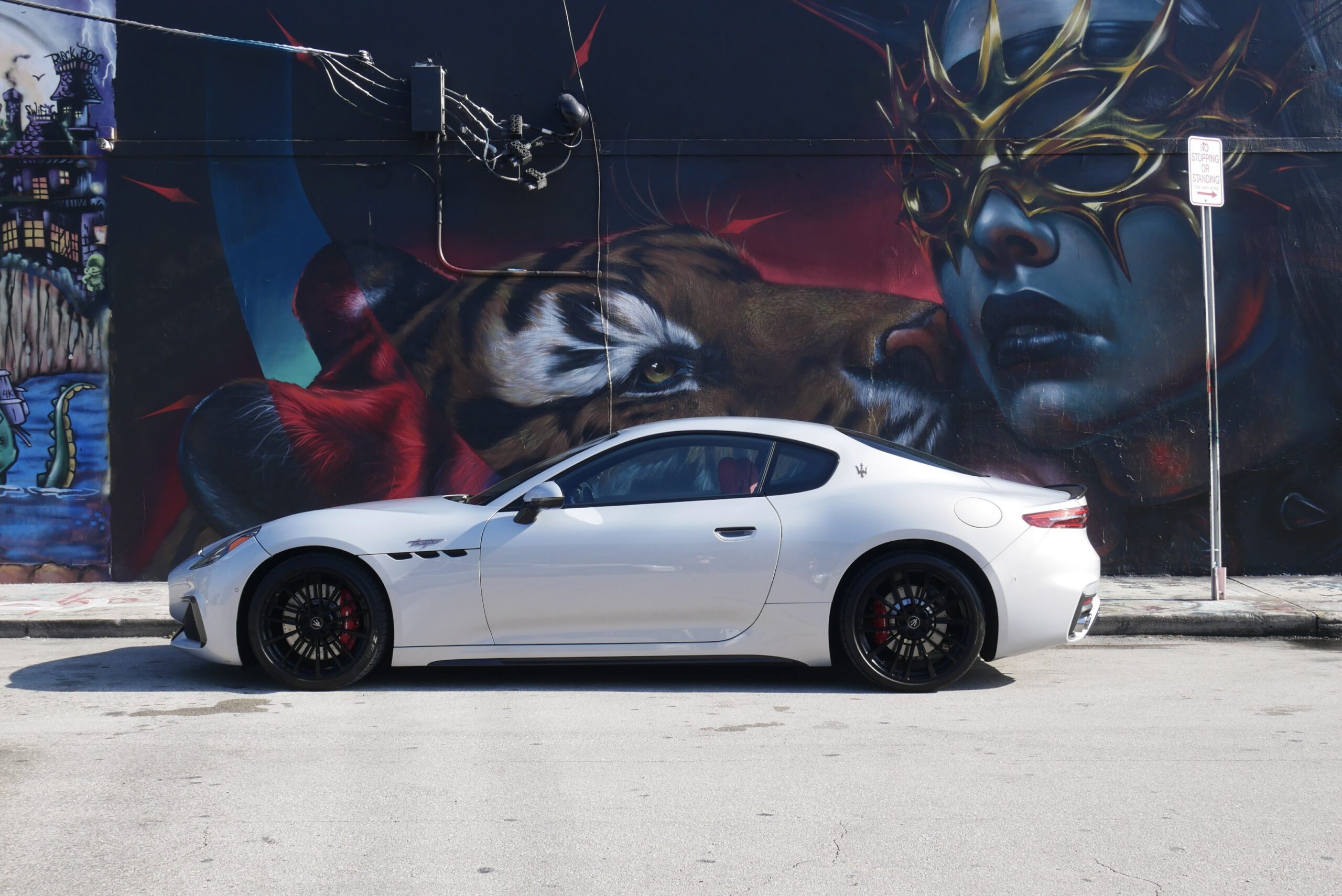
Our Trofeo arrived finished in Bianco Astro, with a red full-grain perforated leather interior, carbon-fiber details, Carbon Macrotwill trim, staggered 20- and 21-inch Pegaso-design wheels and an upgraded Sonus Faber audio system.
Its base price was $166,000. With options, the car sitting in front of me carried an MSRP of $185,830.
At that price, it needed to feel special.
After several days driving it around South Florida, I began to understand where that feeling comes from.
Seeing the GranTurismo Trofeo in Miami
Miami is an interesting place to experience an automobile like this because the city has its own visual personality. There is color everywhere, especially when you move through Wynwood. Buildings become canvases, traffic is unpredictable, people are constantly moving, and exotic and luxury cars aren’t particularly unusual.
Yet the Maserati still attracted attention.
The Bianco Astro paint initially seemed like a relatively conservative specification for a car with this much personality, but seeing it under the Florida sun changed my opinion. The white finish allowed the GranTurismo’s proportions to become the focus.
The hood stretches far ahead of the cabin. The roofline falls gently toward the rear. The body has enough muscle around the wheels to communicate performance without relying on oversized wings or excessive aerodynamic decoration.
Against the murals of Wynwood, the simplicity of the white exterior worked particularly well. Later, driving toward Miami Beach, the same car took on a completely different character. Palm trees, modern architecture, hotels, bright sunlight and the blue Florida sky somehow made the GranTurismo look exactly where it belonged.
That is something Maserati has historically understood very well.
A Maserati doesn’t necessarily need to be the loudest car parked outside a restaurant to make you notice it.
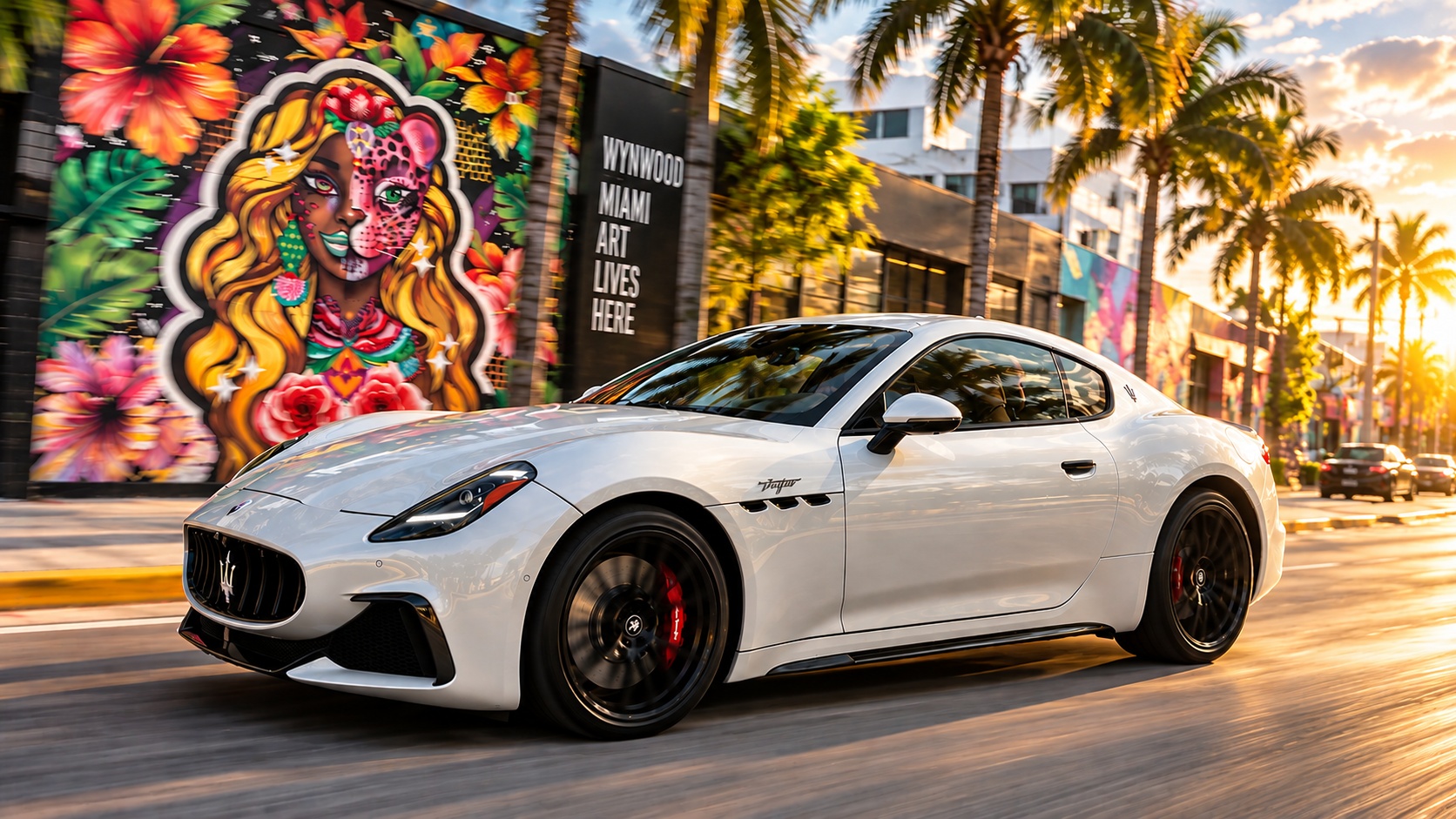
The GranTurismo Trofeo has presence without trying too hard to manufacture it.
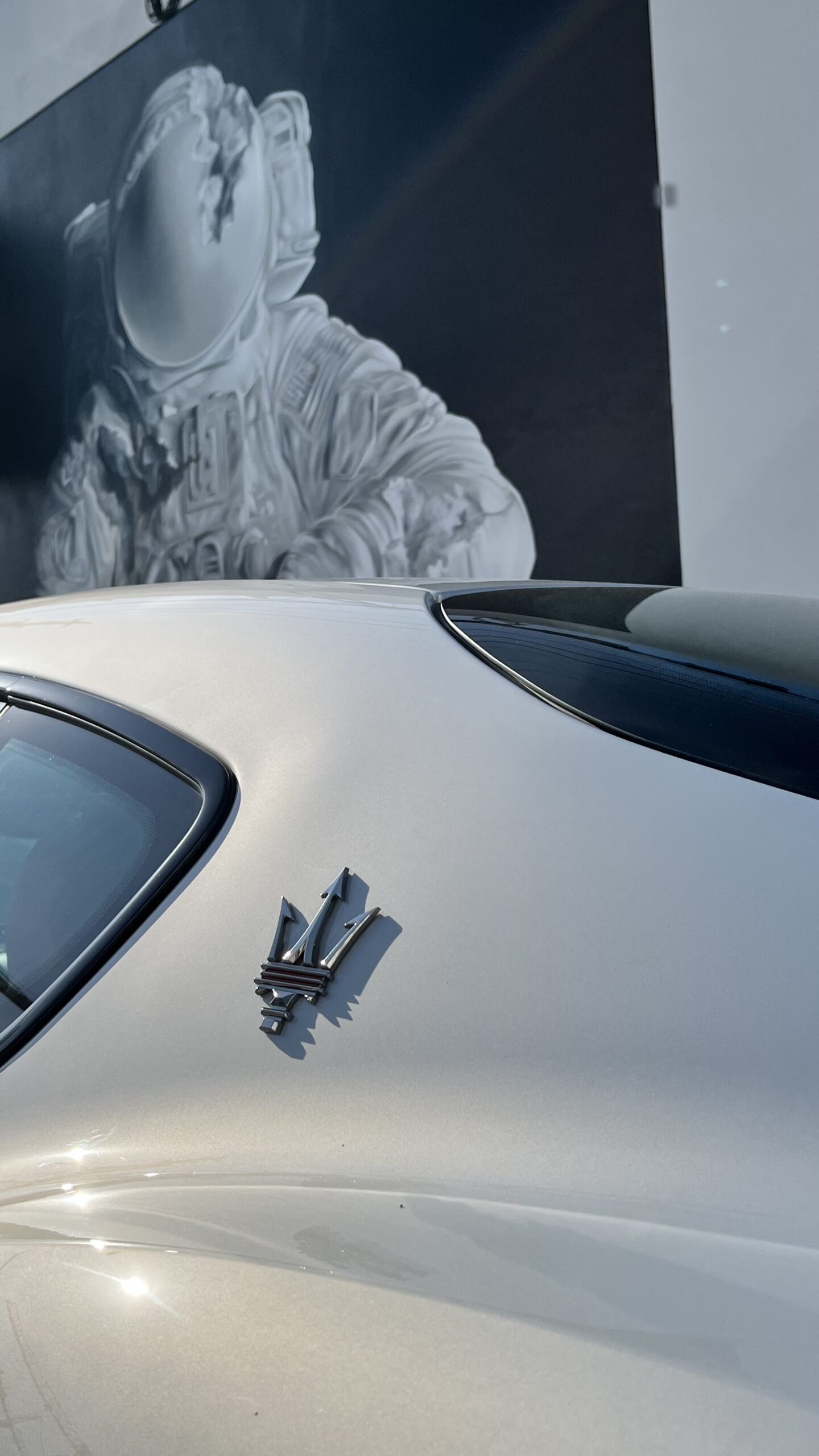
Our car’s $2,880 carbon-fiber rear spoiler added a little more aggression, while the Trofeo’s unique fascias, carbon-fiber exterior elements, gloss-black details, black-chrome badging and quad exhaust outlets subtly separated it from the regular GranTurismo.
I appreciated that restraint.
It would have been easy for Maserati to cover the Trofeo with aerodynamic pieces and turn it into something that looked more like a track-focused special edition. Instead, you still immediately recognize the elegance of the GranTurismo underneath.

The Trofeo simply looks as though it has been spending more time at the gym.
The Red Interior Changes the Experience
Opening the driver’s door was probably my favorite visual moment with this particular specification.
The exterior is almost understated in white. Then you open the door and discover an interior covered in red full-grain perforated leather and carbon fiber.
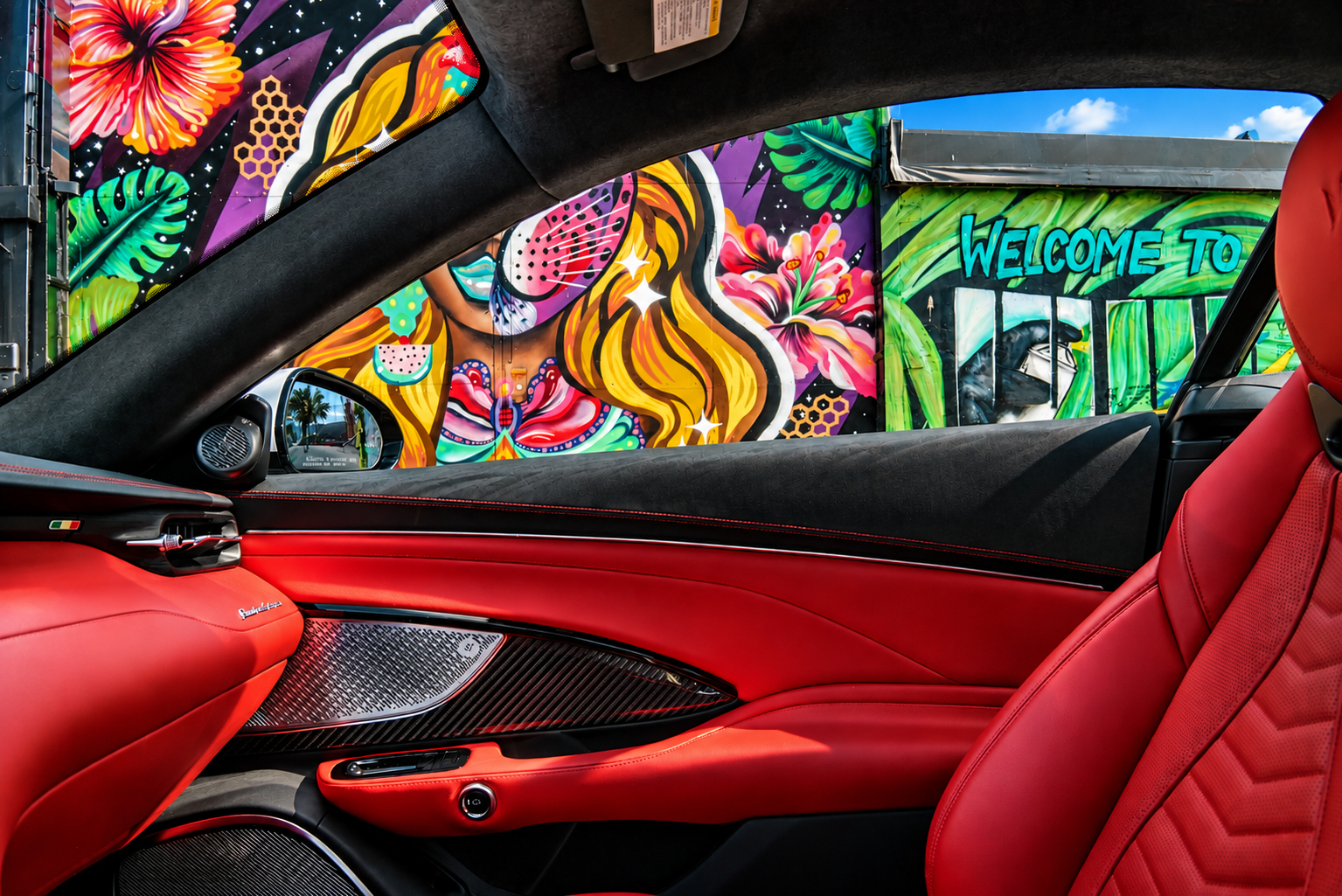
Suddenly, the personality of the car makes sense.
The GranTurismo I drove in Virginia had a much more traditional luxury atmosphere, with warmer colors and open-pore wood. It felt elegant and sophisticated, exactly as you would expect from an Italian grand tourer.
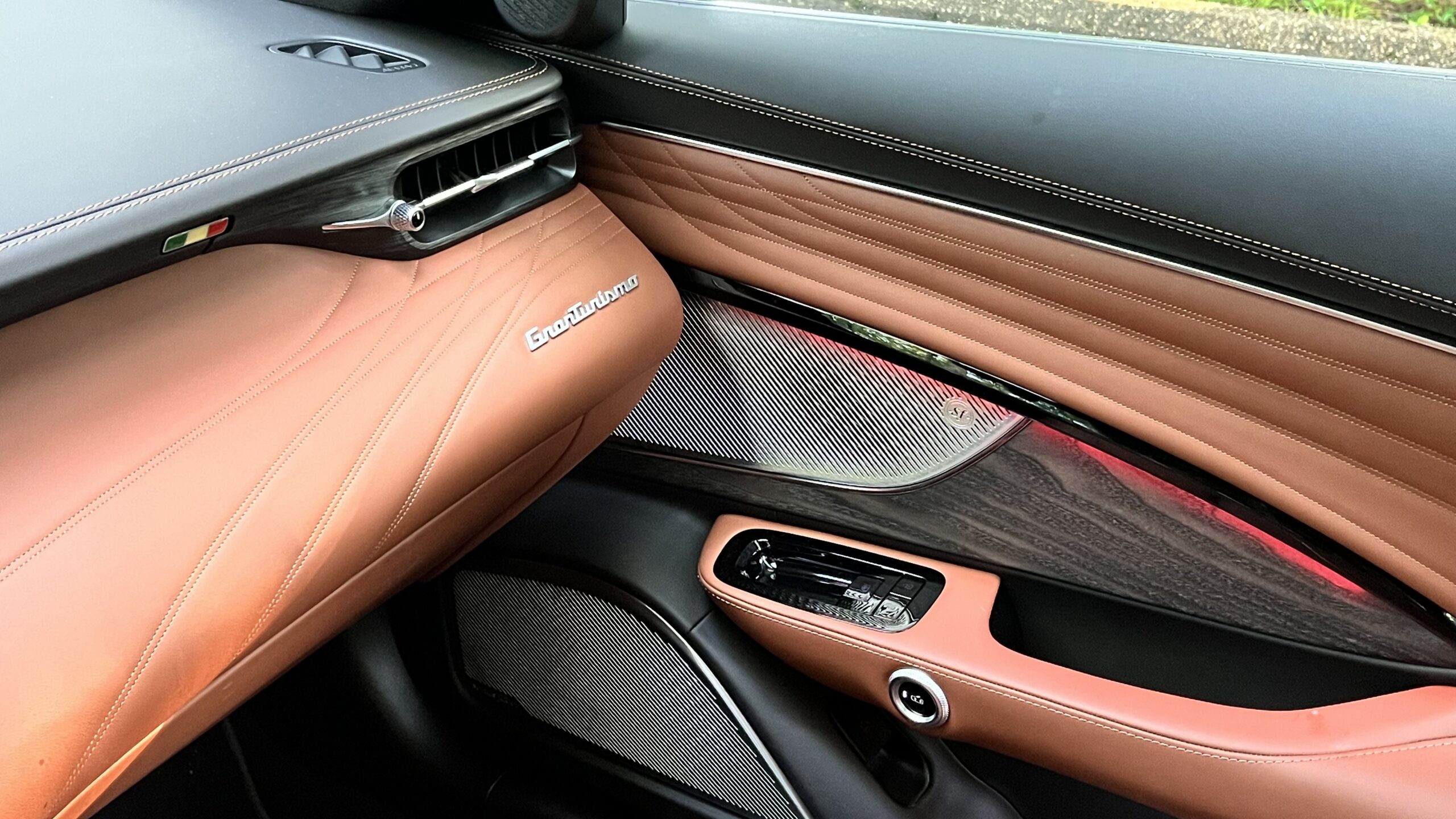
The Trofeo felt younger. More energetic.
Not necessarily less luxurious, just more focused on the person sitting behind the steering wheel.
The Carbon Macrotwill trim, a $2,650 option on our test car, fits that personality beautifully. The aluminum column-mounted paddle shifters are another detail I enjoyed because they feel substantial in your hands. They’re not decorative pieces attached to the steering wheel. They look and feel like something you’re actually going to want to use.
And you will.
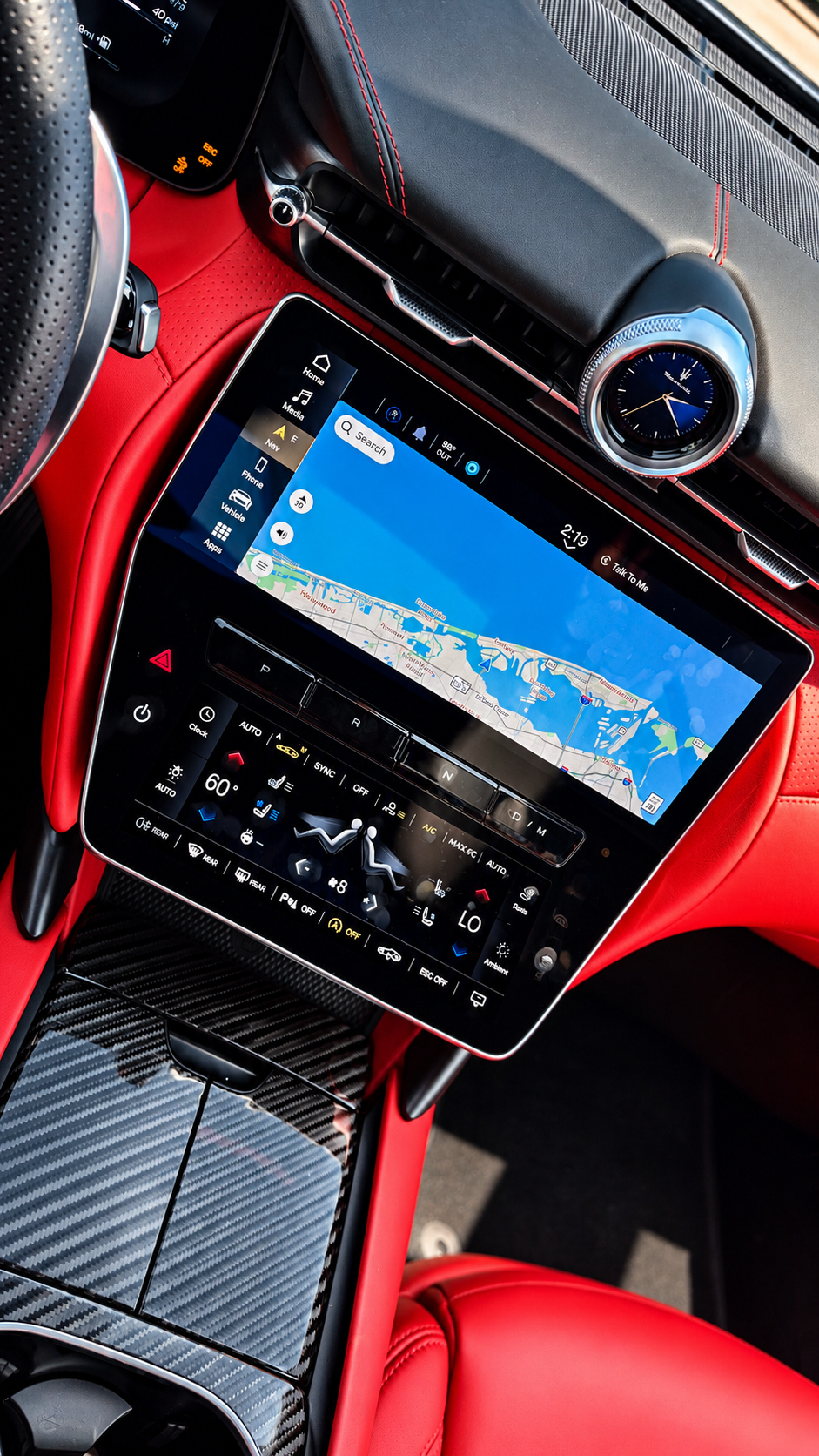
The seats deserve attention as well. A grand tourer can’t simply look beautiful; it has to remain comfortable after the novelty of the first hour disappears. The Trofeo provides 18-way power-adjustable front seats with driver memory, heating and enough adjustment to find a genuinely comfortable driving position.
Technology is integrated throughout the cabin without completely taking over the experience. There’s a 12.3-inch digital instrument cluster, accompanied by Maserati’s 12-inch and 8.8-inch central displays. Navigation, Apple CarPlay, Android Auto, wireless charging and connected features are all present.
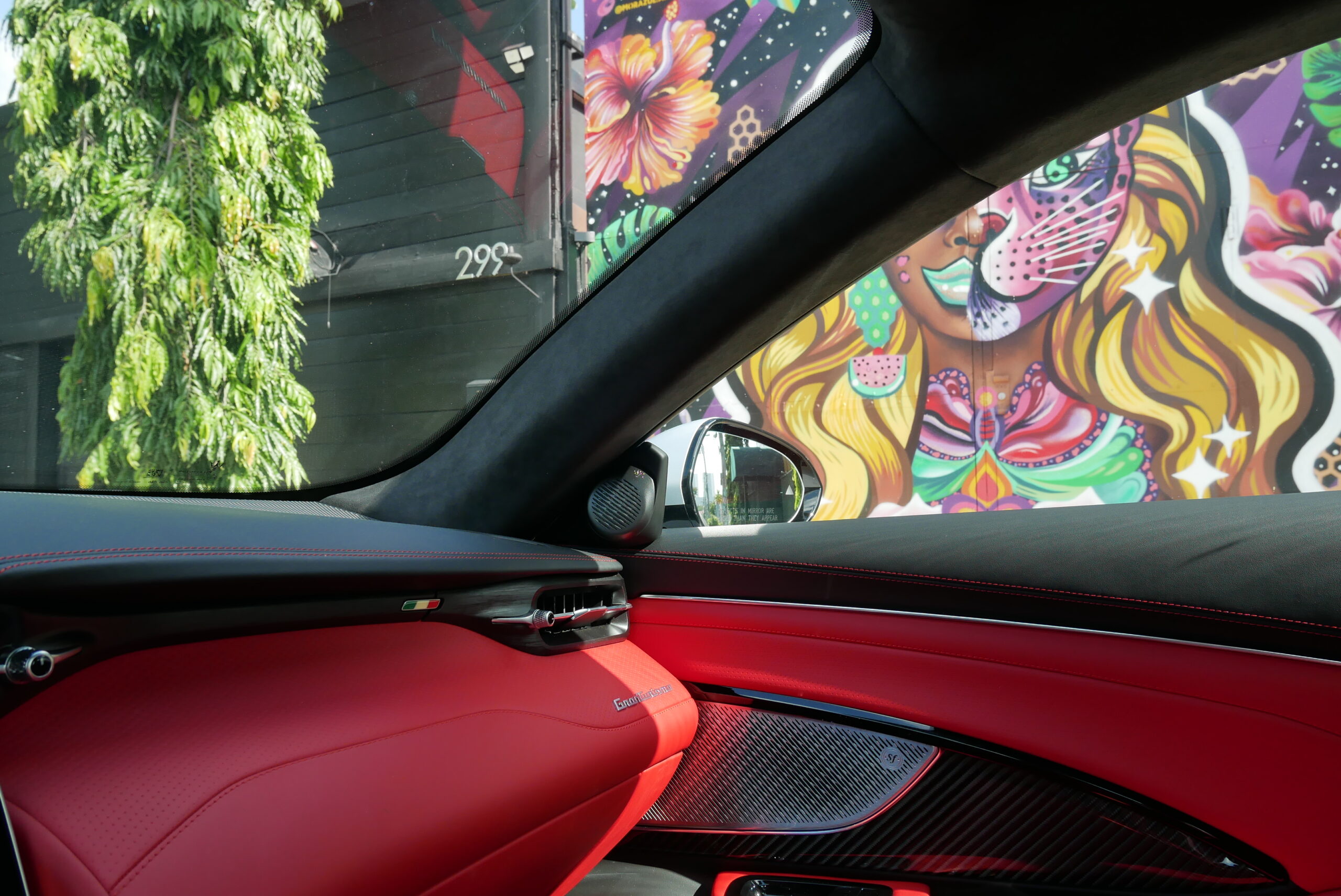
Our car also had the high-premium Sonus Faber audio system, a $4,890 option.
It’s an impressive system.
But there were plenty of moments when I preferred listening to something else.
The car itself.
The Nettuno Is What Makes the Trofeo Special
This is where my opinion of the Trofeo really began to form.
Under the hood is Maserati’s 3.0-liter twin-turbocharged Nettuno V6, paired with an eight-speed ZF automatic transmission and Maserati’s Q4 all-wheel-drive system.
The chassis includes adaptive air suspension, Skyhook electronic active damping and an electronic limited-slip differential. There is launch control and four selectable driving modes: Comfort, GT, Sport and Corsa.
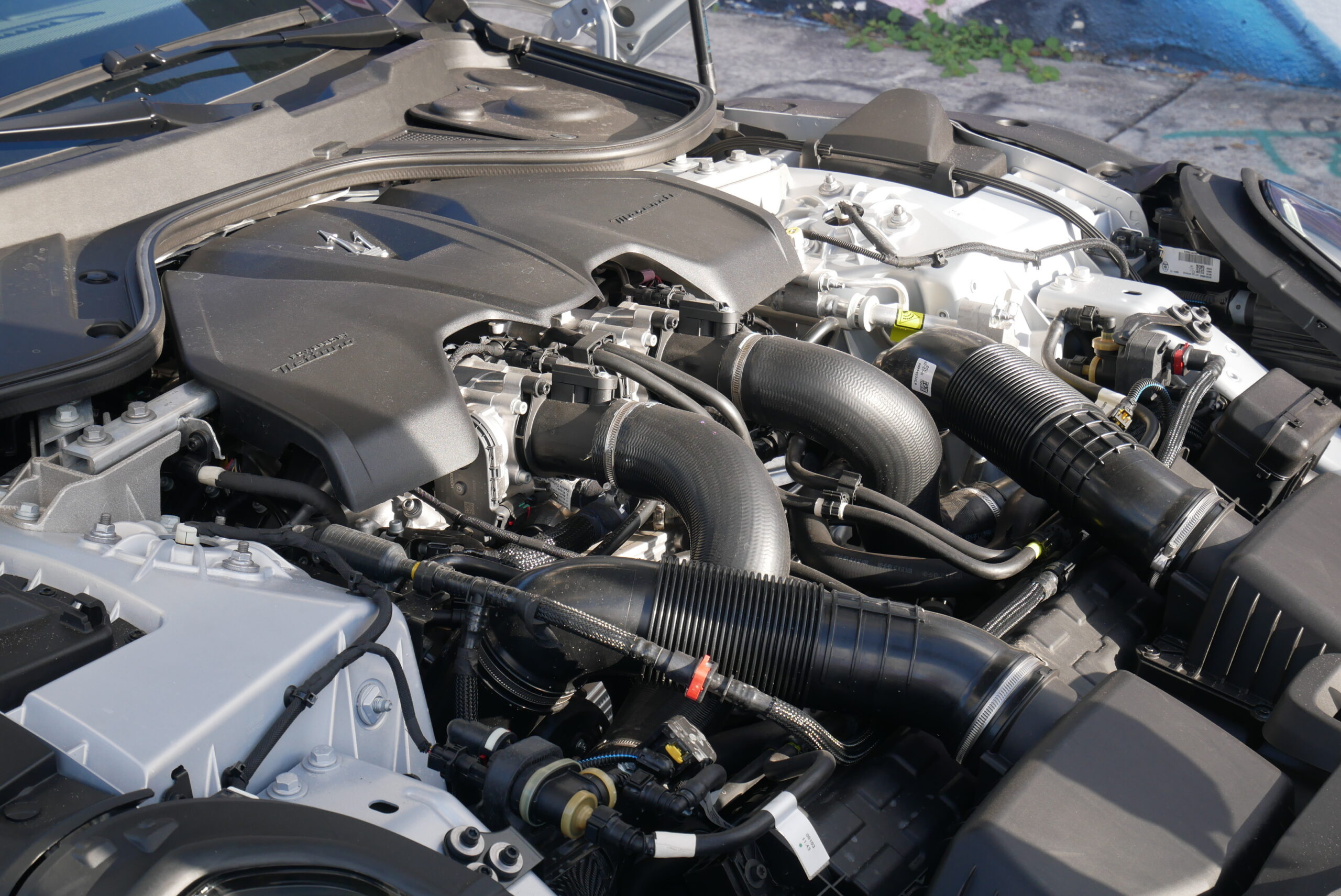
You can read all of that on a specification sheet. What the specification sheet can’t adequately explain is how broad the personality of this powertrain feels from the driver’s seat.
The Nettuno is the finest Maserati engine I have personally experienced. And I don’t say that simply because the Trofeo is fast. Of course it’s fast.
What impressed me more was how easily the engine changes character depending on what you’re asking from the car.
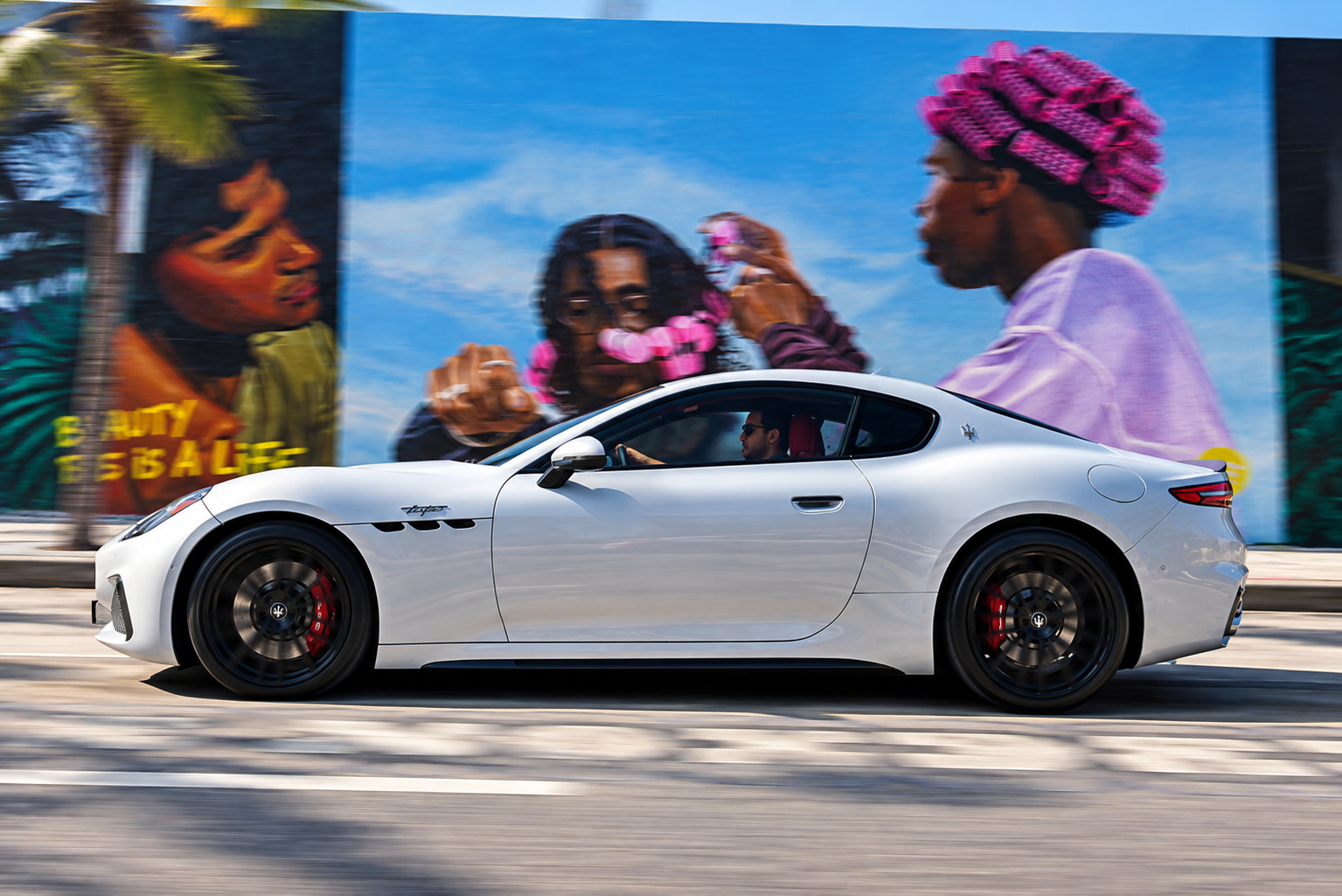
Miami traffic isn’t particularly interested in how much performance your Maserati has. There were plenty of moments when I was simply moving from one traffic light to another, surrounded by SUVs, delivery vehicles and people trying to change lanes at the last possible second.
In those situations, the Trofeo behaves remarkably normally.
The transmission isn’t constantly trying to prove something. The suspension doesn’t punish you over imperfect pavement, and the engine can remain relatively relaxed. You can drive the car through Miami Beach at an ordinary pace and enjoy the steering, seating position, interior and atmosphere without feeling as though the car is begging you to drive twice the speed limit.
That’s important.
Because eventually the traffic opens. And that’s when you reach for Sport.
The change isn’t theatrical for the sake of being theatrical. The throttle simply becomes more responsive, the transmission starts holding gears with greater purpose and the exhaust becomes more present behind you.
Push further into Corsa, and you discover the side of the Trofeo that was hiding while you were sitting in traffic ten minutes earlier.
The car tightens around you. Now the aluminum paddles that looked so beautiful when you opened the door become part of the experience. The engine feels more urgent. The transmission becomes more aggressive. You begin looking farther down the road and paying more attention to what your right foot is doing.
This is why I enjoyed the Nettuno so much. It’s not an engine that gives you one experience all the time. It lets the GranTurismo be a GranTurismo first. Then, when you ask for more, it gives you considerably more.
Miami Is Actually a Good Place to Understand This Car
Nobody thinks of Miami as the place to test the ultimate limits of a performance car.
There are no mountain passes waiting outside South Beach, and you’re probably going to spend considerably more time on I-95 than attacking a series of perfect corners.
But that’s precisely why driving the Trofeo here was useful. This is how many owners are actually going to use the car.
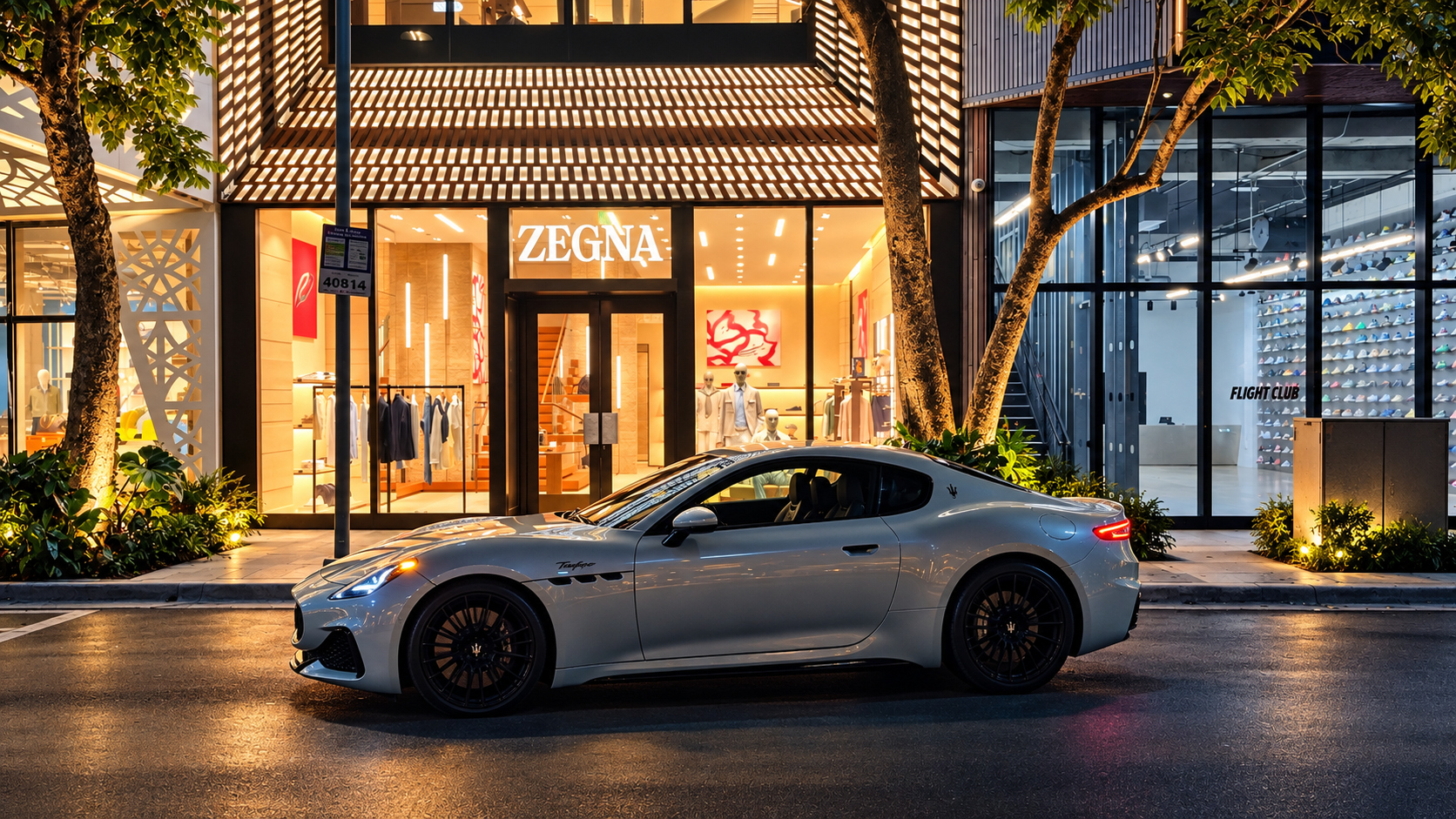
You’re going to drive to dinner. You’re going to sit in traffic. You’re going to take it to a hotel. You’re going to cover long stretches of highway. You’re going to deal with heat, rough pavement and those Florida rainstorms that seem capable of appearing five minutes after you were looking at a perfectly blue sky.
The Trofeo has to work in all of those situations before its performance becomes relevant.
And it does.
What Does $185,830 Actually Buy?
Our GranTurismo Trofeo started at $166,000, but several significant options pushed the final price considerably higher.
The carbon-fiber rear spoiler added $2,880. Carbon Macrotwill trim cost another $2,650. The high-premium Sonus Faber system added $4,890, red brake calipers were $1,320, the ADAS Base Package added $5,180, the Comfort Package another $1,240, and the Sport Design Package contributed $1,670.
Final MSRP:
$185,830.
That’s real money, even in this segment.
And I think anyone considering this car should look beyond the question of whether $185,830 buys enough performance. It does.
But so do plenty of other cars. At this level, horsepower alone isn’t particularly difficult to find. Neither is acceleration. What becomes harder to find is personality.
And perhaps most importantly, it gives you something you can’t really measure:
A reason to want to drive it.
GranTurismo or GranTurismo Trofeo?
Driving these two cars in two different parts of the country made the answer much clearer to me.
The GranTurismo I drove in Virginia is probably the easier car to understand.
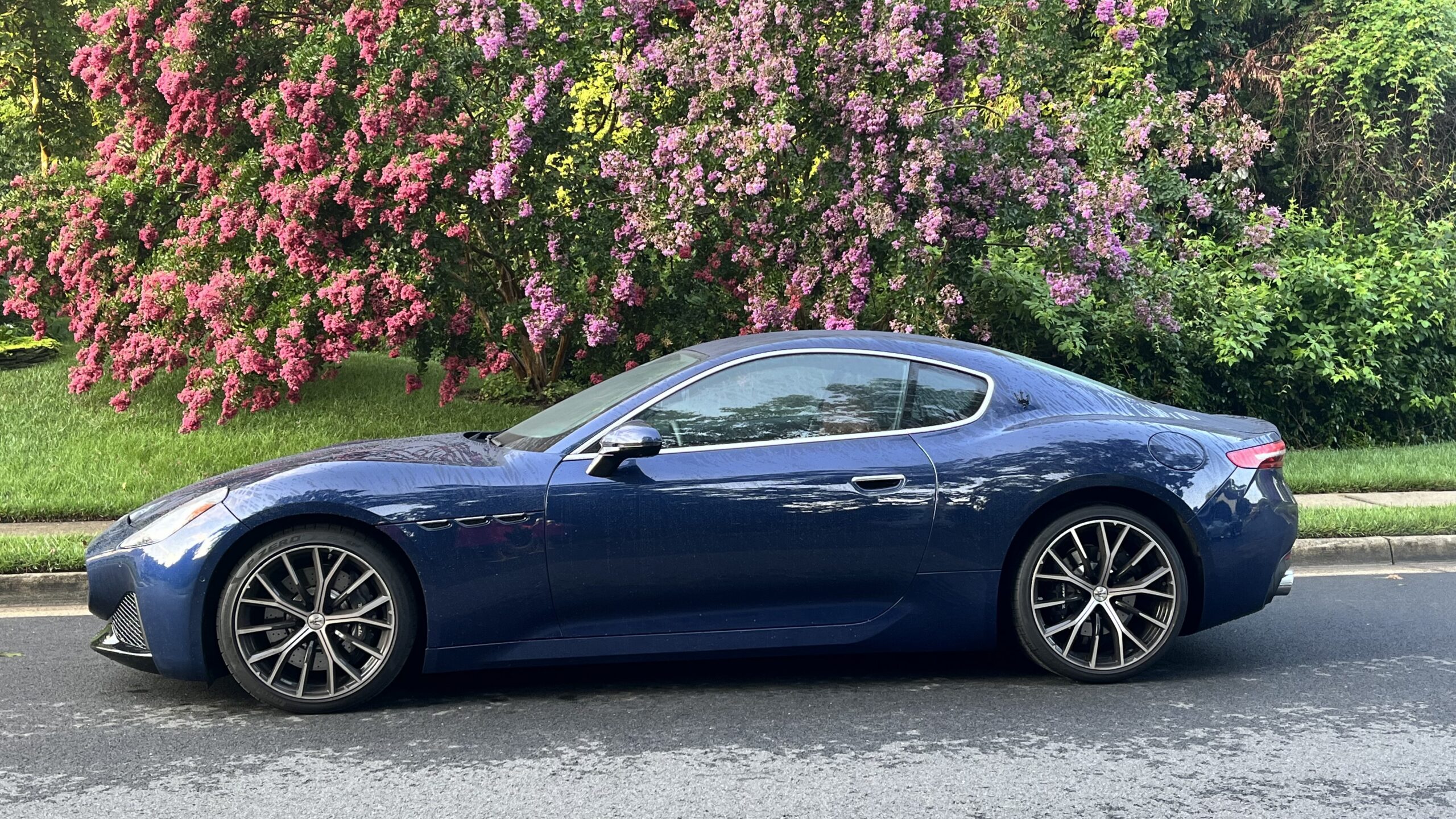
It’s elegant, fast, comfortable and beautifully suited to covering distance. It reminded me what a proper GT should be. You don’t finish a long drive feeling as though the car has been fighting you for the last three hours.
The Trofeo takes that same philosophy and adds another layer.
It’s still comfortable. It’s still elegant. It still feels like a Maserati GranTurismo.
But there’s more anticipation every time you get behind the wheel because you know another version of the car is sitting there waiting for you.
The standard GranTurismo makes the journey enjoyable.
The Trofeo makes you wonder whether there’s a more interesting road to get there.
That, more than anything else, describes the difference I felt between them.
Who Is This Car Really For?
I don’t think the GranTurismo Trofeo is simply for someone who wants the most expensive or most powerful version of the GranTurismo.
The buyer who will appreciate this car most is probably someone who could own a dedicated sports car but doesn’t necessarily want to live with one every day.
Maybe you want to leave Washington or Miami in the morning and drive several hundred miles without arriving exhausted.
Maybe you want to take someone to dinner without making them climb into a car that feels designed primarily for a racetrack.
Maybe you care about Italian design and the small details that make an automobile feel different every time you approach it.
But when the road opens, you still want something serious underneath your right foot.
That’s the person I think Maserati built the Trofeo for.
It doesn’t force you to decide whether you want the elegant car or the exciting one before leaving the house.
You get both.
Copyright Notice: All photographs and images featured in this article are © Carsfera.com / Carsfera Media unless otherwise credited. No image may be copied, reproduced, republished, distributed, modified, licensed, or used for any commercial purpose under any circumstances without prior written authorization from Carsfera.com. All rights reserved.
-
 TEST DRIVES2 months ago
2025 Ford Bronco Sport Badlands: The Adventure SUV You Can Drive Every Day
-

 TEST DRIVES2 months ago
2026 Toyota GR Supra MkV Final Edition
-
 NOW TRENDING1 month ago
Aston Martin DBX Becomes Harry Da Souza’s Ride in MobLand
-

 Formula12 months ago
FIA Reveals Second ADUO Results With Red Bull-Ford Still on Top
-
 NOW TRENDING2 months ago
Tesla Cybercab Puts U.S. Regulations to the Test
-
 NOW TRENDING2 months ago
2027 Hyundai Tucson Hybrid Gets a Power Boost
-
 NOW TRENDING2 months ago
Hyundai Reports Strong Hybrid Sales in August 2026
-
 NOW TRENDING2 months ago
Nissan Z Nismo Finally Gets a Manual Transmission in Japan
You must be logged in to post a comment Login