
RACING
Aston Martin Explains Alonso’s Bouncing and Oil Leak in Baku

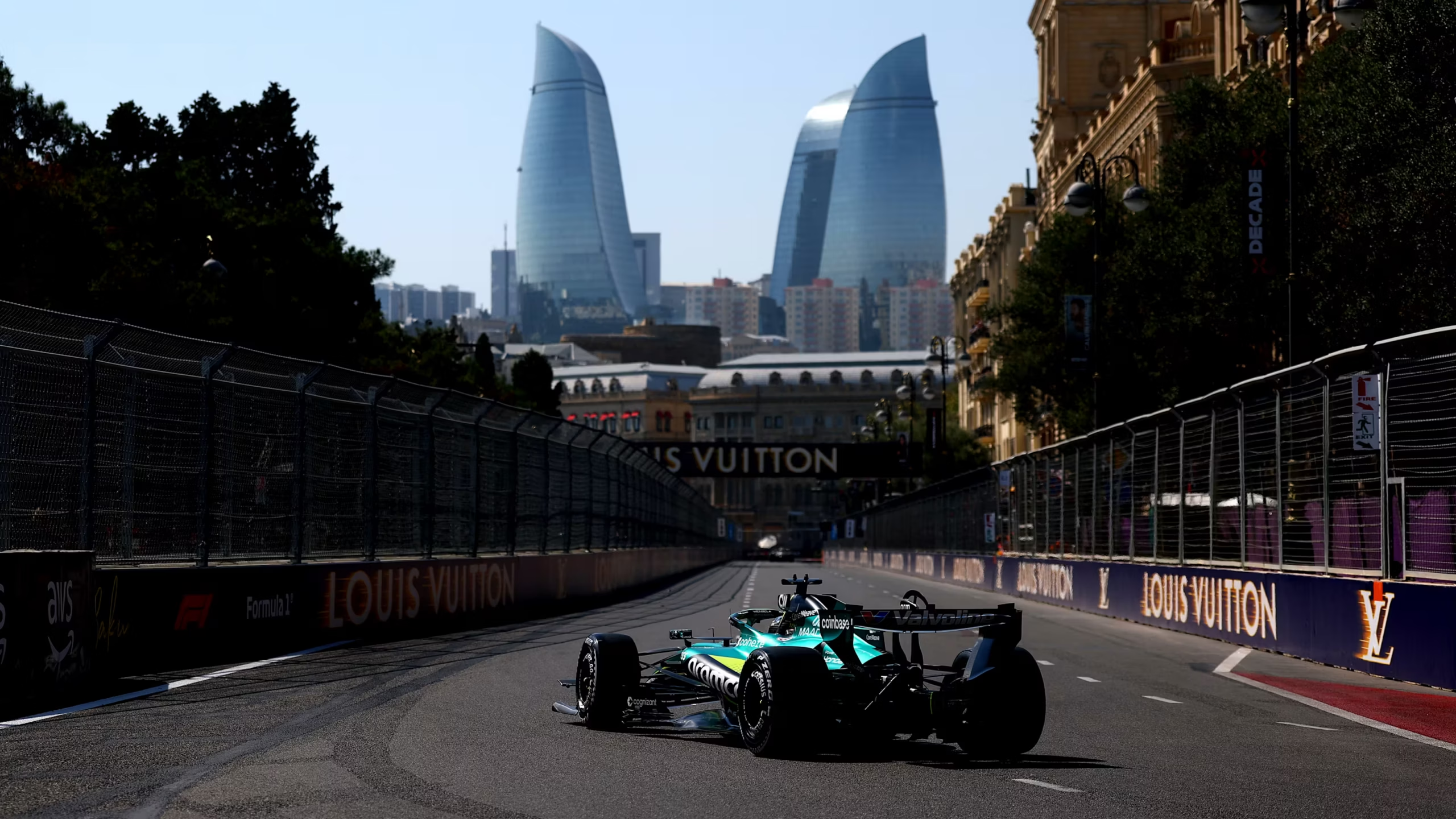
Aston Martin says it was deliberately testing very low ride heights in Baku, while Fernando Alonso’s FP2 running ended early because of a suspected oil leak.
Aston Martin faces a difficult Baku weekend
Aston Martin arrived in Baku expecting a difficult weekend. The long straights of the Azerbaijan circuit expose one of the AMR26’s biggest weaknesses: efficiency at high speed.
Thursday’s practice sessions confirmed those concerns.
Both Fernando Alonso and Lance Stroll finished near the bottom of the timesheets. Alonso ended FP2 in 22nd, while Stroll was 21st. The team also confirmed that both cars will start the Grand Prix from the back because of power-unit penalties.
The problem was not completely unexpected.
Baku places a huge emphasis on straight-line performance. It also leaves very little room for mistakes because of its walls and narrow sections. Aston Martin knew its package would face a major test in Azerbaijan.
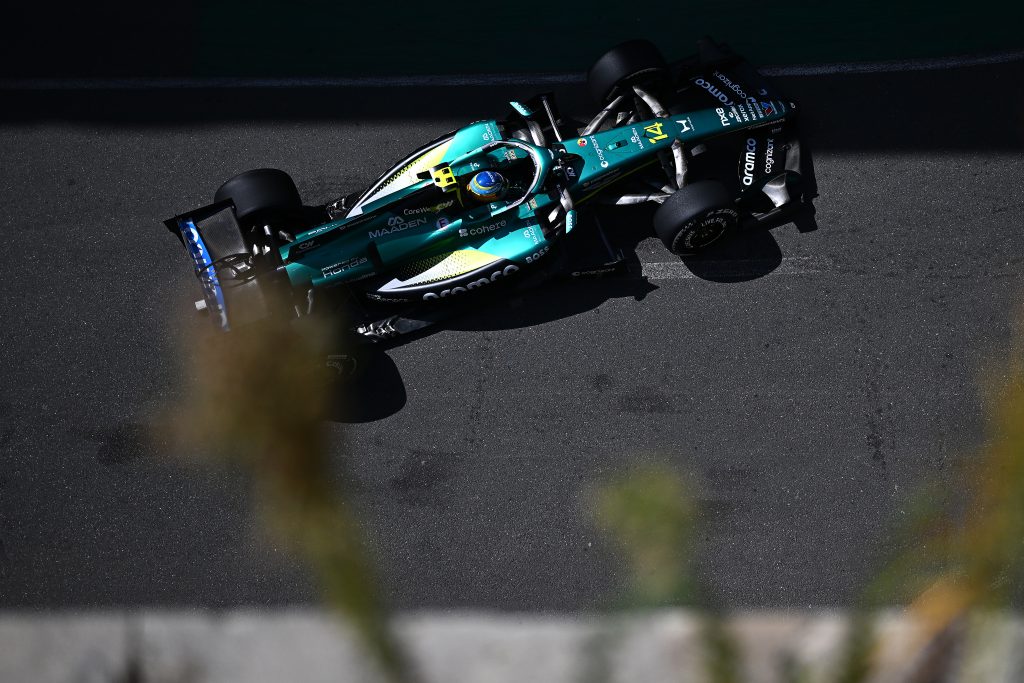
Fernando Alonso completed only limited running in FP2 after Aston Martin detected a suspected oil leak.
Alonso completed 24 laps in FP1. His afternoon was much shorter, with only a handful of laps before the team stopped the car.
Mike Krack, Aston Martin’s Chief Trackside Officer, said the team detected a suspected oil leak and did not have enough time to fully investigate it during the session.
The team planned to inspect the car overnight and repair it ahead of Friday practice.
That makes the incident less alarming than a major mechanical failure.
For now, Aston Martin has described it as a problem that needs to be investigated rather than a serious component failure.
Why was the Aston Martin bouncing so much?
Another issue attracted attention during the opening day.
Video from Baku showed the AMR26 making heavy contact with the track surface in some high-speed sections. The behavior looked like significant bottoming.
Krack, however, explained that Aston Martin was deliberately experimenting with very low ride heights.
The team was trying to find the best compromise between aerodynamic performance, floor wear and different fuel loads. That meant testing several ride-height scenarios during practice.
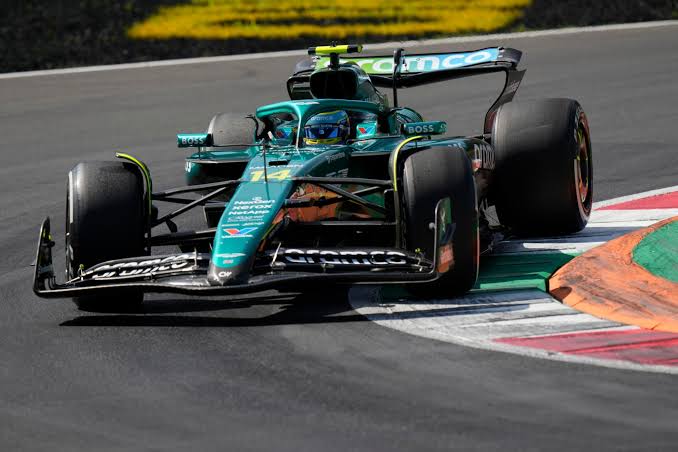
Lance Stroll also struggled for outright pace as Aston Martin evaluated its setup on Baku’s low-grip street circuit.
The practice sessions are precisely where teams can make those experiments.
A qualifying lap demands a different setup from a long race stint. Fuel load, tire behavior and the amount of time spent at high speed can all change the ideal ride height.
That explains why Aston Martin was willing to push the car close to the limit during Thursday’s running.
The goal was not necessarily to eliminate every contact with the track. It was to determine how low the team could run the car without creating excessive wear or instability.
Grid penalties change Aston Martin’s priorities
The situation becomes more complicated because both Alonso and Stroll already have major grid penalties.
Alonso took a fifth internal combustion engine, a fifth turbocharger and a ninth power-unit ancillary component. Stroll also exceeded the permitted allocations for several components.
The FIA therefore confirmed penalties that put both Aston Martin drivers on the back row regardless of their qualifying results.
Alonso’s penalty totals 25 places, while Stroll’s amounts to 20 places.
That changes the value of qualifying.
Aston Martin still needs to maximize the car’s performance. But there is less benefit in chasing an extremely aggressive qualifying strategy when both cars are already locked into the back row.
Krack also acknowledged a human factor. Knowing in advance that the penalties are coming can affect the intensity of the qualifying effort.
Baku exposes the Aston Martin package
The biggest problem remains performance.
Aston Martin’s official Baku report shows Alonso and Stroll ended Thursday in P22 and P21. Their top speeds were also around 320 km/h, but the lap-time deficit remained significant.
That suggests the problem is not simply the engine.
The AMR26 is also struggling to generate enough overall performance on a circuit where every weakness is magnified.
Baku combines a long full-throttle section with slow corners. The car therefore needs both efficiency and strong traction.
That combination is difficult for Aston Martin at the moment.
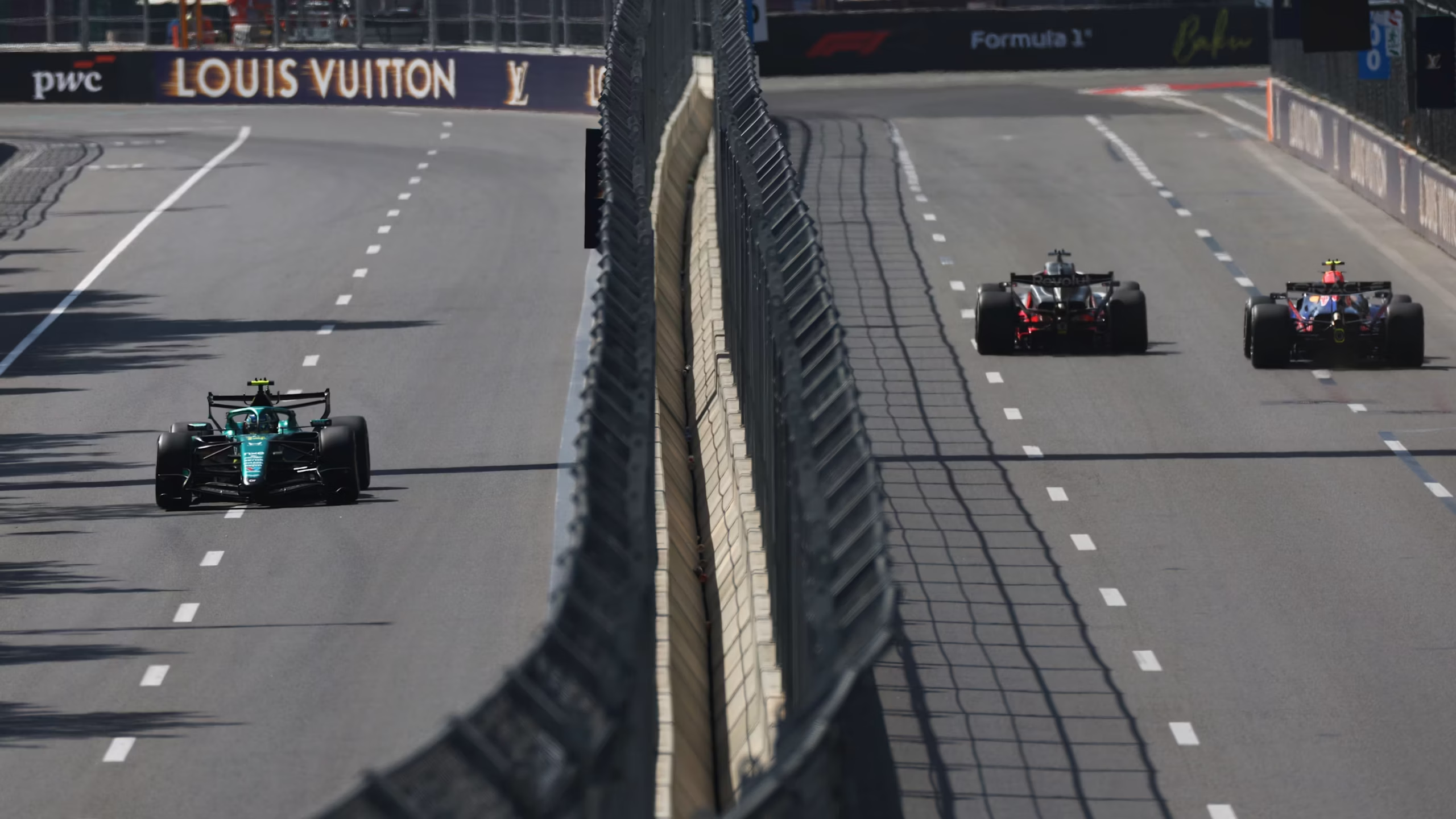
The AMR26 is facing one of its toughest technical challenges of the 2026 season in Baku.
The team is also dealing with Honda power-unit changes.
Aston Martin and Honda agreed that Baku was an appropriate place to introduce additional components, even though doing so triggered penalties. The decision reflects the team’s focus on the remaining races while continuing its development work.
That means Friday’s sessions will be about more than lap times.
The team needs to understand the setup changes, confirm the oil-leak repair and gather useful information for the race.
Alonso’s FP2 problem was not the only concern
The combination of poor pace, setup experimentation and penalties has made Thursday one of the more difficult days of Aston Martin’s season.
Still, the team has reasons to keep working.
Alonso completed enough FP1 mileage to provide useful information. Stroll also completed a reasonable number of laps across the day. The main task now is to combine that data with Friday’s running and find a setup that works better on the street circuit.
The Aston Martin Baku 2026 weekend therefore enters its next phase with several questions still open.
The team has to confirm Alonso’s car is reliable, understand how low it can run without excessive bottoming and extract more performance from a package that has struggled on Baku’s long straights.
With both drivers already facing back-row starts, Aston Martin’s priority is now to maximize every available opportunity and turn a difficult weekend into useful data for the final races of 2026.


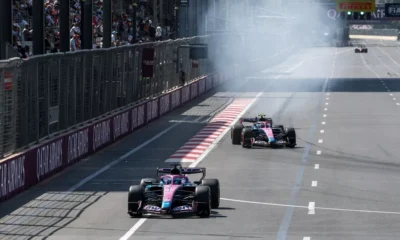




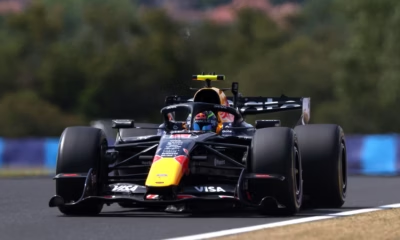


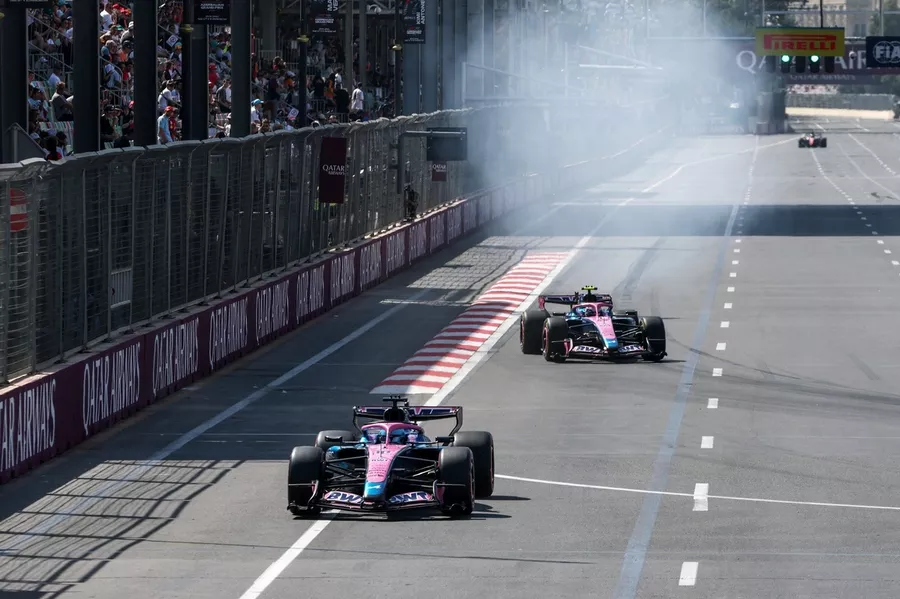
Pierre Gasly’s seventh-place finish in Baku practice showed Alpine’s current pace, while Franco Colapinto is still searching for the right balance before qualifying.
Gasly gives Alpine a clear benchmark in Baku
Alpine ended Thursday in Baku with a mixed picture.
Pierre Gasly finished seventh in FP2, while Franco Colapinto was 11th. The Frenchman completed his best lap in 1:44.843, with Colapinto at 1:45.479. The gap between the two Alpine drivers was therefore 0.636 seconds.
For Steve Nielsen, Alpine’s managing director, Gasly’s result is currently the better indication of what the A526 can deliver in Baku.
“Pierre’s position probably reflects where we think the car is here,” Nielsen said after FP2. He added that Colapinto is still dealing with some balance issues.
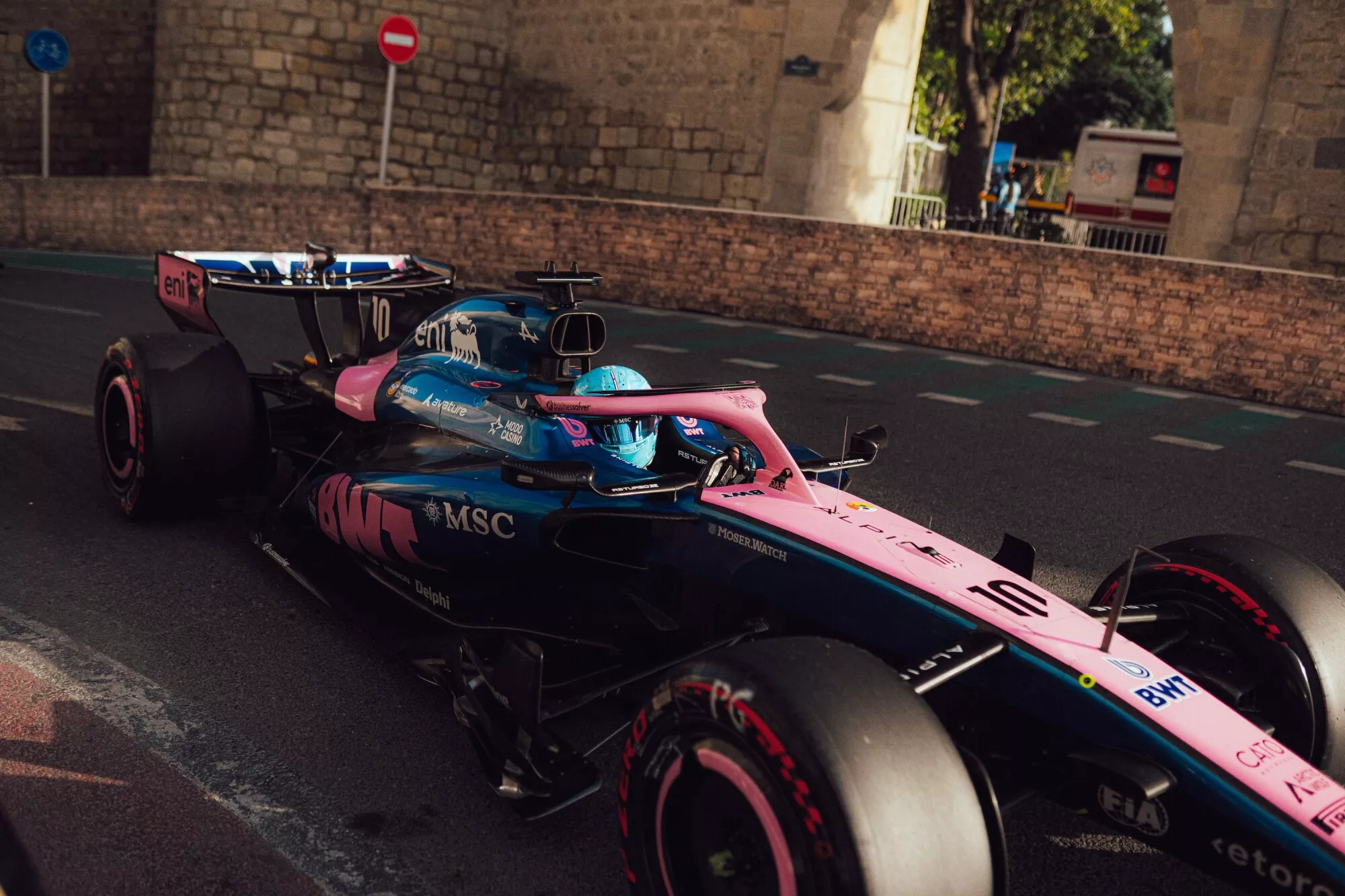
Gasly and Colapinto remain Alpine’s two drivers as the team searches for more performance in Baku.
Colapinto’s Thursday was not a disaster.
He improved from 18th in FP1 to 11th in FP2. Alpine also remained close to several midfield rivals despite bringing no new upgrades to Azerbaijan.
The team focused instead on more conventional setup work. That included energy recovery and deployment, tire preparation, fuel loads and finding clean laps.
Gasly managed to bring all those elements together in the second session.
Colapinto is still looking for the same balance.
Colapinto’s main issue is car balance
Nielsen described the problem as relatively small.
“There are some balance issues to resolve on his side. Nothing major,” the Alpine executive explained. He said Colapinto simply does not feel as comfortable with the car as Gasly at the moment.
That distinction matters.
Alpine is not pointing to a structural problem with the A526. Instead, the team expects to work on the setup before Friday’s final practice and qualifying sessions.
Nielsen also avoided making a firm promise.
“There is never any certainty,” he said, while expressing confidence in the team’s ability to improve the car from one day to the next.
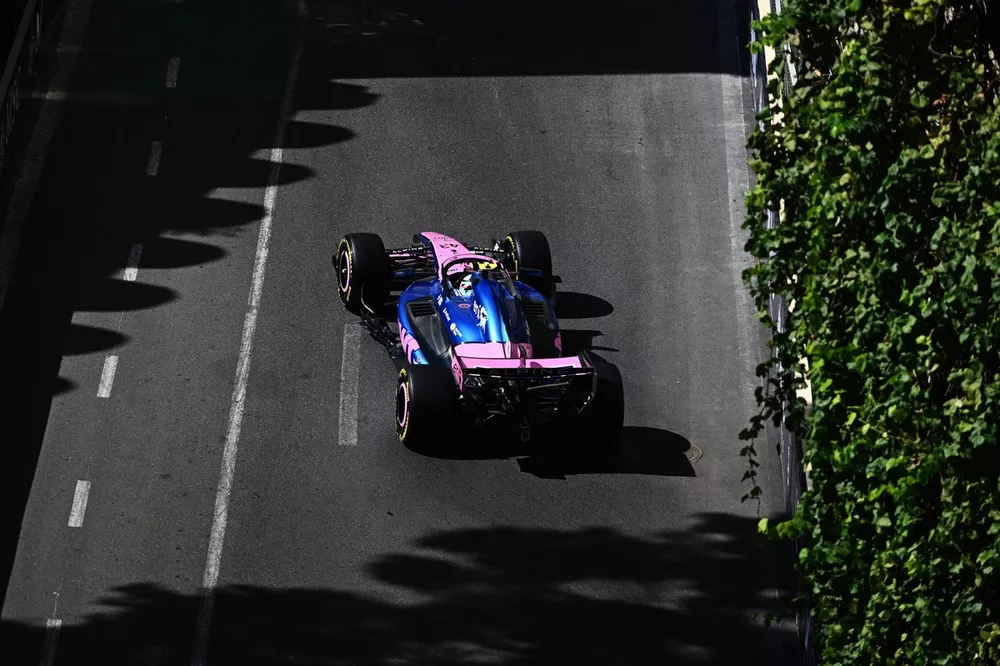
Colapinto has previous experience at Baku, the circuit where he scored his first Formula 1 points in 2024.
The circuit itself leaves little margin for compromise.
Baku combines long straights with slow corners and an extremely narrow section around the old city. Alpine notes that the difference between Turn 16 and Turn 1 covers 2.2 kilometers, while the narrowest point at Turn 8 measures just 7.6 meters.
That makes balance especially important.
A driver needs confidence under braking and on throttle exits. Colapinto therefore needs the car to behave consistently before he can extract the same level of performance as his team-mate.
Alpine does not expect Thursday to tell the whole story
There is another reason Alpine remains cautious about the order.
Several midfield rivals introduced upgrades for Baku. The team believes those changes could unlock more performance later in the weekend.
At the same time, Nielsen said he does not think Alpine has yet seen the best from Audi, Racing Bulls or Williams.
That means Thursday’s classification should not be treated as a final picture.
Friday’s FP3 and qualifying will provide a much clearer comparison.
Gasly also believes there is more performance available. Alpine’s official report said the team made good progress in FP2 and that both drivers produced cleaner, more consistent laps.
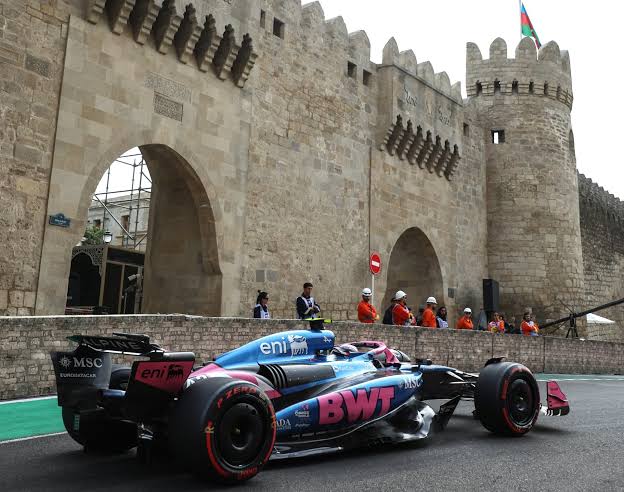
Gasly and Colapinto with Alpine’s A526 at the start of the 2026 season.
For Colapinto, the immediate target is therefore clear.
He needs to solve the balance issue before qualifying and unlock the pace Alpine believes is already available in the car.
The Argentine arrives in Baku after finishing seventh in Madrid, while Gasly is also coming off a strong recent period for Alpine.
The team has already identified where it wants the A526 to be.
Now the focus is on whether Colapinto can reach that same window.
The Colapinto Baku weekend has started with an 11th-place FP2 result, but Alpine’s own assessment suggests the car has more pace. Gasly’s seventh place is the current benchmark, and Friday will show whether Colapinto can close the gap before qualifying.
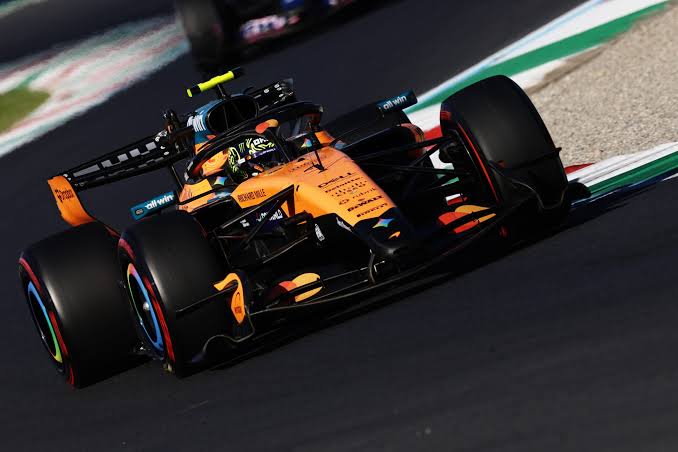
Lando Norris says McLaren is “miles off” the pace in Baku, with Mercedes faster through the slow corners and on the long straight after Thursday practice.
Norris sees a major pace gap in Baku
Lando Norris did not hide his concern after the opening day of the 2026 Azerbaijan Grand Prix.
The McLaren driver said the car feels reasonably good to drive. The problem is the stopwatch. McLaren ended Thursday around 1.5 seconds off George Russell’s Mercedes, which topped both practice sessions.
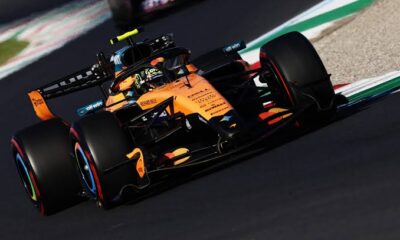
Norris finished sixth in FP2 with a 1:44.831, 1.484 seconds behind Russell. Oscar Piastri was eighth, 1.510 seconds off the pace.
The McLaren MCL40 tackles the Baku City Circuit during Thursday practice.
Norris said the result was difficult to accept because the car itself did not feel particularly bad.
He explained that McLaren expected to struggle at a circuit with very slow corners and an extremely long straight. Mercedes has been stronger in both areas so far.
“We’re miles off,” Norris said after FP2. He added that the car was in the position the team expected, but the size of the gap was still a surprise.
That difference could prove important again on Friday.
Qualifying will take place on September 25, with the race scheduled for Saturday, September 26.
Mercedes is exploiting Baku’s extremes
The Baku City Circuit creates an unusual setup challenge.
The track combines some of the slowest corners on the Formula 1 calendar with its longest straight. Teams therefore have to balance aerodynamic load against drag.
McLaren’s technical team knew that would make the weekend difficult.
Norris said Mercedes is faster in the slow corners. The Silver Arrows are also faster on the main straight.
That means McLaren is losing time at both ends of the lap.
There is little room for easy gains. Adding downforce can help in the corners, but more aerodynamic drag can cost speed on the straight.
That compromise is one of the central engineering problems in Baku.
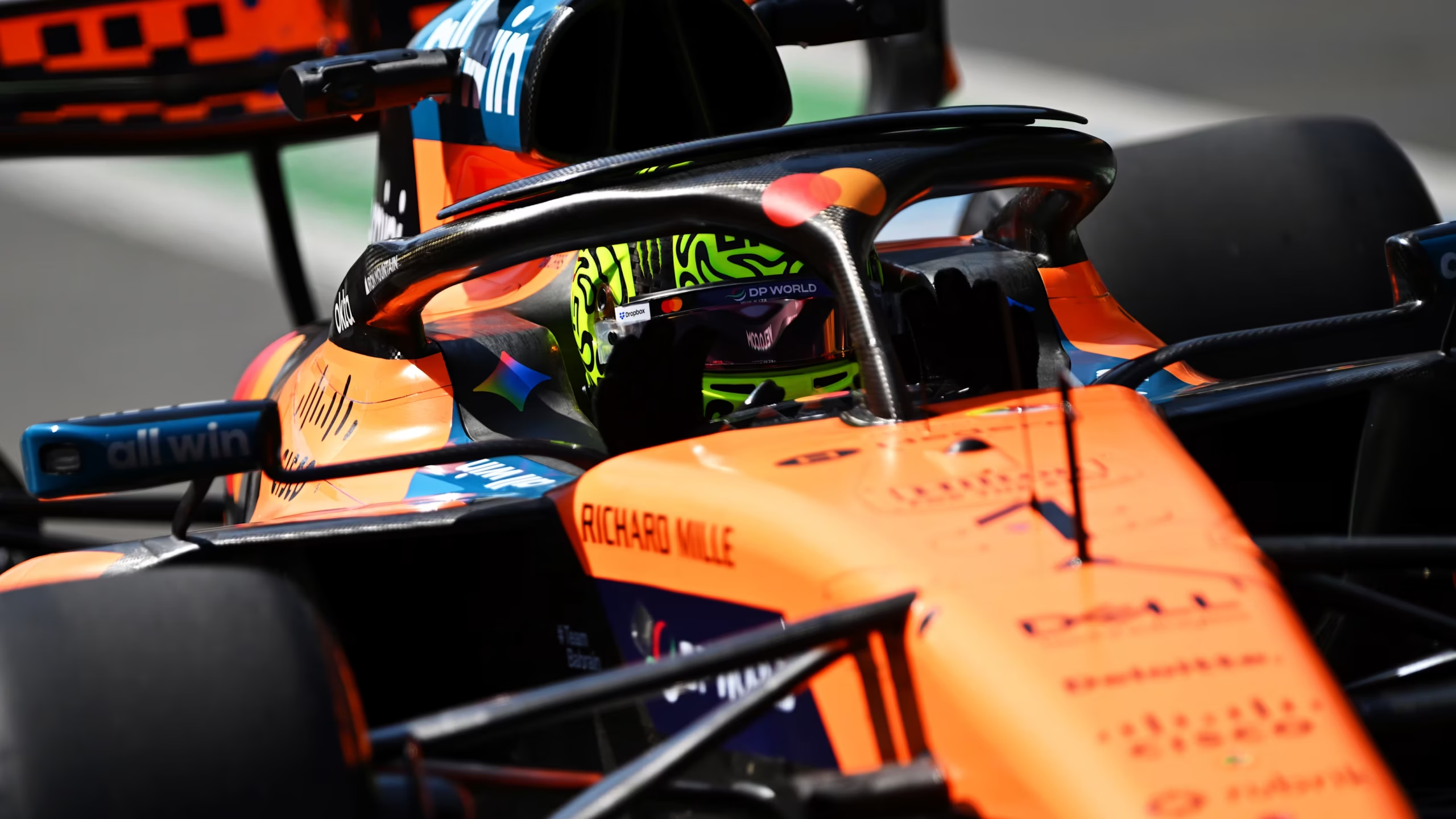
Norris’s MCL40 negotiates the tight sections of the Baku circuit during the team’s Thursday running.
McLaren arrived with a significant upgrade package.
The team brought changes to the sidepods, engine cover, floor, diffuser and rear suspension. A new, higher-downforce H-Wing was also available for evaluation.
The initial data was encouraging.
Technical director and chief designer Rob Marshall said the car was behaving broadly as the team’s simulations predicted. However, McLaren had not yet extracted the full potential of the package.
That distinction is important.
The upgrade does not appear to have failed. Instead, McLaren is still trying to find the right setup for Baku.
Floor damage cost McLaren valuable track time
The first practice session created another problem.
Both McLaren cars suffered floor-related issues. Norris’s MCL40 developed damage to the front of the floor, while a similar problem was later identified on Piastri’s car.
The team applied a temporary fix to keep both cars running.
A more complete solution was then fitted between FP1 and FP2. McLaren said the temporary fix allowed both drivers to complete their second-session programs.
That lost track time matters at a street circuit.
Baku rewards confidence. Drivers need laps to understand the braking points, kerbs and narrow sections.
Norris admitted that the disrupted first session left him a few laps behind the ideal program.
He still said the car felt predictable.
Norris remains confident in the car
The biggest positive for McLaren was the driver’s feedback.
Norris said he felt “pretty good” in the car and believed it was responding well.
The problem was not a lack of confidence in the MCL40. It was the lack of raw pace.
That is an important distinction for the team.
If the handling remains stable, engineers can focus on setup changes and data analysis rather than solving a fundamental balance problem.
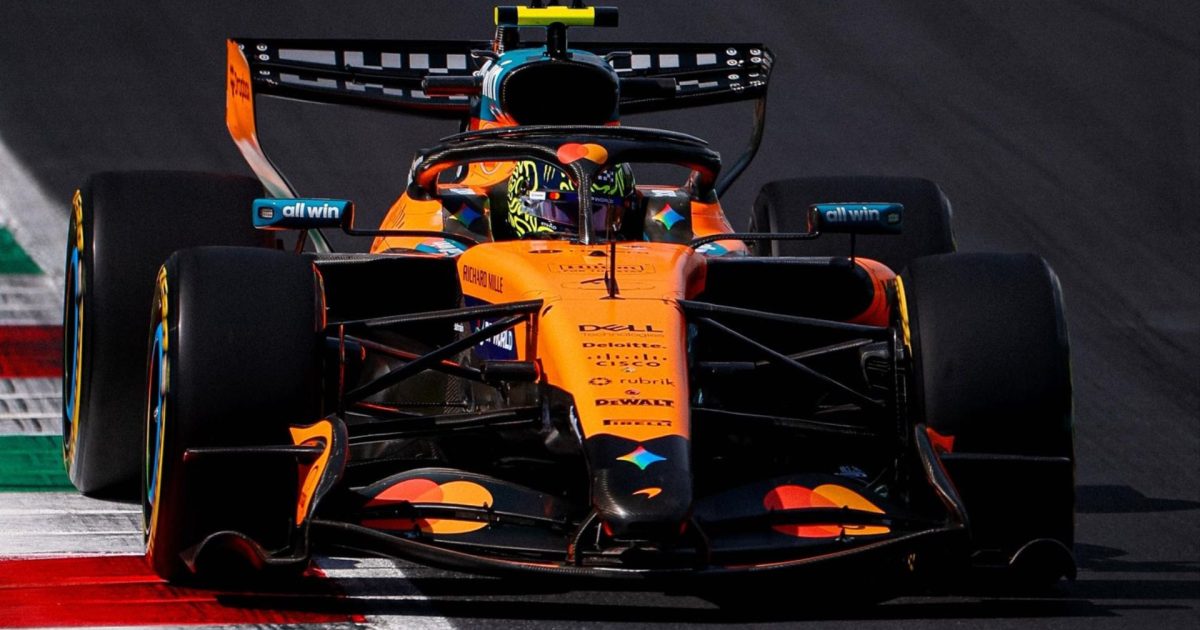
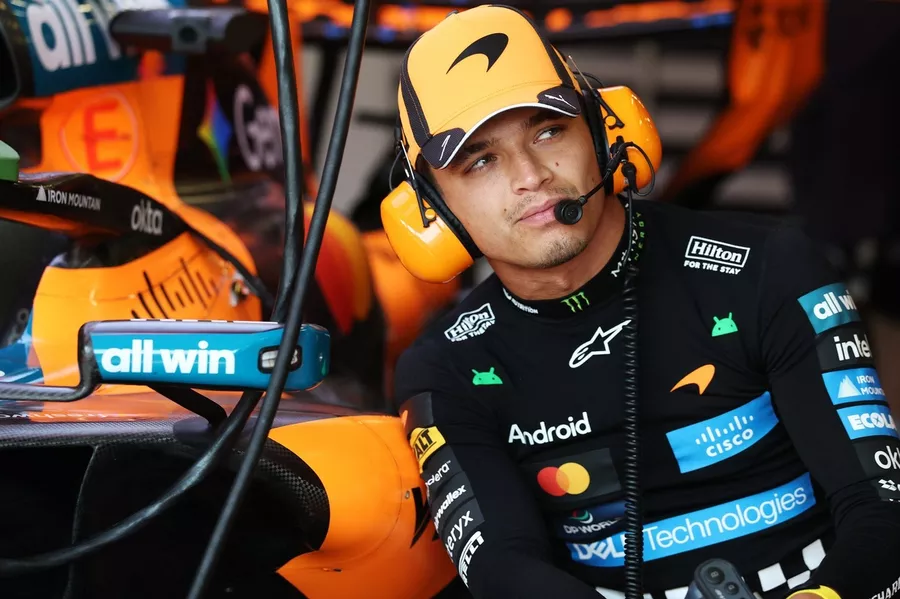
Lando Norris and Oscar Piastri prepare for a challenging Baku weekend with McLaren.
McLaren now has several hours of data to analyse before final practice and qualifying.
The team says the new components are working in the way its simulations predicted. The next task is to dial in the performance and find more time from the package.
The short Baku schedule adds another layer.
There is only one practice session on Friday before qualifying. The race then takes place on Saturday.
That leaves McLaren little time to close the gap.
McLaren needs a stronger Friday
Norris knows the situation can change quickly.
The MCL40 upgrade has already produced useful information, and the team has a full night of data analysis ahead. But Mercedes currently has a clear performance advantage around the Baku lap.
McLaren’s objective is therefore straightforward: improve the setup, unlock more performance and reduce the gap before qualifying.
For Lando Norris in Baku, the car may feel good enough.
Right now, however, it is not fast enough. Friday’s work will determine whether McLaren can turn its new upgrade package into a much closer fight at the front.
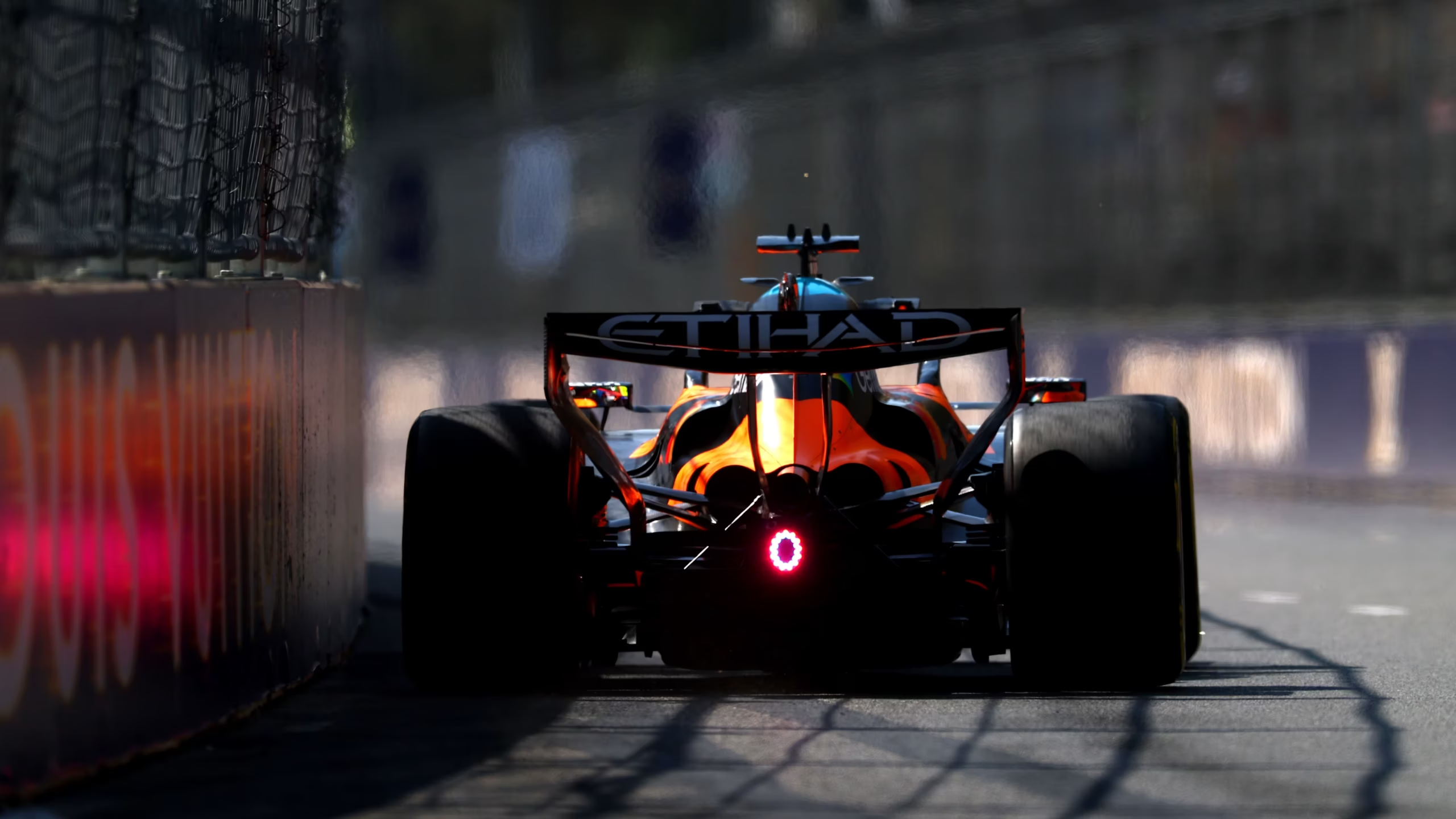
Red Bull’s latest RB22 upgrades are working as expected in Baku, giving Max Verstappen a stronger balance while bumps remain the team’s main weakness.
Red Bull gets a positive first read in Baku
Red Bull arrived in Baku with a major update package for the RB22. After the first two practice sessions, the team has received encouraging signs that the new parts are delivering the performance expected from the simulations.
Max Verstappen finished second in FP1 and third in FP2. More importantly, he said the car felt good enough to fight for a podium, even though Mercedes remained ahead on pure short-run pace.
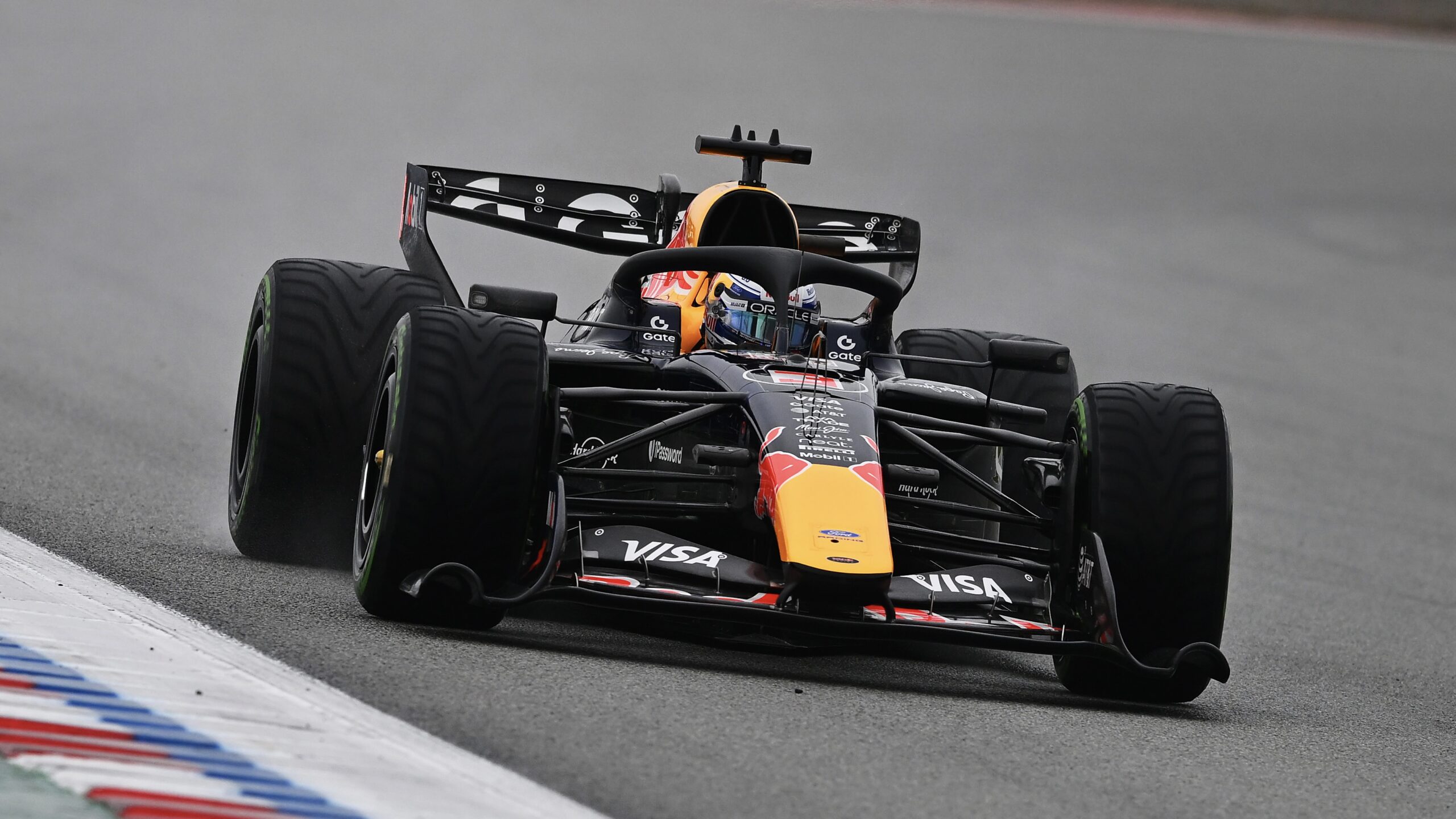
Max Verstappen drives the updated RB22 during Thursday practice at the Baku City Circuit.
The update focuses on several areas of the car.
Formula 1’s technical analysis confirms changes to the floor geometry, diffuser and sidepods. Red Bull also revised the mirror assembly, halo and cooling-louvre layout to improve airflow and increase local aerodynamic load.
That first comparison with the simulation is important.
Technical director Pierre Wache said the team received good feedback from both drivers and that the upgrade delivered roughly what Red Bull expected.
For a team that has already spent heavily developing the RB22 this season, that is a valuable result.
Verstappen is happier with the balance
The strongest positive from Thursday was not the headline lap time.
It was the balance of the car.
Verstappen said he was “pretty happy” with the RB22 after the opening day. He added that the team is now looking for more performance rather than dealing with a fundamental balance problem.
That is an important difference compared with some previous weekends.
Red Bull has often struggled when the car develops too much understeer or oversteer. In Baku, the main complaints have instead centered on how the car reacts to the uneven asphalt.
The RB22 therefore appears to have a clearer performance window.
Bumps remain the biggest problem
Baku creates a very specific technical challenge.
The circuit combines long flat-out sections with slow corners and extremely narrow streets. The Old Town section is only 7.6 meters wide at its narrowest point.
The surface is another issue.
Verstappen complained during FP2 about the ride of the RB22. Formula 1 reported that he was forced to counter-steer because the rear axle was unloading over the bumps.
That is important because Red Bull wants to keep the car low enough to maximize aerodynamic performance along Baku’s long straight.
The compromise is difficult.
A lower ride height can improve aerodynamic efficiency. But an overly stiff setup can make the car unstable when it encounters bumps or aggressive braking zones.
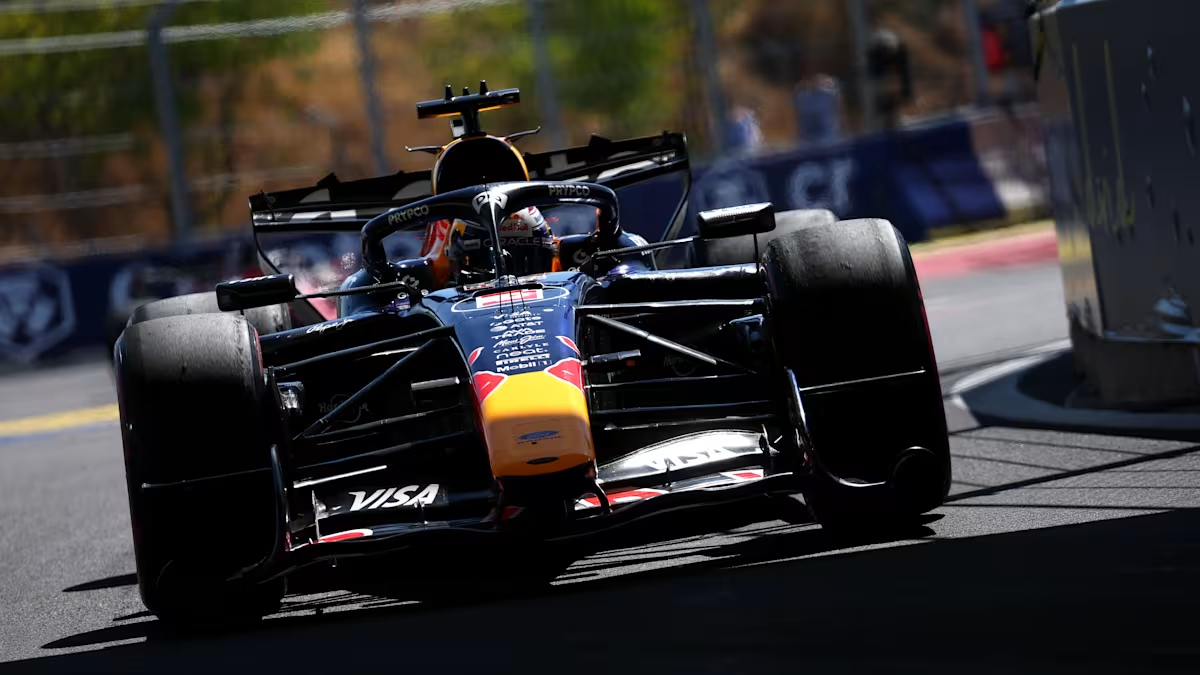
Baku combines long straights with narrow sections that place unusual demands on car stability and setup.
Red Bull therefore needs to find a better compromise overnight.
The objective is not simply to make the car softer. Engineers need to protect the aerodynamic platform while giving the rear axle a more predictable response.
That could be particularly important in qualifying.
Mercedes is still ahead on one-lap pace
The first-day picture was encouraging for Red Bull, but Mercedes remains the benchmark.
George Russell topped both FP1 and FP2, with Kimi Antonelli second in FP2. Verstappen finished third in the afternoon session, 0.827 seconds behind Russell.
Wache therefore admitted that Mercedes looked strongest over the short runs.
At the same time, the Red Bull technical director said the gaps to McLaren and Ferrari were harder to judge because of different run plans and energy deployment.
That leaves Red Bull with room to improve before qualifying.
The team does not need a completely different car. It needs to extract more speed from the package that already appears to be working.
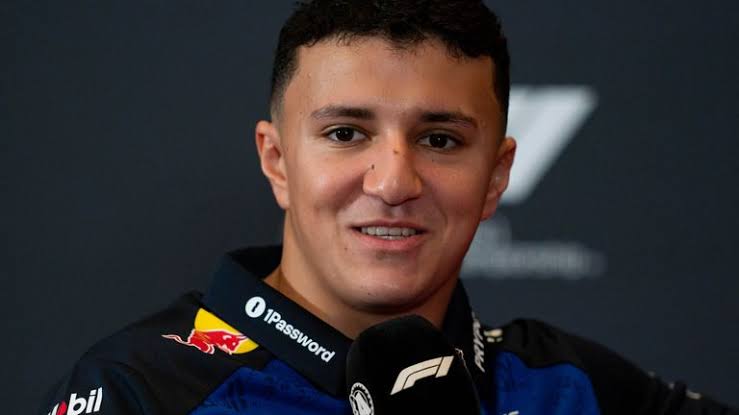
Isack Hadjar also used Red Bull’s new package and described the car as stronger than the version he drove before his injury.
Hadjar’s feedback provides another positive signal.
After missing Zandvoort, Monza and Madrid, the Frenchman returned in Baku and said the upgraded RB22 felt stronger than the car he drove in Hungary. He finished ninth in FP2.
Both Red Bull drivers therefore gave the same broad message.
The new package is working.
Red Bull is already thinking about 2027
The Baku upgrade also arrives at an important point in Red Bull’s development cycle.
The team has already started moving a significant part of its resources toward the 2027 project. That means the remaining 2026 upgrades need to deliver a clear return without consuming excessive manufacturing and development capacity.
The Baku package could be the final major step in that process.
Its early performance is encouraging because the team is getting confirmation from both the simulation tools and the drivers.
That combination matters.
A new component is only useful if its predicted aerodynamic behavior translates to real track performance. In Baku, Red Bull appears to have achieved that first connection.
The remaining issue is the surface.
Red Bull needs the RB22 to remain stable over the bumps without sacrificing the aerodynamic efficiency that gives it potential on Baku’s long straights.
For now, the Red Bull Baku upgrade has delivered the response the team wanted, and Verstappen believes the RB22 has enough balance to fight for a podium. The next step is to find the extra speed needed to close the gap to Mercedes before qualifying.
-

 NOW TRENDING1 month ago
Tesla Cybercab Gets September 3 Austin Launch Date
-

 INTELLIGENT MOBILITY2 months ago
GM Updates Infotainment System With Smarter Features
-
 NOW TRENDING2 months ago
2027 Hyundai Tucson Spied With New Design and Hybrid Power
-
 NOW TRENDING2 months ago
2027 Audi Q9 and SQ9 Debut as Brand’s Largest SUVs
-
 NOW TRENDING2 months ago
2026 Toyota GRMN Corolla Debuts as the Ultimate Hot Hatch
-
 NOW TRENDING2 months ago
Every GM Assembly Plant Operating in the U.S. in 2026
-

 NOW TRENDING2 months ago
Ferrari Sold Out Through 2027 as Demand Hits New High
-

 NOW TRENDING1 month ago
Audi’s New SUVs Could Help Reverse Its Sales Decline in 2026
You must be logged in to post a comment Login