
Formula1
Aston Martin Uses AI to Bridge the F1 Wind Tunnel Gap

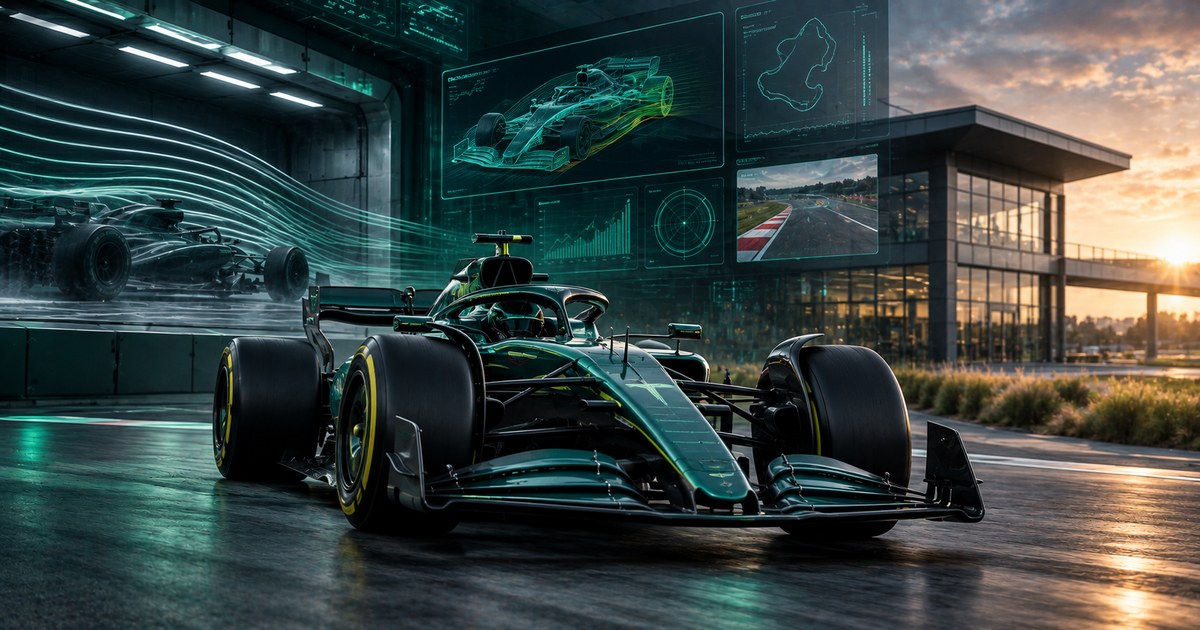
Aston Martin is using artificial intelligence with its CoreWeave AI.R Tunnel to improve aerodynamic correlation and turn massive amounts of F1 data into faster decisions.
Aston Martin is putting AI to work in Formula 1
Artificial intelligence is becoming part of Aston Martin’s daily Formula 1 operation.
The team is working with CoreWeave to process large amounts of information and turn it into useful engineering and race-strategy insights. The project covers areas that range from aerodynamic correlation to competitor radio analysis.
The latest details were published by Aston Martin on September 21, 2026. The team says millions of data points are generated during every Grand Prix weekend, making speed of analysis increasingly important.
The objective is not to replace engineers.
Instead, Aston Martin wants its engineers to find important information faster. In Formula 1, saving even a few seconds can affect a setup change or a strategy decision.
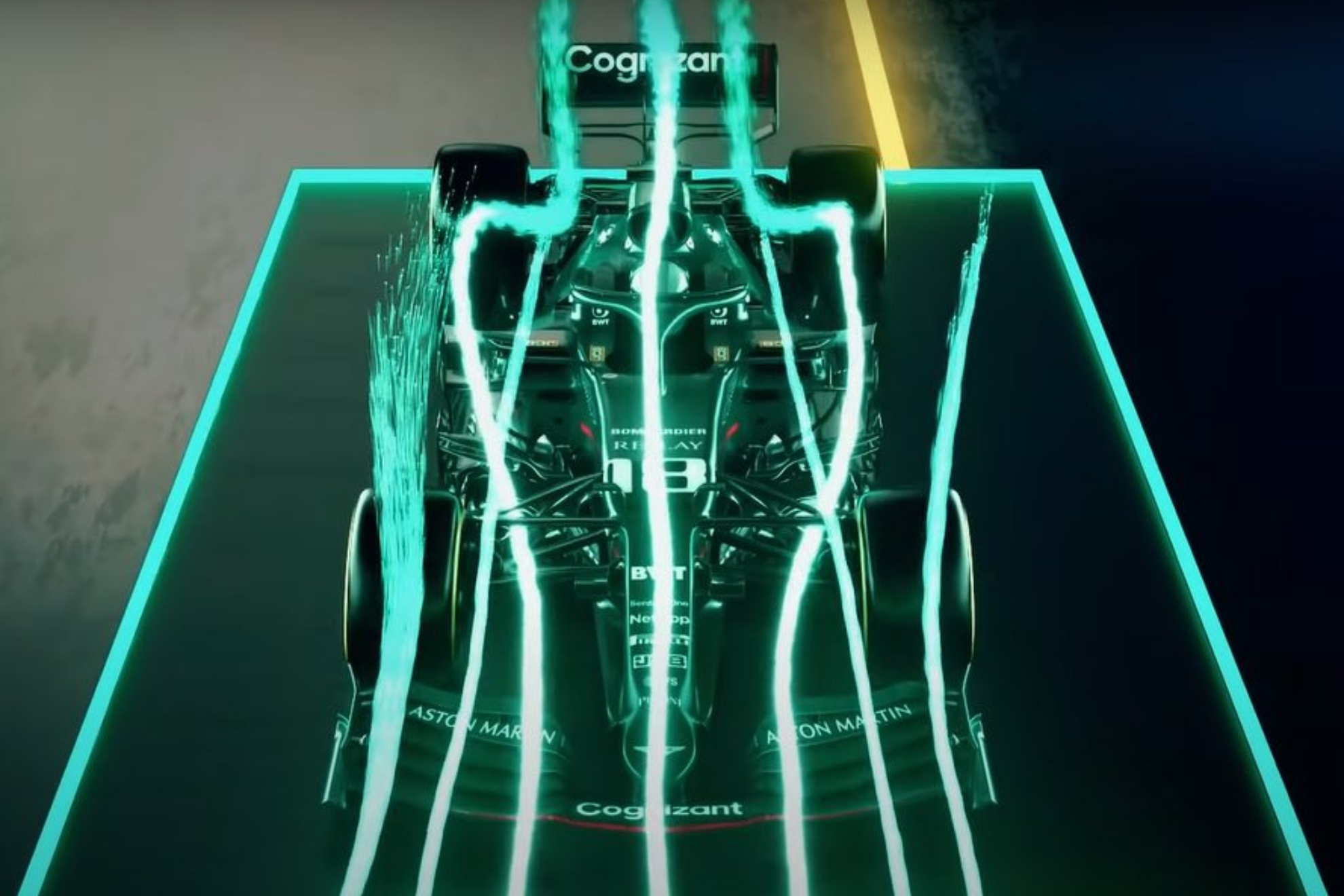
The CoreWeave AI.R Tunnel became a central part of Aston Martin’s technical operation as the team prepared for the 2026 regulations.
The wind tunnel is at the center of the first application.
Aston Martin’s CoreWeave AI.R Tunnel provides precise aerodynamic measurements. However, a laboratory cannot reproduce every condition found at a Formula 1 circuit.
The team points to changing kerb heights, weather conditions and dirty air as examples.
Those variables can create a gap between what simulations predict and what the driver experiences on track. That difference is known as aerodynamic correlation.
AI helps Aston Martin close the correlation gap
Aston Martin describes correlation as one of the biggest challenges in modern F1 aerodynamics.
The team and CoreWeave developed analytical methods that compare historical race data with vehicle-dynamics research. The goal is to identify the factors that can cause real-world performance to differ from controlled testing.
The result is a more accurate prediction of how aerodynamic components could behave at a Grand Prix.
That information can then be used before the cars arrive at the circuit.
Aston Martin says its Vehicle Engineering team uses the insights in the week before a race to help calibrate the car’s setup. The aim is simple: make the car behave as closely as possible to the engineers’ expectations during the first practice session.
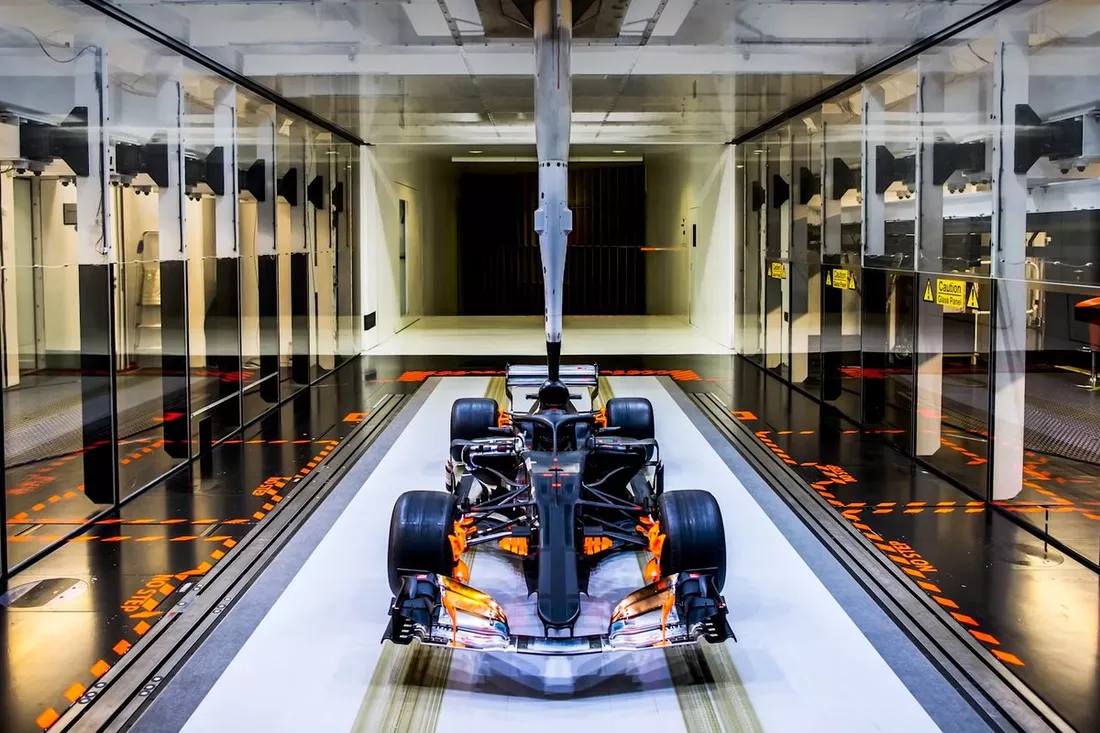
CoreWeave branding is visible on Aston Martin’s Formula 1 machinery as the partnership expands into AI-powered engineering.
The second application happens during the race itself.
Aston Martin says engineers can face 22 competitor radio channels plus more than 15 internal channels at the same time. Finding a specific piece of information manually can take valuable minutes.
That becomes a problem when a strategy decision has to be made quickly.
AI turns F1 radio into searchable data
CoreWeave has built a system that listens to, transcribes and categorizes radio communications.
The tool processes competitor and internal audio. Engineers can then search the information through a dedicated interface instead of manually reviewing long audio streams or noisy transcripts.
The system also uses a large language model to standardize terms.
For example, different ways of saying “Turn 1” can be organized as T1, making the information easier to filter.
This can help answer questions about tire performance, grip, strategy or driver feedback much faster.
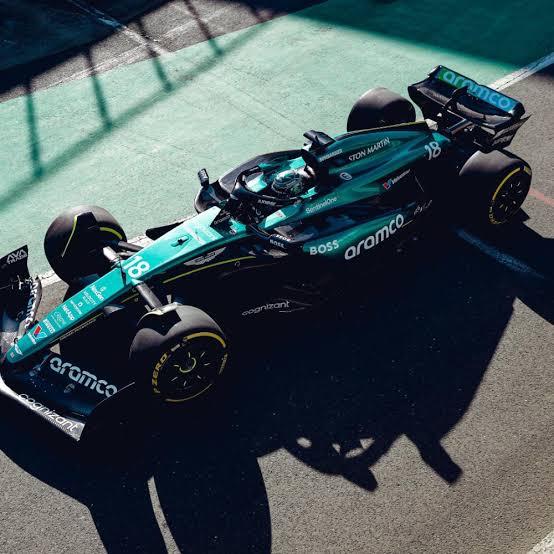
Race engineers remain responsible for interpreting the data and making the decisions during a Grand Prix.
The scale of the system is significant.
At the 2026 Monaco Grand Prix, Aston Martin says the platform processed tens of hours of radio, thousands of messages and hundreds of thousands of words.
CoreWeave has also described a broader system capable of processing 40 radio channels simultaneously. Its technical report says the platform can transcribe, categorize and make those feeds searchable within seconds.
That system was tested during the final two races of the 2025 season before being deployed for 2026. CoreWeave says its development included 75 model iterations, seven hours of hand-annotated F1 radio and more than 3,000 labeled samples.
AI is another tool for Aston Martin’s engineers
Aston Martin is clear about the role of the technology.
AI is not replacing the people making decisions. Instead, it changes how much information those people can process and how quickly they can access it.
That distinction matters in Formula 1.
An AI system can organize data. It can identify patterns. It can surface relevant information.
But engineers still need to decide what that information means for the car.
The same principle applies to aerodynamic development. The AI can help predict how a component will behave, but the engineering team still decides which solution should be developed and tested.
The AI work fits a larger technical transformation
Aston Martin’s AI project is part of a much broader investment at its AMR Technology Campus in Silverstone.
The team’s new wind tunnel began operation in 2025 and was created to support both the existing car and the transition to the 2026 regulations.
Adrian Newey has also acknowledged that Aston Martin started its 2026 development cycle later than many rivals. He said the first 2026 model did not enter the AI.R Tunnel until mid-April, leaving the team roughly four months behind in that phase of aerodynamic testing.
That makes efficient use of every available development tool even more important.
The AI work is therefore not a separate experiment. It is part of Aston Martin’s effort to connect simulation, wind-tunnel data, vehicle dynamics and race information more effectively.
The Aston Martin AI and CoreWeave partnership shows how Formula 1 is moving beyond simply collecting more data. The focus is increasingly on finding the right information quickly and turning it into decisions that can improve the car on the track.










-

 NOW TRENDING2 months ago
Aston Martin DBX Becomes Harry Da Souza’s Ride in MobLand
-

 TEST DRIVES2 months ago
2026 Maserati GranTurismo Trofeo Review: Miami
-
 INTELLIGENT MOBILITY2 months ago
Tesla Cybercab Navigation Problem Hits Austin Robotaxis
-

 INTELLIGENT MOBILITY2 months ago
Tesla Cybercab Cannot Be Charged at Home—Here’s Why
-
 INTELLIGENT MOBILITY2 months ago
2027 Nissan Rogue Hybrid: e-POWER Comes to America
-

 TEST DRIVES2 months ago
2026 Maserati GranTurismo Coupe
-
 Formula12 months ago
Cadillac F1 2026 Faces an Eight-Race Logistics Challenge
-

 NOW TRENDING2 months ago
2027 Lexus LS Gets Another Update, But Not in America