
RACING
Ferrari’s New 15-HP Engine Upgrade Is Officially Coming to Monza

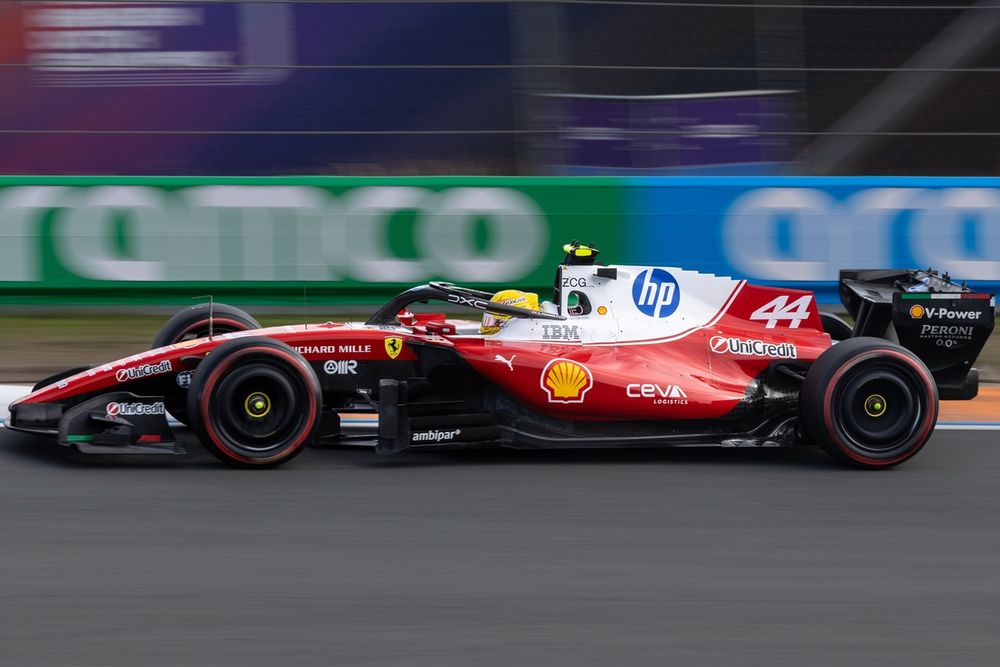
Ferrari has approved its second ADUO-enhanced power unit after positive reliability tests, allowing Lewis Hamilton and Charles Leclerc to debut the upgraded engine at Monza.
The wait is over. Ferrari will introduce its second ADUO-enhanced power unit at the Italian Grand Prix, giving Lewis Hamilton and Charles Leclerc a significant engine upgrade for Monza.
The updated six-cylinder unit has passed the required reliability tests and is now approved for competition.
Ferrari Gives Hamilton and Leclerc the New Engine
Both Ferrari drivers will use their fourth power unit of the 2026 season at Monza.
That means neither Hamilton nor Leclerc will receive a grid penalty for the upgrade.

Lewis Hamilton and Charles Leclerc will debut Ferrari’s upgraded power unit at Monza.
The situation is very different for Andrea Kimi Antonelli.
The Mercedes driver is expected to use his team’s fifth power unit, which will result in a 20-place grid penalty.
Mercedes is reportedly considering keeping George Russell on his current engine because the team wants him to challenge for pole and counter Ferrari’s improved performance.
Around 15 More Horsepower
Ferrari’s updated 067/7 power unit has been revised in both the combustion chamber and turbocharger.
The turbo’s diameter remains unchanged, but Ferrari has modified its angle and blade count.

Ferrari’s upgraded 067/7 power unit features revisions to the combustion chamber and turbocharger.
The expected gain is close to 15 horsepower, including the performance benefit from Shell’s new fuel.
Ferrari hopes that increase will cut its power deficit to Mercedes roughly in half.
The engineers have also worked on a different torque-delivery curve to improve how electrical energy is distributed throughout a lap.
That could be especially important at Monza.
Monza Creates a Unique Hybrid Challenge
Monza’s long straights make engine performance extremely important, but the circuit also creates difficulties for hybrid systems.
There are relatively few heavy braking zones, limiting the opportunities to recover energy.

Ferrari has used AI to develop hybrid energy-management strategies for Monza’s demanding layout.
Ferrari has therefore used artificial intelligence to develop energy-management strategies, with the aim of extracting maximum performance from the hybrid system.
The SF-26 will also run its lowest-downforce aerodynamic configuration of the season.
Ferrari plans to use the low-downforce version of its “Macarena” rear wing, while the FTM system will remain installed unless an even larger drag reduction becomes necessary.
Ferrari Needs a Strong Monza
Monza may not be Ferrari’s ideal circuit on paper, but the team cannot afford another lost opportunity.
Mercedes currently holds an 87-point advantage in the constructors’ championship.
Ferrari therefore needs Hamilton and Leclerc to capitalize on the new engine and recover ground at its home race.
The Ferrari engine upgrade could be one of the most important technical developments of the season. If the additional power and improved energy deployment deliver as expected, Monza could provide Ferrari with a much-needed chance to close the gap to Mercedes.


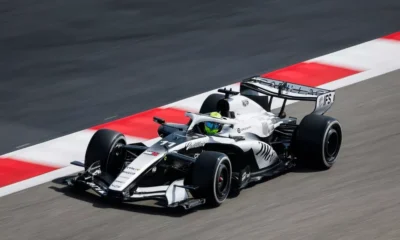






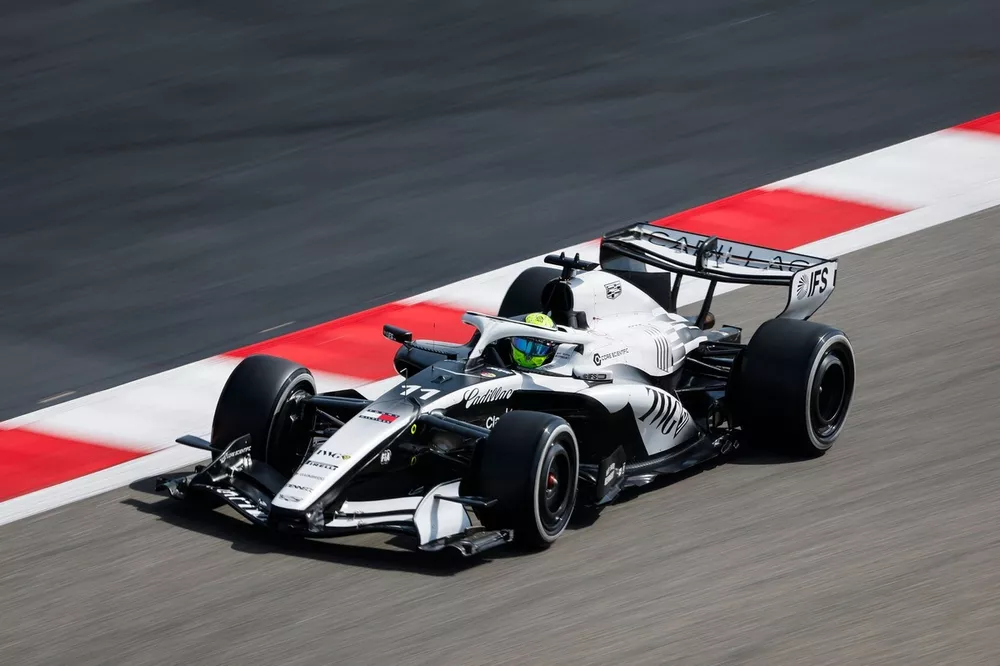
Sergio Pérez sees his Cadillac comeback as more than a return to Formula 1, with the chance to help build the new team while pushing for faster progress.
Sergio Pérez has found a different kind of motivation with Cadillac F1.
After leaving Red Bull and spending 2025 away from Formula 1, the Mexican returned to the grid with a role that goes beyond simply driving the car.
Pérez says he feels deeply involved in building the new Cadillac project from the ground up.
Pérez wants to help build Cadillac
Pérez still wants to fight for victories and championships, but he understands that Cadillac cannot offer that immediately.
Instead, he sees the opportunity to help create a competitive team as a major motivation.

Sergio Pérez is playing a key role in Cadillac’s first Formula 1 campaign.
The Mexican says he feels like an important part of the project and believes he has a level of influence that few drivers experience during their careers.
According to Pérez, Cadillac listens closely to his feedback on development and other technical areas.
That has given him a different role compared with his previous years at established teams.
Cadillac’s lack of progress is frustrating
The long-term project is exciting for Pérez, but the short-term results have been difficult.
Cadillac remains near the back of the Formula 1 field, and Pérez admits the team’s recent performances have been disappointing.

Pérez admits Cadillac has not progressed as quickly as the team expected during its debut season.
For a new team, he believes progress should be constant.
Instead, Cadillac has struggled to make the gains expected during the opening part of its F1 journey.
Pérez does not believe there is a single reason for the problem.
A new team has to build its processes, development structure, technical organization, and car performance at the same time.
Small gains could transform Cadillac
Despite the current results, Pérez remains optimistic about the team’s potential.
He points out that Cadillac is still at the very beginning of its history in Formula 1.

Pérez believes even a half-second improvement could dramatically change Cadillac’s position in the field.
The Mexican says a gain of half a second or one second could completely transform the team’s competitive position.
That is why understanding where Cadillac has failed to make progress is so important.
Pérez wants the team to analyze its processes, identify the areas that are holding it back, and accelerate its development curve.
The main objective is to make enough progress during the second half of the season to give Cadillac a stronger foundation for 2027.
For Sergio Pérez Cadillac, the current season is therefore about more than results. Pérez wants to help establish the foundations of a team capable of fighting at the front in the future, even though the lack of immediate progress remains a source of frustration.

Alex Albon played down speculation of a rift with Carlos Sainz after their Williams clash at Zandvoort, revealing they cleared the air over breakfast.
Alex Albon has dismissed suggestions of tension with Carlos Sainz after their collision at the Dutch Grand Prix, insisting the Williams teammates have no problem with each other.
The two drivers met for breakfast on Monday to discuss what happened at Zandvoort.
Sainz accepted responsibility for the crash
Sainz took full responsibility for the incident between the two Williams cars.
While defending on used hard tires into Turn 1, the Spaniard hit a bump on the inside, locked his wheels, and slid into Albon.

Carlos Sainz collided with Williams teammate Alex Albon during the Dutch Grand Prix.
The contact damaged the floor of Albon’s car and forced him to retire.
Sainz continued but finished 16th and received a 10-second penalty for the incident.
Despite the disappointing outcome, Albon insists the crash did not create any lasting tension between the teammates.
Albon: “It wasn’t like Max and Daniel”
Speaking on The Fast And The Curious podcast, Albon joked about their meeting the following Monday.
He said Sainz even offered to pay for breakfast.

Alex Albon says he and Carlos Sainz quickly moved on from their Zandvoort collision.
Albon believes people outside the team have tried to make the incident appear more serious than it really was.
He specifically compared it with the famous Max Verstappen and Daniel Ricciardo clash in Baku in 2018.
For Albon, the Williams incident was nowhere near that level of conflict.
He said both drivers understood that the media would be eager to turn the crash into a bigger story, but neither wanted to encourage that narrative.
Albon jokes about revenge
The Williams driver even joked that the incident could give him permission to return the favor one day.
When asked whether he was now allowed to take Sainz off the track once as revenge, Albon laughed and suggested it might be a good idea.
He immediately acknowledged that the Williams team probably would not approve.

Albon joked that he could now “repay” Sainz, although he admitted Williams would not be happy with the idea.
The conversation eventually moved away from racing and into breakfast.
Albon revealed that the group ordered pancakes, protein pancakes, avocado toast, and even scrambled eggs with caviar.
He also joked about Sainz’s confidence when making pancakes, saying the Spaniard talks about his technique with the confidence of a professional chef.
The relaxed exchange reinforces Albon’s main point: despite the Zandvoort crash, Alex Albon Carlos Sainz remains a healthy Williams teammate relationship, with both drivers apparently ready to put the incident behind them.

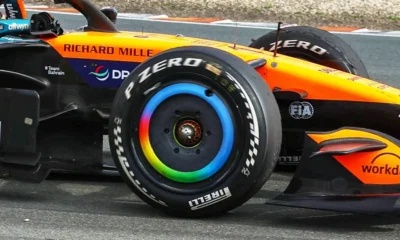
McLaren’s latest front wheels helped raise tire temperatures at Zandvoort, complementing the aerodynamic upgrades that have made the MCL40 increasingly difficult to beat.
McLaren’s victory at Zandvoort was not only about aerodynamic upgrades.
The MCL40 has now won two consecutive Grands Prix, with its latest improvements restoring downforce and making the car especially strong through fast corners.
But another change may have played an important role: new front wheels and wheel covers designed to improve tire temperatures.
McLaren’s New Front Wheels Target Tire Temperatures
McLaren introduced several small updates for Zandvoort.
The package included a revised section of the floor, changes to the rear brake ducts, and new front wheels.
The goal of the wheel update was simple: help the front tires reach their operating temperature more effectively.

McLaren introduced new front wheels at Zandvoort to improve tire temperature management.
Technical director Neil Houdley said the changes were not expected to produce a major lap-time gain on their own.
Instead, they were intended to make the MCL40 more consistent and competitive, particularly when preparing the tires for a fast lap.
That detail became especially important during qualifying.
Tire Warm-Up Has Been a McLaren Weakness
McLaren has been extremely competitive in fast corners, but tire preparation has caused problems at several circuits this season.
The issue was particularly visible in Monaco, where the team struggled to generate enough temperature in the front tires.
Similar difficulties appeared in Australia and China, where the MCL40 experienced graining.

McLaren’s focus on front-tire temperatures addresses a weakness that had appeared at several circuits earlier in the season.
That made front-tire preparation one of the main concerns heading into Zandvoort.
Instead, the graining remained relatively limited and McLaren was able to get the tires into the correct operating window.
The effect was particularly noticeable in the final Q3 runs.
While Ferrari and other teams needed an additional preparation lap, McLaren managed to extract enough performance from the tires to take pole position.
The Wheel Design Gives McLaren More Control
Wheel development has become an increasingly important area in Formula 1.
Under the 2026 regulations, teams once again have greater freedom to develop their wheels, creating opportunities to influence tire temperatures and operating pressures.
McLaren appears to have taken advantage of that freedom.

The new front wheel and more enclosed cover help McLaren control how airflow interacts with the tire.
The wheel design includes internal cavities that can influence how airflow reaches the tire.
For Zandvoort, McLaren adjusted the front wheel to generate more heat and help the tire reach its ideal operating range.
The wheel is supplied by long-time partner Enkei, while the more closed wheel cover reduces the amount of cool outside air reaching the tire.
McLaren did not make the same change at the rear.
Rear tires were already dealing with significant wear at Zandvoort because of strong winds, sliding through high-speed corners, and traction demands out of slower turns.
That made the front axle the more important area to address.
Another Piece of McLaren’s Recent Progress
The wheel update is only one part of McLaren’s recent improvement.
The team has also gained performance from its aerodynamic development program, particularly in the fastest corners.
Those gains have helped turn the MCL40 into the benchmark at circuits that reward sustained high-speed cornering.
At Zandvoort, however, the McLaren Zandvoort story also shows how small technical details can make a major difference.
Better front-tire preparation can improve qualifying performance, reduce the risk of graining, and allow drivers to extract more from the car when the track is at its fastest.
That combination of aerodynamic efficiency and tire management has helped McLaren become the team to beat over the last two race weekends.
-
 NOW TRENDING2 months ago
Tesla Model Y L Arrives in the U.S. With More Space and Three Rows
-

 RACING2 months ago
McLaren F1 Unveils Special Silverstone Livery Honoring Its History
-
 TEST DRIVES2 months ago
A Week Driving Honda’s New Hybrid Coupe
-
 INTELLIGENT MOBILITY2 months ago
Audi A4 E-tron and Q7 E-tron Confirmed as New Electric Models
-

 TEST DRIVES2 months ago
Ford Recalls More Than 741,000 Trucks and SUVs Over Rollaway Risk
-
 NOW TRENDING2 months ago
Toyota Reports Strong June and Q2 2026 U.S. Sales Growth
-
 TEST DRIVES2 months ago
The Last Great V8 Audi Wagon Deserves Future Classic Status
-
 NOW TRENDING2 months ago
Audi A4 EV Returns in 2028 With a Bold New Design Language
You must be logged in to post a comment Login