
INTELLIGENT MOBILITY
Hyundai and Kia Expand 3D Printing to Speed Up Vehicle Development

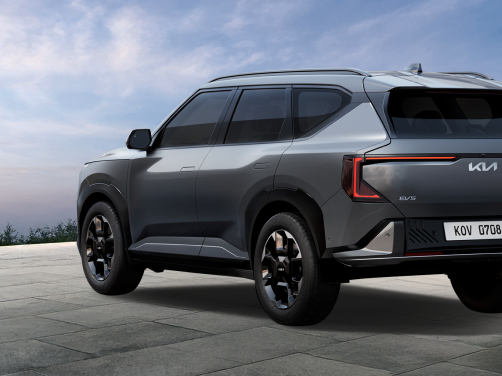
Hyundai Motor and Kia are using advanced 3D printing technologies to accelerate vehicle development, reduce production time and create lighter, more complex components.
Hyundai Motor and Kia are taking another step toward the future of automotive engineering by expanding the use of advanced 3D printing technologies to accelerate vehicle development. Through the Additive Manufacturing Solution Center (AMSC), engineers can transform digital designs into functional components faster while reducing production complexity and improving design flexibility.
The initiative allows Hyundai and Kia to optimize vehicle development, manufacture lightweight parts and shorten the time required to validate new designs.
Advanced 3D Printing Improves Engineering Efficiency
The AMSC, located at Hyundai Motor and Kia’s Namyang Research and Development Center, serves as the company’s dedicated hub for additive manufacturing.
Unlike conventional manufacturing methods that rely on molds, casting or machining, additive manufacturing builds components layer by layer directly from digital models. This process enables engineers to produce complex geometries while minimizing material waste and reducing tooling requirements.
The facility utilizes multiple technologies, including:
- Metal Powder Bed Fusion (Metal PBF)
- Polymer Powder Bed Fusion
- Digital Light Processing (DLP)
- Stereolithography (SLA)
- Directed Energy Deposition (DED-WAAM)

Hyundai and Kia’s Additive Manufacturing Solution Center uses advanced 3D printing technologies to accelerate vehicle development.
Lighter Components and Faster Prototyping
One of the biggest advantages of additive manufacturing is the ability to design parts without many of the limitations of traditional production methods.
Engineers can develop:
- Lightweight structural components
- Prototype parts
- Manufacturing tools
- Custom development components
- Complex metal and polymer parts
The company also applies Design for Additive Manufacturing (DfAM) techniques to optimize weight, improve structural strength and consolidate multiple components into a single printed part.
Every component undergoes extensive quality inspections, including dimensional analysis, material verification and mechanical testing before being approved for use.

Metal components are produced using advanced additive manufacturing and refined through precision machining.
Applications Beyond Vehicle Development
The technology supports far more than prototype production.
Hyundai Motor and Kia are using additive manufacturing for:
- Vehicle development
- Motorsports components
- Manufacturing equipment
- Heritage vehicle restoration
- Emergency replacement parts
One example highlighted by the company is the recreation of components for the classic Hyundai Pony, using 3D scanning, reverse engineering and advanced printing technologies to reproduce discontinued parts.
The technology is also used to manufacture lightweight motorsport components such as suspension brackets, anti-roll bar parts and brake duct elements.
A Key Step Toward Future Vehicle Production
Hyundai Motor and Kia view the Additive Manufacturing Solution Center as a strategic investment that will strengthen future vehicle development by integrating design, manufacturing, post-processing and quality validation under one roof.
As software-defined vehicles continue to evolve, the company expects additive manufacturing to play an increasingly important role in reducing development time, improving manufacturing efficiency and supporting more advanced vehicle architectures.

Additive manufacturing also supports heritage vehicle restoration and the production of motorsport components.












-

 NOW TRENDING2 months ago
Aston Martin DBX Becomes Harry Da Souza’s Ride in MobLand
-

 TEST DRIVES2 months ago
2026 Maserati GranTurismo Trofeo Review: Miami
-
 INTELLIGENT MOBILITY2 months ago
Tesla Cybercab Navigation Problem Hits Austin Robotaxis
-

 INTELLIGENT MOBILITY2 months ago
Tesla Cybercab Cannot Be Charged at Home—Here’s Why
-
 INTELLIGENT MOBILITY2 months ago
2027 Nissan Rogue Hybrid: e-POWER Comes to America
-

 TEST DRIVES2 months ago
2026 Maserati GranTurismo Coupe
-

 Formula12 months ago
Cadillac F1 2026 Faces an Eight-Race Logistics Challenge
-

 NOW TRENDING2 months ago
2027 Lexus LS Gets Another Update, But Not in America