
NOW TRENDING
Subaru Unveils 510-HP Electric Wagon With Its Own EV Platform

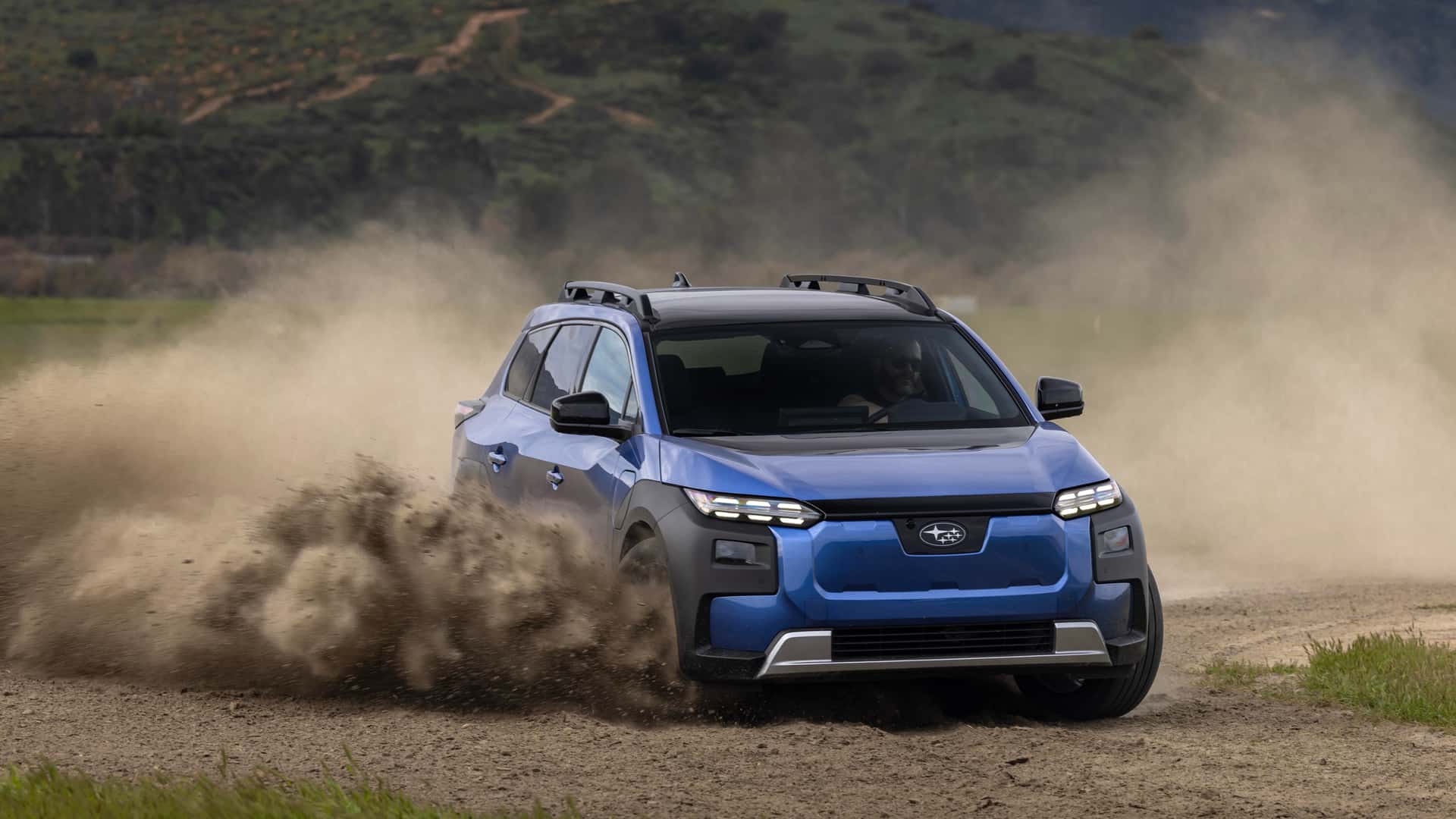
Subaru has developed a 510-horsepower electric prototype featuring dual motors, a lighter battery pack and an integrated control system, offering a glimpse of the company’s next generation of all-wheel-drive EVs.
Subaru has demonstrated a new direction for its electric vehicle strategy with a modified Outback-style wagon powered by two electric motors producing a combined output of approximately 510 horsepower. Tested at the company’s proving ground north of Tokyo on October 18, the prototype showcases Subaru’s efforts to develop its own electric vehicle technology independently of Toyota’s shared EV platforms.

Subaru’s electric prototype previews the company’s independent EV engineering ambitions.
Subaru’s 510-HP Electric Prototype Uses Dual Motors
The prototype combines a 150-kW front e-axle, rated at approximately 201 horsepower, with a more powerful 230-kW rear unit producing around 308 horsepower. Together, the two motors deliver approximately 510 horsepower and provide all-wheel drive.
According to the reported specifications, the prototype can accelerate from zero to 62 mph in less than four seconds. The configuration allows Subaru to control motor output and torque distribution across both axles, applying its all-wheel-drive engineering philosophy to an electric platform.
A New EV Platform Beyond Toyota’s Architecture
Unlike the Subaru Solterra and other electric vehicles developed through collaboration with Toyota, this prototype uses a dedicated platform designed around Subaru’s own engineering priorities. The company is pursuing an electric architecture that reflects the symmetrical all-wheel-drive approach associated with models such as the WRX and Outback.
The project also differs from Subaru’s broader electric vehicle lineup, which includes the Solterra, Trailseeker, Uncharted and the Toyota-co-developed Getaway. Those vehicles form part of the company’s existing and planned EV strategy, while the new prototype demonstrates a separate path toward future in-house technology.

The dual-motor setup delivers approximately 510 horsepower through an electric all-wheel-drive system.
Lighter Platform and Battery Design
Weight reduction is a central element of Subaru’s new architecture. The company says the dedicated EV platform is approximately 220 pounds lighter than the structure used by its current electric models. Reducing vehicle mass can help engineers manage efficiency, handling and overall vehicle performance.
The battery pack also reflects this focus. Subaru says it contains approximately 4,000 cylindrical cells and weighs around 25 percent less than its previous pack. The company has also set a target for energy density roughly 20 percent above the industry average, although the reference benchmark and final production specifications have not been disclosed.
Integrated Control System Supports Over-the-Air Updates
Subaru has developed an integrated control unit intended to manage the electric motors, battery and vehicle software through a more centralized system. Rather than relying on a collection of separate modules, the approach aims to coordinate key vehicle functions within a unified electronic architecture.
The system is also designed to support over-the-air software updates. This could allow Subaru to deliver certain feature improvements or software adjustments after a vehicle reaches customers, depending on the final production implementation.

Subaru’s lighter battery and integrated electronics are key parts of its new EV architecture.
Production Timeline and Technical Details Remain Unconfirmed
Subaru executives have indicated that some of the prototype’s technology could reach production vehicles starting in 2029. However, the company has not identified a production model or confirmed that the test vehicle’s body style will carry over to a showroom vehicle.
Important specifications also remain unavailable, including battery capacity, charging speed and real-world driving range. The prototype should therefore be viewed as a demonstration of Subaru’s engineering direction rather than a preview of a fully confirmed production vehi

he test mule demonstrates Subaru’s engineering direction, but its final production design remains unknown.
What Subaru’s New EV Technology Means
The 510-hp prototype highlights Subaru’s effort to gain greater control over its electric vehicle hardware and software. Its dual-motor layout, reduced platform weight and integrated control system could provide a foundation for future all-wheel-drive EVs.
For now, the company continues to develop electric models through its existing Toyota collaboration while exploring its own dedicated technology. If the planned 2029 timeline holds, the prototype’s engineering could eventually influence a new generation of Subaru electric vehicles, although the production lineup and final specifications have yet to be confirmed.








-

 NOW TRENDING2 months ago
Aston Martin DBX Becomes Harry Da Souza’s Ride in MobLand
-
 TEST DRIVES2 months ago
2026 Maserati GranTurismo Trofeo Review: Miami
-
 INTELLIGENT MOBILITY2 months ago
Tesla Cybercab Navigation Problem Hits Austin Robotaxis
-
 INTELLIGENT MOBILITY2 months ago
Tesla Cybercab Cannot Be Charged at Home—Here’s Why
-
 INTELLIGENT MOBILITY2 months ago
2027 Nissan Rogue Hybrid: e-POWER Comes to America
-
 TEST DRIVES2 months ago
2026 Maserati GranTurismo Coupe
-
 Formula12 months ago
Cadillac F1 2026 Faces an Eight-Race Logistics Challenge
-
 NOW TRENDING1 month ago
Land Rover Defender Recall 2026: 23,677 JLR SUVs Affected