
NOW TRENDING
BMW Plans Bigger U.S. SUV Above X7 as Lineup Shrinks


BMW is considering a new flagship SUV for the U.S. that would sit above the X7, while the company also plans to reduce variants across its global lineup.
BMW wants an even larger SUV for the U.S.
BMW is preparing a major change to its product strategy.
The automaker says it is considering an additional Sports Activity Vehicle above the BMW X7 specifically for the U.S. market. The company has not yet announced the model’s name, price, dimensions or launch date.
For now, calling the vehicle the “X8” would only be a placeholder. BMW has not confirmed that name.
The decision reflects the continued importance of large SUVs to BMW’s U.S. business. The company’s Spartanburg plant in South Carolina, known as the global center of competence for BMW X models, is currently operating at full capacity.

The BMW X7 is currently the largest model in BMW’s SUV family, but the company is considering a new U.S.-specific offering above it.
The new model would expand BMW’s presence in the largest luxury SUV segment.
BMW says the vehicle would be closely tailored to American customers. That is a notable change from the company’s traditional approach of developing most models for global markets first.
The timing also makes sense within BMW’s U.S. manufacturing strategy.
The company recently completed a $1.7 billion investment in its South Carolina operations. BMW says the expansion supports additional vehicle production and strengthens the United States as an important part of its global manufacturing network.
BMW is not simply adding more models
The bigger SUV comes with another important announcement.
BMW says it plans to review and reduce the number of variants across its global portfolio. The objective is to focus resources on products that generate stronger long-term returns in individual markets.
One confirmed example is the BMW 2 Series Active Tourer.
BMW has stated that there will be no direct successor to the model. That does not mean every aging BMW nameplate will disappear, but it does show the company is becoming more selective about which vehicles remain in the portfolio.
The strategy is particularly relevant as BMW introduces more Neue Klasse technology.
Instead of expanding every segment indefinitely, the company wants to concentrate investment on vehicles that have a clear role in each market.

The new BMW X5 adds Neue Klasse technology while retaining combustion, plug-in hybrid and electric powertrains.
The 2027 BMW X5 is an example of that technology strategy.
The new generation offers combustion engines with 48-volt mild-hybrid technology, plug-in hybrid power and the fully electric iX5. BMW says the iX5 will be the first fully electric BMW assembled in the United States, starting in late 2026.
That gives BMW more powertrain flexibility without requiring a completely separate product for every technology.
The same principle is expected to spread across the wider lineup.
China will get a more localized BMW lineup
BMW’s product changes are not limited to the United States.
China is another major focus of the new strategy. BMW plans to increase local production in high-volume segments as Neue Klasse models enter the market.
The company wants at least 95% of the vehicles it sells in China to be locally manufactured and developed for Chinese customer preferences by 2030.
That means BMW is taking a more regional approach.
The U.S. will receive a larger SUV designed around American demand. China will receive more locally developed and produced high-volume models. Other markets will see different product strategies based on their own needs.
BMW calls this approach greater regionalization.
The objective is to match vehicle supply more closely with demand in each major market.

BMW ALPINA’s first new standalone model will be inspired by the BMW 7 Series and positioned above the regular BMW range.
BMW ALPINA will also expand at the top
Another major change is happening above the regular BMW lineup.
BMW ALPINA became a standalone brand within BMW Group in 2026. Its first new model is scheduled for 2027 and is inspired by the BMW 7 Series.
BMW says ALPINA is intended to occupy a space between BMW and Rolls-Royce.
The brand will focus on high performance, comfort and extensive personalization. Its vehicles will be produced at selected BMW Group plants.
That gives BMW another way to expand its high-end portfolio without simply adding more conventional BMW-badged models.
Artificial intelligence will play a larger role
BMW is also expanding its use of artificial intelligence.
The company says AI will increasingly support areas such as vehicle development, manufacturing, sales and aftersales. The goal is to improve efficiency while supporting a more focused product portfolio.
That technology push is arriving alongside the Neue Klasse rollout.
BMW wants the new architecture and software systems to spread across different vehicle segments. At the same time, it is reviewing which models and variants deserve continued investment.
The result could be a smaller but more regionally focused lineup.
The bigger SUV remains unconfirmed
For U.S. buyers, the most interesting part of BMW’s latest strategy is still the vehicle above the X7.
BMW has confirmed that it is considering the additional U.S.-focused SAV, but it has not announced a name, pricing, dimensions or production date.
The company has also not confirmed whether the new vehicle will use the unofficial X8 name or another designation.
What is clear is the market BMW is targeting.
Large luxury SUVs remain a key part of BMW’s U.S. strategy, and the company wants to expand its presence at the top of the segment while simultaneously becoming more selective elsewhere.
The future BMW SUV above the X7 is therefore still in the planning phase. For now, BMW’s confirmed strategy is to add a U.S.-specific flagship SAV while reducing selected variants across the global portfolio and continuing the rollout of Neue Klasse technology.






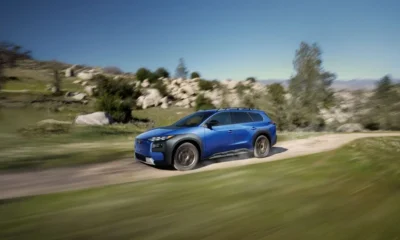



The Aston Martin Valkyrie heads to Barcelona seeking to extend its points streak and strengthen its position in the 2026 World Endurance Championship.
The Aston Martin Valkyrie will make its Spanish competition debut at the Circuit de Barcelona-Catalunya as the FIA World Endurance Championship approaches the final two rounds of the 2026 season. The seventh round will take place at the 2.9-mile circuit in Montmeló, where Aston Martin THOR Team aims to build on a consistent run of results.
Barcelona marks the first appearance of the Spanish circuit on the WEC calendar. For Aston Martin, it represents another opportunity to demonstrate the Valkyrie’s progress against established rivals in the Hypercar class, with the season finale at Monza still to come.
Aston Martin Valkyrie Extends Its Points Streak
The Valkyrie arrives in Spain after scoring points in eight consecutive races. That run includes fourth-place finishes at the 6 Hours of Spa-Francorchamps and Lone Star Le Mans at Circuit of the Americas in Austin, Texas.
The team’s latest performance came at Fuji Speedway in Japan, where both Valkyries started inside the top six for the first time. The No. 007 car, driven by Britain’s Tom Gamble and Harry Tincknell, also led during the race. Meanwhile, the No. 009 entry, shared by Spain’s Alex Riberas and Denmark’s Marco Sørensen, remained in contention for a podium before the final Safety Car period changed the race’s closing phase.

The Aston Martin Valkyrie showed front-running pace at Fuji, giving the team momentum heading into Barcelona.
The result reinforced the progress made by Aston Martin THOR Team throughout the campaign. However, the team must convert that speed into stronger finishing positions if it hopes to climb the manufacturers’ standings before the season ends.
Championship Standings Leave Room for Progress
Aston Martin sits sixth in the FIA Hypercar World Endurance Manufacturers’ Championship with 54 points. The team is 42 points behind fourth place, with a maximum of 88 points still available across the Barcelona round and the season-ending 6 Hours of Monza on November 8.
That gap makes the remaining races particularly important. A strong result in Spain could improve Aston Martin’s position, although the final standings will depend on the performance of its competitors as well as its own results.
Consistency has been one of the Valkyrie’s defining characteristics this season. Its consecutive points finishes show that the car can regularly challenge for meaningful results, even as the team continues to pursue the pace required to compete more consistently at the front.
The Valkyrie Combines a V12 With Racing Technology
The competition version of the Aston Martin Valkyrie is developed from the road-going hypercar by Aston Martin and The Heart of Racing. Its design combines a race-optimised carbon-fibre chassis with a modified 6.5-litre V12 engine.
In standard form, the powerplant produces more than 1,000 bhp and can rev to 11,000 rpm. For endurance racing, however, the car must comply with the regulations governing the WEC Hypercar class and IMSA’s GTP category. Its maximum permitted output is therefore limited to 500 kW, equivalent to approximately 671 bhp.
The Valkyrie’s carbon-fibre construction, aerodynamic package and naturally aspirated V12 form the foundation of its racing specification.
The regulatory power limit means the competition car cannot simply rely on the output of its road-going counterpart. Instead, performance depends on the overall package, including aerodynamic efficiency, chassis behaviour, tyre management and how effectively the team executes its race strategy.
Barcelona will provide a useful test of that balance. The circuit combines a fast opening sector with a slower final section, creating different demands on the car across a single lap.
Barcelona Brings a New WEC Challenge
Although Barcelona is familiar to many drivers and teams, its inclusion in the WEC schedule presents a new challenge for the Hypercar field. The circuit’s layout and traffic conditions could influence how the race develops, particularly when faster prototypes negotiate slower cars during long-distance competition.
Tincknell believes the circuit’s characteristics could suit the Valkyrie, particularly following the return of the final two corners to their original high-speed configuration. The British driver also sees the race as an opportunity to respond after Fuji, where the team showed encouraging pace but did not fully convert it into the result it wanted.
Gamble is equally optimistic. He returns to Barcelona after previously finishing on the podium there and hopes to carry the speed demonstrated in Japan into the Spanish round.

Barcelona’s mix of high-speed and low-speed sections will test the Valkyrie’s balance and the team’s ability to manage traffic.
For Riberas, the event has additional significance. The Spanish driver will contest his first home WEC race at the circuit where he grew up. He described the opportunity to compete there in a Valkyrie with Aston Martin THOR Team as a dream come true, while expressing confidence in the car’s potential after Fuji.
Sørensen, meanwhile, highlighted traffic management as a possible deciding factor. Barcelona’s relatively narrow layout could make overtaking and navigating slower traffic particularly challenging for the Hypercar field.
Aston Martin Focuses on Execution for the Final Rounds
Team principal Ian James believes recent races have demonstrated that the Valkyrie can fight near the front when conditions suit the car. He also pointed to the team’s run of points finishes as evidence that it has been able to make the most of its available performance.
The priority for Barcelona will be to execute the race cleanly, avoid mistakes and take advantage of opportunities as they arise. With only two rounds remaining, every point could influence Aston Martin’s final championship position.
Adam Carter, Aston Martin’s head of endurance motorsport, also sees reasons for confidence. He noted that the Valkyrie has performed as expected on circuits with characteristics similar to Barcelona, while acknowledging the experience and strength of the opposition.
The Spanish race will therefore offer a fresh measure of the Valkyrie’s development. Aston Martin has established a reliable points-scoring record, but a stronger finish would provide a more significant reward for the progress made throughout 2026.
With the Monza finale approaching, the objective is clear: maintain the points streak, challenge for a better result and finish the season as strongly as possible.

The Rivian R2 Performance combines 656 horsepower with a starting price below $60,000.
The Rivian R2 Performance has earned a place on the 2026 Wards 10 Best Engines & Propulsion Systems list, highlighting the electric crossover’s power, engineering and value. With 656 horsepower, dual-motor all-wheel drive and a starting MSRP of $59,485, the R2 Performance aims to deliver high-performance electric driving at a more accessible price than larger premium EVs.
Rivian R2 Performance Delivers 656 Horsepower
The R2 Performance represents a new chapter for Rivian as the company expands beyond its original R1S SUV and R1T pickup. While those vehicles established the brand in the electric adventure-vehicle market, the R2 introduces a different platform and propulsion system in a midsize crossover.
Its dual-motor all-wheel-drive system produces 656 horsepower and 609 lb-ft of torque. Rivian estimates acceleration from zero to 60 mph in just 3.6 seconds, placing the R2 Performance firmly in the high-performance EV category.
That output is useful for more than rapid acceleration. The combination of electric torque and all-wheel drive can help provide responsive highway merging, confident acceleration from traffic lights and traction across changing road conditions.

The Rivian R2 Performance combines a midsize crossover design with high-output electric propulsion.
Rivian R2 Performance Starts at $59,485
The R2 Performance has a starting manufacturer’s suggested retail price of $59,485. That positions it below many high-performance luxury electric SUVs while offering output that would have been associated with considerably more expensive vehicles.
Rivian is targeting buyers who want a practical crossover with strong acceleration and the flexibility associated with an adventure-oriented electric vehicle. The R2 is smaller than the full-size R1S, but it uses a different platform, battery and propulsion architecture rather than simply adapting the larger SUV.
The price is a central part of the R2 Performance’s appeal. Its combination of 656 horsepower, 609 lb-ft of torque and dual-motor all-wheel drive gives the model a compelling performance profile for its segment.

Rivian positions the R2 Performance as a more accessible entry into its high-performance electric vehicle lineup.
Rivian R2 Battery Uses LG Energy Solution Cells
The R2 battery pack uses 4,965 cylindrical cells supplied by LG Energy Solution. The cells employ NCMA chemistry, which combines nickel, cobalt, manganese and aluminum.
The cells are identified by their dimensions: 46 millimeters in diameter and 95 millimeters in height. Cell chemistry and packaging play important roles in battery performance, energy storage and the overall design of an electric vehicle’s propulsion system.
However, the information available here does not establish the R2 Performance’s official battery capacity, EPA-estimated range or charging times. Those figures should be considered separately from its power output when evaluating the vehicle’s overall capabilities.
For U.S. buyers, the distinction is important. Horsepower and acceleration describe performance, while EPA range ratings and charging specifications help determine how well an EV fits daily commuting and longer journeys.

The R2 uses cylindrical NCMA battery cells supplied by LG Energy Solution.
What the Award Means for Rivian
The 2026 Wards 10 Best Engines & Propulsion Systems recognition highlights the R2 Performance’s electric drive system and the engineering behind its power output. The award also draws attention to Rivian’s effort to develop its own motors and integrate key propulsion components.
The R2 is an important model for the company’s broader strategy because it brings its electric vehicle technology into the midsize crossover segment. Its lower starting price compared with larger Rivian models could help the brand reach more buyers while retaining the performance and versatility associated with its lineup.
With 656 horsepower, 609 lb-ft of torque and a claimed zero-to-60-mph time of 3.6 seconds, the R2 Performance offers a strong combination of acceleration and all-wheel-drive capability. Its $59,485 starting MSRP gives those figures additional significance in the U.S. market.
The next important factors for buyers will be the vehicle’s official range, charging performance, equipment and real-world ownership costs. Together, those details will help determine how competitive the R2 Performance is beyond its award-winning propulsion system.
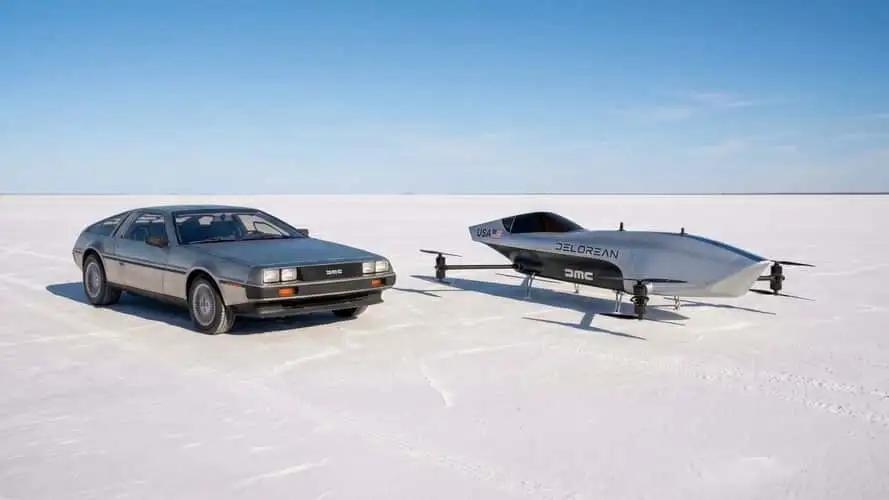
DeLorean will represent the United States in the Airspeeder electric aircraft racing series.
DeLorean Motor Company is entering electric aircraft racing as the constructor behind the U.S. team in the Airspeeder International Series. The program begins in November 2026, with DeLorean initially competing using a standardized electric racing aircraft before developing its own design for the 2027-28 season.
DeLorean Joins the Airspeeder International Series
DeLorean announced its entry at TechCrunch Disrupt 2026, marking a new direction for a brand best known for its iconic stainless-steel sports car. Rather than launching another conventional road vehicle, the company is joining a racing championship built around electric vertical takeoff and landing aircraft, known as eVTOLs.
The DeLorean Airspeeder Team will represent the United States when the 2026-27 season begins in November. It will compete against national teams from other countries in a series designed to explore the possibilities of high-performance electric flight.
Airspeeder races use three-dimensional courses marked by virtual gates instead of conventional painted track boundaries. Pilots navigate these courses using onboard sensors and collision-avoidance technology designed to help manage the risks of high-speed competition.
The championship was created by Australian entrepreneur Matt Pearson, who sees racing as a way to develop and demonstrate emerging electric aviation technology. For DeLorean, the partnership also offers an opportunity to expand its brand into a new category of motorsport.

The Airspeeder International Series brings electric vertical takeoff and landing aircraft into competitive racing.
DeLorean Will Race the Standardized Mk3C First
For its debut season, the DeLorean Airspeeder Team will compete with the standardized Airspeeder Mk3C. The aircraft uses the series’ established technical platform, allowing DeLorean to enter the championship without immediately developing a completely new racing machine.
During this initial phase, DeLorean’s primary responsibility will be the team’s branding and visual identity rather than the core engineering of the aircraft. This arrangement gives the company time to learn from competition before moving toward a more independent technical program.
The standardized approach also provides a common starting point for the championship’s competitors. It allows the series to focus on racing while giving participating constructors an opportunity to develop their own designs in subsequent seasons.
The pilot lineup, detailed aircraft specifications and complete sporting program for DeLorean’s debut remain to be announced.
DeLorean Plans Its Own Electric Racing Aircraft for 2027-28
The longer-term ambition is to move beyond the standardized aircraft. Starting with the 2027-28 season, DeLorean plans to develop its own racing aircraft in collaboration with engineering students from the University of California, Berkeley, and Georgia Institute of Technology.
The academic partnerships are expected to contribute engineering knowledge and design analysis to the development process. However, the final aircraft configuration, performance targets and technical specifications have not yet been disclosed.

DeLorean plans to develop a dedicated racing aircraft after its first season using the standardized Mk3C.
The project could give DeLorean a more substantial role in electric aviation by moving from team branding toward aircraft development. That transition will depend on engineering progress, testing, regulatory requirements and the series’ technical framework.
DeLorean has also highlighted the importance of safety standards and regulatory compliance. Chief brand officer Cameron Wynne described the program as an opportunity to contribute to the frameworks needed for advanced air mobility, alongside the development of flight technology.
Why DeLorean Is Expanding Beyond Road Cars
The Airspeeder partnership reflects an effort to broaden DeLorean’s identity beyond its best-known vehicle. The original DeLorean sports car became a cultural icon, while the company’s more recent reinvention has sought to establish a wider presence in modern automotive and mobility technology.
Electric aircraft racing provides a different platform for that ambition. It connects the brand with electric propulsion, advanced engineering and a motorsport audience interested in emerging forms of transportation.
The partnership does not, however, establish that DeLorean is developing a consumer flying car. The announced program concerns competitive electric aircraft, and the company has not confirmed plans to sell a road-and-air vehicle to the public.

The new racing program gives DeLorean a presence in electric aviation without confirming a consumer flying-car project.
-
 NOW TRENDING2 months ago
Tesla Cybercab Gets September 3 Austin Launch Date
-
 INTELLIGENT MOBILITY2 months ago
GM Super Cruise: How It Works and What Comes Next in 2028
-
 TEST DRIVES1 month ago
2026 Toyota GR Supra MkV Final Edition
-
 TEST DRIVES2 months ago
2025 Ford Bronco Sport Badlands: The Adventure SUV You Can Drive Every Day
-
 NOW TRENDING2 months ago
2027 Toyota Corolla Celebrates 60 Years With Special Edition
-
 RACING2 months ago
FIA Reveals Second ADUO Results With Red Bull-Ford Still on Top
-
 NOW TRENDING2 months ago
Aston Martin Valen: The Most Powerful Front-Engined Supercar
-

 NOW TRENDING2 months ago
2027 Jeep Wrangler Smoky Mountain Edition Debuts With 4×4
You must be logged in to post a comment Login