
INTELLIGENT MOBILITY
Hyundai Tucson Gets A Smarter Infotainment System

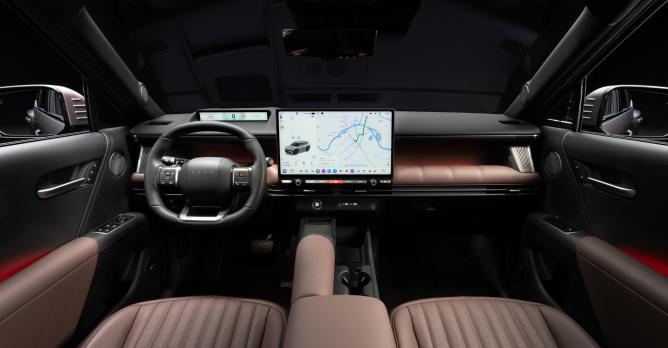
Hyundai will introduce Pleos Connect in the U.S. with the 2027 Tucson, bringing Android Automotive, built-in AI and native apps.
Hyundai is preparing a major technology upgrade for the U.S. market with the arrival of Pleos Connect in the 2027 Tucson. The new infotainment platform combines Android Automotive OS, over-the-air updates, connected services and an artificial-intelligence assistant designed to understand natural language.
The system will be available on U.S.-specification Hyundai vehicles equipped with 17-inch or 12.9-inch centre displays. Rather than treating infotainment as a fixed system installed when a vehicle leaves the factory, Hyundai is positioning Pleos Connect as part of its broader move towards software-defined vehicles.
That change could make future Hyundai models more adaptable throughout their lifecycles. The company plans to collect and analyse data from vehicles equipped with Pleos Connect and its Gleo AI assistant, using that information to develop new software experiences and deliver updates remotely.
Hyundai expects Pleos Connect to reach around 20 million vehicles by 2030, making the platform an important part of its long-term software strategy. The Tucson will be the first U.S. model to introduce the technology.

The 2027 Hyundai Tucson will introduce Pleos Connect to U.S. customers with large 17-inch or 12.9-inch displays.
Gleo AI Turns The Infotainment System Into A Digital Assistant
One of Pleos Connect’s biggest features is Gleo AI, an in-vehicle assistant powered by a large language model. Unlike traditional voice systems that rely heavily on predefined commands, Gleo AI is designed to understand conversational requests and interpret what the driver is trying to accomplish.
Drivers can use natural language to search for destinations, request navigation and refine their route. The system can understand context and handle multiple commands, making interactions more similar to a conversation than a sequence of rigid voice instructions.
Gleo AI can also access vehicle-specific information. Drivers can ask questions about their Hyundai and use voice commands to control supported functions, including climate settings.
The assistant can also provide information from the vehicle’s owner’s manual. That could make unfamiliar functions easier to understand without requiring the driver to search through menus or physical documentation.
The technology is particularly relevant as Hyundai moves towards software-defined vehicles. The vehicle becomes a platform that can evolve after purchase rather than remaining fixed at the moment of delivery.

Gleo AI is designed to understand natural-language requests and help drivers with navigation, vehicle functions and information.
Google And HERE Bring Connected Navigation To Tucson
Pleos Connect also introduces a redesigned navigation experience. The system combines HERE Maps and Google Places with real-time mapping and routing information.
Hyundai has designed the interface around a large, customisable display. Navigation can be shown in either portrait or landscape orientation, while compatible applications can operate alongside the map.
Floating information cards provide route information without completely covering the navigation screen. This approach is designed to keep important details visible while preserving a clear view of the route.
The system also includes pre-installed map data for the U.S. That means navigation can continue to provide useful information in areas where mobile connectivity is limited.
Connectivity is another important part of the platform. Pleos Connect supports wireless Apple CarPlay and Android Auto, alongside Bluetooth 5.4 and Wi-Fi 6.
This combination allows Hyundai to provide its own connected ecosystem while still giving drivers access to familiar smartphone-based services.

Pleos Connect combines HERE Maps and Google Places with a large-screen interface designed for flexible navigation and multitasking.
A New App Store Could Keep The Tucson Updated
Pleos Connect also introduces the Pleos App Market, allowing native applications to run directly on the vehicle’s Android Automotive-based platform.
The marketplace will support entertainment, lifestyle, productivity, mobility and vehicle-related services. Streaming music and video applications are among the types of services Hyundai plans to offer.
One important advantage is that applications can receive updates independently of Hyundai’s broader infotainment software updates. That creates a more flexible ecosystem in which individual services can evolve without requiring a complete system update.
Hyundai is also developing an API for third-party developers. Applications created for Pleos Connect will go through cybersecurity and verification procedures before becoming available to customers.
The strategy could significantly change how drivers interact with their cars over time. Instead of relying on an infotainment system that remains largely unchanged for years, Hyundai is building a platform that can add new functions and services after the vehicle has been purchased.
The 2027 Tucson therefore represents more than a new infotainment upgrade. It marks an important step in Hyundai’s transition towards software-defined vehicles, where artificial intelligence, connected services and over-the-air updates become increasingly central to the ownership experience.











-

 NOW TRENDING2 months ago
Land Rover Defender Recall 2026: 23,677 JLR SUVs Affected
-
 NOW TRENDING2 months ago
Hyundai September 2026 Sales Hit Record 77,439
-

 NOW TRENDING2 months ago
2027 Silverado HD: New 8.3L Duramax V8 Revealed
-
 NOW TRENDING2 months ago
Cadillac EVs 2026: All Five Electric Models Explained
-

 NOW TRENDING2 months ago
Porsche Gas Macan Returns in 2028 as EV Plans Evolve
-
 INTELLIGENT MOBILITY2 months ago
GM and PG&E Make Home EV Charging Easier for Buyers
-
 INTELLIGENT MOBILITY2 months ago
Waymo Safety Data Shows 82% Fewer Injury Crashes
-

 INTELLIGENT MOBILITY2 months ago
IONNA EV Charging Network More Than Doubles in 2026