
NOW TRENDING
Ford’s Off-Road Lineup Fuels Sales Growth in 2026

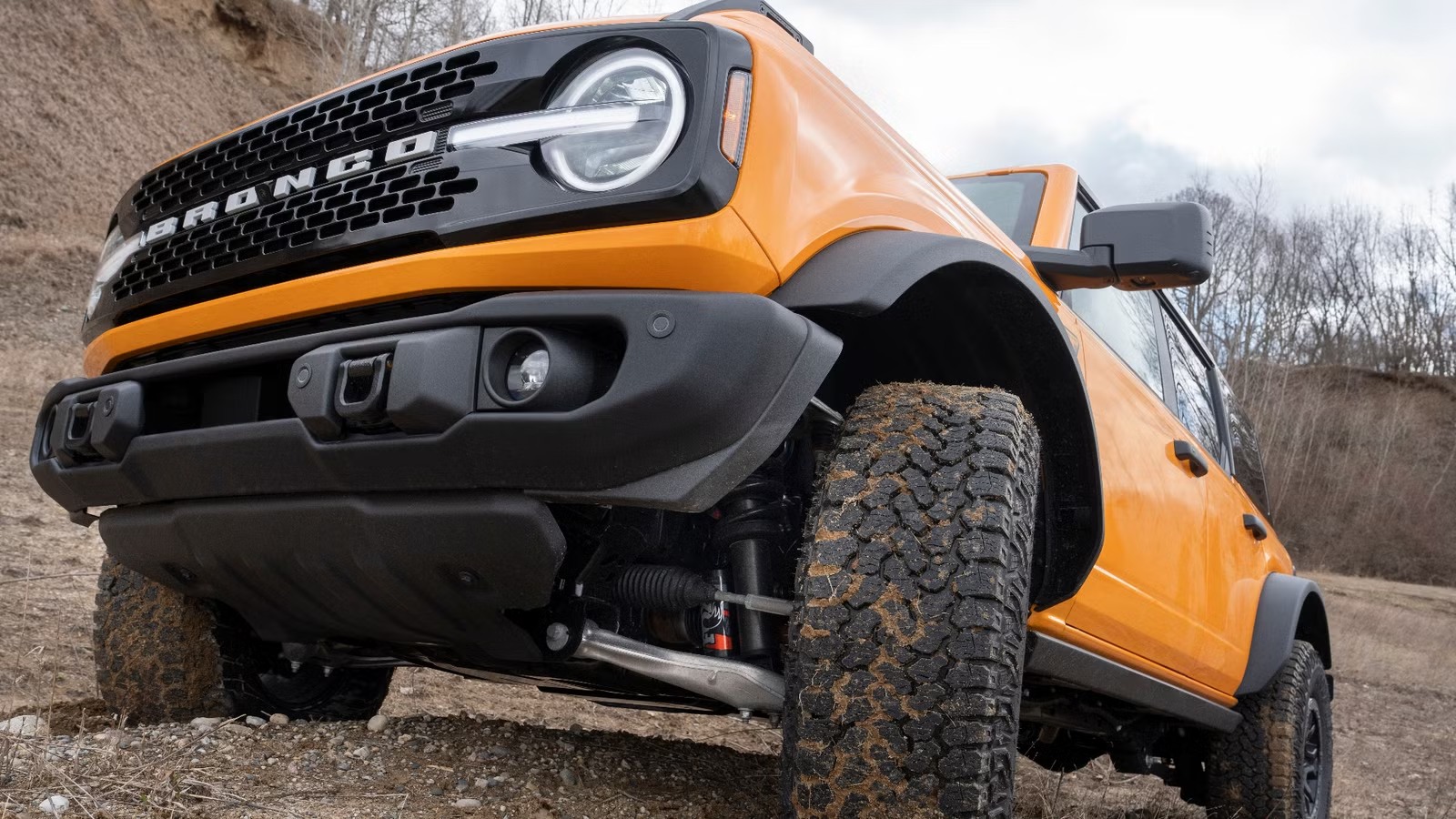
Ford’s Bronco, Raptor and Tremor models continue to attract new buyers, helping the automaker boost profits and strengthen its position in the off-road market.
Ford’s growing family of off-road vehicles is becoming one of the company’s biggest competitive advantages. Strong demand for the Bronco, Raptor and Tremor models helped boost second-quarter profits while attracting younger buyers and strengthening Ford’s position in one of the industry’s fastest-growing segments.
The automaker says its strategy of investing in performance-focused trucks and SUVs is paying off, with off-road models representing a significant share of total sales.
Bronco Overtakes the Jeep Wrangler
One of Ford’s biggest milestones came during the second quarter of 2026, when the Ford Bronco outsold the Jeep Wrangler for the first time since its return to the market.
Ford delivered 45,739 Broncos through June, compared with 41,793 Wranglers, marking a major achievement in one of the industry’s most competitive SUV segments.
According to Ford CEO Jim Farley, off-road models accounted for 25% of the company’s second-quarter sales, proving that enthusiasm for adventure-focused vehicles continues to grow.

The Ford Bronco surpassed Jeep Wrangler sales during the second quarter of 2026.
Raptor and Tremor Continue Driving Profits
Ford executives also highlighted the success of the Raptor and Tremor families.
The company reported that:
- Raptor sales increased 9% year over year.
- Tremor models now represent 15% of Expedition sales.
- Off-road variants continue generating higher profit margins than standard trims.
Ford believes relaxed U.S. emissions regulations have also allowed it to better meet customer demand for V8-powered trucks and high-performance models without the same compliance challenges faced in previous years.

Ford says Raptor and Tremor models continue to deliver strong demand and higher profit margins.
Hybrid Expansion Remains a Key Priority
Beyond its off-road lineup, Ford continues expanding its hybrid strategy.
The Ford Maverick Hybrid posted record sales during the first half of 2026, becoming America’s best-selling hybrid pickup. Company executives confirmed that hybrid technology will gradually spread across more Ford models over the coming years.
The announcement comes despite Ford ending production of the hybrid versions of the Escape SUV, as the automaker shifts its product strategy toward more profitable trucks, SUVs and electrified vehicles.
Ford believes the combination of off-road performance models and an expanding hybrid portfolio will remain central to its long-term growth strategy.

Ford plans to expand hybrid technology across more models while maintaining its off-road leadership.


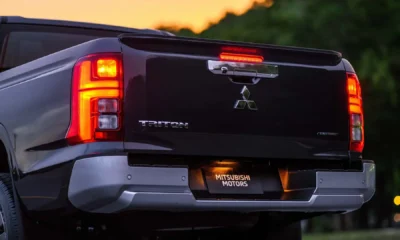






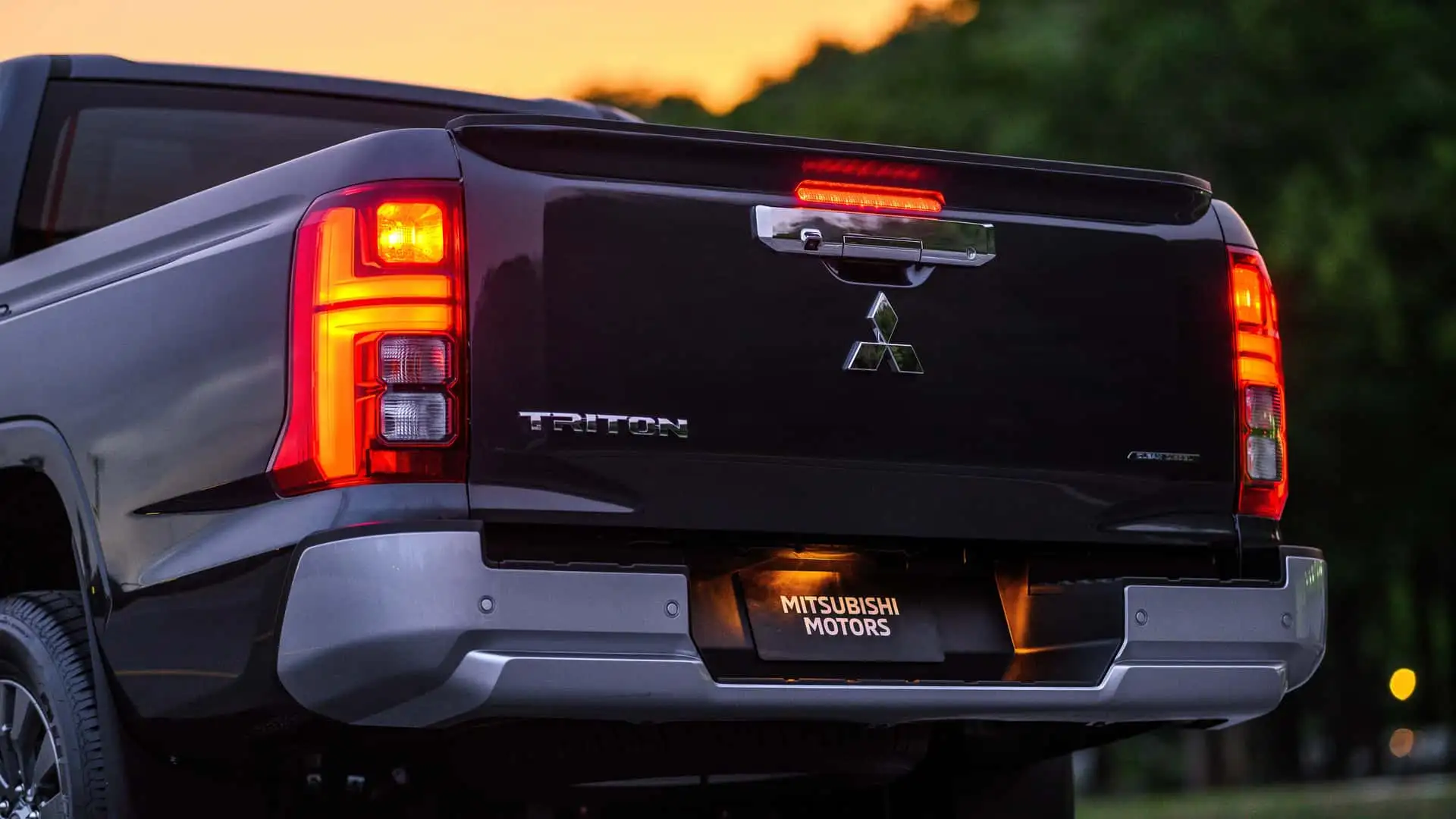
Mitsubishi plans to return to the U.S. pickup market with a Nissan-built truck as part of its Momentum 2030 strategy, although key details remain unconfirmed.
Mitsubishi is preparing to return to the U.S. pickup market, and Nissan is expected to provide the foundation for the new truck.
The pickup appears in Mitsubishi’s Momentum 2030 roadmap presented to dealers, but the company has not yet confirmed its name, specifications, size, or production timeline.
Nissan Could Build Mitsubishi’s New Pickup
Mitsubishi has not officially revealed what platform the truck will use.
However, early design material shows a boxy pickup with split LED headlights, giving it a different appearance from Mitsubishi’s current SUV lineup.
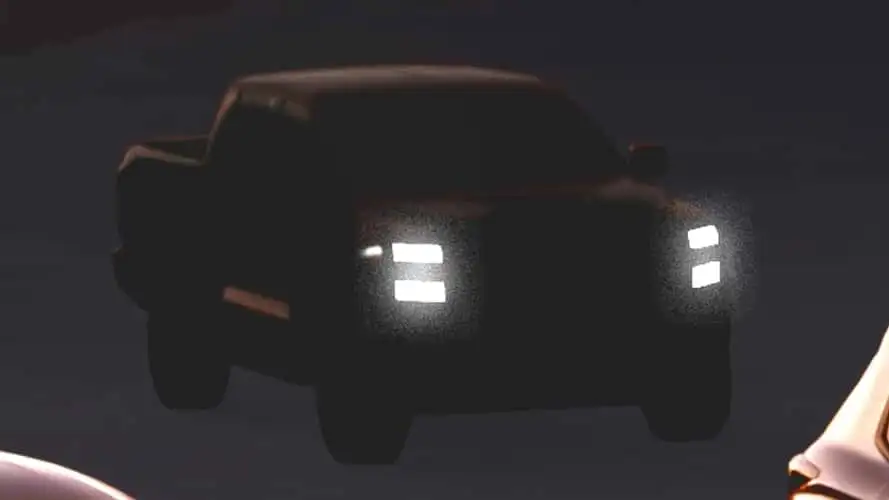
Early Mitsubishi design material shows a boxy pickup with split LED headlights.
Mitsubishi has also not confirmed whether the truck will compete in the midsize or full-size segment.
The Nissan connection could simplify development.
Nissan already produces and sells the Frontier in the United States, giving Mitsubishi access to established pickup technology instead of developing an entirely new truck from the ground up.
A connection to the Nissan Frontier or Navara has been suggested, but Mitsubishi has not confirmed which Nissan architecture will underpin the pickup.
The Truck Is Part of a Larger Mitsubishi Strategy
The pickup is one of several new models planned for Mitsubishi’s North American lineup.
The Eclipse Sportback EV, which uses Nissan technology and is based on the next-generation Leaf, is scheduled to arrive at U.S. and Canadian dealerships during the second half of 2026.
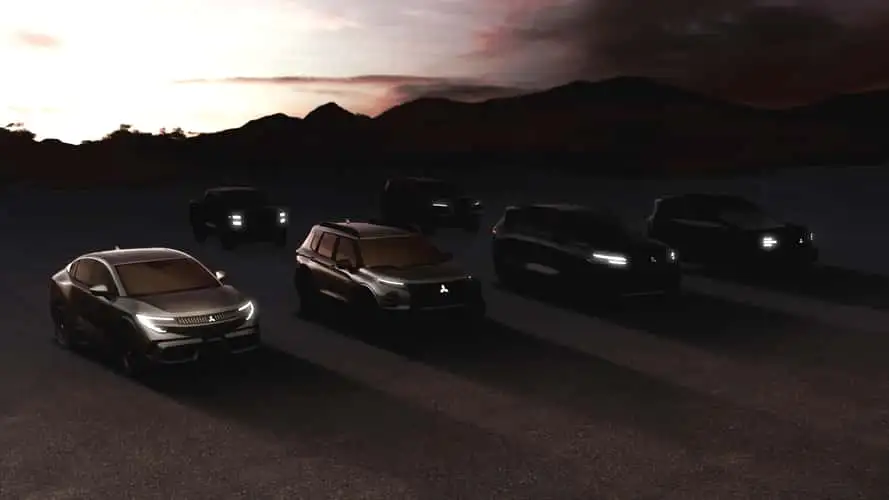
The Eclipse Sportback EV will be one of Mitsubishi’s first major additions to its U.S. lineup under the Momentum 2030 strategy.
A more rugged Outlander variant is then expected in the first quarter of 2027.
The pickup is planned to follow those launches, although Mitsubishi has not announced a specific date.
Together, the new vehicles would expand Mitsubishi’s current U.S. lineup beyond the Outlander Sport, Eclipse Cross, Outlander, and Outlander PHEV.
Mitsubishi Is Expanding Its Alliance-Based Lineup
Momentum 2030 calls for Mitsubishi to strengthen its U.S. presence through electrification, new products, retail improvements, and dealer-network expansion.
Using Nissan hardware allows Mitsubishi to accelerate that product expansion while maintaining its own exterior design and brand identity.
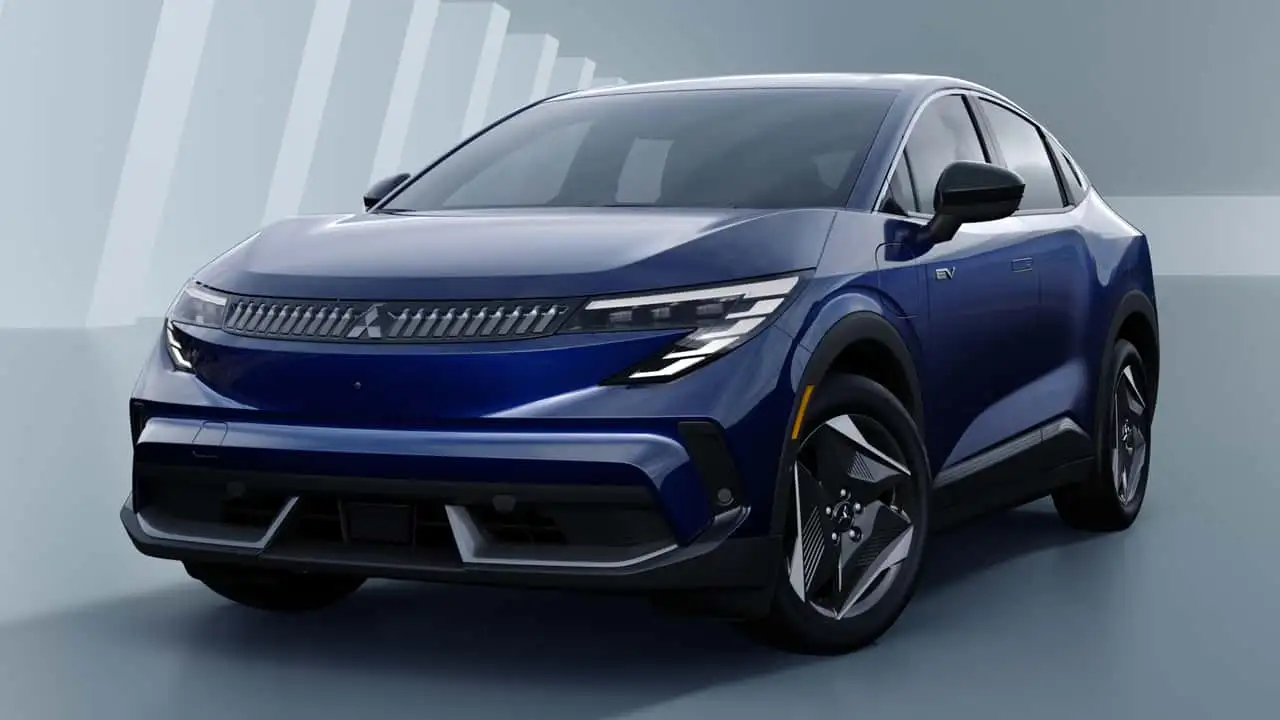
The Nissan partnership gives Mitsubishi a faster path to expanding its U.S. vehicle lineup.
Mitsubishi is also preparing another major product outside the pickup program.
The next Pajero, historically known as the Montero in North America, is scheduled for a world premiere on September 2.
However, Mitsubishi’s materials treat the Pajero and the potential U.S. pickup as separate projects.
The Pajero is expected to serve as a ladder-frame flagship SUV, while the Nissan-built pickup would form part of Mitsubishi’s broader North American product expansion.
For now, the Mitsubishi pickup truck remains an early-stage program, but its inclusion in Momentum 2030 signals that Mitsubishi is serious about returning to a segment it has not competed in directly in the U.S. for years.
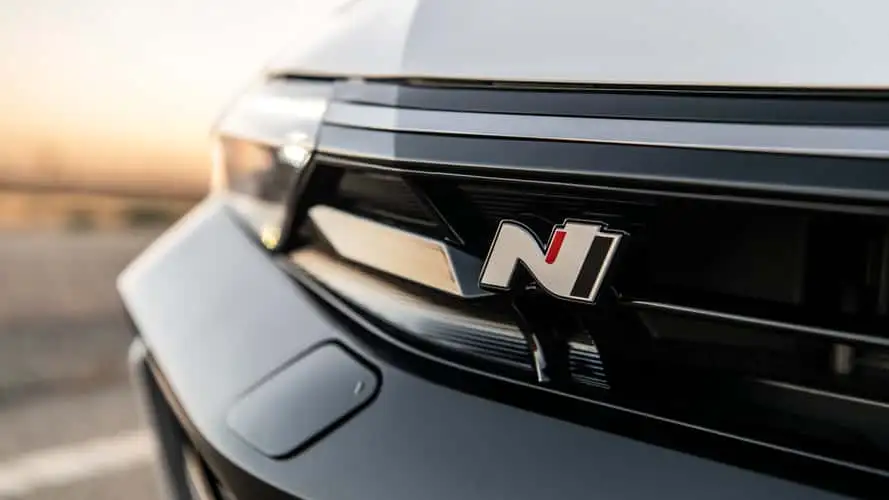
Hyundai is developing a new high-volume performance lineup that will sit below the N range and combine more accessible pricing with hardware borrowed from its sportiest models.
Hyundai is preparing a new family of more affordable performance cars that will sit between its full N models and the less powerful N Line range.
The announcement came during Hyundai’s CEO Investor Day, where the company outlined plans for a new “high-volume performance” lineup aimed at bringing more driving excitement to a wider group of buyers.
The first model is scheduled to arrive in 2030.
A New Performance Class for Hyundai
The upcoming models are expected to borrow hardware from Hyundai’s existing N cars while maintaining a lower price.
Hyundai specifically mentioned sharing powertrains and other performance hardware with the N range. The company has not yet confirmed whether the new lineup will include gasoline engines, electric motors, or both.
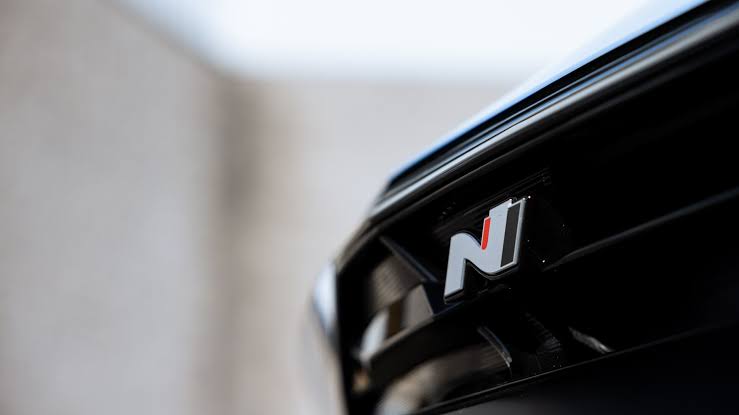
Hyundai plans to create a new performance lineup positioned between its N and N Line models.
The new family will also receive its own name, although Hyundai has not revealed what that branding will be.
The strategy appears similar to the approach used by premium automakers with their intermediate performance models.
Audi uses S, BMW offers M Performance, and Mercedes-Benz has positioned certain AMG models below its most extreme variants.
Hyundai could adopt a similar structure for its mainstream lineup.
N Models Are Still the Performance Flagships
Hyundai currently offers five full N models: the i20 N, i30 N, Elantra N, Ioniq 5 N, and Ioniq 6 N.
Together, those models sold around 20,000 units in 2025.
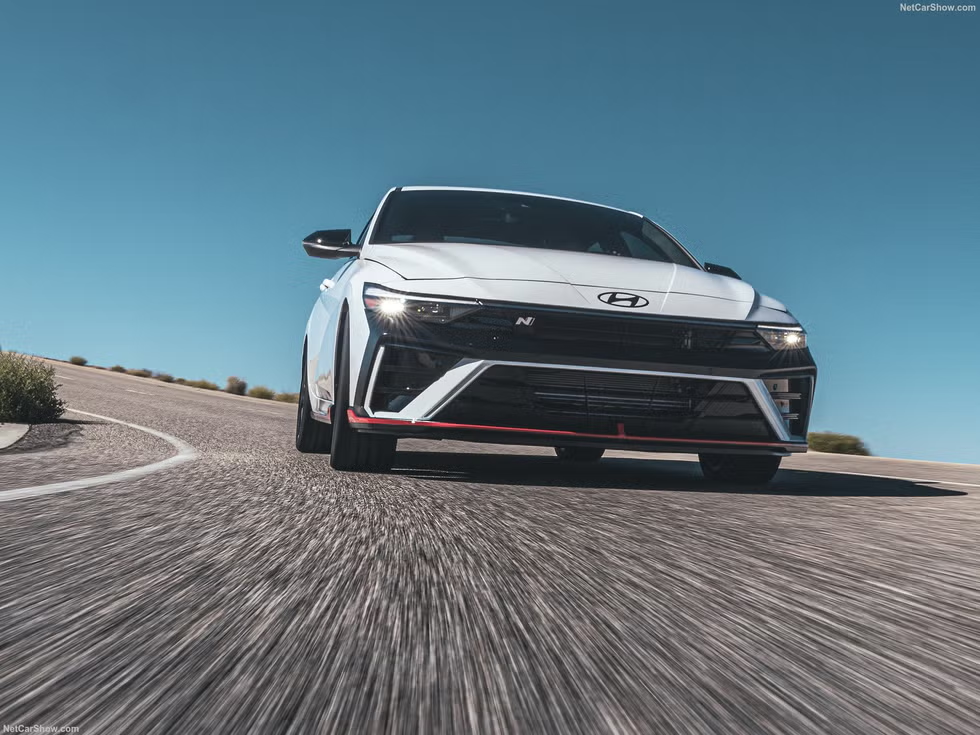
Hyundai’s existing N lineup remains focused on high-performance models, while the new range will target a much larger audience.
The recently revealed 2027 Elantra is also expected to receive an N version, potentially with a larger engine.
At the other end of Hyundai’s performance range are approximately 12 N Line models.
Those vehicles focus mainly on styling rather than major mechanical upgrades. Hyundai sold around 161,000 N Line models in 2025, showing the much larger market for sporty-looking vehicles without full performance hardware.
The New Models Will Focus on Everyday Driving
The new performance lineup is expected to provide a middle ground between the two existing approaches.
Instead of matching the extreme performance of the N cars, Hyundai says these vehicles will have a stronger focus on road use.
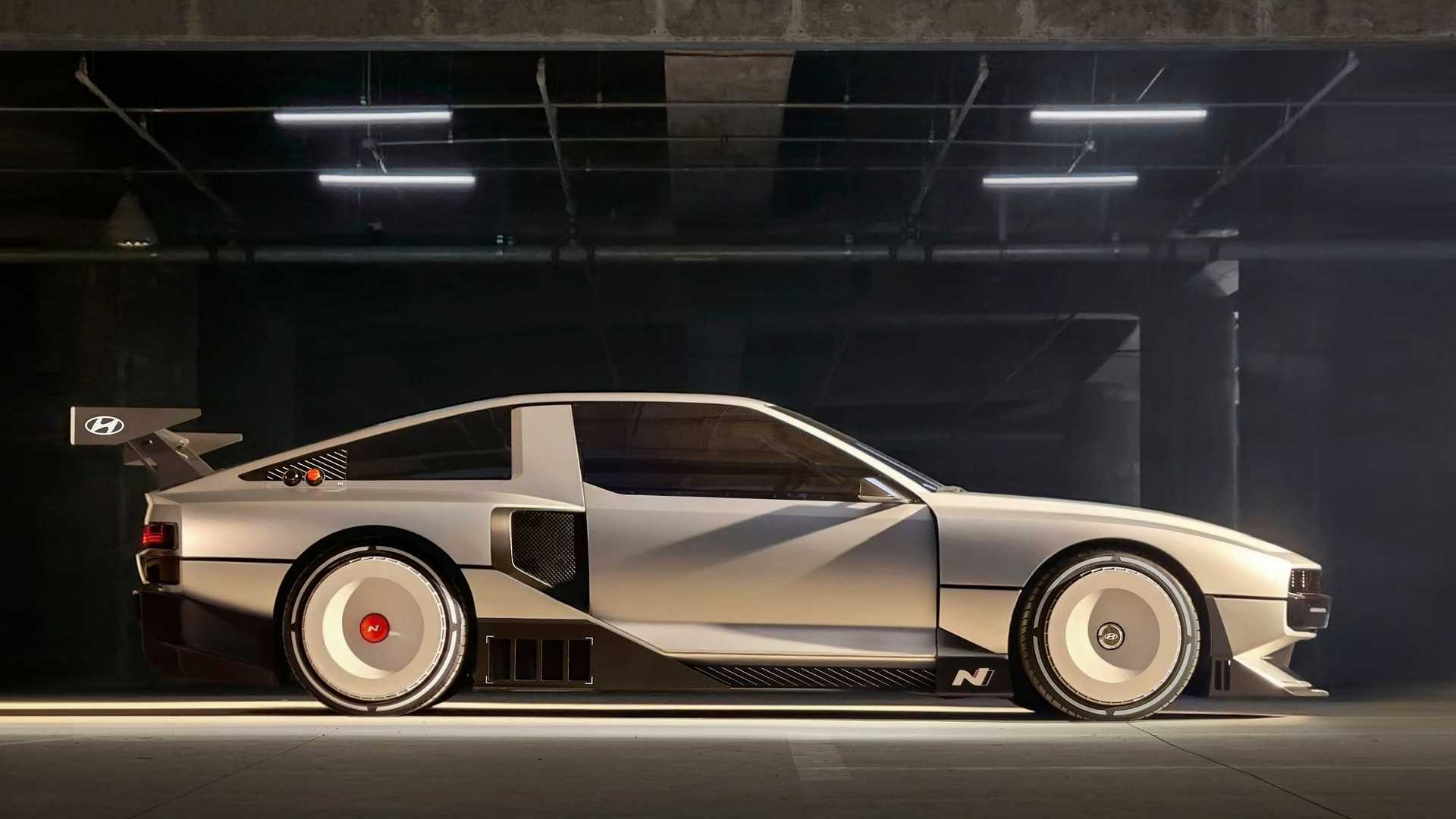
The new Hyundai performance models will emphasize everyday road driving while borrowing technology from the N range.
That could mean more accessible pricing, easier daily usability, and selected performance upgrades without the cost or intensity of a full N model.
Hyundai plans to launch the first vehicle from this new family in 2030.
The new lineup could therefore give the company a broader performance portfolio, allowing buyers who want more than an N Line but cannot justify an N model to step into a more affordable enthusiast-oriented vehicle.
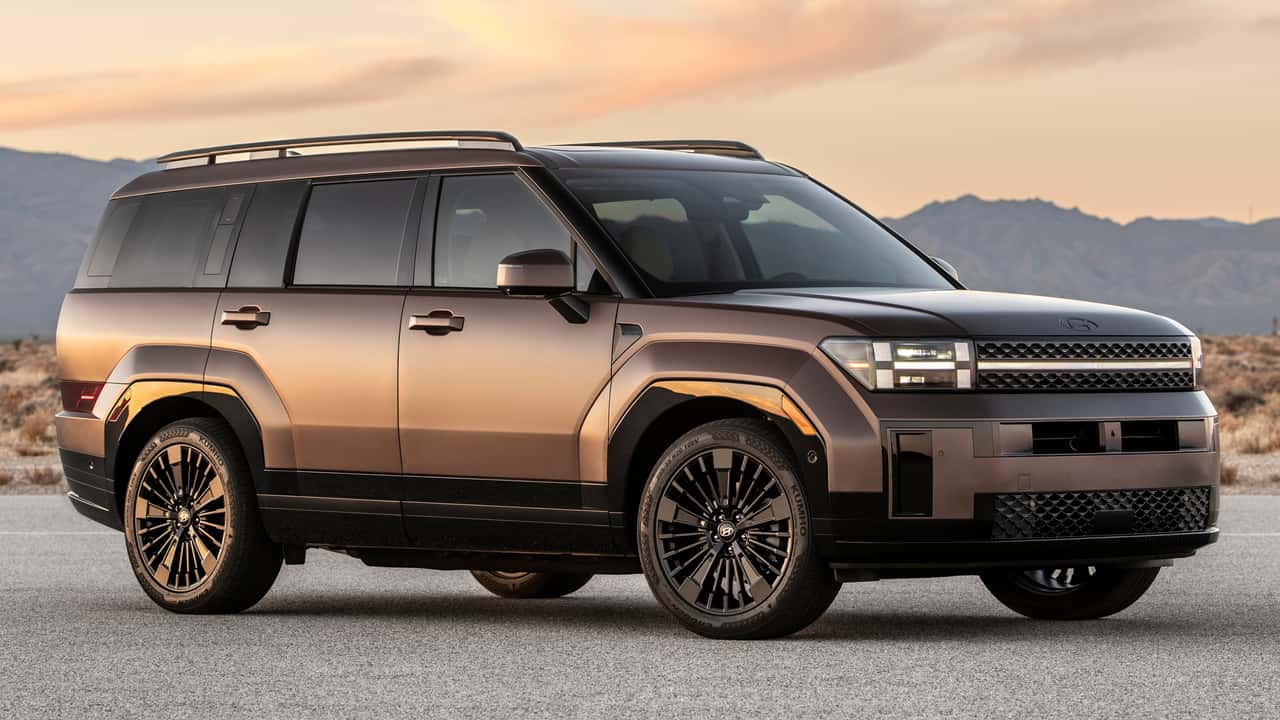
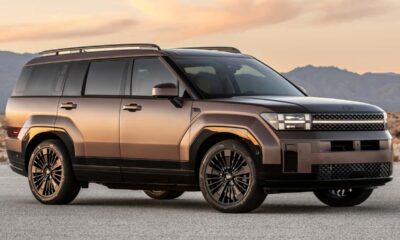
Hyundai will launch the Santa Fe EREV in the U.S. in 2027, while Genesis is developing an even longer-range extended-range electric SUV.
Hyundai Motor Group is preparing to enter the extended-range electric vehicle (EREV) market with new models from Hyundai and Genesis.
The first to arrive in the United States will be the Hyundai Santa Fe EREV, scheduled for the first half of 2027. Genesis will follow with its own extended-range electric SUV.
Santa Fe EREV promises more than 600 miles
The Santa Fe EREV will be assembled in the United States beginning early next year alongside conventional versions of the midsize SUV at Hyundai’s Alabama plant.
The headline specification is a projected driving range of more than 600 miles, or approximately 965 kilometers.
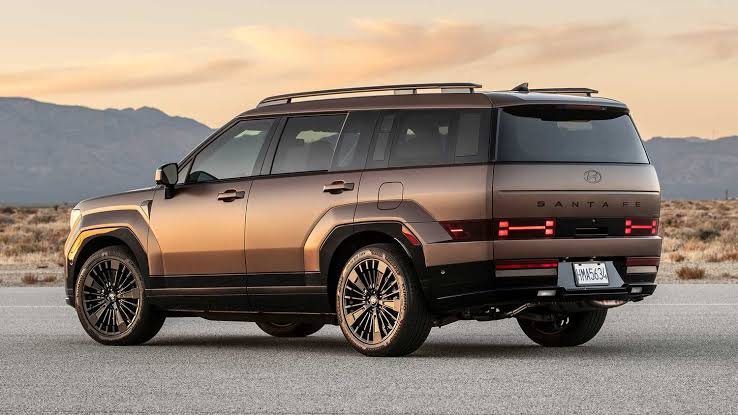
The Hyundai Santa Fe EREV is scheduled to arrive in the U.S. during the first half of 2027.
Hyundai says that figure is roughly 1.6 times the range of a conventionally powered Santa Fe.
The EREV approach uses a smaller battery than a comparable fully electric vehicle. Hyundai says its in-house-developed battery will have approximately half the capacity of the battery it would use in a full EV version.
That could reduce the weight penalty while still providing a substantial amount of electric driving capability.
Two electric motors and likely all-wheel drive
The Santa Fe EREV will use two electric motors, likely positioned at each axle to provide all-wheel drive.
Hyundai has not yet revealed the combustion engine’s exact specifications, but the system is expected to operate differently from a conventional hybrid.
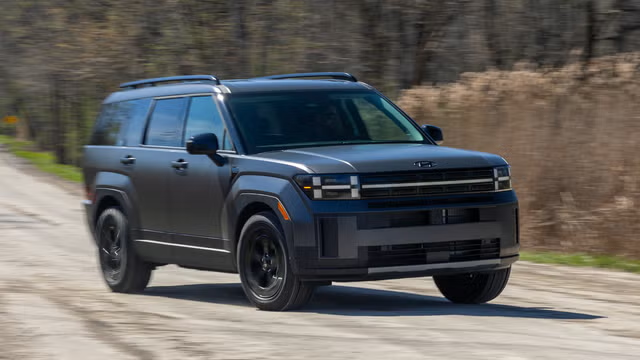
The Santa Fe EREV will use two electric motors and is expected to provide an EV-like driving experience.
In an EREV system, the gasoline engine typically acts as a generator, producing electricity to charge the battery rather than mechanically driving the wheels.
Hyundai says the dual-motor system is designed to provide EV-like acceleration and driving characteristics.
The company has not yet disclosed the battery capacity, engine output, or final performance figures.
Hyundai plans more EREV models
The technology will not be limited to the Santa Fe.
Hyundai says it intends to introduce extended-range electric vehicles across multiple vehicle segments.
The recently introduced Ioniq V will also receive an EREV version for China, while another compact crossover using the technology is planned for the Chinese market.
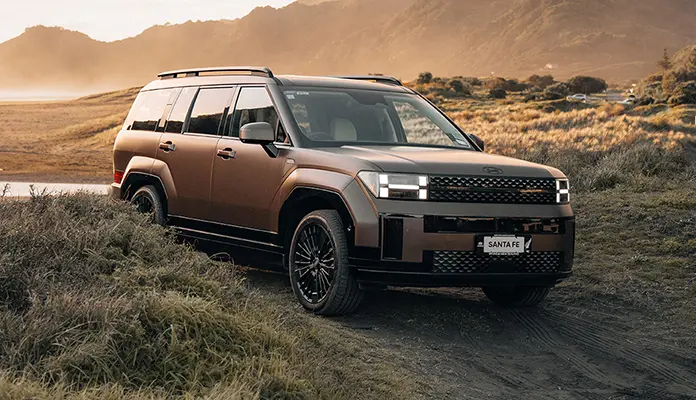
Hyundai plans to expand EREV technology beyond the Santa Fe and into other segments and markets.
The strategy gives Hyundai another option between conventional hybrids and fully electric vehicles, particularly in markets where charging infrastructure is still developing.
Genesis is preparing an even longer-range EREV
Genesis is also developing its own extended-range electric vehicle.
The first teaser suggests the model will be based on the GV80, following the luxury brand’s recent introduction of its first conventional hybrid, the GV80 Hybrid.
Genesis is developing an EREV believed to be based on the GV80 and targeting more than 640 miles of total range.
Production is scheduled to begin early next year.
Genesis says its EREV will use an all-new high-performance battery and deliver more than 640 miles of combined range, or approximately 1,030 kilometers, from a full battery charge and a tank of fuel.
That would give the Genesis model an even greater range target than the Santa Fe EREV.
The arrival of the Hyundai EREV and Genesis extended-range EVs represents a significant expansion of Hyundai Motor Group’s electrification strategy. Rather than choosing exclusively between gasoline engines, conventional hybrids, and full EVs, the group is adding another technology aimed at combining electric driving characteristics with the flexibility of gasoline-powered energy generation.
-

 NOW TRENDING2 months ago
Polestar to Exit U.S. Market After 2026 Due to Connected Vehicle Rules
-
 NOW TRENDING2 months ago
Tesla Model Y L Arrives in the U.S. With More Space and Three Rows
-

 RACING2 months ago
McLaren F1 Unveils Special Silverstone Livery Honoring Its History
-
 INTELLIGENT MOBILITY2 months ago
Audi A4 E-tron and Q7 E-tron Confirmed as New Electric Models
-
 TEST DRIVES2 months ago
A Week Driving Honda’s New Hybrid Coupe
-
 TEST DRIVES2 months ago
Ford Recalls More Than 741,000 Trucks and SUVs Over Rollaway Risk
-
 NOW TRENDING2 months ago
Toyota Reports Strong June and Q2 2026 U.S. Sales Growth
-
 INTELLIGENT MOBILITY2 months ago
GM Expands Super Cruise With Exclusive Hands-Free Towing Technology
You must be logged in to post a comment Login