
Con una potencia de 540 CV (397 kW), una aceleración de 0 a 100 km/h en 3,6 segundos y 318 km/h de velocidad máxima, el nuevo Audi R8 Spyder con motor atmosférico V10 combina unas prestaciones impresionantes con el encanto de la conducción a cielo abierto. Su espectacular diseño y sus avanzadas tecnologÃas son una prueba de la capacidad de la marca de los cuatro aros. Audi ha desvelado este deportivo abierto de altas prestaciones en el Salón Internacional de Nueva York 2016.
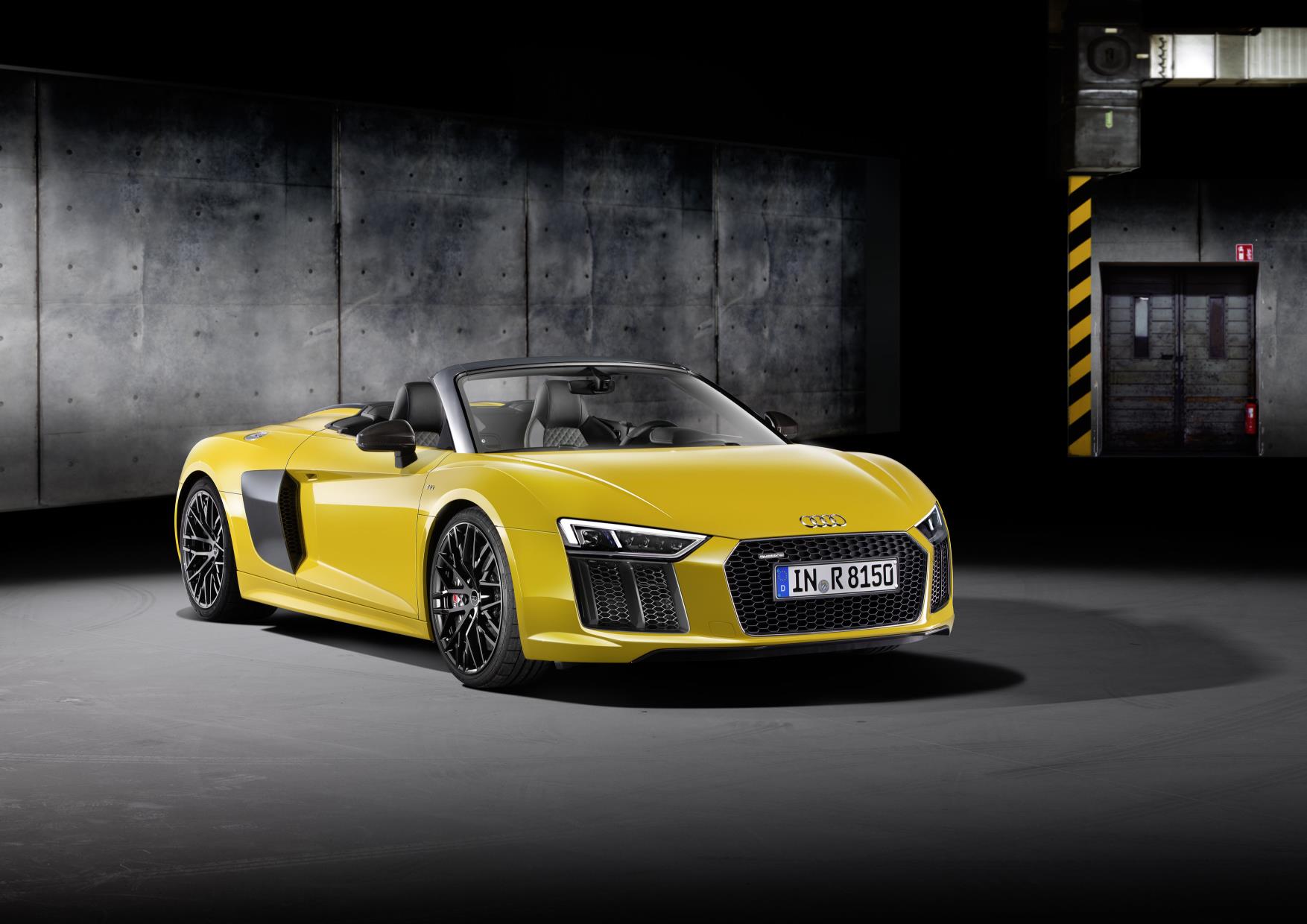
Este deportivo descapotable de altas prestaciones abre un capÃtulo nuevo en la exitosa historia del Audi R8. Todo comenzó en 2007 con la introducción en el mercado del Coupé de la primera generación, seguido por el Spyder en 2010. Las ventas de las dos versiones alcanzaron casi 27.000 unidades, una prueba de la capacidad tecnológica de Audi y su relación con la competición. La marca lo ha vuelto a demostrar en la segunda generación del R8 con el nuevo Audi R8 Le Mans, un coche de competición para la categorÃa GT3, desarrollado por los ingenieros en paralelo con el modelo de serie. Como resultado, casi el 50 por ciento de todos los elementos del R8 LMS se encuentran también en el R8. Confirman el éxito del nuevo Coupé los prestigiosos galardones recibidos el pasado año, como el “Golden Steering Wheel†y el “Auto Trophyâ€.
“Nuestra nueva gama R8 es la vanguardia deportiva de Audi,†ha señalado Stefan Knirsch, responsable de Desarrollo. “Tras el Coupé, estamos lanzando la segunda generación del R8 Spyder. Este deportivo se distingue por unas prestaciones decididamente cautivadoras y proporciona al conductor una experiencia aún más directa con el inconfundible sonido del V10 atmosférico.â€
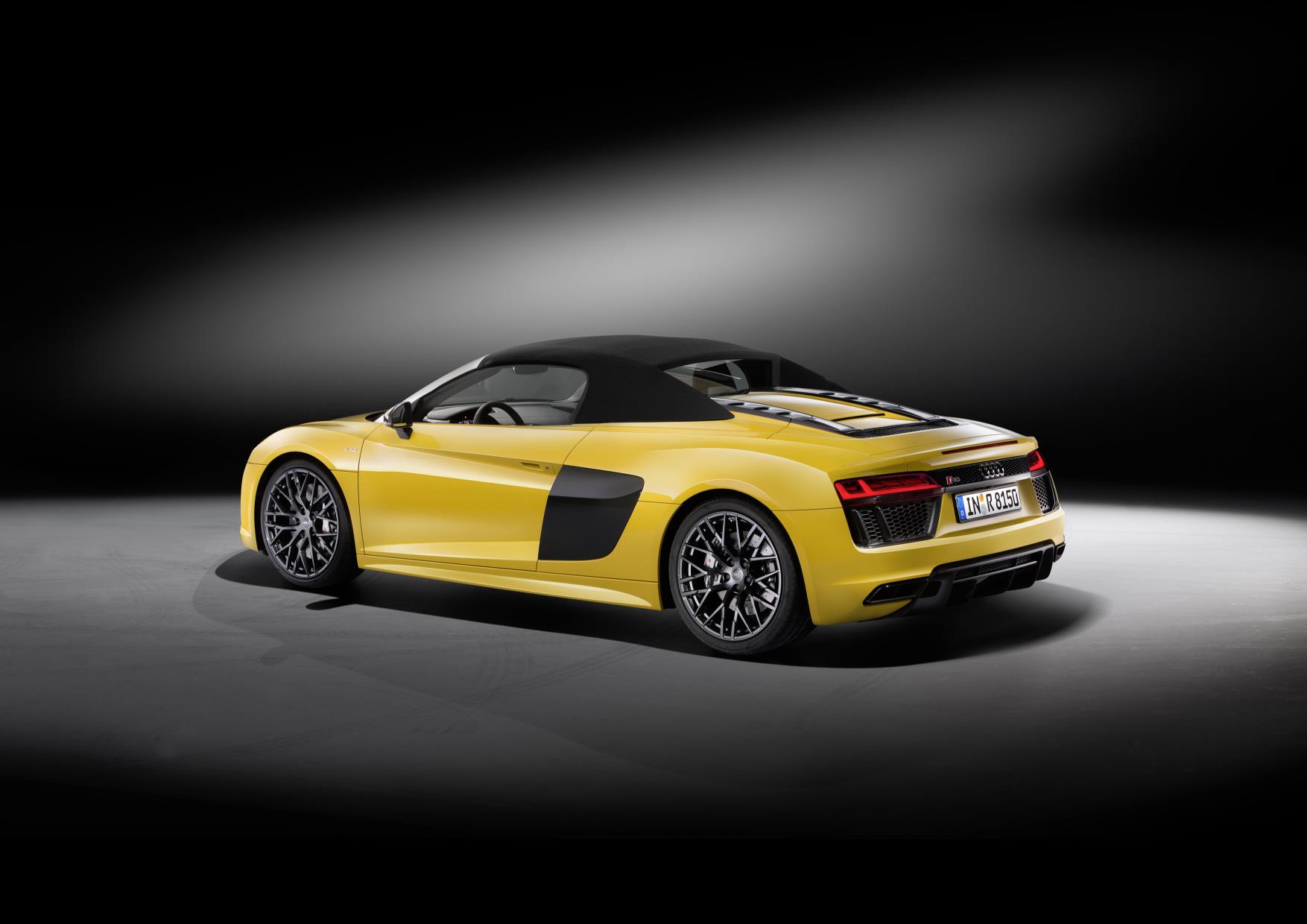
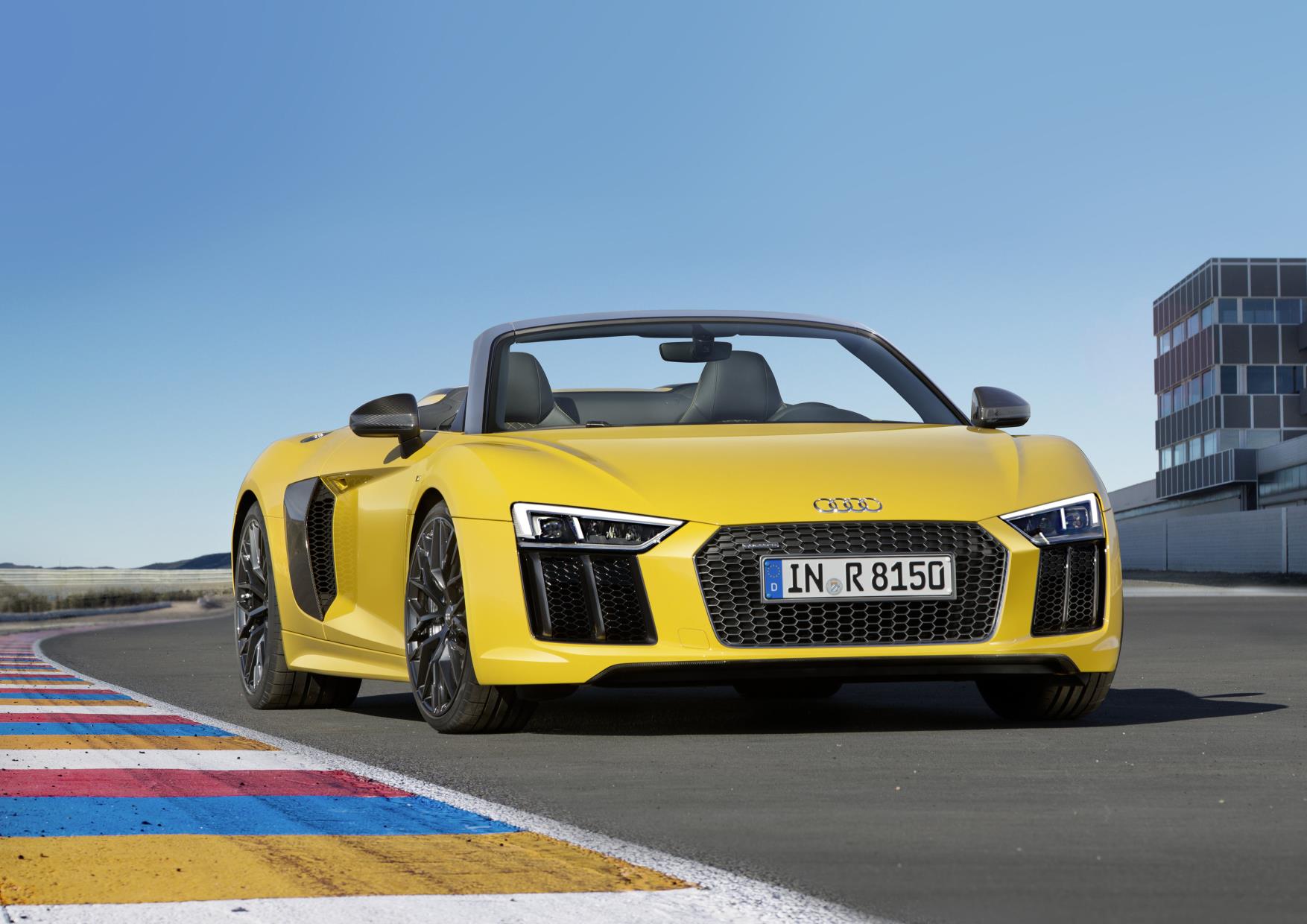
El carácter dinámico del nuevo Audi R8 Spyder V10 queda bien patente a primera vista. La posición adelantada del espacio para los ocupantes, los pasos de rueda muy acentuados y la larga parte trasera definen la silueta clásica de un deportivo de motor central. El nuevo Audi R8 Spyder es 14 mm más corto que el modelo anterior, con una longitud total de 4.426 mm. Ha crecido 36 mm en anchura, hasta un total de 1.940 mm. No han variado con relación a la primera generación del R8 Spyder ni la altura (1.244 mm) ni la distancia entre ejes (2.650 mm).
Las lÃneas horizontales en la parte delantera y trasera enfatizan la anchura del Audi R8 Spyder, como lo hace la parrilla Singleframe grande y baja, que tiene una rejilla con estructura de panal. Unas superficies esculturales la conectan con unos grupos ópticos en forma de cuña, cada uno con 37 diodos emisores de luz como equipo de serie. Como opción de tecnologÃa avanzada, Audi ofrece iluminación láser para una máxima visibilidad y alcance, reconocible por una tira anodizada de color azul en los faros, iluminada adicionalmente. Esta tecnologÃa se combina con intermitentes dinámicos que, en la parte trasera, se suministran de serie en todas las versiones.
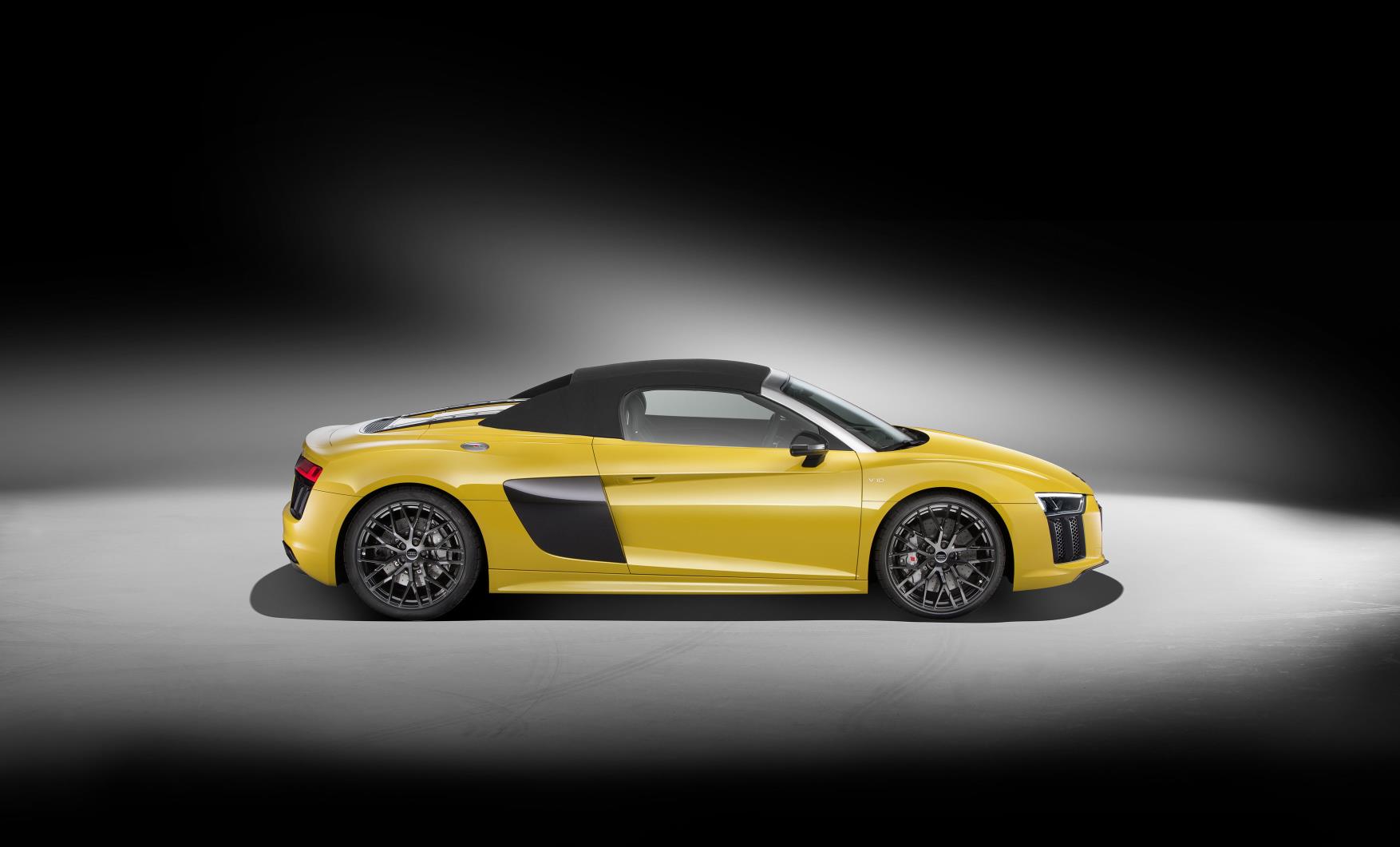
La capota de nuevo desarrollo del Audi R8 Spyder está fabricada en tejido, al estilo caracterÃstico de Audi. Sólo pesa 44 kg, con lo que contribuye al bajo peso total de este deportivo de altas prestaciones. Esta capota flexible se abre en sólo 20 segundos mediante un sistema electrohidráulico y se puede accionar en marcha hasta una velocidad de 50 km/h. El módulo del techo está alojado tras los asientos y comprende los componentes de la protección antivuelco, la capota, su alojamiento, el alojamiento de la luneta trasera y las articulaciones de la cubierta del compartimento, hecha de fibra de carbono reforzada y movida hidráulicamente.
Los niveles de ruido aerodinámico y de rodadura dentro del coche son mucho más bajos que en el modelo anterior. También se ha reducido la turbulencia de aire cuando la capota está abierta. Para un mayor confort, un deflector de viento realizado en tejido sintético reduce el flujo posterior de aire en un 90 por ciento aproximadamente alrededor de la cabeza y en un 80 por ciento alrededor de los hombros y el cuello. Además de este deflector textil, el cristal trasero desvÃa adicionalmente el aire cuando el techo está abierto. Con el techo plegado, el conductor tiene una experiencia aún más directa del caracterÃstico rugido del motor V10.
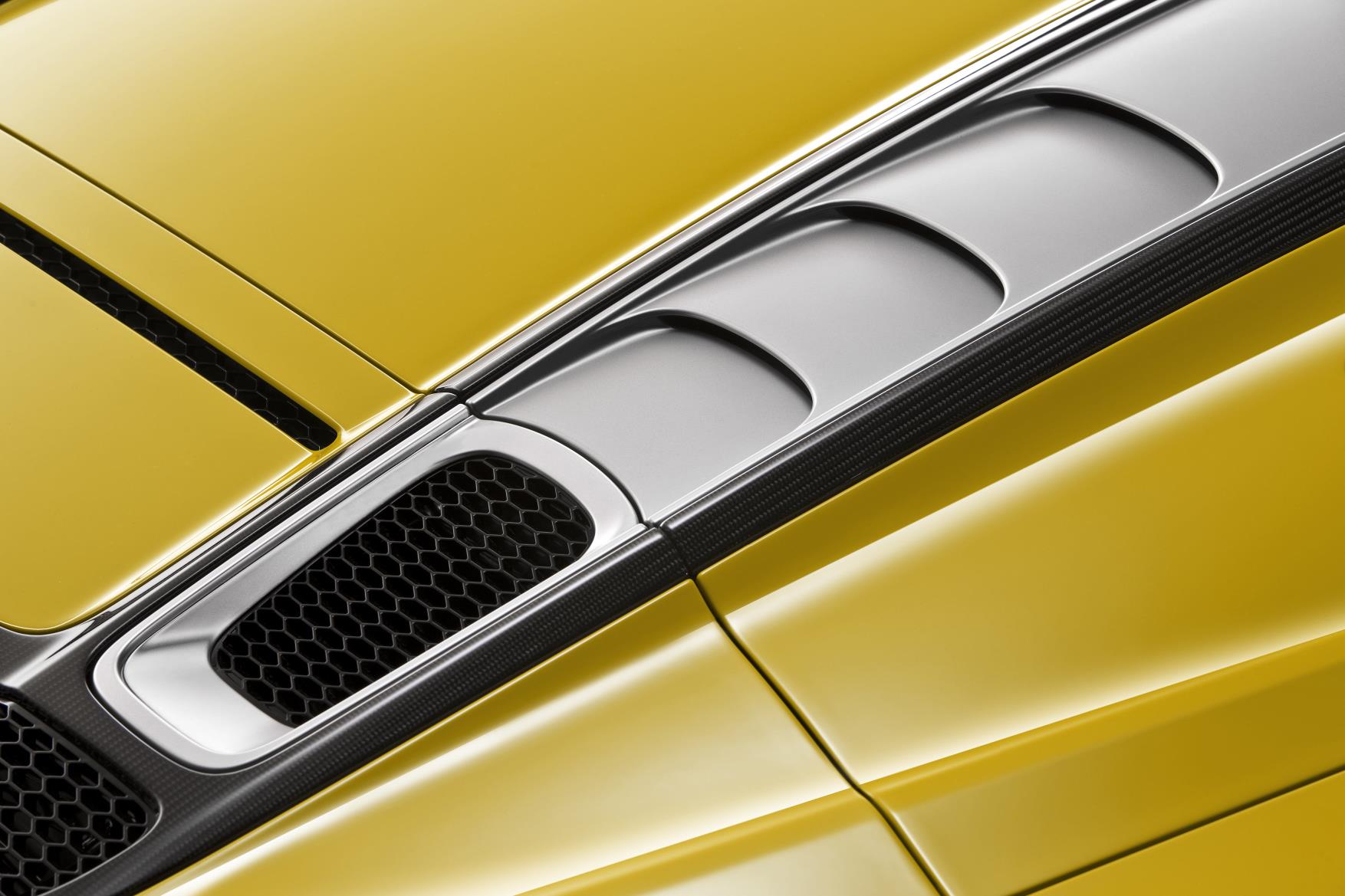
El compartimento plano donde se aloja el techo plegado tiene una cubierta grande con tres deportivas ranuras de ventilación en cada lado. Dos aletas recorren el techo hacia la parte trasera y otorgan al Audi R8 Spyder un perfil dinámico. La capota está disponible en tres colores: negro, marrón y rojo.
Construcción ligera con componentes de fibra de carbono: peso en vacÃo de 1.612 kg
Con un peso en vacÃo de 1.612 kg, el nuevo Audi R8 Spyder V10 demuestra claramente el potencial dinámico de la construcción ligera en la automoción. La relación entre peso y potencia es sólo 3,19 kg/CV. La clave para esta impresionante cifra es el nuevo Audi Space Frame (ASF) con el principio de construcción multimaterial. Como el R8 Coupé, combina componentes de aluminio y de polÃmero reforzado con fibra de carbono, estructuralmente integrados.
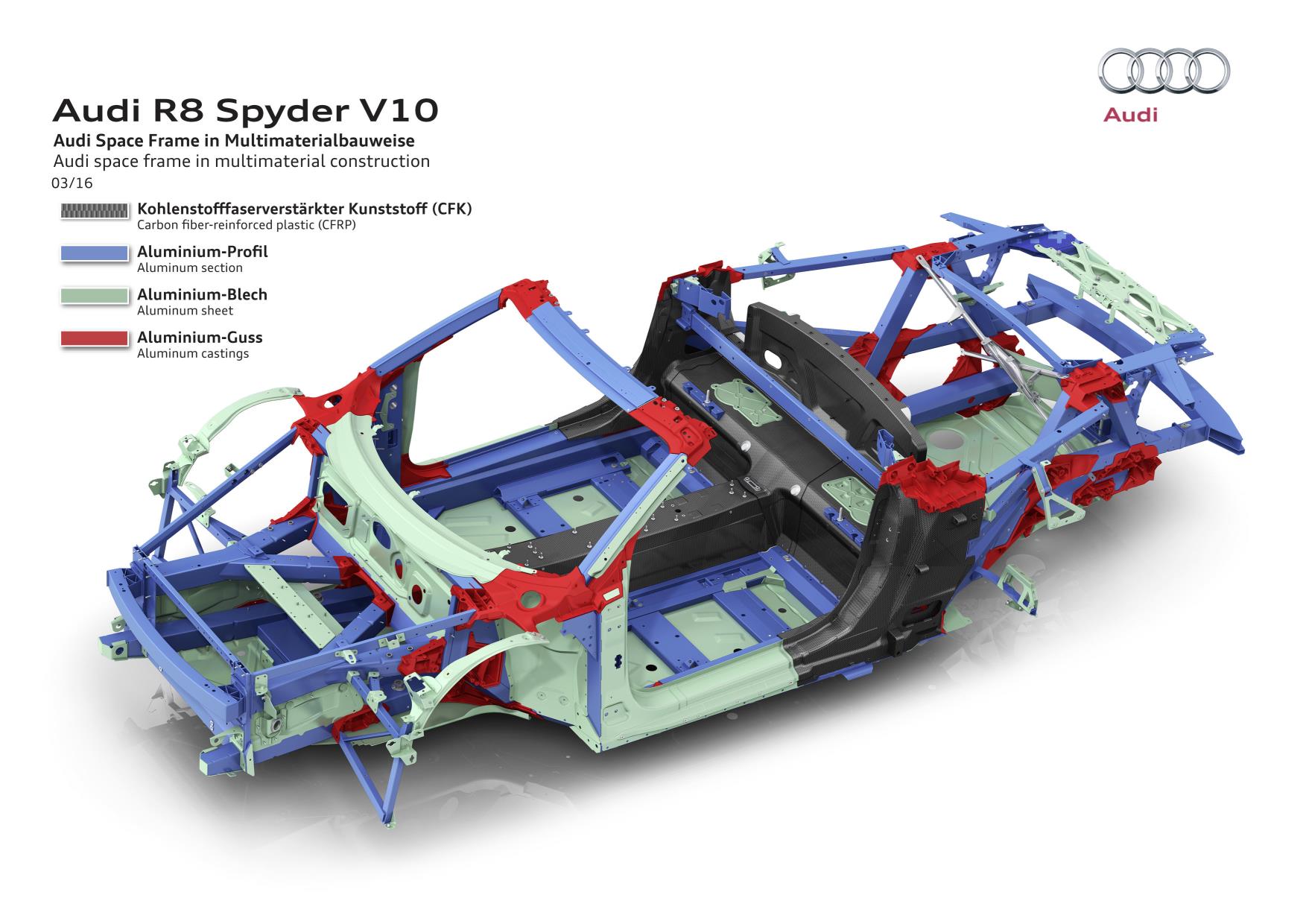
Los componentes de aluminio constituyen un 79,6 por ciento del ASF multimaterial. Desarrollado a partir de la versión Coupé, es la base sobre la que los ingenieros de Audi han incorporado refuerzos especÃficos, especialmente en los umbrales de las puertas, los pilares A y el marco del parabrisas. Unos sistemas de fabricación innovadores han reducido hasta en un diez por ciento el peso de algunos componentes individuales. En conjunto, el bastidor ASF del nuevo Audi R8 Spyder pesa sólo 208 kg y, además, su rigidez torsional es un 50 por ciento mayor que la del modelo anterior, registrando valores excelentes en acústica y en seguridad en caso de impacto. La parte inferior tiene una cubierta lisa que mejora la aerodinámica y, en la trasera, un gran difusor incrementa el apoyo aerodinámico; dos soluciones más tomadas directamente de la competición.
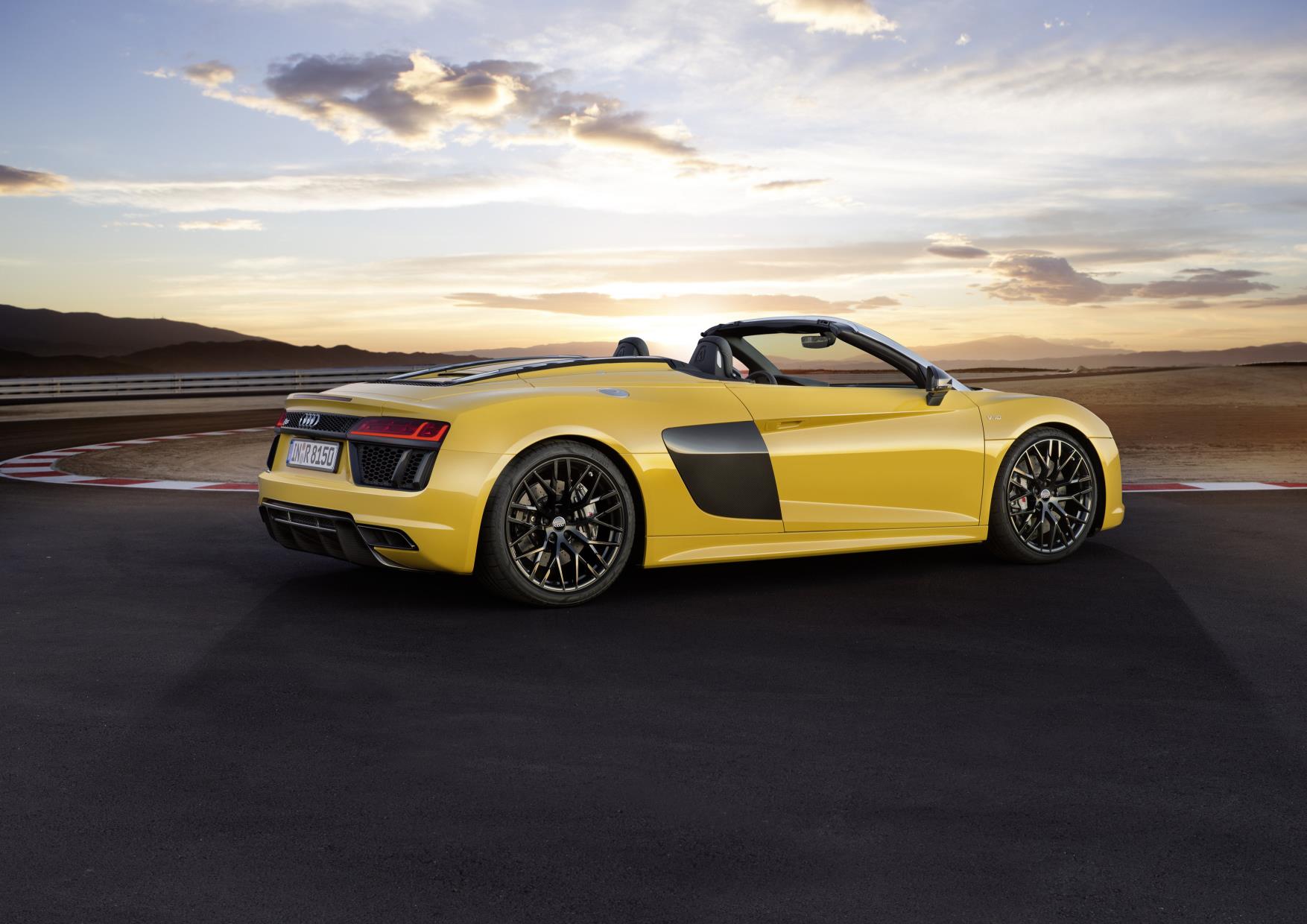
Con su respuesta precisa al acelerador, su capacidad de subir de régimen rápidamente hasta 7.800 rpm y un sonido impresionante, el motor de diez cilindros garantiza las emociones. Con una cilindrada de 5.204 cc, genera una potencia de 540 CV (397 kW) y un par de 540 Nm a 6.500 rpm. Además de inyección directa en la cámara de combustión (FSI) el V10 también tiene inyección en el colector de admisión (MPI). El resultado son unas prestaciones cautivadoras: el nuevo Audi R8 Spyder V10 acelera de 0 hasta 100 km/h en 3,6 segundos y hasta 200 km/h en 11,8 segundos. Si el conductor continúa acelerando, la aguja del velocÃmetro sólo se para cuando llega a 318 km/h. El rugido del V10 se vuelve más profundo y apasionante a medida que sube de régimen. Las aletas en el escape son de serie; el escape deportivo opcional con salidas acabadas en color negro brillante da otro tono al sonido.
Comparado con el modelo anterior, el consumo medio NEDC es un 10 por ciento menor, gracias a tecnologÃas como la desconexión de cilindros COD (cylinder on demand), el sistema de inyección doble o el modo de marcha por inercia en la caja de cambios S tronic de siete velocidades con doble embrague. Con este último sistema, cuando el conductor levanta el pie del acelerador a una velocidad superior a 55 km/h, el motor se desacopla de la transmisión y el nuevo Audi R8 Spyder avanza entonces por inercia. El consumo medio es de 11,7 l/100 km, que supone unas emisiones de 277 g/km de CO2.
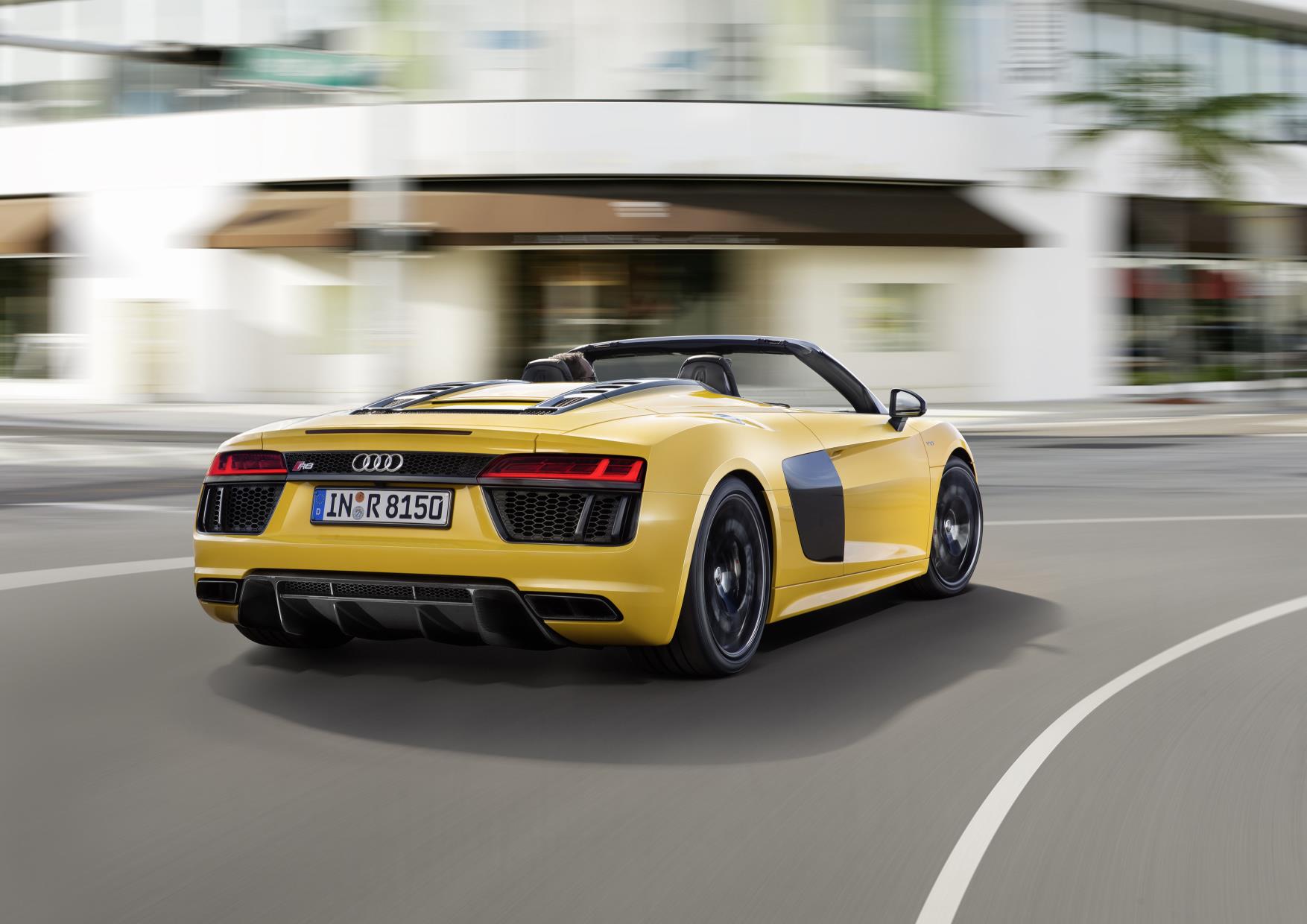
El sistema de propulsión quattro combina tres módulos de tecnologÃa punta: la caja de cambios de siete velocidades S tronic, colocada tras el motor, cambia de marcha de forma extremadamente rápida gracias al doble embrague. Para distribuir libremente el par del V10 entre los dos ejes hay un embrague multidisco accionado electrohidráulicamente en el eje delantero, con control electrónico y un sistema de refrigeración por agua. Un diferencial autoblocante mecánico en el eje trasero es una de las claves de las reacciones deportivas en carretera. Sus valores de bloqueo están calculados para que trabaje conjuntamente con la tracción quattro.
La tracción quattro está integrada en el sistema de conducción dinámica Audi drive select, que permite al conductor elegir entre los modos básicos comfort, auto, dynamic e individual. En cada uno de ellos, este deportivo abierto de altas prestaciones muestra un carácter diferente, que comprende desde desplazamiento sin esfuerzo por autopista a un estilo con el que se disfruta en cada curva de un puerto de montaña. El sistema también interviene en la respuesta del acelerador, la dirección, la caja de cambios S tronic, la función de control de las aletas en las salidas de escape y el sistema de opcional de amortiguación adaptativa Audi magnetic ride.
El manejo del coche se vuelve aún más preciso con el volante de cuero performance, que hace su debut en el R8 Spyder. Añade tres programas de conducción más: seco, mojado y nieve. Debido a que cada modo tiene unos parámetros de rozamiento especÃficos, el conductor puede adaptar individualmente su Audi R8 Spyder a las condiciones predominantes de la carretera durante el viaje. Además de los módulos técnicos mencionados, el control de estabilidad ESC también influye en la respuesta de estos modos.
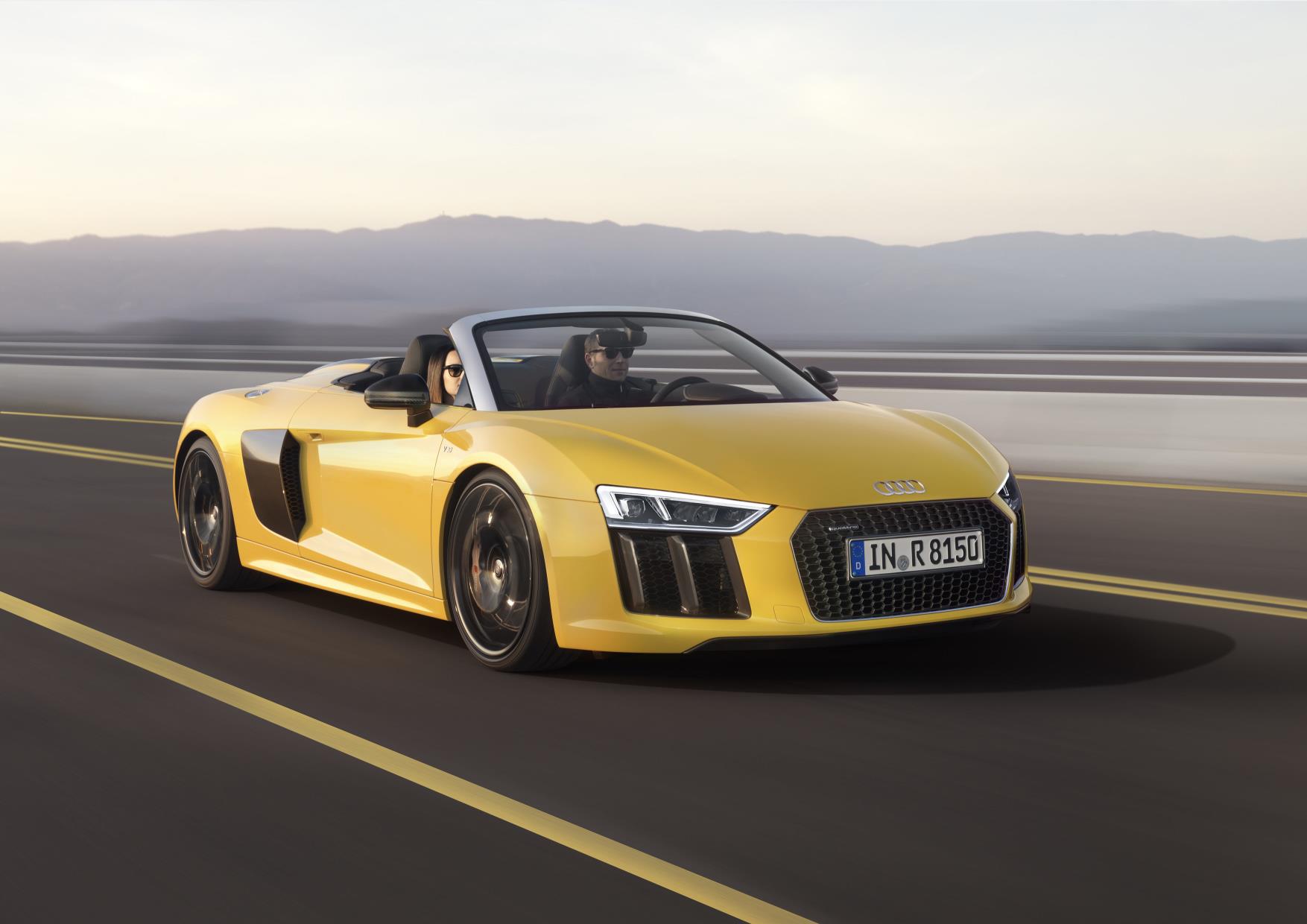
La estabilidad del R8 Spyder es decididamente dinámica, entre otros factores, por la posición central y baja del motor, conseguida gracias al sistema de lubricación por cárter seco. Las ruedas están guiadas por brazos ligeros de aluminio, una caracterÃstica que revela su ADN de competición. La dirección asistida electromecánica proporciona un contacto con la carretera excelente debido a su respuesta sutilmente diferenciada. Como alternativa, está disponible la dirección dinámica que cambia la desmultiplicación en función de la velocidad y adapta el par de giro. El resultado es un tacto de dirección aún más preciso y un mayor confort de marcha.
Audi suministra el nuevo R8 Spyder con llantas de 19 pulgadas y neumáticos diferentes en los dos ejes: 245/35 en el delantero y 295/35 en el trasero. Existe la opción de llantas de 20 pulgadas con neumáticos de medida 245/30 delante y 305/30 detrás. El eficaz equipo de frenos de este deportivo abierto incluye pinzas de ocho pistones en las ruedas delanteras y de cuatro en las traseras. En las cuatro hay grandes discos ventilados y perforados con forma lobulada. Como equipamiento opcional, Audi también puede suministrar los ligeros y duraderos discos cerámicos reforzados con fibra de carbono, un material capaz de soportar cargas especialmente grandes.
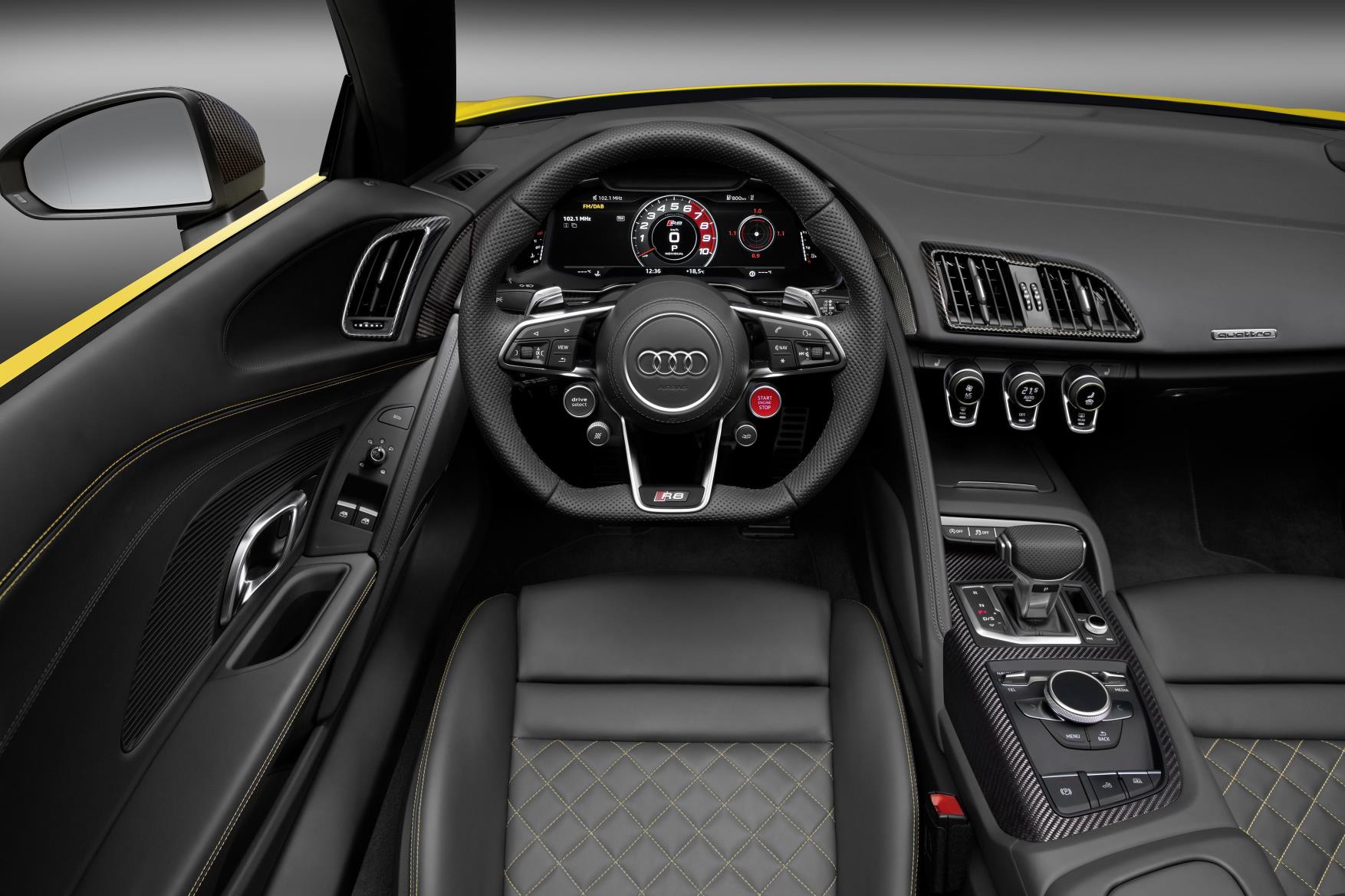
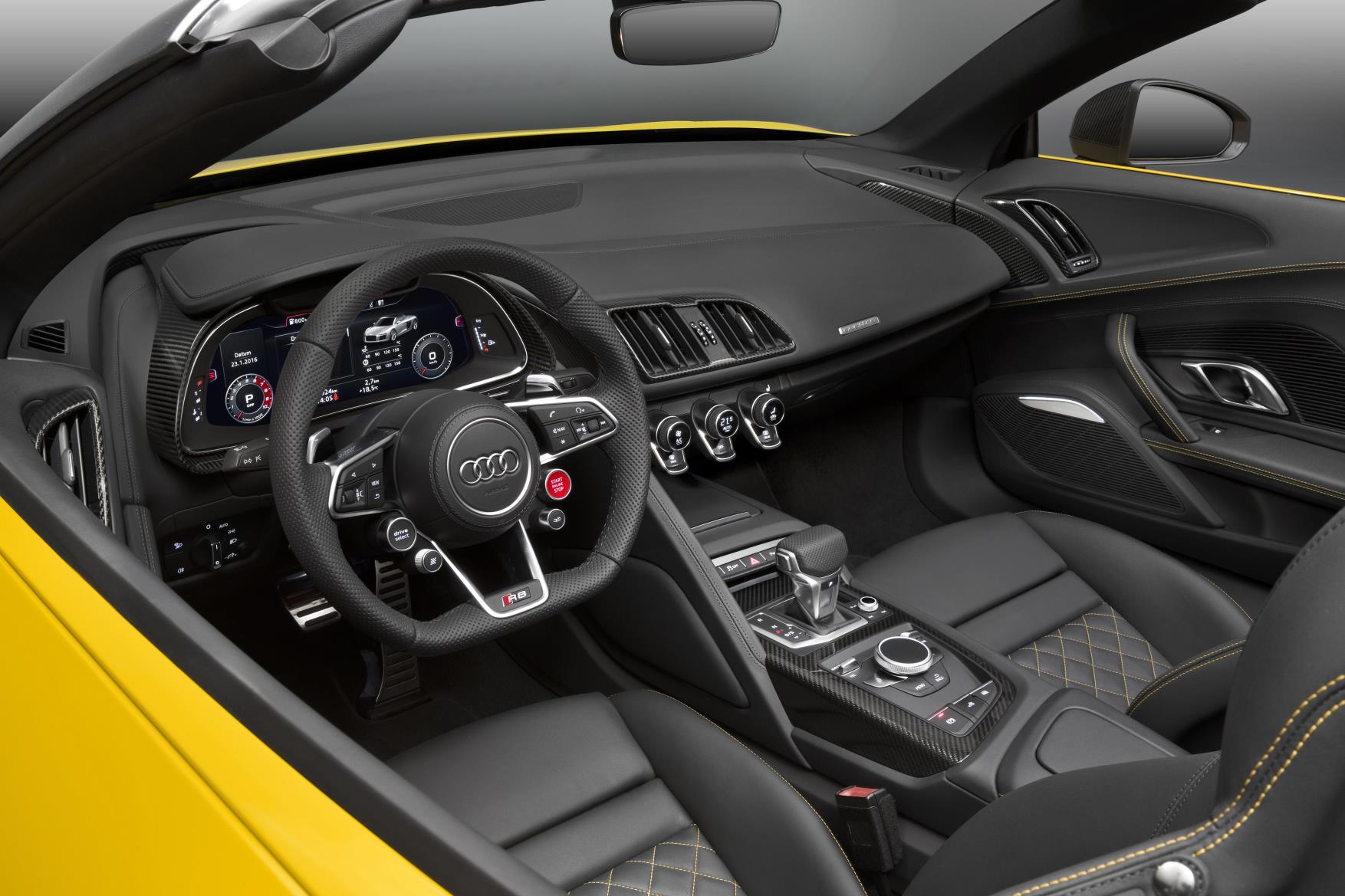
El concepto de manejo del nuevo Audi R8 Spyder V10 está orientado coherentemente hacia el conductor, como en un coche de carreras. El conductor puede controlar todas las funciones importantes desde el nuevo volante de cuero sport o performance. Sus manos permanecen en el volante para que pueda concentrarse completamente en la carretera. Entre las funciones de serie están los botones satélite para arrancar y parar el motor y para los modos de conducción del sistema Audi drive select. El volante de cuero performance viene con dos controles satélite adicionales, uno para el modo performance y el otro para el control de las aletas de escape.
El Audi virtual cockpit de serie presenta la información detallada en un monitor de 12,3 pulgadas con gráficos 3D de alta resolución. El conductor puede elegir entre tres pantallas: la vista clásica, la vista de infotainment y la vista performance. Los más exigentes que conduzcan en circuito apreciarán especialmente esta última porque proporciona datos de par, potencia, temperatura de aceite, de neumáticos, tiempos por vuelta y fuerzas G. Los gráficos alrededor del velocÃmetro y del tacómetro se pueden personalizar según las preferencias.
El sistema MMI Navegación plus con MMI touch es parte del equipamiento de serie del Audi R8 Spyder. Como en un smartphone, se controla mediante jerarquÃas planas, incluida una función de búsqueda de texto. Las funciones del vehÃculo se pueden controlar desde el volante, con el MMI o mediante el control por voz. Este último es especialmente cómodo y con un funcionamiento de gran calidad gracias a los tres pequeños micrófonos en los cinturones; forma parte del equipo de serie en el R8 Spyder.
El complemento perfecto al MMI Navegación plus es el módulo Audi connect, que lleva a este biplaza abierto hasta Internet a través de una conexión 4G y le da acceso a toda una gama de servicios. Estos abarcan desde navegación con Google Earth y Google Street View a media streaming e información de tráfico en tiempo real. Como opción, también está disponible la carga por inducción de un mediante el Audi phone box. El Audi R8 Spyder es el primer modelo en el que el contenido del teléfono móvil seleccionado se puede ver directamente en el Audi virtual cockpit mediante el Audi Smartphone interface. Desde mediados de este año, esta opción estará disponible también para el R8 Coupé.
Un aspecto destacable para los amantes del sonido es el equipo Bang & Olufsen Sound System, de serie, con 13 altavoces, incluido el nuevo altavoz en el reposacabezas. Hay dos de ellos en cada asiento, colocados al nivel del oÃdo del conductor y el pasajero; destaca por su excelente sonido y bajo peso.
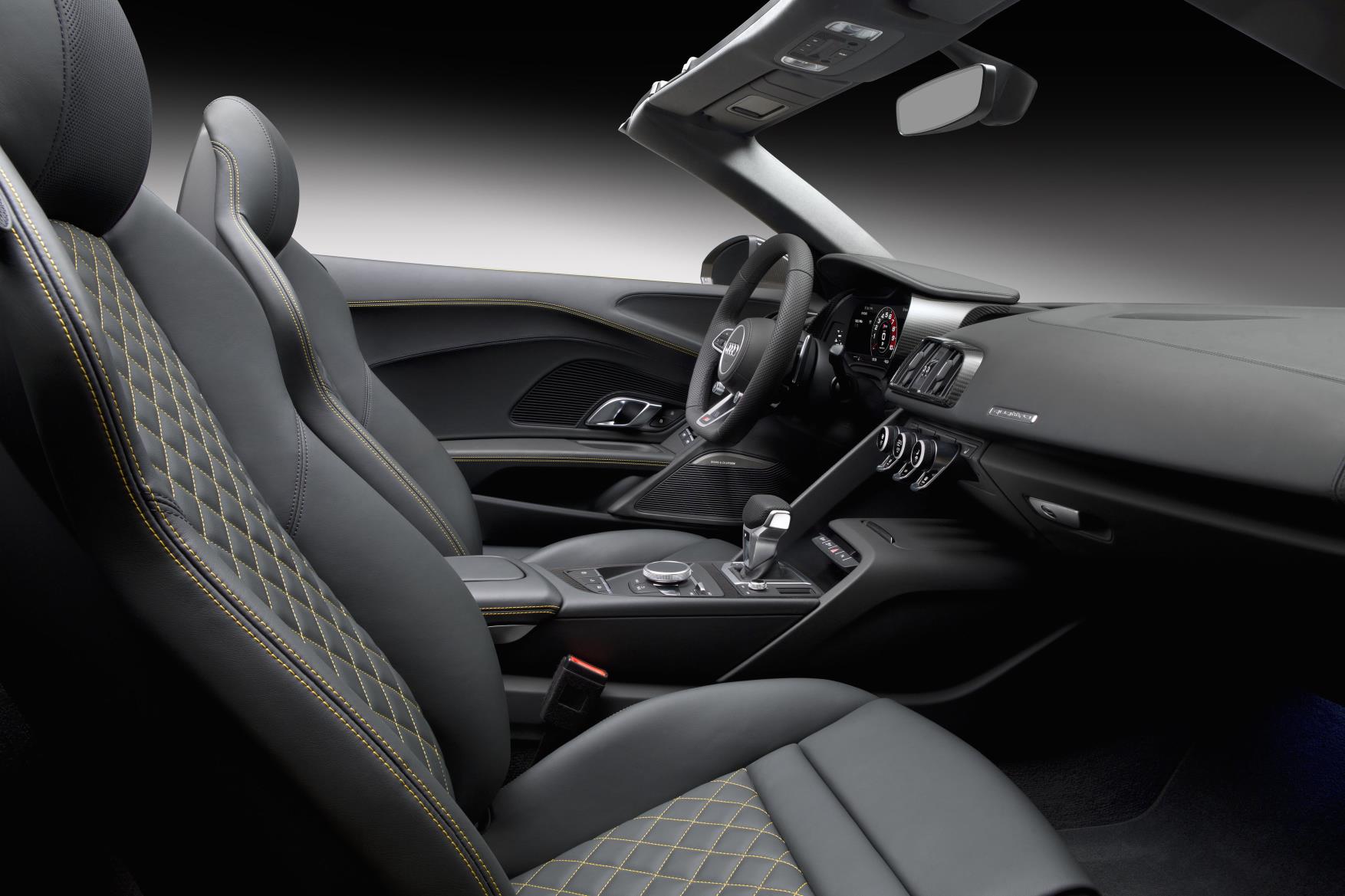
El Audi R8 Spyder V10 está fabricado casi enteramente a mano en la planta creada especÃficamente “Audi Böllinger Höfeâ€, cerca de Neckarsulm, donde quattro GmbH demuestra su experiencia en la producción de pequeñas series. Las operaciones de fabricación comprenden un amplio espectro para adecuarse a los requerimientos especiales de los clientes. Los asientos deportivos para el conductor y el pasajero son equipo de serie, tapizados con un exquisito cuero con un patrón de diamantes como opción. Alternativamente, Audi puede proporcionar asientos de tipo bacquet para un soporte lateral aún mayor.
Los elementos como el spoiler delantero, el difusor o los nuevos y llamativos sideblades, se pueden personalizar –por ejemplo– con fibra de carbono en acabado brillante. Otro elemento visual que también es una innovación técnica y proporciona una diferenciación visual es el alumbrado opcional láser de Audi, con una tira anodizada azul. Hay un nuevo color especÃfico para el Audi R8 Spyder, marrón Argus mate, junto con otros diez acabados de pintura.
Las preventas del nuevo Audi R8 Spyder comenzarán en el verano de 2016. El lanzamiento en el mercado está previsto para finales del verano de 2016.



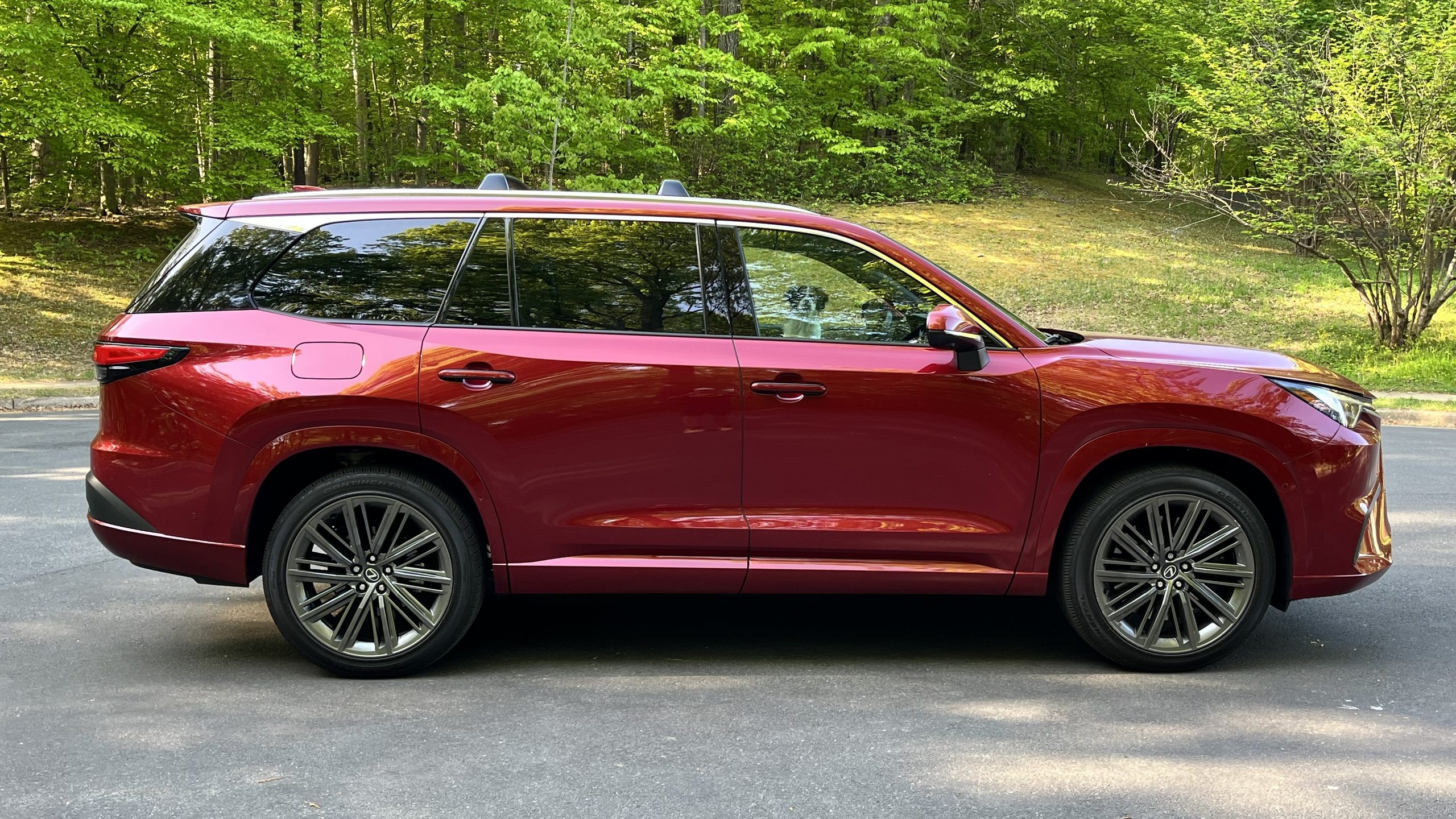
What if your next luxury SUV could drive on electricity during the week and take the entire family on a road trip without worrying about charging stations?
That’s the promise of the 2026 Lexus TX 550h+ Luxury AWD, a three-row plug-in hybrid that combines 404 horsepower, an estimated 33 miles of all-electric range, and the comfort expected from a flagship Lexus family SUV.
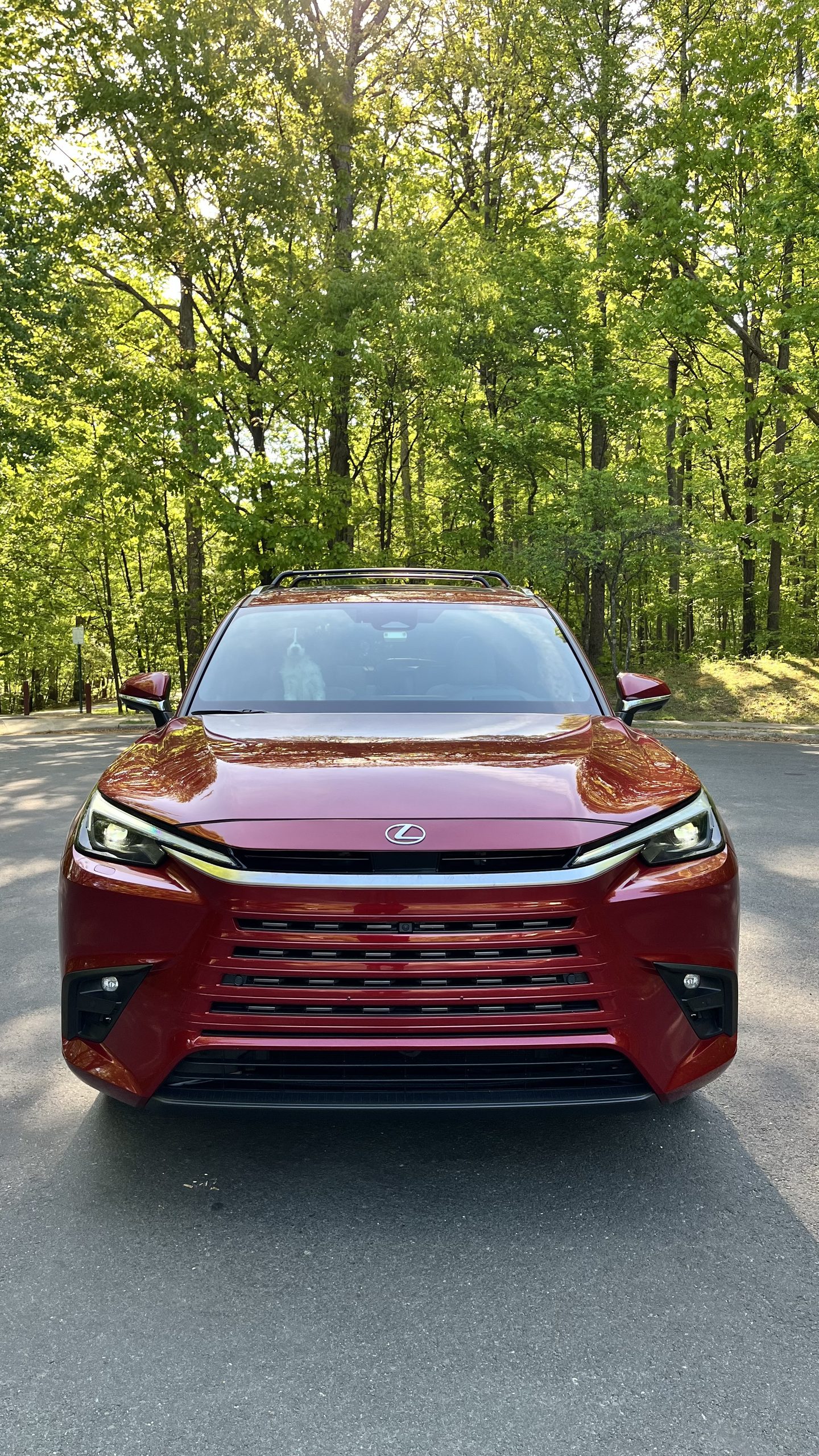
In a market where electrification often forces buyers to reconsider how they drive, the TX 550h+ offers a refreshingly practical alternative. It doesn’t ask families to change their routines. Instead, it adapts to them.
With a featured price of $85,639, however, this level of flexibility doesn’t come cheap. The question is whether Lexus has created one of the smartest luxury family SUVs available or simply one of the most expensive ways to save gasoline.
33 Electric Miles That Could Change Your Daily Routine
The most important number in the TX 550h+ isn’t its horsepower. It’s 33.
That’s the estimated distance this Lexus can travel using electricity alone before relying on its gasoline engine.
For families with relatively short commutes, those miles could cover school drop-offs, grocery shopping, office trips, and afternoon activities without consuming gasoline. Charge at home overnight, and the next morning begins with another opportunity to drive electrically.
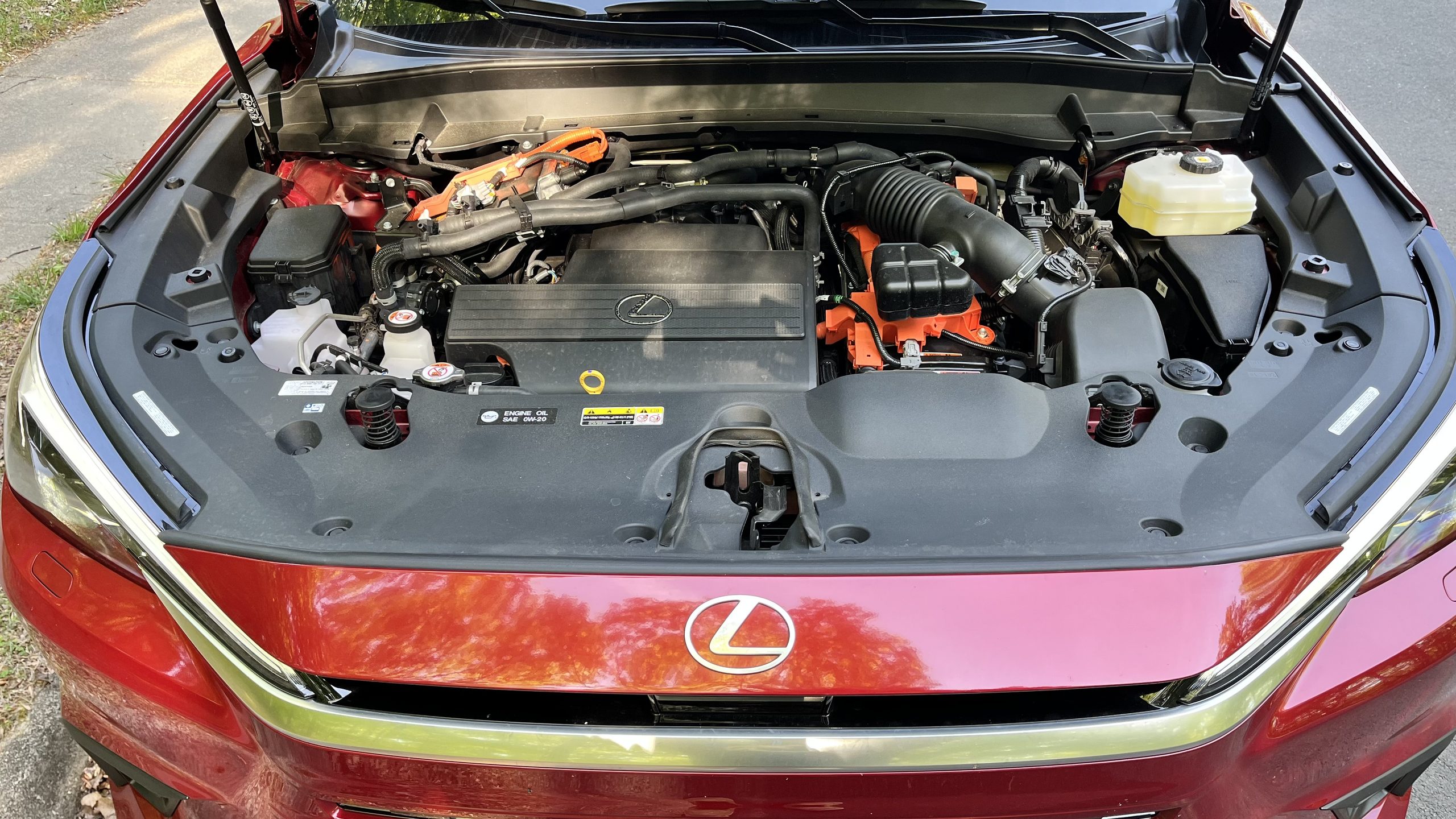
The system uses an 18.1-kWh lithium-ion battery that can be fully recharged in approximately three hours using a compatible 240-volt Level 2 charging setup under ideal conditions. A standard 120-volt household outlet is also supported, although charging takes considerably longer.
And when the battery’s usable electric range is depleted, the TX continues operating as a conventional hybrid, delivering an EPA-estimated 29 mpg combined. Its overall efficiency rating reaches 76 MPGe when accounting for electricity and gasoline use.
The result is a vehicle that makes electrification convenient rather than complicated.
Of course, 33 miles won’t cover every family’s daily driving, and colder temperatures, highway speeds, and climate-control demands can reduce electric range. But for households able to charge regularly, the potential to significantly reduce gasoline consumption is substantial.
A 404-Horsepower V6 With Nothing to Prove
Luxury doesn’t always need to announce itself.
Under the hood, Lexus combines a naturally aspirated 3.5-liter V6 with electric motors, an electronically controlled continuously variable transmission, and DIRECT4 all-wheel drive.
Together, they produce 404 horsepower—enough for Lexus to estimate a 0–60 mph time of approximately 5.9 seconds.
That’s impressive performance for a three-row SUV weighing roughly 5,400 pounds.
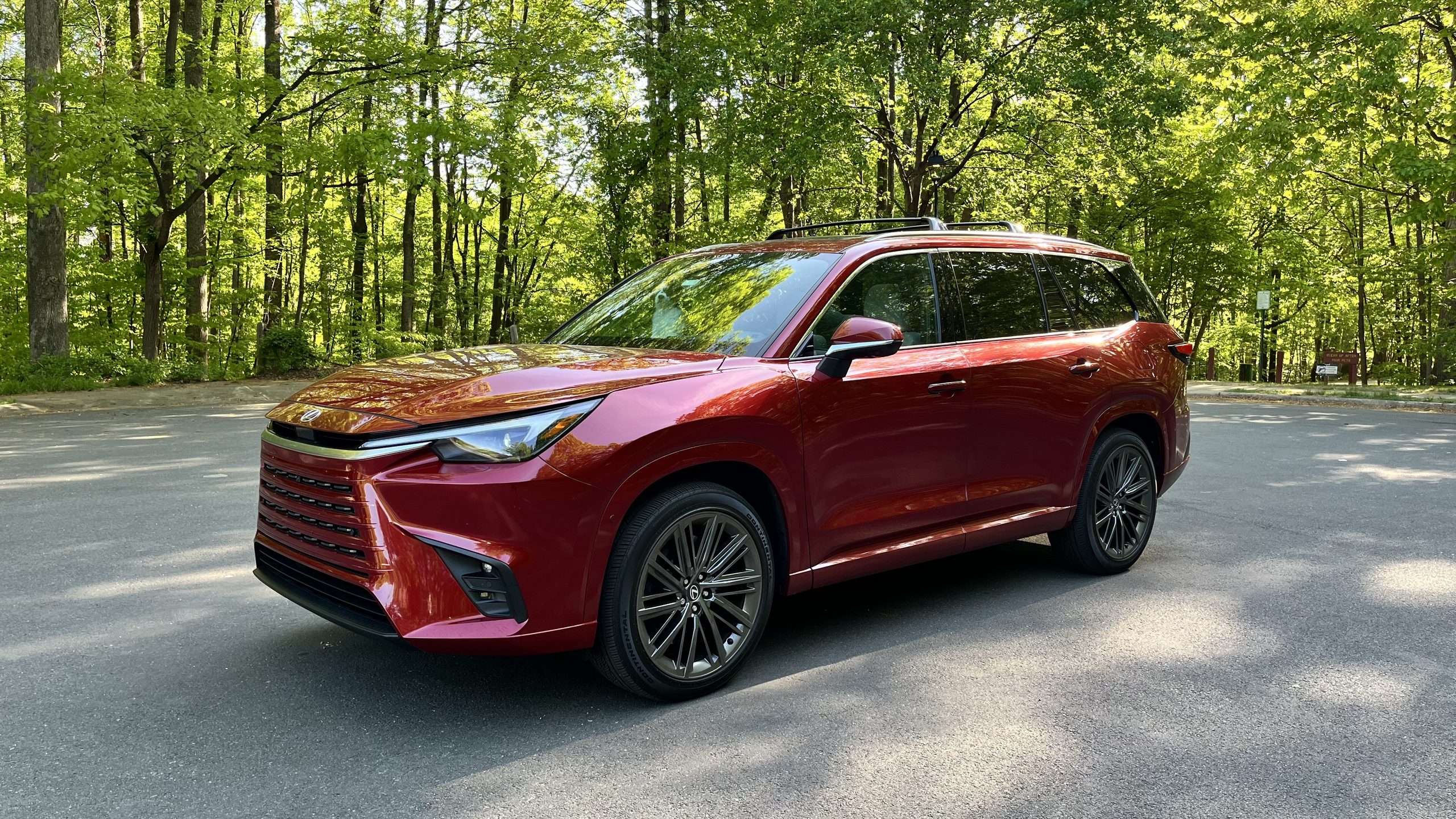
Yet the TX 550h+ isn’t designed to compete with aggressively tuned performance SUVs. Its mission is different: delivering confident acceleration, smooth power delivery, and the kind of effortless capability that makes everyday driving feel less demanding.
The V6 also gives the TX a distinctive position within the Lexus lineup. While the TX 500h uses a turbocharged four-cylinder hybrid powertrain, the plug-in model pairs electrification with the character of a six-cylinder engine.
The electronically controlled transmission prioritizes smoothness and efficiency rather than traditional gear changes. Drivers expecting the sharper responses of a sport-oriented SUV may find its character less engaging.
But that’s not necessarily a weakness.
For a vehicle designed around family comfort, refinement matters more than drama.
Inside, Lexus Understands What Families Actually Need
The TX 550h+ makes one of its strongest arguments the moment passengers settle into the cabin.
Rather than treating the third row as an afterthought, Lexus designed the TX around genuine three-row usability.
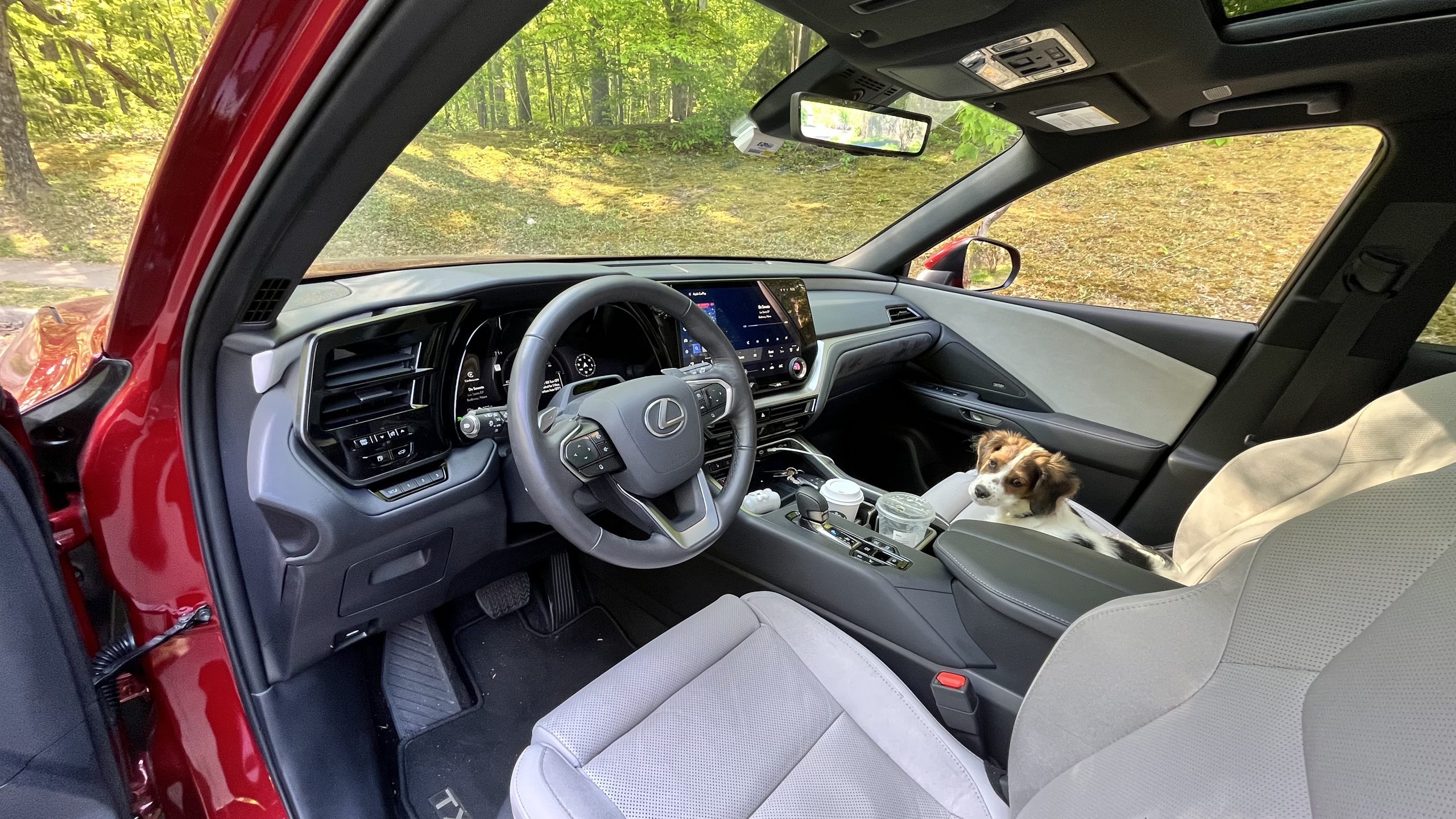
The six-passenger configuration features second-row captain’s chairs, creating a more spacious environment while allowing easier access to the rear seats. Available comfort amenities include heated and ventilated second-row seating and sunshades.
Up front, semi-aniline leather upholstery, heated and ventilated seats, and a heated steering wheel reinforce the premium atmosphere.
Technology is equally prominent. A 14-inch Lexus Interface touchscreen anchors the dashboard, complemented by a 12.3-inch digital instrument display, wireless smartphone integration, and available premium features such as a head-up display and Mark Levinson audio system.
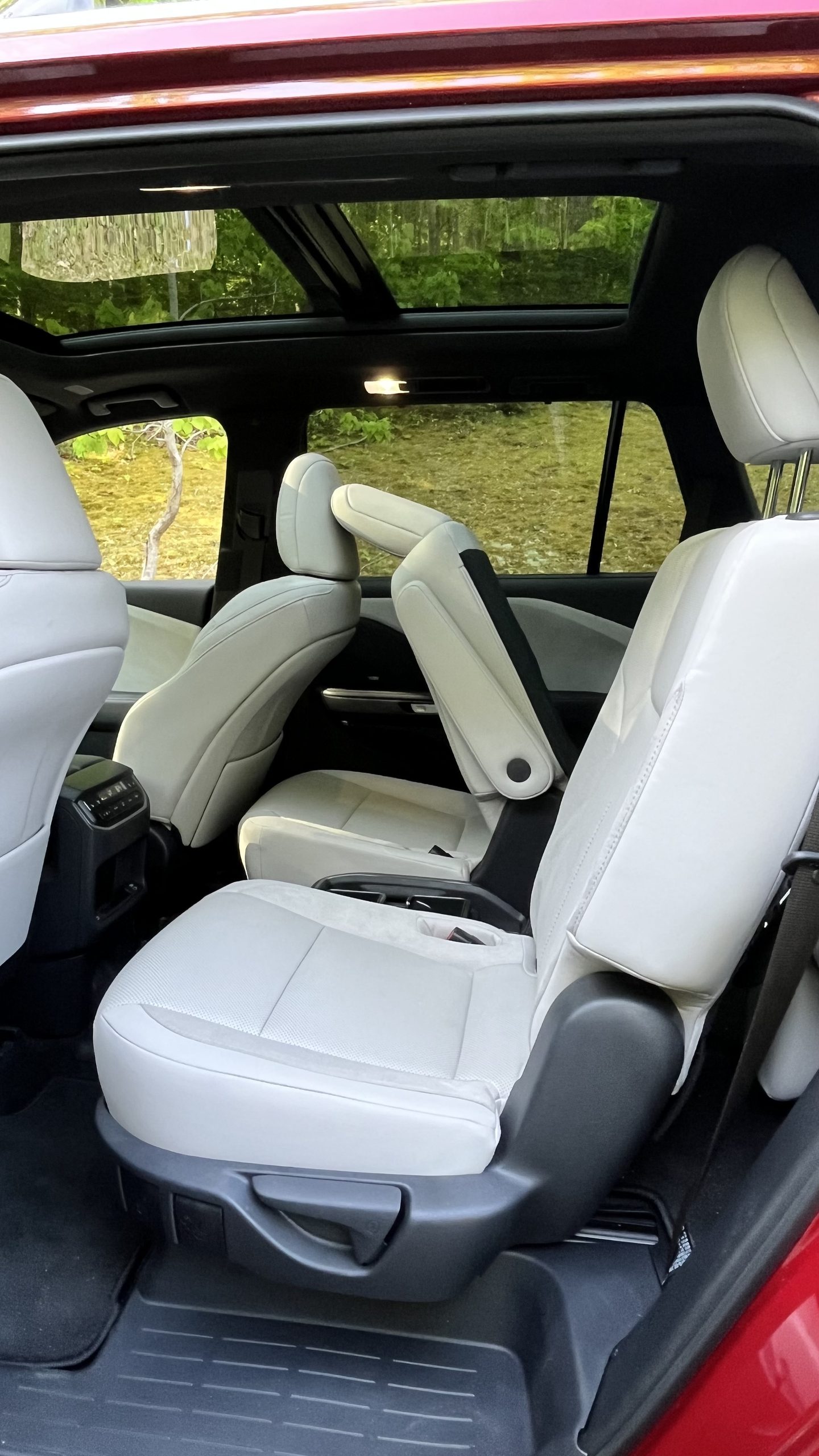
But the TX’s greatest luxury may be its practicality.
With 20.2 cubic feet of cargo space behind the third row and up to 97 cubic feet with the rear seating folded, it can transition from family transportation to a surprisingly capable cargo carrier.
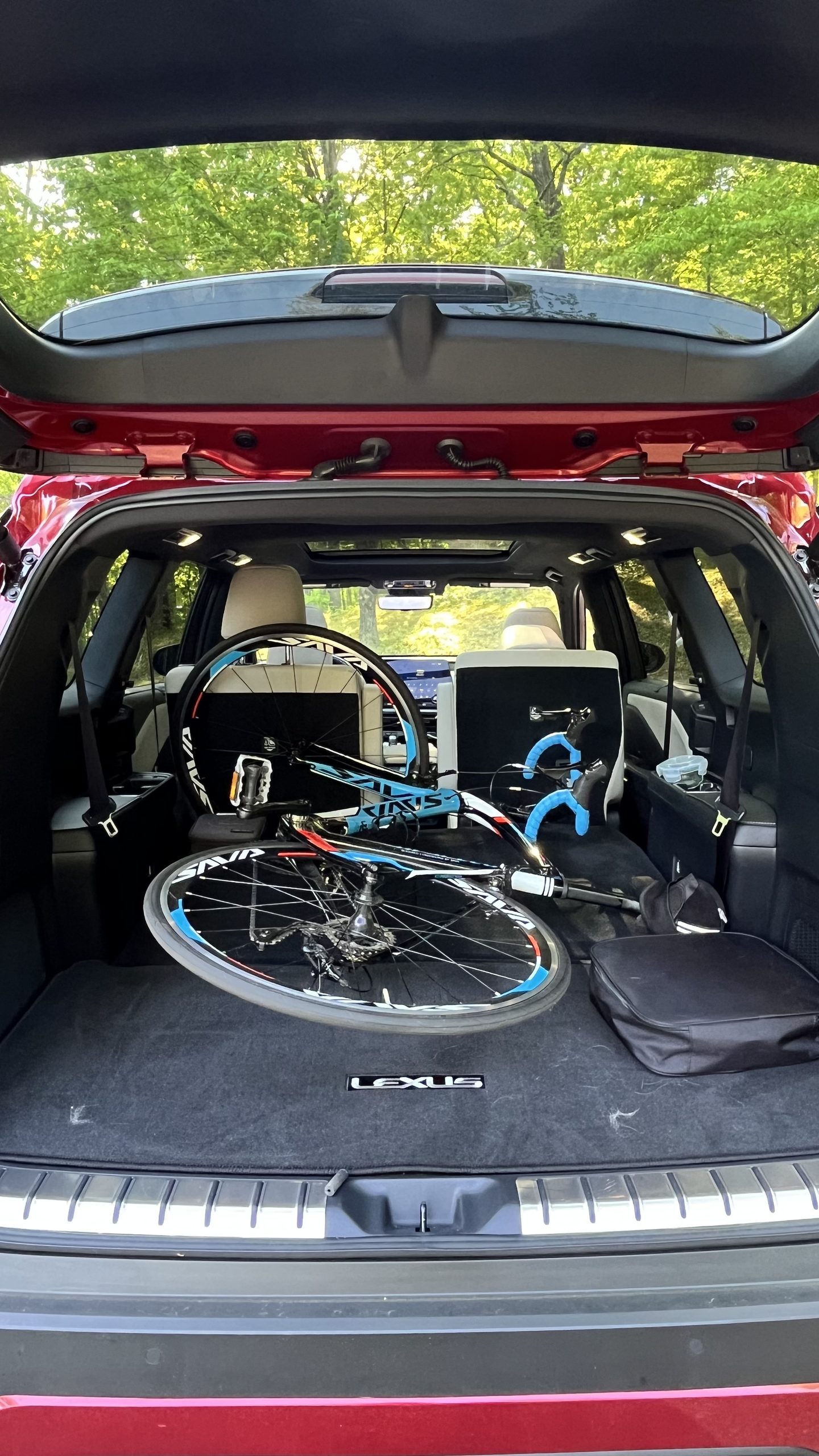
There are compromises. Six seats won’t satisfy families needing seven or eight passenger positions, and using all three rows naturally limits luggage capacity.
Still, Lexus has clearly prioritized the needs of passengers rather than simply maximizing the number of seats.
Technology That Makes a Large SUV Easier to Live With
At more than 203 inches long, the TX is a substantial vehicle. Maneuvering something this size through crowded parking lots and narrow urban spaces can become part of the ownership experience.
Lexus addresses that challenge with an extensive collection of driver-assistance and convenience technologies.
Lexus Safety System+ 3.0 comes standard, providing features designed to assist with collision avoidance, lane keeping, and highway driving.
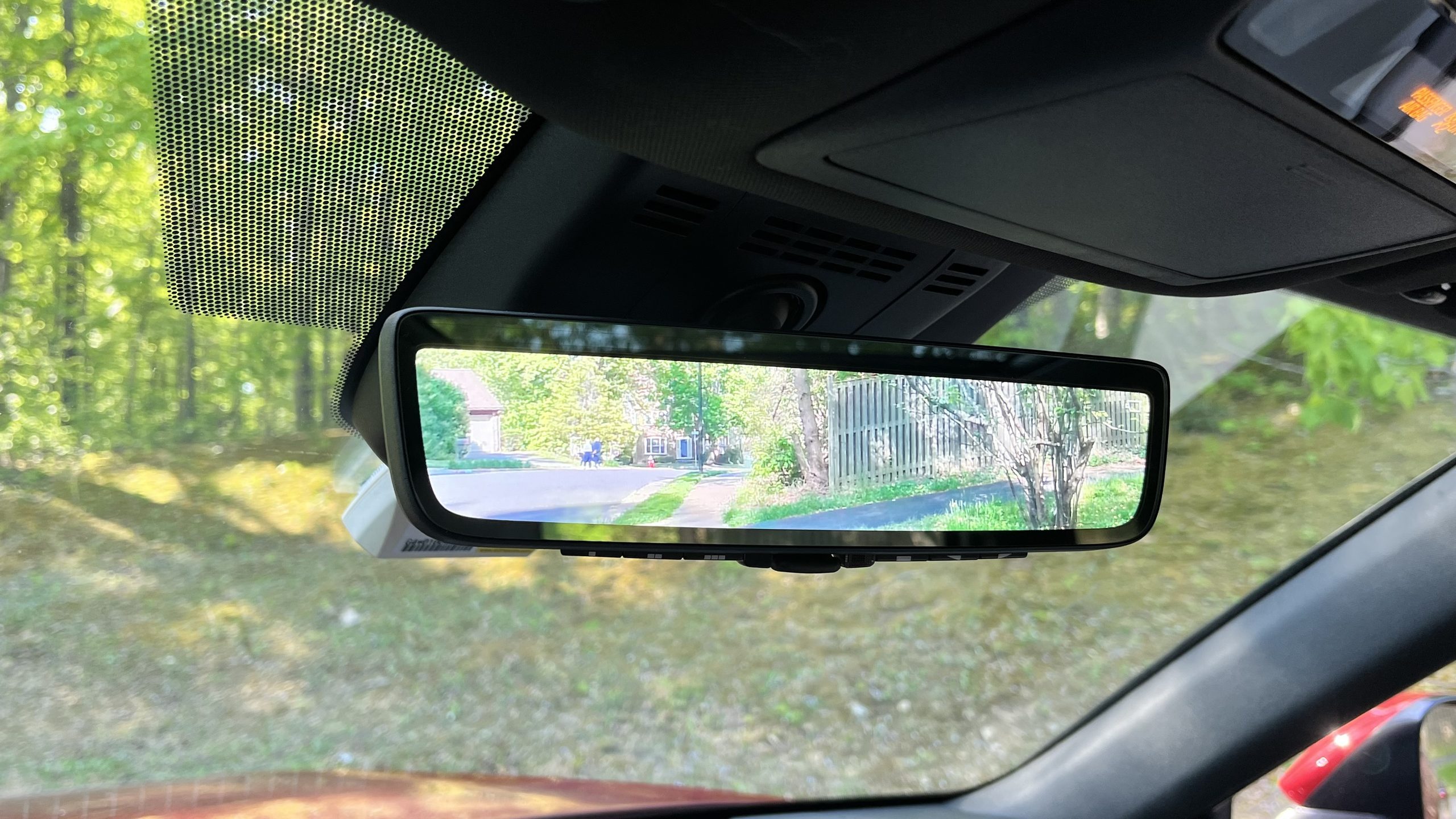
Depending on equipment, additional systems such as a panoramic view monitor, Traffic Jam Assist, and Advanced Park can make daily driving and parking less stressful.
These systems don’t replace an attentive driver, but they can reduce some of the effort associated with operating a large family SUV.
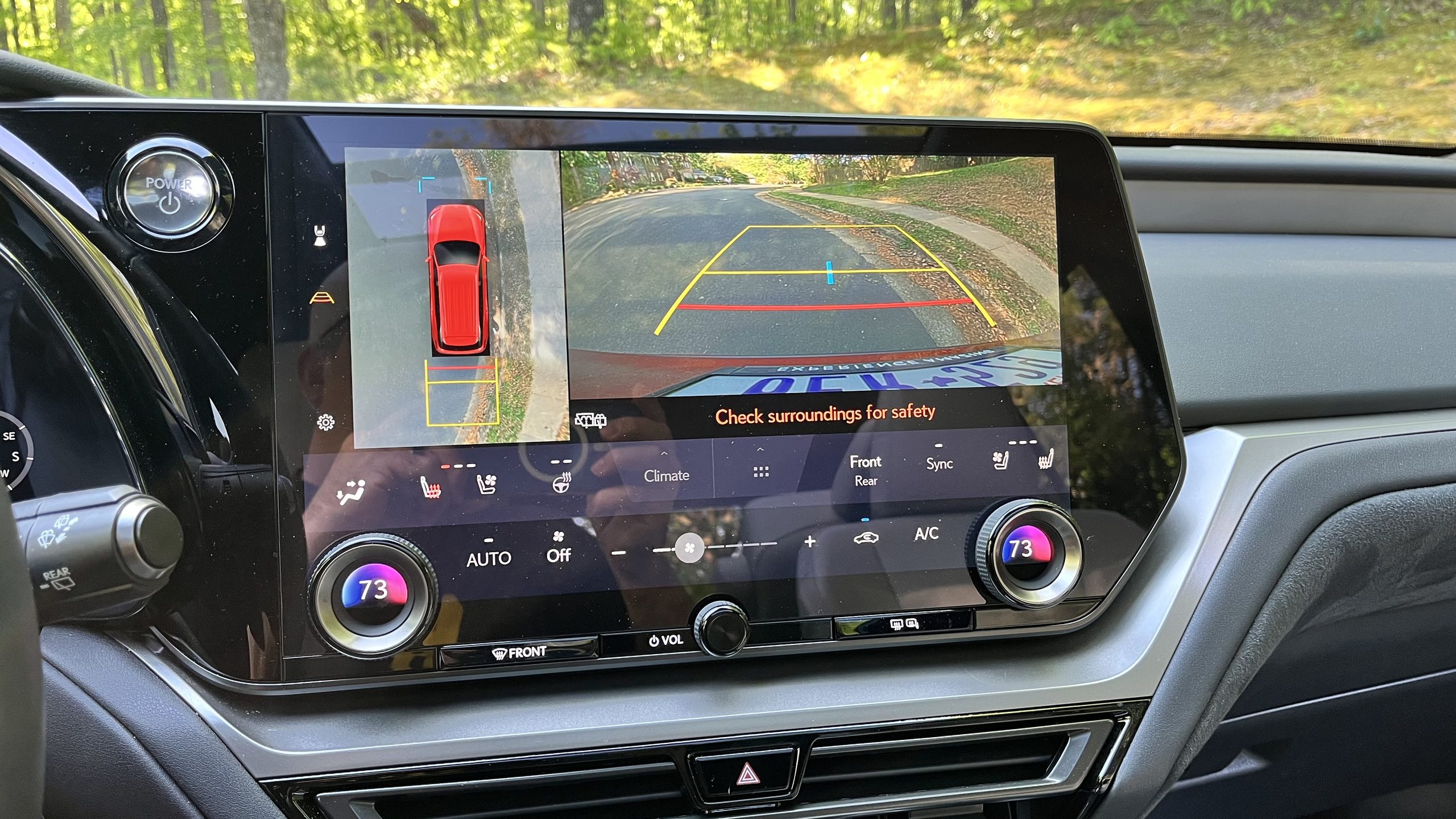
And that’s precisely where the TX makes sense: technology should make life easier, not more complicated.
Is an $85,639 Lexus Really Worth It?
This is where the conversation becomes more interesting.
The 2026 TX 550h+ Luxury AWD carried an announced starting MSRP of $81,060 including delivery, while the featured vehicle is priced at $85,639.
That’s a considerable investment, even in today’s luxury SUV market.
For comparison, Lexus also offers the TX 500h, a conventional hybrid producing 366 horsepower and delivering an estimated 27 mpg combined.
The TX 500h costs considerably less, making it an attractive alternative for drivers who don’t have convenient access to home charging.
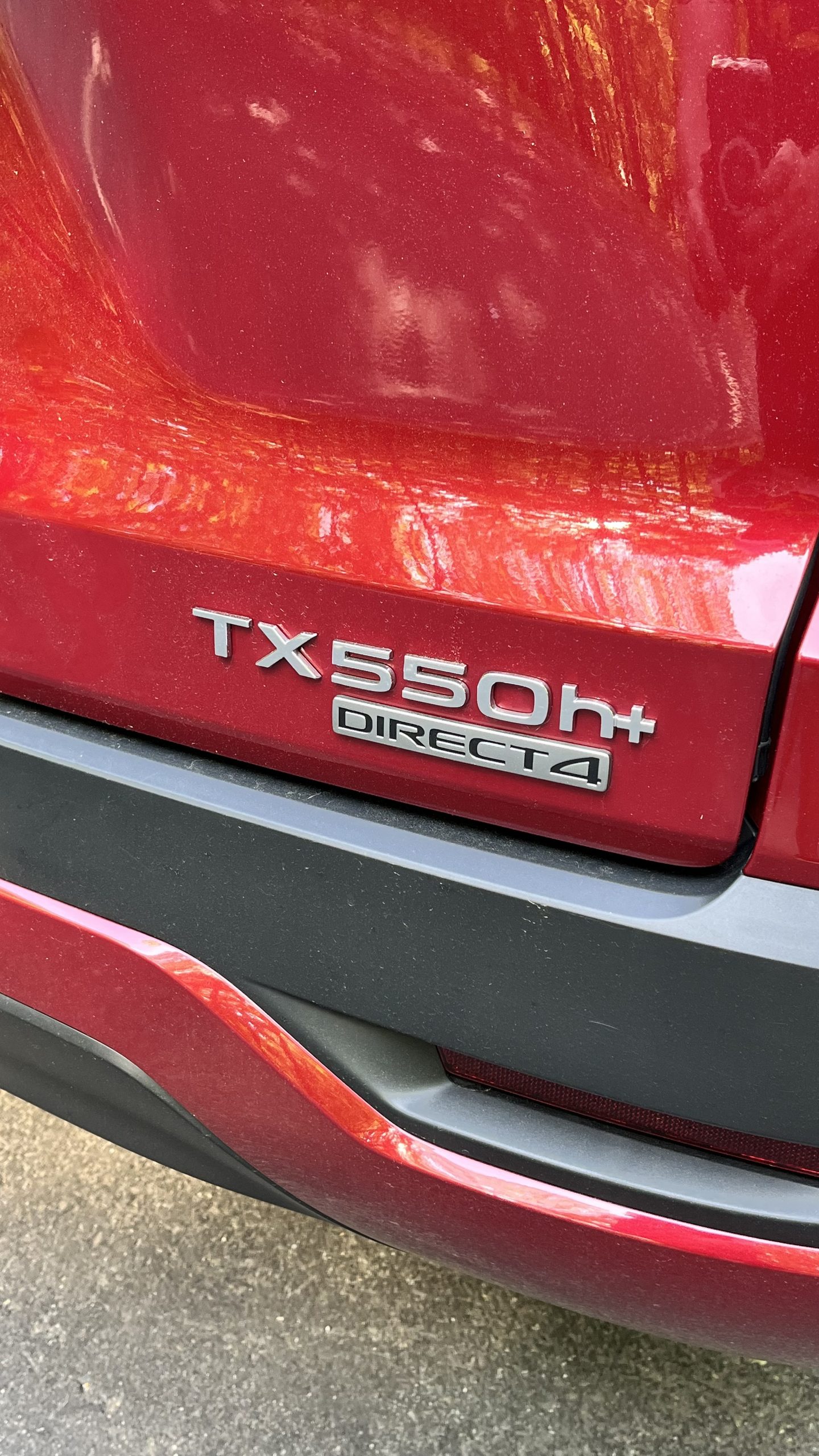
And that’s the important distinction.
The TX 550h+ doesn’t automatically become the more economical choice simply because it can run on electricity. Actual savings depend on electricity costs, gasoline prices, driving distances, charging habits, and the initial purchase-price difference.
Buyers who rarely plug in may struggle to justify the premium.
But for families who can recharge consistently, the appeal extends beyond fuel savings. There’s the convenience of electric driving around town, the flexibility of gasoline for longer journeys, and the ability to enjoy both without committing to a fully electric vehicle.
The TX 550h+ is less about finding the cheapest way to drive and more about finding a comfortable balance between two technologies.
One More Reason the 2026 Model Matters
There’s an unexpected twist to the TX 550h+ story.
Lexus has confirmed that the plug-in hybrid version will be discontinued for the 2027 model year.
That makes the 2026 TX 550h+ the final model-year opportunity to purchase this particular combination of V6 power, plug-in hybrid efficiency, and three-row Lexus luxury, subject to remaining inventory.
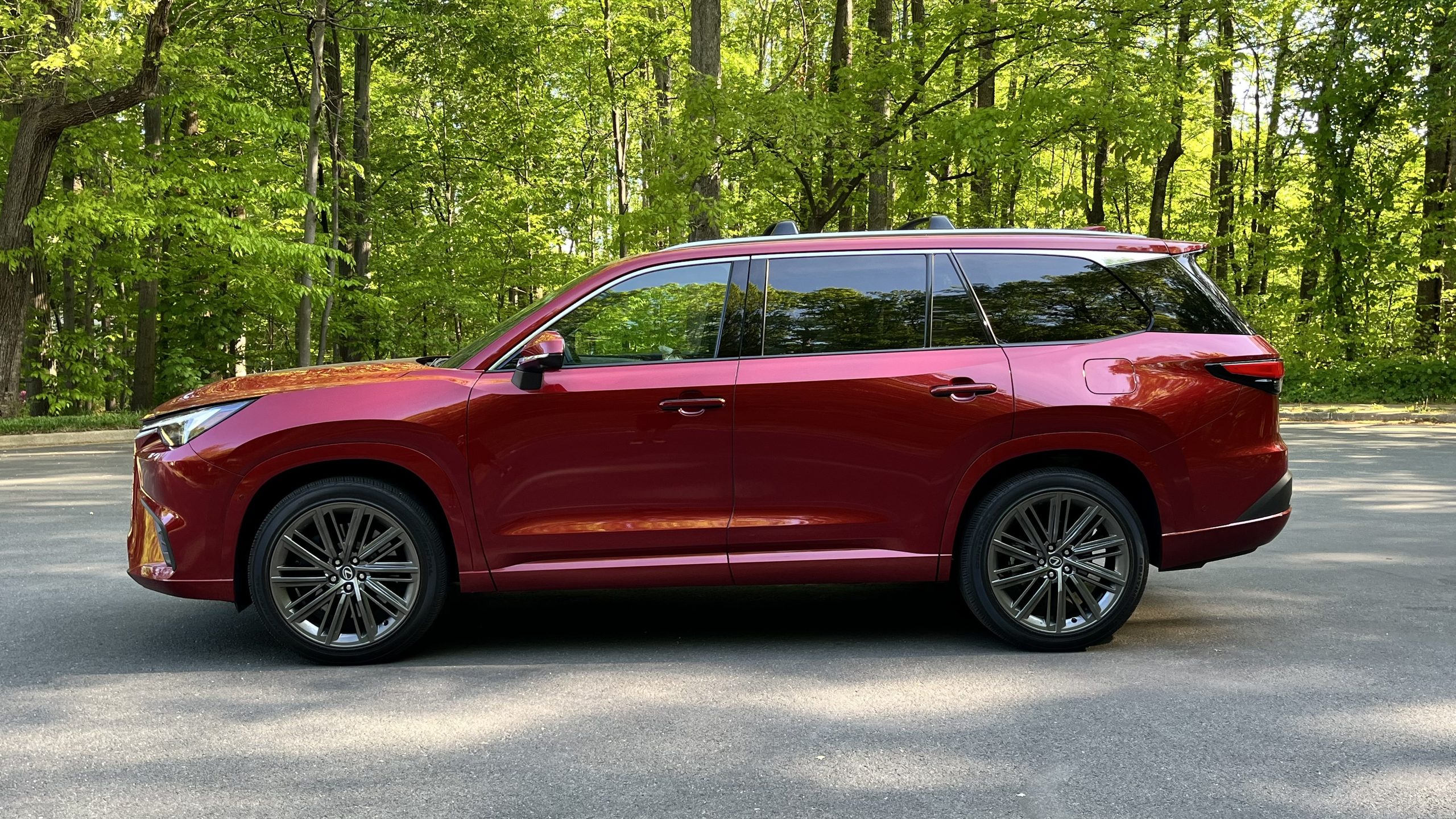
It also makes the vehicle more distinctive within the Lexus lineup, although discontinuation alone shouldn’t be interpreted as a guarantee of stronger resale value.
For buyers who specifically want a plug-in hybrid luxury SUV with a six-cylinder engine, the decision may now carry greater urgency.
The Carsfera Verdict: Luxury That Fits Real Life
The 2026 Lexus TX 550h+ doesn’t need dramatic styling, an aggressive exhaust note, or extraordinary acceleration figures to make its point.
Its appeal is more intelligent than that.
It offers the possibility of electric driving for everyday errands, the freedom of a gasoline-backed hybrid for longer journeys, and a spacious, beautifully equipped cabin designed around the people who matter most.
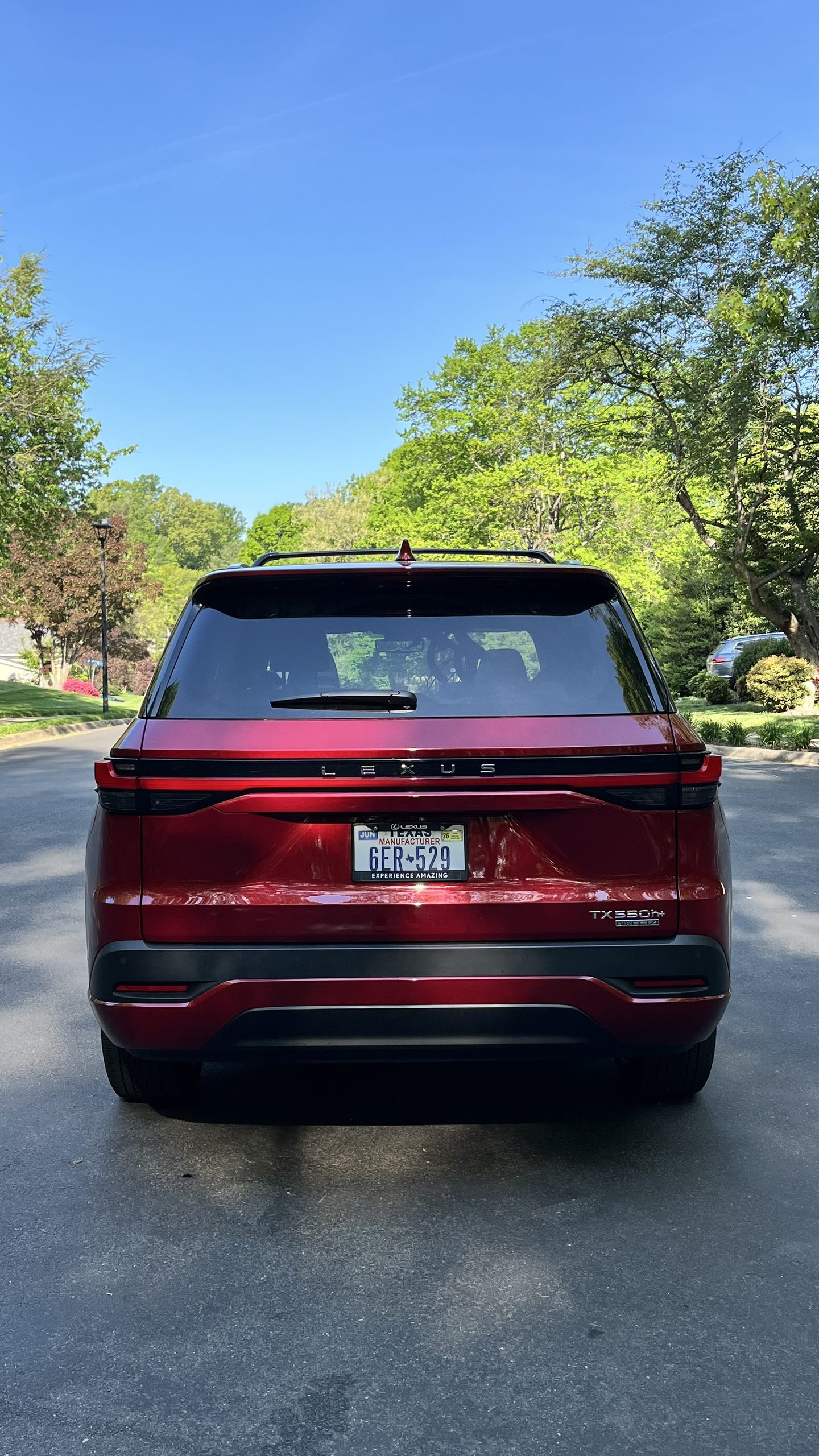
It’s not perfect. The price is substantial, the electric range is limited compared with a fully electric SUV, and buyers who cannot charge regularly may find better value elsewhere in the TX lineup.
But for the right household, those compromises may be surprisingly easy to accept.
The TX 550h+ represents a compelling vision of luxury: not simply having more power, more technology, or more expensive materials, but having a vehicle that asks less of you.
And perhaps that’s what modern family luxury should be about.
Would you spend $85,000 on a three-row Lexus that could handle much of your weekly driving on electricity? Or would you choose a conventional hybrid instead?
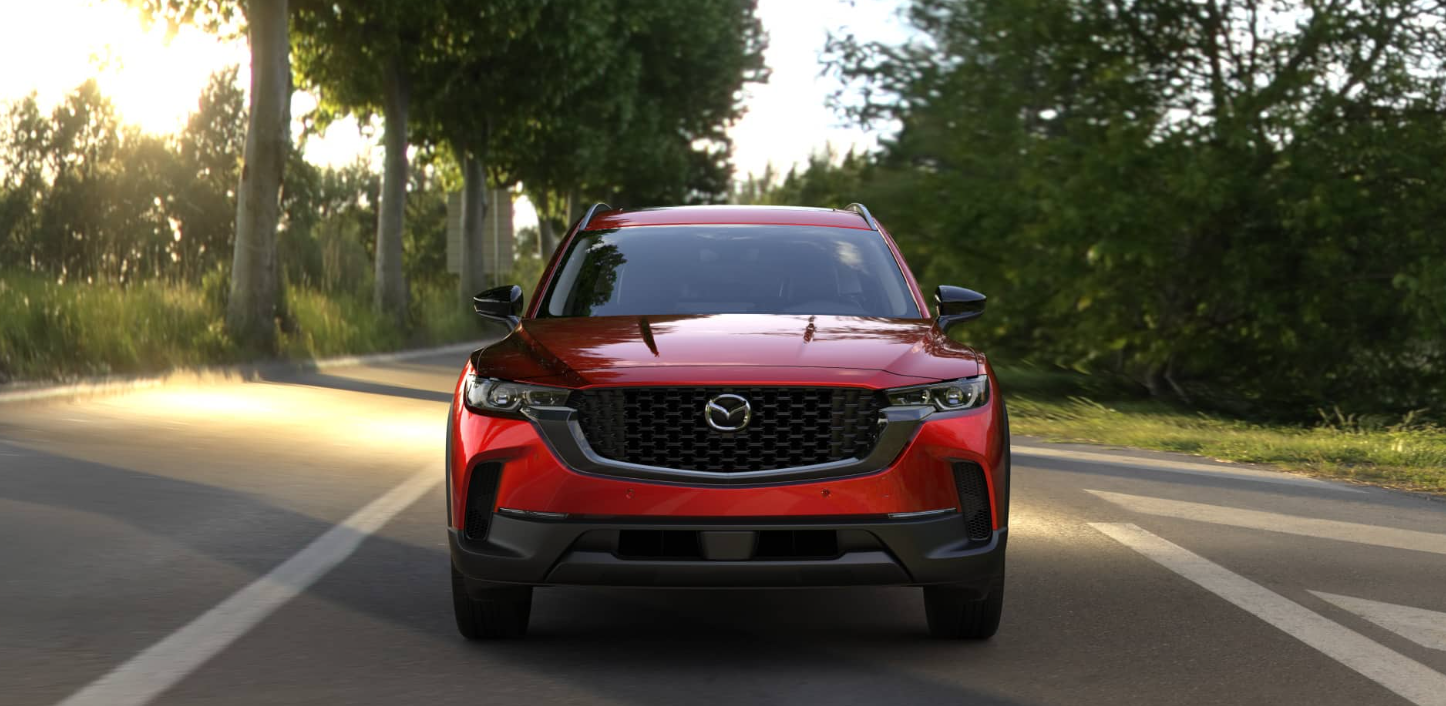
The compact SUV market is packed with practical choices. Most offer similar features, similar fuel economy, and similar levels of comfort. For many buyers, that’s enough.
Mazda has taken a different approach.
The 2026 Mazda CX-50 2.5 Turbo Premium Plus AWD isn’t trying to be just another crossover designed to blend into traffic. Instead, it targets drivers who want the practicality of an SUV without losing the engagement and confidence that make driving enjoyable in the first place.
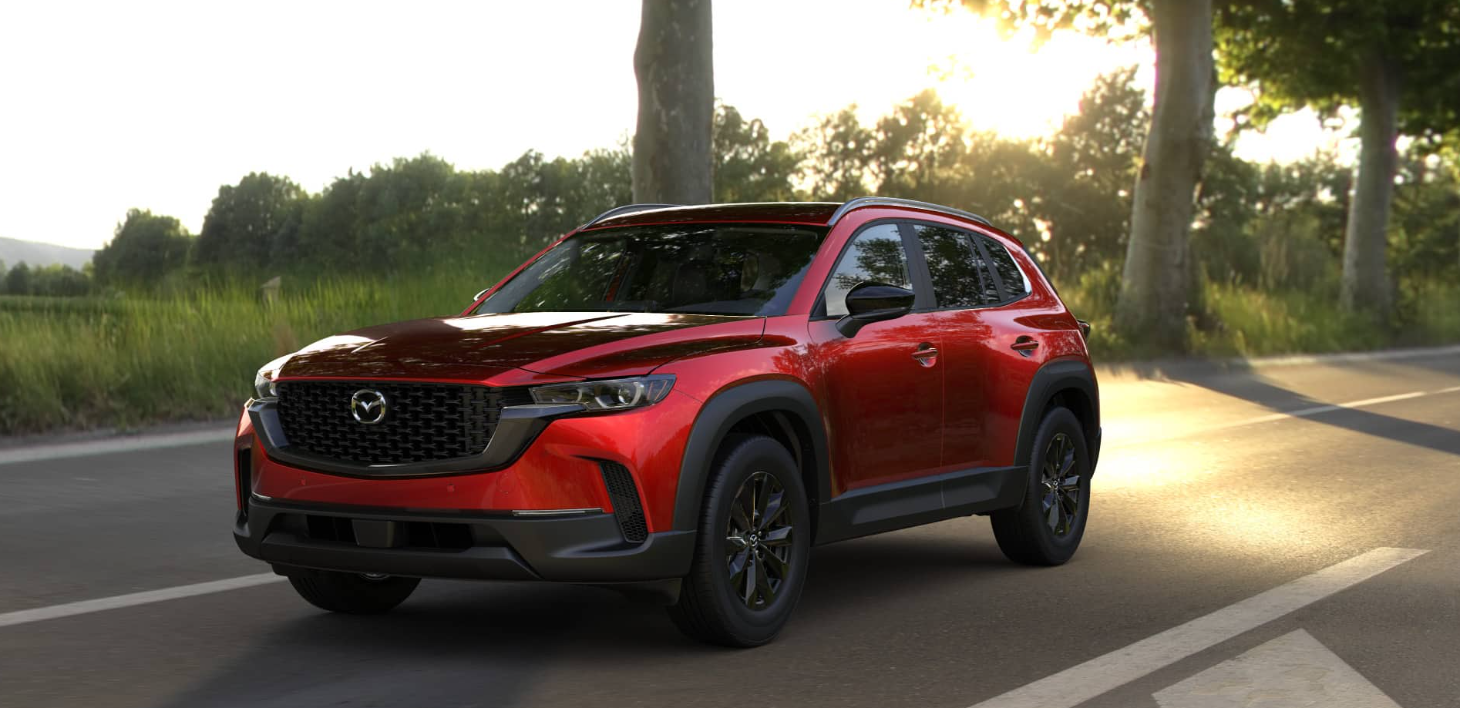
After spending time evaluating the CX-50 Turbo Premium Plus, it’s clear that Mazda continues to focus on something many competitors have largely abandoned: creating vehicles with genuine personality.
Refined
One look at the CX-50 explains why it stands out in crowded parking lots.
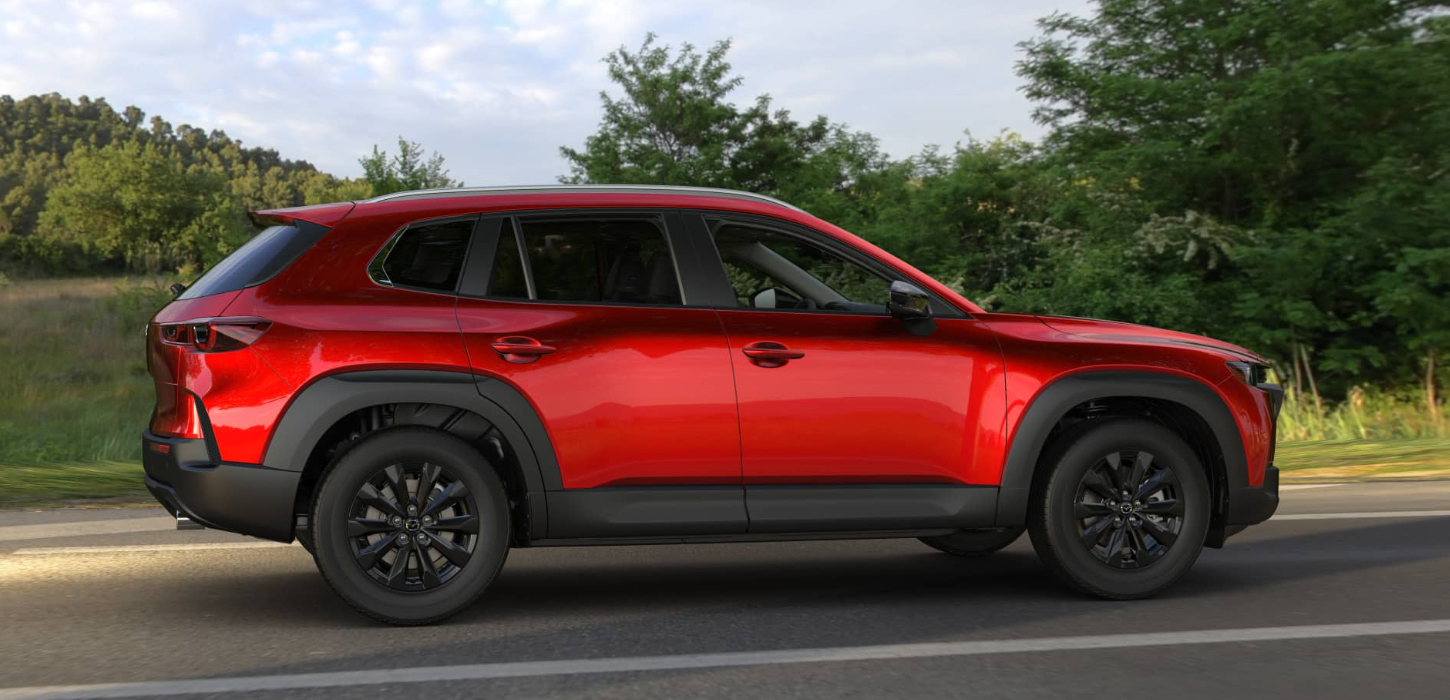
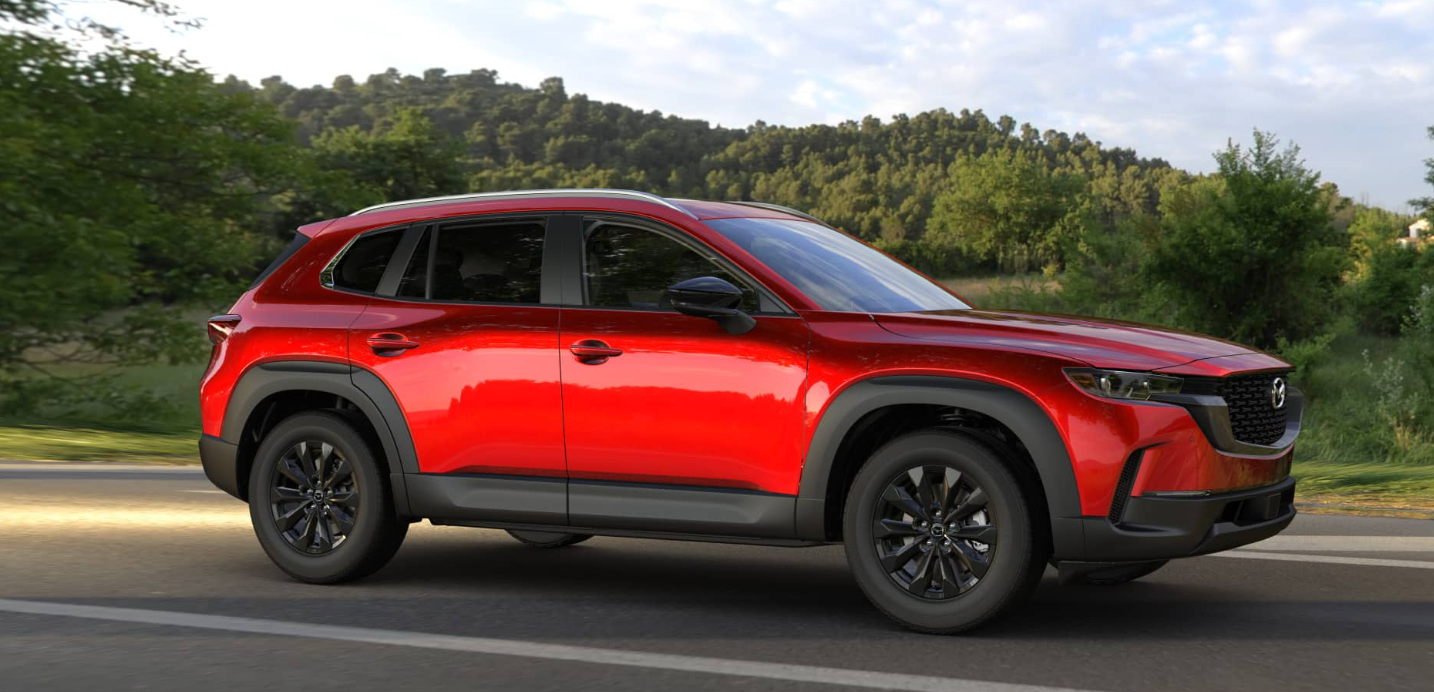
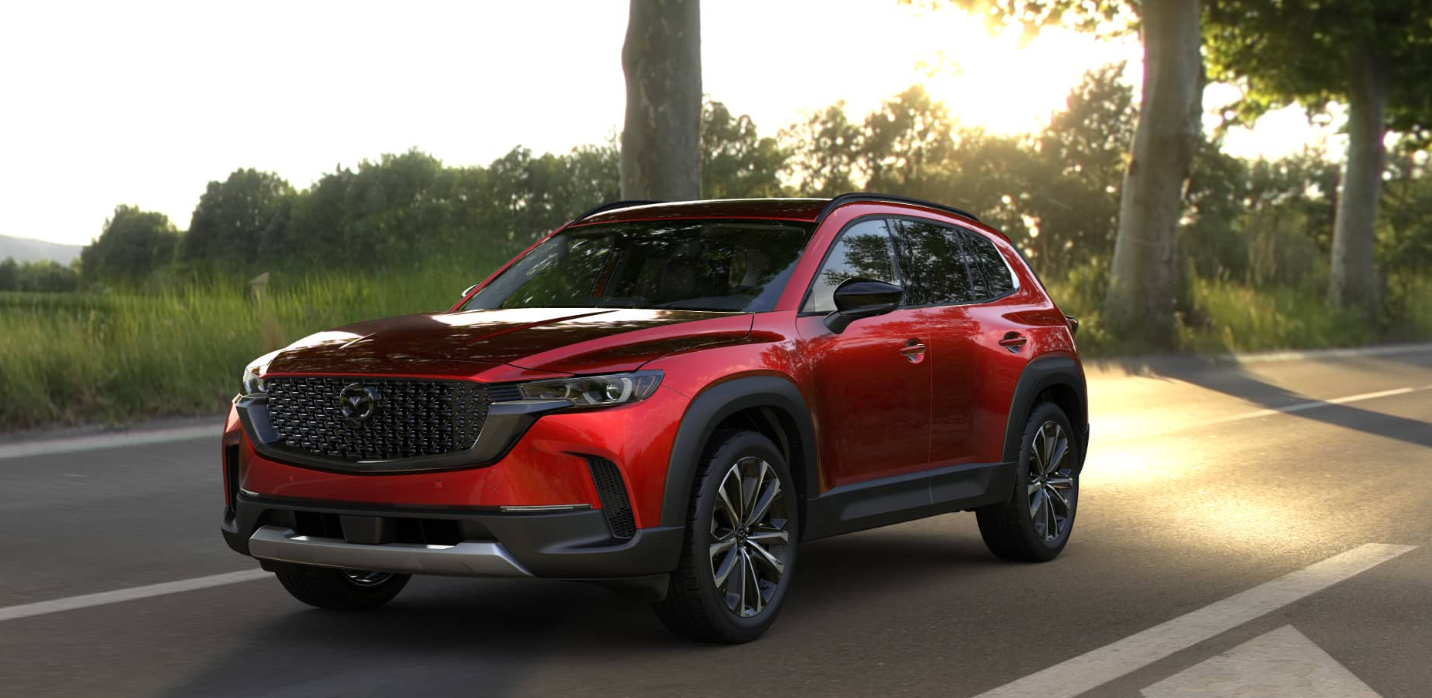
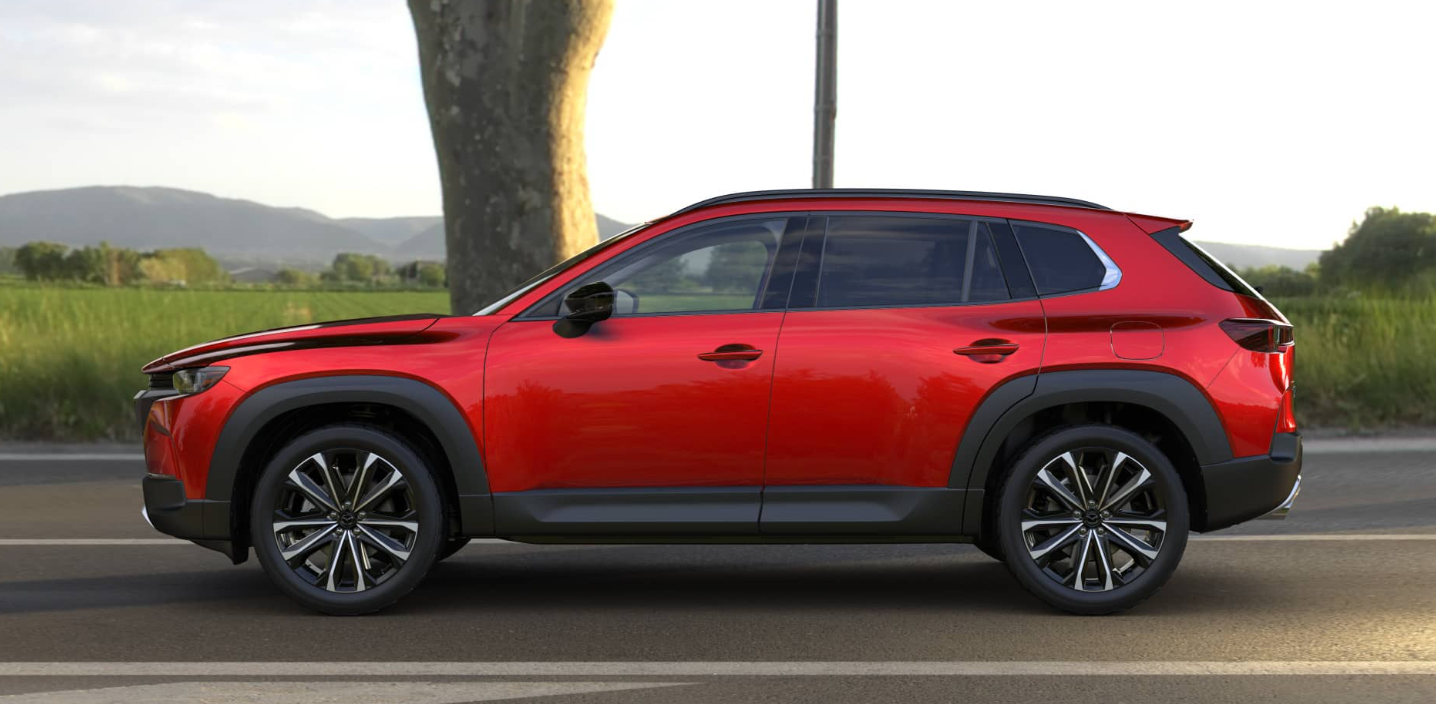
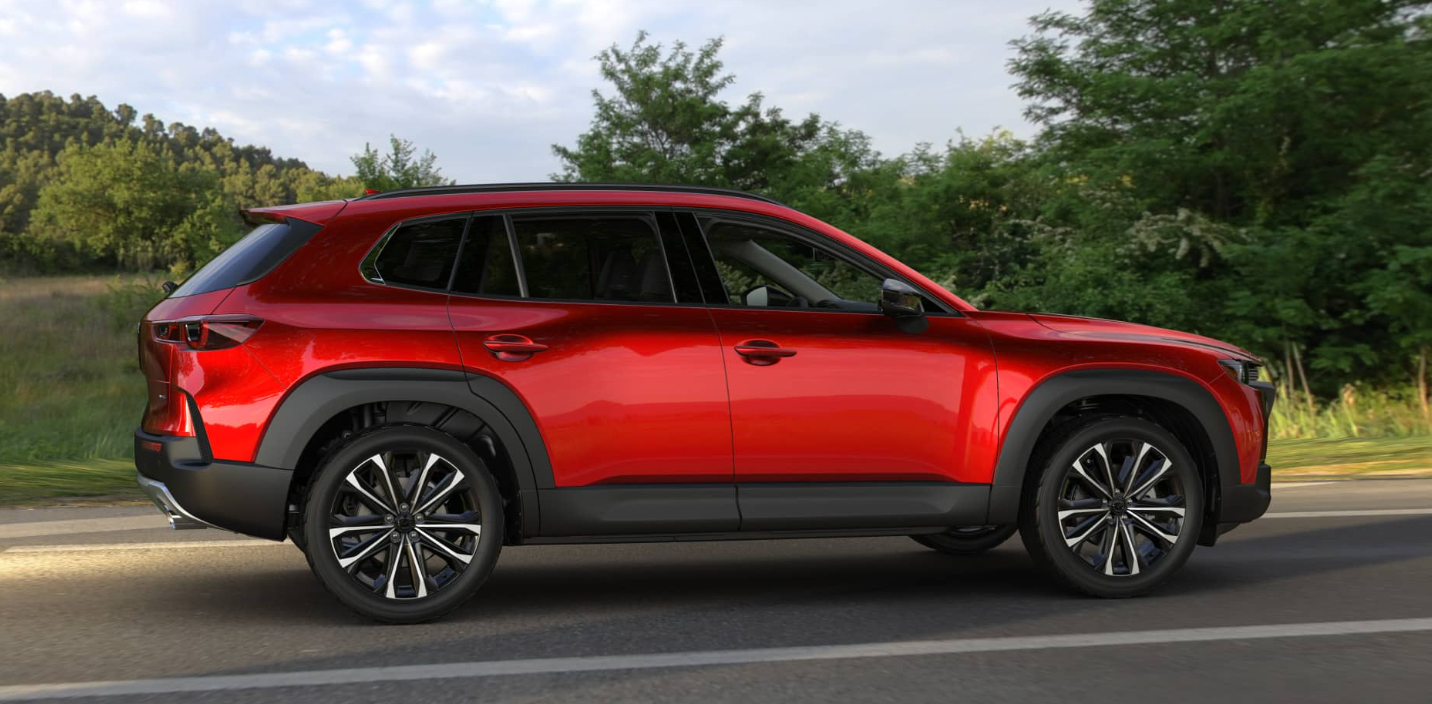
Compared to many compact SUVs, the CX-50 sits wider and lower, giving it a more athletic stance. The proportions feel purposeful, with styling that balances rugged capability and premium design. The vehicle presents an especially upscale appearance that wouldn’t look out of place next to luxury-branded competitors.
Mazda has done an impressive job creating a crossover that feels adventurous without looking overstyled. The design is clean, mature, and likely to age well.
For buyers who value appearance as much as practicality, the CX-50 immediately makes a strong first impression.
Turbo Power Makes a Difference
The biggest reason many shoppers gravitate toward this trim level is what’s under the hood.
The CX-50 Turbo Premium Plus is powered by Mazda’s turbocharged 2.5-liter four-cylinder engine, producing up to 256 horsepower and 320 lb-ft of torque when using premium fuel.
Those numbers translate into real-world performance that feels noticeably stronger than many competitors in the segment.
Whether entering a fast-moving highway, overtaking slower traffic, or tackling steep grades, the turbocharged engine delivers power with minimal effort. The SUV never feels strained or underpowered, even with passengers and cargo onboard.
It’s not a performance SUV in the traditional sense, but it offers enough acceleration to make everyday driving more enjoyable and less stressful.
That’s something many compact crossovers struggle to achieve.
One of the Best Driving Experiences in the Segment
Where the CX-50 truly separates itself from many rivals is in how it drives.
Mazda has built a reputation for creating vehicles that feel more connected to the road than their competitors, and the CX-50 continues that tradition.
The steering has a natural weight that inspires confidence without feeling heavy. The suspension strikes an effective balance between comfort and control, allowing the vehicle to remain composed through corners while still providing a comfortable ride during daily commuting.
Unlike some crossovers that feel disconnected or overly soft, the CX-50 maintains a sense of responsiveness that drivers will notice immediately.
Standard all-wheel drive further enhances that confidence.
Whether driving through rain, snow, gravel roads, or simply navigating winding back roads, the CX-50 feels secure and predictable. The AWD system works seamlessly in the background, helping the vehicle maintain traction without drawing attention to itself.
For buyers comparing the CX-50 against popular options like the Toyota RAV4, Honda CR-V, Hyundai Tucson, or even Mazda’s own CX-5, driving dynamics remain one of Mazda’s strongest advantages.
Premium Features Without a Luxury Badge
The Premium Plus trim sits at the top of the CX-50 lineup, and it shows.
The cabin feels thoughtfully designed and well executed, with materials and technology that create a near-luxury experience.
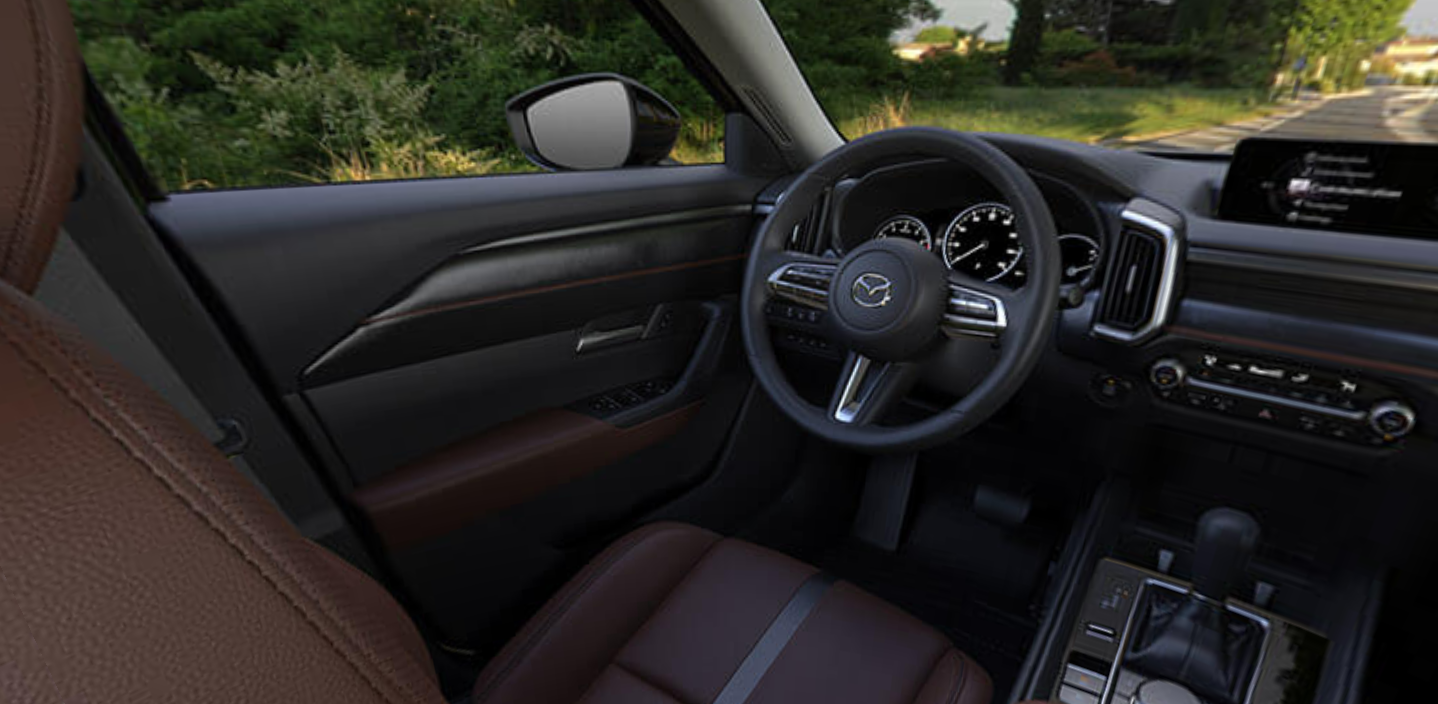
Leather-trimmed seating surfaces, ventilated front seats, heated rear seats, a panoramic moonroof, wireless smartphone connectivity, wireless charging, and a Bose premium audio system all contribute to a cabin that feels more expensive than its price tag suggests.
The available 360-degree camera system and front and rear parking sensors also make maneuvering easier in tight spaces, while Mazda’s suite of advanced safety technologies provides additional peace of mind for families and commuters alike.
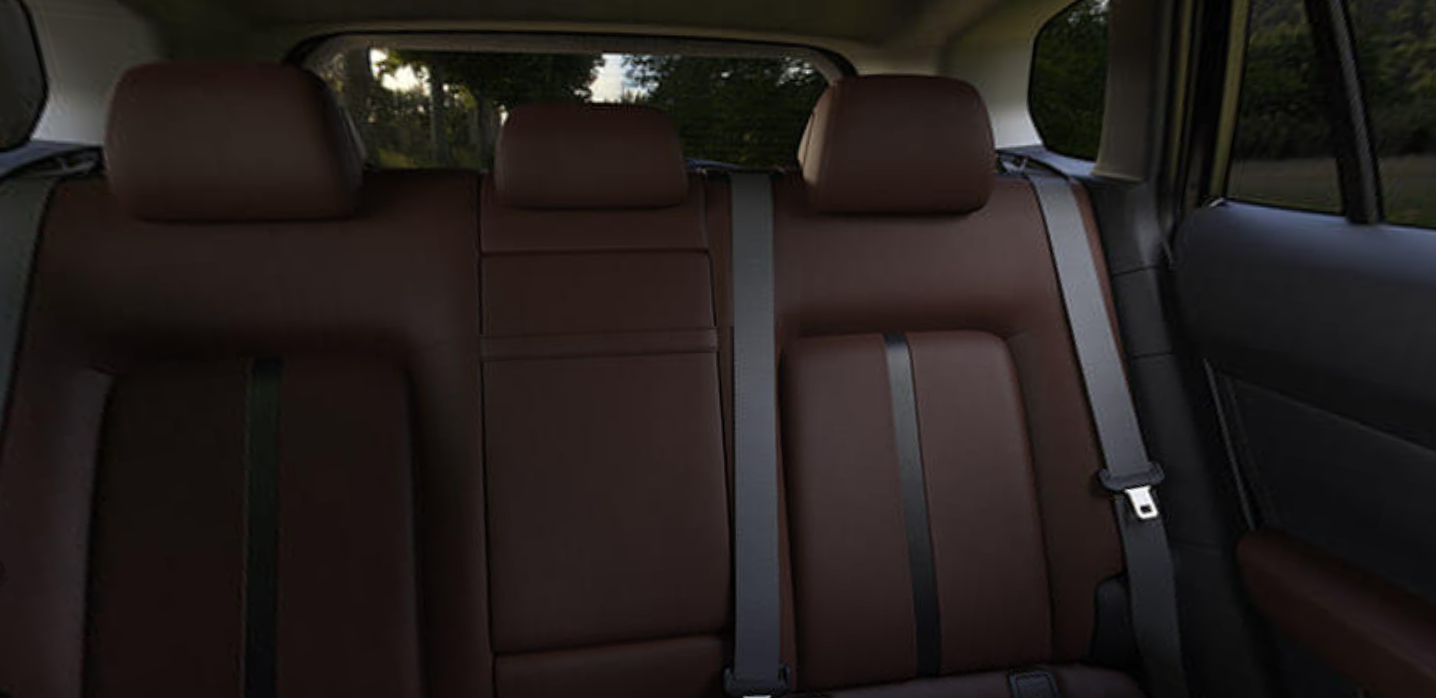
One of Mazda’s greatest strengths continues to be interior design. Rather than overwhelming drivers with excessive screens and flashy gimmicks, the company focuses on creating a clean, functional, and upscale environment.
The result is a cabin that feels premium without trying too hard.
Fuel Economy Remains Competitive
Performance often comes at the expense of efficiency, but the CX-50 Turbo manages to strike a reasonable balance.
EPA estimates are rated at 23 mpg in the city, 29 mpg on the highway, and 25 mpg combined.
Those figures won’t lead the segment, but they remain competitive considering the turbocharged engine, standard all-wheel drive, and strong performance capabilities.
For most buyers, the slight tradeoff in fuel economy will be worth the added power and driving enjoyment.
Utility That Fits Most Lifestyles
Despite its focus on driving dynamics, the CX-50 still fulfills the practical expectations buyers have for a compact SUV.
Cargo space measures 31.4 cubic feet behind the second row. While that figure doesn’t lead the class, it provides enough room for groceries, luggage, sports equipment, and the demands of everyday life.
The turbocharged model also offers a towing capacity of up to 3,500 pounds, making it capable of handling small boats, utility trailers, personal watercraft, or lightweight campers.
For outdoor enthusiasts and active families, that extra capability adds meaningful versatility.
The CX-50 may not be the largest vehicle in its segment, but it delivers enough utility for most real-world situations.
Value and Pricing
With a total MSRP of approximately $45,215 including destination and options, the CX-50 Turbo Premium Plus competes in the upper end of the compact SUV category.
At first glance, that price may seem ambitious.
However, when buyers consider the level of equipment, premium interior quality, standard all-wheel drive, turbocharged performance, advanced safety features, and distinctive design, the value proposition becomes easier to understand.
In many ways, the CX-50 offers a near-luxury experience without requiring buyers to step into a luxury brand.
That alone will make it appealing to many shoppers.
Final Thoughts
The 2026 Mazda CX-50 2.5 Turbo Premium Plus AWD won’t be the ideal choice for someone whose only priority is maximum cargo capacity.
There are larger and roomier options available.
What Mazda offers instead is something increasingly rare in the crossover segment: character.
The CX-50 combines strong performance, confident handling, premium features, attractive styling, and everyday practicality into a package that feels genuinely enjoyable to drive.
For buyers who view driving as more than simply getting from one place to another, that’s a meaningful advantage.
The compact SUV segment is full of competent vehicles. The CX-50 stands out because it manages to be competent while still feeling special.
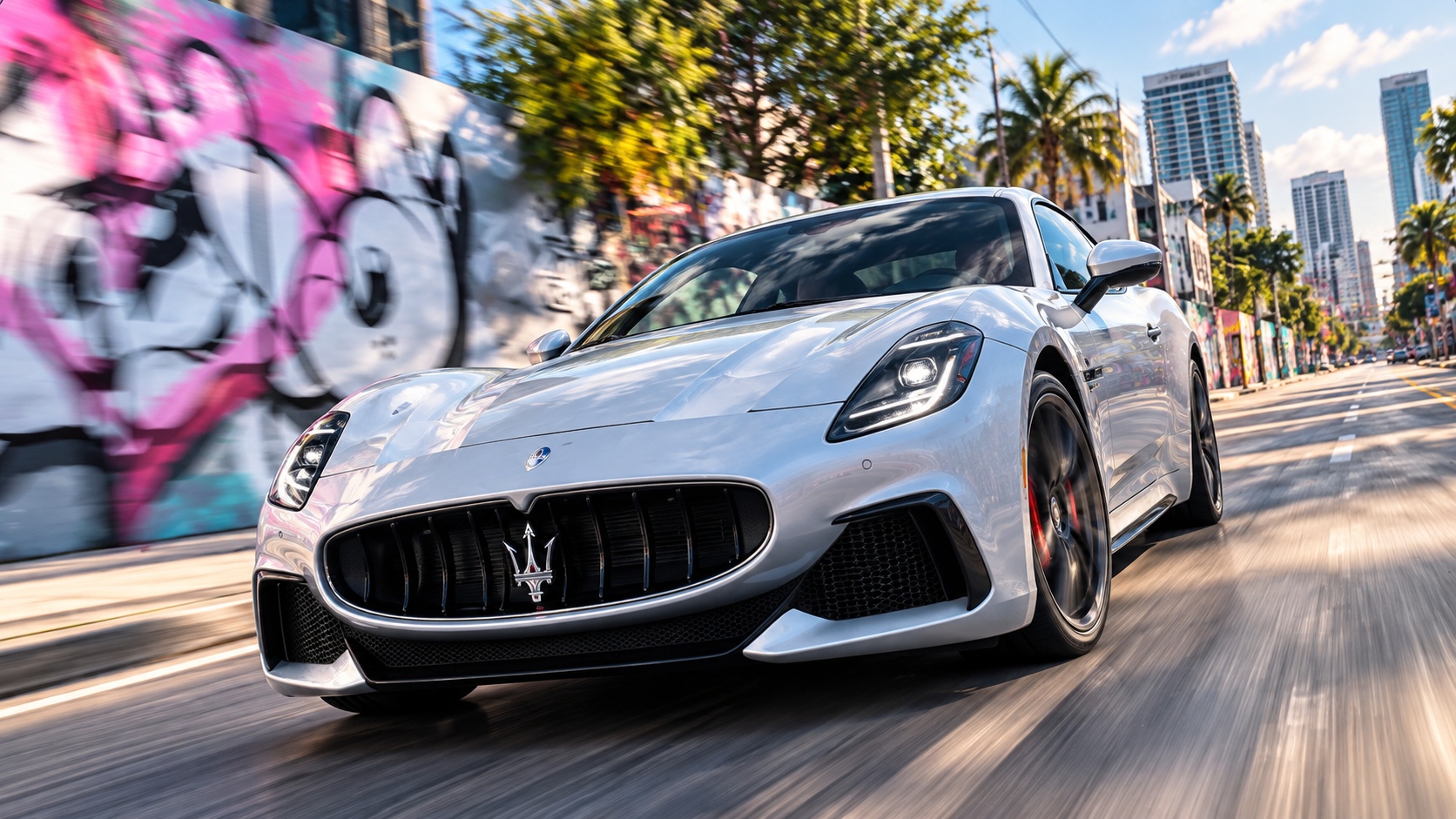
Carsfera takes Maserati’s performance-focused GranTurismo through Miami and Wynwood to discover what happens when 542 horsepower, Italian craftsmanship and one of America’s most expressive cities meet.

There are certain cars that make more sense once you spend several days with them. The specifications may tell you how much power they produce, how quickly they accelerate and how much they cost, but they don’t necessarily explain what it feels like to have one sitting outside your hotel in the morning, drive it through traffic in the afternoon and then take the longer route home simply because you’re enjoying the car.
The 2026 Maserati GranTurismo Trofeo became that kind of car for me in Miami.
I had already spent time with the GranTurismo in Virginia, where the highways and secondary roads gave me an opportunity to appreciate what Maserati has done with this generation. What stood out wasn’t one dramatic performance number. It was how naturally the car combined speed, comfort and sophistication. It felt like a proper grand tourer, something you could genuinely imagine driving for hours rather than something designed around a ten-minute burst of excitement.
Miami introduced me to the other side of that personality.
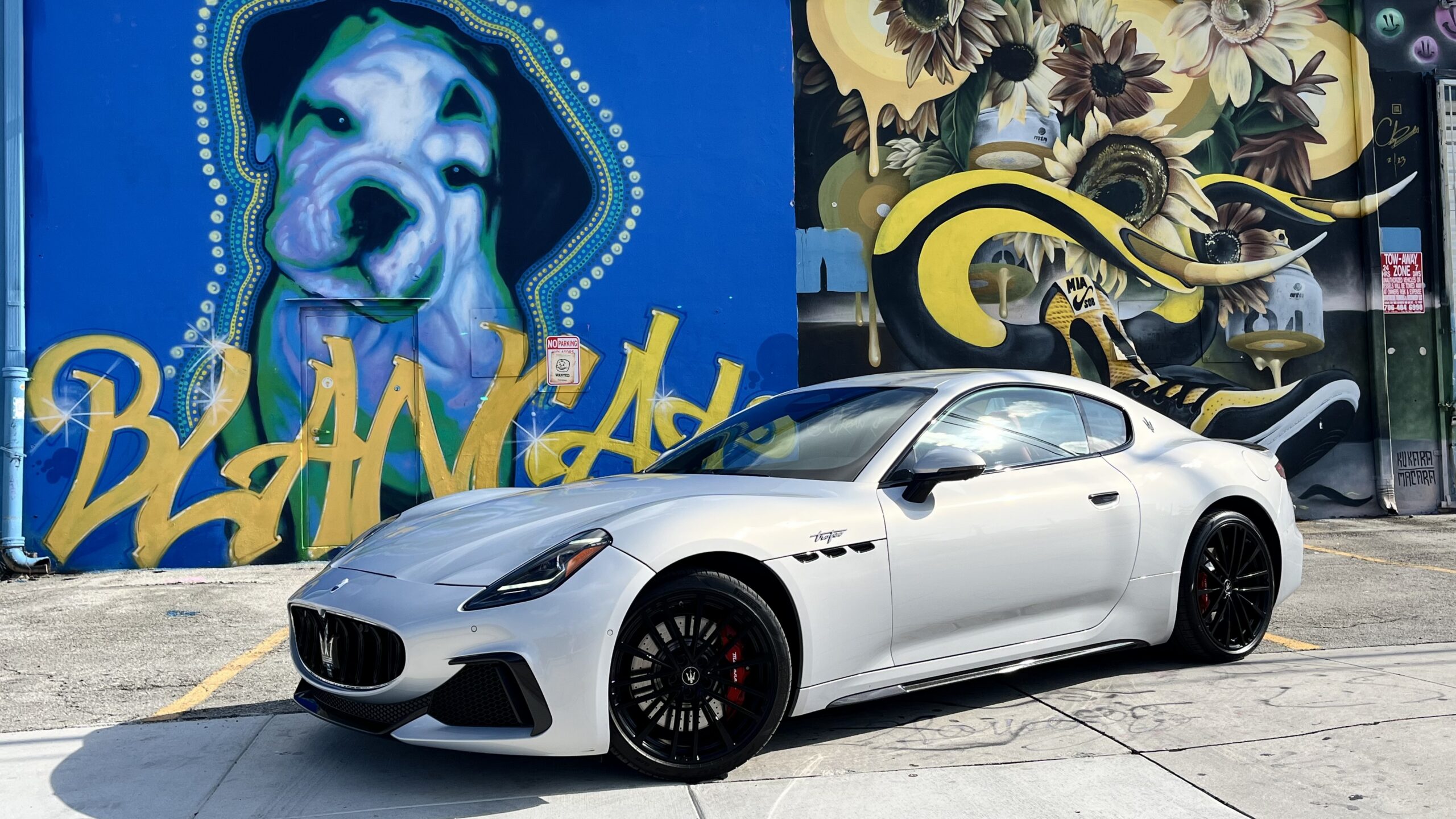
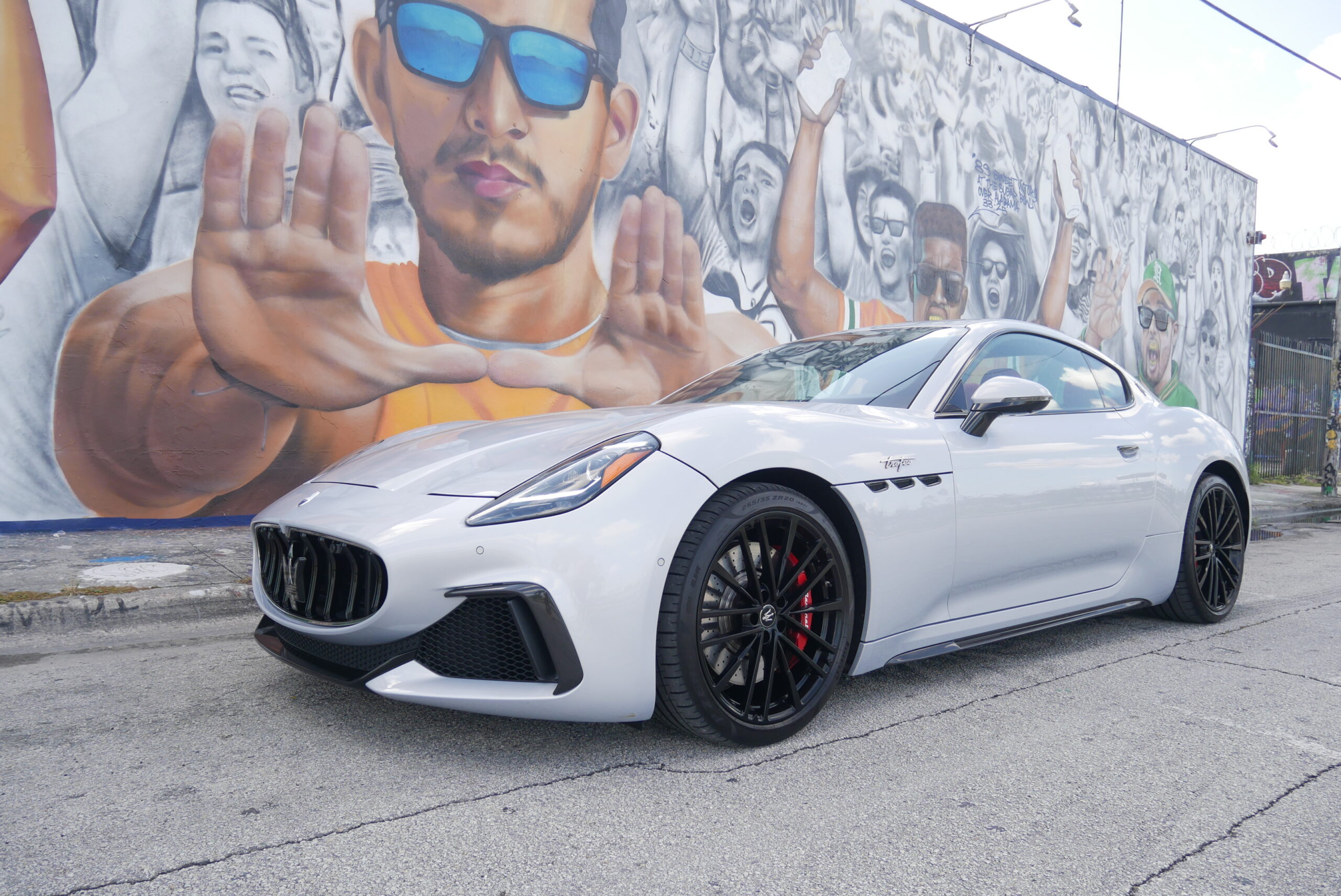
Our Trofeo arrived finished in Bianco Astro, with a red full-grain perforated leather interior, carbon-fiber details, Carbon Macrotwill trim, staggered 20- and 21-inch Pegaso-design wheels and an upgraded Sonus Faber audio system.
Its base price was $166,000. With options, the car sitting in front of me carried an MSRP of $185,830.
At that price, it needed to feel special.
After several days driving it around South Florida, I began to understand where that feeling comes from.
Seeing the GranTurismo Trofeo in Miami
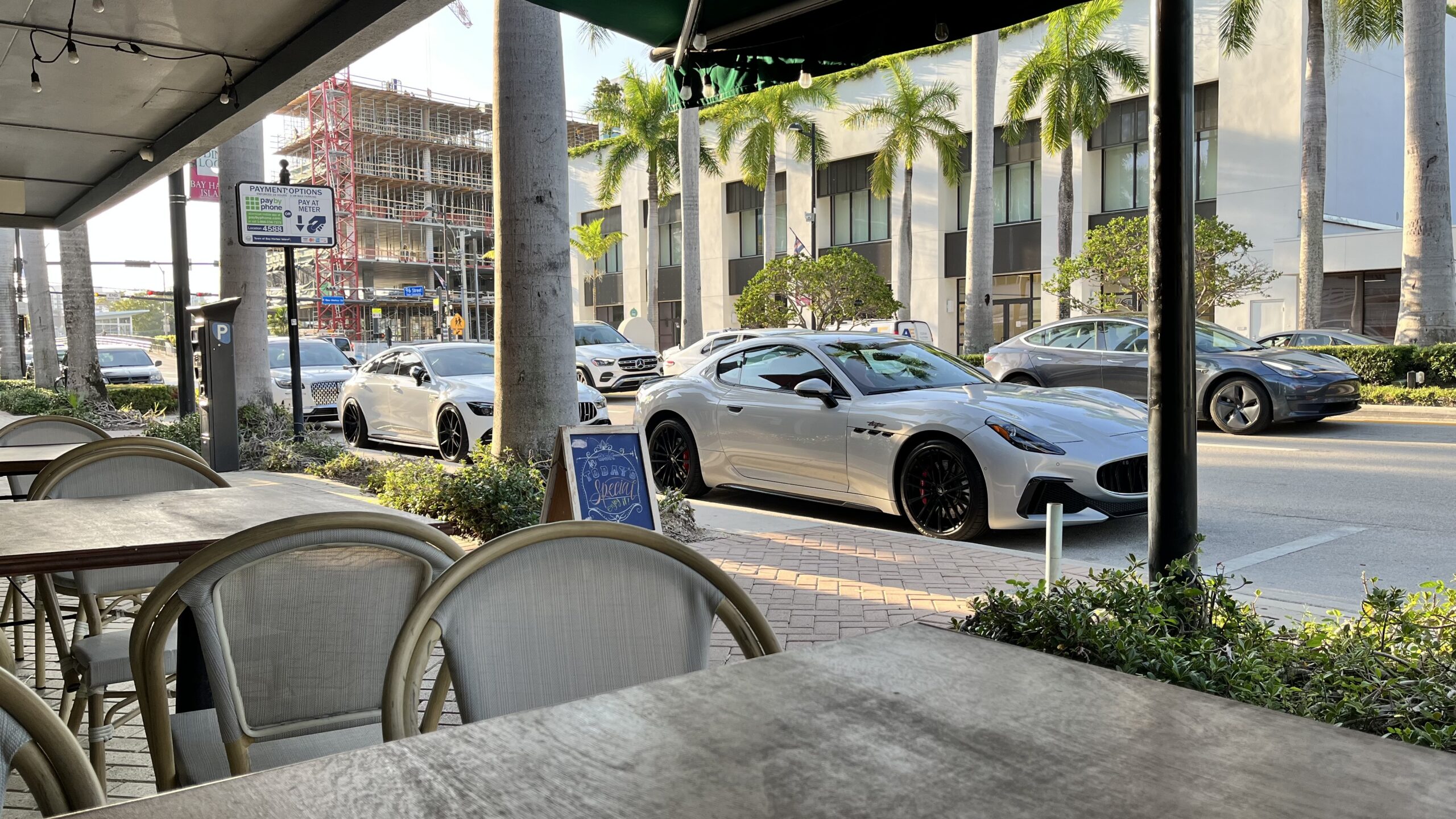
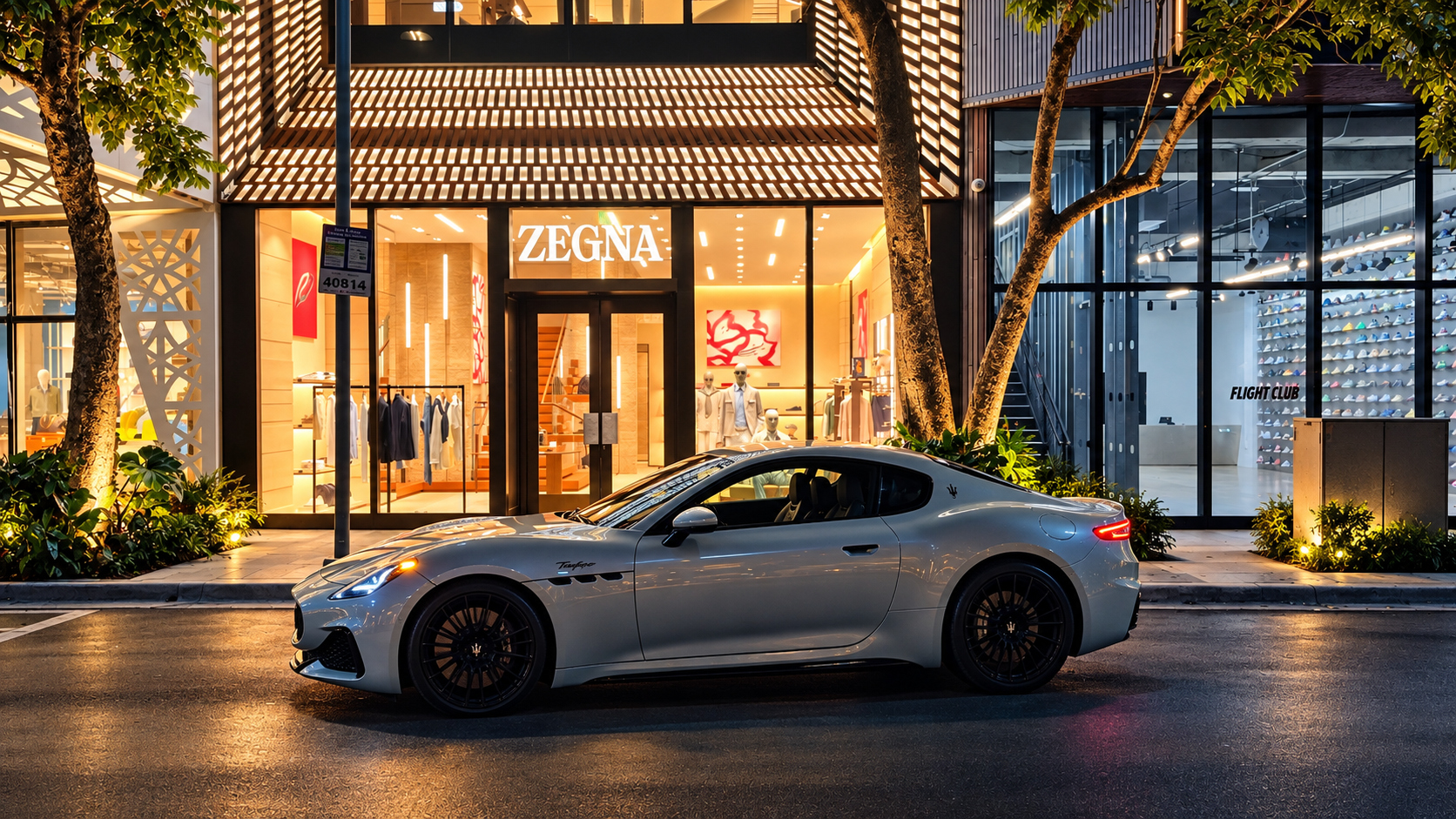
Miami is an interesting place to experience an automobile like this because the city has its own visual personality. There is color everywhere, especially when you move through Wynwood. Buildings become canvases, traffic is unpredictable, people are constantly moving, and exotic and luxury cars aren’t particularly unusual.
Yet the Maserati still attracted attention.
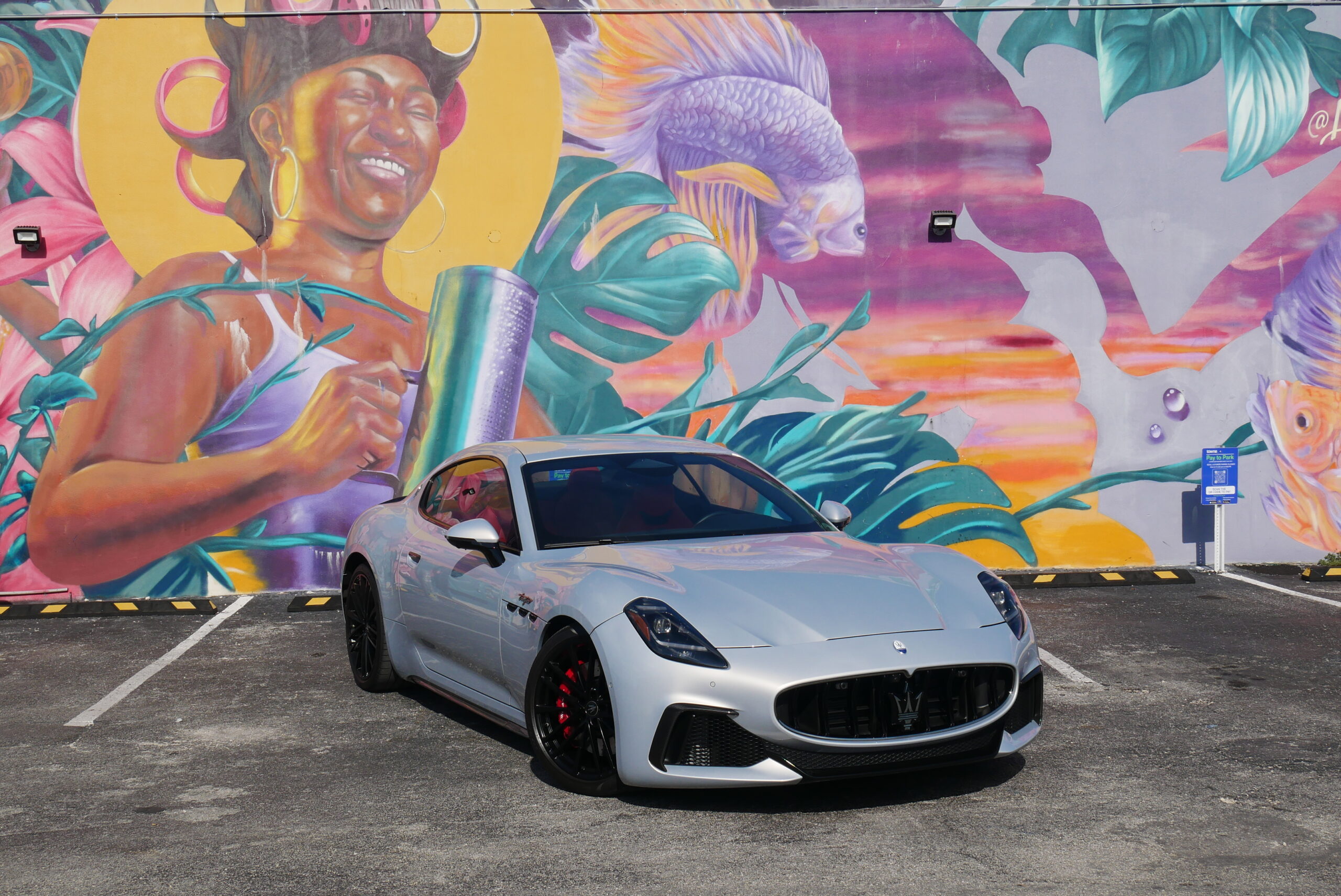
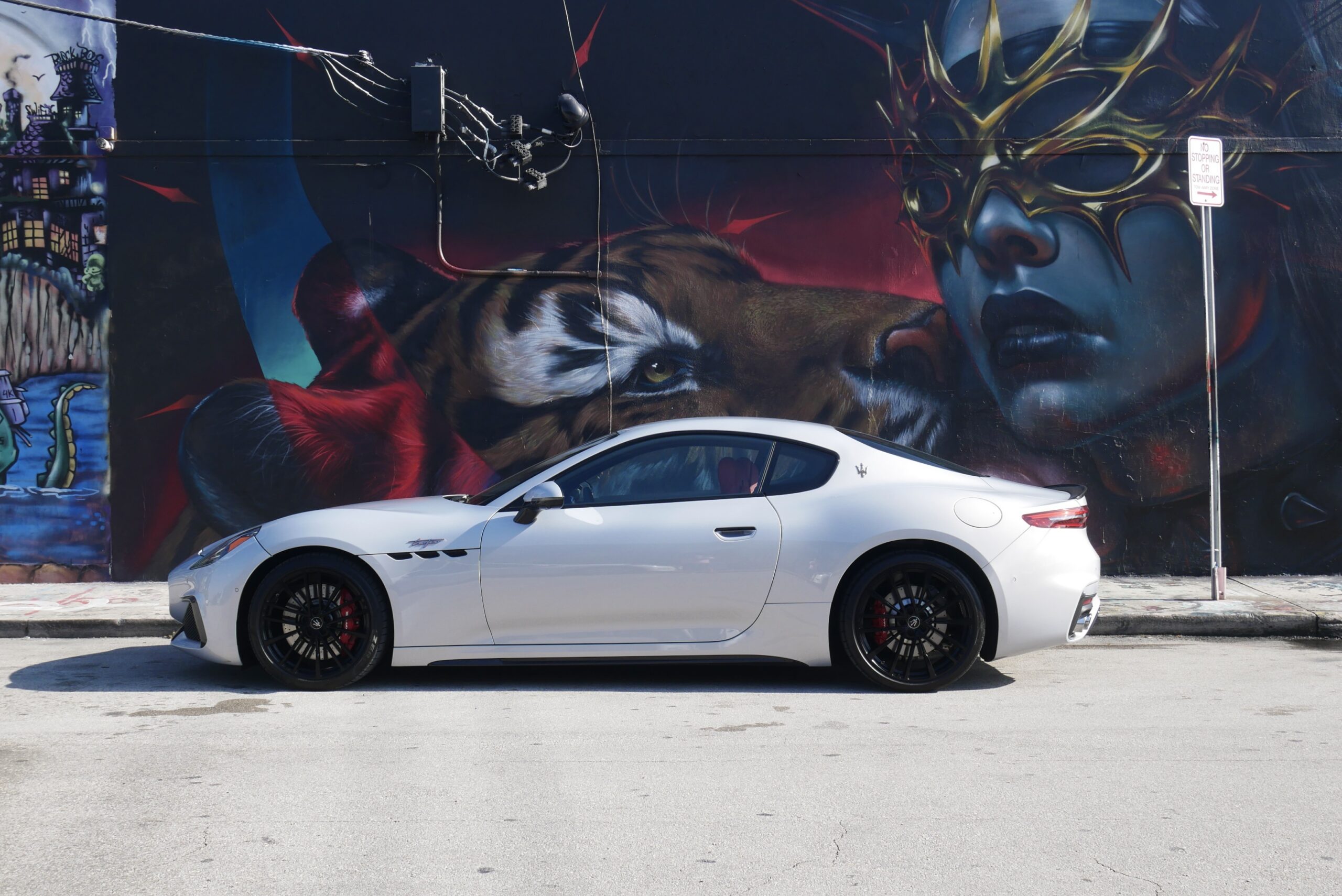
The Bianco Astro paint initially seemed like a relatively conservative specification for a car with this much personality, but seeing it under the Florida sun changed my opinion. The white finish allowed the GranTurismo’s proportions to become the focus.
The hood stretches far ahead of the cabin. The roofline falls gently toward the rear. The body has enough muscle around the wheels to communicate performance without relying on oversized wings or excessive aerodynamic decoration.
Against the murals of Wynwood, the simplicity of the white exterior worked particularly well. Later, driving toward Miami Beach, the same car took on a completely different character. Palm trees, modern architecture, hotels, bright sunlight and the blue Florida sky somehow made the GranTurismo look exactly where it belonged.
That is something Maserati has historically understood very well.
A Maserati doesn’t necessarily need to be the loudest car parked outside a restaurant to make you notice it.
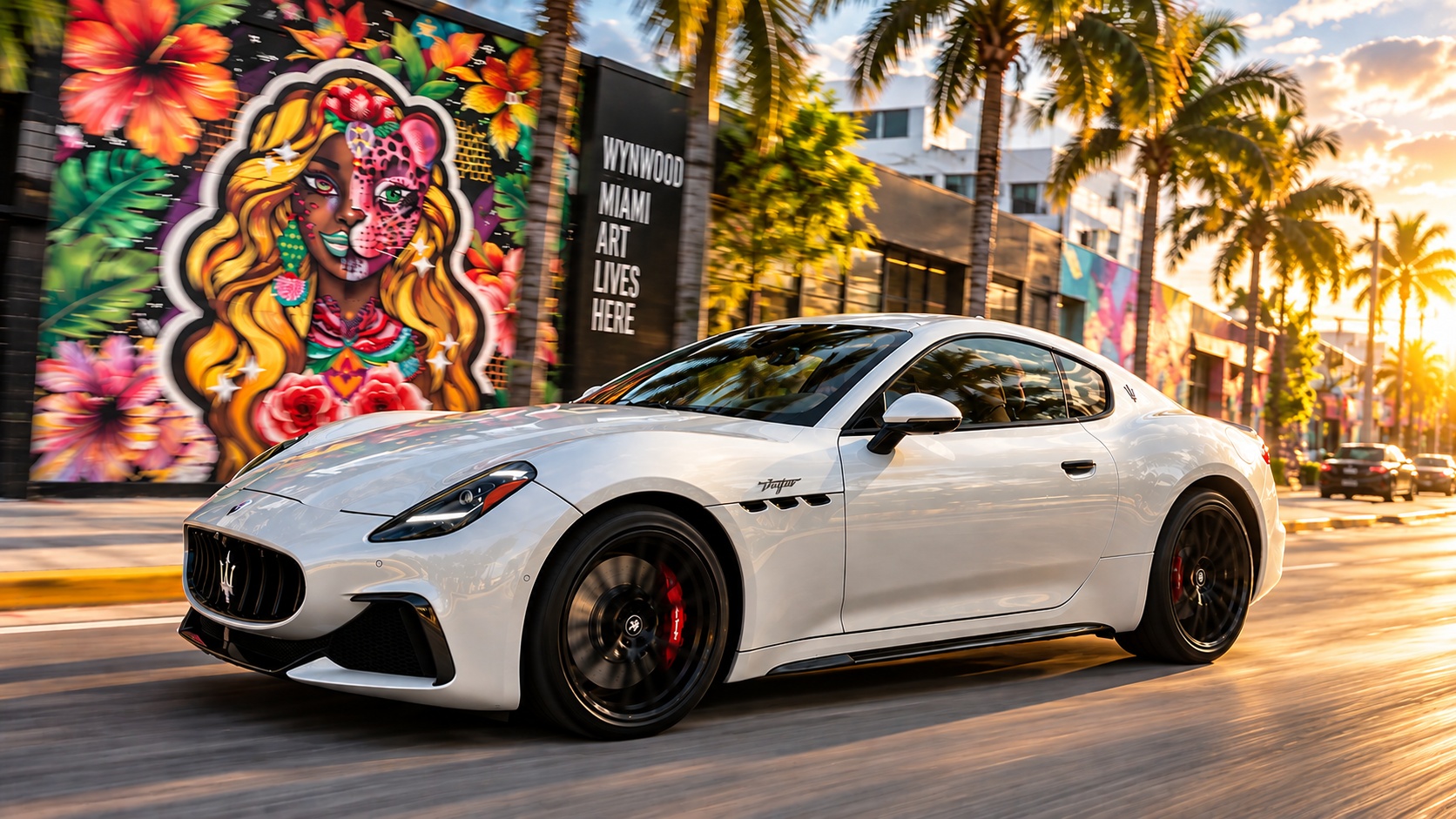
The GranTurismo Trofeo has presence without trying too hard to manufacture it.
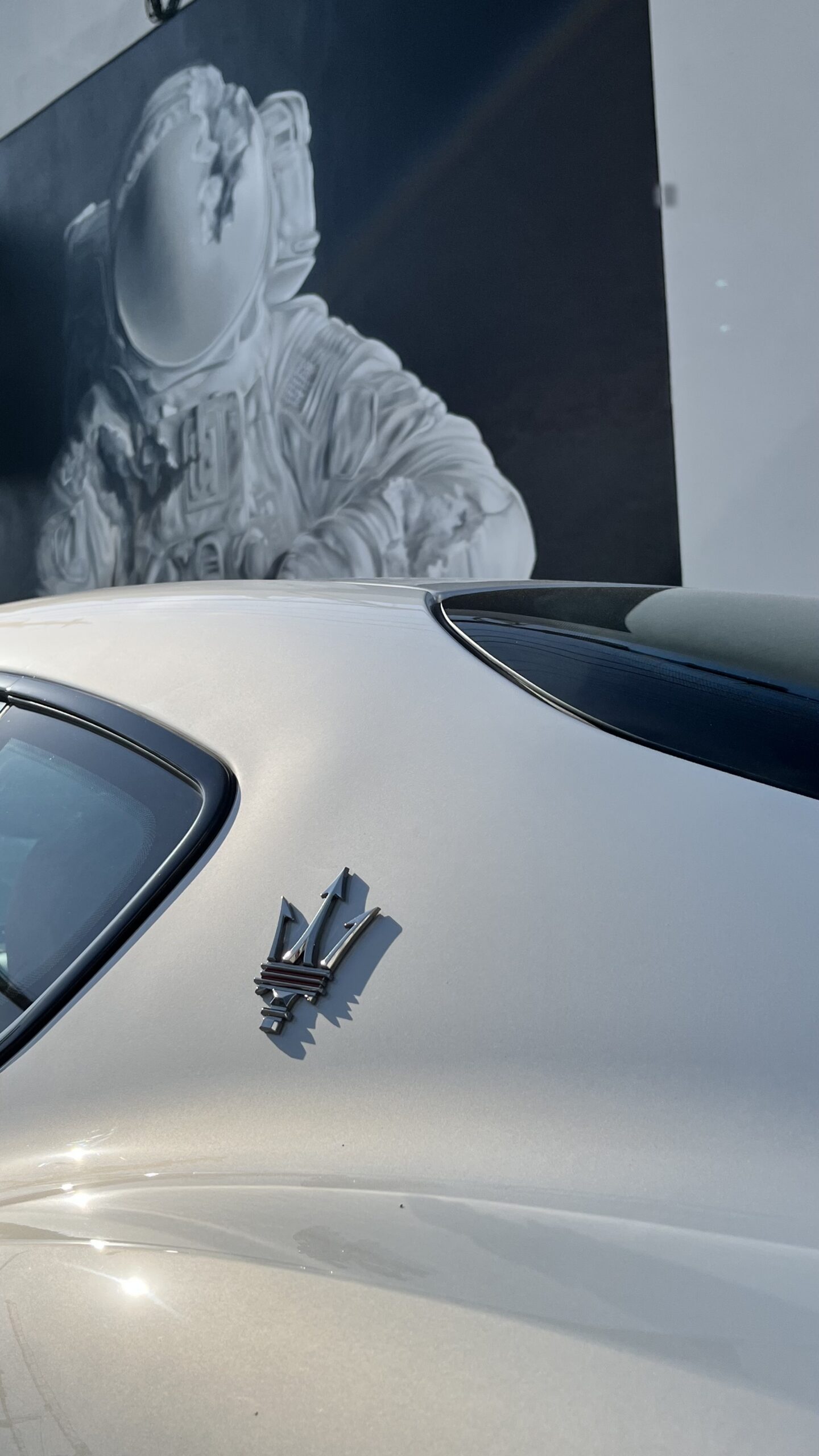
Our car’s $2,880 carbon-fiber rear spoiler added a little more aggression, while the Trofeo’s unique fascias, carbon-fiber exterior elements, gloss-black details, black-chrome badging and quad exhaust outlets subtly separated it from the regular GranTurismo.
I appreciated that restraint.
It would have been easy for Maserati to cover the Trofeo with aerodynamic pieces and turn it into something that looked more like a track-focused special edition. Instead, you still immediately recognize the elegance of the GranTurismo underneath.
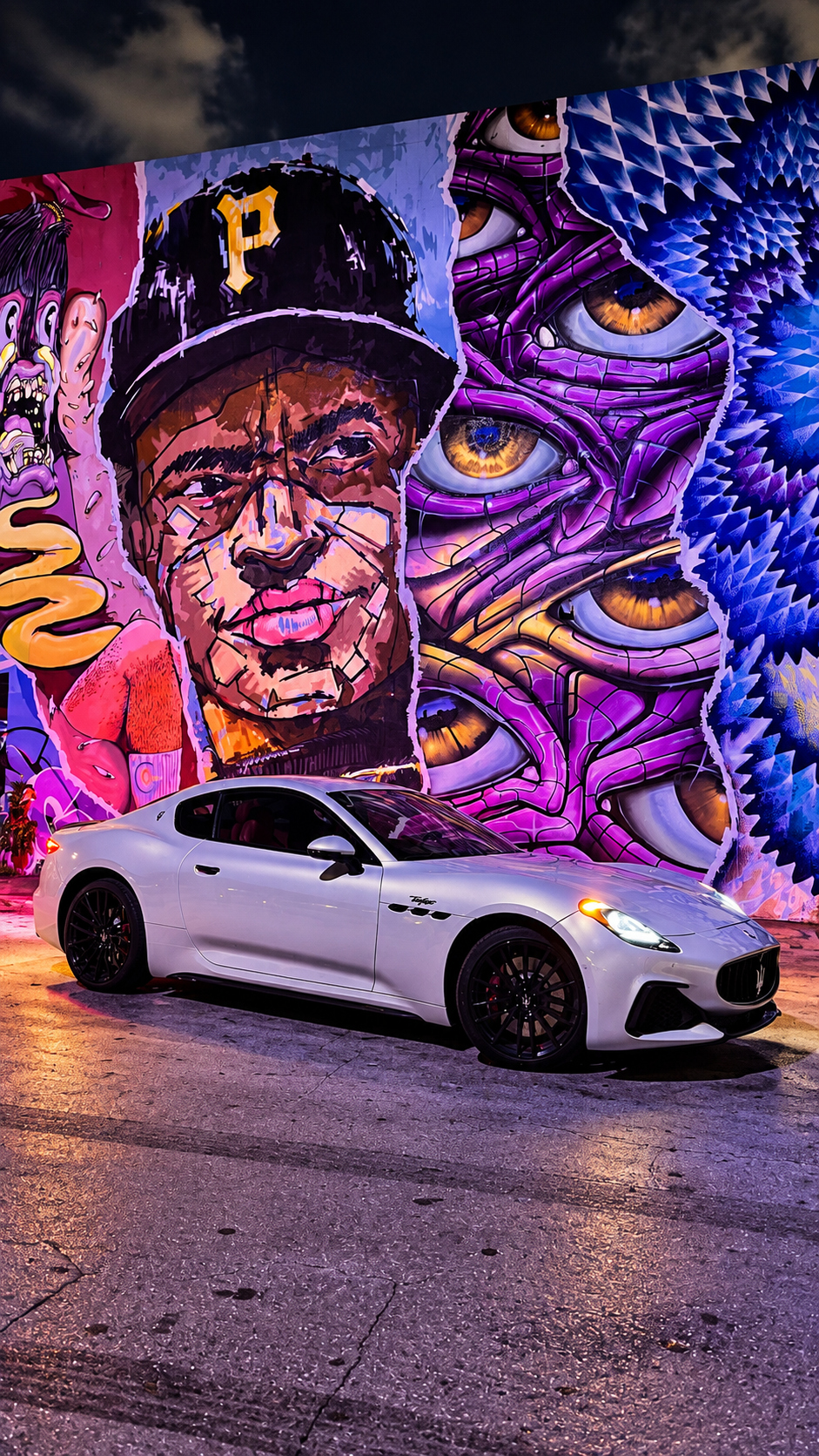
The Trofeo simply looks as though it has been spending more time at the gym.
The Red Interior Changes the Experience
Opening the driver’s door was probably my favorite visual moment with this particular specification.
The exterior is almost understated in white. Then you open the door and discover an interior covered in red full-grain perforated leather and carbon fiber.
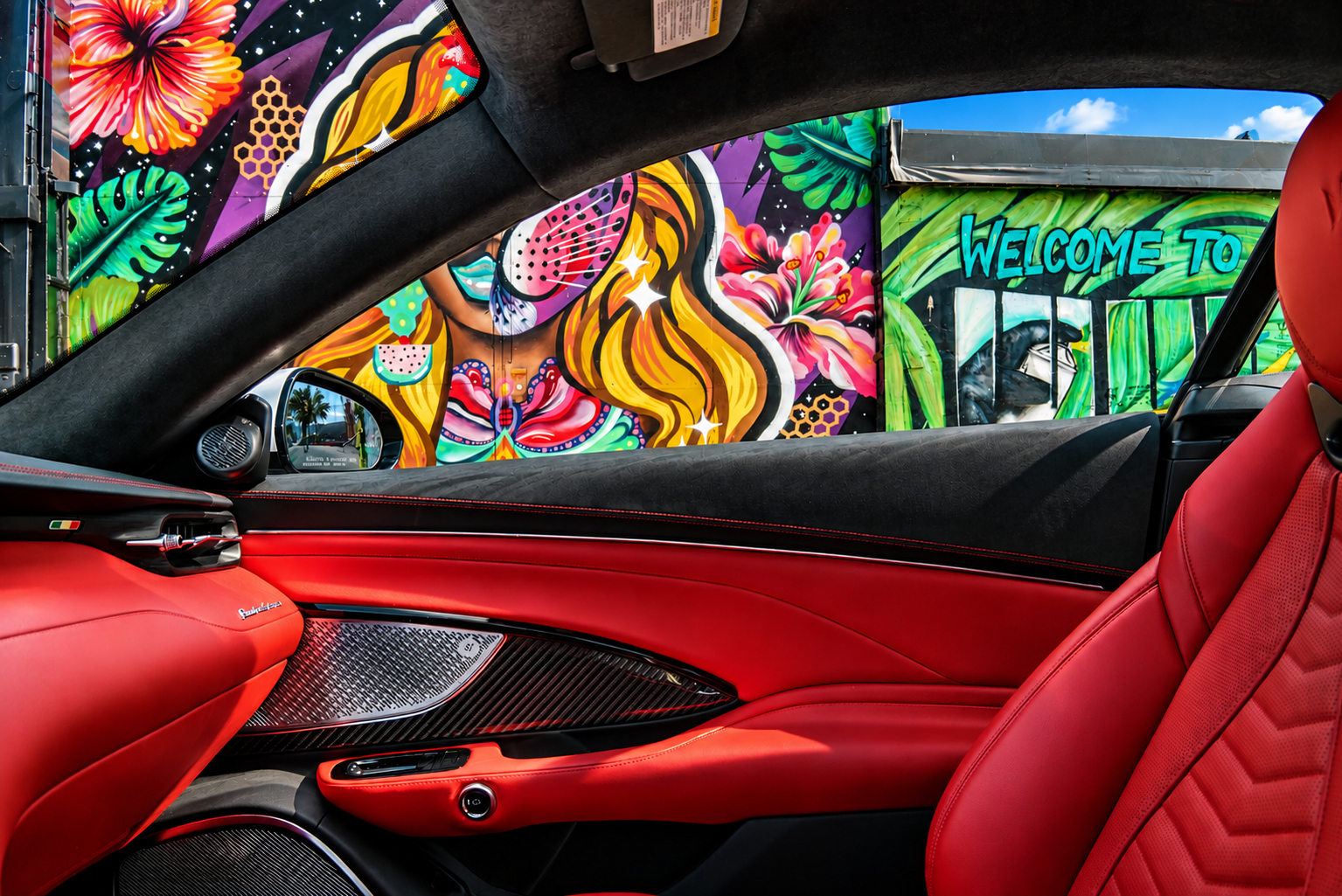
Suddenly, the personality of the car makes sense.
The GranTurismo I drove in Virginia had a much more traditional luxury atmosphere, with warmer colors and open-pore wood. It felt elegant and sophisticated, exactly as you would expect from an Italian grand tourer.
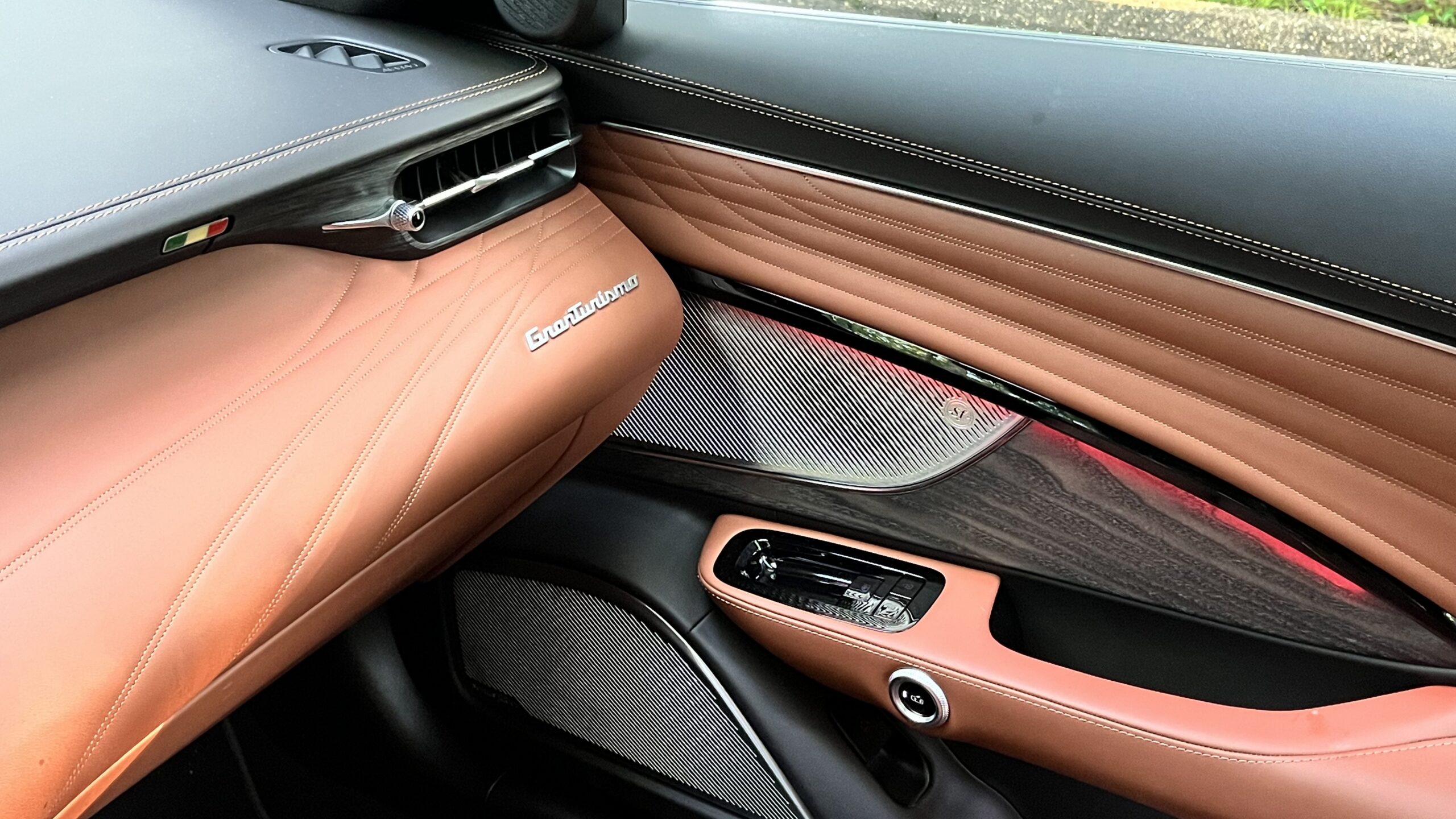
The Trofeo felt younger. More energetic.
Not necessarily less luxurious, just more focused on the person sitting behind the steering wheel.
The Carbon Macrotwill trim, a $2,650 option on our test car, fits that personality beautifully. The aluminum column-mounted paddle shifters are another detail I enjoyed because they feel substantial in your hands. They’re not decorative pieces attached to the steering wheel. They look and feel like something you’re actually going to want to use.
And you will.
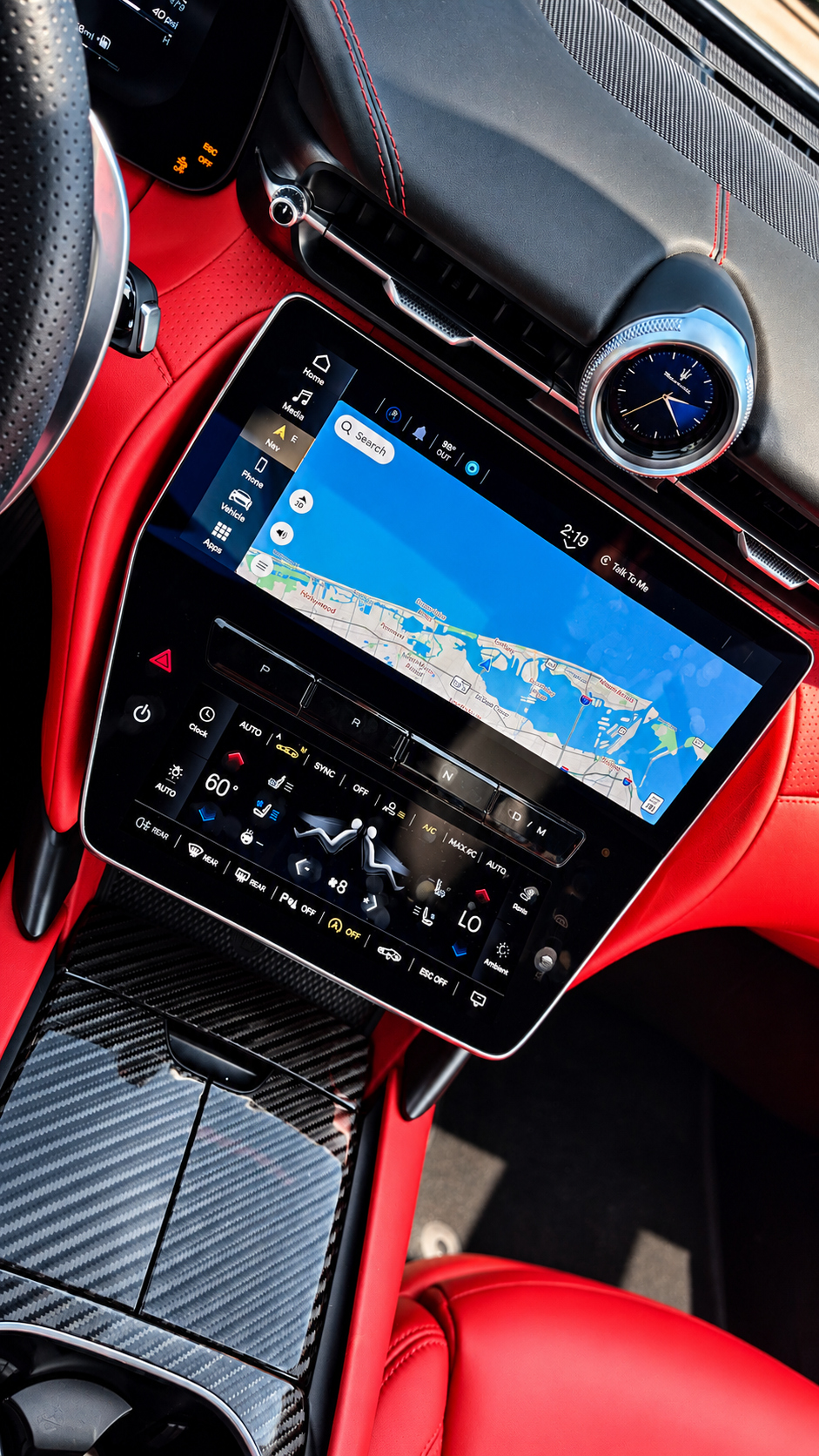
The seats deserve attention as well. A grand tourer can’t simply look beautiful; it has to remain comfortable after the novelty of the first hour disappears. The Trofeo provides 18-way power-adjustable front seats with driver memory, heating and enough adjustment to find a genuinely comfortable driving position.
Technology is integrated throughout the cabin without completely taking over the experience. There’s a 12.3-inch digital instrument cluster, accompanied by Maserati’s 12-inch and 8.8-inch central displays. Navigation, Apple CarPlay, Android Auto, wireless charging and connected features are all present.
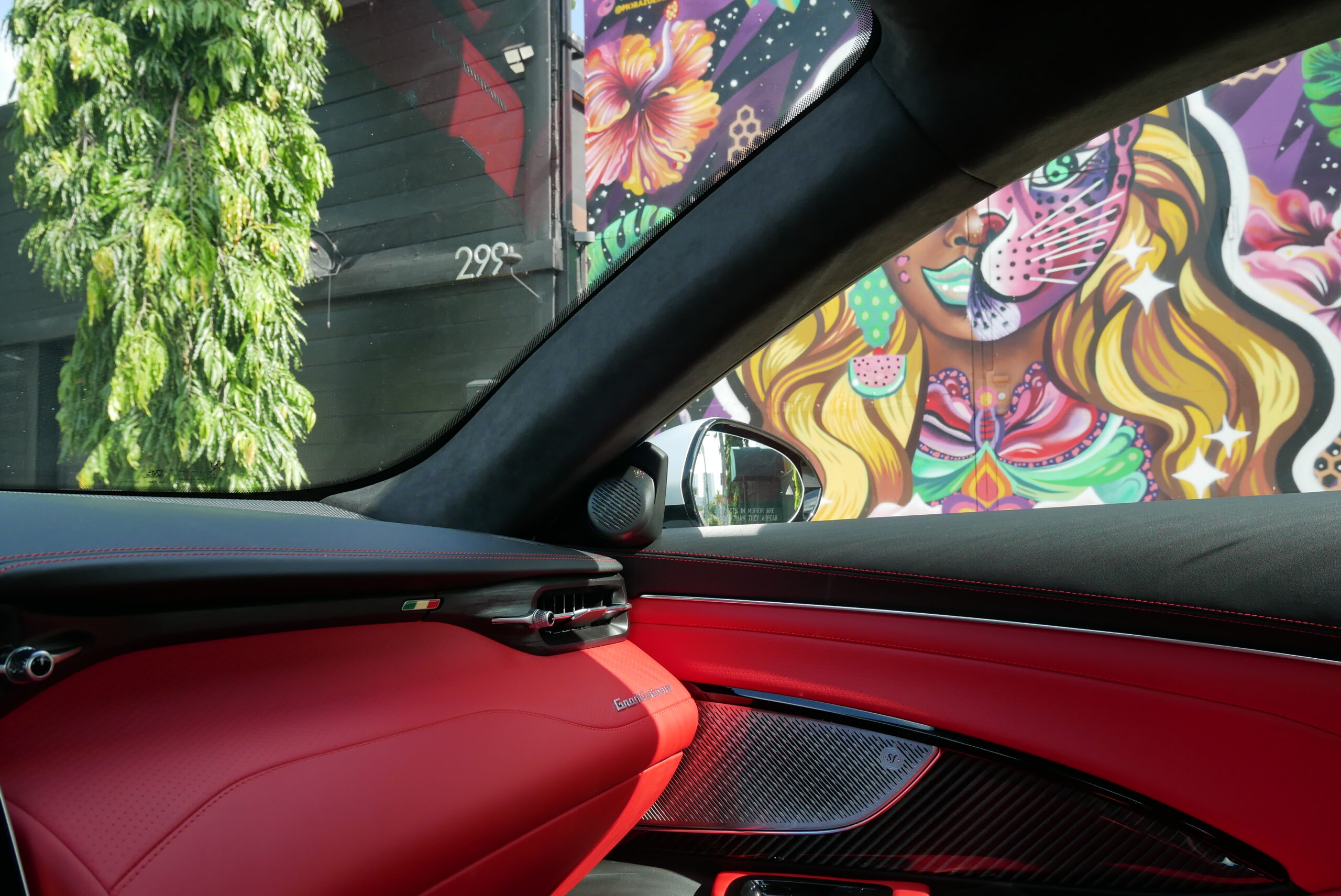
Our car also had the high-premium Sonus Faber audio system, a $4,890 option.
It’s an impressive system.
But there were plenty of moments when I preferred listening to something else.
The car itself.
The Nettuno Is What Makes the Trofeo Special
This is where my opinion of the Trofeo really began to form.
Under the hood is Maserati’s 3.0-liter twin-turbocharged Nettuno V6, paired with an eight-speed ZF automatic transmission and Maserati’s Q4 all-wheel-drive system.
The chassis includes adaptive air suspension, Skyhook electronic active damping and an electronic limited-slip differential. There is launch control and four selectable driving modes: Comfort, GT, Sport and Corsa.
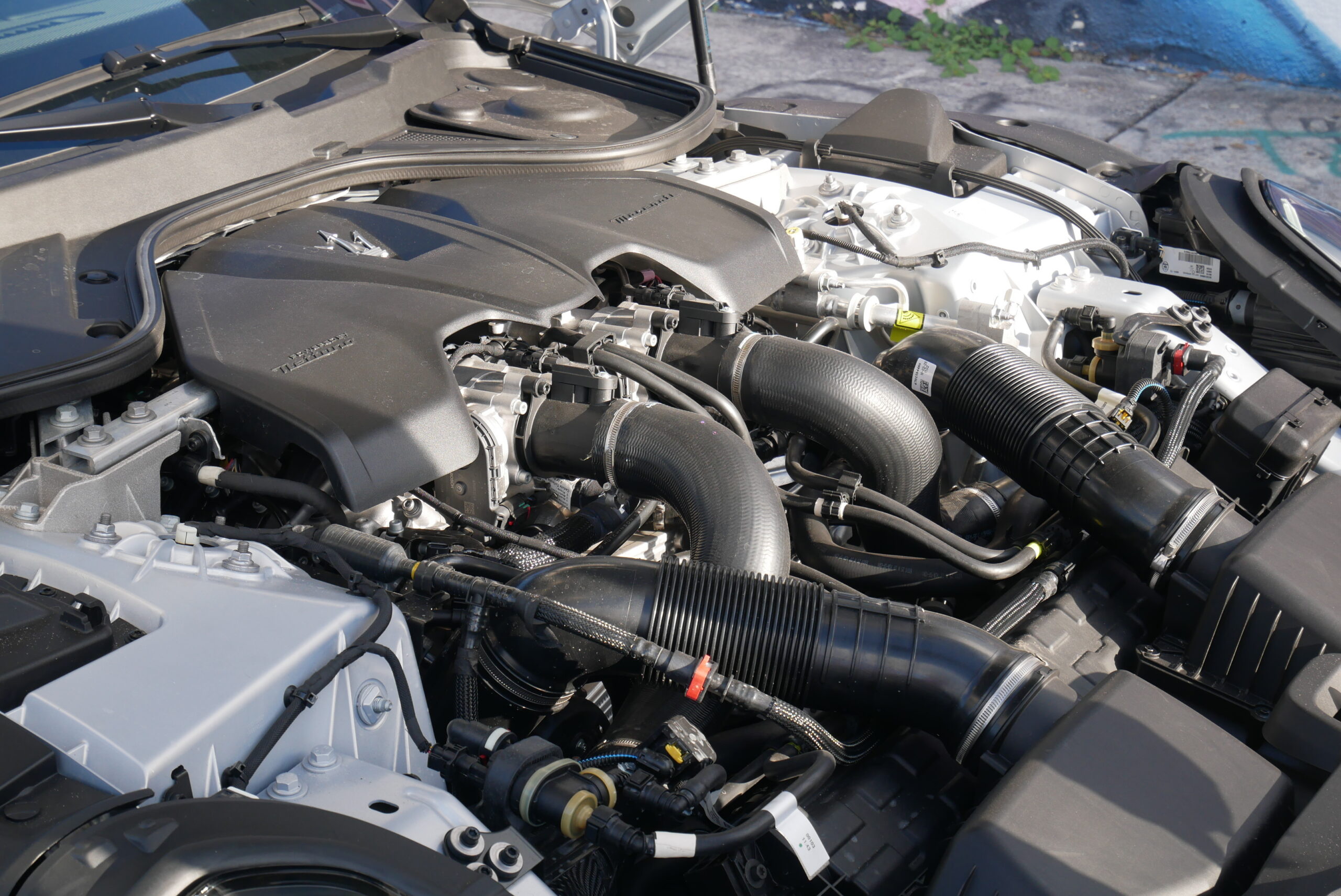
You can read all of that on a specification sheet. What the specification sheet can’t adequately explain is how broad the personality of this powertrain feels from the driver’s seat.
The Nettuno is the finest Maserati engine I have personally experienced. And I don’t say that simply because the Trofeo is fast. Of course it’s fast.
What impressed me more was how easily the engine changes character depending on what you’re asking from the car.
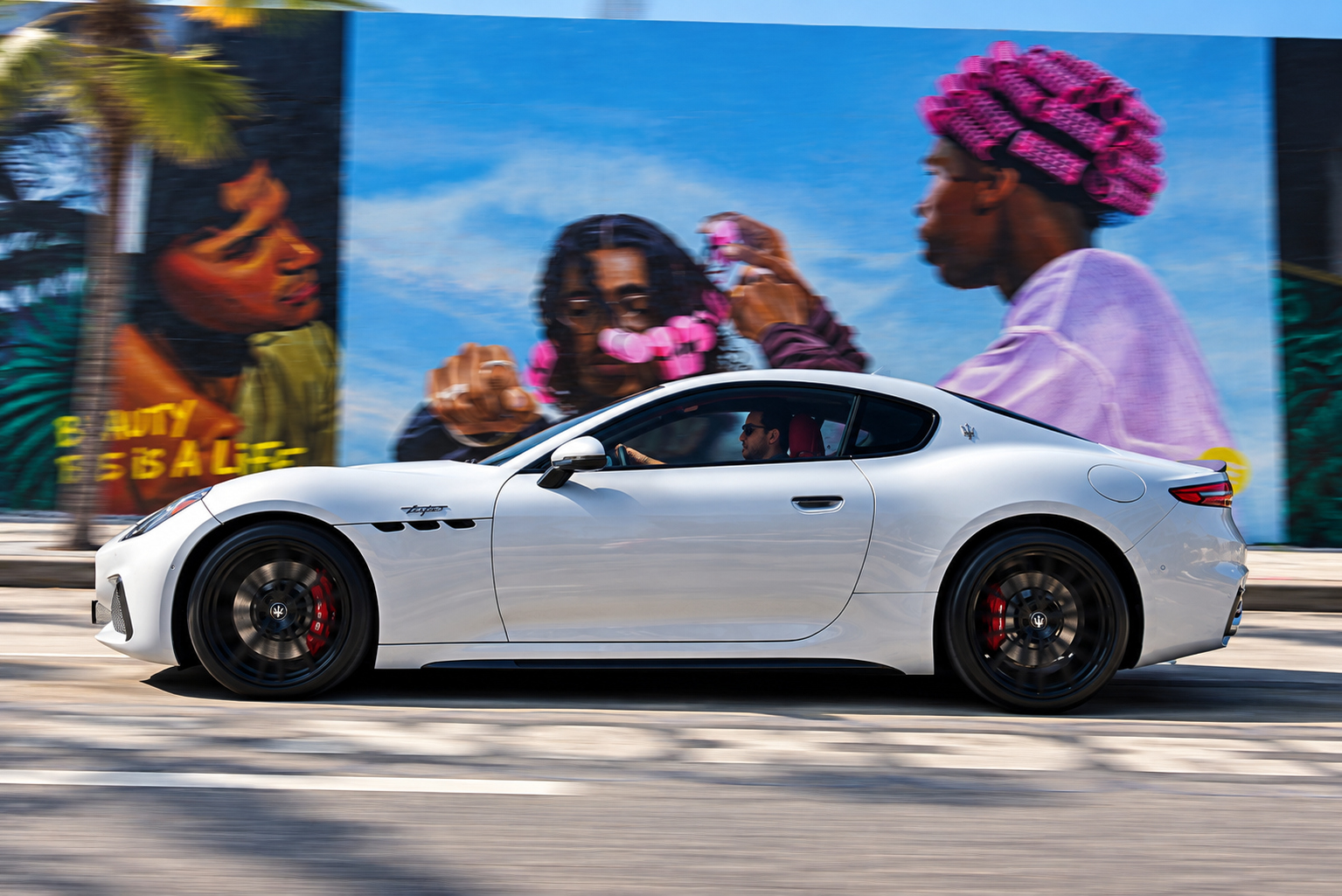
Miami traffic isn’t particularly interested in how much performance your Maserati has. There were plenty of moments when I was simply moving from one traffic light to another, surrounded by SUVs, delivery vehicles and people trying to change lanes at the last possible second.
In those situations, the Trofeo behaves remarkably normally.
The transmission isn’t constantly trying to prove something. The suspension doesn’t punish you over imperfect pavement, and the engine can remain relatively relaxed. You can drive the car through Miami Beach at an ordinary pace and enjoy the steering, seating position, interior and atmosphere without feeling as though the car is begging you to drive twice the speed limit.
That’s important.
Because eventually the traffic opens. And that’s when you reach for Sport.
The change isn’t theatrical for the sake of being theatrical. The throttle simply becomes more responsive, the transmission starts holding gears with greater purpose and the exhaust becomes more present behind you.
Push further into Corsa, and you discover the side of the Trofeo that was hiding while you were sitting in traffic ten minutes earlier.
The car tightens around you. Now the aluminum paddles that looked so beautiful when you opened the door become part of the experience. The engine feels more urgent. The transmission becomes more aggressive. You begin looking farther down the road and paying more attention to what your right foot is doing.
This is why I enjoyed the Nettuno so much. It’s not an engine that gives you one experience all the time. It lets the GranTurismo be a GranTurismo first. Then, when you ask for more, it gives you considerably more.
Miami Is Actually a Good Place to Understand This Car
Nobody thinks of Miami as the place to test the ultimate limits of a performance car.
There are no mountain passes waiting outside South Beach, and you’re probably going to spend considerably more time on I-95 than attacking a series of perfect corners.
But that’s precisely why driving the Trofeo here was useful. This is how many owners are actually going to use the car.
You’re going to drive to dinner. You’re going to sit in traffic. You’re going to take it to a hotel. You’re going to cover long stretches of highway. You’re going to deal with heat, rough pavement and those Florida rainstorms that seem capable of appearing five minutes after you were looking at a perfectly blue sky.
The Trofeo has to work in all of those situations before its performance becomes relevant.
And it does.
What Does $185,830 Actually Buy?
Our GranTurismo Trofeo started at $166,000, but several significant options pushed the final price considerably higher.
The carbon-fiber rear spoiler added $2,880. Carbon Macrotwill trim cost another $2,650. The high-premium Sonus Faber system added $4,890, red brake calipers were $1,320, the ADAS Base Package added $5,180, the Comfort Package another $1,240, and the Sport Design Package contributed $1,670.
Final MSRP:
$185,830.
That’s real money, even in this segment.
And I think anyone considering this car should look beyond the question of whether $185,830 buys enough performance. It does.
But so do plenty of other cars. At this level, horsepower alone isn’t particularly difficult to find. Neither is acceleration. What becomes harder to find is personality.
And perhaps most importantly, it gives you something you can’t really measure:
A reason to want to drive it.
GranTurismo or GranTurismo Trofeo?
Driving these two cars in two different parts of the country made the answer much clearer to me.
The GranTurismo I drove in Virginia is probably the easier car to understand.
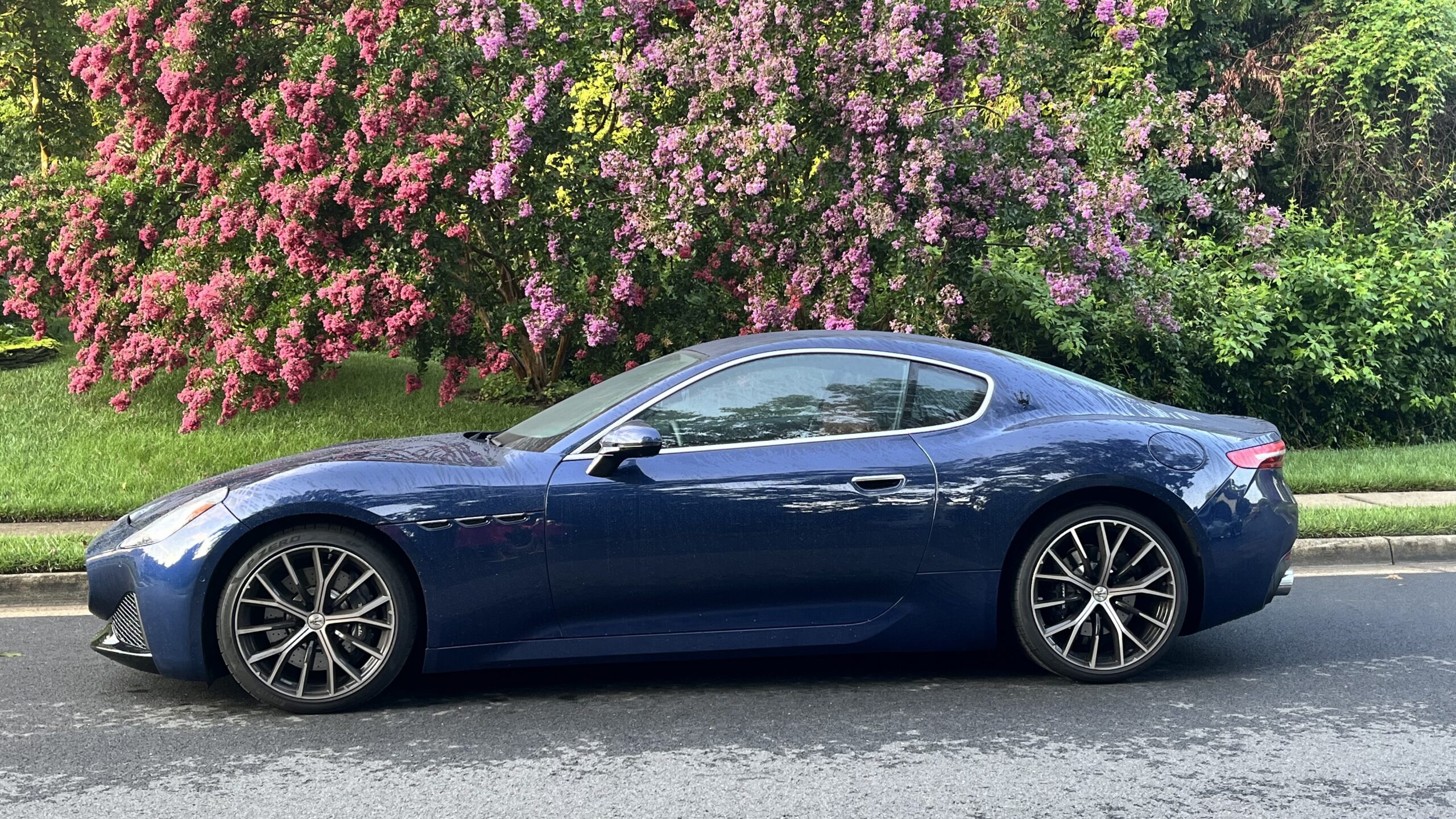
It’s elegant, fast, comfortable and beautifully suited to covering distance. It reminded me what a proper GT should be. You don’t finish a long drive feeling as though the car has been fighting you for the last three hours.
The Trofeo takes that same philosophy and adds another layer.
It’s still comfortable. It’s still elegant. It still feels like a Maserati GranTurismo.
But there’s more anticipation every time you get behind the wheel because you know another version of the car is sitting there waiting for you.
The standard GranTurismo makes the journey enjoyable.
The Trofeo makes you wonder whether there’s a more interesting road to get there.
That, more than anything else, describes the difference I felt between them.
Who Is This Car Really For?
I don’t think the GranTurismo Trofeo is simply for someone who wants the most expensive or most powerful version of the GranTurismo.
The buyer who will appreciate this car most is probably someone who could own a dedicated sports car but doesn’t necessarily want to live with one every day.
Maybe you want to leave Washington or Miami in the morning and drive several hundred miles without arriving exhausted.
Maybe you want to take someone to dinner without making them climb into a car that feels designed primarily for a racetrack.
Maybe you care about Italian design and the small details that make an automobile feel different every time you approach it.
But when the road opens, you still want something serious underneath your right foot.
That’s the person I think Maserati built the Trofeo for.
It doesn’t force you to decide whether you want the elegant car or the exciting one before leaving the house.
You get both.
Copyright Notice: All photographs and images featured in this article are © Carsfera.com / Carsfera Media unless otherwise credited. No image may be copied, reproduced, republished, distributed, modified, licensed, or used for any commercial purpose under any circumstances without prior written authorization from Carsfera.com. All rights reserved.
-
 TEST DRIVES2 months ago
2026 Toyota GR Supra MkV Final Edition
-
 NOW TRENDING1 month ago
Aston Martin DBX Becomes Harry Da Souza’s Ride in MobLand
-
 Formula12 months ago
FIA Reveals Second ADUO Results With Red Bull-Ford Still on Top
-
 NOW TRENDING2 months ago
Tesla Cybercab Puts U.S. Regulations to the Test
-
 NOW TRENDING2 months ago
2027 Hyundai Tucson Hybrid Gets a Power Boost
-
 NOW TRENDING2 months ago
Hyundai Reports Strong Hybrid Sales in August 2026
-
 NOW TRENDING2 months ago
Nissan Z Nismo Finally Gets a Manual Transmission in Japan
-
 INTELLIGENT MOBILITY1 month ago
Tesla Cybercab Cannot Be Charged at Home—Here’s Why
You must be logged in to post a comment Login