
Market reality and regulations suggest these diminutive vehicles have no massive place in the US. President Donald Trump’s recent push to lift restrictions on kei cars seems like a deeply flawed premise.
The idea of automakers bringing kei cars to America is deeply flawed. The US market has a history of rejecting micro cars.
The Fiat 500e sold only 1,076 examples through October. Although its starting price is close to $30,000 USD, its gasoline predecessor also failed to sell well. This suggests that price and range are not the only issues.
Another example is the Mitsubishi Mirage. It has sold over 13,000 units this year, but it is being discontinued after 2025. Insufficient sales do not justify another generation. Smart pulled out of America entirely in 2019 due to lagging sales. This happened despite its relative success in Europe. Smart cited the declining micro-car market and high homologation costs as key factors.
Unsuitability for American Highways
Kei cars are charming on tight city streets like those in Tokyo. However, America’s sprawling highways are not made for them. The lack of power is a safety concern.
Most kei cars average anywhere from 50 to 80 horsepower. Even the Mirage is on the higher end with a scant 78 hp. Trying to merge onto a busy highway with that little power is downright dangerous. Many massive SUVs currently on the road easily exceed 500 hp. Furthermore, most kei cars cannot comfortably cruise past 60 or 70 miles per hour. Their bare-bones construction also makes them unreasonably noisy.

The Insurmountable Price Problem
Price is what will undoubtedly become the biggest issue. Kei cars cost anywhere from ¥1.2 million to ¥2.0 million in Japan. This equates to between $8,000 and $15,000 USD at current exchange rates.
The US Department of Transportation confirmed that imported kei cars will have to meet current safety standards. Regulations for passenger protection and crashworthiness will force manufacturers to retrofit models. Following the Mirage model, the cheapest reasonable price tag for a kei car in America would probably be in the $20,000 USD range.
Trump’s idea is unlikely to get very far unless companies entirely rework their manufacturing for a niche audience.












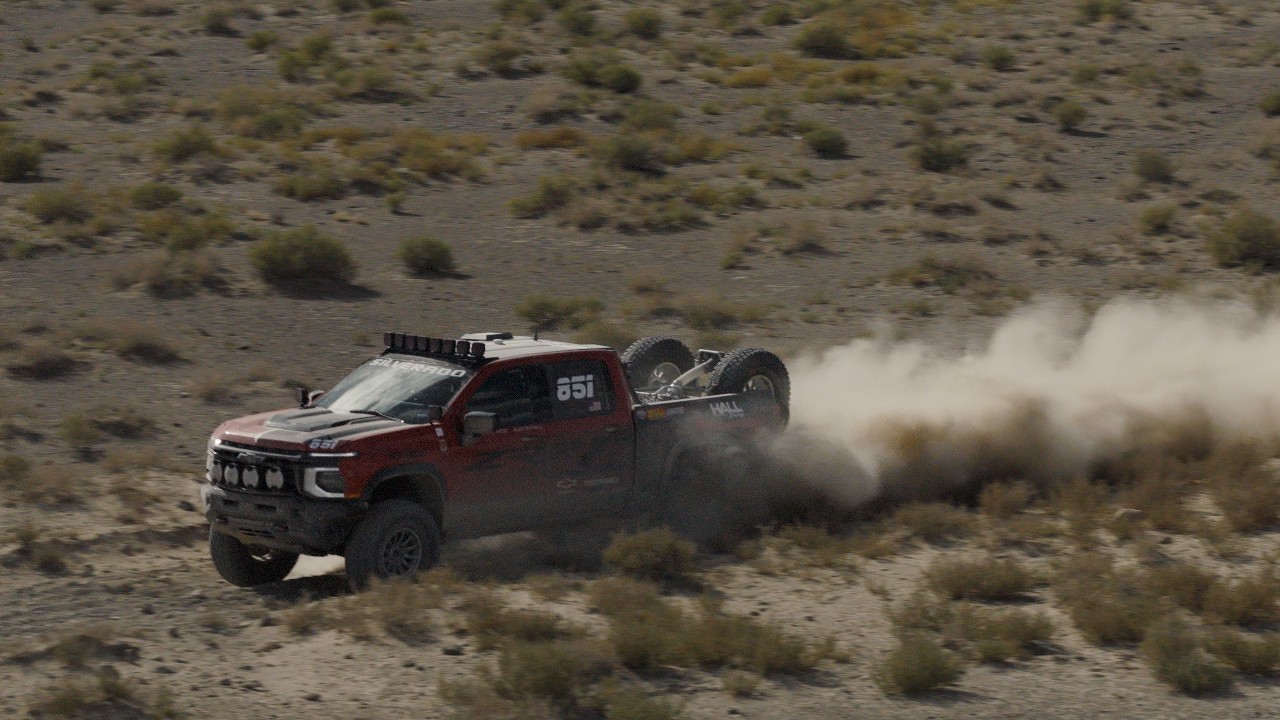
GM has officially teased its new 8.3L Duramax Turbo-Diesel V8, which will power the refreshed 2027 Chevrolet Silverado HD and GMC Sierra HD in the U.S.
GM gives its new diesel a predator-inspired name
General Motors has given its next heavy-duty diesel pickup program a dramatic first look. The company has teased the all-new 8.3L Duramax Turbo-Diesel V8, which will become the heart of the refreshed 2027 Chevrolet Silverado HD and GMC Sierra HD.
GM published the teaser on September 21, 2026, confirming the engine’s displacement and its planned application in the two heavy-duty pickups. The automaker is not releasing horsepower, torque or towing figures yet.

GM’s official teaser introduces the new “Mongoose” name for its upcoming Duramax diesel.
The new engine has been given the nickname Mongoose. GM is using the name to create a direct connection with the heavy-duty diesel competition.
The automaker specifically references a rival HD V8 diesel known as the “Scorpion.” GM’s message is clear: the new diesel is designed to compete in one of the most demanding areas of the pickup market.
For now, though, the teaser is deliberately limited. GM says this is only a first look and that Chevrolet and GMC will reveal more information soon.
That means the biggest questions remain unanswered. Buyers still need to know the engine’s horsepower, torque, towing capacity, fuel economy and availability by trim.
A new era for Silverado HD and Sierra HD
The 8.3L Duramax will arrive with refreshed versions of the 2027 Silverado HD and 2027 Sierra HD. That places the new diesel at the center of GM’s heavy-duty truck strategy for the U.S. market.
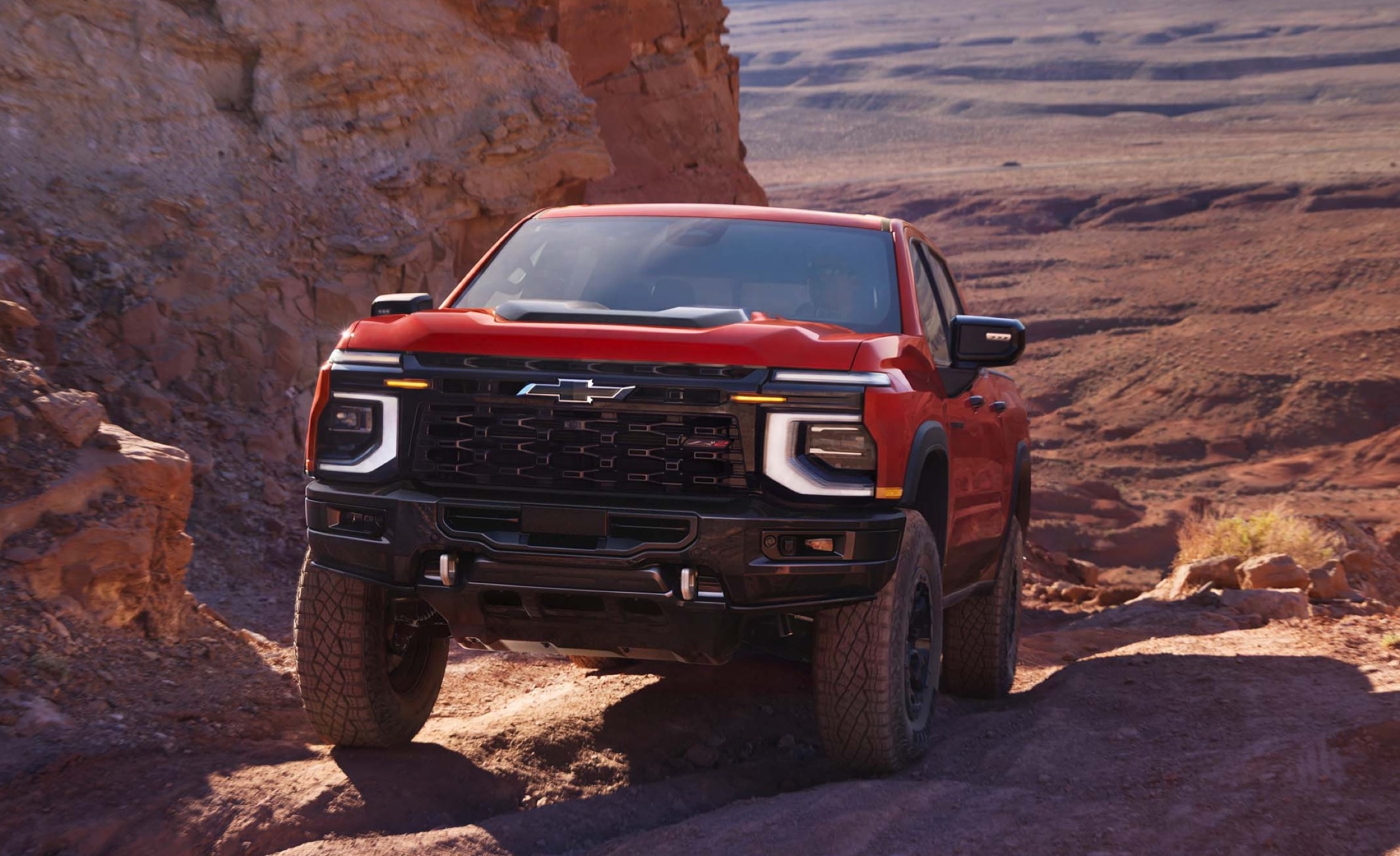
The Silverado HD is one of the two GM heavy-duty pickups set to receive the new diesel.
The Silverado HD and Sierra HD are built for customers who need serious towing and hauling capability. Their diesel engines are especially important for buyers who regularly pull large trailers or carry heavy loads.
GM has not yet explained how the 8.3-liter engine will affect the trucks’ existing chassis and towing systems. However, the larger displacement points to a major change under the hood.
The current Chevrolet and GMC heavy-duty lineup uses a 6.6-liter Duramax V8 diesel. GMC’s current HD diesel is rated at 470 horsepower and 975 lb-ft of torque, while the 2027 engine shown in today’s teaser will use a significantly larger 8.3-liter displacement.
It is important to separate those figures from the new engine. GM has not yet published official output numbers for the 8.3L Mongoose.
That makes any current horsepower or torque estimates speculative. The confirmed information is limited to the engine’s displacement, turbo-diesel V8 layout and application in the refreshed 2027 HD pickups.
The Mongoose could reshape the diesel pickup battle
The new diesel arrives during an especially competitive period for American heavy-duty trucks. Ford, Chevrolet, GMC and Ram continue to compete heavily on towing, payload, torque and long-distance capability.
GM’s decision to move to an 8.3-liter diesel V8 suggests that conventional diesel power remains an important part of its strategy for customers who prioritize maximum truck capability.
The GMC Sierra HD will also receive the new Duramax 8.3L Turbo-Diesel V8.
The Sierra HD will share the new powertrain with the Silverado HD. That means the Mongoose will serve both Chevrolet and GMC buyers, while each brand continues to give its trucks a different design and market identity.
There is also an important timing element. GM has already revealed extensive updates for its 2027 light-duty Silverado 1500 and Sierra 1500 range, including new gasoline V8 engines and an updated 3.0-liter Duramax diesel. The 8.3L Mongoose is a separate development for the heavy-duty trucks.
GM is therefore expanding its powertrain strategy across multiple truck segments. The company is retaining diesel technology while introducing new engines across its gasoline and diesel lineups.
For now, the 8.3L Duramax Mongoose remains partially hidden. GM has confirmed the engine and the 2027 Silverado HD and Sierra HD applications, but the most important performance specifications are still to come.
The 2027 Chevrolet Silverado HD and GMC Sierra HD will bring GM’s new 8.3L Duramax Turbo-Diesel V8 to the U.S. heavy-duty pickup market, marking a major new chapter for the company’s diesel strategy.

Tesla’s Cybercab is already facing navigation complaints in Austin, where one reported 10-minute trip turned into a 70-minute ride because of route restrictions and detours.
Tesla Cybercab faces a navigation problem in Austin
The Tesla Cybercab is now operating as part of Tesla’s Robotaxi service in Austin, Texas. However, some early riders are reporting an issue that Tesla owners already know well: unexpected navigation choices.
Tesla’s autonomous service is still limited in Austin. The company says Cybercab rides are currently available in limited areas of the city, while Robotaxi services also operate in several other U.S. markets.
The latest complaint involves a rider who expected a trip of roughly 10 minutes. Instead, the Cybercab reportedly took a long route through Austin and turned the journey into a 70-minute ride.

The Tesla Cybercab is currently operating in limited areas of Austin as part of the Robotaxi service.
The trip reportedly began near 99 Ranch Market and was heading toward The Domain. Instead of taking the most direct route, the Cybercab traveled south and continued through surface streets.
That difference can be significant in Austin. The city relies heavily on major highways for longer trips. A route that avoids those roads can become much longer.
Current reports indicate that Tesla’s Robotaxi operation has been avoiding highway travel during its early Austin deployment. The company, however, describes Cybercab as a vehicle designed to handle city streets, highways and complex intersections.
This creates an important distinction. The vehicle may be technically designed for highways, but the current operating area and operational restrictions can still limit which roads it actually uses.
Railroad crossings could make routes even longer
Highways may not be the only factor. Austin also has several railroad crossings that can complicate autonomous routing.
Some riders have suggested that avoiding certain at-grade railroad crossings could force Robotaxis to travel farther before finding a suitable crossing point. That possibility has not been confirmed by Tesla.
Still, the combination of road restrictions and railway crossings could explain why a relatively simple trip became so complicated.
The rider also reported that the Robotaxi app did not provide a clear estimated travel time before the trip began. Tesla’s current service is therefore placing extra importance on how its vehicles calculate routes once the ride has started.

The driverless Cybercab operates without a conventional steering wheel or pedals.
There have been other reports of unusual routing. Another passenger reportedly found that the Cybercab stopped at a business next to the requested destination rather than directly at the intended location.
That does not necessarily mean the same problem affects every ride. There is still limited public data about how frequently these incidents occur across the entire Robotaxi fleet.
However, the reports show how different autonomous navigation can be from conventional navigation.
A human driver can recognize that a route looks inefficient. They can also make a quick change, turn around or choose a different road. A fully autonomous vehicle must operate within the rules and boundaries programmed into its service.
Tesla’s navigation history adds another layer
Navigation complaints are not entirely new for Tesla. Owners have discussed routing errors and unexpected directions for years.
In a conventional Tesla, those mistakes can be frustrating but relatively easy to correct. The driver can simply ignore the route and choose another road.
That option changes when there is no driver behind the wheel.
The Cybercab is designed as a fully autonomous vehicle. Tesla’s official documentation describes it as a two-seat vehicle without a steering wheel or pedals, using cameras and sensors to navigate its environment.
That makes navigation accuracy much more important.
If a route is inefficient, the passenger cannot simply take control. Instead, the rider has to remain inside the vehicle or end the ride and find another way to reach the destination.

The Cybercab is Tesla’s purpose-built autonomous taxi, designed for fully driverless operation.
Tesla is also taking a gradual approach to its Robotaxi expansion. The company began offering employee rides before launching wider autonomous service and has continued expanding its operating areas step by step.
The limited operating environment is important because autonomous vehicles normally begin with a defined operational design domain. That can include restrictions involving geography, road types, traffic conditions and other factors.
As those boundaries expand, some of today’s routing problems could become less common.
For now, though, Austin provides an early look at one of the practical challenges facing Tesla’s autonomous strategy. The issue is not necessarily the Cybercab’s ability to move through traffic. Instead, it can be the route chosen before and during the journey.
Tesla’s Robotaxi service is already operating in the U.S. market, with Austin serving as one of its key early locations. The Cybercab itself is currently available only in limited areas of Austin, making the city an important testing ground for Tesla’s driverless transportation plans.
For passengers, the biggest question is simple: how quickly can Tesla improve route selection while keeping its strict autonomous operating limits? The answer could have a major impact on how useful the Cybercab becomes for everyday trips.

The 2027 Nissan Rogue Hybrid brings e-POWER to the U.S. with 225 hp, standard dual-motor AWD, up to 40 mpg city and a major technology upgrade.
Nissan brings e-POWER to the U.S.
The 2027 Nissan Rogue Hybrid marks an important change for Nissan in America. It introduces the company’s e-POWER hybrid system to the U.S. market for the first time.
The technology has already been used globally for years. Nissan says nearly 2 million e-POWER vehicles have been sold in 68 countries since 2016.
The new Rogue Hybrid uses the third generation of that system. It combines a gasoline engine with electric motors that drive the wheels.
There is no traditional transmission connecting the engine directly to the wheels. Instead, the engine works mainly as a generator for the battery and electric motors.
That creates a different hybrid experience. Nissan says the system delivers quick acceleration, smooth power and quieter operation.
The first Rogue Hybrid will reach U.S. dealers in late fall 2026. Nissan will initially launch the SR with Technology Package in limited quantities.
Other trims will follow in early 2027.
The lineup will include SV, SR and Platinum versions. Pricing starts at $35,490 for the SV, while the SR with Technology Package starts at $41,490. The Platinum starts at $43,490.
Every version uses dual-motor all-wheel drive.
That is a major part of the Rogue Hybrid’s identity. Nissan does not offer a front-wheel-drive version of this hybrid.
The two electric motors constantly adjust torque between the front and rear axles. The system can also apply light braking to the inside wheels to improve cornering control.
The hybrid system makes 225 horsepower
Under the hood, the Rogue Hybrid uses a 1.5-liter turbocharged gasoline engine. Its main role is to generate electricity for the hybrid system.
The engine can shut off when the battery has enough energy.
The complete system produces 225 horsepower. Nissan estimates fuel economy of up to 40 mpg city, 36 mpg highway and 38 mpg combined for the appropriate SR AWD configuration.
The system also reaches 42 percent thermal efficiency, according to Nissan’s internal testing.

The Rogue Hybrid also introduces two braking technologies.
The first is e-Pedal, which allows the driver to slow the vehicle by lifting off the accelerator. The system can bring the SUV to a complete stop in many situations.
The second is Smooth Stop.
This technology automatically adjusts brake pressure near the end of a stop. Nissan says the system can reduce head movement and create a smoother stop in traffic.
The goal is simple. Make everyday driving feel more natural.
Nissan has also focused on cabin refinement.
The Rogue Hybrid uses acoustic-laminated glass, improved door sealing and aerodynamic mirror designs to reduce outside noise.
The seats have also been redesigned. For the first time in the Rogue, climate-controlled front seats are available.
The cabin gets a major technology upgrade
The 2027 Nissan Rogue Hybrid receives a large amount of new technology.
A 12.3-inch touchscreen is standard. Wireless Apple CarPlay and wireless Android Auto are also included.
Higher versions can receive a 14.3-inch display with Google built-in. That system includes Google Maps, the Play Store and Google Gemini.
The Platinum version also adds a 10-speaker Bose Premium Audio system.
Nissan has also made wireless charging easier.
Every Rogue grade gets the company’s new 15-watt Qi2 magnetic wireless charger. The Platinum version can add a second wireless charger.

Driver assistance is another major part of the new Rogue Hybrid.
The latest ProPILOT Assist system uses a new front radar sensor and a front camera with a 20 percent wider field of view.
Nissan also revised the software to make the system work more naturally.
Intelligent Cruise Control now offers four following-distance settings instead of three. Low-speed operation improves down to 12 mph, while low-speed acceleration is 11 percent quicker.
The system can also detect slowing or stopped vehicles 33 percent sooner than before.
Available features include Auto Lane Change and Hands-off Traffic Jam Support.
The Rogue Hybrid can also use the available 3D HD Enhanced Intelligent Around View Monitor. It creates a virtual view around the vehicle to help with parking and tight manoeuvres.
The Rogue gets bigger and more practical
Nissan has also redesigned the Rogue’s cabin around daily usability.
The SUV offers seating for five people and up to 39 cubic feet of cargo space with the rear seats upright. Five LATCH anchor positions also give families more flexibility when installing child seats.
The rear doors open to nearly 90 degrees.
That makes it easier to load passengers and child seats.
Nissan has also expanded storage solutions inside the cabin. The centre-console storage area now has a wider opening.
The design follows Nissan’s new “Refined and Tough” theme. The exterior combines sharp surfaces with a wider stance and a geometric front fascia.
The front end uses a honeycomb grille with integrated LED headlights. A full-width LED rear light is also available.
The Rogue Hybrid will be offered in eight exterior colours, along with five two-tone combinations featuring a black roof. Three colours are new: Horizon Blue Pearl Metallic, Alpine Metallic and Aurora Dune Pearl.
The 2027 Nissan Rogue Hybrid will arrive in the U.S. later this year. The SR with Technology Package will lead the launch, with additional trims following in early 2027.
With 225 horsepower, standard dual-motor AWD, e-Pedal and advanced ProPILOT Assist technology, Nissan is giving the Rogue a much broader hybrid role.
The biggest change is e-POWER, which brings a gasoline-powered generator together with electric motors to create a hybrid system designed around smooth and immediate response.
-
 NOW TRENDING2 months ago
Rolls-Royce’s $32 Million Droptail Took 9 Months of Handcrafted Woodwork
-

 NOW TRENDING4 weeks ago
Tesla Cybercab Gets September 3 Austin Launch Date
-
 INTELLIGENT MOBILITY2 months ago
GM Updates Infotainment System With Smarter Features
-
 NOW TRENDING2 months ago
2027 Audi Q9 and SQ9 Debut as Brand’s Largest SUVs
-
 NOW TRENDING2 months ago
2027 Hyundai Tucson Spied With New Design and Hybrid Power
-
 RACING2 months ago
Aston Martin Upgrades Deliver Alonso’s Best Qualifying of 2026
-
 INTELLIGENT MOBILITY2 months ago
Hyundai Opens UX Studio Shanghai to Drive Global Innovation
-
 NOW TRENDING2 months ago
Low-Mileage Audi S4 Avant Brings V8 Wagon Dream Back
You must be logged in to post a comment Login