
Formula1
Williams Feared Losing Sainz During Its 2026 Crisis


James Vowles admits Williams feared Carlos Sainz or Alex Albon could leave during the team’s difficult 2026 season, but both drivers ultimately backed the project.
Williams entered the 2026 Formula 1 season expecting to build on its progress from the previous year. Instead, the team faced a major setback.
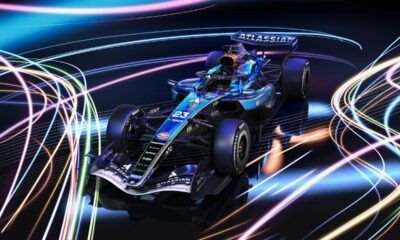
The FW48 arrived overweight, lacked the expected performance and left Williams fighting near the back of the field for much of the season.
The difficult situation created another concern for team principal James Vowles. He feared Carlos Sainz or Alex Albon could decide to leave the team.
That possibility added another layer of pressure to an already challenging season. Williams needed to improve the car while also maintaining a strong working relationship with its two drivers.

Carlos Sainz and Alex Albon remained committed to Williams despite its difficult start to 2026.
Williams Faced the Risk of Losing a Driver
The scale of Williams’ problems made the situation particularly difficult.
The team missed its Barcelona preseason shakedown and eventually put an FW48 on track that was around 28 kilograms above the minimum weight limit.
After finishing fifth in the 2025 Constructors’ Championship, Williams dropped to ninth in 2026.
That was a significant change in competitive performance.
Vowles later acknowledged that he had considered the possibility of losing one of his drivers during the most difficult periods of the season.
He also confirmed that potential routes existed for a driver to leave, although the contractual circumstances were different for each case.
For Williams, the priority was therefore twofold. The team had to address the technical problems while continuing to build trust with Sainz and Albon.

James Vowles had to manage the team’s technical challenges while maintaining confidence within the driver lineup.
Sainz and Albon Chose to Support the Project
Vowles had already spoken with both drivers before the season began.
He contacted Albon first and then Sainz. The message was direct: Williams was facing serious problems.
The FW48 would be heavy, and the team did not yet know the full impact that would have on its performance.
Albon responded immediately.
According to Vowles, the driver made it clear that he wanted to remain involved and asked what he could do to help the team.
Sainz took a more analytical approach.
He asked questions about the car, the team’s understanding of the problem and the development plan.
His response eventually led to the same conclusion: he wanted to help.
Both drivers then visited Williams’ factory in Grove.
Their presence sent an important message to the wider organization. They were not looking for someone to blame. They were showing that they remained engaged with the team’s recovery effort.
That support became especially valuable as Williams continued working through a difficult season.
Baku Finally Gave Williams a Reason for Optimism
Williams continued developing the FW48 through the summer.
The team faced further difficult weekends, but Sainz and Albon continued to support the development program.
That commitment mattered to Vowles.
The situation eventually began to change in Baku, where Williams introduced a significantly lighter chassis.
The weight reduction addressed one of the major weaknesses that had affected the FW48 throughout the season.
Sainz also reached Q3 for the first time in 2026, providing a visible sign that the team’s development work was beginning to produce results.

The lighter Williams chassis helped produce one of the clearest signs of progress during the 2026 season.
The Biggest Victory Was Restoring Confidence
The improvement in Baku did not turn the FW48 into a front-running car overnight.
It did, however, provide something Williams badly needed: evidence that its development plan was working.
For much of 2026, the team had been dealing with problems that went far beyond a normal performance deficit.
Engineers had to reduce the car’s weight, improve its pace and understand why the project had fallen so far behind its expectations.
At the same time, the leadership team needed to maintain a productive relationship with two drivers who had committed to Williams’ long-term plans.
Sainz and Albon ultimately chose to remain part of that process.
For Vowles, that commitment carried significant value.
Williams’ 2026 crisis was therefore about more than lap time. It was also about maintaining trust while rebuilding the team’s competitive foundation.
The progress in Baku showed that the work was beginning to move in the right direction.
And for Williams, restoring that confidence could prove just as important as any single result.









-

 NOW TRENDING2 months ago
Land Rover Defender Recall 2026: 23,677 JLR SUVs Affected
-

 NOW TRENDING2 months ago
Hyundai September 2026 Sales Hit Record 77,439
-

 NOW TRENDING2 months ago
2027 Silverado HD: New 8.3L Duramax V8 Revealed
-

 NOW TRENDING2 months ago
Cadillac EVs 2026: All Five Electric Models Explained
-

 NOW TRENDING2 months ago
Porsche Gas Macan Returns in 2028 as EV Plans Evolve
-

 NOW TRENDING2 months ago
2027 Toyota Grand Highlander Woodland Adds Adventure
-

 INTELLIGENT MOBILITY2 months ago
GM and PG&E Make Home EV Charging Easier for Buyers
-

 INTELLIGENT MOBILITY2 months ago
Waymo Safety Data Shows 82% Fewer Injury Crashes