
RACING
Mercedes F1 Explains Why Its 2026 Upgrades Are Running Late

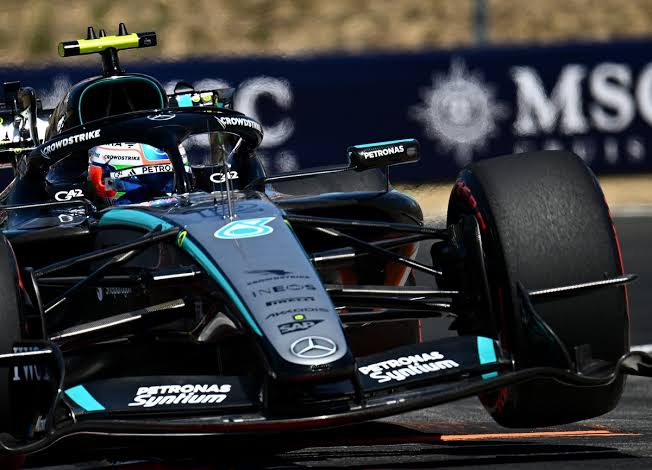
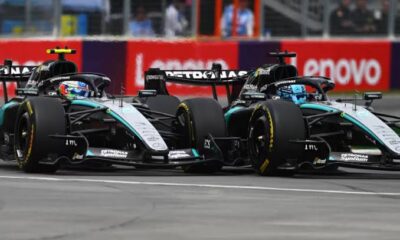
Mercedes has explained why its 2026 development program has fallen behind some rivals after delaying the W17’s design freeze to maximize its launch performance.
Mercedes has revealed why its 2026 Formula 1 development program is currently running behind several rivals. Technical director James Allison says the team deliberately pushed the W17’s initial development to the limit, allowing Mercedes to launch a very strong car but leaving less capacity for the next stages of the season.
The strategy worked immediately. Mercedes opened the new regulations with a one-two finish in Australia and won eight of the first 11 races.
However, Ferrari and McLaren have since closed the gap with their own major upgrades.
Mercedes delayed its W17 development cycle
According to Allison, Mercedes made an unusual decision during the final stages of developing the W17. The team delayed its normal design freeze to keep extracting performance from the new regulations for as long as possible.

Mercedes delayed the W17 design freeze to include as much late development performance as possible in the launch car.
A design freeze normally establishes the specification that will enter production. Later improvements are then introduced through scheduled upgrades during the season.
Mercedes chose to move that point later than usual.
The approach allowed the team to place more development into the launch specification. However, Allison said the plan left the project with almost no contingency if problems appeared during production.
Mercedes found much more performance than in 2025
The reason behind the strategy was the unusually steep development curve created by the 2026 regulations.
Allison said Mercedes was finding roughly six to seven times more lap time per week in the wind tunnel than it had during 2025.
He estimated that the team could find around half a second every two months, highlighting how quickly performance was developing under the new rules.

Mercedes says the 2026 regulations have created a much faster development curve than the mature rules used in 2025.
Mercedes took advantage of that situation before the season began.
The team pushed as much late-stage aerodynamic performance as possible into the first version of the W17. That helped create a major early advantage.
However, other teams froze their designs earlier and began preparing their first upgrades sooner.
Rivals caught up with earlier upgrades
Allison says that decision has left Mercedes roughly one or two races behind its rivals in the development cycle.
Ferrari demonstrated the effect in Barcelona after introducing a significant upgrade package. McLaren later made another major step with its new floor in Hungary.

Ferrari and McLaren have closed the gap with upgrades that arrived earlier in the 2026 development cycle.
The situation explains why the competitive order has changed throughout the season.
Mercedes may have had more performance at the start, but rivals had new parts ready sooner. As a result, the initial advantage could disappear quickly.
According to Allison, teams are currently developing at a similar rate, with roughly half a second of potential lap-time gain every two months.
That means being one development cycle behind can effectively cost around half a second.
Mercedes says more performance is coming
Despite the delay, Allison believes Mercedes still has further performance in development.
The team’s strategy now is to remain ahead of its rivals until the next major package arrives. Mercedes is effectively trying to protect its championship position while waiting for the next block of upgrades.
The early results give the team some margin for error. Mercedes holds a significant lead in both championships after the opening half of the season.
Still, the Mercedes F1 2026 development battle is becoming increasingly close. Ferrari and McLaren have shown that a single major upgrade can erase a large part of an early advantage.
Mercedes therefore needs its next package to deliver as expected.








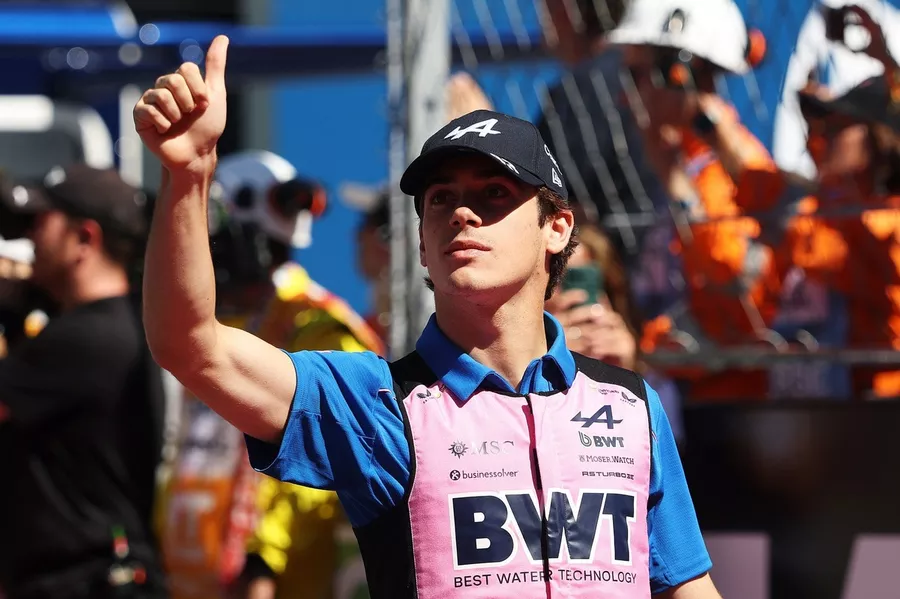
Franco Colapinto returns to Baku with Alpine after a seventh-place finish in Spain, aiming to continue his recent run of points-scoring results in Formula 1.
Colapinto returns to the scene of his F1 breakthrough
Some Formula 1 circuits become closely linked to a driver’s career. For Franco Colapinto, Baku is one of those places.
The Argentine returns to the Azerbaijan Grand Prix this weekend with Alpine. He arrives after finishing seventh at the Spanish Grand Prix in Madrid, another points-paying result during his 2026 campaign. Formula 1’s official results show that Colapinto also finished seventh in Miami and sixth in Canada earlier this season.
Baku carries a different meaning, though. It was here in 2024 that Colapinto scored the first Formula 1 points of his career.
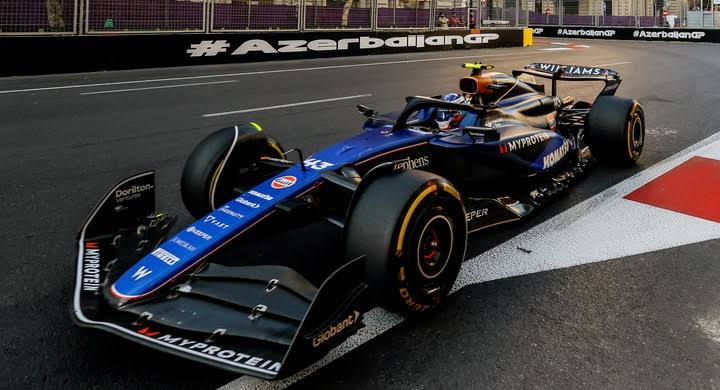
Franco Colapinto raced at Baku for Williams in 2024, scoring points in only his second Formula 1 appearance.
Colapinto reached Q3 and started eighth in the 2024 Azerbaijan Grand Prix. He then finished eighth after 51 laps, collecting four championship points for Williams.
The result was significant for another reason. Colapinto became the first Argentine driver to score Formula 1 points since Carlos Reutemann in 1982, according to Formula 1’s report from that weekend.
Now, two years later, his situation is very different.
He is no longer a young substitute making his first steps in the championship. He is racing as a full-time Alpine driver and arrives in Azerbaijan after one of his strongest weekends of the 2026 season.
Alpine wants to carry its recent momentum
Colapinto’s seventh place in Madrid came after another strong qualifying performance. He reached Q3 and qualified ninth, finishing ahead of his Alpine teammate Pierre Gasly. Formula 1 described the Spanish weekend as probably Colapinto’s best race weekend of the season in terms of execution.
The result also continued an important recent run.
Colapinto scored points in Spain after collecting points in the previous two European rounds. His 2026 record now includes eight points-scoring finishes after 14 races, according to Formula 1’s official driver results.
That gives Alpine a stronger foundation heading into Baku.
Colapinto said he wants to transfer the performance level from Madrid to Azerbaijan. The team’s official preview also highlights the confidence created by its recent points-scoring form.
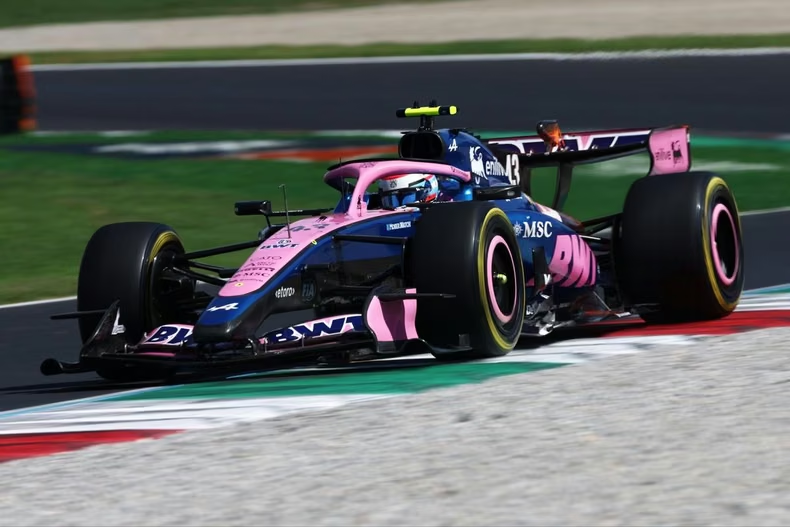
Colapinto arrives in Baku after finishing seventh for Alpine at the 2026 Spanish Grand Prix.
The challenge will be different.
The Baku City Circuit is a high-speed street track with long straights, heavy braking zones and very narrow sections. Alpine says the difference from Turn 16 to Turn 1 is around 2.2 kilometers, creating opportunities for overtaking.
The most famous section is the castle area. The track becomes extremely narrow there, with a minimum width of only 7.6 meters at Turn 8.
That leaves almost no room for mistakes.
Baku could create opportunities for Alpine
Street circuits can also produce unpredictable races. Close barriers, changing track position and strategy can quickly alter the order.
That is something Colapinto is aware of. His objective is not simply to repeat the seventh-place result from Madrid. Instead, he wants Alpine to be ready to capitalize if opportunities appear during the race.
The team is entering a particularly busy period. The Azerbaijan Grand Prix is the first race of a triple-header, adding another layer of pressure to preparation and execution.
Colapinto has already identified the key approach: carry Alpine’s recent performance into another demanding street circuit.
That means finding a good setup, qualifying strongly and staying out of trouble around the walls.
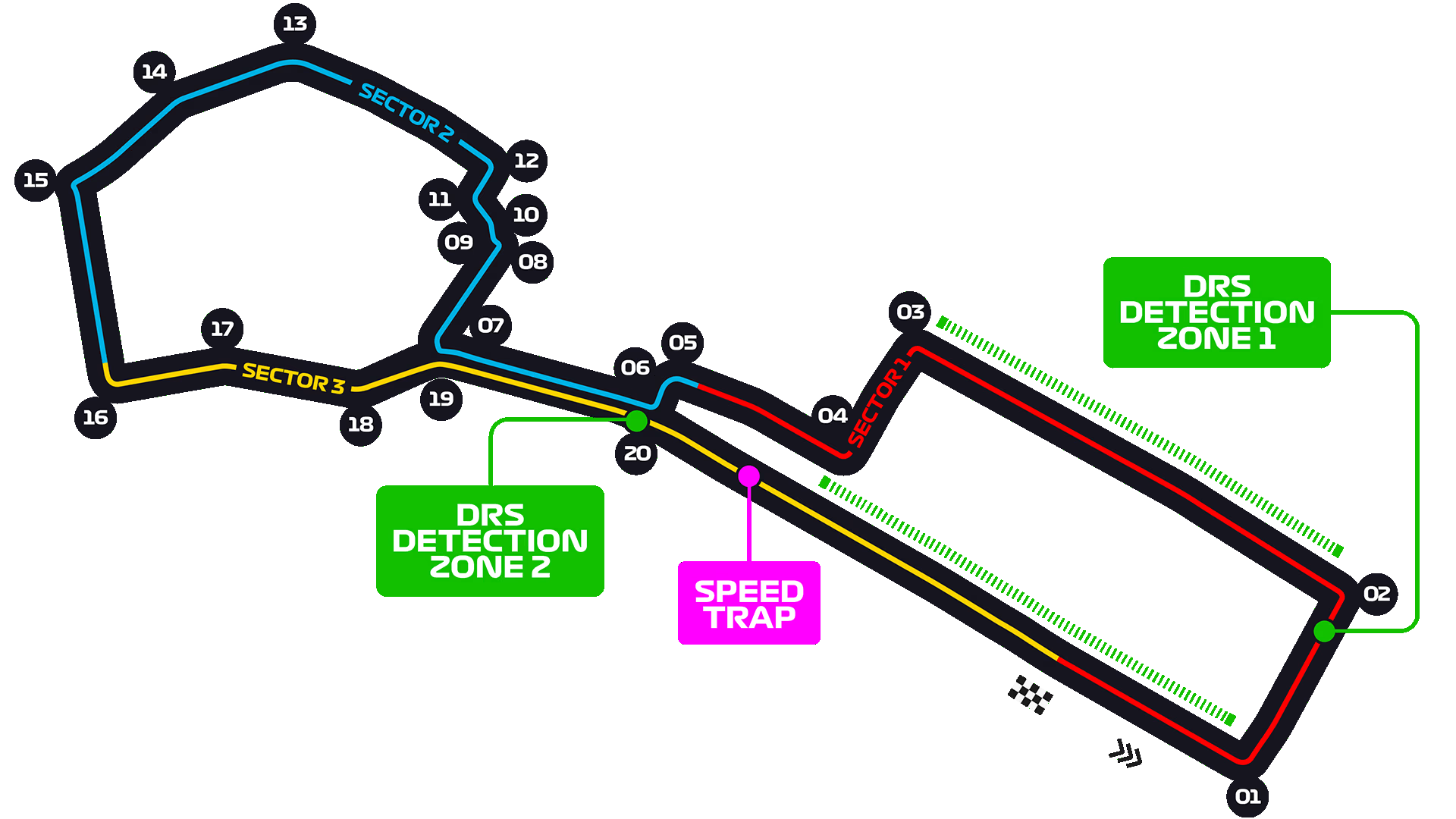
The Baku City Circuit combines long straights with the narrow castle section through the historic center of the city.
Pierre Gasly will also look to build on Alpine’s recent form. The Frenchman has a particularly strong Baku memory, having finished third at the circuit in 2021.
Gasly, however, also noted that the circuit has not always been particularly favorable to Alpine in recent seasons. The team’s target is therefore to establish a competitive setup early in the weekend and put both cars in a position to fight for points.
For Colapinto, Baku offers something more personal.
His 2024 result changed the perception around his rookie campaign. It was his first Q3 appearance and his first points finish, all in only his second Grand Prix.
Now he returns as an Alpine driver with a much larger body of Formula 1 experience behind him.
The Franco Colapinto Baku return therefore combines a meaningful memory with a current sporting objective. After taking seventh in Madrid, the Argentine wants another top-10 finish as Alpine continues its push for more championship points.
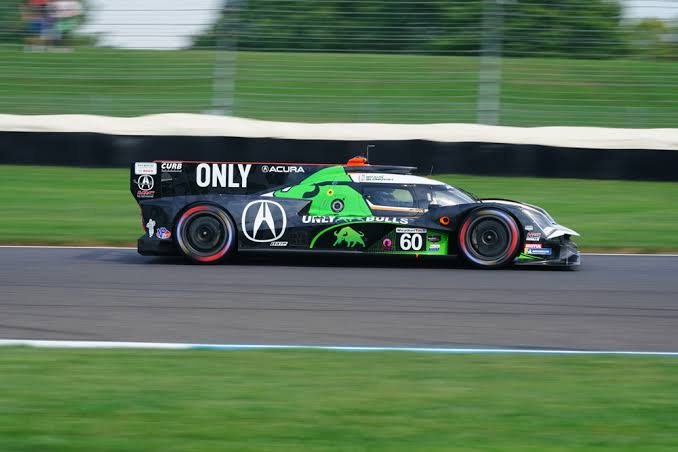
Tom Blomqvist put the No. 60 Acura ARX-06 on pole at Indianapolis, giving Meyer Shank Racing its first GTP pole of the 2026 IMSA season.
Blomqvist puts Acura on pole at Indianapolis
Tom Blomqvist delivered a standout qualifying performance at Indianapolis Motor Speedway. The British driver placed the No. 60 Acura Meyer Shank Racing with Curb Agajanian Acura ARX-06 on pole for the TireRack.com Battle on the Bricks.
Blomqvist completed the 14-turn, 2.439-mile road course in 1:14.674. His lap gave Acura the fastest time in the GTP class and put Colin Braun alongside him as his co-driver.
The result also gave Blomqvist his first pole of the 2026 season. It was his eighth career pole with Meyer Shank Racing since joining the organisation in 2022.
The session was also affected by weather. Lightning near the circuit forced a delay, while the GTD and GTD PRO qualifying sessions were cancelled. Their grids were then set using team championship standings.

The pole was not the result of a simple qualifying run.
Blomqvist said the team had tested new concepts during practice. He also noted that the weather made the session difficult to predict.
The Acura appeared to have the pace when it mattered most. Blomqvist needed a single strong lap and delivered it near the end of the session.
The conditions added another challenge.
Earlier rain had left some damp spots around the track. That made tyre preparation even more important.
Blomqvist also highlighted the difficulty of getting the right-side tyres up to temperature at Indianapolis. He felt he had only one major opportunity to produce the lap he needed.
He used it perfectly.
Acura beats Cadillac for the top spot
Jack Aitken and Earl Bamber placed the No. 31 Cadillac V-Series.R on the outside of the front row. Aitken’s best lap was 1:14.975, leaving him 0.301 seconds behind Blomqvist.
Dries Vanthoor put the No. 24 BMW M Hybrid V8 third. Jordan Taylor and Louis Deletraz were fourth in the No. 40 Cadillac.
The sister Acura also secured a strong grid position.
The No. 93 Acura ARX-06 of Nick Yelloly and Renger van der Zande qualified fifth. The pair arrived at Indianapolis third in the GTP driver standings and had already taken a victory at Long Beach earlier in the season.
That gives Meyer Shank Racing two cars near the front.

The No. 93 car is still involved in the championship battle.
Yelloly and van der Zande entered Indianapolis with a points deficit to the GTP leader, Jack Aitken. Their fifth-place qualifying result keeps them within striking distance for the race.
For Blomqvist and Braun, the situation is different.
The No. 60 crew is out of championship contention. The priority is now to secure the team’s first win of the season.
That makes pole position particularly valuable.
The 2026 Indianapolis race is a shorter two-hour, 40-minute sprint, unlike last year’s six-hour format. In a shorter race, track position can have an even greater influence on the final result.
Blomqvist and Braun also have unfinished business at Indianapolis.
Last year, the pair finished third after starting from the back following a post-qualifying technical infraction. This time, the No. 60 Acura will start at the front.
That makes the 2026 pole especially meaningful for the team.
Acura’s IMSA programme is nearing its end
The Indianapolis weekend is also significant for another reason.
Acura is preparing to leave the IMSA WeatherTech SportsCar Championship after the 2026 season. That means Meyer Shank Racing has only two races remaining with the Acura GTP programme.
The team therefore wants to finish the partnership with another victory.
The No. 60 Acura now has the best possible starting position. The No. 93 is also starting from the top five.
Both cars will carry Acura’s hopes into the final stages of the programme.

The qualifying result also highlights the strength of Meyer Shank Racing at Indianapolis.
Blomqvist’s pole marked the second consecutive year that he has set the fastest qualifying time at the circuit. The previous year’s result, however, was later removed after a technical inspection issue.
This time, the No. 60 Acura will officially lead the field.
Blomqvist said the team executed the qualifying plan well. He also praised the work completed during practice.
Now the focus shifts to the race.
The shorter format means the Acura crew will have less time to recover from mistakes. Starting at the front should therefore help the No. 60 avoid traffic during the opening laps.
The No. 93 will also have an opportunity to fight near the front. Yelloly and van der Zande need a strong result to support their championship challenge.
Tom Blomqvist has already completed the first part of the mission. The No. 60 Acura ARX-06 will start from pole at Indianapolis.
The next objective is the one Meyer Shank Racing wants most: turning pole position into its first IMSA victory of 2026 before Acura’s programme reaches its final races.
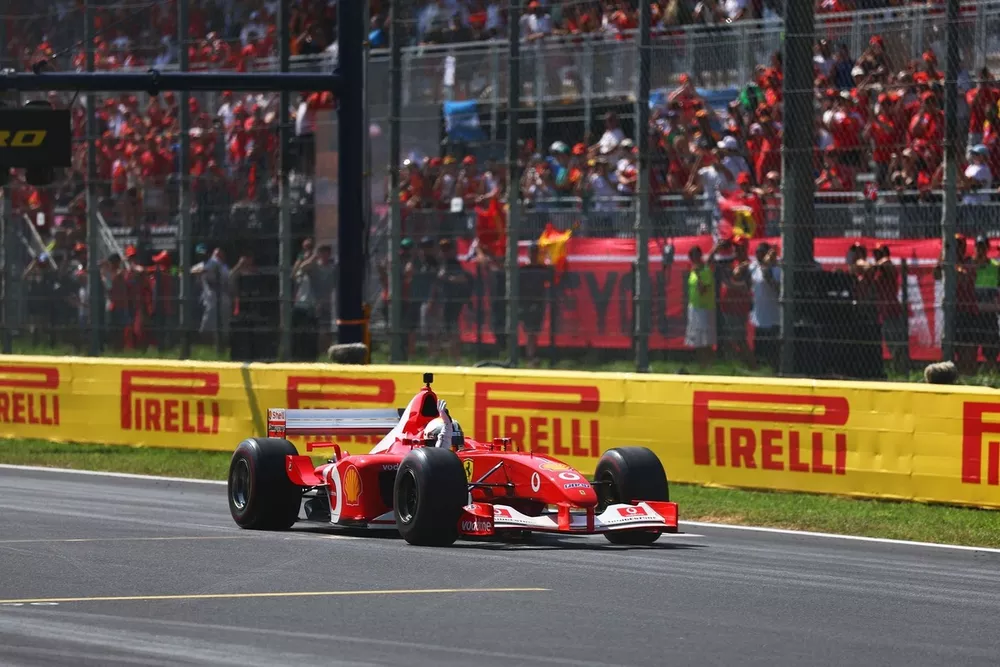
Sebastian Vettel believes Formula 1 can combine the excitement of its historic cars with modern sustainability after driving Michael Schumacher’s Ferrari F2002 at Monza.
Vettel sees a future for both performance and sustainability
Sebastian Vettel has offered his view on the F1 2026 regulations after returning to the track in one of Formula 1’s most iconic cars.
The four-time world champion drove Michael Schumacher’s Ferrari F2002 at Monza, bringing a 3.0-liter V10 back to one of the sport’s most historic circuits.
The experience gave Vettel a direct connection with the past. It also made him think about the future of Formula 1.
Vettel has never hidden his passion for older F1 cars. He was also critical of the turbo-hybrid era when it arrived in 2014, particularly because of the quieter engine sound.
In 2019, a hybrid failure during the Russian Grand Prix even led Vettel to call for the return of V12 engines over team radio.
However, his environmental views have developed alongside his passion for classic racing.
Vettel now believes that sustainability and driving excitement do not have to be opposing ideas. He sees modern technology as a way to combine both sides of Formula 1.

Vettel described the experience of driving the F2002 as especially meaningful.
The Ferrari was the car Schumacher used during his dominant 2002 championship season. Schumacher finished on the podium in all 17 races that year, an achievement that remains unmatched.
For Vettel, the car represents much more than an old racing machine.
He considers the F2002 a symbol of what Formula 1 represented during that period. It combined extreme performance, engineering precision and technological innovation.
At the same time, Vettel recognises that today’s cars represent the technological priorities of their own era.
The difference is not necessarily about which generation is better. Instead, Vettel believes Formula 1 should learn from its past while continuing to develop for the future.
That is why the 2026 regulations interest him.
Vettel does not agree with everything in F1 2026
Vettel has made clear that he does not support every aspect of the current regulations.
From a driving perspective, the former Ferrari driver believes there are elements he would change. However, he does not see that as a reason to reject the direction toward greater sustainability.
The German believes Formula 1 has enough technology to find a better balance.
“One thing does not have to exclude the other,” Vettel explained. His idea is to combine the elements that fans love with solutions that reduce the environmental impact of motorsport.
That philosophy has been part of his public position for years.
Vettel has repeatedly supported synthetic fuels and sustainable fuel technology. He sees them as one possible way to preserve internal-combustion engines while reducing their environmental impact.

The F2002 demonstration also provided a practical example of that idea.
Vettel’s run was completed using fuel made with advanced sustainable components, including molecules produced from renewable sources such as bio-waste and agricultural residues.
That allowed an early-2000s V10 engine to run with modern fuel technology.
The significance was clear.
A historic Formula 1 engine did not necessarily need to remain locked in the past. Modern fuel technology could help bring it back to the circuit while maintaining a different environmental approach.
For Vettel, that opens an interesting possibility for future motorsport regulations.
He believes sustainable fuels could help preserve some of the characteristics enthusiasts associate with traditional racing engines.
Sustainable fuels could keep the combustion engine relevant
Vettel sees sustainable fuels as an important part of motorsport’s future.
The former champion believes the technology has potential beyond Formula 1. It could also influence other racing categories and demonstrate how combustion engines might continue evolving.
This is especially relevant because Formula 1 is already looking toward future regulations that could change the balance between electric and combustion power.
Vettel’s position is therefore not simply a defence of V10 engines.
Instead, he wants Formula 1 to combine its heritage with new technology.

That philosophy also explains why Vettel believes historic demonstrations can have a purpose beyond nostalgia.
The F2002 represents one of Formula 1’s most important technical periods. The 2026 cars represent another.
Both generations are products of their own technological priorities, and Vettel believes the sport can take valuable lessons from each.
The German also sees Formula 1 as a platform with significant global influence. Because of that reach, he believes the championship can help promote ideas that extend beyond racing.
His goal is not simply to bring back older engines.
Instead, Vettel wants future regulations to preserve the things that make Formula 1 exciting while continuing to address sustainability.
The F2002 demonstration at Monza made that contrast especially visible. A legendary V10 returned to the circuit, but it was powered by modern sustainable fuel technology.
That combination reflects Vettel’s broader view of the sport.
Formula 1 does not necessarily have to choose between its past and its future.
For Vettel, the challenge is finding a way to combine performance, emotion and responsibility in the same technical package.
-
 NOW TRENDING2 months ago
Rolls-Royce’s $32 Million Droptail Took 9 Months of Handcrafted Woodwork
-
 NOW TRENDING4 weeks ago
Tesla Cybercab Gets September 3 Austin Launch Date
-
 INTELLIGENT MOBILITY2 months ago
GM Updates Infotainment System With Smarter Features
-
 NOW TRENDING2 months ago
2027 Audi Q9 and SQ9 Debut as Brand’s Largest SUVs
-
 NOW TRENDING2 months ago
2027 Hyundai Tucson Spied With New Design and Hybrid Power
-
 RACING2 months ago
Aston Martin Upgrades Deliver Alonso’s Best Qualifying of 2026
-
 INTELLIGENT MOBILITY2 months ago
Hyundai Opens UX Studio Shanghai to Drive Global Innovation
-
 NOW TRENDING2 months ago
Low-Mileage Audi S4 Avant Brings V8 Wagon Dream Back
You must be logged in to post a comment Login