
INTELLIGENT MOBILITY
GM Updates Infotainment System With Smarter Features

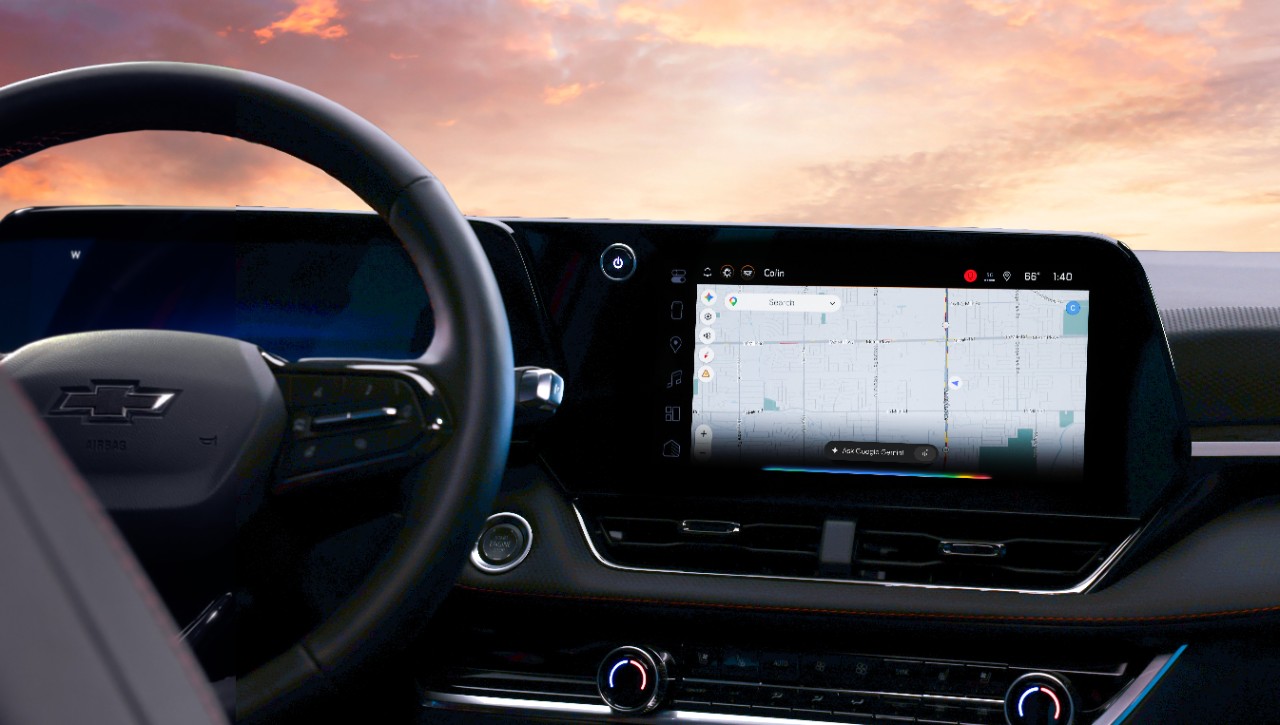
General Motors is rolling out new over-the-air software updates that improve the infotainment experience with a redesigned interface, enhanced personalization and easier-to-use controls across eligible Cadillac models.
The latest GM infotainment software update introduces a wide range of enhancements designed to make the in-vehicle experience more intuitive and personalized. Developed using customer feedback, the new features improve navigation, media controls, seating preferences and charging functions while delivering a cleaner and more responsive interface.
Moreover, the updates are arriving through over-the-air software downloads, allowing eligible Cadillac owners to receive new functionality without visiting a dealership.
Smarter Audio Controls and Easier Navigationdia playback.
Drivers can now view an upcoming playlist through a new side queue, making it easier to see which songs will play next. Additionally, a new drop-down source selector allows users to switch between music apps and audio sources with fewer taps, creating a faster and more seamless listening experience.
Furthermore, larger touch targets throughout the interface reduce accidental presses and make frequently used controls easier to access.
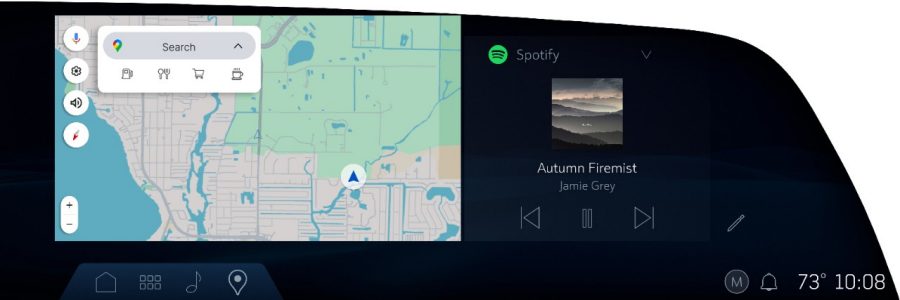
GM’s updated infotainment interface features improved media controls and larger touch targets.
Personalized Driver Profiles and Comfort Settings
The GM infotainment software update also expands personalization features.
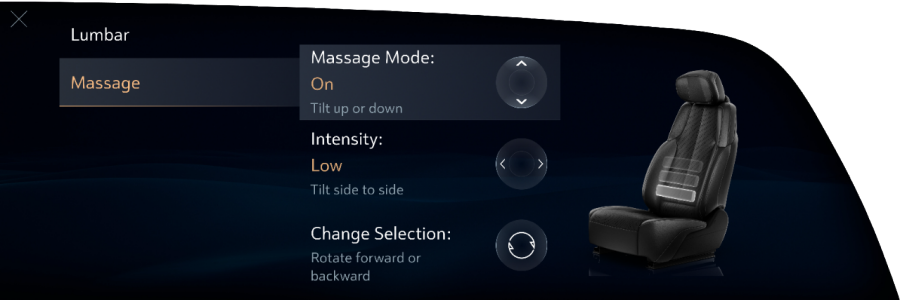
Drivers can now link two user profiles to the vehicle’s memory seat buttons. With a single press, both the preferred seating position and the driver’s personalized profile are restored automatically. The feature will debut on the 2026 Cadillac VISTIQ before expanding to additional GM models.
Meanwhile, seat adjustment graphics have been redesigned to match the physical controls located on the vehicle’s doors. As a result, changing comfort settings becomes more intuitive and visually consistent.
Additionally, the charging application now features clearer labels and descriptions, making charging options easier to understand.

Updated driver profiles automatically restore personalized seating and infotainment settings.
Better Connectivity and Improved Display Quality
GM has also refined several everyday features to improve convenience.
The latest software includes sharper Head-Up Display graphics, making important driving information easier to read. Furthermore, Bluetooth pairing has been simplified by removing an extra confirmation step, allowing devices to connect more quickly.
These refinements contribute to a smoother user experience while reducing unnecessary interactions with the infotainment system.
Eligible Cadillac Models Receive Over-the-Air Updates
The new GM infotainment software update is being released gradually through over-the-air updates.
Eligible vehicles include:
- 2025 Cadillac LYRIQ
- 2026 Cadillac LYRIQ
- 2025 Cadillac OPTIQ
- 2026 Cadillac OPTIQ
- 2025 Cadillac VISTIQ
- 2026 Cadillac VISTIQ
- 2025 Cadillac CT5
- 2026 Cadillac CT5
GM confirmed that additional software improvements will continue rolling out over the coming months as updates become available.
Eligible Cadillac models receive the latest infotainment improvements through over-the-air software updates.
Future Updates Will Expand the Experience
General Motors has already outlined additional enhancements planned for future releases.
Upcoming updates will introduce a redesigned home screen featuring a larger interactive navigation map alongside media controls. Drivers will also benefit from simplified widget customization, making it easier to personalize the dashboard layout with just a few taps.
Overall, these software improvements demonstrate GM’s continued focus on enhancing the digital driving experience through regular over-the-air updates, delivering new features that improve usability, convenience and personalization without requiring new hardware.









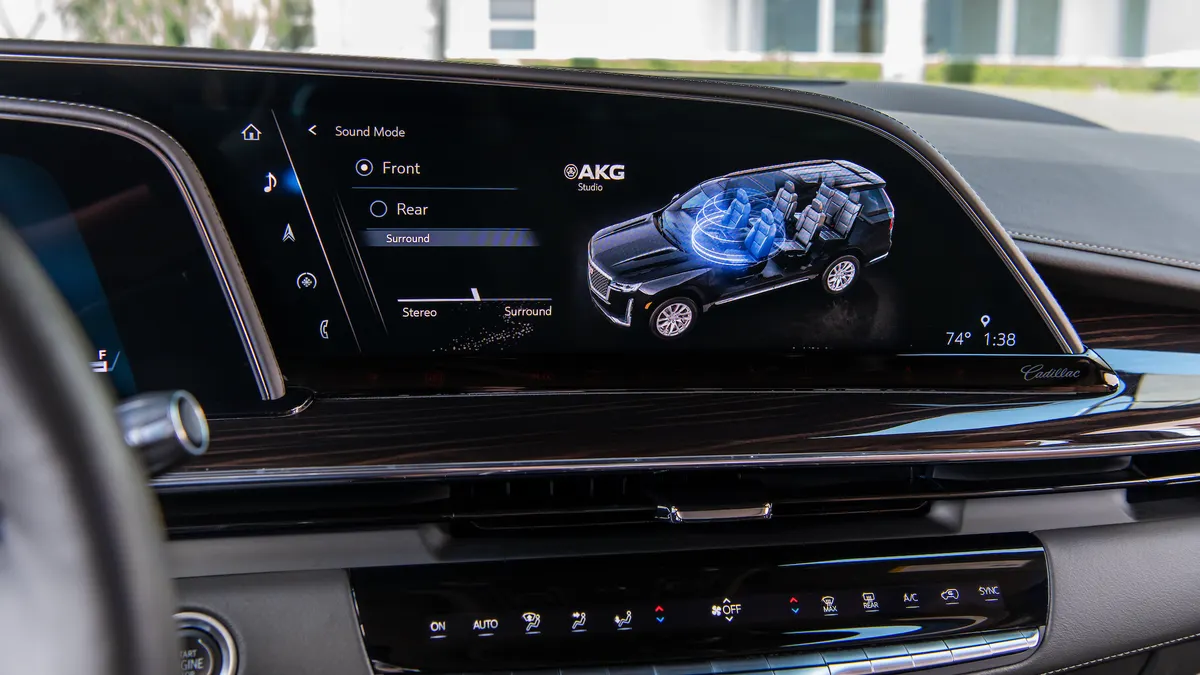
Vehicle quality continues to improve, but infotainment remains a major weakness. JD Power says multimedia systems generate more complaints than any other vehicle category.
Vehicle infotainment problems continue to frustrate new-car owners even as overall vehicle quality improves. According to JD Power’s 2026 U.S. Multimedia Quality and Satisfaction Study, multimedia systems remain the most problematic category reported by drivers.
The study found that infotainment-related complaints accounted for 25% of all reported problems in new vehicles. JD Power recorded 42.4 multimedia problems for every 100 vehicles, making the category the most frequently reported source of trouble.
The findings are based on responses from more than 78,000 owners and lessees of new 2026 model-year vehicles after 90 days of ownership.
Infotainment Is the Only Category Getting Worse
JD Power found that multimedia was the only major vehicle category to deteriorate year over year. That stands out as other areas of vehicle quality continue to improve.
The growing reliance on software, touchscreens and connectivity appears to be a major reason. Instead of traditional mechanical failures, many modern complaints involve software behavior, system complexity and problems connecting devices.

Modern vehicle infotainment systems are generating more complaints than any other vehicle category, according to JD Power’s 2026 study.
As automakers add more digital features, the technology inside cars increasingly resembles the software found in smartphones and computers.
However, unlike consumer electronics, infotainment systems are often responsible for controlling functions that drivers use every day. That makes reliability and ease of use particularly important.
Software Complexity Is Becoming the Bigger Problem
JD Power says the industry is shifting toward a new type of quality challenge.
As vehicles become more software-defined, problems are increasingly related to system complexity, software performance and connectivity rather than conventional hardware failures.
That creates a difficult situation for automakers. Software can be updated after a vehicle is sold, but poorly integrated systems can still create significant frustration for owners.

Software, connectivity and system complexity are increasingly responsible for infotainment complaints in modern vehicles.
Software glitches have also become an important factor in vehicle recalls. Automakers are now looking for ways to make software fixes easier to deliver through over-the-air updates.
The goal is to continuously improve vehicle systems without requiring owners to visit a dealership every time a problem is identified.
Navigation Systems Are Showing Improvement
Not every part of vehicle multimedia is getting worse. JD Power found that customer satisfaction with navigation systems improved significantly.
Navigation satisfaction increased by 17 points to 933 on a 1,000-point scale. The improvement was driven by fewer complaints involving usability and accuracy.
That suggests automakers are making meaningful progress in at least some areas of the digital driving experience.

Navigation satisfaction improved significantly, while infotainment remained the weakest multimedia category in JD Power’s latest study.
Customer satisfaction also improved for multimedia systems and speakers overall, showing that progress is possible even while infotainment remains the industry’s biggest trouble spot.
Carmakers Need to Make Technology Simpler
The latest findings highlight a growing challenge for automakers. Drivers increasingly expect the technology in their vehicles to work consistently without requiring complicated workarounds.
That means adding more features is not necessarily the answer. Systems also need to be intuitive, stable and easy to use.
Moreover, the shift toward software-defined vehicles gives manufacturers an opportunity to address problems after vehicles reach customers. Over-the-air updates can improve functionality and fix certain issues without a dealership visit.
Infotainment Remains Automotive’s Biggest Quality Challenge
The vehicle infotainment problems identified by JD Power show how the definition of vehicle quality is changing.
Modern vehicles may have fewer traditional reliability issues, yet drivers are encountering a new category of frustration tied to software, connectivity and increasingly complicated user interfaces.
For automakers, the message is clear: customers expect digital features to work every time and without unnecessary complexity. The brands that simplify the experience while delivering dependable software will have the best chance of turning infotainment from a persistent weakness into a competitive advantage.
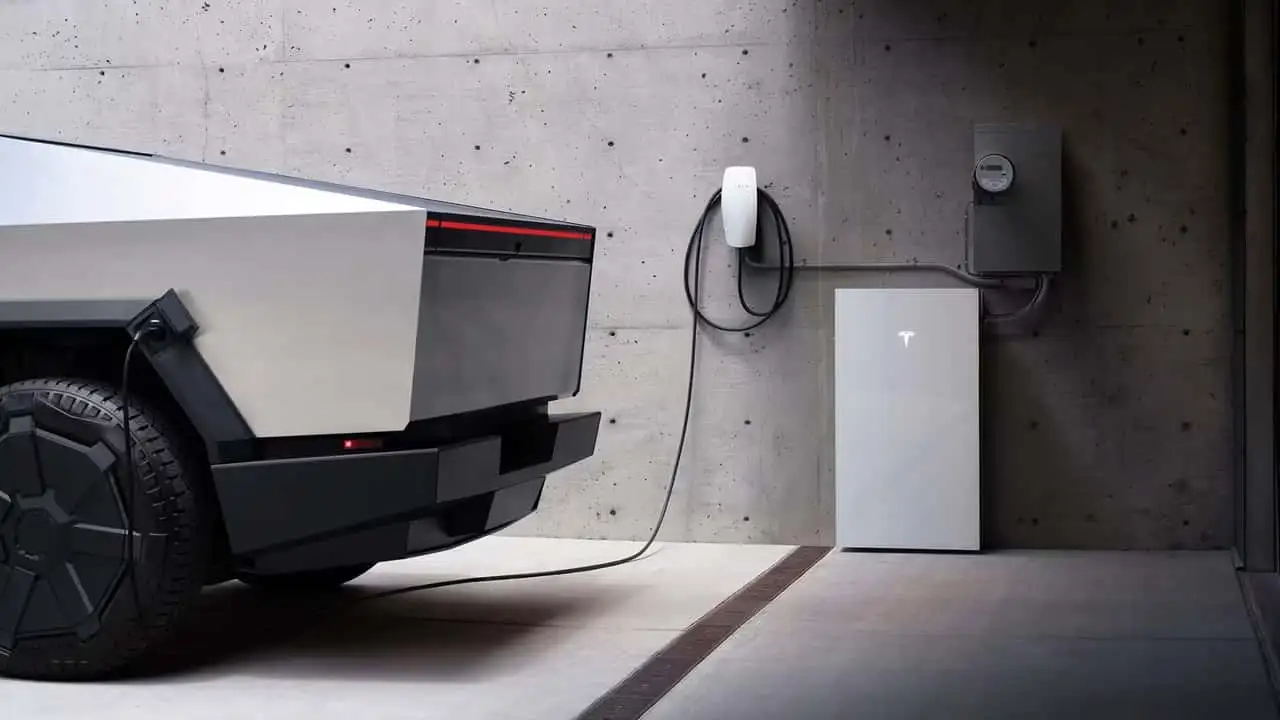
Tesla has finally activated one of the Cybertruck’s most anticipated features. Its battery can now help power a home during an outage, although the system requires specific Tesla hardware.
The Tesla Cybertruck V2H feature has finally arrived after years of waiting. Tesla says the electric pickup can now send energy from its high-voltage battery to a home during a power outage through the company’s Powerwall system.
The technology is known as Vehicle-to-Home, or V2H. It allows an electric vehicle to act as an additional energy source rather than simply consuming electricity.
However, there is an important catch. Cybertruck owners cannot activate the feature with just any home charging setup.
Cybertruck V2H Requires a Powerwall 3
Tesla says the new system, called Powershare Home Backup, currently requires a Powerwall 3 installed at the home.
A Tesla Wall Connector is also required to transfer energy from the Cybertruck into the home. That hardware combination allows the pickup and stationary battery system to work together as a larger backup solution.
Tesla says adding a Cybertruck can extend household backup power by more than three days. The company compares that additional capacity to the energy provided by up to nine extra Powerwalls.

The Tesla Cybertruck can now provide backup energy to a home when paired with a Powerwall 3.
Both the Powerwall 3 and the Cybertruck’s energy export system can handle up to 11.5 kW of AC power. That gives the setup enough output for most typical household backup needs.
For Cybertruck owners who already have the required Tesla energy equipment, the feature could significantly increase the amount of time their homes remain powered during an outage.
Tesla Is Rolling Out Powershare Home Backup
Tesla has started enabling the feature for eligible owners, although the rollout is not necessarily automatic for everyone.
Some Cybertruck owners have reportedly received emails asking them to complete a survey before the functionality is activated on their systems.
For now, Powerwall 3 is the only supported stationary battery. Tesla says compatibility with older Powerwall 2 and Powerwall+ systems is expected later.

Tesla’s Powershare Home Backup system connects the Cybertruck with the company’s home energy infrastructure.
Tesla has described the system as a way to integrate two separate energy sources through the same wall connection used for vehicle charging.
The company also points to improvements made to the Cybertruck since the first customer vehicles were delivered. That includes earlier software and hardware work related to Powershare.
The Cybertruck Already Had a Form of Home Backup
This is not the first time Tesla has allowed the Cybertruck to provide electricity to a house.
In 2024, the company introduced a software update that allowed the pickup to keep a home powered through a Powershare Gateway and Universal Wall Connector.
The major difference is that the Gateway itself does not contain a battery. It relies entirely on the Cybertruck’s battery pack to provide backup energy.
The newer configuration with a Powerwall 3 creates a more integrated home energy system, combining the stationary battery with the vehicle when additional capacity is needed.

The Cybertruck’s earlier Powershare system also allowed it to provide electricity to a home during an outage.
The Price of Cybertruck V2H Adds Up Quickly
The Tesla Cybertruck V2H capability is useful, but it is not a cheap upgrade.
The Cybertruck package that enables V2H currently costs $1,970 before installation and does not include the required home battery. A Powerwall 3 system costs considerably more, with the supplied pricing putting the installed unit at around $16,000.
That means homeowners starting from scratch could face a substantial investment before they can use their Cybertruck as a home energy source.
Still, the system offers something conventional backup equipment cannot: access to the vehicle’s large battery whenever the truck is connected and available.
Cybertruck Turns Into More Than Just a Pickup
The arrival of Tesla Cybertruck V2H finally delivers one of the electric truck’s most anticipated capabilities. Instead of simply being a vehicle that draws energy from the home, the Cybertruck can now become an additional power source during an outage.
Moreover, Tesla’s approach highlights how the company is trying to connect its vehicles and stationary energy products into a single ecosystem. The Cybertruck, Powerwall 3 and Wall Connector can work together rather than operating as completely separate products.
For now, the system is limited to Powerwall 3 installations, but support for older Tesla energy systems could expand its reach later. After years of promises and delays, Cybertruck owners finally have a practical way to turn their pickup into a backup battery for the house.
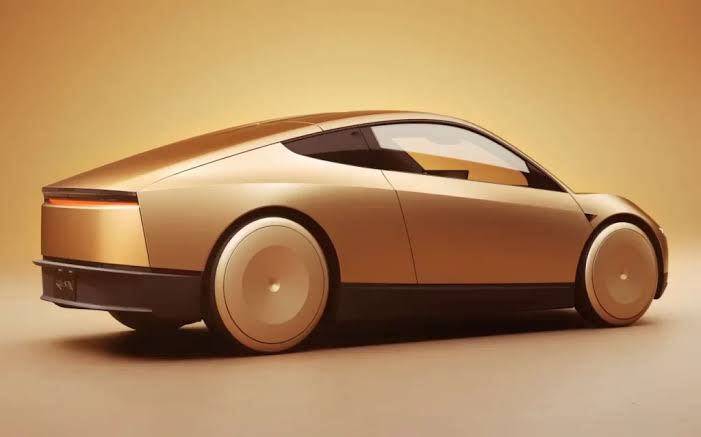
The Tesla Cybercab is taking the robotaxi concept further by removing another piece of conventional EV hardware. For now, owners cannot plug it into a typical home charger.
The Tesla Cybercab home charging experience is very different from what most electric vehicle owners are used to. Tesla’s purpose-built robotaxi appears to leave out one important component found in conventional EVs: the onboard charger.
That means the Cybercab cannot currently be plugged into a typical Tesla Wall Connector or another AC home charger. Instead, the vehicle needs to receive DC power directly from a fast charger.
The decision fits Tesla’s broader strategy for the Cybercab. The vehicle has been designed specifically around autonomous operation and fleet use, allowing the company to eliminate components it considers unnecessary for a robotaxi.
The Cybercab Does Not Have an Onboard Charger
A conventional electric vehicle can accept AC power from a household charger because it has an onboard charger that converts alternating current into the direct current needed by the battery.
The Cybercab apparently removes that conversion hardware.
As a result, plugging the robotaxi into a normal home charging setup is not currently possible. Instead, the vehicle must connect directly to a DC fast-charging source.

The Tesla Cybercab appears to omit the onboard charger required for conventional AC home charging.
For a privately owned EV, that would be a major limitation. However, the Cybercab is being developed around a very different operating model.
The robotaxi is supposed to spend as much time as possible carrying passengers rather than sitting in a driveway. That makes fast charging much more important than convenient overnight AC charging.
Tesla Uses DC Fast Charging Instead
The Cybercab can receive DC power through its NACS charging connection. The connector is hidden behind an access panel in the rear bumper, allowing the vehicle to connect directly to a compatible fast charger.
For now, that means Cybercab operators need to rely on Tesla’s Supercharger network.

The Cybercab uses a hidden NACS connection for direct DC fast charging at Tesla Supercharger locations.
That may sound unusual, but the setup makes more sense when viewed as a commercial fleet vehicle.
A robotaxi can potentially spend much of its operating day on the road. Therefore, minimizing charging time can have a direct impact on how many trips the vehicle can complete.
Wireless Charging Could Eliminate the Plug
Tesla is also working toward another solution that would fit the Cybercab’s autonomous mission even better: wireless charging.
The company plans to install inductive charging equipment at some Supercharging sites. That would allow the Cybercab to recharge without a person physically connecting a cable.
Tesla’s planned wireless charging system could eventually allow Cybercabs to recharge without human assistance.
Wireless charging would make particular sense for an autonomous fleet. The vehicle could potentially position itself over a charging pad and begin replenishing its battery without requiring anyone to plug it in.
However, there is a tradeoff. Wireless charging is slower than Tesla’s high-power wired fast charging.
The Cybercab’s Small Battery Changes the Equation
Previous demonstrations of Tesla’s wireless charging technology have shown speeds of up to roughly 25 kW. That is significantly lower than the peak output associated with Tesla’s fastest Superchargers.
Still, the Cybercab is expected to use a battery pack with less than 50 kWh of capacity. That means a full wireless recharge could take around two hours based on the previously demonstrated charging rate.
For a purpose-built robotaxi operating continuously, that may be an acceptable compromise, particularly if charging is automated and happens between passenger trips.
Tesla Could Still Add Home Charging Later
The current limitation may not necessarily be permanent.
Tesla could decide to add an onboard AC charger before the Cybercab becomes available to consumers. At the moment, the vehicle is not offered as a normal consumer product, so the hardware configuration could still change before wider availability.
For now, however, the Tesla Cybercab home charging setup is essentially nonexistent. The robotaxi is built around DC fast charging today, with wireless charging potentially becoming the more important solution as Tesla expands its autonomous fleet.
That approach may seem strange compared with conventional EV ownership, but the Cybercab is not really designed like a conventional EV. It is a commercial autonomous platform where uptime, automation and rapid charging matter more than plugging into a wall overnight.
-

 TEST DRIVES2 months ago
2026 Maserati MCPura Cielo
-

 NOW TRENDING2 months ago
2027 Range Rover GT Debuts as the Brand’s Lowest EV
-
 NOW TRENDING2 months ago
Mercedes-AMG Admits the C63 Hybrid Was a Mistake for Buyers
-

 INTELLIGENT MOBILITY2 months ago
2027 Toyota Crown Gets New Hybrid System and Fresh Design
-

 NOW TRENDING2 months ago
Next-Gen Cadillac CT5-V Blackwing Could Keep the V8 Alive
-

 NOW TRENDING2 months ago
Honda Civic Si Production Ends After 2026 Model Year Pause
-
 NOW TRENDING2 months ago
Rolls-Royce’s $32 Million Droptail Took 9 Months of Handcrafted Woodwork
-
 NOW TRENDING2 months ago
2027 Toyota Sequoia Adds Trailhunter Package and New Tech
You must be logged in to post a comment Login