
Porsche EV owners claim the company slowed chargers, making charging times painfully long. The luxury automaker is now dealing with a class-action lawsuit over its Porsche Mobile Charger Plus (PMC+) and Porsche Mobile Charger Connect (PMCC) devices, which allegedly take twice as long to charge vehicles as advertised.
Plaintiffs argue that Porsche, after discovering overheating issues with the PMC+ and PMCC in 2023, deliberately restricted their output from 40 amps to 20 amps, doubling the time needed to fully charge Taycan and E-Hybrid models. Charging that once took around 9.5–10.5 hours now reportedly stretches to 20 hours, leaving owners frustrated. Lead plaintiffs Paul Herdtner (Taycan 4S) and John Holby (Taycan Turbo) are demanding chargers that function as marketed or full reimbursement for the cost of the devices.
Why This Lawsuit Matters
The complaint states that Porsche advertised the chargers as fast, reliable, and efficient, giving customers confidence to invest in premium EVs. Slower charging undermines the vehicles’ usability, particularly for daily commutes and long-distance travel. Plaintiffs claim Porsche has failed to restore full charger functionality, which they argue diminishes the value of their expensive electric vehicles.
Legal Demands and Potential Outcomes
Filed on September 26, 2025, in the U.S. District Court for the Northern District of Georgia, the lawsuit – Herdtner, et al., v. Porsche Cars North America, Inc. – seeks full refunds, charger functionality, and punitive damages. A jury trial has been requested, highlighting the seriousness of the claims and the potential for substantial repercussions for Porsche if the plaintiffs succeed.

Impact on Porsche and the EV Market
This lawsuit comes at a time when electric vehicle reliability and charging infrastructure are under intense scrutiny. For a luxury brand like Porsche, public disputes over hardware performance can affect reputation and buyer confidence. Tesla, Lucid, and other EV makers are watching closely, as outcomes could shape customer expectations for charger performance and transparency across the industry.
The Road Ahead
Porsche will need to respond decisively, either by restoring charger speeds or facing possible financial and reputational consequences. For owners of Taycan and E-Hybrid models, the case highlights the importance of verifying manufacturer claims and ensuring promised EV performance is delivered. The broader EV market is likely to see increased scrutiny as this lawsuit unfolds, emphasizing how critical charging technology is to the electric car experience.










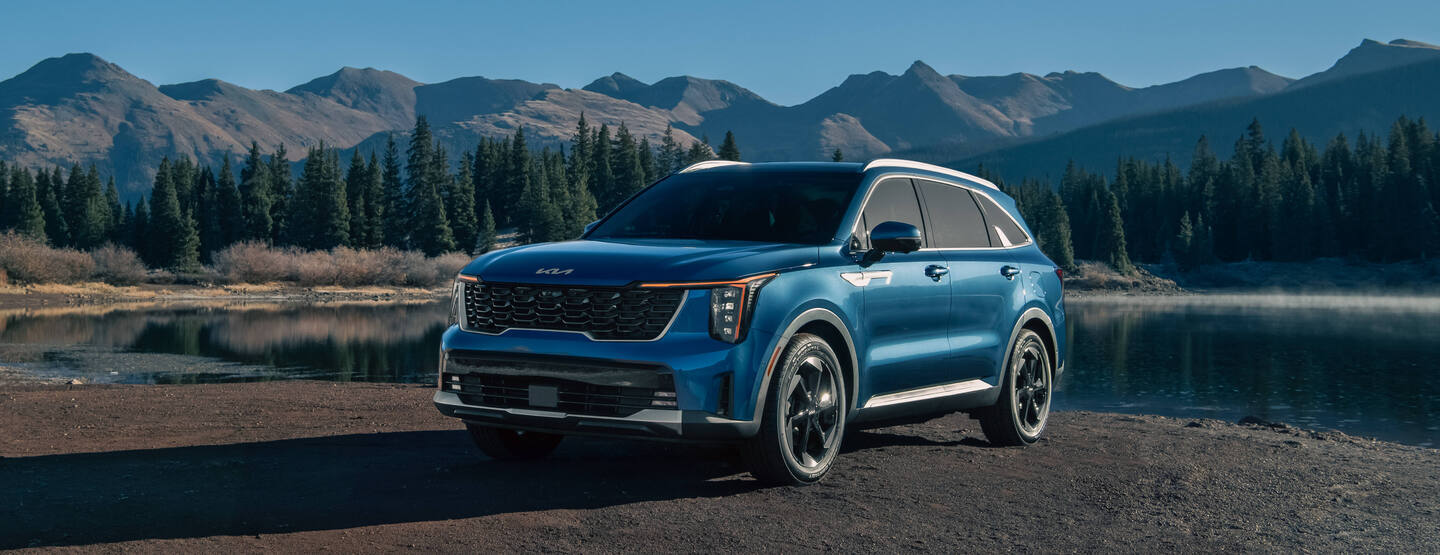
Kia introduces a new X-Line EX model for 2027, updates selected features and sets U.S. pricing for the Sorento Hybrid lineup starting at $39,090.
Kia America has announced pricing for the 2027 Kia Sorento Hybrid, expanding the range with a new X-Line EX trim and introducing several design and equipment updates. The lineup includes four configurations, with different drivetrain options and equipment levels to suit buyers looking for a hybrid midsize SUV.
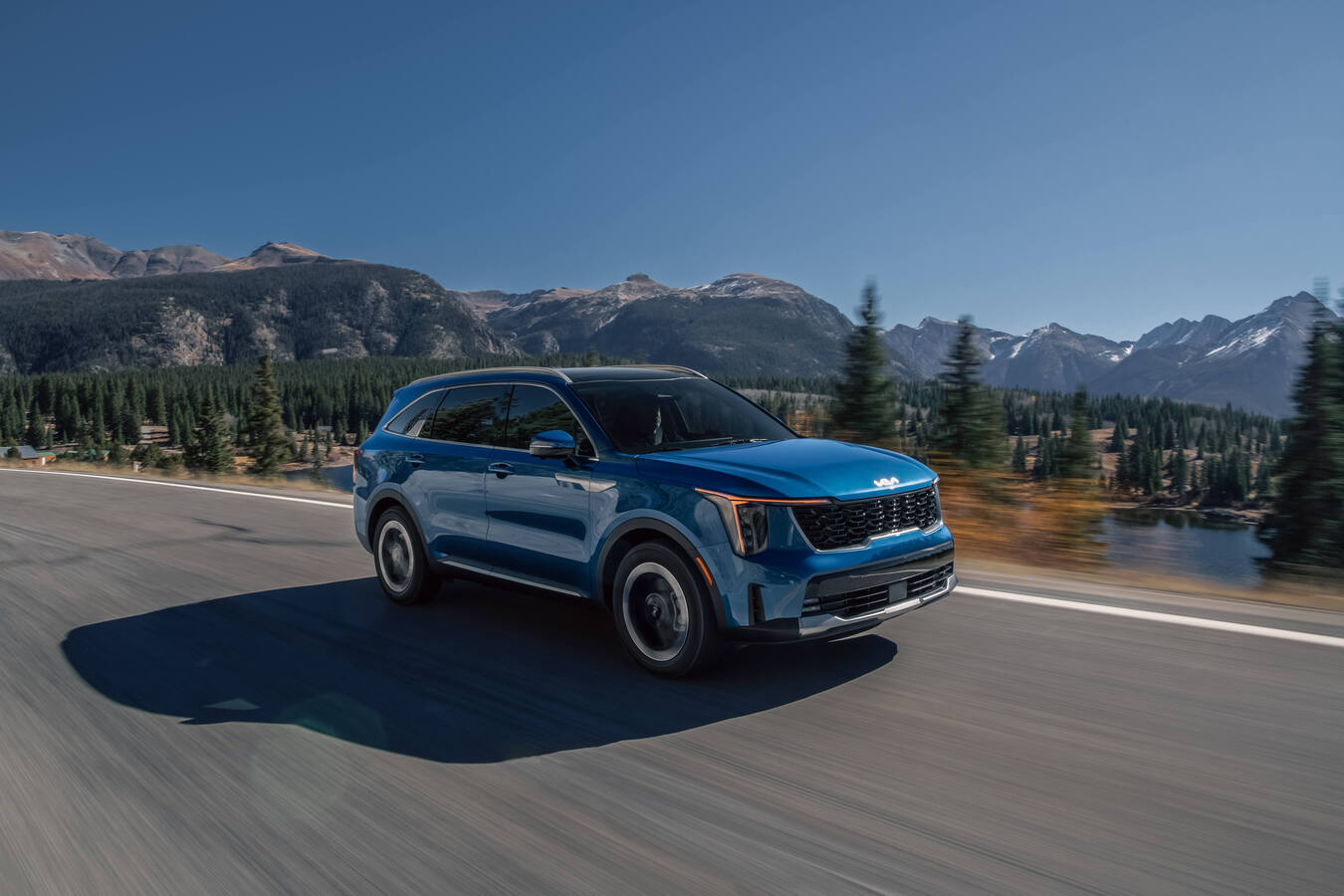
The 2027 Kia Sorento Hybrid lineup adds a new X-Line EX configuration.
2027 Kia Sorento Hybrid Prices
The 2027 Kia Sorento Hybrid starts at $39,090 for the EX with front-wheel drive. Buyers can also choose all-wheel drive or move up to one of the two X-Line versions, both of which come with all-wheel drive.
| Model | Drivetrain | Starting MSRP |
|---|---|---|
| Sorento HEV EX | FWD | $39,090 |
| Sorento HEV EX | AWD | $40,890 |
| Sorento HEV X-Line EX | AWD | $43,090 |
| Sorento HEV X-Line SX-Prestige | AWD | $47,590 |
The prices exclude a $1,495 destination charge. Including that fee, the EX FWD starts at $40,585, before taxes, registration and other applicable costs.
New X-Line EX Adds Black Exterior Details
The main addition for 2027 is the Sorento Hybrid X-Line EX. This new trim builds on the EX equipment package with gloss-black wheels and gloss-black exterior accents, giving it a distinct appearance within the range.
Kia also equips all X-Line versions with machined wood inlays on the instrument panel and doors. These interior details distinguish the X-Line models from the standard EX configuration. the standard EX models.ferent interior finish to the models positioned above the standard EX.
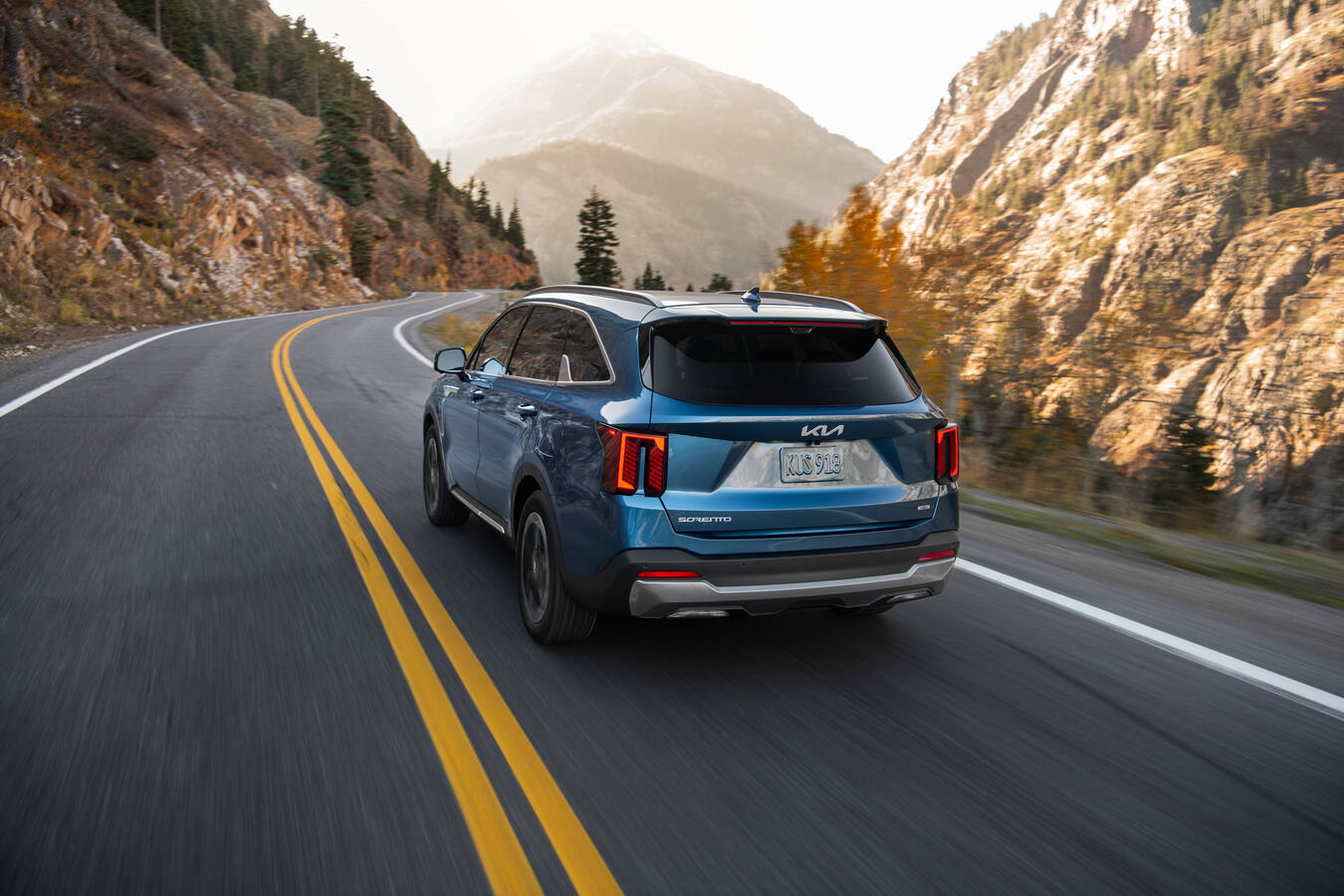
The X-Line EX combines gloss-black exterior accents with additional design details.
SX-Prestige Gains Additional Equipment
The X-Line SX-Prestige remains the top configuration in the 2027 Sorento Hybrid lineup. Its equipment includes a panoramic sunroof, Bose Premium Audio and second-row captain’s chairs.
The head-up display is now standard on SX-Prestige trims. It projects selected driving information into the driver’s field of view, allowing key details to be viewed without looking down at the instrument panel.
These additions give the top trim a more extensive equipment package than the entry-level EX, while the X-Line EX provides another option for buyers who want the distinctive exterior styling.
Exterior Updates for the 2027 Model Year
Kia has also revised the Sorento Hybrid’s color and exterior badging. Pale Gray replaces Steel Gray in the available color selection, while new HEV emblems on the tailgate identify the vehicle’s hybrid powertrain.
These changes accompany the new X-Line EX and the revised equipment offerings. They update the model’s appearance and trim choices without constituting a complete redesign.
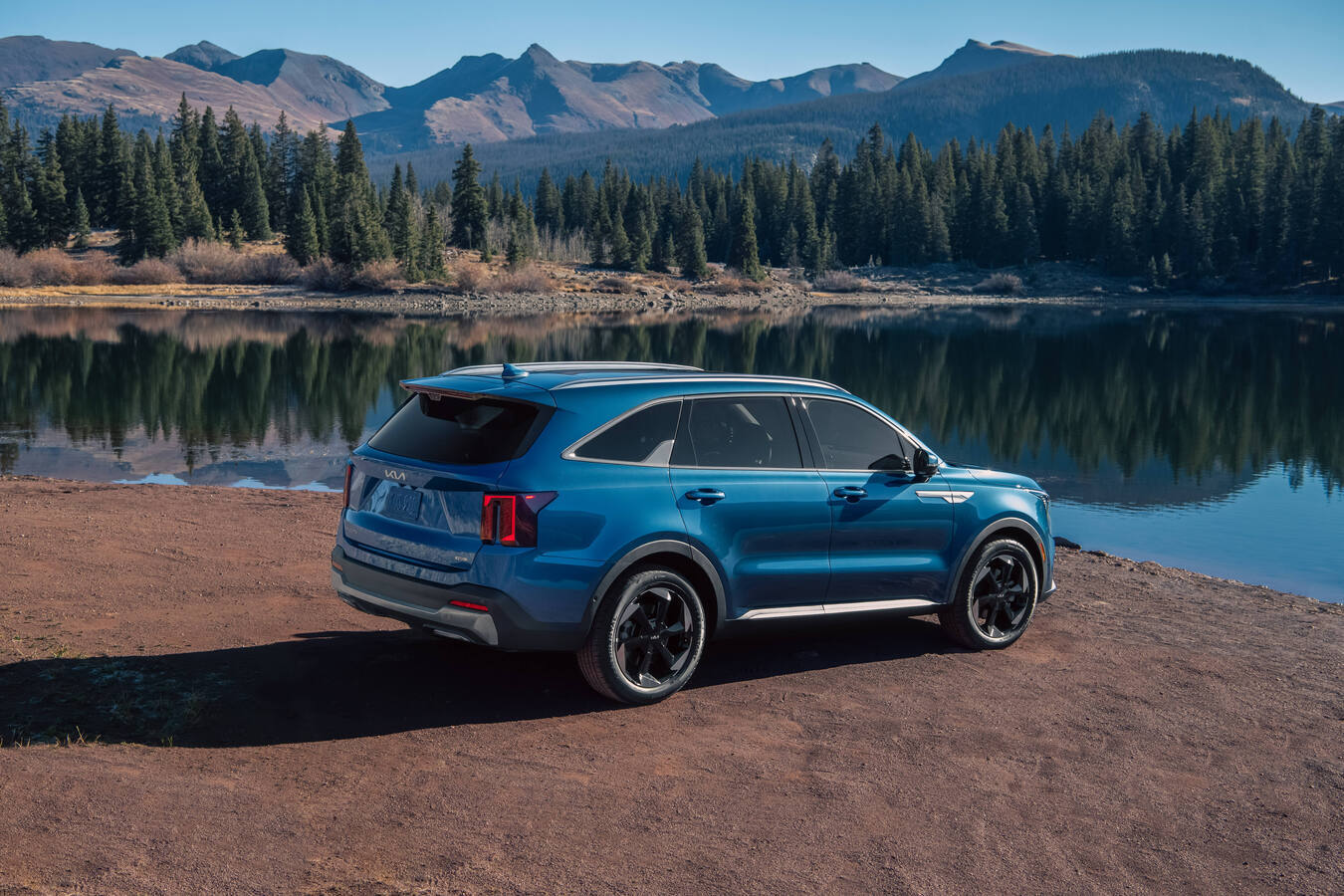
New HEV tailgate emblems identify the Sorento Hybrid.
With a starting MSRP of $39,090 before destination charges, the 2027 Kia Sorento Hybrid offers four configurations for U.S. buyers. The EX provides the entry point, while the X-Line EX adds distinctive styling and the SX-Prestige brings additional comfort and technology features.
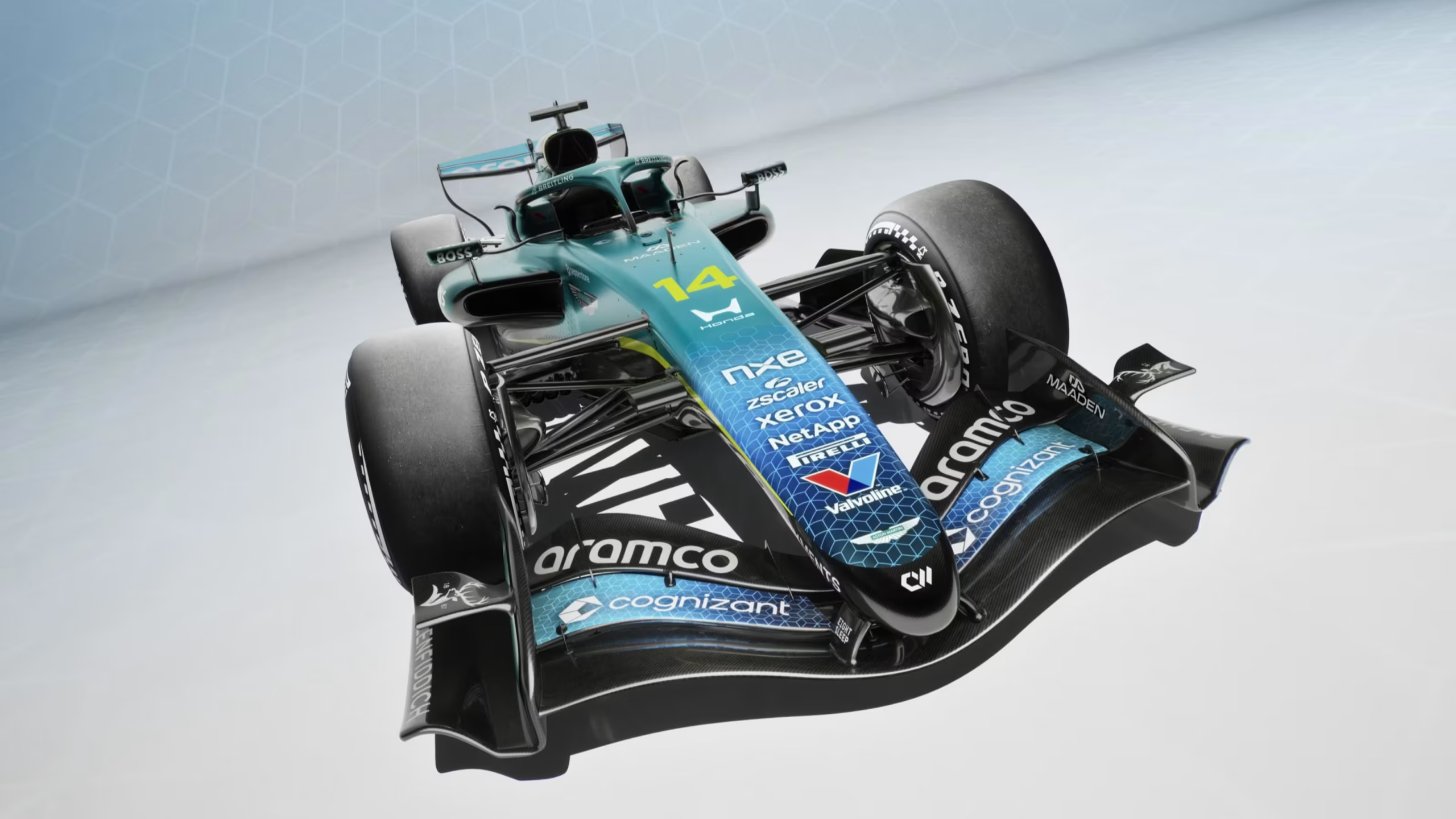
Aston Martin will showcase a special AMR26 livery at the United States Grand Prix, celebrating five years of its partnership with Cognizant.
Aston Martin is preparing a special appearance for the 2026 United States Grand Prix in Austin, where its AMR26 will mark five years of collaboration with Cognizant. The partnership began in 2021 and remains part of the team’s identity in Formula One.
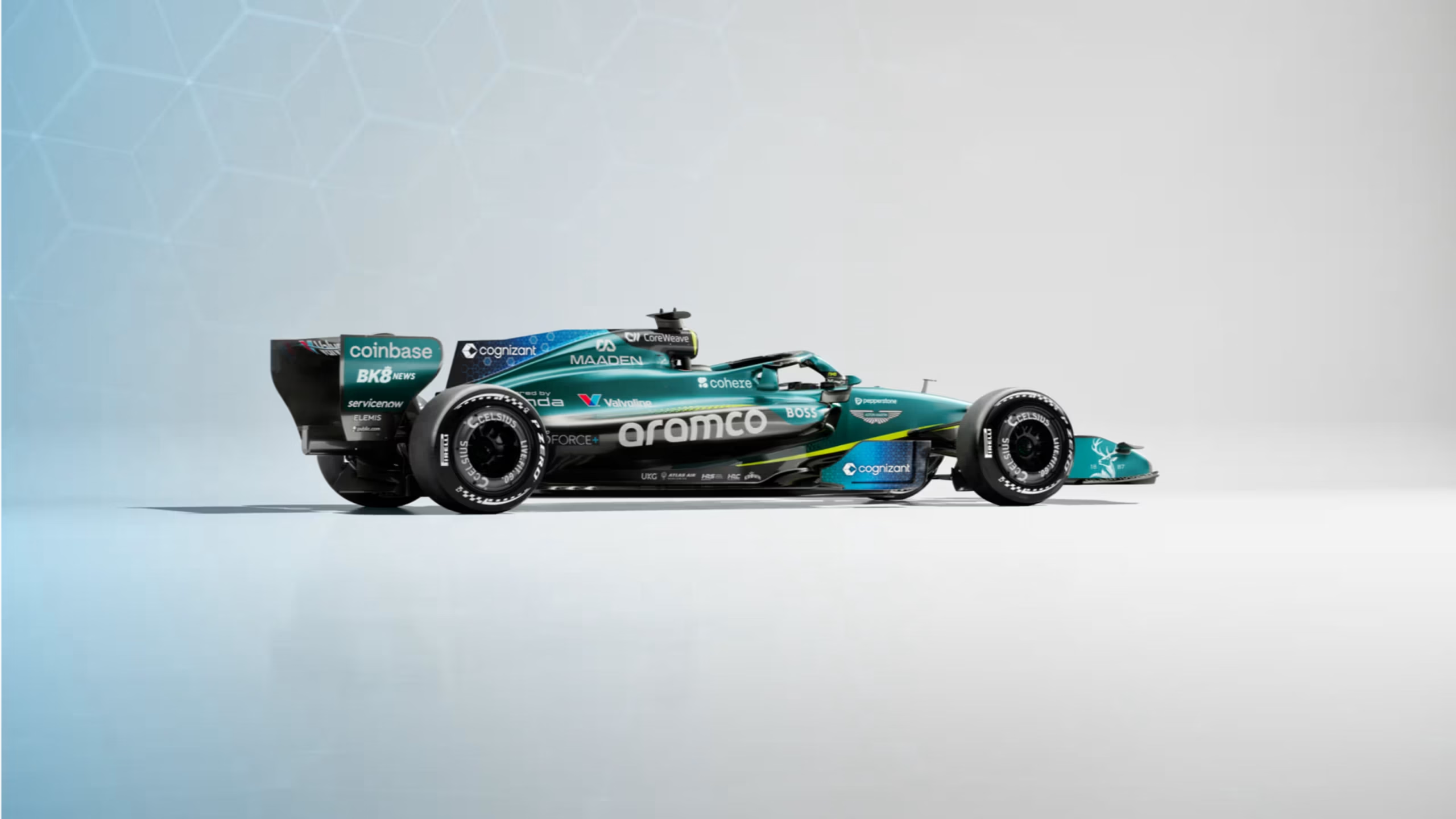
The AMR26 will carry a special design for the United States Grand Prix weekend.
Aston Martin Marks Five Years With Cognizant
The Austin Grand Prix provides the setting for Aston Martin to recognize the milestone. Since the partnership began in 2021, Cognizant has maintained a prominent association with the team’s Formula One program.
The anniversary also comes as the relationship expands into new areas of technology. Earlier in 2026, Cognizant became Aston Martin’s Global AI Services Partner, strengthening the technological dimension of the collaboration.
Technology and Formula One
Modern Formula One relies on data analysis, software and advanced computing to support decisions throughout a race weekend. Teams use these tools to evaluate performance, develop strategies and improve their operations.
Aston Martin’s expanded relationship with Cognizant reflects the growing role of artificial intelligence and digital technology in motorsport. However, the partnership’s announcement alone does not establish a specific performance gain for the AMR26.
Data analysis and digital tools are important parts of modern Formula One operations.
Austin Provides the Backdrop
The United States Grand Prix gives Aston Martin an opportunity to highlight the anniversary in front of American fans. The special livery will bring the partnership into focus during the Austin race weekend.
The design also connects the team’s on-track presence with a collaboration that has evolved since 2021. With Cognizant’s expanded role in artificial intelligence, the anniversary reflects both the history of the relationship and its continuing technological focus.
Aston Martin’s special AMR26 appearance will be one of the team’s key visual elements at the United States Grand Prix. Further details about the livery’s specific design features should be confirmed through the team’s official announcement.

The automaker is inviting select R1 and R2 owners to try a new route-based driving assistant before a wider U.S. rollout.
Rivian is preparing to expand its driver-assistance technology with Point to Point, a system designed to handle more of a journey than conventional hands-free highway assistance. The first phase will be limited to selected customers, with a broader rollout planned for 2027.
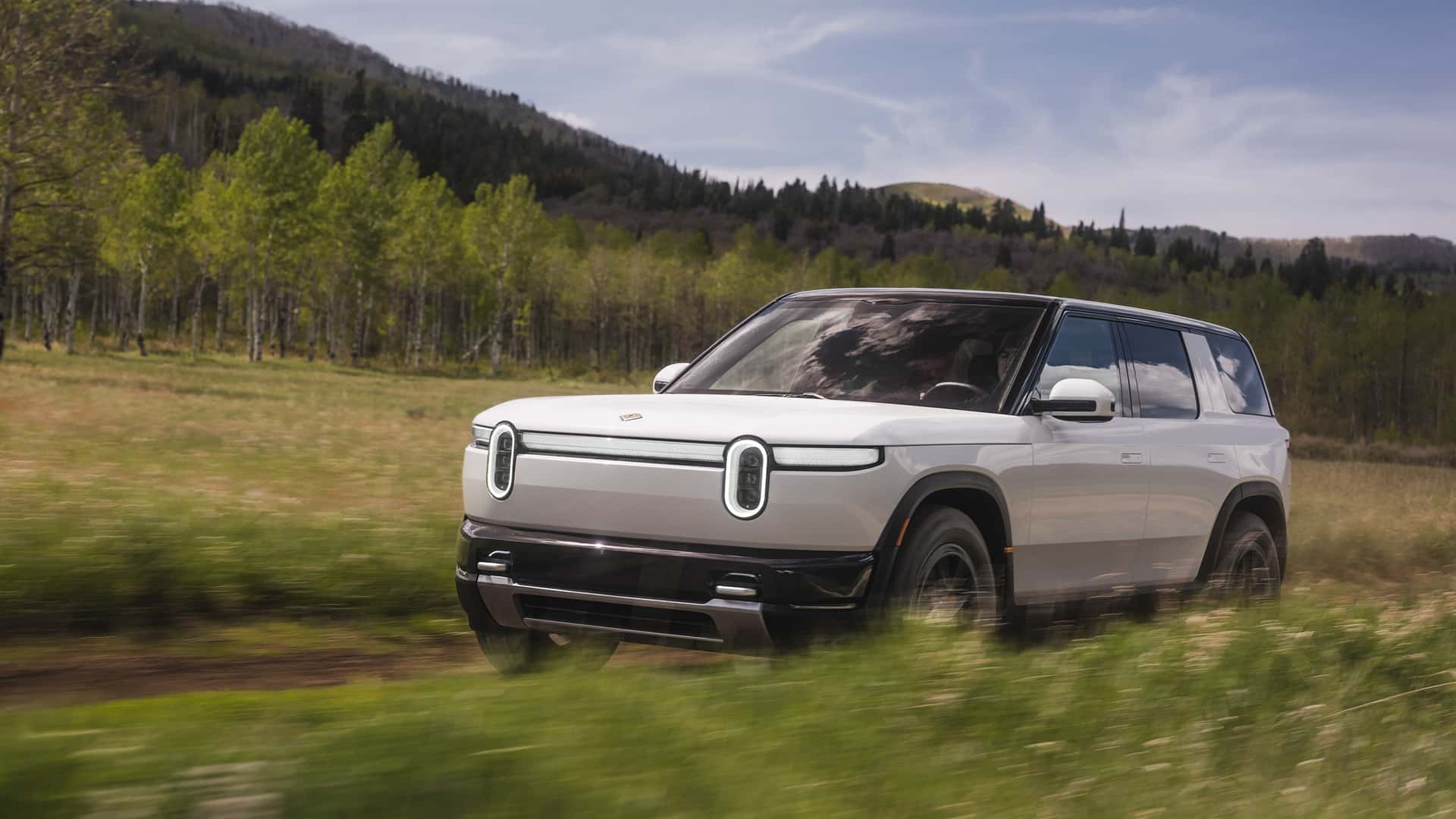
Rivian is starting its latest driving technology program with eligible owners of newer R1 models and the R2.
From Highway Assistance to Full Routes
Point to Point builds on Rivian’s existing Universal Hands-Free system. It is designed to follow a planned route, including turns, highway merges and surface streets, while the driver remains responsible for supervising the vehicle.
The technology combines the vehicle’s sensors and cameras with Rivian’s Large Driving Model, which interprets surrounding conditions and helps determine how the vehicle should respond.
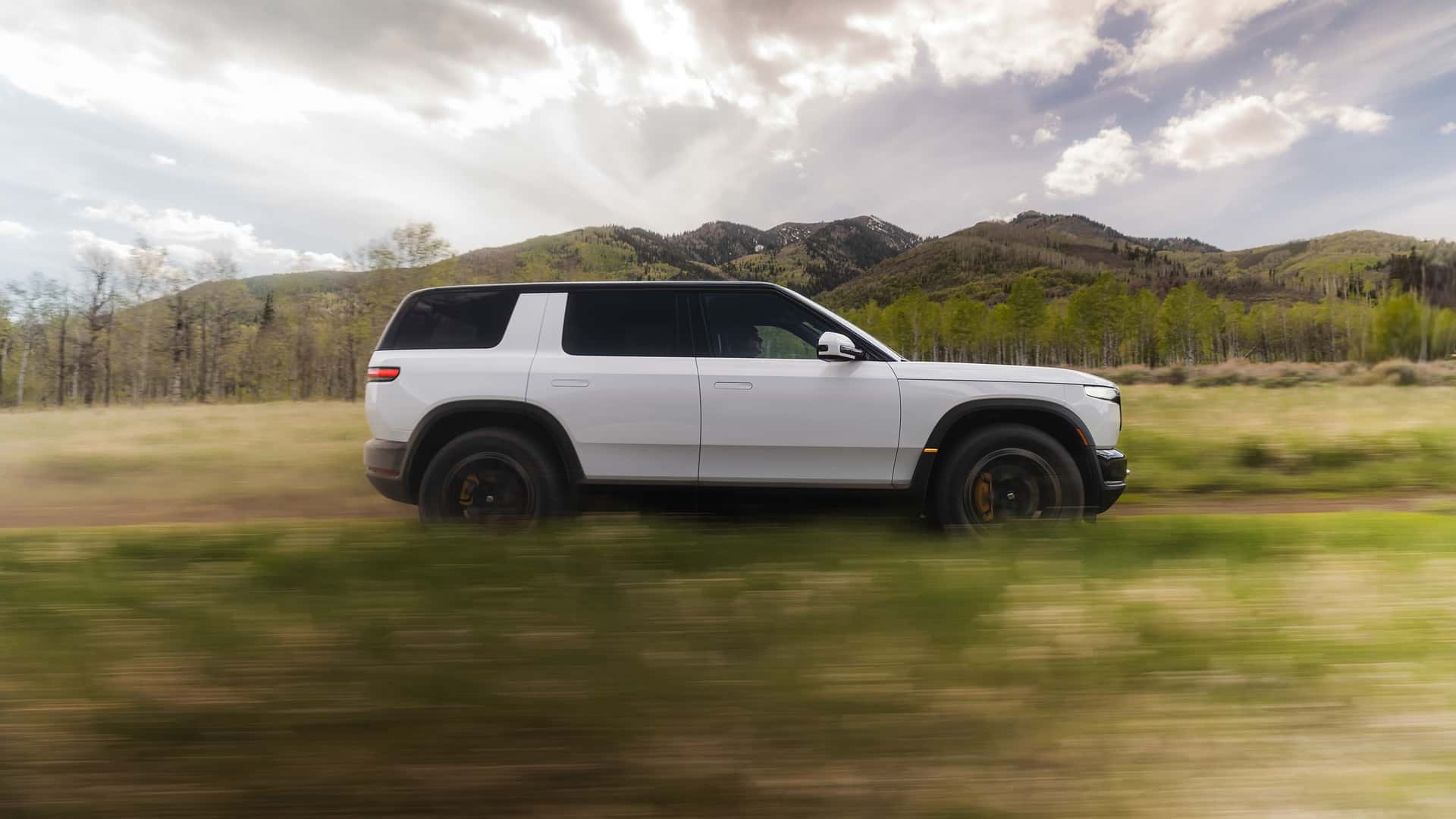
Point to Point aims to manage more of a planned journey while requiring the driver to remain attentive.
Who Can Join the Early Access Program?
The initial program targets eligible Gen 2 R1 and R2 owners in California and Florida. Applicants must have an active paid Autonomy+ subscription; free trials do not qualify.
Rivian will consider existing use of its driver-assistance features, recent safety records and a balance of vehicle models and regions when selecting participants. Owners can register their interest through the Autonomy Early Access tile in their Rivian account.
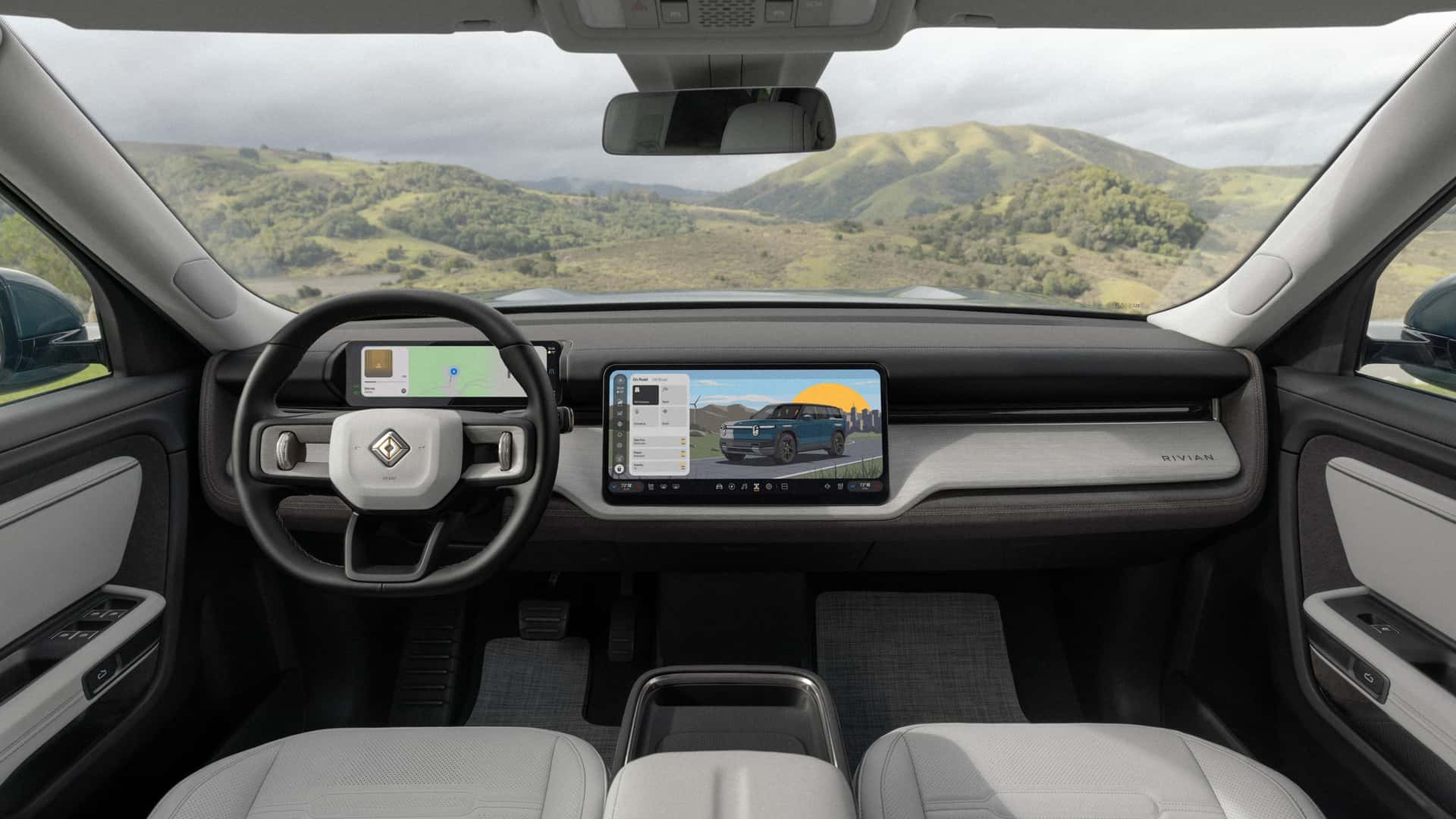
Eligible owners can register their interest through their Rivian account.
Testing Comes With Conditions
Selected participants must use the preview features weekly, report issues and complete monthly surveys. They must also agree to data collection that includes location and camera data, under a non-disclosure agreement.
The program is unpaid, and Rivian can reassess participants’ eligibility every 30 days. First-generation R1 vehicles and Canadian owners are excluded from the initial phase.
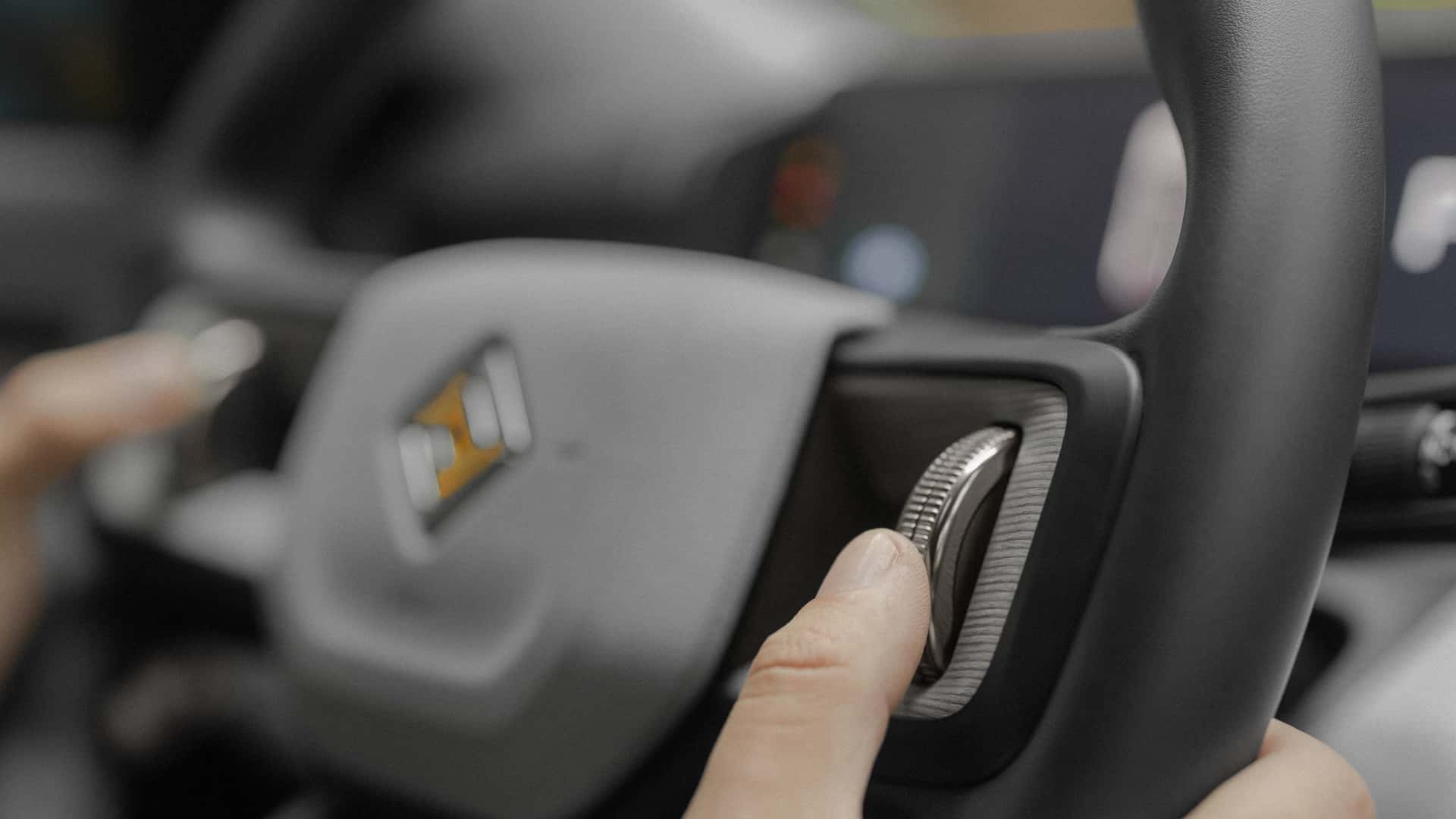
Camera and sensor data are part of the technology Rivian is developing and evaluating.
A Wider Rollout Is Planned for 2027
Rivian expects Point to Point to reach a broader group of Autonomy+ customers in 2027, following the early-access phase. Feedback from interested owners outside California and Florida may also help inform which states are considered for expansion.
The R2 is among the vehicles targeted for the initial program, with wider availability expected to follow.
Point to Point remains a Level 2 driver-assistance system, not fully autonomous driving. Drivers must stay attentive and be ready to take control at all times.
-

 NOW TRENDING2 months ago
Tesla Cybercab Gets September 3 Austin Launch Date
-
 TEST DRIVES2 months ago
2025 Ford Bronco Sport Badlands: The Adventure SUV You Can Drive Every Day
-
 TEST DRIVES2 months ago
2026 Toyota GR Supra MkV Final Edition
-

 NOW TRENDING1 month ago
Aston Martin DBX Becomes Harry Da Souza’s Ride in MobLand
-

 NOW TRENDING2 months ago
Tesla Cybercab Puts U.S. Regulations to the Test
-
 Formula12 months ago
FIA Reveals Second ADUO Results With Red Bull-Ford Still on Top
-
 NOW TRENDING2 months ago
2027 Hyundai Tucson Hybrid Gets a Power Boost
-
 NOW TRENDING2 months ago
Hyundai Reports Strong Hybrid Sales in August 2026
You must be logged in to post a comment Login