
Elon Musk’s company is reportedly considering iPhone integration on its screens, but with a unique Tesla twist.

Tesla, a pioneer in in-car software, may finally yield to consumer demand and allow Apple CarPlay in its vehicles–albeit in a way that preserves its native system. This change could mark a significant shift in the automaker’s technological philosophy.
A Major Strategic Shift
From the beginning, Tesla rejected CarPlay and other forms of smartphone mirroring, trusting its proprietary operating system to deliver a unique experience. However, a recent Bloomberg report claims the company is already testing the feature, which could soon appear in customer cars. Notably, CarPlay would operate in a small window within the main display, keeping Tesla’s interface and functionality intact.
What to Expect from Integration
Tesla is not planning to implement the full CarPlay Ultra, which takes over the entire vehicle display. This version has seen a slow rollout, with some automakers losing interest. Tesla appears to be focused solely on the standard version, allowing drivers to access iPhone apps without compromising the Tesla interface.
Impact on Competition and Consumers
If Tesla enables Apple CarPlay, it would be a landmark win for drivers who consider this feature essential. It would also serve as a key differentiator against competitors like Rivian or GM, which do not offer CarPlay as standard. Additionally, it could pressure other holdouts to follow suit, proving it’s possible to maintain a proprietary experience while offering full smartphone connectivity.
Conclusion: A Win for Drivers
For consumers, CarPlay in a Tesla means more freedom, convenience, and seamless integration with the Apple ecosystem, strengthening the case for purchase. This integration would further highlight Tesla’s leadership in automotive technology, demonstrating that the brand can evolve without losing its innovative identity.









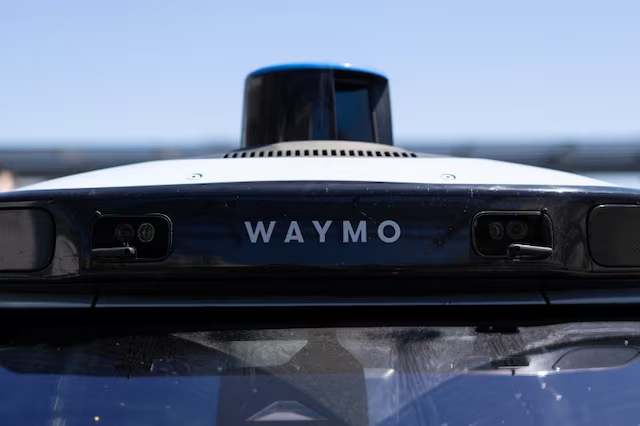
Waymo has officially started offering fully autonomous rides to the public in Las Vegas. The launch marks the company’s first robotaxi service in Nevada as it expands across the U.S.
Waymo has officially started offering autonomous ride-hailing in Las Vegas, opening another major U.S. market for its robotaxi service. The launch marks the company’s first public robotaxi operation in Nevada and expands its footprint into one of the country’s busiest tourism destinations.
The company began welcoming public riders on September 14, with service initially covering a nearly 24-mile operating area. The expansion follows months of testing and validation on Las Vegas roads.
Waymo says it will gradually give access to more riders across Clark County as the service expands.
Waymo Starts Public Robotaxi Service in Las Vegas
The Las Vegas launch puts Waymo directly into another highly visible U.S. market for autonomous transportation. Residents and visitors can request fully autonomous rides through the Waymo service, with the operating area covering parts of the city and the Las Vegas Strip.
The company has also positioned the service around major destinations such as Allegiant Stadium and The Venetian. That makes Las Vegas a particularly important test for autonomous ride-hailing because traffic patterns can vary dramatically between neighborhoods, hotels, entertainment venues and major events.
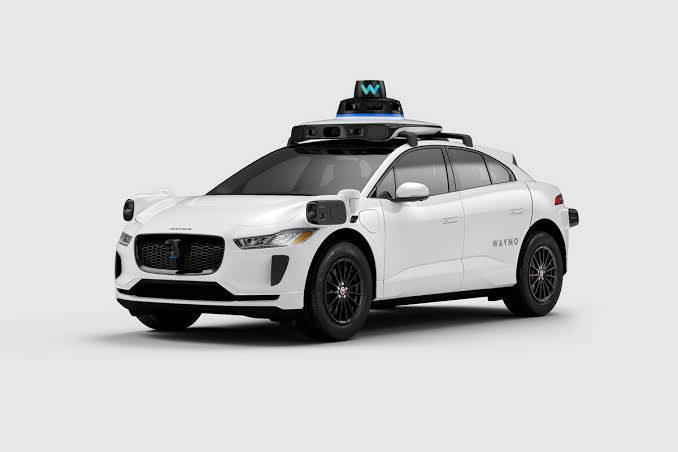
Waymo is now offering fully autonomous public rides across a designated service area in Las Vegas.
Waymo had previously been testing in the city with autonomous specialists onboard. The company has now moved to public passenger operations without a human driver controlling the vehicle.
That transition represents an important step as Waymo continues expanding beyond its more established robotaxi markets.
The Ojai Becomes Waymo’s Las Vegas Robotaxi
Las Vegas is also part of Waymo’s rollout of its newest vehicle platform, known as Ojai. The robotaxi uses Waymo’s sixth-generation Driver technology and is designed specifically around the passenger experience.
The company says the Ojai offers a more spacious cabin, larger screens and additional customization options for riders.
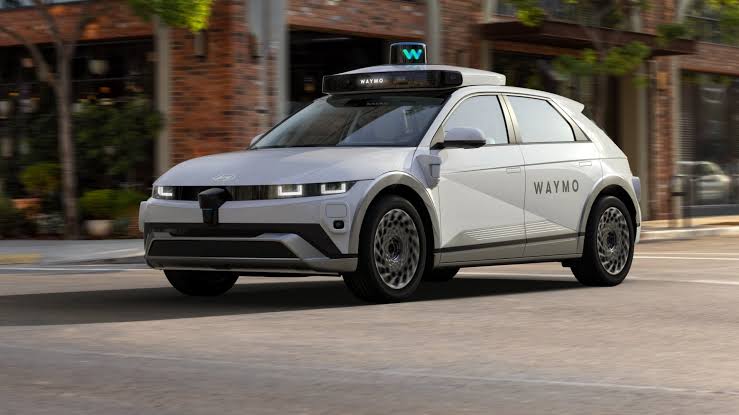
Waymo’s Ojai robotaxi uses the company’s sixth-generation autonomous driving system in Las Vegas.
The vehicle is intended to make the autonomous experience feel more like a conventional ride-hailing service, only without a human driver behind the wheel.
Las Vegas joins Denver and San Diego as early cities for Waymo’s majority-Ojai fleet deployment, according to the company.
Waymo Faces Growing Robotaxi Competition
The Las Vegas launch also increases competition in an increasingly crowded autonomous ride-hailing market. Waymo is competing against companies including Amazon’s Zoox and Tesla as automakers and technology firms push toward commercial self-driving services.
Zoox had already begun offering paid public rides in Las Vegas before Waymo’s launch. That gave the city an unusual position as one of the first U.S. markets where multiple autonomous ride-hailing operators are competing for passengers.
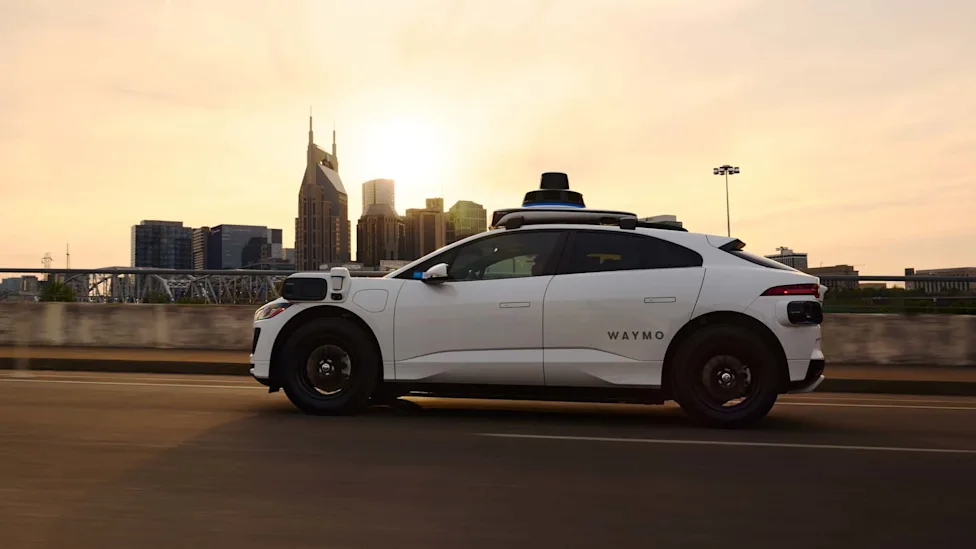
Waymo is expanding its robotaxi network as competition from other autonomous ride-hailing companies intensifies.
Waymo has been expanding rapidly in 2026. The company began welcoming public riders in Denver, San Diego and Tampa earlier this month, adding to an expanding network of U.S. cities.
The company’s latest expansion reflects its broader strategy of moving autonomous transportation from limited testing programs into everyday commercial service.
Las Vegas Could Be a Major Test for Autonomous Driving
The Waymo Las Vegas launch is significant because of the city’s unique driving environment. A large tourist population, busy entertainment districts, major sporting events and constantly changing traffic conditions create a demanding environment for an autonomous vehicle.
Waymo says it has been preparing for the launch for years and has extensively validated its system on Las Vegas roads. The company also says its sixth-generation Driver has accumulated more than 200 million fully autonomous miles across its broader operations.
Moreover, the company plans to gradually expand access rather than immediately opening the entire market to every potential rider.
Waymo Expands Its U.S. Robotaxi Ambitions
The move into Las Vegas represents another major step for Waymo as it expands autonomous ride-hailing across the United States. The company is already operating in a growing number of cities and recently added Denver, San Diego and Tampa to its public service network.
For Las Vegas, the arrival of Waymo means visitors and residents now have access to another fully autonomous transportation option. For the company, it provides an opportunity to prove that its technology can operate reliably in one of America’s most complicated and heavily traveled tourist cities.
The Waymo Las Vegas launch therefore represents more than another city on a map. It is another real-world test of whether autonomous ride-hailing can become a normal part of everyday transportation in the United States.
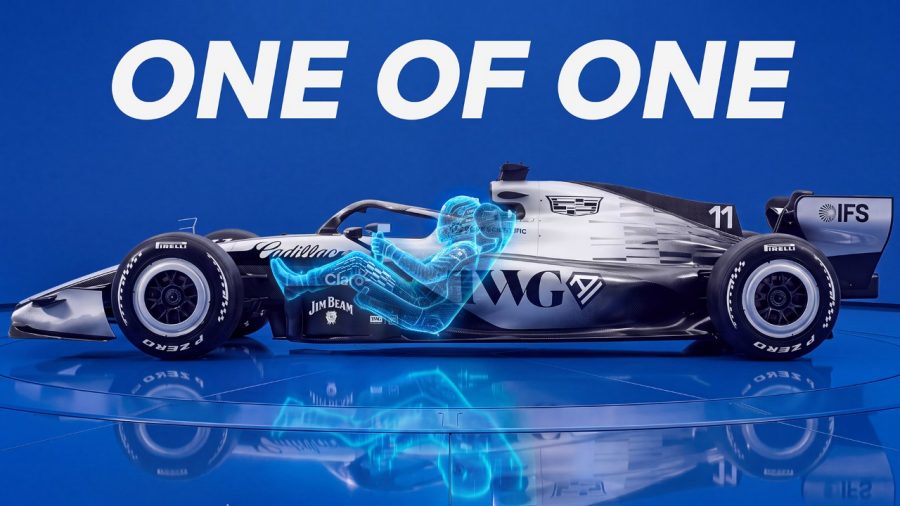
Every Cadillac Formula 1 driver gets a seat built specifically for their body. Here is how the team creates, tests and refines one before it reaches the track.
A Formula 1 car has countless components designed to maximize performance, but few are more personal than the driver’s seat. The Cadillac F1 driver seat must hold the driver securely through enormous G-forces while remaining comfortable throughout an entire race.
The fit has to be extremely precise. A seat that is too loose can allow excessive movement and increase fatigue, while one that is too tight can make a full race physically painful.
Cadillac recently showed the complete process behind creating one of its bespoke F1 seats, from the initial body mold to the final trackside adjustments.
The Process Starts With the Driver’s Body
The first step takes place at General Motors’ Charlotte Technical Center. The driver sits inside the Formula 1 chassis on top of a plastic bag while a technician fills it with a liquid mixture.
The material expands and hardens around the driver’s body, creating a detailed physical mold. That foam shape can then be measured precisely and converted into a digital representation of the finished seat.
Cadillac creates an individual mold around the driver to capture the precise shape required for the F1 seat.
Once the digital model has been finalized, the physical seat can be manufactured.
This approach allows the team to reproduce the driver’s seating position with a high level of accuracy before making any final adjustments at the track.
Cadillac Uses Flax-Based Material Instead of Carbon Fiber
The actual seat is produced at Cadillac Formula 1 Team’s facility near Silverstone in the United Kingdom.
Unlike many components of an F1 car, the seat is not made from carbon fiber. Cadillac instead uses a natural flax-based fiber weave.
The material provides an important advantage for the driver. According to the team, it does a better job of isolating the cockpit occupant from the intense vibrations produced by the race car.
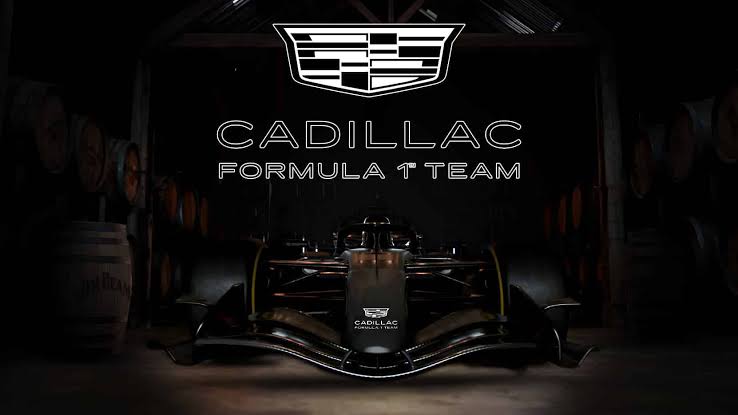
Cadillac manufactures its F1 seats from a flax-based fiber weave designed to improve vibration isolation.
That means material selection is about more than simply minimizing weight. The seat also plays an important role in driver comfort and fatigue management.
In Formula 1, even small improvements can make a difference over a long race distance.
Valtteri Bottas Puts the Seat to the Test
With the seat completed, Cadillac takes it to the circuit for a real-world fitting session.
At the British Grand Prix, Valtteri Bottas climbed into his new bespoke seat inside the team’s garage. Rather than simply accepting the first version, Bottas provided feedback on how it felt and where changes were needed.
The seat was then returned to the factory so the team could make precise modifications.
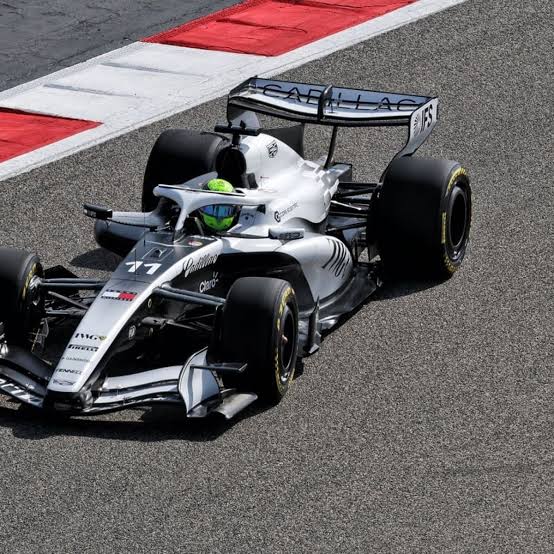
Valtteri Bottas test-fits his bespoke Cadillac F1 seat during the British Grand Prix weekend.
Engineers can add or remove material in specific areas until the fit is exactly right. That iterative process is essential because the driver needs both stability and comfort while remaining securely positioned inside the cockpit.
Once the adjustments were complete, Bottas had a finished seat ready for competition.
A Custom Seat Is a Performance Component
The Cadillac F1 driver seat may look relatively simple compared with an engine, suspension system or aerodynamic package, but its importance is difficult to overstate.
The seat determines how securely the driver is held during braking, cornering and acceleration. It also helps manage the physical demands created by the car’s vibrations and G-forces.
Moreover, every driver has different requirements. That is why Cadillac does not simply produce one standard seat and install it across its cars.
From Digital Scan to the Race Track
The entire process combines driver-specific fitting, digital modeling, specialized materials and repeated testing. It begins with a mold of the driver’s body and ends with a component that is refined through direct feedback from the cockpit.
For Bottas, the final step came almost immediately. After the fitting process was completed, he used the new seat during Free Practice 1 at the British Grand Prix.
That makes the Cadillac F1 driver seat a perfect example of how Formula 1 performance is built from details that spectators rarely see. The car may be engineered at the limits of technology, but ultimately, one of its most important components has to fit one person perfectly.
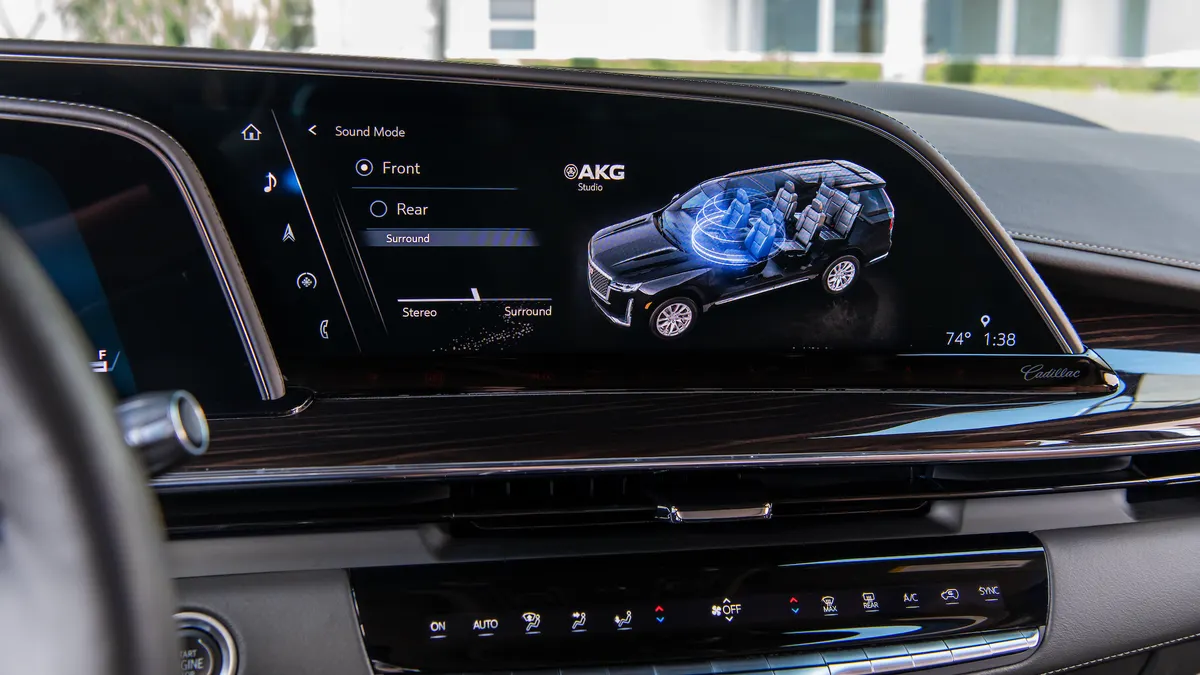
Vehicle quality continues to improve, but infotainment remains a major weakness. JD Power says multimedia systems generate more complaints than any other vehicle category.
Vehicle infotainment problems continue to frustrate new-car owners even as overall vehicle quality improves. According to JD Power’s 2026 U.S. Multimedia Quality and Satisfaction Study, multimedia systems remain the most problematic category reported by drivers.
The study found that infotainment-related complaints accounted for 25% of all reported problems in new vehicles. JD Power recorded 42.4 multimedia problems for every 100 vehicles, making the category the most frequently reported source of trouble.
The findings are based on responses from more than 78,000 owners and lessees of new 2026 model-year vehicles after 90 days of ownership.
Infotainment Is the Only Category Getting Worse
JD Power found that multimedia was the only major vehicle category to deteriorate year over year. That stands out as other areas of vehicle quality continue to improve.
The growing reliance on software, touchscreens and connectivity appears to be a major reason. Instead of traditional mechanical failures, many modern complaints involve software behavior, system complexity and problems connecting devices.

Modern vehicle infotainment systems are generating more complaints than any other vehicle category, according to JD Power’s 2026 study.
As automakers add more digital features, the technology inside cars increasingly resembles the software found in smartphones and computers.
However, unlike consumer electronics, infotainment systems are often responsible for controlling functions that drivers use every day. That makes reliability and ease of use particularly important.
Software Complexity Is Becoming the Bigger Problem
JD Power says the industry is shifting toward a new type of quality challenge.
As vehicles become more software-defined, problems are increasingly related to system complexity, software performance and connectivity rather than conventional hardware failures.
That creates a difficult situation for automakers. Software can be updated after a vehicle is sold, but poorly integrated systems can still create significant frustration for owners.

Software, connectivity and system complexity are increasingly responsible for infotainment complaints in modern vehicles.
Software glitches have also become an important factor in vehicle recalls. Automakers are now looking for ways to make software fixes easier to deliver through over-the-air updates.
The goal is to continuously improve vehicle systems without requiring owners to visit a dealership every time a problem is identified.
Navigation Systems Are Showing Improvement
Not every part of vehicle multimedia is getting worse. JD Power found that customer satisfaction with navigation systems improved significantly.
Navigation satisfaction increased by 17 points to 933 on a 1,000-point scale. The improvement was driven by fewer complaints involving usability and accuracy.
That suggests automakers are making meaningful progress in at least some areas of the digital driving experience.

Navigation satisfaction improved significantly, while infotainment remained the weakest multimedia category in JD Power’s latest study.
Customer satisfaction also improved for multimedia systems and speakers overall, showing that progress is possible even while infotainment remains the industry’s biggest trouble spot.
Carmakers Need to Make Technology Simpler
The latest findings highlight a growing challenge for automakers. Drivers increasingly expect the technology in their vehicles to work consistently without requiring complicated workarounds.
That means adding more features is not necessarily the answer. Systems also need to be intuitive, stable and easy to use.
Moreover, the shift toward software-defined vehicles gives manufacturers an opportunity to address problems after vehicles reach customers. Over-the-air updates can improve functionality and fix certain issues without a dealership visit.
Infotainment Remains Automotive’s Biggest Quality Challenge
The vehicle infotainment problems identified by JD Power show how the definition of vehicle quality is changing.
Modern vehicles may have fewer traditional reliability issues, yet drivers are encountering a new category of frustration tied to software, connectivity and increasingly complicated user interfaces.
For automakers, the message is clear: customers expect digital features to work every time and without unnecessary complexity. The brands that simplify the experience while delivering dependable software will have the best chance of turning infotainment from a persistent weakness into a competitive advantage.
-

 TEST DRIVES2 months ago
2026 Maserati MCPura Cielo
-

 NOW TRENDING2 months ago
2027 Range Rover GT Debuts as the Brand’s Lowest EV
-

 INTELLIGENT MOBILITY2 months ago
2027 Toyota Crown Gets New Hybrid System and Fresh Design
-
 NOW TRENDING2 months ago
Mercedes-AMG Admits the C63 Hybrid Was a Mistake for Buyers
-
 NOW TRENDING2 months ago
Honda Civic Si Production Ends After 2026 Model Year Pause
-

 NOW TRENDING2 months ago
Next-Gen Cadillac CT5-V Blackwing Could Keep the V8 Alive
-
 NOW TRENDING2 months ago
Rolls-Royce’s $32 Million Droptail Took 9 Months of Handcrafted Woodwork
-
 NOW TRENDING2 months ago
2027 Toyota Sequoia Adds Trailhunter Package and New Tech
You must be logged in to post a comment Login