
TEST DRIVES
Range Rover Evoque Convertible: the most exclusive and capable convertible in the world

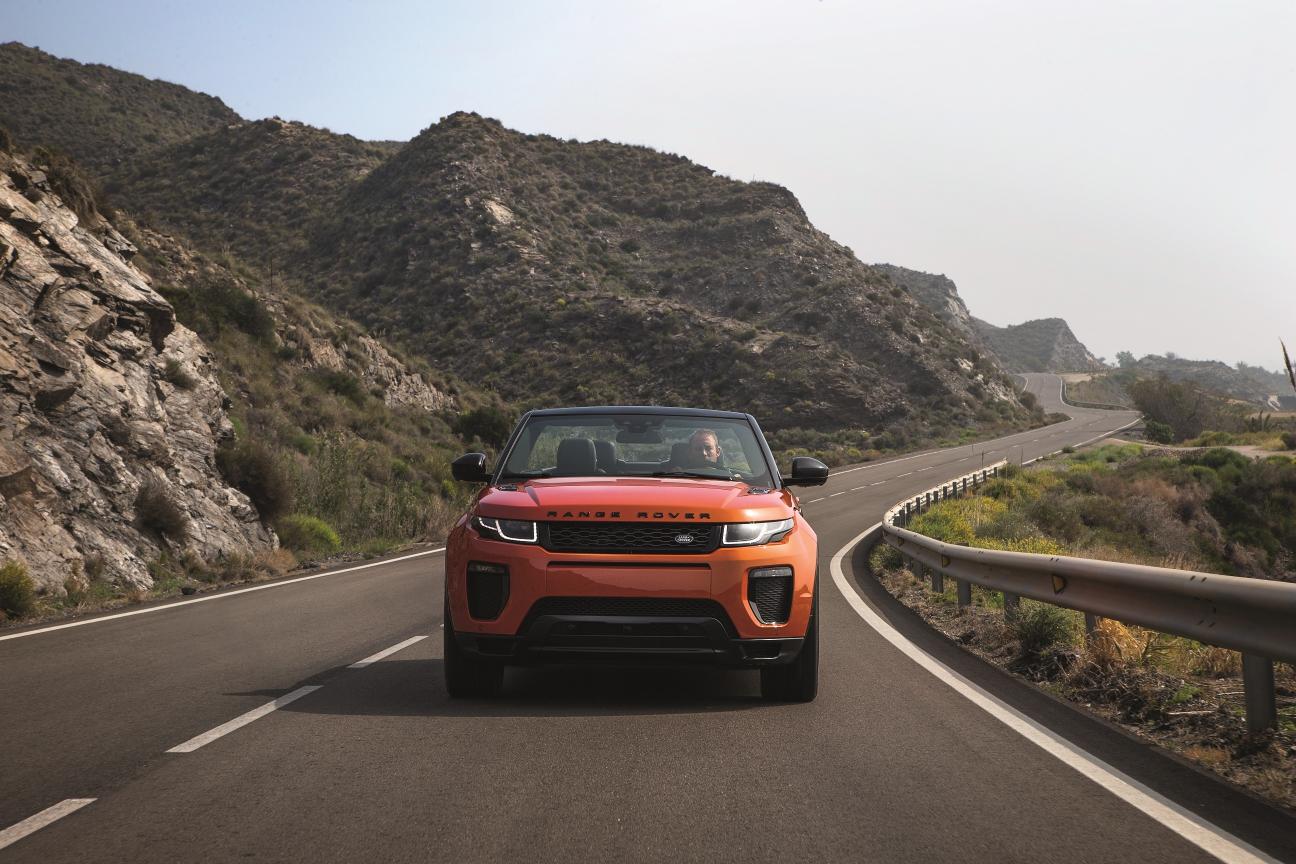
Land Rover has unveiled the world’s first luxury compact SUV convertible. Range Rover Evoque Convertible combines the bold design and refinement of Evoque with comprehensive specification and a sophisticated folding roof to create a no compromise, all-season convertible.
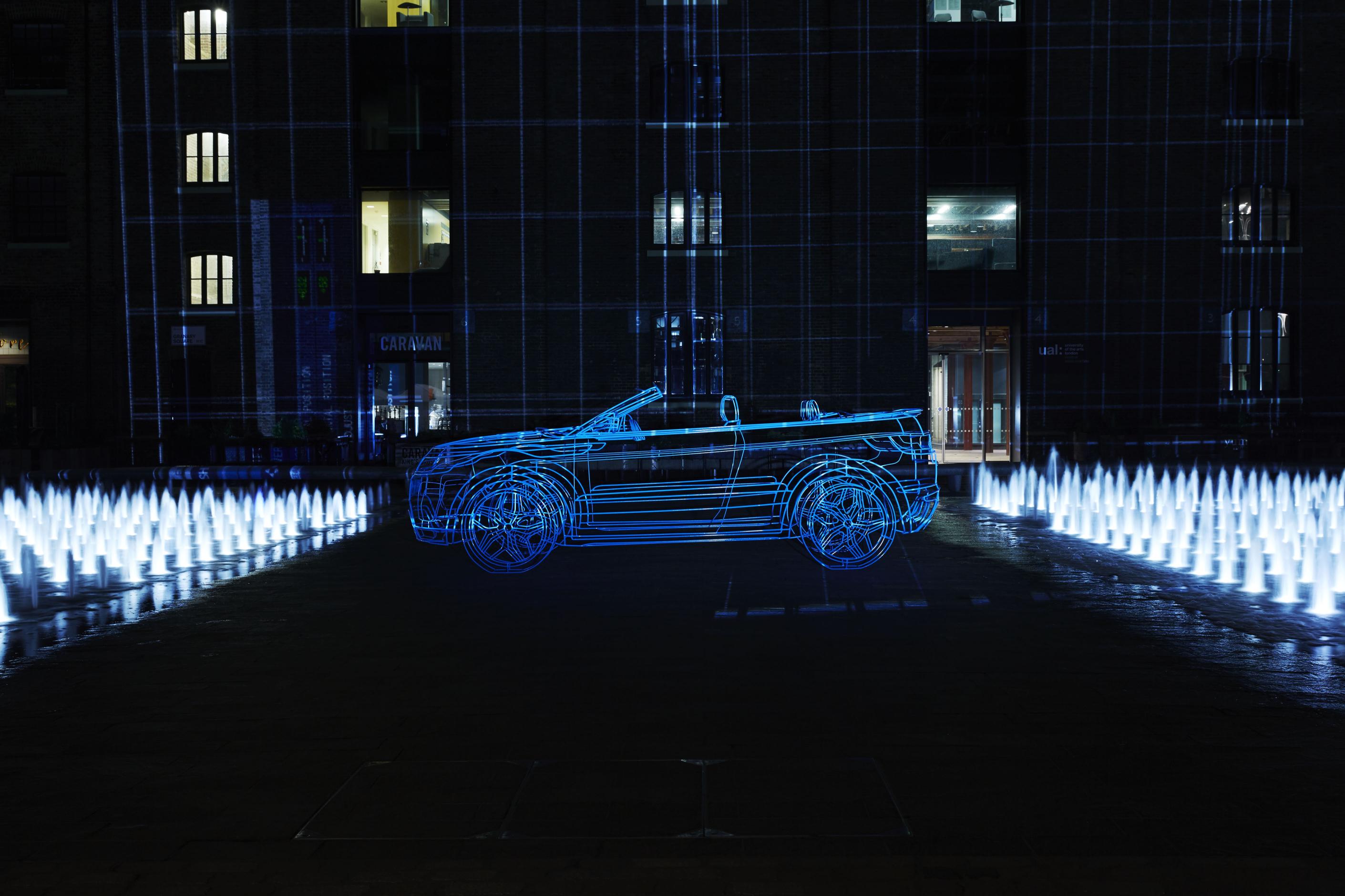 The ground breaking and distinctive shape of the original Range Rover Evoque lends itself to an elegant convertible design and the new model sits at the pinnacle of the Evoque portfolio as the most exclusive and capable convertible in the world.
As the fifth member of the Range Rover family – and the first ever convertible – the highly desirable new model combines traditional Range Rover luxury with a distinctive four-seat design and versatile storage.
The Range Rover Evoque Convertible has been engineered to meet Land Rover’s most rigorous standards, ensuring exceptional structural rigidity, trademark refinement, outstanding levels of safety and unrivalled breadth of capability.
Gerry McGovern, Land Rover Design Director and Chief Creative Officer, commented: “Range Rover Evoque Convertible is a vehicle for all seasons. Its uniquely distinctive design and world-class engineering adds another dimension to the Range Rover family, further enhancing its desirability and appeal.”
[embedyt] http://www.youtube.com/watch?v=kCJTNUVugQs[/embedyt]
The global SUV market is forecast to grow by 20 per cent over the next five years and Evoque Convertible will play a key role in continuing Range Rover’s 45-year success story, pioneering an all-new SUV sector.
Evoque Convertible’s eye-catching exterior design is made possible by a sophisticated fabric roof shaped to create a crisply defined silhouette that remains faithful to the original design. Its Z-fold mechanism lays flush with the rear bodywork for a sleek, uncluttered appearance when lowered. The fabric roof is the longest and widest currently fitted to any vehicle on sale today.

The fully-automated roof stows in 18 seconds, and can be raised in 21 seconds, at speeds up to 30mph. When closed it provides high standards of refinement with a layer of acoustic insulation ensuring interior comfort on a par with five-door Evoque. In addition, the position of the roof doesn’t affect loadspace, with a generous 251-litre boot offering unrivalled practicality for a convertible.
At the heart of the high-class cabin is an all-new, high-resolution 10.2-inch touchscreen with Jaguar Land Rover’s next-generation infotainment system, InControlâ„¢ Touch Pro, which debuts in a Land Rover. Raising the standard of connectivity for the brand, the highly-responsive and super-fast InControlâ„¢ Touch Pro offers seamless smartphone integration, door-to-door navigation, 3G connectivity and a premium sound system.
Safety hasn’t been overlooked with a Roll-Over Protection Device featuring deployable roll-over bars hidden in the rear bodywork. It deploys two aluminium bars within 90 milliseconds in the unlikely event of a roll-over situation to create a survival space for occupants.
Land Rover’s full suite of lightweight, all-aluminium four-cylinder petrol and diesel engines is available with the potent 240PS Si4 petrol providing outstanding levels of performance and refinement.
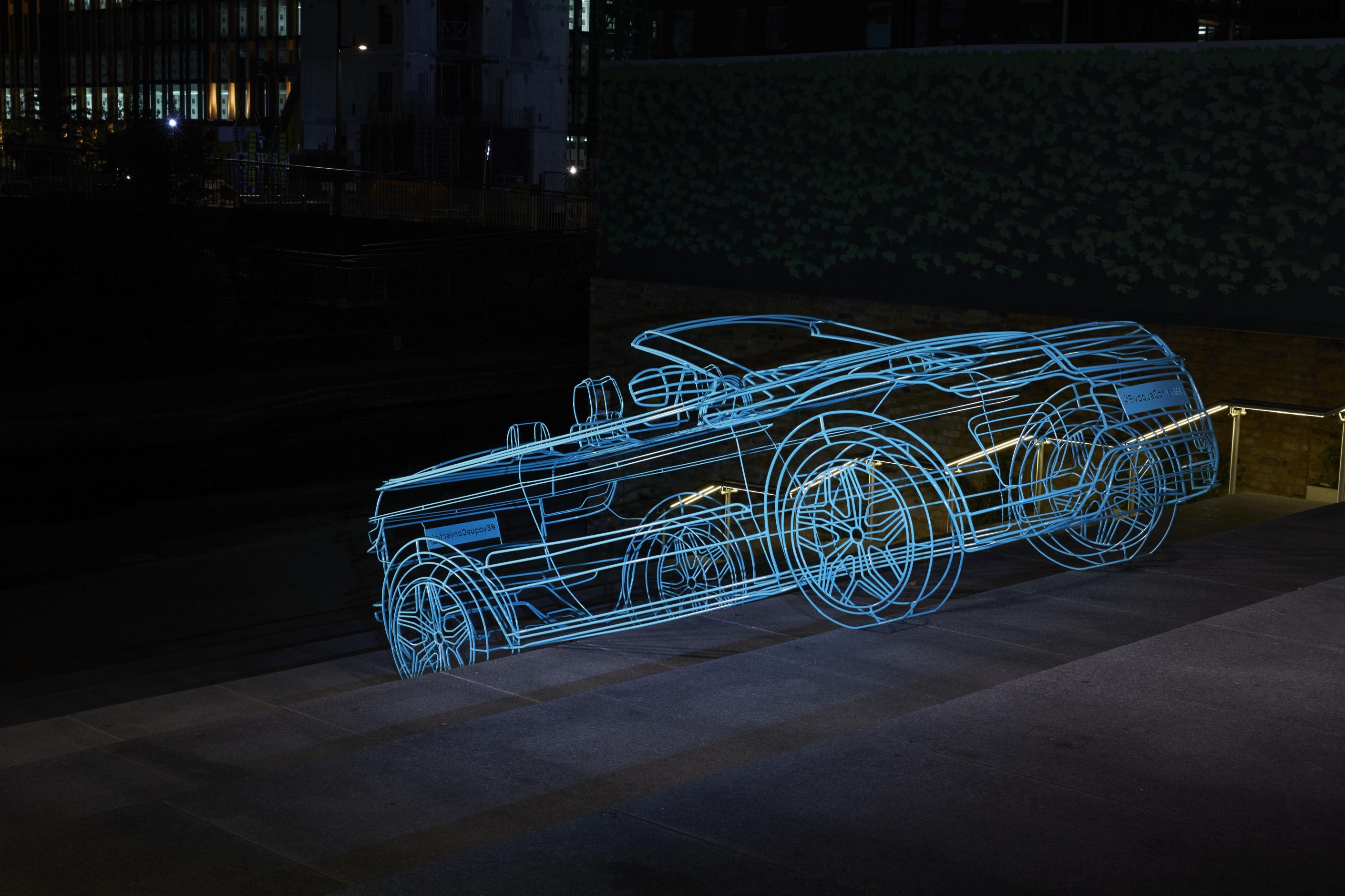 Diesel power comes from Land Rover’s 2.0-litre Ingenium engines which provide highly efficient and refined performance with fuel economy up to 55mpg (5.1 l/100km) and CO2 emissions as low as 149g/km.
Evoque Convertible is underpinned by Land Rover’s world-class all-terrain capability, using the same advanced technologies as Evoque five-door and Coupé derivatives. A customary choice of four-wheel drive powertrains combines with Land Rover’s nine-speed automatic transmission, Terrain Response® system, Wade Sensing and All-Terrain Progress Control to ensure Evoque is a convertible for all seasons.
The new Range Rover Evoque Convertible will be produced at Land Rover’s Halewood plant in the UK, alongside the five door and Coupé bodystyles, and goes on sale across from Spring 2016 in more than 170 markets worldwide.



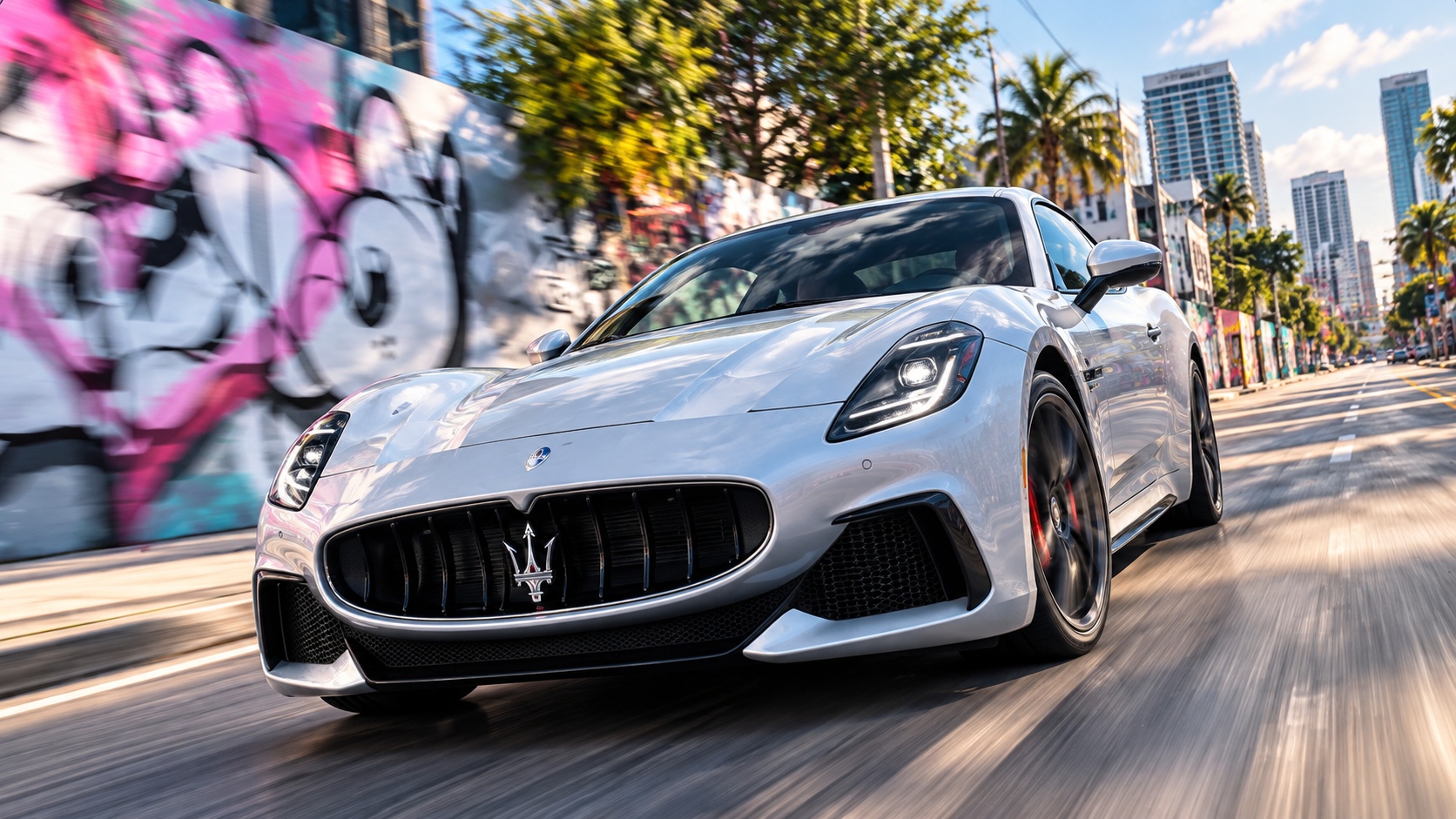
Carsfera takes Maserati’s performance-focused GranTurismo through Miami and Wynwood to discover what happens when 542 horsepower, Italian craftsmanship and one of America’s most expressive cities meet.

There are certain cars that make more sense once you spend several days with them. The specifications may tell you how much power they produce, how quickly they accelerate and how much they cost, but they don’t necessarily explain what it feels like to have one sitting outside your hotel in the morning, drive it through traffic in the afternoon and then take the longer route home simply because you’re enjoying the car.
The 2026 Maserati GranTurismo Trofeo became that kind of car for me in Miami.
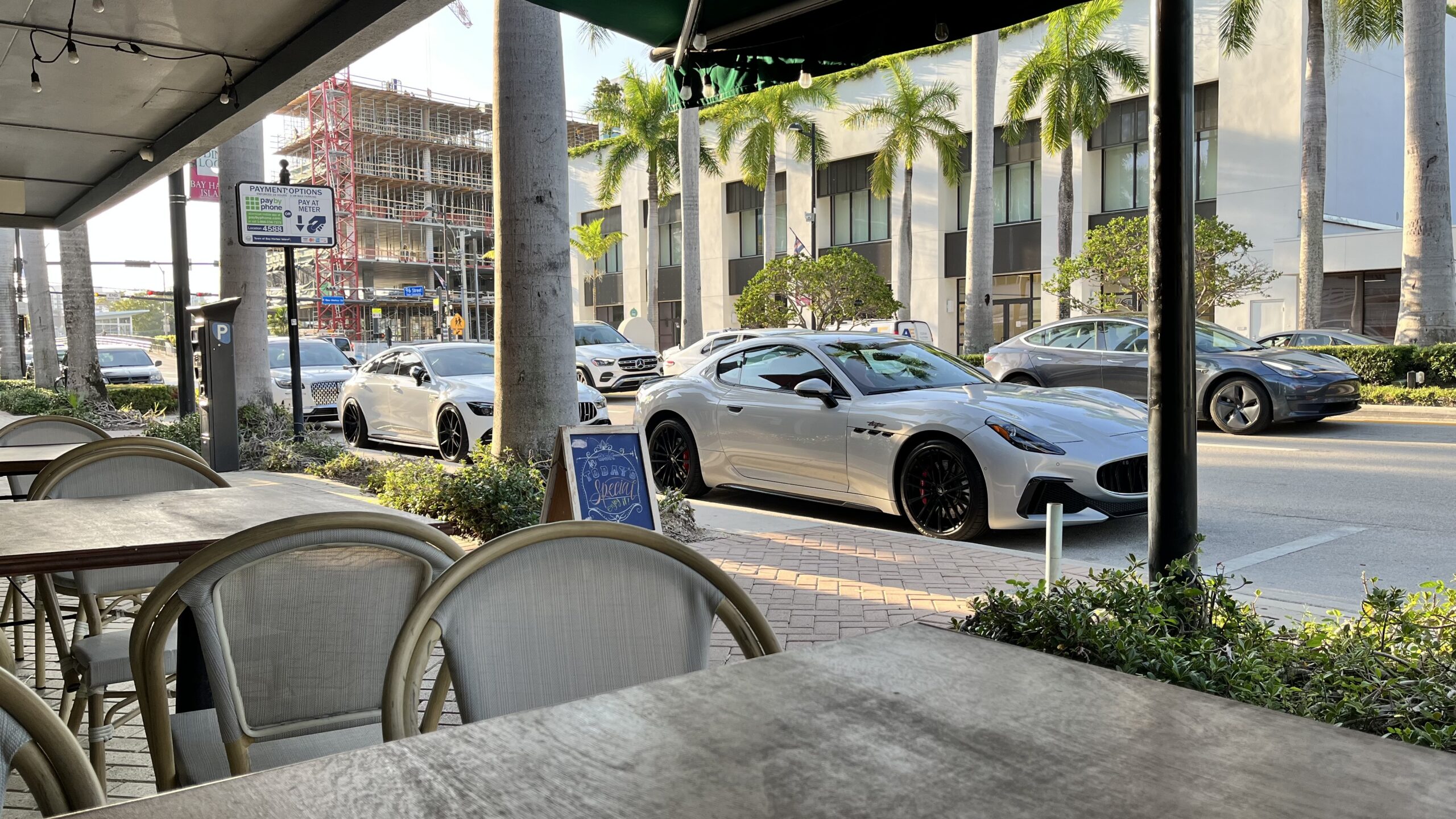
I had already spent time with the GranTurismo in Virginia, where the highways and secondary roads gave me an opportunity to appreciate what Maserati has done with this generation. What stood out wasn’t one dramatic performance number. It was how naturally the car combined speed, comfort and sophistication. It felt like a proper grand tourer, something you could genuinely imagine driving for hours rather than something designed around a ten-minute burst of excitement.
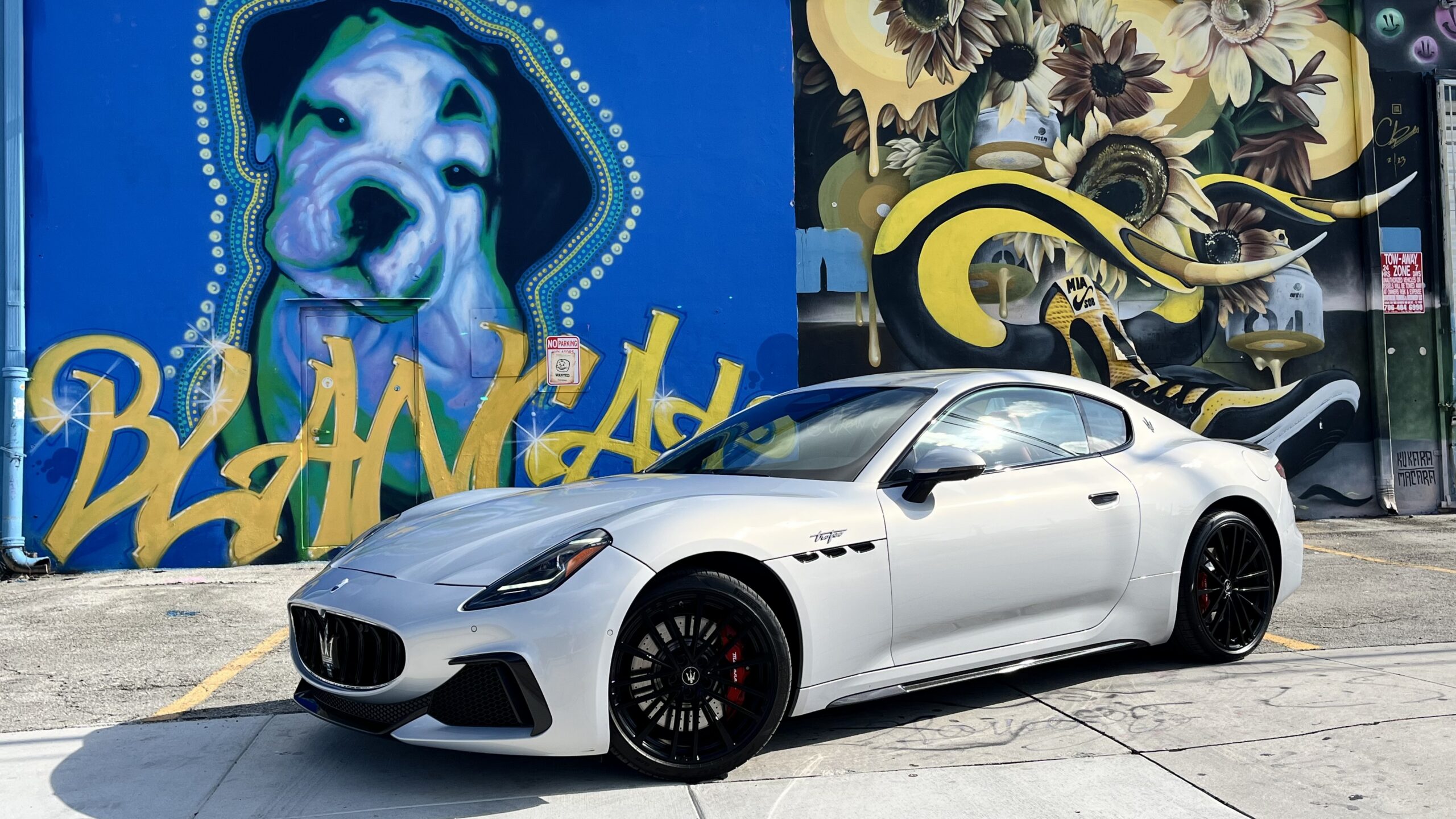
Miami introduced me to the other side of that personality.
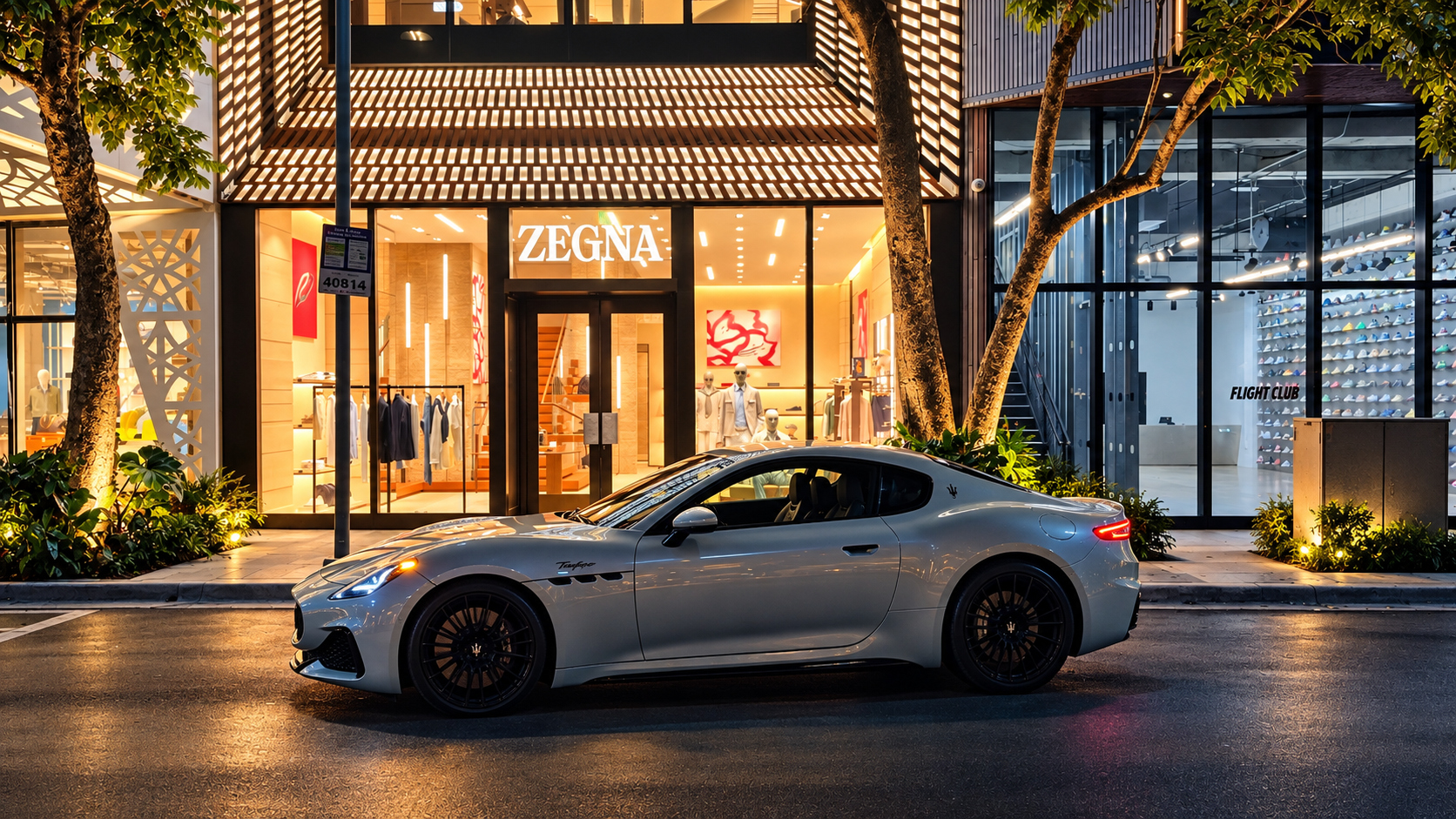
Our Trofeo arrived finished in Bianco Astro, with a red full-grain perforated leather interior, carbon-fiber details, Carbon Macrotwill trim, staggered 20- and 21-inch Pegaso-design wheels and an upgraded Sonus Faber audio system.
Its base price was $166,000. With options, the car sitting in front of me carried an MSRP of $185,830.
At that price, it needed to feel special.
After several days driving it around South Florida, I began to understand where that feeling comes from.
Seeing the GranTurismo Trofeo in Miami
Miami is an interesting place to experience an automobile like this because the city has its own visual personality. There is color everywhere, especially when you move through Wynwood. Buildings become canvases, traffic is unpredictable, people are constantly moving, and exotic and luxury cars aren’t particularly unusual.
Yet the Maserati still attracted attention.
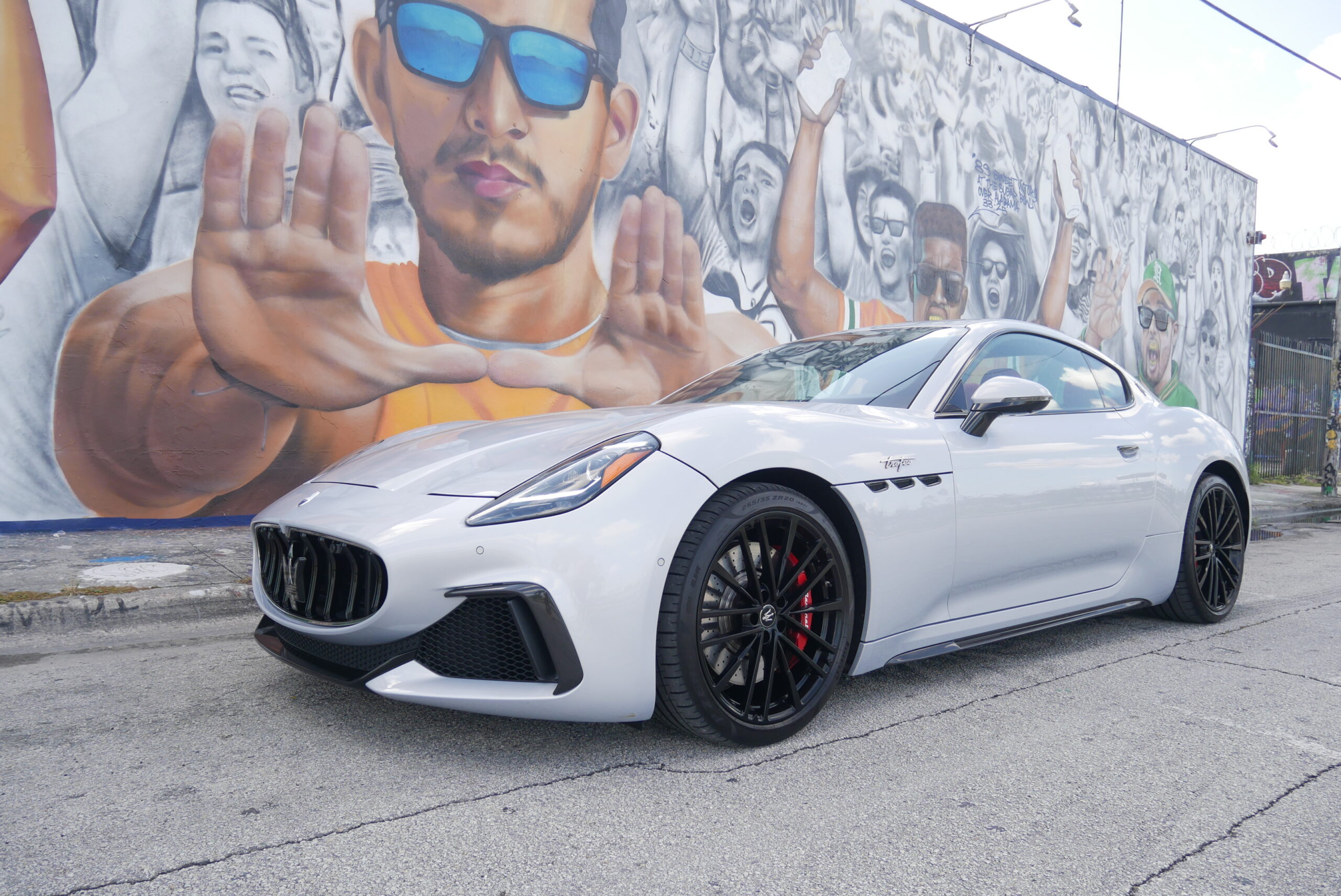
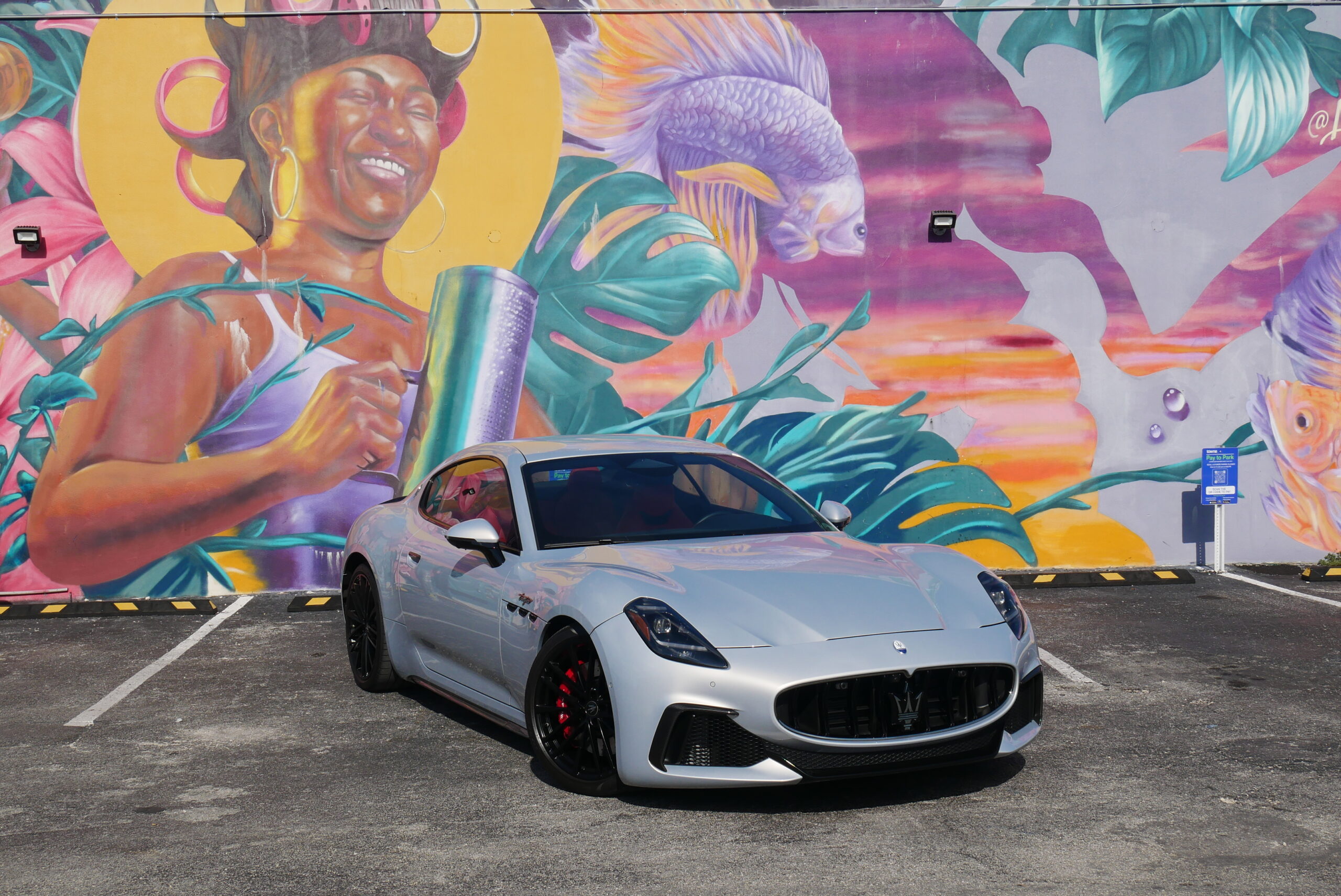
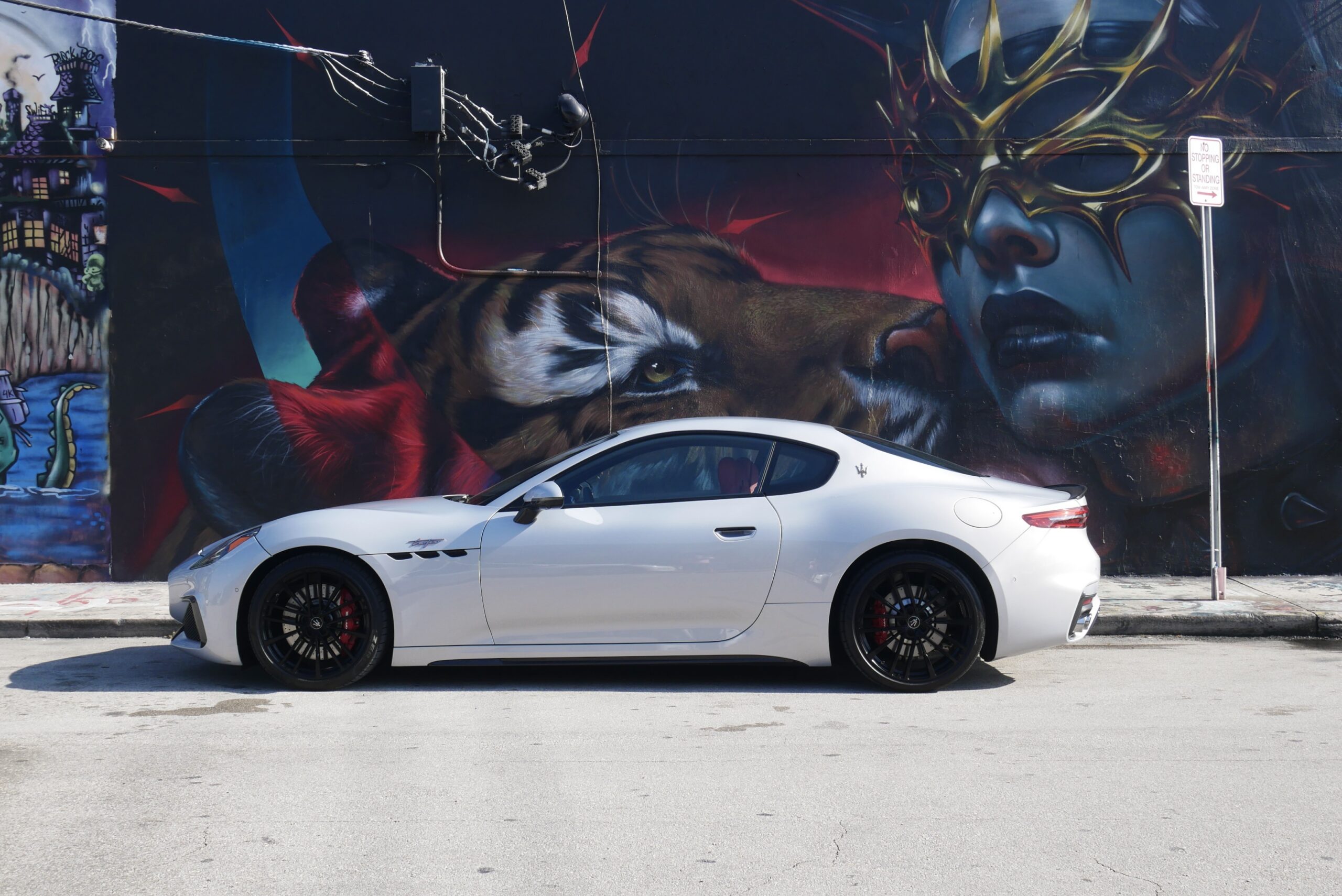
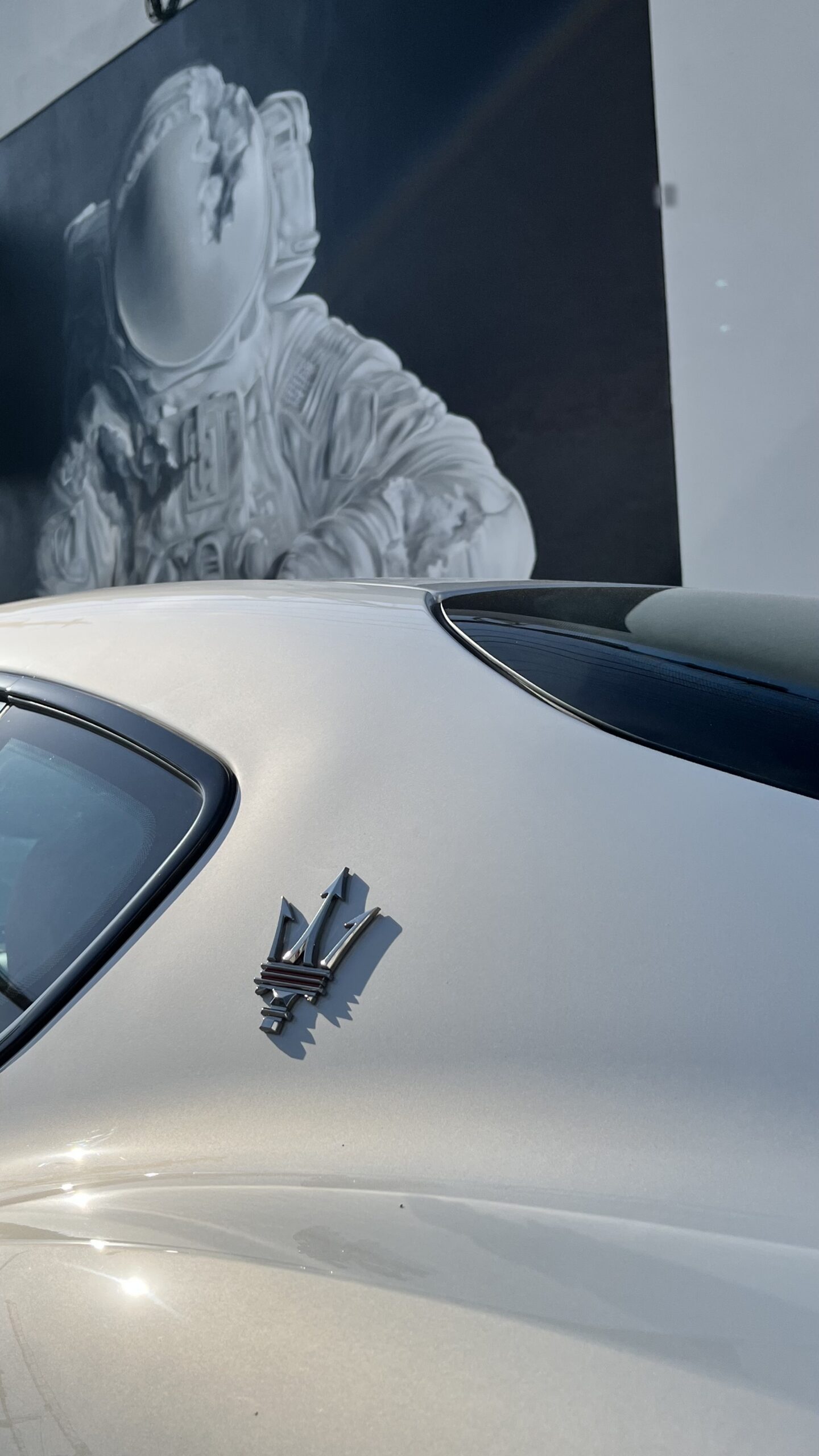
The Bianco Astro paint initially seemed like a relatively conservative specification for a car with this much personality, but seeing it under the Florida sun changed my opinion. The white finish allowed the GranTurismo’s proportions to become the focus.
The hood stretches far ahead of the cabin. The roofline falls gently toward the rear. The body has enough muscle around the wheels to communicate performance without relying on oversized wings or excessive aerodynamic decoration.
Against the murals of Wynwood, the simplicity of the white exterior worked particularly well. Later, driving toward Miami Beach, the same car took on a completely different character. Palm trees, modern architecture, hotels, bright sunlight and the blue Florida sky somehow made the GranTurismo look exactly where it belonged.
That is something Maserati has historically understood very well.
A Maserati doesn’t necessarily need to be the loudest car parked outside a restaurant to make you notice it.
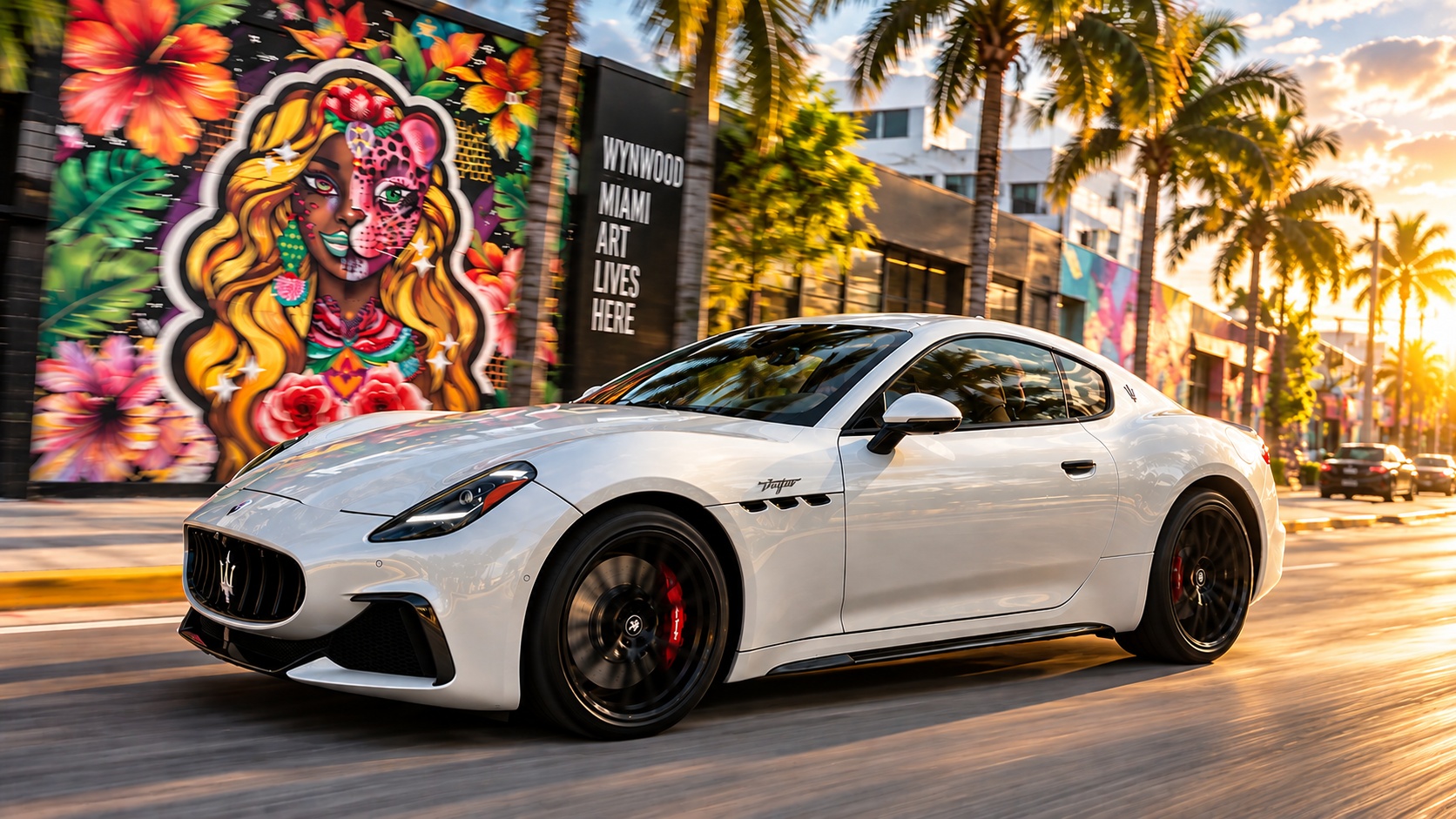
The GranTurismo Trofeo has presence without trying too hard to manufacture it.
Our car’s $2,880 carbon-fiber rear spoiler added a little more aggression, while the Trofeo’s unique fascias, carbon-fiber exterior elements, gloss-black details, black-chrome badging and quad exhaust outlets subtly separated it from the regular GranTurismo.
I appreciated that restraint.
It would have been easy for Maserati to cover the Trofeo with aerodynamic pieces and turn it into something that looked more like a track-focused special edition. Instead, you still immediately recognize the elegance of the GranTurismo underneath.
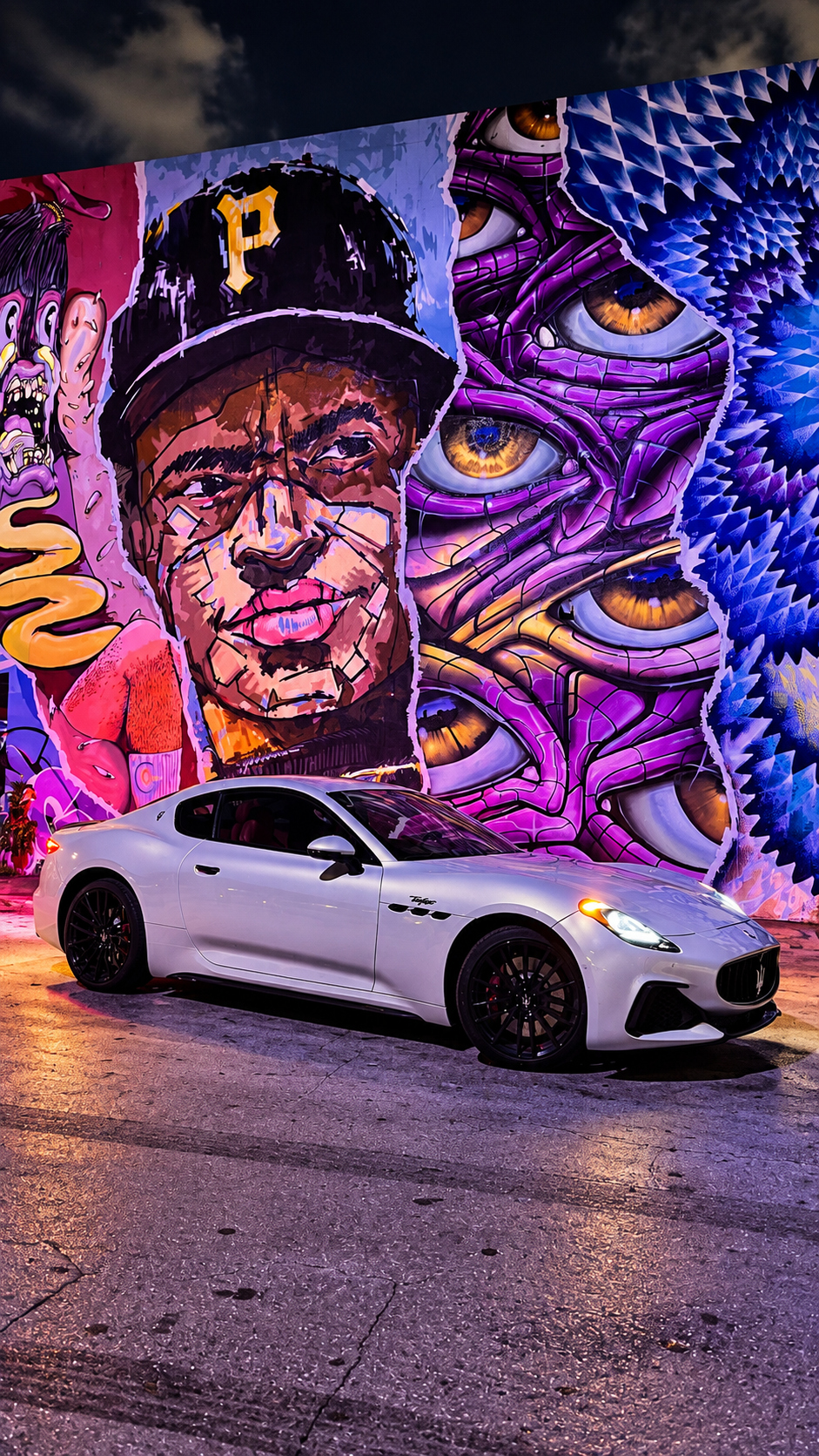
The Trofeo simply looks as though it has been spending more time at the gym.
The Red Interior Changes the Experience
Opening the driver’s door was probably my favorite visual moment with this particular specification.
The exterior is almost understated in white. Then you open the door and discover an interior covered in red full-grain perforated leather and carbon fiber.
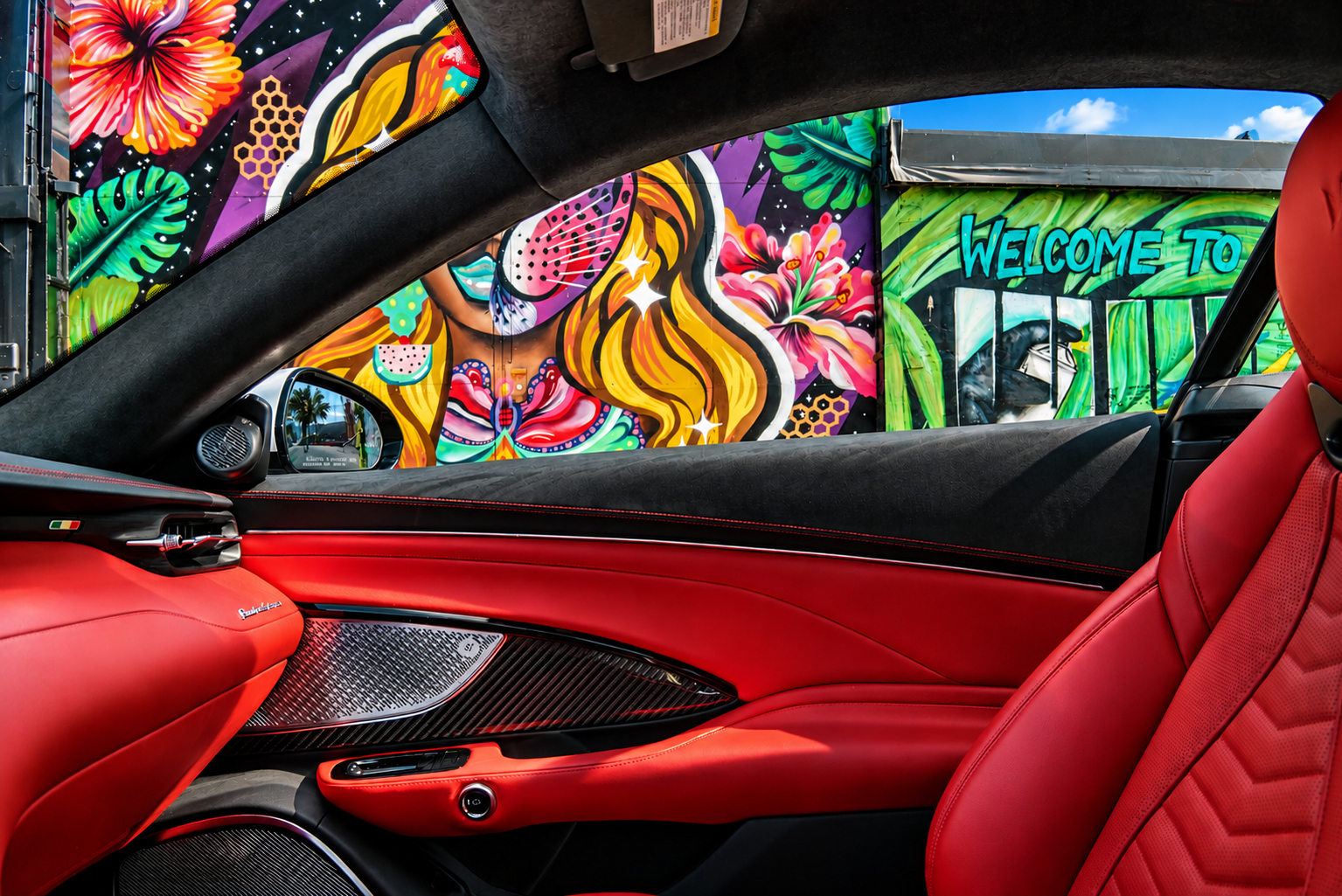
Suddenly, the personality of the car makes sense.
The GranTurismo I drove in Virginia had a much more traditional luxury atmosphere, with warmer colors and open-pore wood. It felt elegant and sophisticated, exactly as you would expect from an Italian grand tourer.
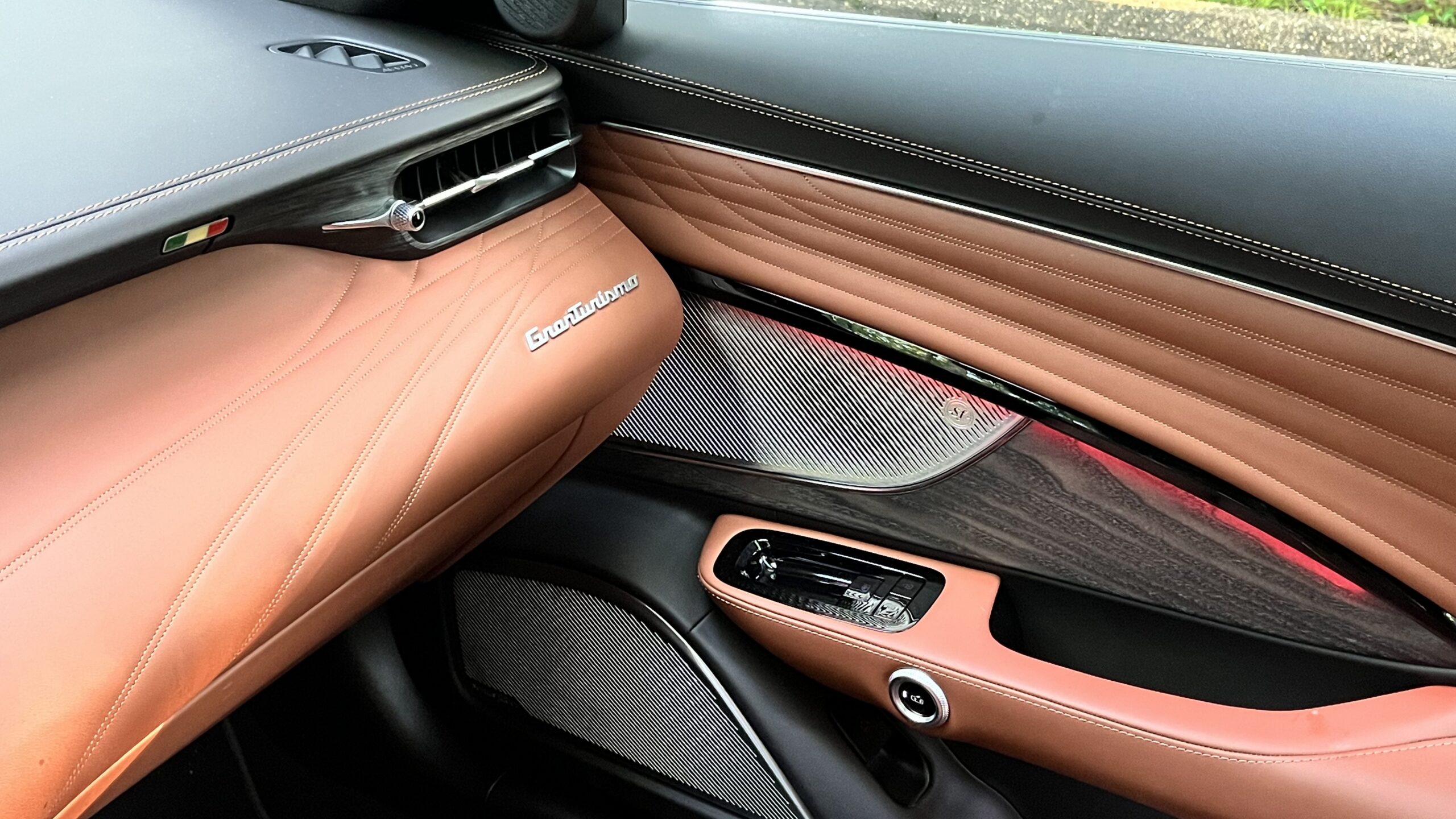
The Trofeo felt younger. More energetic.
Not necessarily less luxurious, just more focused on the person sitting behind the steering wheel.
The Carbon Macrotwill trim, a $2,650 option on our test car, fits that personality beautifully. The aluminum column-mounted paddle shifters are another detail I enjoyed because they feel substantial in your hands. They’re not decorative pieces attached to the steering wheel. They look and feel like something you’re actually going to want to use.
And you will.
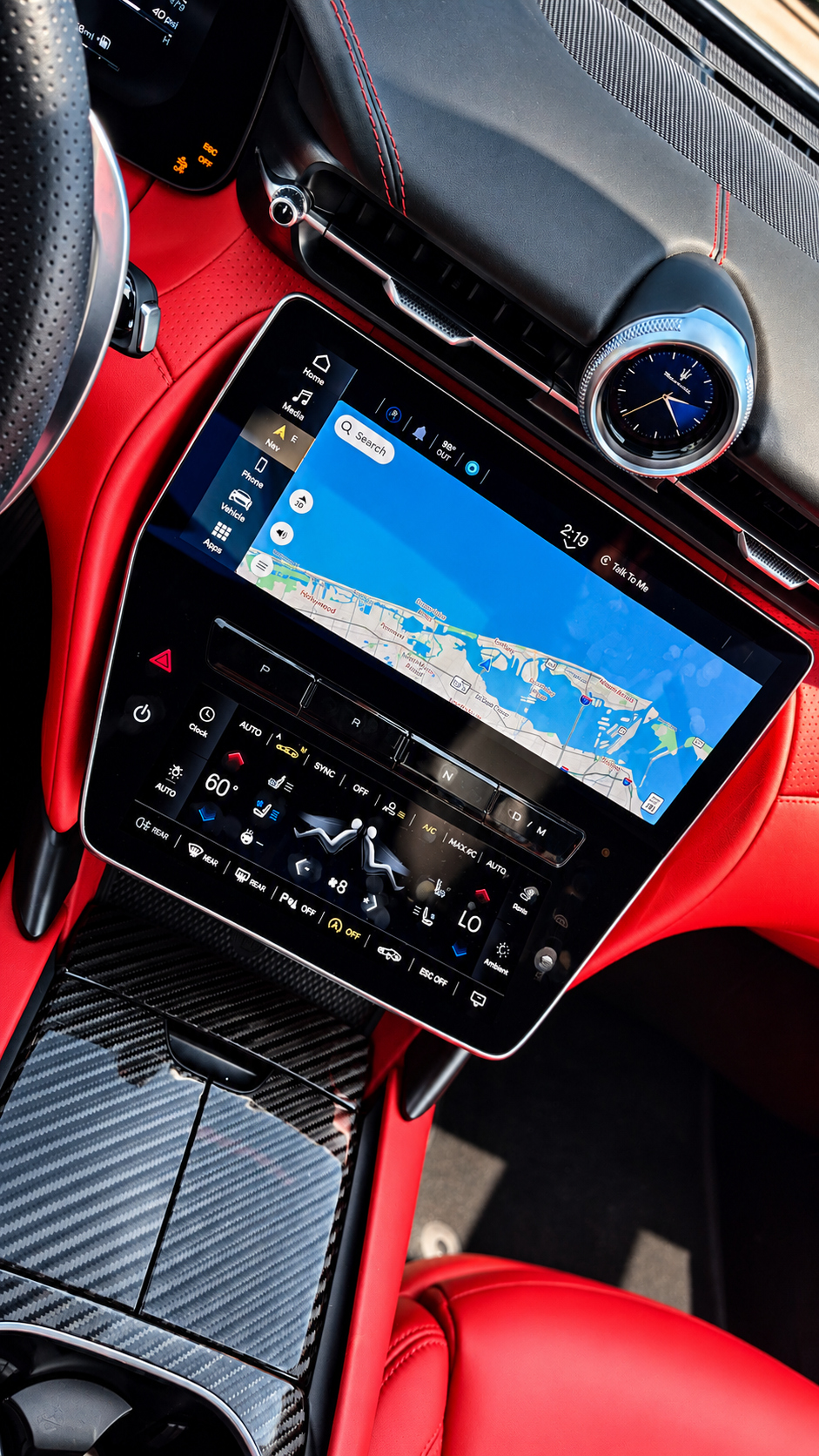
The seats deserve attention as well. A grand tourer can’t simply look beautiful; it has to remain comfortable after the novelty of the first hour disappears. The Trofeo provides 18-way power-adjustable front seats with driver memory, heating and enough adjustment to find a genuinely comfortable driving position.
Technology is integrated throughout the cabin without completely taking over the experience. There’s a 12.3-inch digital instrument cluster, accompanied by Maserati’s 12-inch and 8.8-inch central displays. Navigation, Apple CarPlay, Android Auto, wireless charging and connected features are all present.
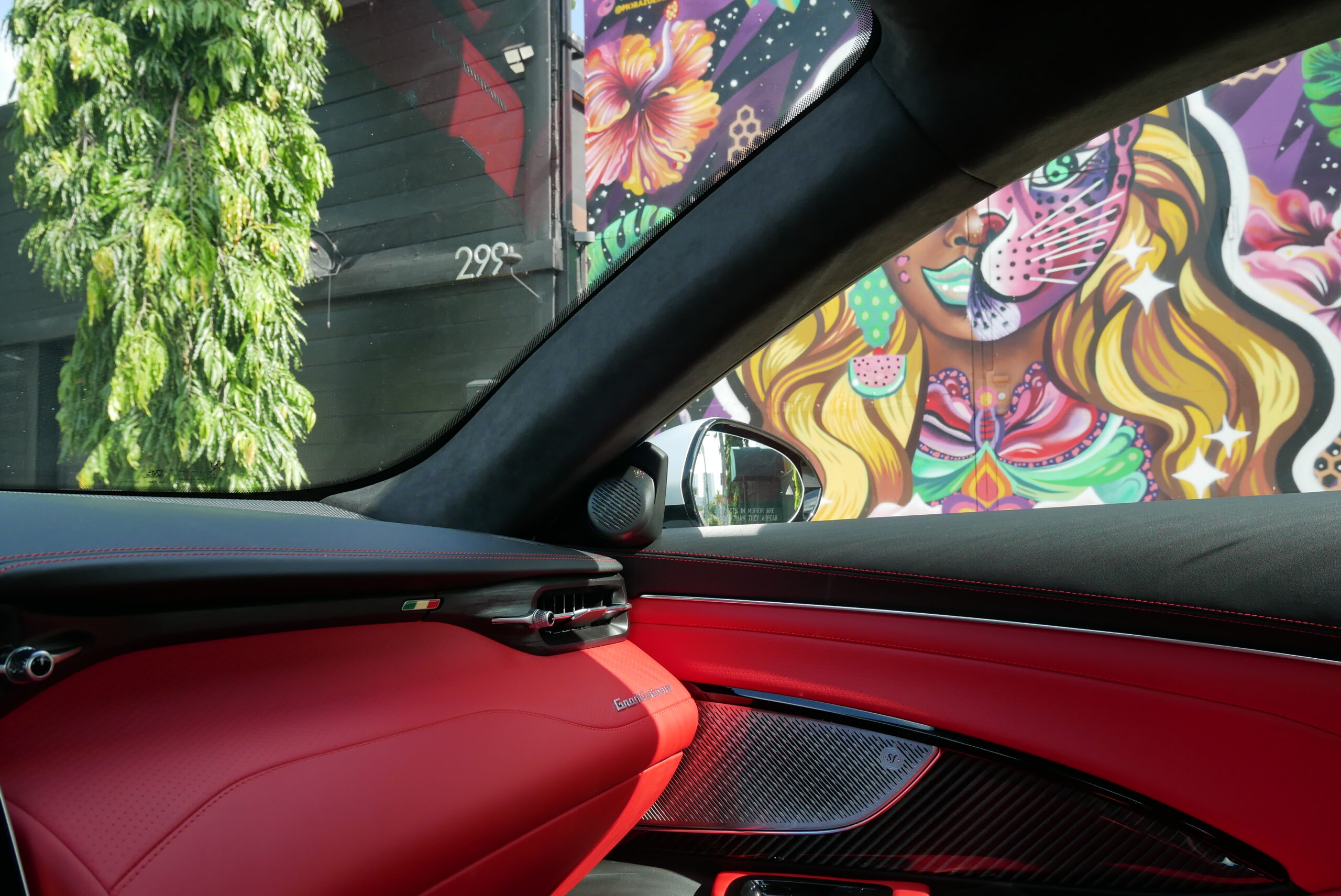
Our car also had the high-premium Sonus Faber audio system, a $4,890 option.
It’s an impressive system.
But there were plenty of moments when I preferred listening to something else.
The car itself.
The Nettuno Is What Makes the Trofeo Special
This is where my opinion of the Trofeo really began to form.
Under the hood is Maserati’s 3.0-liter twin-turbocharged Nettuno V6, paired with an eight-speed ZF automatic transmission and Maserati’s Q4 all-wheel-drive system.
The chassis includes adaptive air suspension, Skyhook electronic active damping and an electronic limited-slip differential. There is launch control and four selectable driving modes: Comfort, GT, Sport and Corsa.
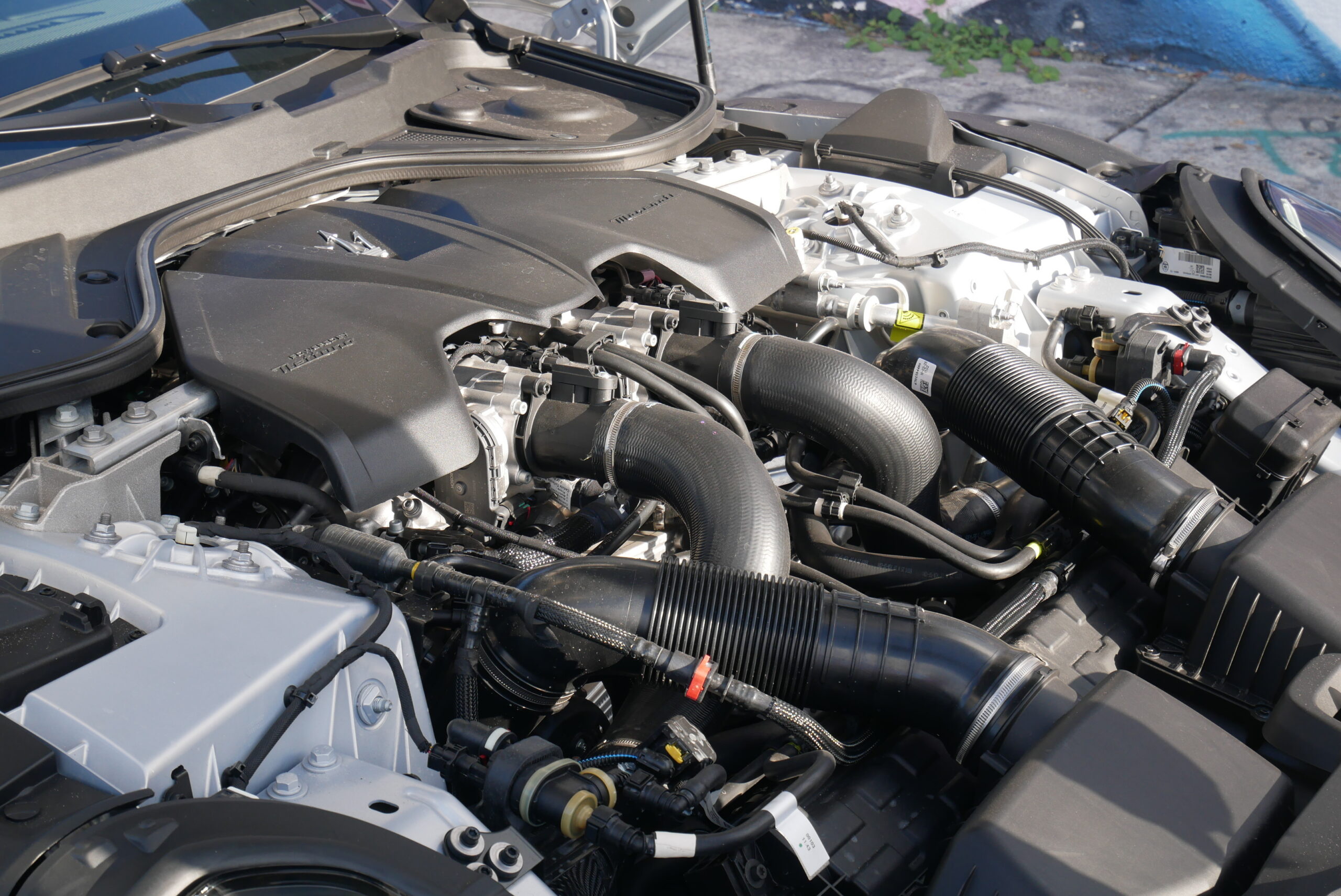
You can read all of that on a specification sheet. What the specification sheet can’t adequately explain is how broad the personality of this powertrain feels from the driver’s seat.
The Nettuno is the finest Maserati engine I have personally experienced. And I don’t say that simply because the Trofeo is fast. Of course it’s fast.
What impressed me more was how easily the engine changes character depending on what you’re asking from the car.
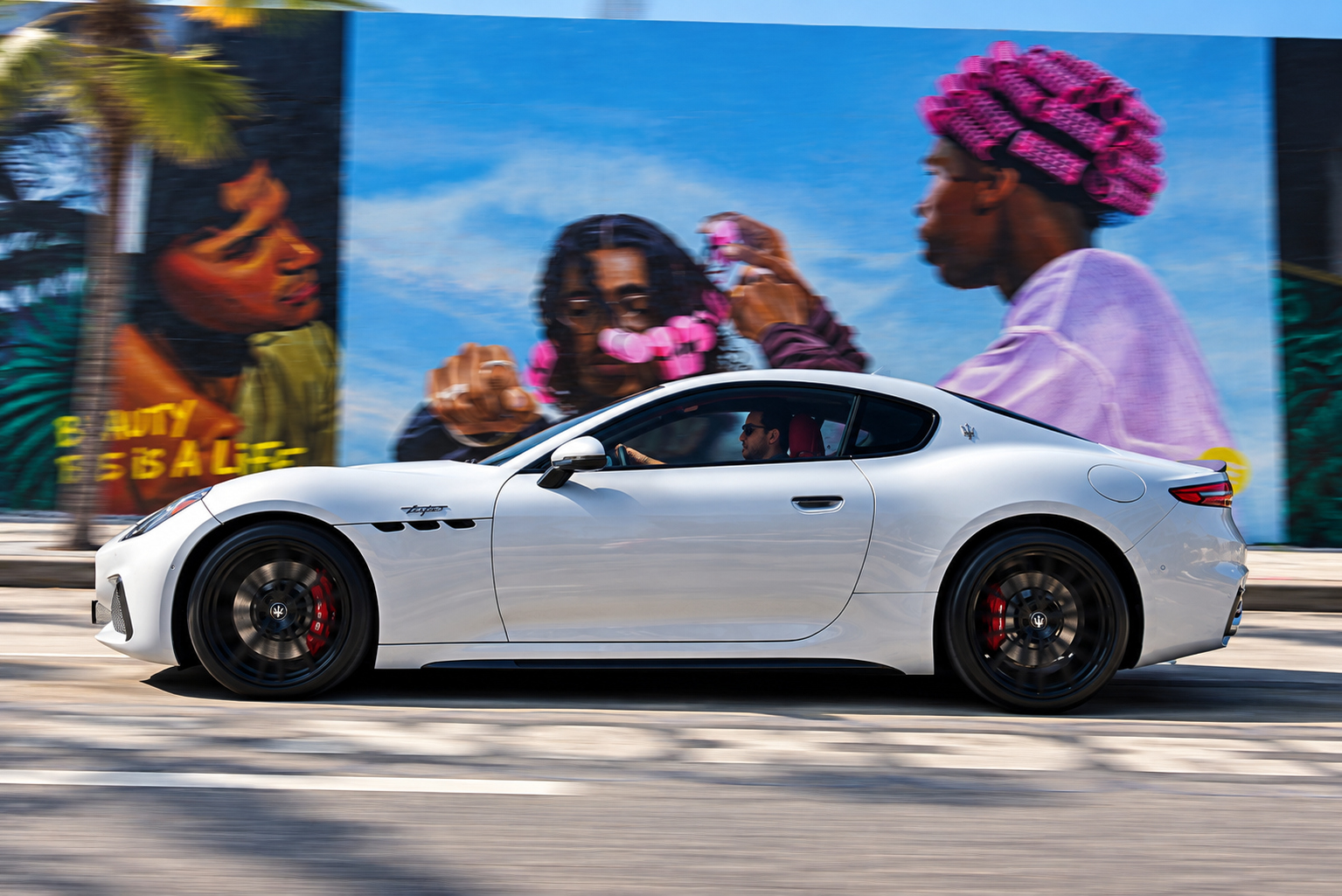
Miami traffic isn’t particularly interested in how much performance your Maserati has. There were plenty of moments when I was simply moving from one traffic light to another, surrounded by SUVs, delivery vehicles and people trying to change lanes at the last possible second.
In those situations, the Trofeo behaves remarkably normally.
The transmission isn’t constantly trying to prove something. The suspension doesn’t punish you over imperfect pavement, and the engine can remain relatively relaxed. You can drive the car through Miami Beach at an ordinary pace and enjoy the steering, seating position, interior and atmosphere without feeling as though the car is begging you to drive twice the speed limit.
That’s important.
Because eventually the traffic opens. And that’s when you reach for Sport.
The change isn’t theatrical for the sake of being theatrical. The throttle simply becomes more responsive, the transmission starts holding gears with greater purpose and the exhaust becomes more present behind you.
Push further into Corsa, and you discover the side of the Trofeo that was hiding while you were sitting in traffic ten minutes earlier.
The car tightens around you. Now the aluminum paddles that looked so beautiful when you opened the door become part of the experience. The engine feels more urgent. The transmission becomes more aggressive. You begin looking farther down the road and paying more attention to what your right foot is doing.
This is why I enjoyed the Nettuno so much. It’s not an engine that gives you one experience all the time. It lets the GranTurismo be a GranTurismo first. Then, when you ask for more, it gives you considerably more.
Miami Is Actually a Good Place to Understand This Car
Nobody thinks of Miami as the place to test the ultimate limits of a performance car.
There are no mountain passes waiting outside South Beach, and you’re probably going to spend considerably more time on I-95 than attacking a series of perfect corners.
But that’s precisely why driving the Trofeo here was useful. This is how many owners are actually going to use the car.
You’re going to drive to dinner. You’re going to sit in traffic. You’re going to take it to a hotel. You’re going to cover long stretches of highway. You’re going to deal with heat, rough pavement and those Florida rainstorms that seem capable of appearing five minutes after you were looking at a perfectly blue sky.
The Trofeo has to work in all of those situations before its performance becomes relevant.
And it does.
What Does $185,830 Actually Buy?
Our GranTurismo Trofeo started at $166,000, but several significant options pushed the final price considerably higher.
The carbon-fiber rear spoiler added $2,880. Carbon Macrotwill trim cost another $2,650. The high-premium Sonus Faber system added $4,890, red brake calipers were $1,320, the ADAS Base Package added $5,180, the Comfort Package another $1,240, and the Sport Design Package contributed $1,670.
Final MSRP:
$185,830.
That’s real money, even in this segment.
And I think anyone considering this car should look beyond the question of whether $185,830 buys enough performance. It does.
But so do plenty of other cars. At this level, horsepower alone isn’t particularly difficult to find. Neither is acceleration. What becomes harder to find is personality.
And perhaps most importantly, it gives you something you can’t really measure:
A reason to want to drive it.
GranTurismo or GranTurismo Trofeo?
Driving these two cars in two different parts of the country made the answer much clearer to me.
The GranTurismo I drove in Virginia is probably the easier car to understand.
It’s elegant, fast, comfortable and beautifully suited to covering distance. It reminded me what a proper GT should be. You don’t finish a long drive feeling as though the car has been fighting you for the last three hours.
The Trofeo takes that same philosophy and adds another layer.
It’s still comfortable. It’s still elegant. It still feels like a Maserati GranTurismo.
But there’s more anticipation every time you get behind the wheel because you know another version of the car is sitting there waiting for you.
The standard GranTurismo makes the journey enjoyable.
The Trofeo makes you wonder whether there’s a more interesting road to get there.
That, more than anything else, describes the difference I felt between them.
Who Is This Car Really For?
I don’t think the GranTurismo Trofeo is simply for someone who wants the most expensive or most powerful version of the GranTurismo.
The buyer who will appreciate this car most is probably someone who could own a dedicated sports car but doesn’t necessarily want to live with one every day.
Maybe you want to leave Washington or Miami in the morning and drive several hundred miles without arriving exhausted.
Maybe you want to take someone to dinner without making them climb into a car that feels designed primarily for a racetrack.
Maybe you care about Italian design and the small details that make an automobile feel different every time you approach it.
But when the road opens, you still want something serious underneath your right foot.
That’s the person I think Maserati built the Trofeo for.
It doesn’t force you to decide whether you want the elegant car or the exciting one before leaving the house.
You get both.
Copyright Notice: All photographs and images featured in this article are © Carsfera.com / Carsfera Media unless otherwise credited. No image may be copied, reproduced, republished, distributed, modified, licensed, or used for any commercial purpose under any circumstances without prior written authorization from Carsfera.com. All rights reserved.
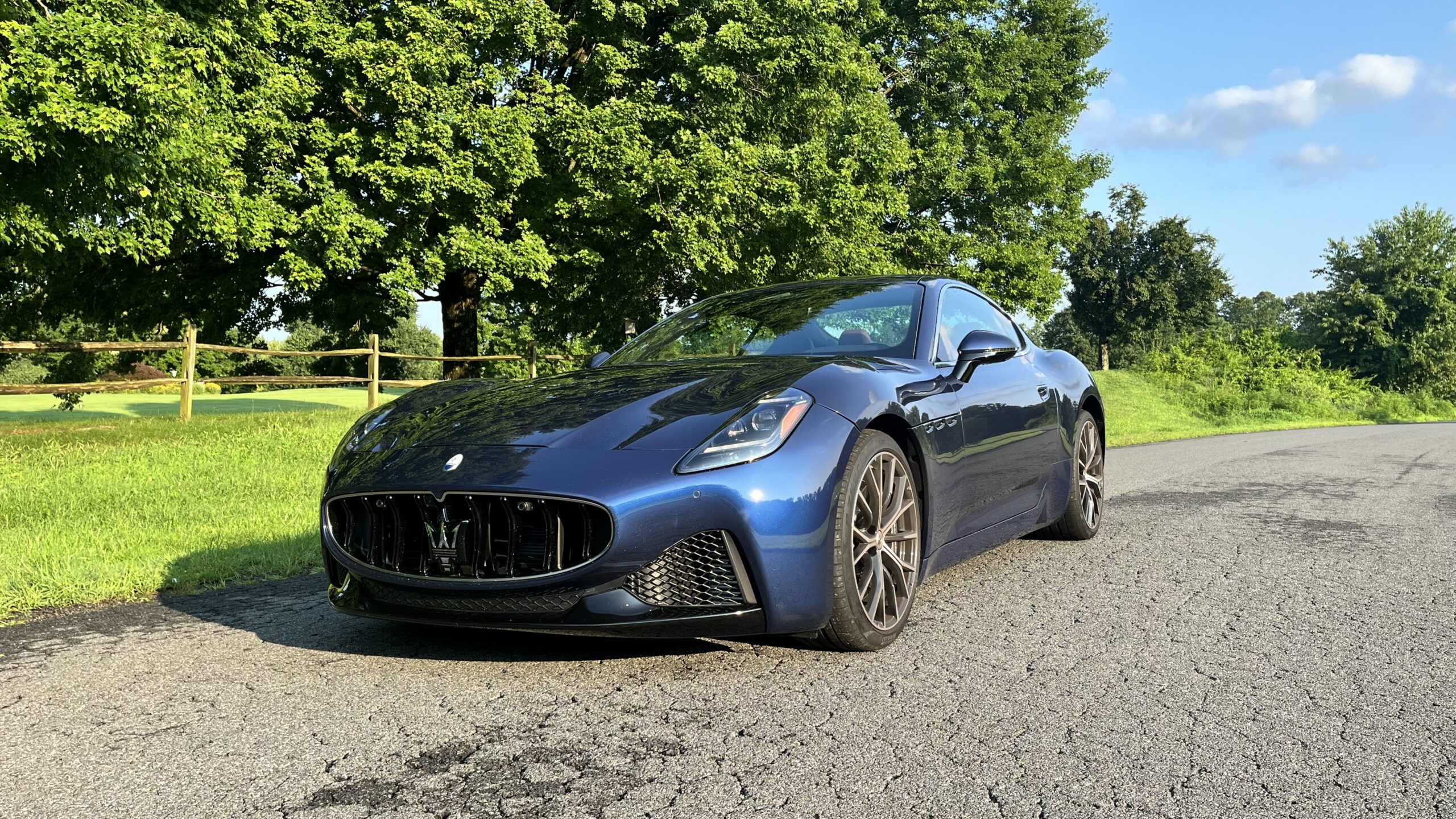
With timeless Italian proportions, a twin-turbo V6 and a beautifully appointed cabin, the 2026 Maserati GranTurismo reminds us that a memorable automobile is not defined by performance figures alone, it is defined by how it makes us feel.
Some automobiles are created to satisfy a practical need. Others exist to awaken something inside the person holding the steering wheel. The 2026 Maserati GranTurismo Coupe belongs firmly in the second category.
Carsfera experienced this particular GranTurismo on the highways and secondary roads of Virginia, where its character could be understood beyond a specification sheet. It demonstrated that a modern grand tourer does not have to choose between performance, comfort and emotional connection. It can bring all three together in one beautifully sculpted machine.
That balance is the essence of the GranTurismo. It is not trying to be the loudest or most aggressive car in every situation. Instead, it turns an ordinary journey into an occasion.
Italian design with a human purpose
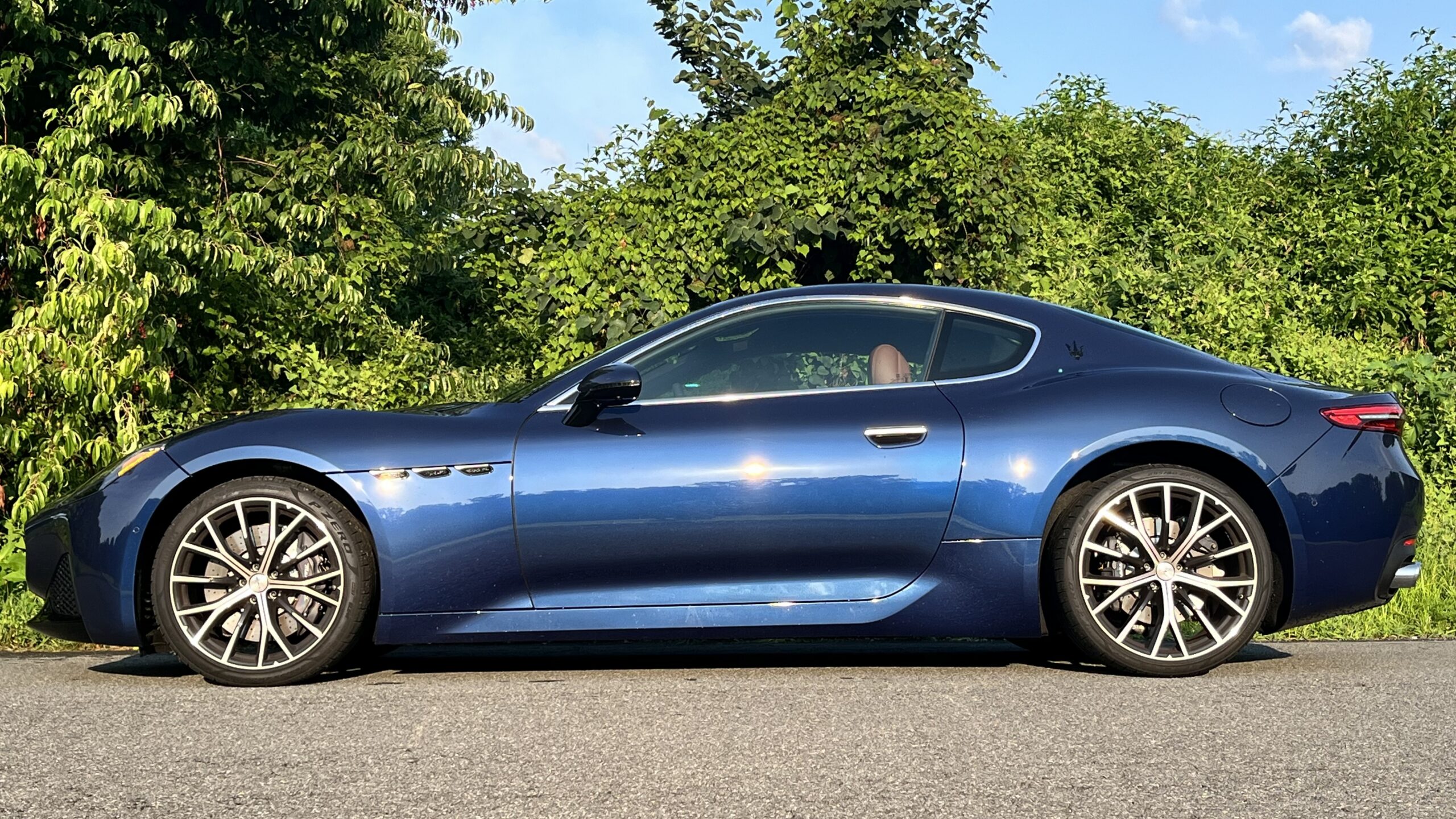
The GranTurismo carries the proportions of an Italian grand tourer: a long hood, a low roofline and a muscular stance that communicates performance without sacrificing elegance.
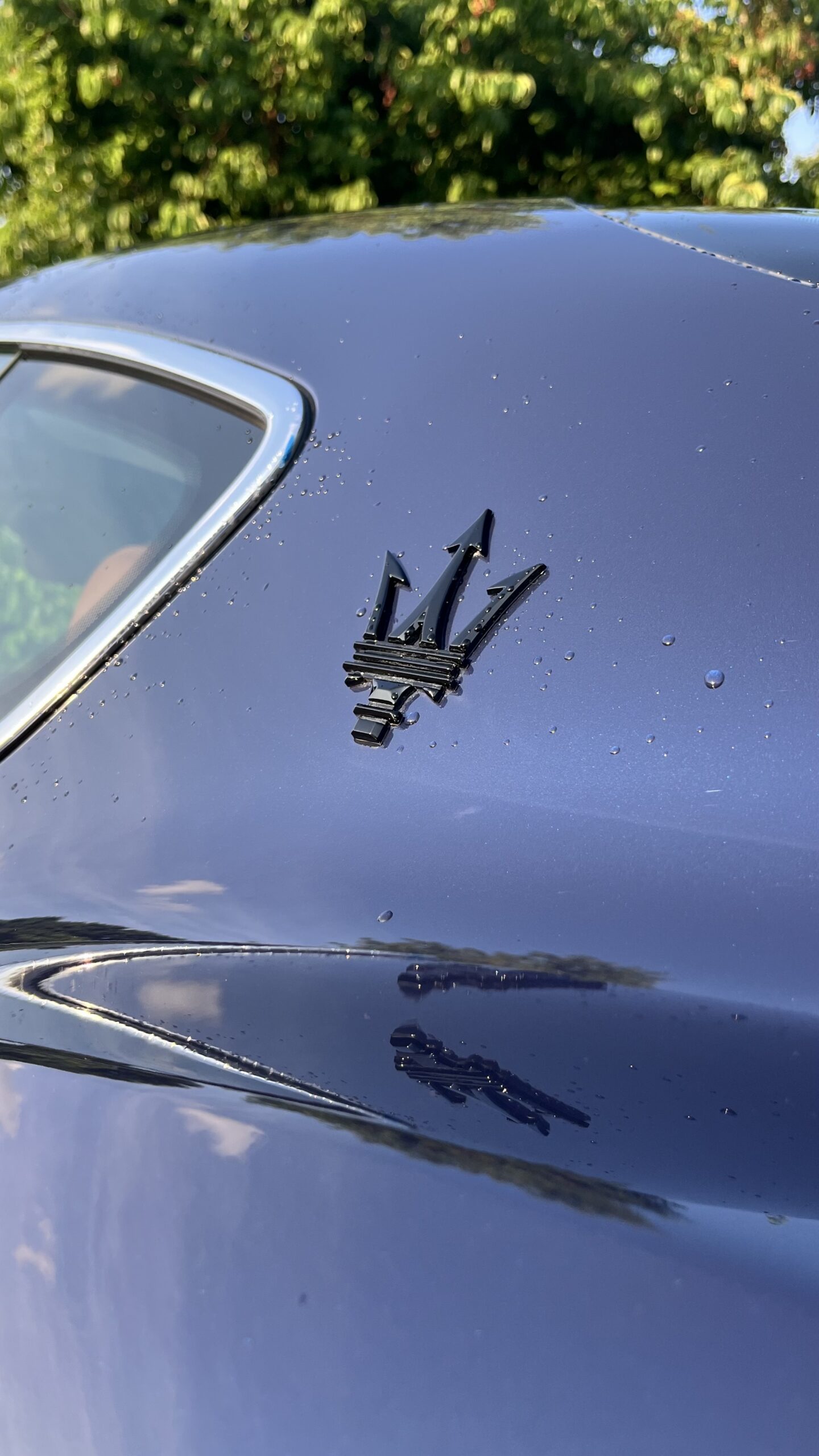
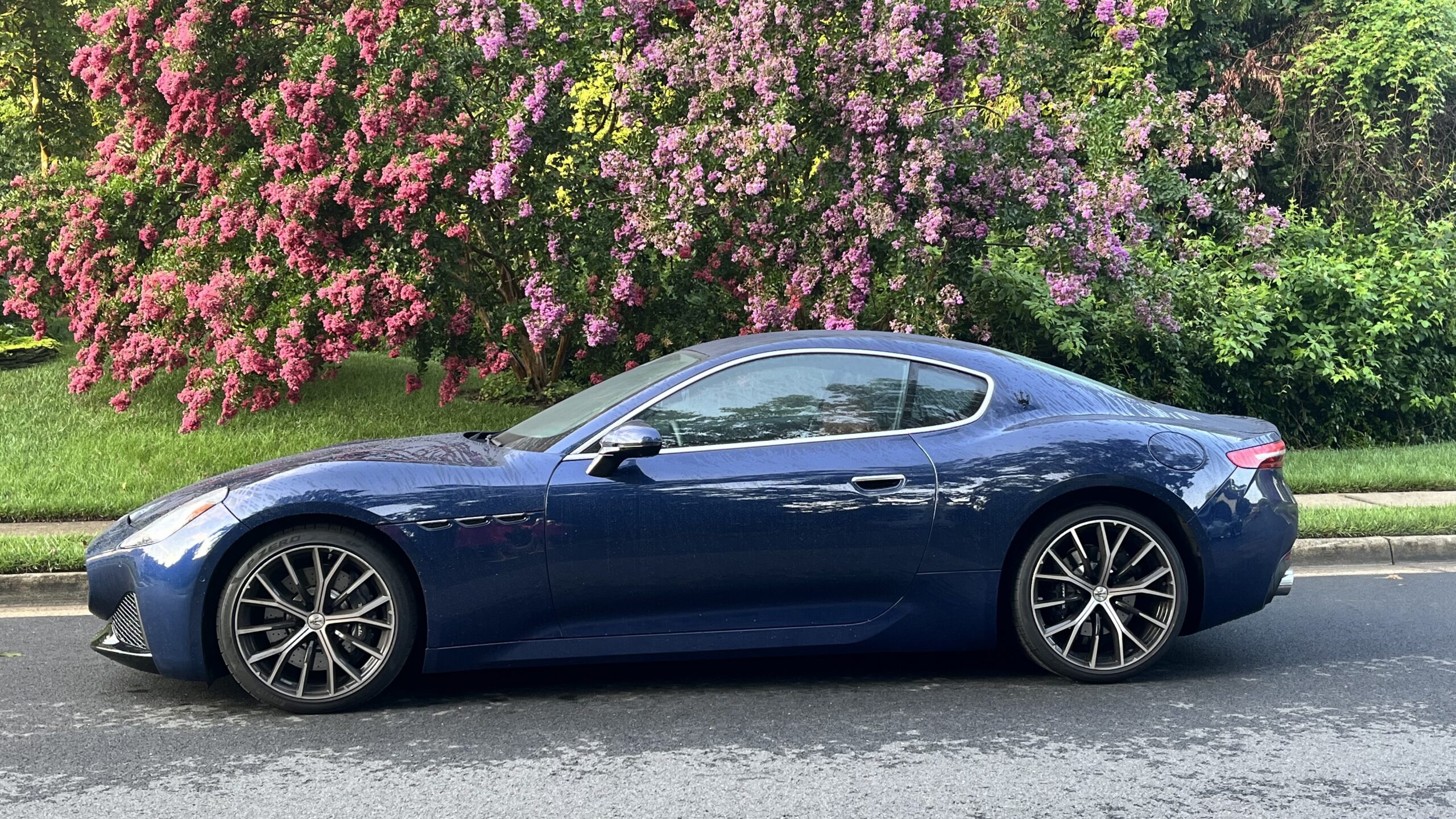
Our test vehicle was finished in Blu Modena, a $4,200 exterior color that transformed continually as the surrounding light changed. Under direct sunlight, the blue appeared energetic and expressive. In softer conditions, it became deeper and more sophisticated.
It attracted attention, but not through unnecessary extravagance. People noticed it because its shape felt special.
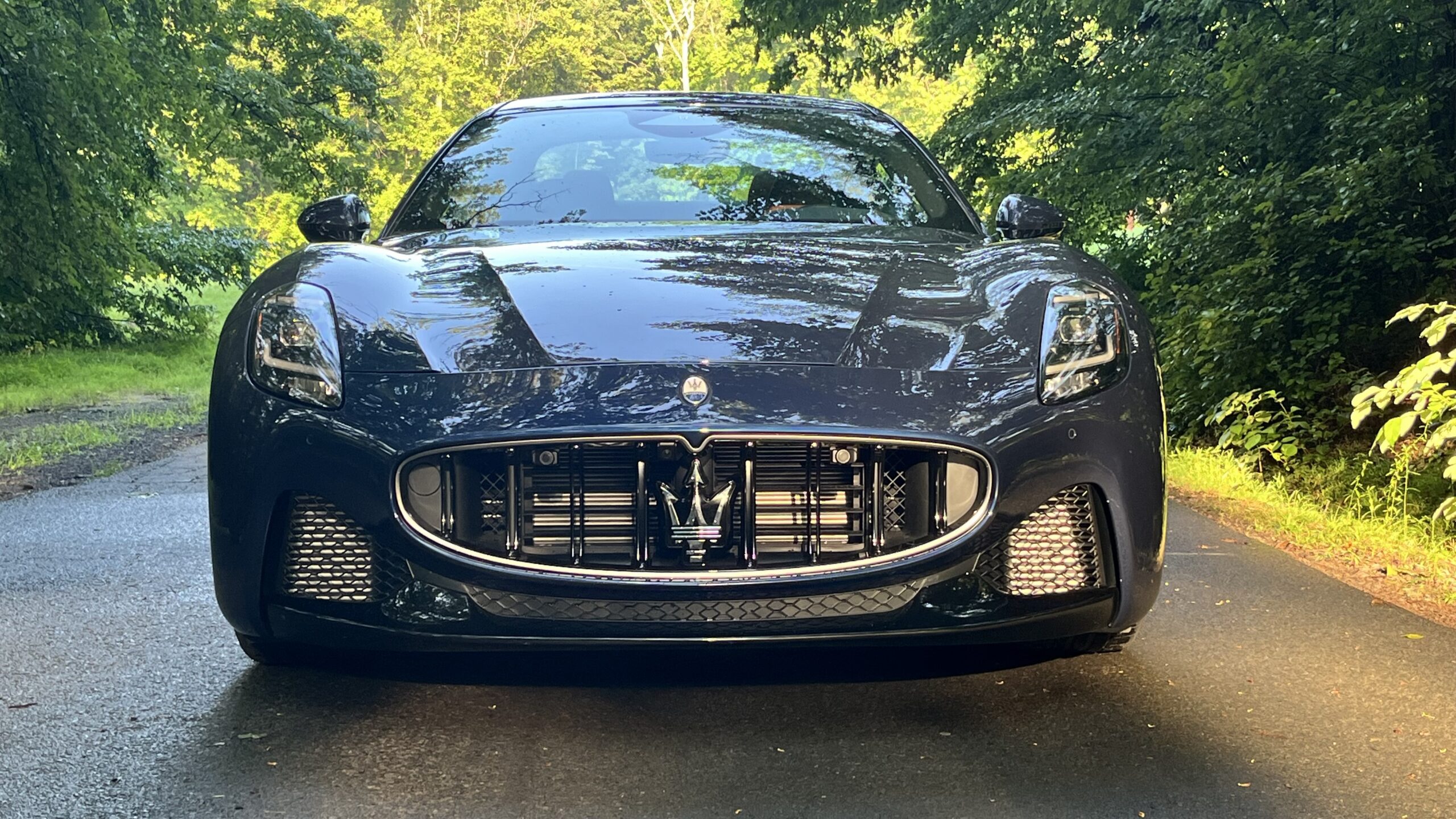
The staggered 20- and 21-inch Crio-design wheels, black anodized brake calipers, gloss-black accents and quad chrome exhaust outlets provided a purposeful edge. Yet the overall presentation remained refined enough for a business meeting, an evening in the city or an extended weekend away.
That versatility matters because the GranTurismo is not intended to be admired only while parked. It was designed to become part of its owner’s life.
A cabin created for connection
Opening the door reveals an interior that feels warm, personal and distinctly Italian.
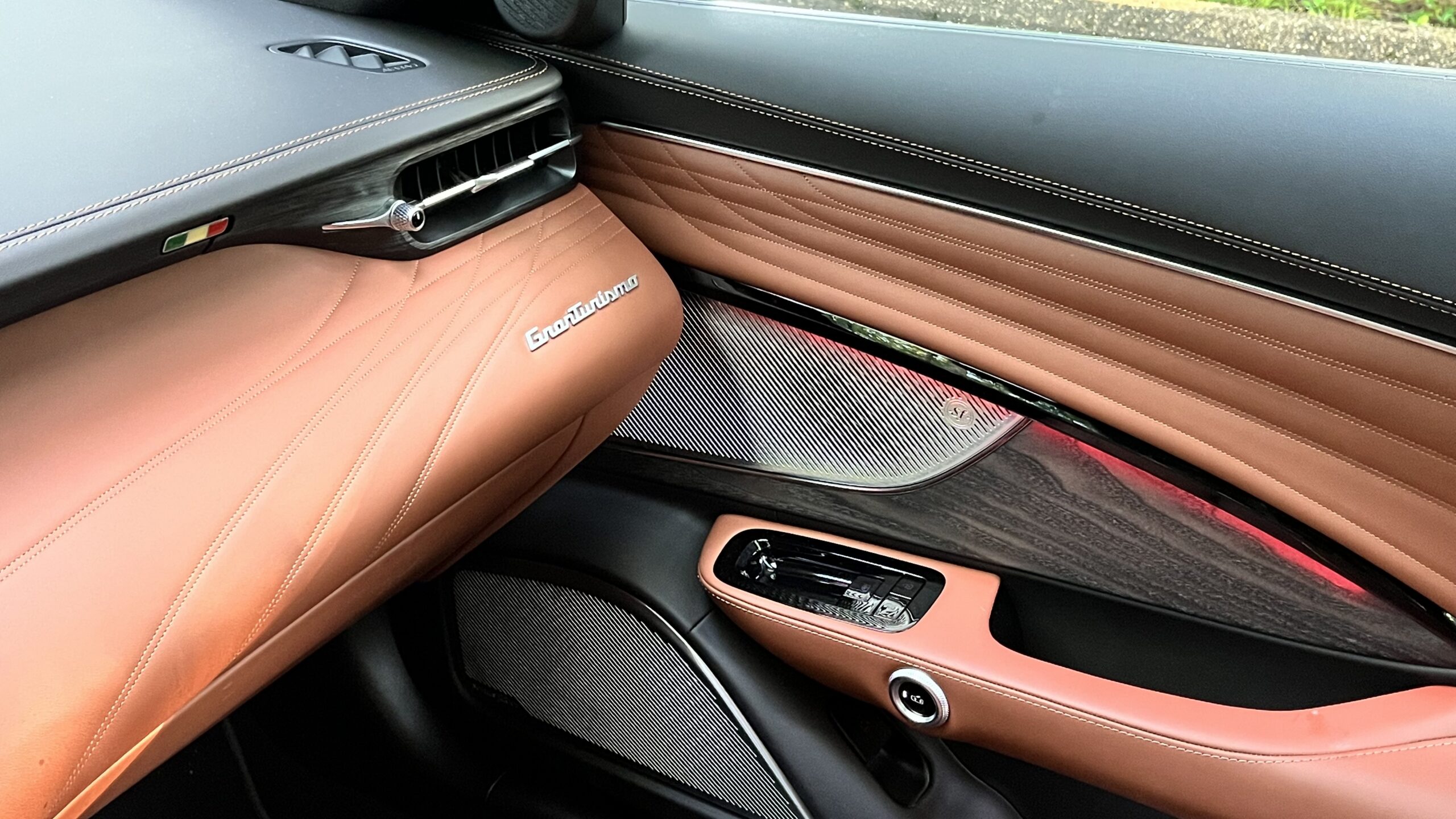
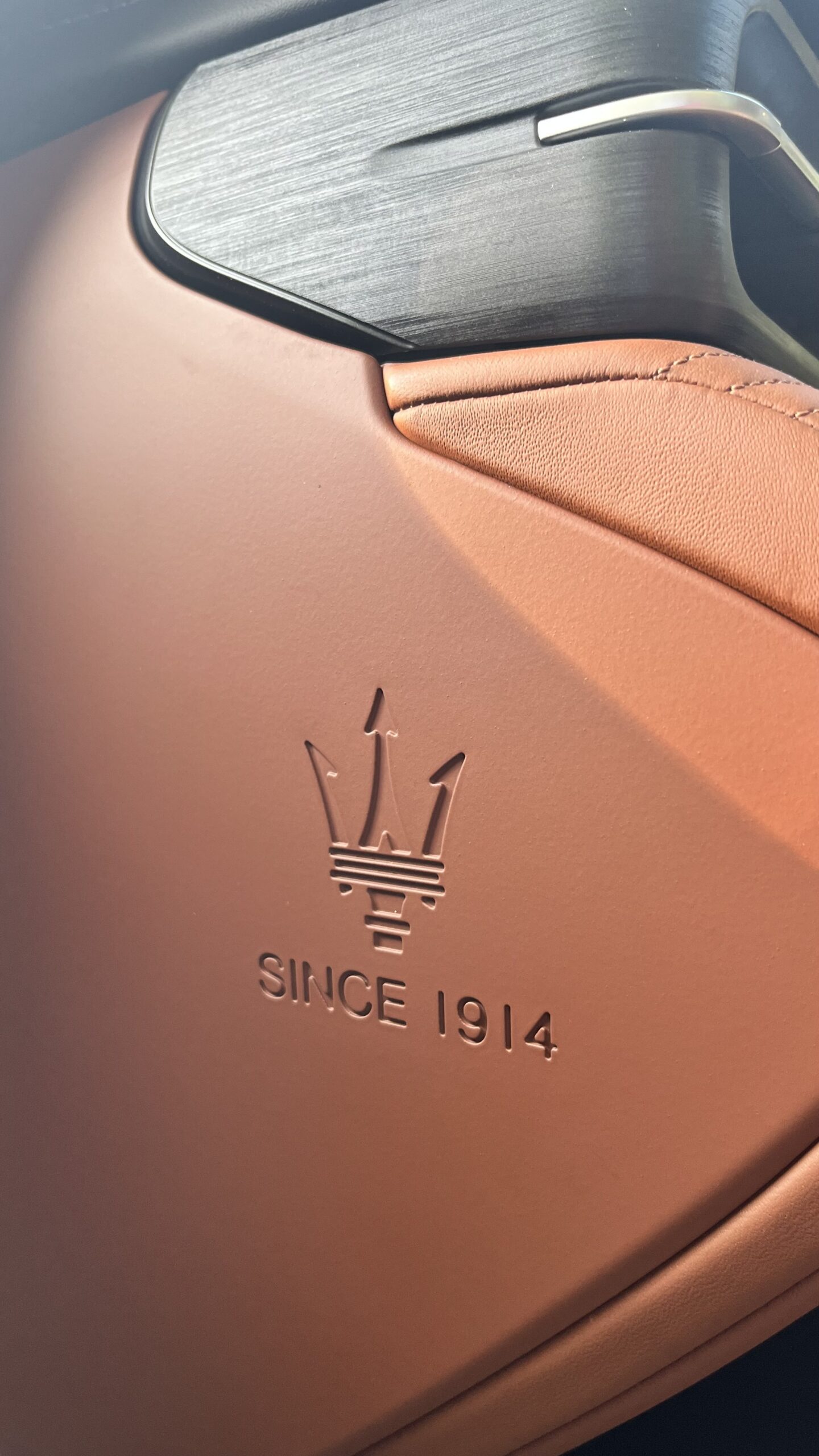
The tan leather upholstery, a $1,980 option, created an inviting contrast with the Blu Modena exterior. Campidoglio-design stitching and open-pore Radica wood trim gave the cabin a handcrafted atmosphere without making it feel trapped in the past.
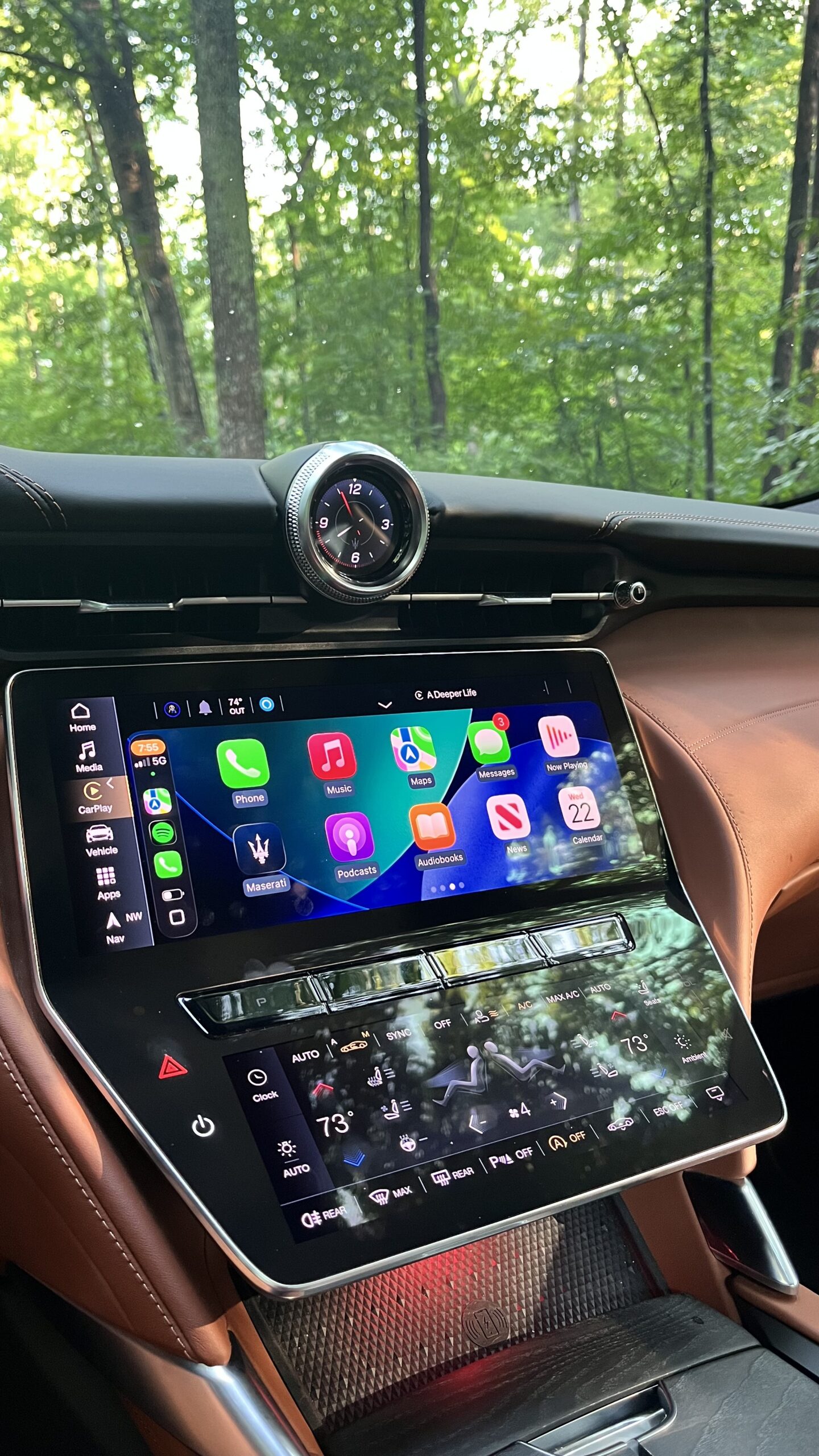
There is technology throughout the interior, but it generally supports the experience instead of dominating it. A 12.3-inch digital instrument display is accompanied by the Maserati Intelligent Assistant interface, divided between 12-inch and 8.8-inch screens. Apple CarPlay, Android Auto, navigation, wireless charging, Alexa integration and connected services are also included.
The 12-speaker Sonus Faber audio system deserves particular recognition. Its clarity complements the GranTurismo’s mission: this is a car in which music, conversation and the sound of the engine all become part of the journey.
The 18-way power front seats, driver memory, heating, dual-zone climate control and power-adjustable steering column help drivers create a comfortable and personal environment. The tested vehicle’s $1,690 Comfort Package reinforced that sense of everyday usability.
Performance that adapts to the person driving
Beneath the hood is Maserati’s 3.0-liter twin-turbocharged V6, paired with an eight-speed ZF automatic transmission and Q4 all-wheel drive.
The powertrain is responsive and full of character, but what makes it memorable is its flexibility. The GranTurismo does not demand that its driver remain in attack mode. It can settle into a relaxed rhythm on the highway and become noticeably more alert when the, road.or the driver’s mood, changes.
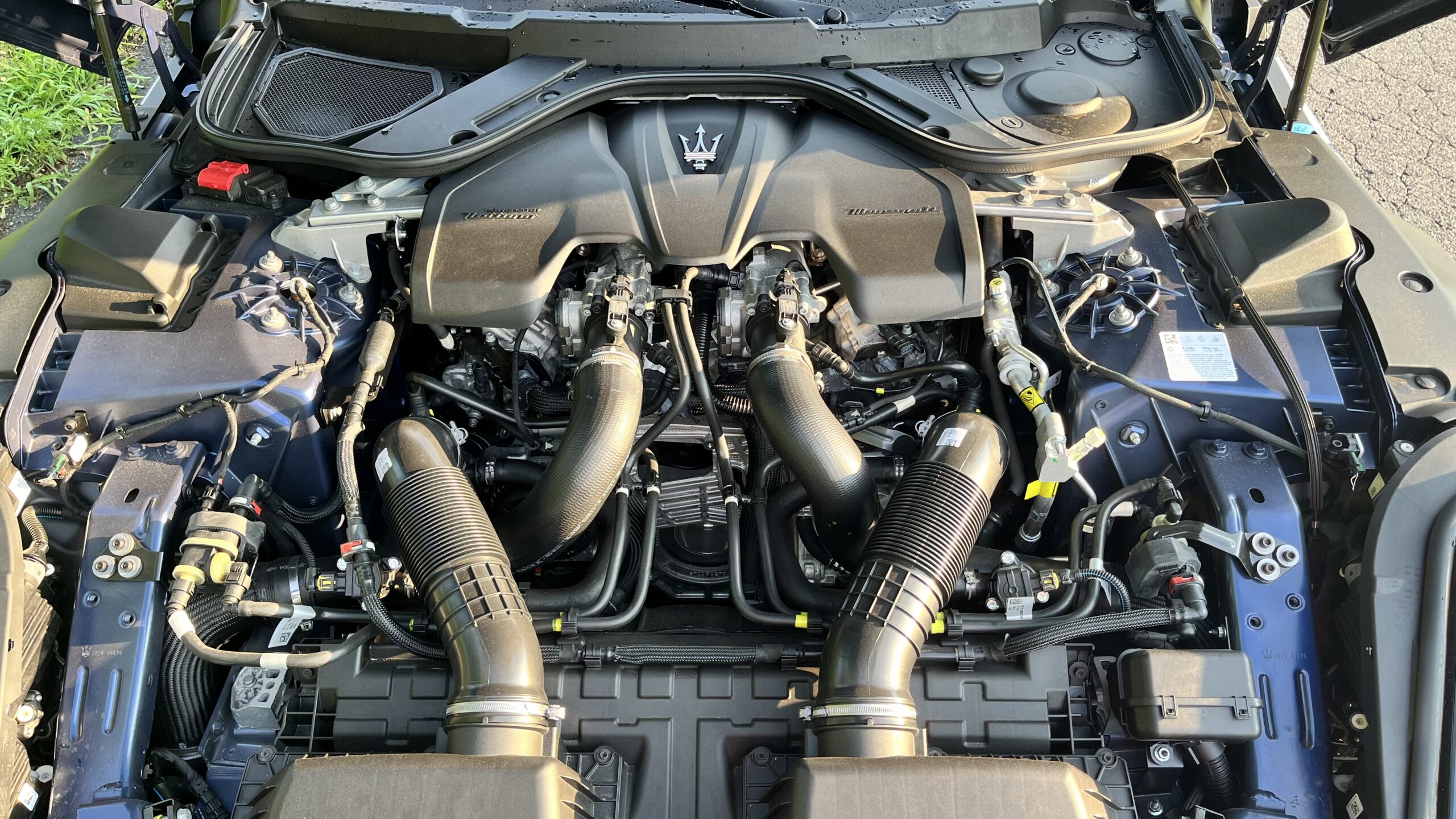
Comfort, GT and Sport modes allow the car’s personality to evolve. Adaptive air suspension and Maserati’s Skyhook electronic damping system help maintain composure without removing the connection between the driver and the road.
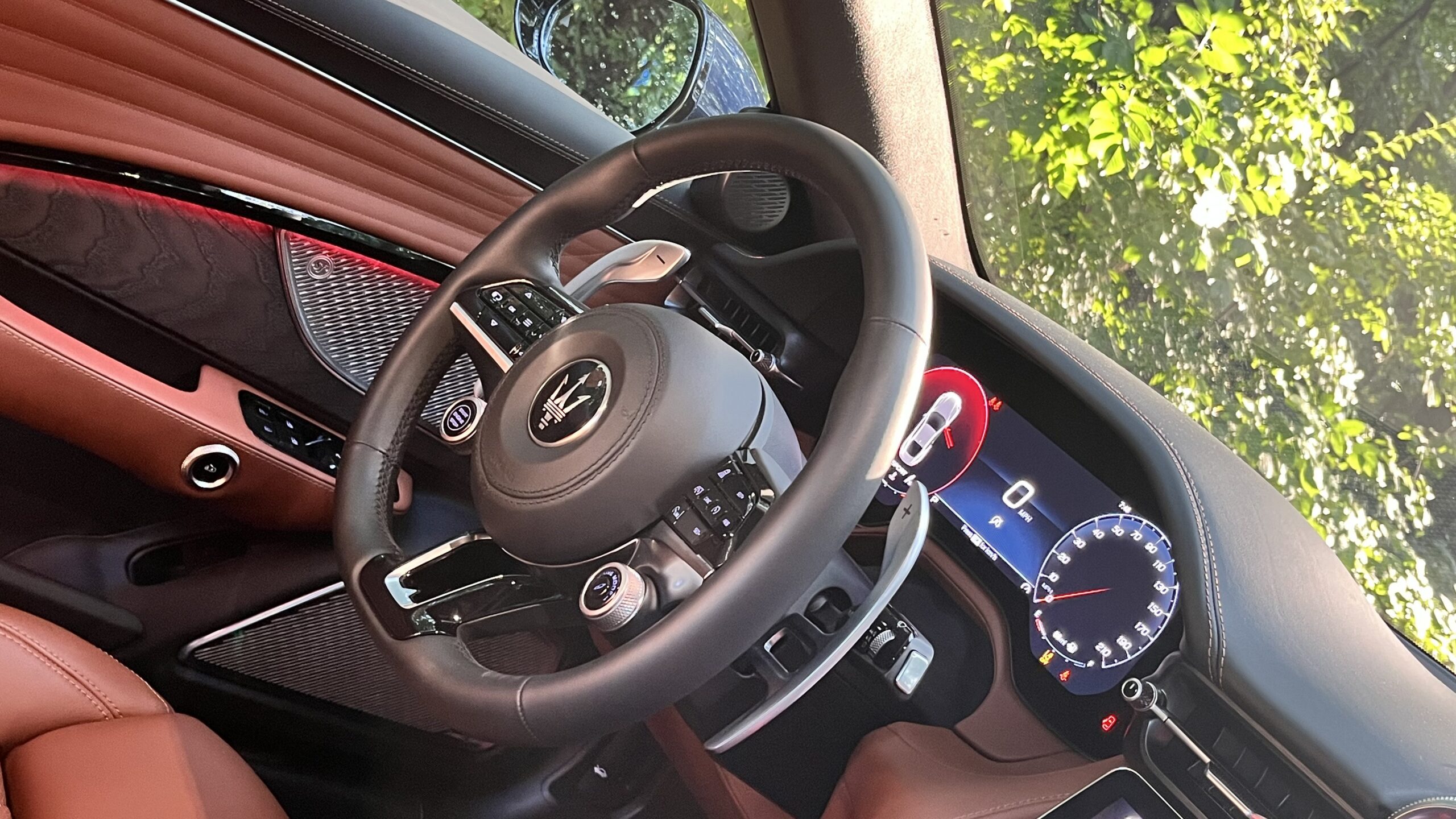
Column-mounted aluminum paddle shifters provide immediate control, while launch control and the sport exhaust offer access to the car’s more theatrical side. The exhaust does not simply generate sound; it creates anticipation. Pressing the accelerator becomes an emotional event.
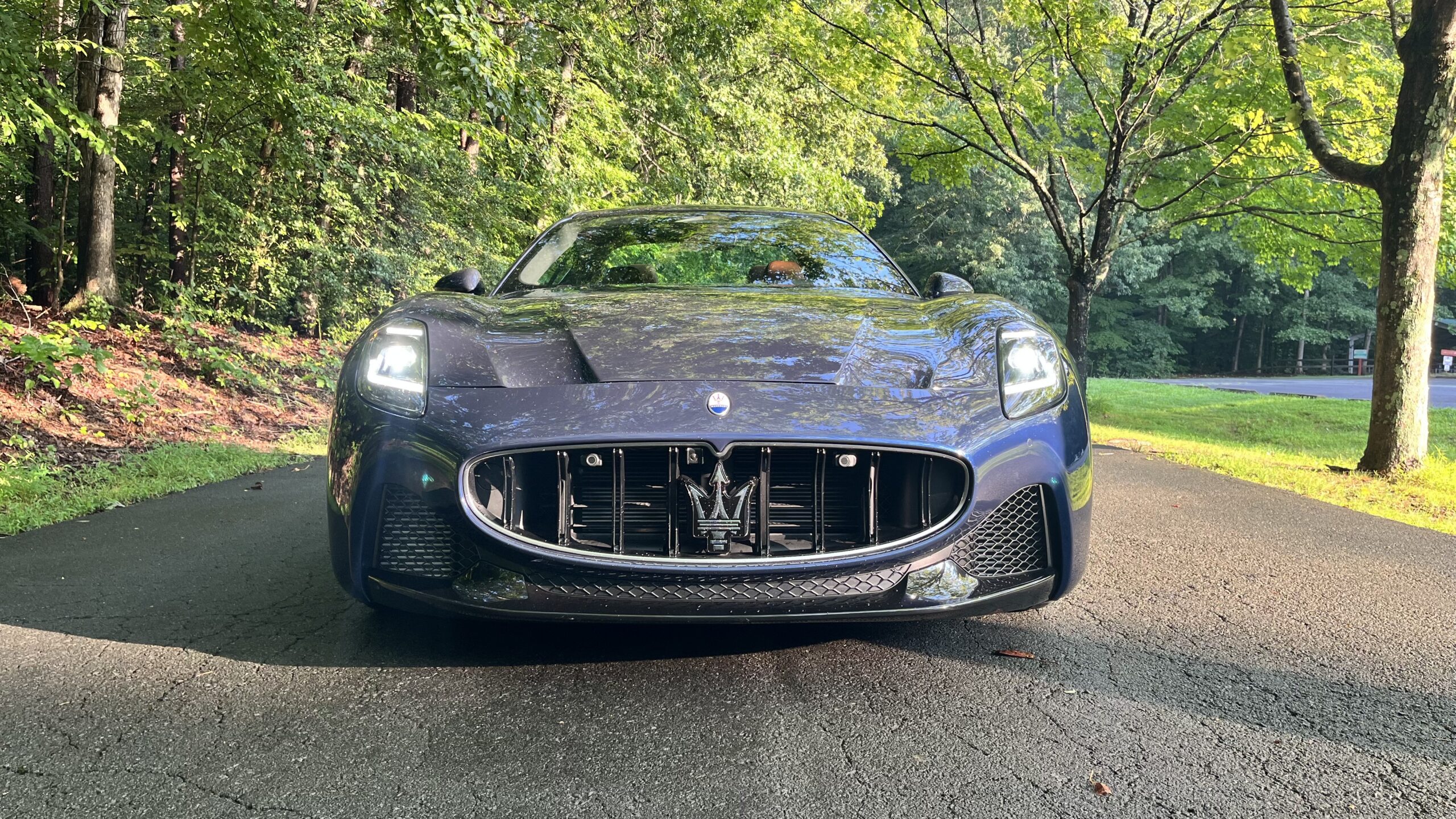
In Virginia, the Q4 all-wheel-drive system also provided a reassuring sense of stability. This is meaningful for buyers who want an exotic-looking Italian coupe that can be enjoyed with greater confidence across changing roads and weather conditions.
Technology that protects the experience
The tested GranTurismo included the $5,180 ADAS Base Package, contributing to an as-tested price of $158,050, compared with a base MSRP of $145,000.
Its safety equipment includes automatic emergency braking with pedestrian recognition, front and rear parking sensors, rear active braking and a backup camera. These systems are especially valuable in a car with a low seating position and substantial bodywork.
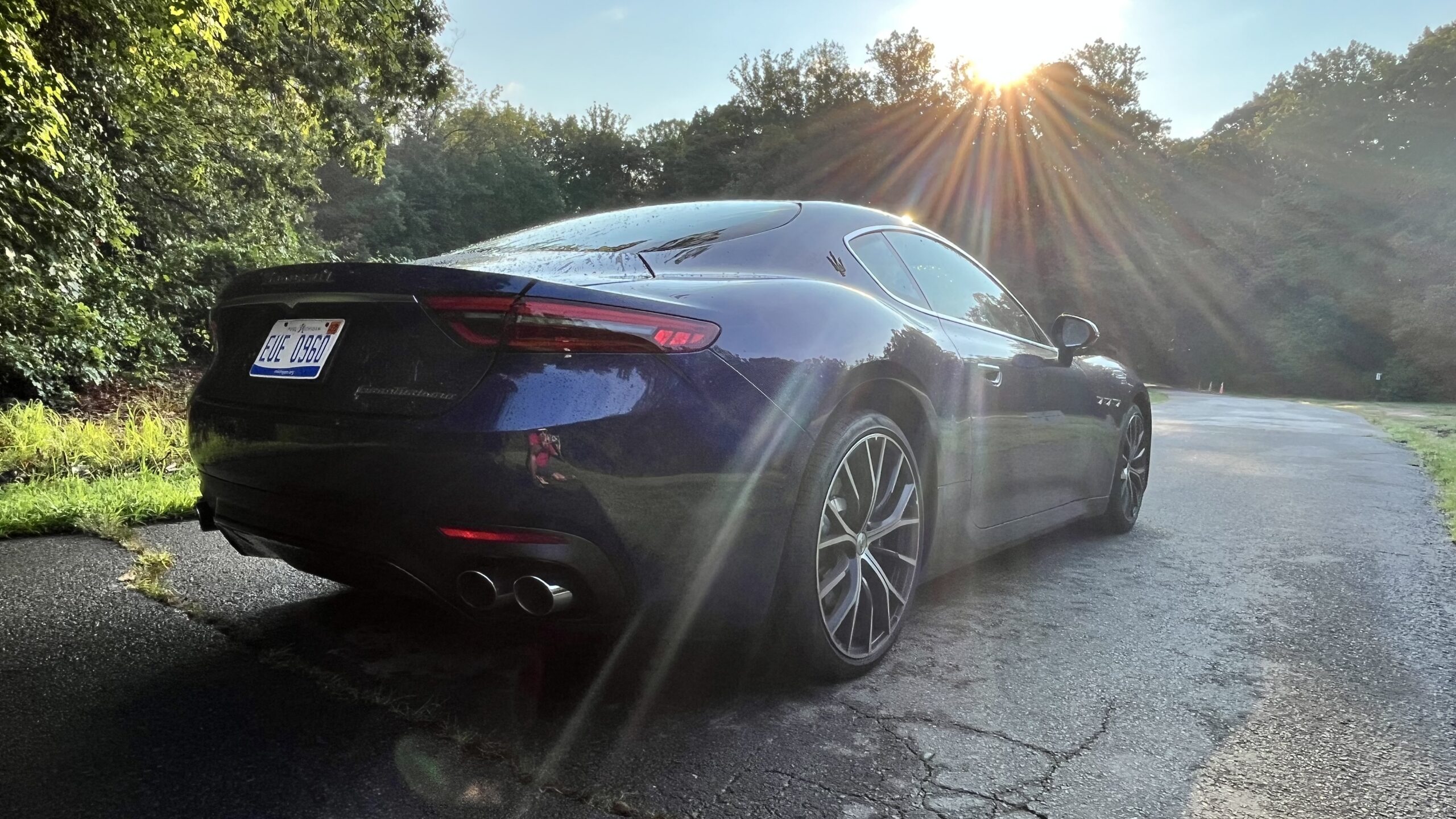
Technology cannot eliminate every compromise associated with owning a performance coupe, but it can make the experience more manageable and reassuring.
Who is the GranTurismo really for?
The 2026 Maserati GranTurismo is for someone who wants more than transportation and something more personal than conventional luxury.
It is for the driver who appreciates craftsmanship but still wants modern connectivity. It is for someone who wants performance without turning every trip into a competition. Most importantly, it is for the person who believes driving should remain an emotional experience.
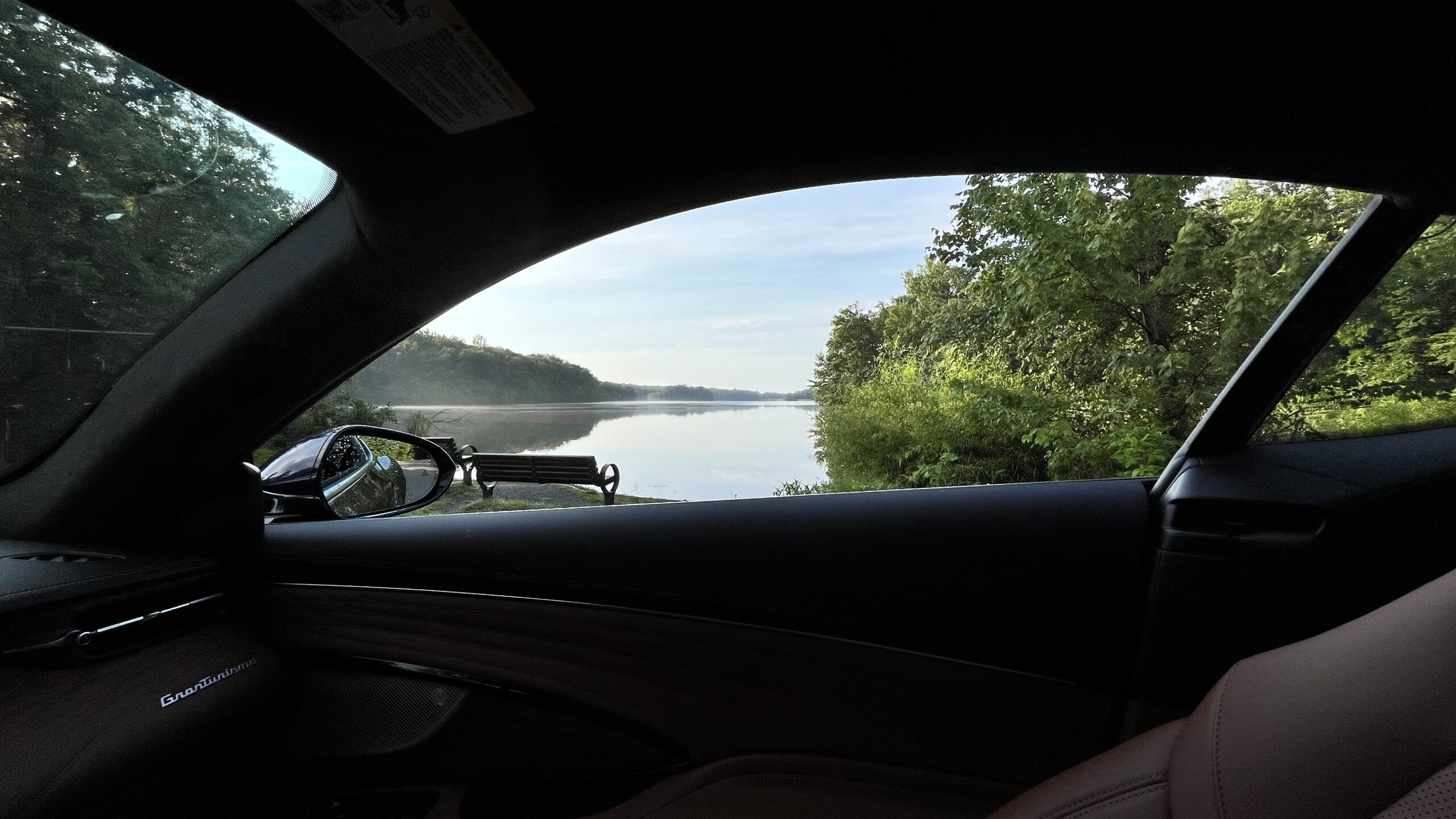
At $158,050 as tested, this is unquestionably a significant purchase. Buyers are not simply paying for leather, technology or horsepower. They are purchasing design, heritage, occasion and the way the GranTurismo can transform their relationship with the road.
There may be faster cars and more practical ones. But few bring together beauty, comfort, performance and personality in quite the same way.
The 2026 Maserati GranTurismo Coupe does not merely transport its occupants. It reminds them why the journey can still matter.

Few modern sports cars generate as much debate as the Toyota GR Supra. Some enthusiasts still point to its collaboration with BMW, while others see that partnership for what it ultimately produced: one of the most compelling rear-wheel-drive sports cars available today.

After spending a week with the 2026 Toyota GR Supra MkV Final Edition, our conclusion is straightforward: the BMW connection does not diminish this Supra. In many ways, it helps make the car better.

Our test vehicle was particularly special. Finished in Burnout Matte Silver with a black Alcantara-and-leather interior, its window sticker showed a $73,300 total suggested retail price, including the Driver Assist Package, GT4-inspired equipment, carbon-fiber mirror caps, matte graphics, and other accessories.
What Do You Get for $73,300?
Under that long hood is the heart of the modern Supra: a 3.0-liter twin-scroll turbocharged inline-six producing 382 horsepower and 368 lb-ft of torque. Our car paired it with the six-speed intelligent manual transmission, sending everything to the rear wheels. Toyota also gives the Final Edition additional chassis, suspension and braking development intended to make this the most focused version of the MkV.

The numbers only explain part of the experience.
During our week with the Supra, what impressed us most was how usable it remained. This is a genuine performance car that doesn’t punish you for driving it normally. The inline-six delivers effortless torque, the manual gearbox adds the involvement enthusiasts increasingly struggle to find, and the compact two-seat cabin makes the Supra feel like something you wear rather than simply drive.

Push harder and its personality changes. The short wheelbase, low seating position, rear-wheel-drive layout and near-ideal weight distribution make the Supra eager to rotate through corners. Toyota originally engineered the MkV around classic sports-car fundamentals, including a very low center of gravity and 50:50 front-to-rear weight balance.
Yet you can still commute in it, enjoy the JBL audio system, heated power seats and modern driver-assistance technology, and even return surprisingly reasonable fuel economy. The sticker rates our manual Final Edition at 19 mpg city, 26 highway and 21 combined.

Yes, There Is BMW Underneath. That’s Not a Bad Thing.
Let’s address the elephant in the garage.
The fifth-generation Supra was developed in collaboration with BMW and is related to the BMW Z4. Toyota itself acknowledges that the Supra was developed in collaboration with BMW and based on the Z4 platform.

It also uses BMW’s excellent B58 inline-six architecture, and both cars are assembled by Magna Steyr in Graz, Austria.
But calling the Supra simply a “BMW with a Toyota badge” misses the point.
Toyota developed the Supra as a fixed-roof sports coupe with its own body, chassis calibration, steering character and driving mission. Toyota Gazoo Racing engineers have continually refined the MkV through motorsports and track development; the Supra has competed in Formula Drift, Super Taikyu and the Nürburgring 24 Hours.

Think of the BMW partnership less as compromising the Supra and more as giving Toyota access to one of the best modern turbocharged inline-six powertrains available.
Why This Supra May Hold Its Value
This is where the 2026 model becomes especially interesting.
Toyota is closing the chapter on the MkV with the Final Edition, and Toyota says only 1,300 Final Editions are planned for North America. That combination, Final Edition status, limited availability, 382-hp inline-six, rear-wheel drive and an available six-speed manual is exactly the formula enthusiasts tend to remember.
There is already evidence that the Supra holds value unusually well. Current iSeeCars analysis estimates the GR Supra retains approximately 76.1% of its value after five years, ranking it among the strongest luxury two-seat sports cars for resale value.

That doesn’t guarantee appreciation, and we wouldn’t buy one purely as an investment. But a low-mileage, original, well-maintained manual Final Edition has several characteristics that could make it particularly desirable years from now.
The Carsfera Verdict
The 2026 GR Supra Final Edition isn’t perfect. Visibility is limited, cabin storage is minimal, entry and exit require some flexibility, and buyers looking for four seats should look elsewhere.
But none of those things change what matters.
The Supra feels special.

For $73,300 as tested, you’re buying one of the final examples of an increasingly rare formula: a compact, turbocharged inline-six, rear-wheel-drive sports coupe available with three pedals.
BMW supplied some of the ingredients. Toyota turned them into a Supra.
And after living with it for a week, we’d argue that instead of worrying about who baked the cake, enthusiasts should enjoy a slice while they still can.
-
 NOW TRENDING2 months ago
Tesla Cybercab Gets September 3 Austin Launch Date
-
 TEST DRIVES2 months ago
2025 Ford Bronco Sport Badlands: The Adventure SUV You Can Drive Every Day
-

 TEST DRIVES2 months ago
2026 Toyota GR Supra MkV Final Edition
-
 NOW TRENDING1 month ago
Aston Martin DBX Becomes Harry Da Souza’s Ride in MobLand
-

 NOW TRENDING2 months ago
Tesla Cybercab Puts U.S. Regulations to the Test
-

 Formula12 months ago
FIA Reveals Second ADUO Results With Red Bull-Ford Still on Top
-
 NOW TRENDING2 months ago
2027 Hyundai Tucson Hybrid Gets a Power Boost
-
 NOW TRENDING2 months ago
Hyundai Reports Strong Hybrid Sales in August 2026
You must be logged in to post a comment Login