
A combination of tenacity, dreams and boundless passion always prevails. No one knows this better than Romano Artioli. For decades, the Italian had dreamed of a modern super sports car – and this is what led him to revive the dormant Bugatti brand.
“Romano Artioli is a part of our brand’s history. It was thanks to his initiative and perseverance that Bugatti was revived,†explains Stephan Winkelmann, President of Bugatti. “Romano’s energy and enthusiasm, his irresistible passion for Bugatti, helped to transport the brand into the 21st century.â€
Artioli’s love of cars is closely linked to his background. Born close to Mantua, the home town of racing driver Tazio Nuvolari, as a child he was fascinated by racing drivers and their cars. At the age of 12, he devoured a book on driver’s licenses. “After that, it was clear to me that my life would be dedicated to cars and engines,†he once told the magazine Classic Driver. Artioli studied mechanical engineering in Bolzano, and after the war he repaired cars.
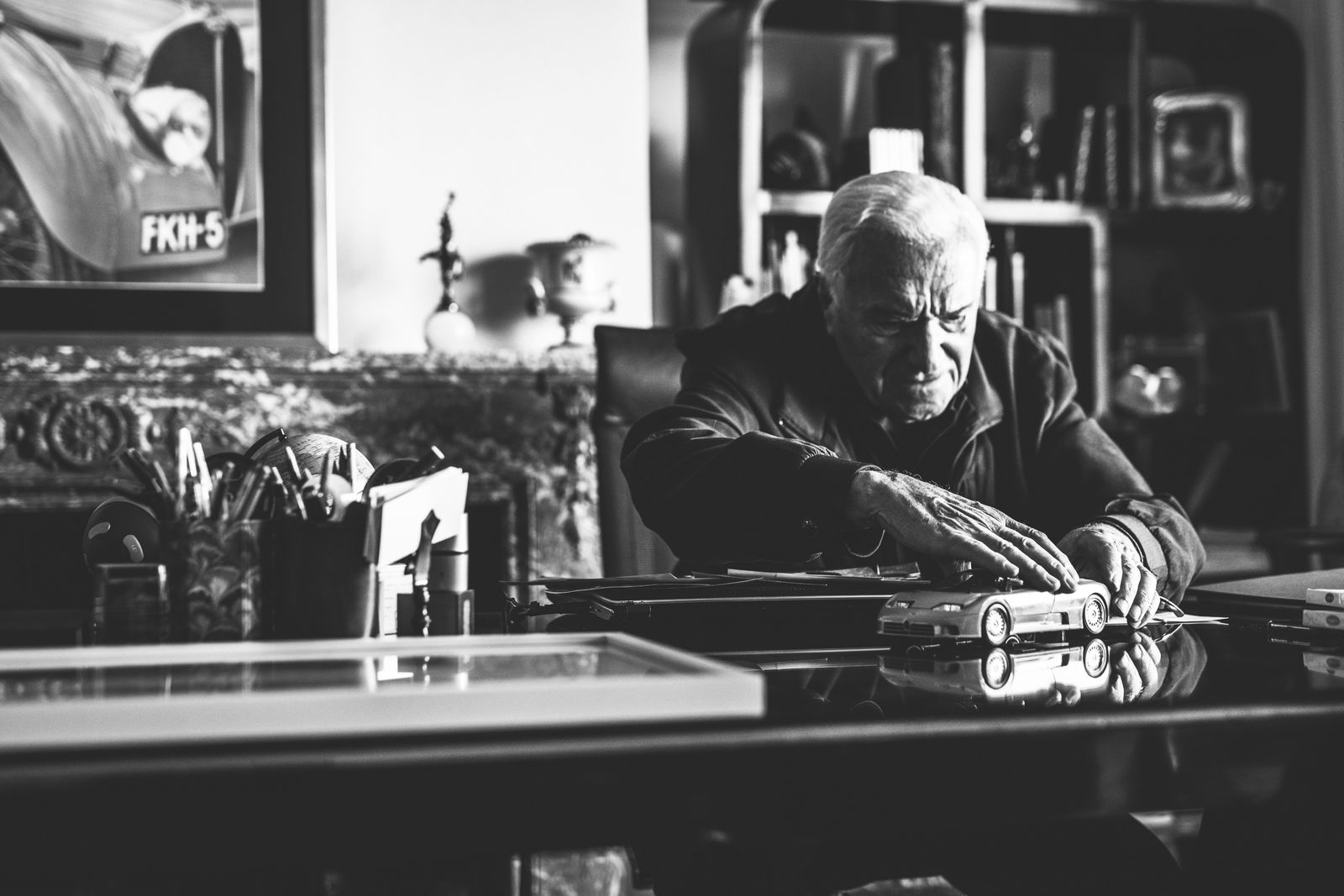
When in 1952, at the age of 20, Artioli heard the news that production at Bugatti had ceased (at least for the time being), he was shocked. A brand of such superior quality, sophisticated design, ideas and technical achievement had to one day be revived. At that moment he vowed: “If no one reacts to the situation at Bugatti, I will work as long as it takes to one day bring the brand backâ€. It would take 39 years for him to achieve his ambition. Over the coming years, the Italian earned his living as a vehicle importer, including the brands GM and Suzuki. He became the largest importer of Japanese cars in Italy and the largest Ferrari dealer. His private car collection at that time featured numerous historic Bugatti models.
By the mid 1980s, the Italian had begun to negotiate the sale of the brand with the French government – discreetly and concealed from public view for two years. In 1987, he founded Bugatti Automobili S.p.A. and became its chairman. Artioli initially wanted to resurrect the company in Molsheim. “Molsheim is comparable to Maranello in Italy or Hethel in England. It is a Mecca for Bugatti, but at the time there were neither production halls nor engineers in the region,†says the 88-year-old. He asked fans of the brand to support him to create a link between Molsheim and a new location – Campogalliano.
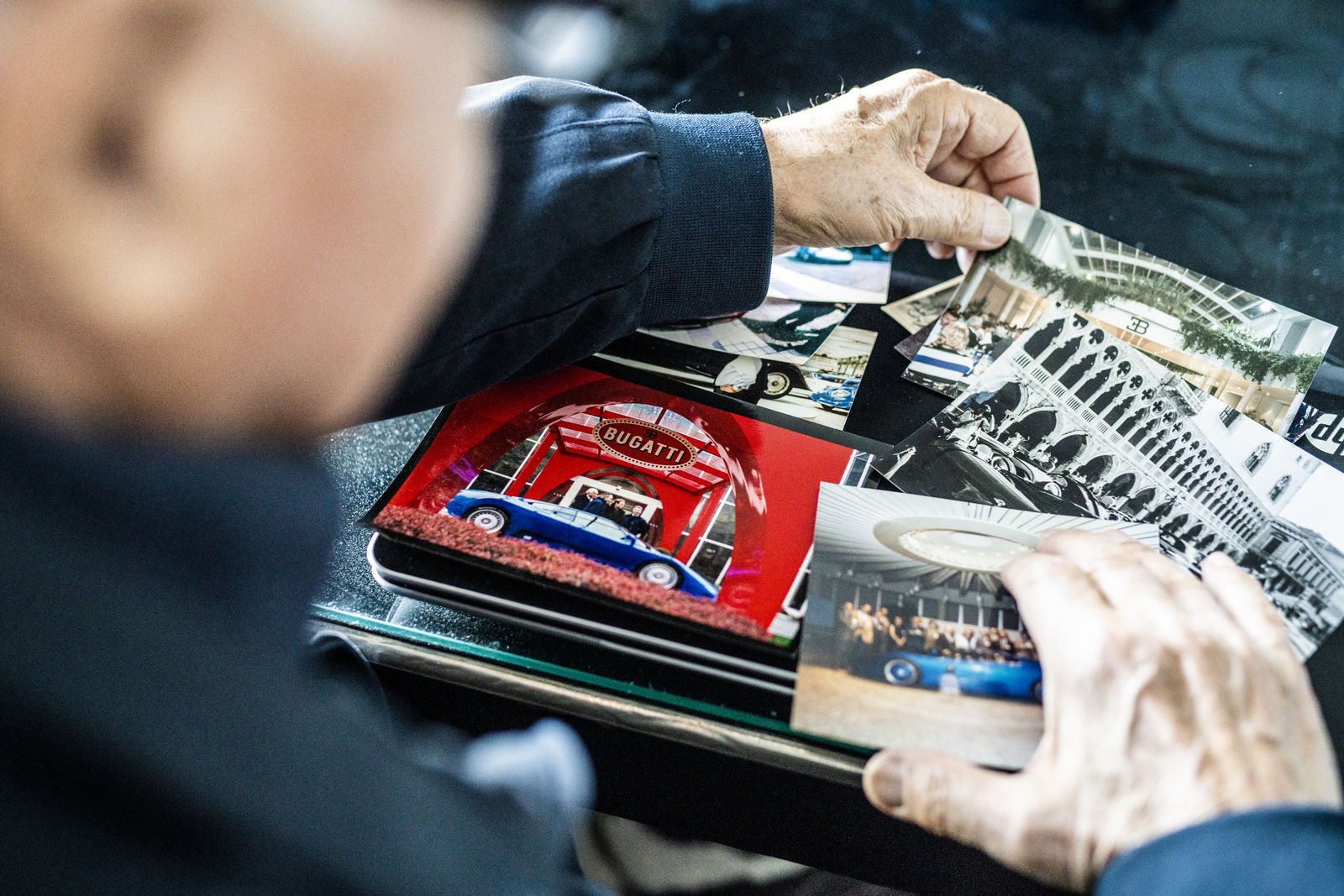
State-of-the-art car production plant built in Campogalliano
In the years that followed, the world’s most modern car production plant was built with intensive planning on a site covering 240,000 square meters in the vicinity of Ferrari, Maserati, De Tomaso and Lamborghini. The site incorporates an administrative building, design studio, engine and test development area, production halls, test track, a stylish canteen, and exhibition space. The halls are open, bathed in natural light, and fitted with air conditioning systems so that the employees feel as though they are sitting in the open air. He handed the architectural commission to his cousin Giampaolo Benedini, who designed a spectacular building – one which went on to inspire other manufacturers.
Benedini also modified the initial design of the future super sports car, smoothing the sharp edges and the extreme wedge shape. “With the EB 110, we had to push the boundaries in terms of performance and quality. I owed that to Ettore Bugatti. Production output was less important than uncompromising quality and innovation,†explains Artioli, who today commutes between his office in Lyon and his family home in Trieste. The car enthusiast enlisted the region’s top engineers and designers to put his plan into action.
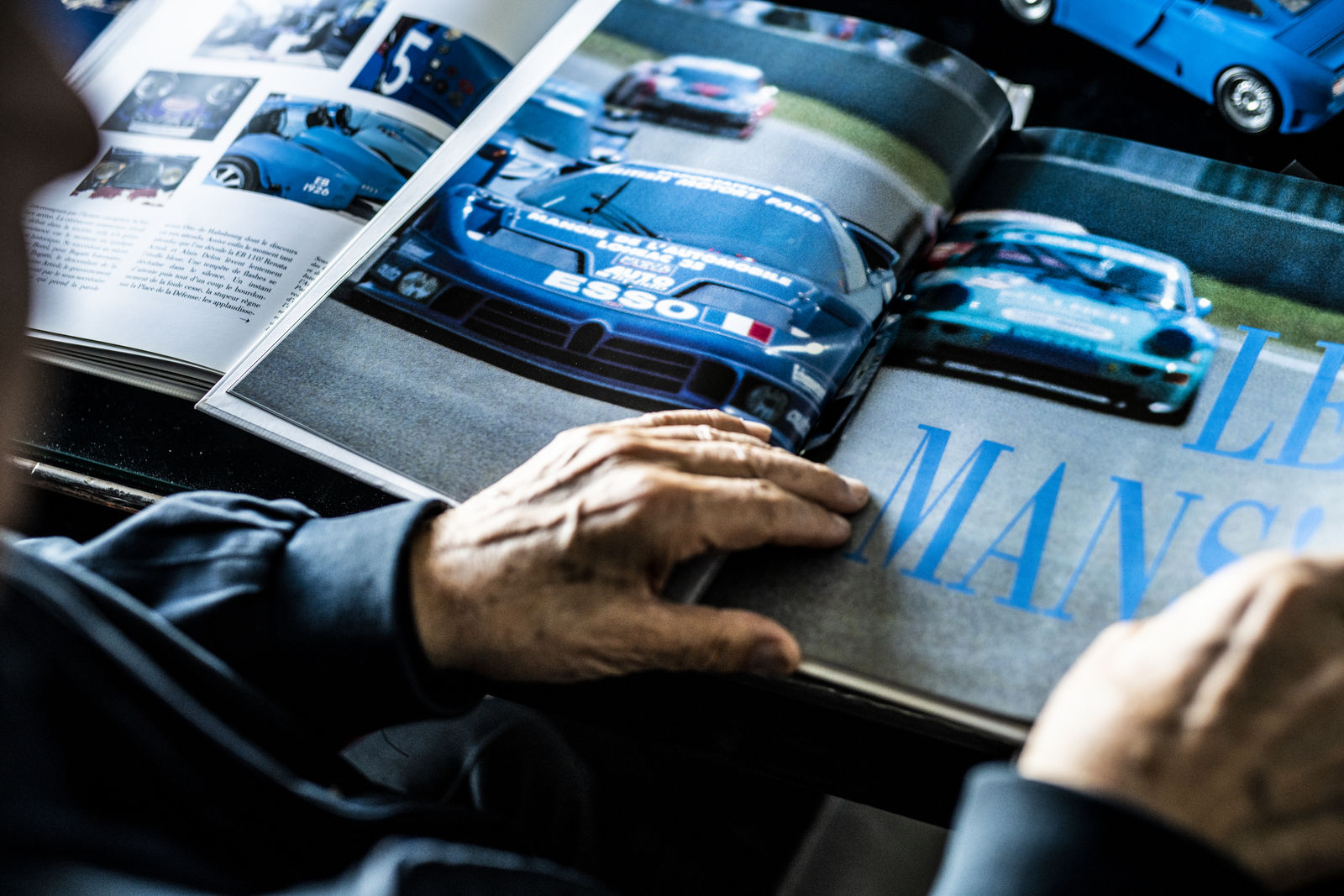
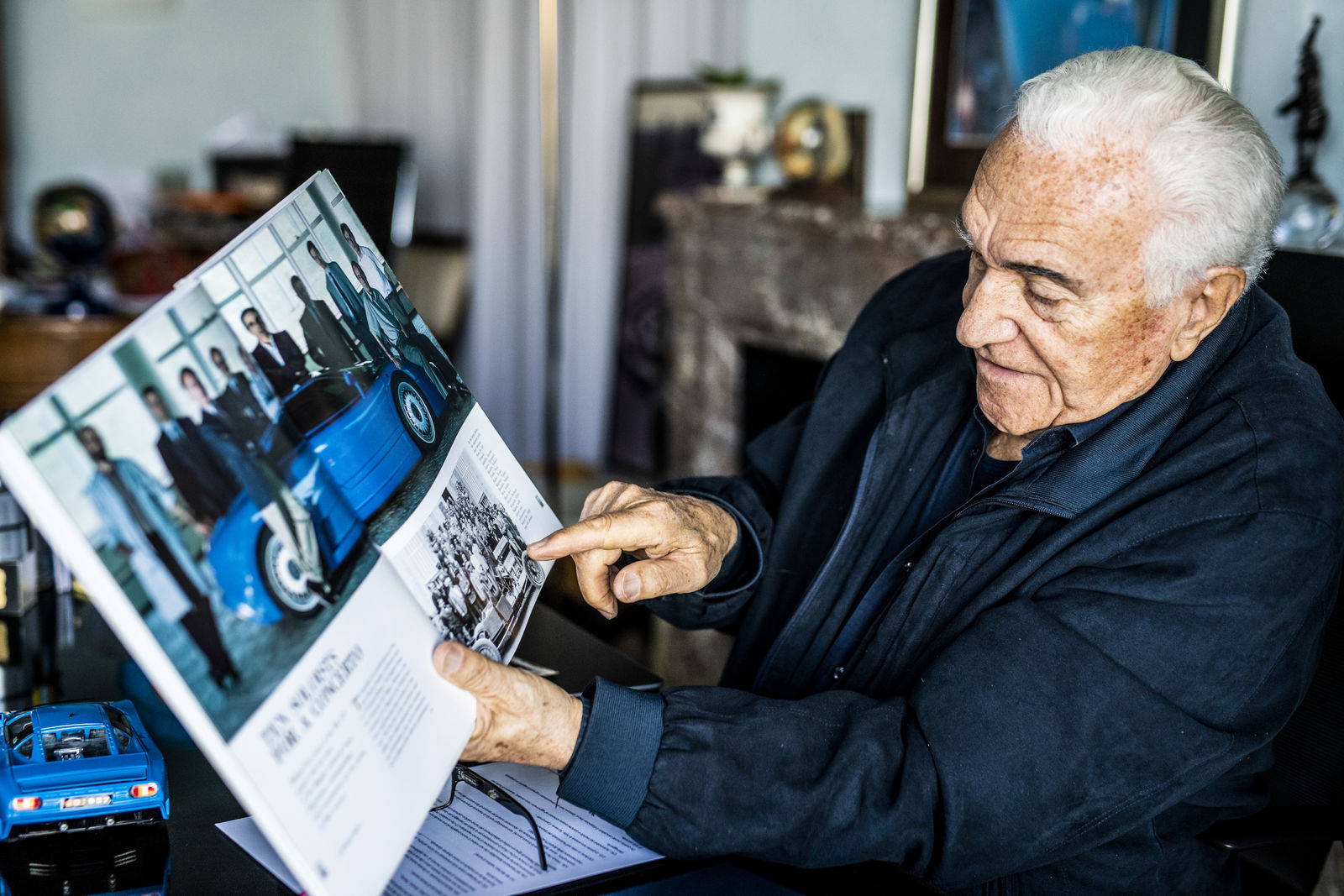
The EB 110 came into being on a blank sheet of paper, breaking with many of the conventions of its class and reaching the peak of automotive excellence. It was to become the best and fastest super sports car in the world. The EB 110 featured the first series-produced carbon chassis, all-wheel drive, four turbochargers, and a 3.5-liter V12 engine with five valves per cylinder and a power output of 550 PS. With a top speed of over 351 km/h, the two-seater broke multiple records. Almost 30 years ago, on Ettore Bugatti’s 110th birthday (September 15, 1991), Romano Artioli presented the EB 110 in Paris. Over 5,000 reporters and leading industry figures from all over the world, not to mention countless eager spectators, attended the premiere in Paris. Several hundred security personnel were needed to safeguard the event on the Place de la Défense. All of the fans shrieked as Alain Delon drove down the Champs-Élysées with Artioli’s wife Renata.
The most high-profile customer was Michael Schumacher, who had tested various super sports cars as part of a comparison test for a car magazine and had been particularly impressed by the EB 110, which he regarded as unrivaled. “Michael came to Campogalliano immediately after and purchased a yellow Super Sport with a blue GT interior. He did not ask for a discount – he was clearly a fan,†recalls Artioli. Every owner was able to individually configure their own EB 110, like a tailor-made suit.
However, times changed. While the response to the EB 110 had been extremely enthusiastic despite the global financial crisis, the Americans were suffering from the effects of the Gulf War, and the value of the yen was rising while in Italy the economy was collapsing – the market shrank and sales fell. Moreover, Artioli had invested in the automotive company Lotus and amassed debts; problems with suppliers followed.
After 39 years of dreaming and seven years of hard work, the Bugatti project under Romano Artioli came to an end. On September 23, 1995, after the construction of around 128 vehicles, he filed for bankruptcy. He paid his 220 employees up to the very last day. “The employees understood the spirit of Bugatti. They were what made the EB 110 so special, losing all that was a shock. It was a terrible day for all of us,†explains Artioli. The almost completed EB 112 super saloon could no longer be launched. “An incredible car, a delight to drive, with a 6.0-liter V12 installed behind the front axle. The chassis was made of carbon fiber and the internal suspension was lightweight. It drove like a go-kart,†recalls Artioli.
But the legend that is Bugatti did not rest for long. In 1998, Bugatti returned to the French town of Molsheim, to the place where, in 1909, Ettore Bugatti built his first car in his own name. Since then, the Atelier in Alsace has produced the inimitable hyper sports cars Chiron, Divo, Chiron Pur Sport and, in homage to the EB 110, the Centodieci










George Russell believes winning the 2026 Formula 1 championship is now extremely unlikely after another difficult weekend left him 81 points behind Mercedes teammate Kimi Antonelli.
George Russell is beginning to accept that his F1 title hopes for 2026 may already be slipping away. After finishing fifth at Madring, the Mercedes driver now trails teammate Andrea Kimi Antonelli by 81 points in the championship.
The gap has grown dramatically over the last five races. Antonelli has finished ahead of Russell in each of those events, while his remarkable consistency has turned a 25-point advantage into a commanding championship lead.
Russell still believes Mercedes has a competitive car. However, after another weekend in which the final result failed to reflect his underlying pace, he admitted that his title chances are now extremely slim.
Russell Lost More Ground to Antonelli in Madrid
Russell qualified sixth at Madring and struggled to extract the maximum from his tires. He said he pushed hard through Turn 11, but the rubber simply could not cope with the demands placed on it.
His race became even more complicated after an early contact with Oscar Piastri. Although Russell appeared to escape significant damage, the Virtual Safety Car created a strategic problem that had a major impact on his afternoon.
Russell had started on the hard compound with the intention of going deep into the race. The VSC arrived on Lap 14, much earlier than Mercedes had expected.

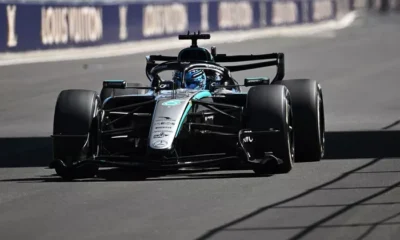
George Russell battles for position at Madring as his Mercedes struggles to match the race pace of its main rivals.
The Virtual Safety Car Hurt Russell’s Strategy
Mercedes had expected drivers starting on mediums and softs to make their first stops around Lap 15. Russell, however, was hoping to extend his opening stint until around Lap 40.
The VSC changed everything.
Russell was one of only two drivers among the 12 starters on hard tires who stopped during the neutralization. He switched to the medium compound, only to later return to the hard tire he preferred.
“It was a very frustrating moment with the safety car,” Russell explained.
The strategy meant Russell never enjoyed the same flexibility as some of his rivals. Charles Leclerc, for example, stayed out during the VSC and delayed his stop until Lap 48.

Russell makes an early pit stop during the Virtual Safety Car, compromising the strategy Mercedes had planned for the race.
Russell still managed to apply pressure toward the end of the race. Leclerc was on fresh soft tires after his late stop, but the Ferrari driver narrowly held onto fourth place.
Russell therefore finished fifth, although he insisted the result did not accurately represent Mercedes’ actual performance.
“The Performance Was Much Better Than the Result”
Russell believes Madring produced a result that was heavily influenced by track position.
“The performance was much better than the result,” he said.
He compared the situation to Monaco, where qualifying position can often determine the outcome because overtaking opportunities are so limited.
That characteristic of Madring made Russell’s early strategic disadvantage even more difficult to overcome. Once drivers settled into position, a faster car could still struggle to complete a pass.
George Russell finishes fifth at Madring after a difficult strategy leaves him unable to recover further positions.
Antonelli Has Built a Huge Championship Advantage
While Russell endured another frustrating weekend, Antonelli continued his extraordinary run of form.
The young Italian secured his eighth victory of the season and his 12th podium in 14 races. That consistency has allowed him to stretch his advantage over Russell to 81 points.
With nine races theoretically remaining, Russell still has time to score heavily. However, the scale of the deficit means he would need a major turnaround in fortunes to put genuine pressure back on his teammate.
Russell Is No Longer Thinking About the Title
Russell was remarkably candid when asked about his championship prospects.
“I’m not going to say it’s over, but it’s very unlikely I’m still in this fight,” he admitted.
He added that he is no longer thinking about being involved in the title battle because he does not believe he currently is.
That mindset could actually change his approach for the remainder of the season. Instead of focusing on championship mathematics, Russell can concentrate on maximizing every individual weekend and trying to convert Mercedes’ pace into victories.
George Russell’s Title Fight Is Hanging by a Thread
The George Russell F1 title challenge is not mathematically finished, but the situation has become increasingly difficult. Antonelli’s consistency has given the Mercedes youngster a huge cushion, while Russell has repeatedly lost valuable points through strategy, qualifying and race circumstances.
Moreover, Russell believes the raw pace of his Mercedes remains stronger than his recent results suggest. The problem is turning that performance into finishes that can consistently close the gap.
For now, his approach is simple: take the season one race at a time and try to win as many Grands Prix as possible. The championship may be slipping away, but Russell still has nine opportunities to change the story.
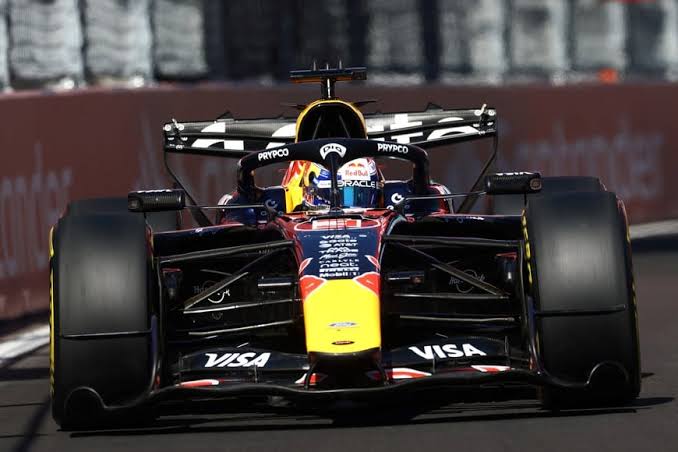
Max Verstappen finished second in Madrid despite lacking the pace of McLaren and Mercedes. The Red Bull driver explained how track characteristics and a late VSC helped him hold off Lando Norris.
Max Verstappen finished second at the Spanish Grand Prix, but the Red Bull driver made it clear that the result was better than the team’s actual pace. According to Verstappen, both Lando Norris and Andrea Kimi Antonelli were faster throughout the race.
Norris became particularly threatening during the final laps. However, despite closing rapidly on Verstappen, the McLaren driver was unable to find a way past the Red Bull around Madring.
Verstappen believes the circuit itself played a major role. He also admitted that a Virtual Safety Car helped him secure a result that was beyond Red Bull’s true performance level.
Verstappen Had to Give the Position Back
The race was already complicated from the opening corners. Verstappen found himself alongside Lewis Hamilton after the Ferrari ran over the curb and bounced back toward the racing line.
Concerned about contact, Verstappen chose to cut Turn 2. He then returned to the track ahead of Hamilton and also gained a position over Antonelli.
Red Bull immediately instructed him to give the positions back. Verstappen knew ignoring the order could have resulted in a penalty.
“If I hadn’t done it, I would have received a penalty,” Verstappen explained. “There was no option.”

Max Verstappen fights for position with Lewis Hamilton during the opening corners of the Spanish Grand Prix.
The decision frustrated Verstappen during the race, particularly because returning the position effectively cost him two places.
However, once the race continued, the Dutchman focused on maximizing what the Red Bull could deliver.
Norris Had More Pace Than Verstappen
Verstappen was clear about the performance gap between Red Bull and its main rivals. He believed Norris was especially quick, while Antonelli also had an advantage in raw pace.
“I think it was pretty clear that especially Lando, but also Kimi, were a little bit faster than me,” Verstappen said.
Norris had controlled much of the early race from pole position, while Antonelli remained firmly in contention. The situation changed when Lance Stroll’s retirement triggered a Virtual Safety Car.
Red Bull was able to benefit from the timing of the neutralization. Norris, meanwhile, lost around 20 seconds compared with several of his rivals and dropped behind them.

Lando Norris closes in on Max Verstappen during the Spanish Grand Prix at Madring.
That incident became a crucial turning point. Verstappen acknowledged that Norris was unlucky with the VSC, while Red Bull benefited from it.
As a result, second place became far more realistic than it had looked earlier in the afternoon.
“Lando Was Flying” in the Final Laps
Later in the race, Norris eventually reached Verstappen and began applying serious pressure. The McLaren was visibly faster, yet overtaking remained extremely difficult.
Verstappen did not consider it a conventional battle because he believed Norris simply lacked the opportunity to complete the pass.
“To be honest, it wasn’t really a battle. He had no chance to overtake me,” Verstappen said.
That was not a criticism of Norris’ speed. Quite the opposite.
“When Lando was behind me, he was flying. He was much faster,” Verstappen admitted.

Max Verstappen keeps Lando Norris behind him during the closing stages despite the McLaren having greater pace.
Madring Helped Verstappen Hold On
The layout of Madring ultimately worked in Verstappen’s favor. The circuit offered limited opportunities to turn a pace advantage into a clean overtaking move.
Therefore, Norris could close the gap without finding the right combination of braking zone, positioning and traction needed to pass.
“Simply because of the nature of the circuit, he couldn’t pass,” Verstappen explained.
That made the final laps particularly revealing. The McLaren had the speed advantage, but the Red Bull had track position.
Red Bull Still Has Work to Do
Despite finishing second, Verstappen did not see the result as evidence that Red Bull had closed the gap to McLaren and Mercedes.
“You only have to look at the lap times. We’re still quite far behind,” he admitted.
He also suggested that the deficit was caused by several factors rather than one specific weakness. Energy deployment may have played a role, but Verstappen also pointed toward the car itself as an area that still needs improvement.
Therefore, the result in Madrid was more about execution and circumstances than outright performance.
Verstappen Says Second Was More Than the Maximum
The Max Verstappen Norris battle ultimately became a story of pace versus position. Norris had the faster car over the final stages, but Madring made it extremely difficult to convert that advantage into an overtaking move.
Meanwhile, the VSC gave Verstappen another important advantage by costing Norris valuable track position.
That is why Verstappen viewed second place as an unexpectedly strong result rather than a missed opportunity for victory. Red Bull did not have the speed to beat McLaren and Mercedes on pure performance, but Verstappen extracted everything available from the package.
“Second place for us was more than the maximum,” Verstappen said.
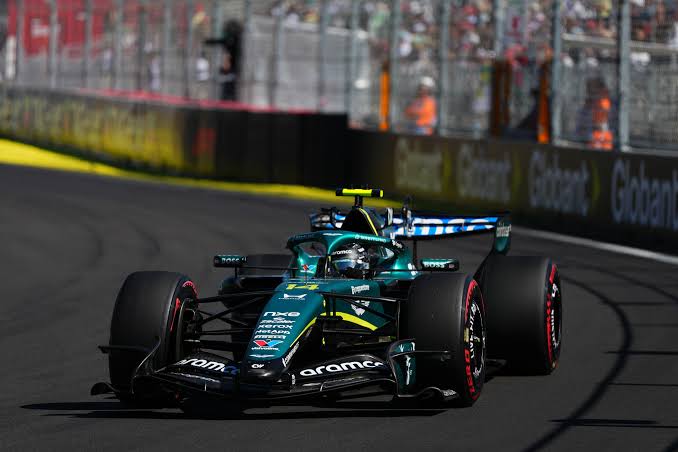
Fernando Alonso’s Spanish Grand Prix was compromised by damage and a series of problems, yet the Aston Martin driver chose to continue until the checkered flag. The team later revealed that finishing the race was largely Alonso’s own decision, driven by the support from the fans at Madring.
Alonso finished 17th, second-to-last among the drivers classified at the end of the race. However, his Aston Martin had been carrying damage for much of the afternoon after contact with Carlos Sainz.
The incident affected the floor and forced Aston Martin to change Alonso’s front wing during the Virtual Safety Car period. Despite those setbacks, he continued to complete the race.
Alonso Drove With a Damaged Aston Martin
Alonso explained after the race that his AMR26 was not in ideal condition for much of the afternoon. The floor remained damaged after the contact, while the team also had to replace the nose.
“We had a thousand and one problems,” Alonso explained. “We had to change the front wing, and we had the car damaged all race without part of the floor.”
The damage clearly limited the car. However, Alonso believed it probably did not change his eventual finishing position because the cars ahead were already too far away.
He pointed out that the Aston Martin was already well behind Oliver Bearman, while the Sauber cars were operating at another level in terms of pace.

Fernando Alonso drives his damaged Aston Martin during the Spanish Grand Prix at Madring.
Aston Martin Says Alonso Chose to Continue
Aston Martin team principal Mike Krack later highlighted Alonso’s decision to keep racing. Speaking after the event, Krack said the team should recognize the Spaniard for completing the race despite the condition of the car.
According to Krack, Alonso could easily have stopped the Aston Martin and returned to the garage. Instead, he continued in front of the home crowd.
That decision was particularly meaningful because Alonso had already endured a difficult afternoon. With the car damaged and no realistic chance of fighting for a significantly better position, continuing required a commitment that went beyond the sporting result.

Alonso continues through Madring despite extensive damage to his Aston Martin AMR26.
Alonso Made His Final Lap About the Fans
The strongest indication of Alonso’s motivation came after the race. He deliberately slowed his return to the pit lane so he could enjoy the atmosphere inside the circuit.
Rather than completing a normal in-lap, Alonso dropped his speed dramatically and took several minutes to reach the pits. His goal was simple: take in the support from the fans around Madring.
“The best part of the weekend,” Alonso said, referring to that final lap.
He explained that he selected first gear and traveled at roughly 20 km/h throughout the in-lap. The journey to the pit lane took around five minutes because he wanted to absorb the atmosphere in the grandstands.

Fernando Alonso salutes the Madring crowd during his slow return to the pit lane after the Spanish Grand Prix.
Fernando Alonso Put the Fans Before the Result
The Fernando Alonso Spanish GP result will show a 17th-place finish, but the number does not fully capture what happened during the race. Aston Martin confirmed that Alonso could have ended his afternoon early, yet he chose to remain on track despite the damaged car.
Moreover, Alonso’s final trip back to the pits became one of the most memorable moments of his weekend. Rather than focusing solely on a difficult result, he used the opportunity to connect with the supporters who had come to see him race.
For a driver competing with a damaged car and little chance of improving his position, finishing may not have changed the championship picture. However, for Alonso and the fans at Madring, those final five minutes carried far more significance than the final classification suggested.
-

 TEST DRIVES2 months ago
2026 Maserati MCPura Cielo
-

 NOW TRENDING2 months ago
2027 Range Rover GT Debuts as the Brand’s Lowest EV
-
 NOW TRENDING2 months ago
Mercedes-AMG Admits the C63 Hybrid Was a Mistake for Buyers
-

 INTELLIGENT MOBILITY2 months ago
2027 Toyota Crown Gets New Hybrid System and Fresh Design
-

 NOW TRENDING2 months ago
Next-Gen Cadillac CT5-V Blackwing Could Keep the V8 Alive
-
 NOW TRENDING2 months ago
Honda Civic Si Production Ends After 2026 Model Year Pause
-
 NOW TRENDING2 months ago
Rolls-Royce’s $32 Million Droptail Took 9 Months of Handcrafted Woodwork
-

 NOW TRENDING2 months ago
2027 Toyota Sequoia Adds Trailhunter Package and New Tech
You must be logged in to post a comment Login