
INTELLIGENT MOBILITY
Honda’s New EV Tech Could Charge Cars While Driving

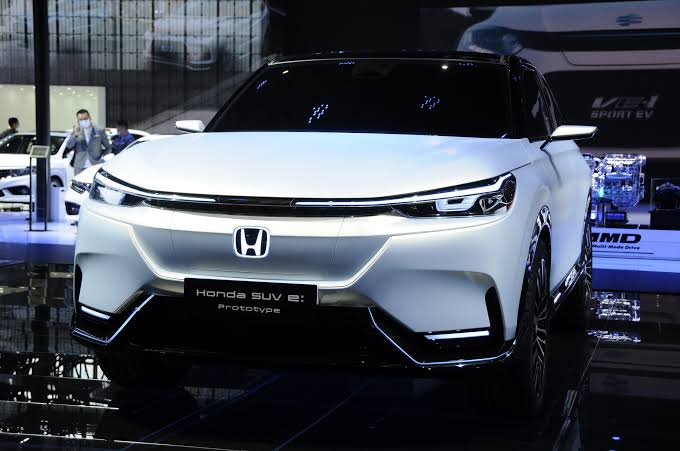
Honda is developing a wireless charging road that could deliver up to 150 kW to EVs while they are moving, including heavy commercial vehicles.
Honda is moving closer to a future in which electric vehicles could recharge their batteries without stopping. The company has developed the underlying technology for a dynamic wireless power transfer system that can send electricity from equipment embedded in the road to an EV while it is driving.
The project is being developed with Taisei Corporation and Taisei Rotec Corporation. Together, the three companies are working on a road system designed to combine high-power wireless charging, durable pavement structures and practical installation methods.
The technology is particularly important for electric trucks and other commercial vehicles. These vehicles need to travel long distances while maintaining high utilisation, making conventional charging stops a major challenge. Honda therefore sees dynamic wireless charging as a potential way to reduce charging downtime while keeping vehicles moving.

Honda’s dynamic wireless power transfer system is designed to supply electricity to an EV through equipment embedded beneath the road surface.
The Road Becomes Part of the Charging System
Honda’s system uses magnetic coupling to transfer electricity between the road and the vehicle. Power is delivered from Ground Assembly units embedded in the pavement to a Vehicle Assembly unit installed on the EV.
The approach is similar in principle to wireless charging for smaller devices, but it has been adapted for much higher power levels and continuous operation while a vehicle is moving.
One of the most important innovations is the way Honda has designed its ground units. The inverter and charging coil are integrated into a single unit, while multiple units can be connected through a DC distribution system.
This architecture can reduce the amount of wiring required beneath the road. It also makes the system easier to install and potentially easier to upgrade when existing pavement is resurfaced.
The companies have designed the pavement and embedded components to withstand heavy traffic. Their target includes vehicles with a gross weight of approximately 20 tons, a crucial requirement if the technology is eventually deployed on roads used by trucks.

The charging units are embedded into the pavement and transfer electricity wirelessly to a receiver installed on the vehicle.
Honda Is Targeting Up To 150 kW
The system is being developed with high-power applications in mind. Honda is working toward up to 150 kW of power transfer per ground assembly unit, which could make the technology particularly relevant to large electric commercial vehicles.
The first stage of testing will take place on a dedicated roadway at the Taisei Group facility in Japan. Beginning in late 2026, the companies plan to evaluate long-term durability, wireless power-transfer performance and electromagnetic-field leakage.
The durability programme is particularly demanding. Testing will simulate the equivalent of one million wheel loads, using a 49-kilonewton load per wheel, to assess how the embedded system performs under repeated heavy-vehicle traffic.
After this stage, development will move toward higher-power operation and high-speed driving. The objective is not simply to demonstrate that electricity can be transferred wirelessly, but to establish a system that can operate reliably as part of real road infrastructure.

Honda’s technology could allow electric cars and commercial vehicles to receive power continuously while travelling over equipped sections of road.
Electric Trucks Could Be The Biggest Beneficiaries
The technology could have its greatest impact on logistics. Electric trucks require large batteries to achieve long ranges, but larger battery packs add weight, cost and charging requirements.
Dynamic wireless power transfer offers a different approach. Instead of relying entirely on stored energy, an electric truck could receive additional electricity while travelling, potentially allowing manufacturers to reduce the size of the battery needed for certain routes.
Honda is initially focusing on logistics and transportation because these sectors combine high mileage with strict uptime requirements. A truck that can recharge while moving could spend less time parked at charging stations and more time carrying freight.
The technology could also eventually support passenger EVs. Honda says the road infrastructure is being developed with broader compatibility in mind, rather than as a system limited exclusively to one vehicle manufacturer.
Public-Road Testing Is Planned For 2027
Honda and its partners plan to continue developing the system before moving to public-road demonstrations. The companies are expected to participate in the Tateyama Project on the Tateyama Expressway in Chiba, Japan, from fiscal 2027 onward.
That phase will be important because laboratory and private-road testing cannot fully reproduce the demands of public infrastructure. Real-world deployment will require reliable power transfer, durable pavement, manageable installation costs and effective safety measures.
Honda’s dynamic wireless charging technology could eventually change the way EV infrastructure is designed, turning sections of roads into active energy-supply systems rather than simply surfaces on which vehicles travel.
For electric commercial vehicles in particular, that could be one of the most important developments yet in the effort to combine long-distance driving with zero-emission transportation.








-
 NOW TRENDING2 months ago
Land Rover Defender Recall 2026: 23,677 JLR SUVs Affected
-
 NOW TRENDING2 months ago
Hyundai September 2026 Sales Hit Record 77,439
-
 NOW TRENDING2 months ago
2027 Silverado HD: New 8.3L Duramax V8 Revealed
-
 NOW TRENDING2 months ago
Cadillac EVs 2026: All Five Electric Models Explained
-

 NOW TRENDING2 months ago
Porsche Gas Macan Returns in 2028 as EV Plans Evolve
-
 INTELLIGENT MOBILITY2 months ago
GM and PG&E Make Home EV Charging Easier for Buyers
-
 INTELLIGENT MOBILITY2 months ago
Waymo Safety Data Shows 82% Fewer Injury Crashes
-
 NOW TRENDING2 months ago
2027 Toyota Grand Highlander Woodland Adds Adventure