
NOW TRENDING
Volvo Cars 2026 Outlook Pulled as U.S. Recovery Slows


Volvo Cars has withdrawn its previous 2026 sales and cash-flow outlook after weaker demand in China and a slower-than-expected recovery in the U.S.
Volvo removes its previous 2026 outlook
Volvo Cars is revising its expectations for the rest of 2026.
The automaker said on October 2 that it will not meet its previous full-year expectations for vehicle volume and cash flow. It also decided not to issue new short-term guidance because market conditions have become increasingly uncertain.
The two biggest problems are clear.
China is deteriorating further, while the U.S. premium market is recovering more slowly than expected. Europe remains the strongest region for Volvo, supported by demand for new electric models.

The Volvo XC60 remains one of the brand’s strongest models in the United States, helping offset weakness elsewhere.
U.S. sales are under pressure
The U.S. market is now a major concern for Volvo.
Volvo Car USA sold 23,766 vehicles in the third quarter of 2026, an 8.7% decline from the same period last year. The company attributed the result to weaker consumer sentiment, stronger competition in the SUV segment and softer demand for electrified vehicles.
Electrified sales were particularly weak.
Volvo Car USA sold 1,787 fully electric vehicles, down 41.1% year over year. Plug-in hybrid sales were more resilient, reaching 5,598 units, up 2.8%.
That split is important for Volvo.
The company’s U.S. strategy increasingly depends on offering both battery-electric and plug-in hybrid vehicles. The latest long-range XC60 and XC90 plug-in hybrids are aimed at customers who want greater electric range without giving up a gasoline engine for longer trips.

The XC90 remains another important part of Volvo’s U.S. SUV portfolio.
China is an even bigger problem
China is showing a much sharper decline.
Volvo Cars delivered 20,284 vehicles in Greater China during the third quarter, down 40.6% from a year earlier. The company cited stronger pricing and competitive pressure from local manufacturers, along with a weaker macroeconomic environment.
The powertrain mix also changed dramatically.
Mild-hybrid and internal-combustion deliveries in Greater China fell 52%, while fully electric sales declined nearly 30%. Plug-in hybrid deliveries, however, increased 45.7%.
That result highlights the challenge Volvo faces in China.
Local brands are competing aggressively on both price and technology. At the same time, premium EV demand has become harder to predict.
Europe is providing a bright spot
Europe is moving in the opposite direction.
Volvo Cars delivered 90,548 vehicles in Europe and the rest of the world during the third quarter, up 2% year over year. Fully electric sales in the region jumped 51%.
The company says demand for its newer models remains strong.
The EX60 and long-range plug-in hybrids are among the products Volvo is now prioritizing. The company is also working to increase EX60 production as part of its next stage of product development.

Volvo is counting on newer models such as the EX60 to help strengthen sales in key markets.
Globally, fully electric sales still increased.
Volvo Cars sold 45,060 fully electric vehicles worldwide in the third quarter, up 28.6% from the same period in 2025. But plug-in hybrid deliveries fell 18%, while mild-hybrid and ICE sales dropped 23.6%.
The numbers show that electrification is progressing unevenly.
Volvo is selling more EVs in Europe, but weaker demand in the U.S. and China is limiting the overall recovery.
Volvo prepares for another important transition
The latest outlook change comes during a broader transformation at Volvo Cars.
The company recently announced Klaus Zellmer as its incoming President and CEO. He will take over no later than October 1, 2027, while Håkan Samuelsson remains in charge during the transition.
Volvo is also pursuing a long-term plan focused on profitability and cash generation. The company says the withdrawal of its short-term guidance does not change its longer-term ambition of building a business capable of an 8% EBIT margin and strong cash flow.
For now, the immediate challenge is demand.
The company will publish its third-quarter 2026 financial results on October 23, providing a much deeper look at profitability, cash flow and the actions Volvo plans to take next.
The Volvo Cars 2026 outlook is therefore entering a more uncertain phase. China remains under heavy pressure, the U.S. recovery is slower than expected, and Volvo must rely on new vehicles and stronger European demand to stabilize its global business.










-
 NOW TRENDING2 months ago
Land Rover Defender Recall 2026: 23,677 JLR SUVs Affected
-
 NOW TRENDING2 months ago
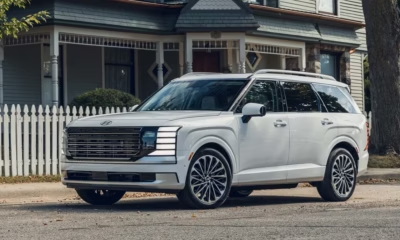
Hyundai September 2026 Sales Hit Record 77,439
-

 NOW TRENDING2 months ago
2027 Silverado HD: New 8.3L Duramax V8 Revealed
-

 NOW TRENDING2 months ago
Cadillac EVs 2026: All Five Electric Models Explained
-

 NOW TRENDING2 months ago
Porsche Gas Macan Returns in 2028 as EV Plans Evolve
-
 NOW TRENDING2 months ago
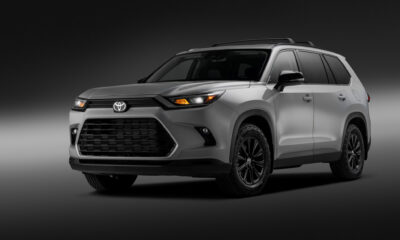
2027 Toyota Grand Highlander Woodland Adds Adventure
-

 INTELLIGENT MOBILITY2 months ago
GM and PG&E Make Home EV Charging Easier for Buyers
-

 INTELLIGENT MOBILITY2 months ago
Waymo Safety Data Shows 82% Fewer Injury Crashes